


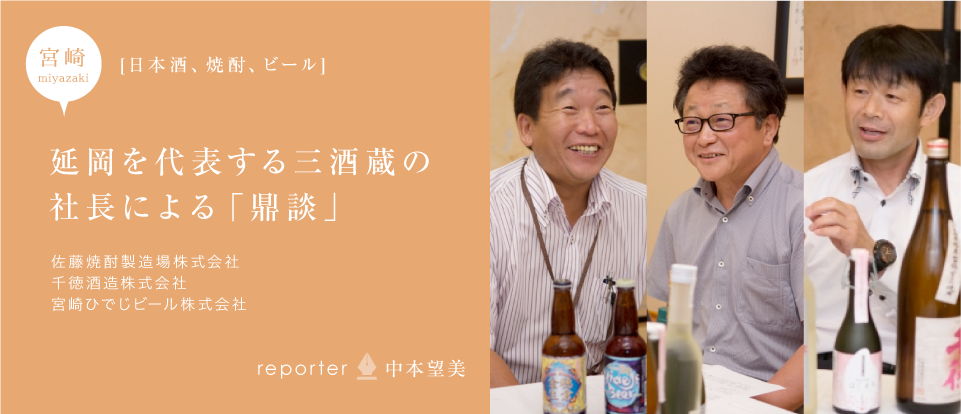

He is known by the nickname "Mitsukura" (三蔵),
Three sake breweries representing Nobeoka, a city of waterways
(Sato Shochu Seizo K.K., Sentoku Shuzo K.K., Miyazaki Hideji Beer Co.
The first trilogy talk by the presidents was realized! Starting with an evaluation of each company's signature products,
We will have a great discussion about past achievements and future prospects.
Sanzo" is located in Nobeoka, a "water town
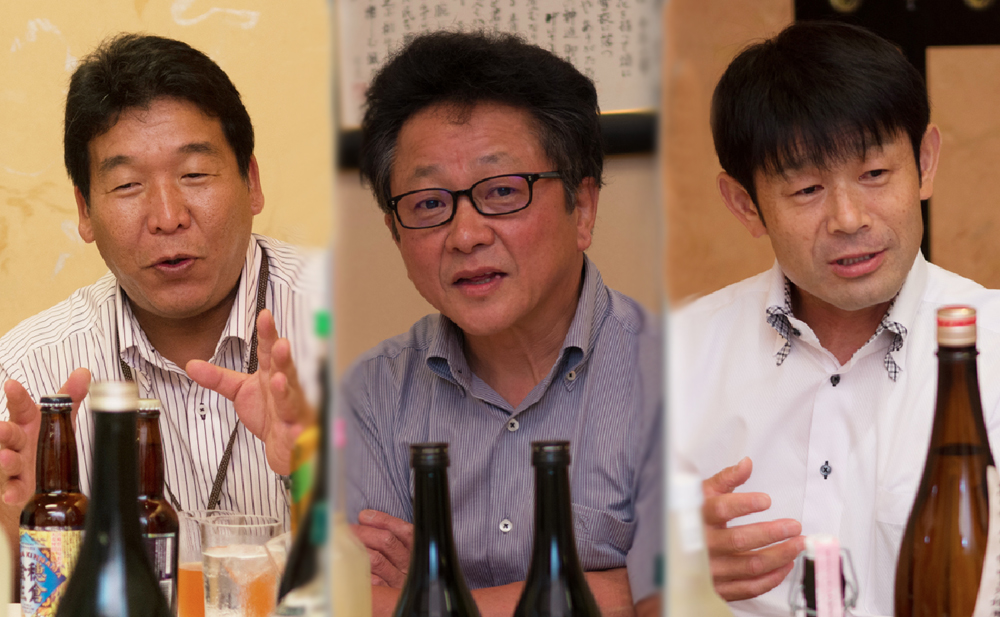
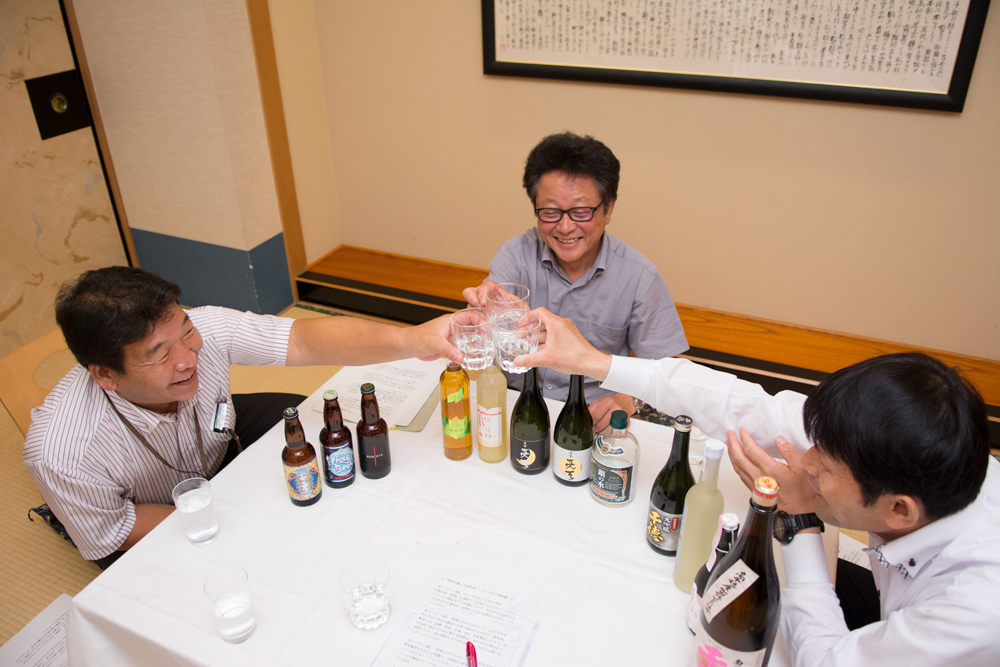
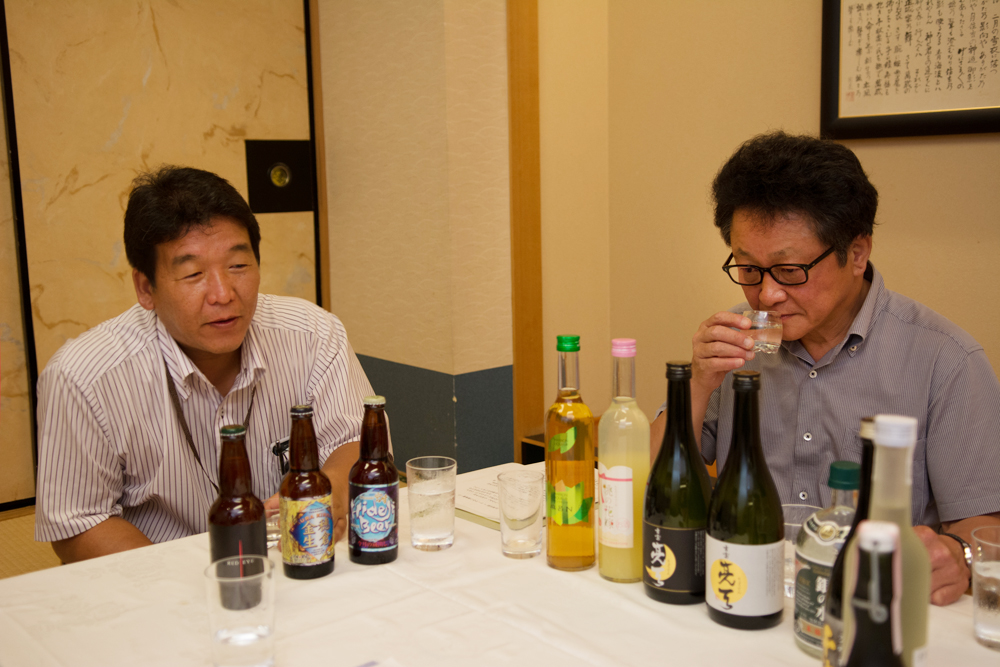
From left: Tokihiko Nagano, president of Miyazaki Hideji Beer Co.
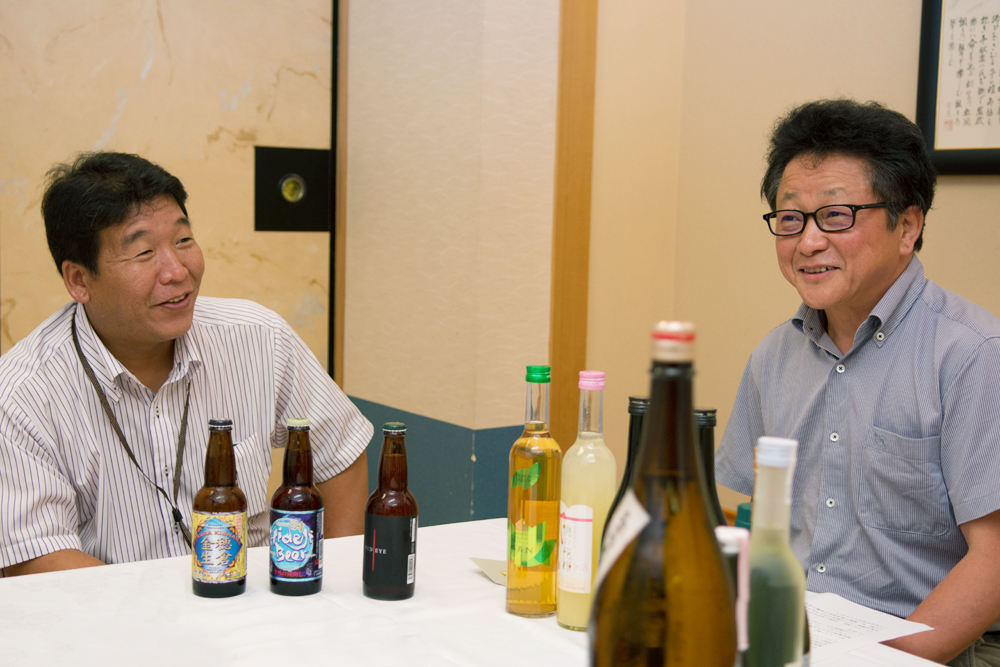
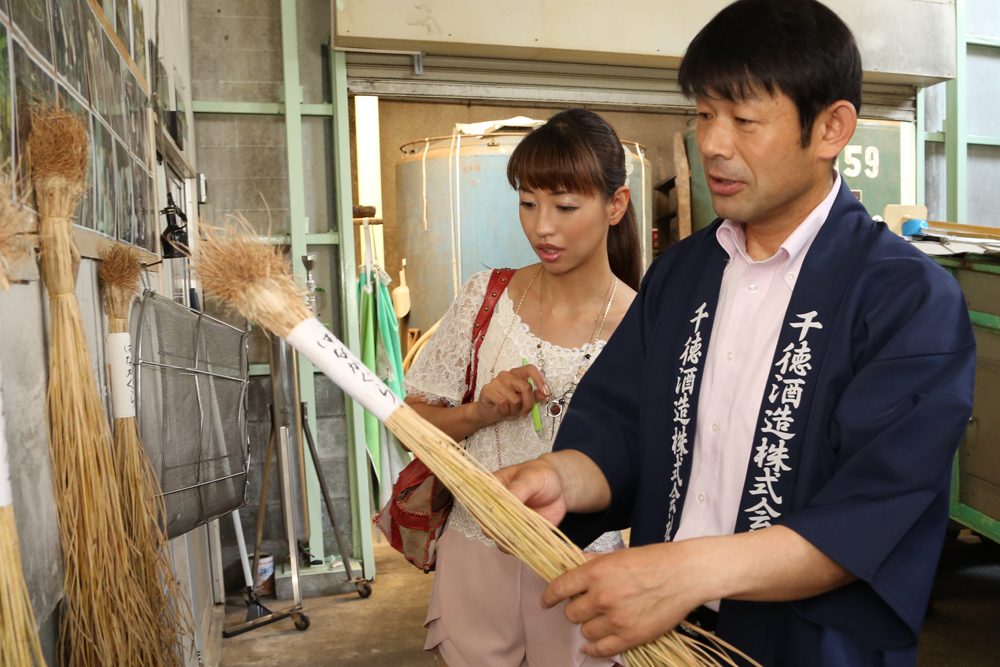
Nobeoka City, Miyazaki Prefecture, is known as the "City of Waterways" because of the four clear streams that flow through the city. Because of the beauty of the water, sake breweries of different genres, such as shochu, sake, and local beer, have taken root in the area in search of their own unique tastes, and each is active on the national stage.
These three breweries have a variety of achievements, such as "the best in the world," "the best in the nation," "the first in the nation," "the southernmost," etc. They inspire each other at a high level, and it can be seen that they are not only improving quality on a daily basis but also actively participating in activities in cooperation with the community as a company and devoting themselves to local revitalization.
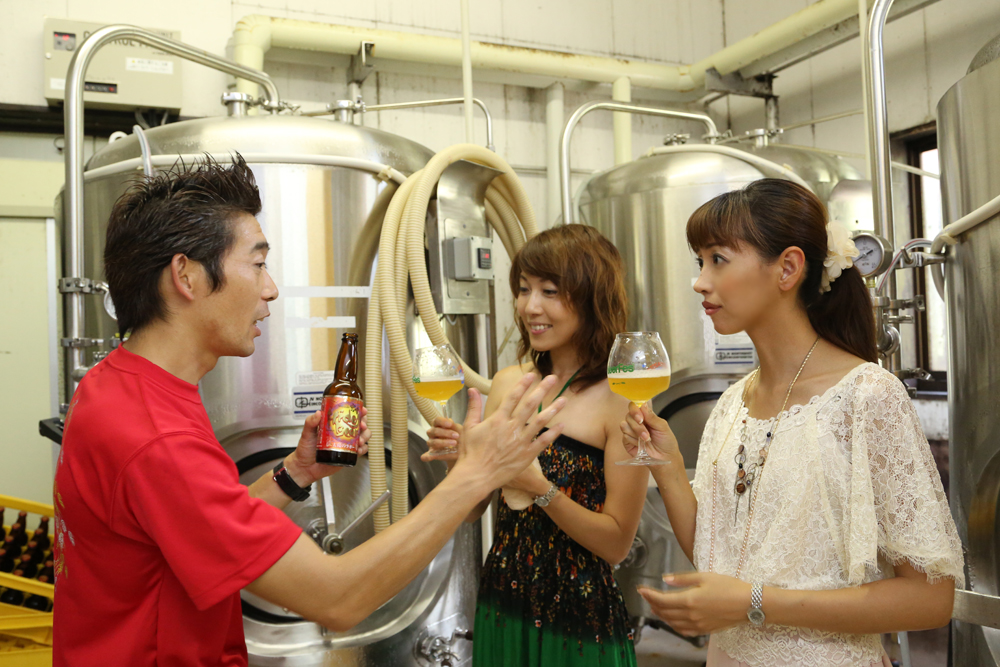
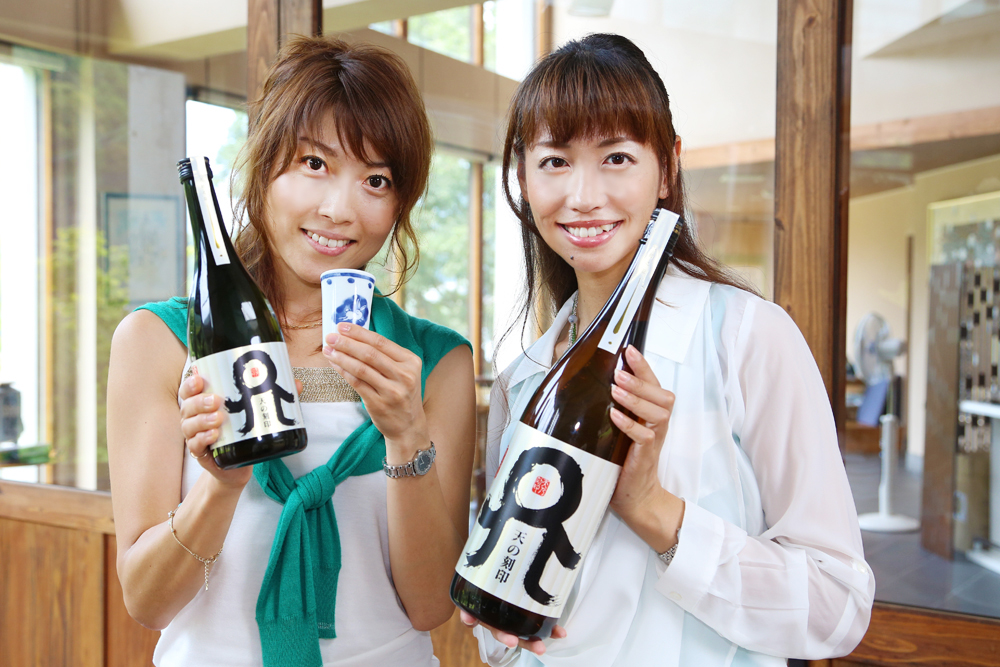
In this report, we will introduce the trip to the three breweries, the process and concept of the brewery, and the recommended products selected by female sake connoisseur Chiho Takei, in addition to a trilogy discussion among the three presidents.
Trilogy Part 1 Theme: Commitment to Local
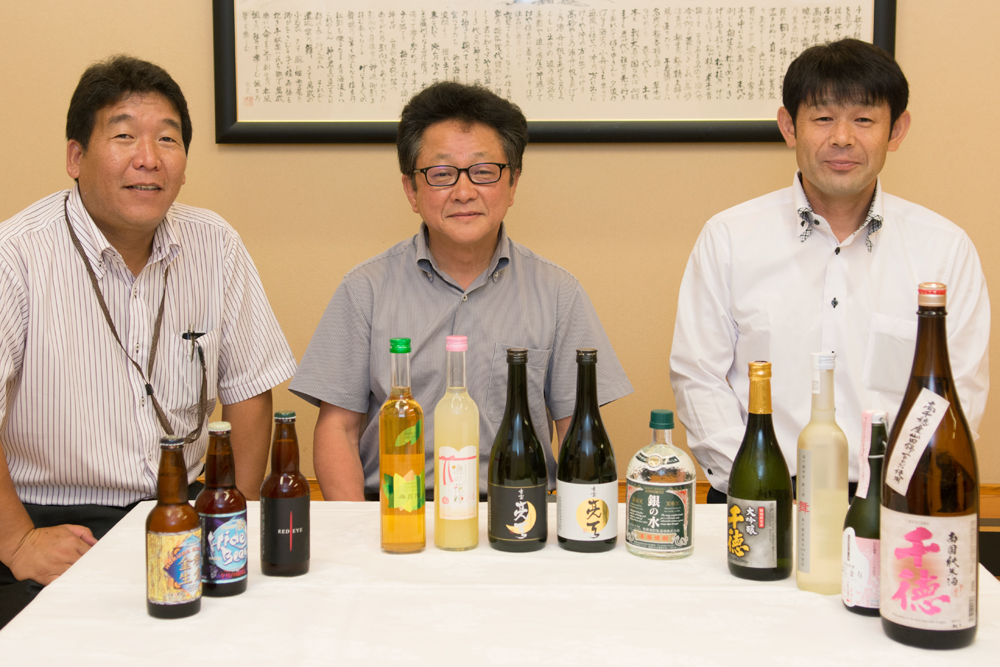
From left: Tokihiko Nagano, president of Miyazaki Hideji Beer Co.
--Please tell us about your concept and relationship with the community and the brewery (company).
Mr. Mizue (Sato Shochu)
First, let me talk about the inevitability of being there (Nobeoka). Japan is blessed with beautiful nature and has built up a long history and culture, so much so that four years ago, Prime Minister Abe mentioned the phrase "Japan, a beautiful country" as his policy. ......
In its history and culture, sake was brewed to offer to the gods, and then to the Shinto rituals, followed by the beautiful sake associated with the festivals, and "sake" was used as a means of communication to facilitate communication. Sake has been celebrated with sake on "Hare no Hi" (Hare days) since ancient times. Japan is blessed with a beautiful natural environment, which has led to the development of this kind of lifestyle culture and tradition by incorporating nature into daily life. The same is true for sake, shochu, and beer. Furthermore, in the field of sake, Japanese beer is what we seek to evolve and take shape. ...... First of all, I think this is the "inevitability of sake in our lives.
As far back as the Edo period (1603-1868), the Nobeoka domain was a natural domain, and sake was brought in from the Kamigata region, but because of their status, ordinary people were not allowed to enter the "entertainment" of people from the Kamigata region, where they drank and ate around sake. ...... Because of this, the Kyushu region was originally a region where "shochu" was loved due to the influence of Satsuma. In Nobeoka, the founder of "Sato Shochu" obtained a license for sake brewing under the new government of the Meiji era, and spread shochu locally as an item that the general public and workers could easily enjoy, creating a culture and tradition closely connected to the region until the present day. Shochu has remained closely connected to the local community, creating a culture and tradition that has continued to this day. Sake, which has remained unchanged throughout the changing times, is a clear example of Japanese culture and traditional industry.
--Is that why there are so many sake brewing companies founded in the Meiji era?
Mr. Mizue (Sato Shochu)
At that time, many breweries brewed their own products, and only a limited number of places were allowed to produce it. However, the government also moved to make it a "commodity" from a policy and financial standpoint, and the system was changed to a license system in 1902. In terms of obtaining that license, I believe that many companies were founded in the Meiji era. If we trace the origin of the brewery back to the Edo period, many of them were operating as home-brewed sake breweries before the Edo period. At any rate, there used to be as many as 22 companies in the northern part of Miyazaki Prefecture. ......
The development of alcoholic beverages was largely overshadowed by the technology of production and living. And if you look at the world, beer has been around since BC. ...... As they say, if Cleopatra's nose had been shorter, history would have been different, and without alcohol, history might have been very different.
Mr. Nagano (Hideoji Beer)
Beer has a long history when considered in the world, but in Japan, beer is a "latecomer" to the market. More importantly, our "local beer" is a recent culture .......
Mr. Mizue (Sato Shochu)
Isn't beer a "cross-cultural" sensation? Since the Japanese began to cross over to other countries, they have adopted new things and created new things to accompany them. ...... I believe that alcohol, while being a form of entertainment, plays an important role in fostering "the richness of the human spirit.
--What do you think about the fact that there are three breweries in Nobeoka City, each with a different genre of sake, either by coincidence or necessity?
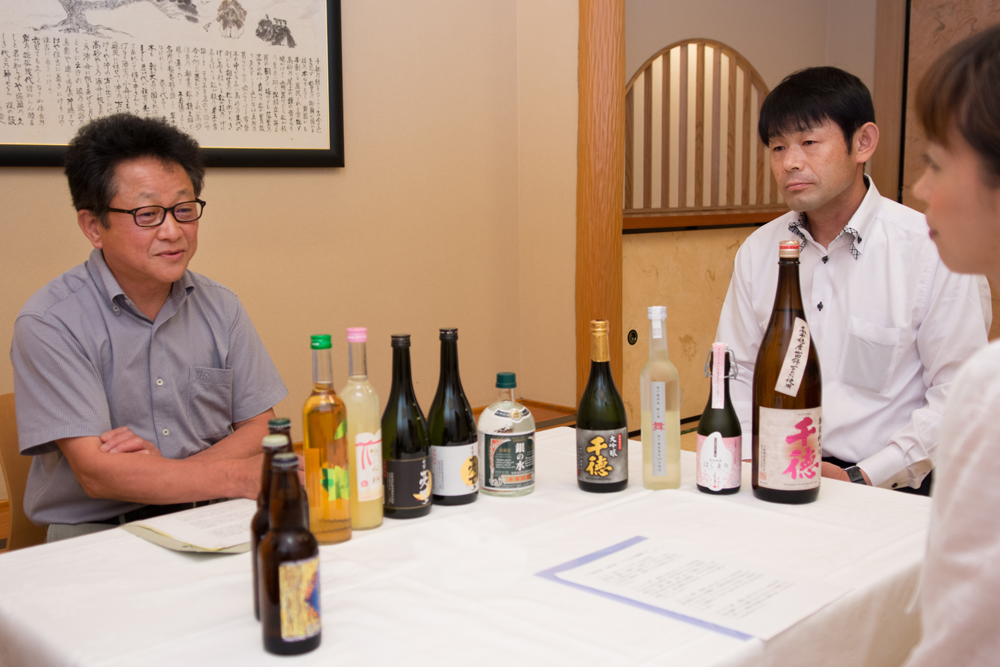
Mr. Nagano (Hideoji Beer)
In the past, there were many sake breweries in Miyazaki Prefecture. However, the number of sake breweries has been reduced to only one, Sentoku Shuzo, and in Nobeoka City, only one shochu brewery, Sato Shochu Works, remains, and now only three breweries, including our own microbrewery, remain. In fact, it is only in the last few years that we have realized that this is a great thing. ......
--does that mean that it was eliminated?
Mr. Mizue (Sato Shochu)
Hmmm...rather than being eliminated, alcohol became an indispensable part of daily life, and in order to nurture and nurture that need, the brewers had to increase their sensitivity. Furthermore, as a result of mutual influence in the shifting history, the creation of wisdom, and continued trial and error, "our company became a necessary presence" and may have been able to survive. Considering such history, I do not think it is a coincidence.
Mr. Kadota (Sentoku Sake Brewery)
It is said that there used to be many sake breweries other than our company, and in fact, they merged repeatedly to become the current "Sentoku Shuzo". Because of this, we have about 70 shareholders. In many cases, whether sake or shochu, it is the "family" that takes over the brewery. ...... In this sense, the brewery may be unique. Why was it possible for this sake to continue to be made in Nobeoka, where the conditions are so harsh? I think it was because it was needed.
--How does the climate of Nobeoka affect sake brewing?
Mr. Kadota (Sentoku Sake Brewery)
Even though it is in the northern part of the prefecture, Miyazaki Prefecture is a tropical country, so it is still a challenge. ...... The cooler the temperature, the better for brewing, and the relationship between fermentation and temperature is very serious. ......
When I think of sake, I think of cold regions, but until I joined Sentoku Shuzo and was informed of the various aspects of the brewery, I wondered, "Why make sake in Nobeoka City in Miyazaki, a tropical country? I was wondering why they were making sake in Nobeoka City in Miyazaki, a tropical country.
By the way, does the fermentation temperature of shochu have anything to do with it (question for Mr. Mizue)?
Mr. Mizue (Sato Shochu)
In the case of shochu, every stage of the process of "brewing," "steeping," and "laying down" requires care to match the conditions by selecting raw materials and designing quality and sake quality according to the four seasons.
As I mentioned earlier, Nobeoka was the domain of the Nobeoka clan, and during the period of splendor and splendor that stretched from the Edo period to the Meiji period, sake was a necessity for the people who traveled from Kamigata and enjoyed drinking sake. However, it was costly and labor-intensive to transport sake from the Kamigata region whenever it ran out. Since sake could not be transported so easily, the technology for making sake was passed on to the people of Nobeoka, and they began to make sake there as well. That is why there were many sake breweries in Nobeoka.
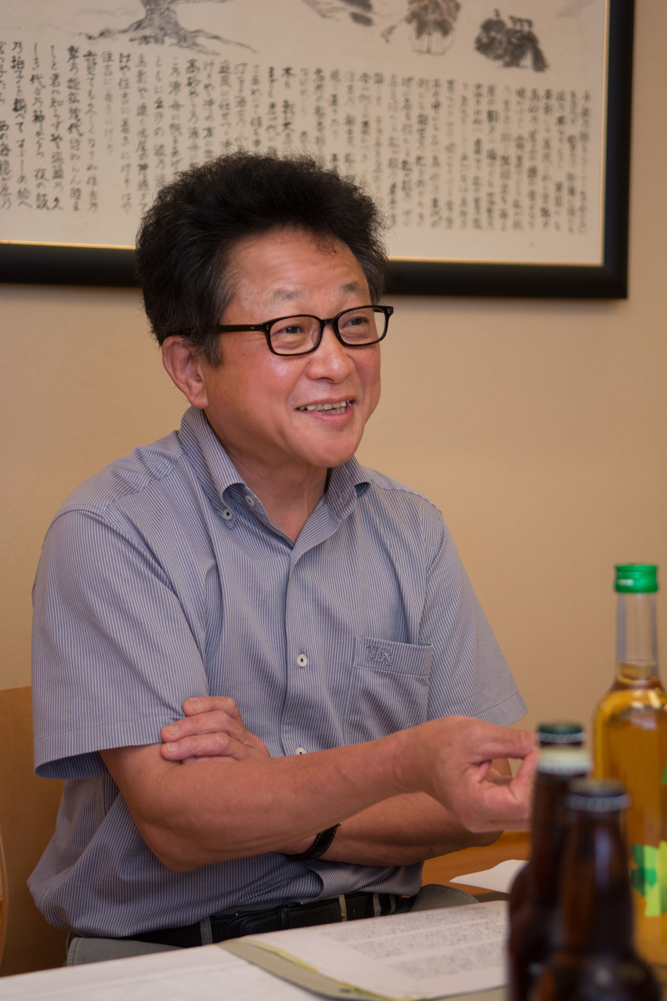 Mr. Kadota (Sentoku Sake Brewery)
I hear that there were many sake breweries in the Mimi River area of Hyuga City, too, because the area was a natural estate. The north is sake culture and the south is shochu culture. ......
Mr. Mizue (Sato Shochu)
Yes, in the Tokugawa period, Hyuga Province was subdivided and ruled. I'd say it's largely divided into two parts, the northern part, bordered by the Binzu River, is where rice-making and cereal shochu are the main products of the region.
-- Sake and shochu have a historical background that supports Japanese society and culture. But microbreweries are completely different, aren't they?
Mr. Nagano (Hideoji Beer)
Yes! It's quite unique. In the course of Japanese history and Nobeoka's history, there is no element in which beer is connected to the community and society and fosters culture. If we look at the world, beer is an old luxury item, but in Japan, and in Nobeoka, it is a completely new culture.
Mr. Mizue (Sato Shochu)
I was impressed by the fact that even in such a small place like Nobeoka, there were gorgeous and gorgeous things as a result of the importation of a large amount of foreign culture into Japan from the Edo period to after the Meiji Restoration. At that time, there was also a splendid Western-style "guest house" in Nobeoka. ...... Beer must have been an indispensable item to create a "Western" atmosphere in this Nobeoka area. It is not by chance but by necessity that beer has been incorporated as one of the symbols of innovation for the new era. ......
--What do you think is the connection between the recent "microbrewery boom" and Hideoji Beer?
Mr. Nagano (Hideoji Beer)
The deregulation of beer production in 1995, which lowered the minimum production volume, led to the emergence of "microbreweries".
Beer has a short history in Japan, and the "microbrew culture" is a latecomer to the country. The history of beer is not comparable to that of sake and shochu, which are considered "national liquors," and there is a large cultural difference between the two. Even so, I am very interested in the history of microbreweries.
--It is easy to imagine a regional connection for shochu and sake. However, beer originally had a strong image of being a "major company's product" rather than a regional one, and I found that its "standing" was different from that of sake and shochu. Furthermore, even within the same beer category, a "microbrewery" can be thought of as a "winery.
Mr. Nagano (Hideoji Beer)
Sake and shochu were created because they were necessary to Japan's history. The difference is that beer was adopted from other countries.
Mr. Mizue (Sato Shochu)
However, our commonality does not change the fact that the raw materials used in our brewing are "agricultural products". What is interesting is that although we are an industry and a company, we are the closest to agriculture. ...... Isn't that our unique industrial form?
The fact that local beer, as well as the local sake and shochu that originally existed, utilized local agricultural products is an example of the importance companies place on regional ties, which will be necessary in the coming era.
Also, isn't this an important "division of labor" method, especially in mountainous areas, in terms of preserving the style that suits each region and the beautiful Japan that exists in that region? There will always be industry, business and agriculture ...... in the process of passing on culture and tradition and in our daily lives. We should utilize and develop each other to the fullest.
-With your current track record, do you ever think about things like traffic and population considerations that would make it easier to work in other areas?
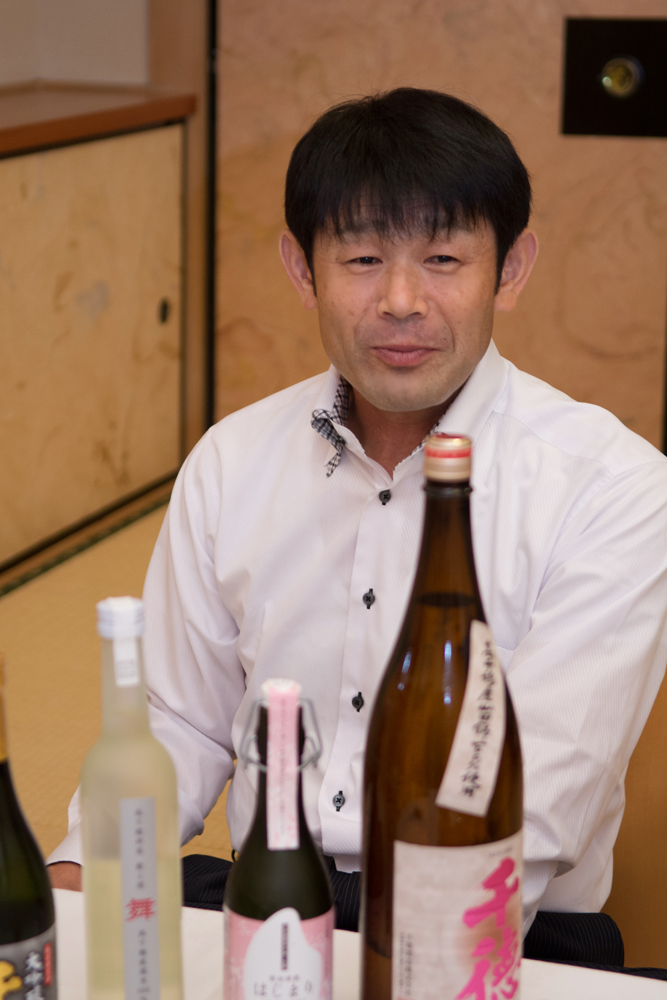
Mr. Kadota (Sentoku Sake Brewery)
Even today, 90% of the market share is held by Nobeoka and other areas in northern Miyazaki Prefecture. The former president of the company promoted the activity of "Toast with Sentoku! and since then, Sentoku has been used for toasts at various events in the city. Sentoku Brewery, which has been nurtured by the local community, would not exist without the citizens of Nobeoka.
Furthermore, the reason for sticking to this region is that it has good water. This is common to all three companies, but good water, which is the key element in production, is a blessing of the land. The water is so good that we sell 4 liters of it for 100 yen. It can be said that the three companies are possible only because of good water.
Mr. Mizue (Sato Shochu)
What is it that makes us obsessed with ......? We are now haunted by the idea of tradition. We have to understand the meaning of tradition. In order to keep it alive, I think it is important to incorporate the natural world unique to Nobeoka into our daily lives as "living wisdom. As Mr. Kadota mentioned, water, in particular, is of such high quality and abundance that it is known as "Suigo Nobeoka. Knowing the characteristics of water well will improve the quality of shochu. So even though we are grateful for the bounty of the land, we cannot imagine leaving it.
On the other hand, I also feel a sense of mission to stubbornly pass on the unique Japanese and Nobeoka traditions that have been preserved up to this point. If it is a company that I started by myself, I feel that it is inevitable that it will fall down in the process, but more than that, I have a responsibility and a mission to take over this company and tradition. Its position as a district warehouse and a regional warehouse is not the property of a single company, but must be nurtured as a regional industry. It would be a "commitment" to firmly pass on such "depth" to future generations.
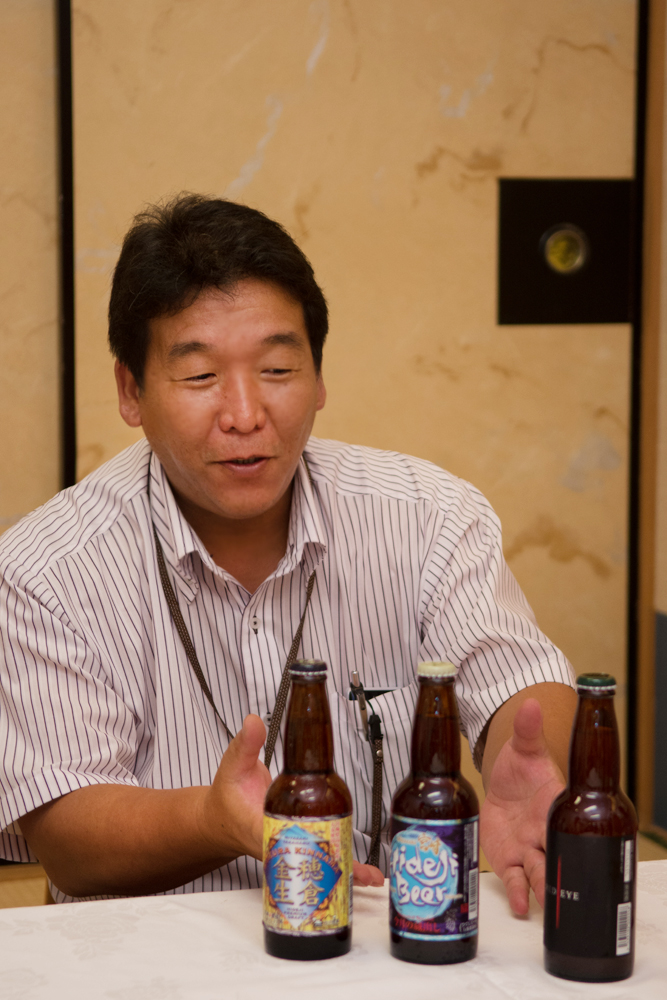
Mr. Nagano (Hideoji Beer)
My role is to revitalize the company I inherited. The previous founder loved "Mukabaki". It must have been a man's romance to want to make local beer here at any cost. ...... At the time, I didn't understand it, but gradually, as I worked in the area, I became obsessed with the natural charm of "Mukabaki," and I found myself thinking that this job was possible because of that environment deep in the mountains.
Now, I think the thought of "This environment is what makes it possible for us to make Hideoji beer. I think the thought, "It absolutely has to be here," has been carried over into the beer. That's what the entire staff thinks.
It is true that unlike the environment in Europe, the home of microbrewing, Japan is said to be unsuitable for microbrewing, but the passion of the staff for the land will raise awareness and foster an environment that produces delicious beer, which in turn will create a story.
--Do you have any thoughts on passing this culture on to the next generation?
Mr. Mizue (Sato Shochu)
We need to grow as a company, so we need to develop as entrepreneurs. Not only shochu, but also sake and beer, have amazing energy from the activities of "microorganisms," which can be called the miracle of the earth. It is a wonder that our lives exist because of their activities.
There is a saying, "Love is the key to success," and I would like to produce something in this area with shochu. I believe that the 21st century will be an era in which we will have to think about how to make the best use of microorganisms and the wisdom of our ancestors, and that the techniques that make full use of microorganisms, such as "fermentation" and "maturation," will play a central role. That is why I am looking forward to taking on various challenges, and I would be happy if I could spend time sharing this excitement with the next generation.
Mr. Nagano (Hideoji Beer)
Since I decided three years ago to continue the business as president, and of course even before that, I have a special attachment to beer. But more than that, I feel the importance of "people's thoughts" and "people's connections" through my work.
At times, there were moments when the company was on the brink of survival. ...... At such times, while witnessing the unity of the employees, and while I was among them, I could not come to the thought of "giving up brewing beer," although it was painful. ...... It made me deeply feel how important "human connections" are. Now I see beer as a means of connecting people with each other. Both the employees and myself are creating the soil to grow as human beings while engaging in community development and town-building activities through beer. I enjoy the fact that beer allows me to expand my connections with people.
Mr. Kadota (Sentoku Sake Brewery)
I just replaced the previous president last November. Now, as president, I am in a position of responsibility not only in management, but also as the original "Toji" (master brewer), carrying on the weight of the 110-year history of the company and the wishes of my predecessors. I cannot let it end with my generation. We are the only brewery in Miyazaki Prefecture that specializes in making only sake, so we cannot afford to lose it. Sentoku Sake Brewery still has a lot of room to grow, especially in Nobeoka, and we have more opportunities to ride the current sake boom and promote our products throughout Japan and overseas. In order to do so, we must continue to pursue sake that is "delicious! We must continue to search for and produce sake that is "good! We must make sake honestly and seriously with the ingredients. I am looking forward to the sake being passed on to new people not only in Japan, but around the world.
Trilogy #2 Theme: Product Development and Initiatives (Tasting)
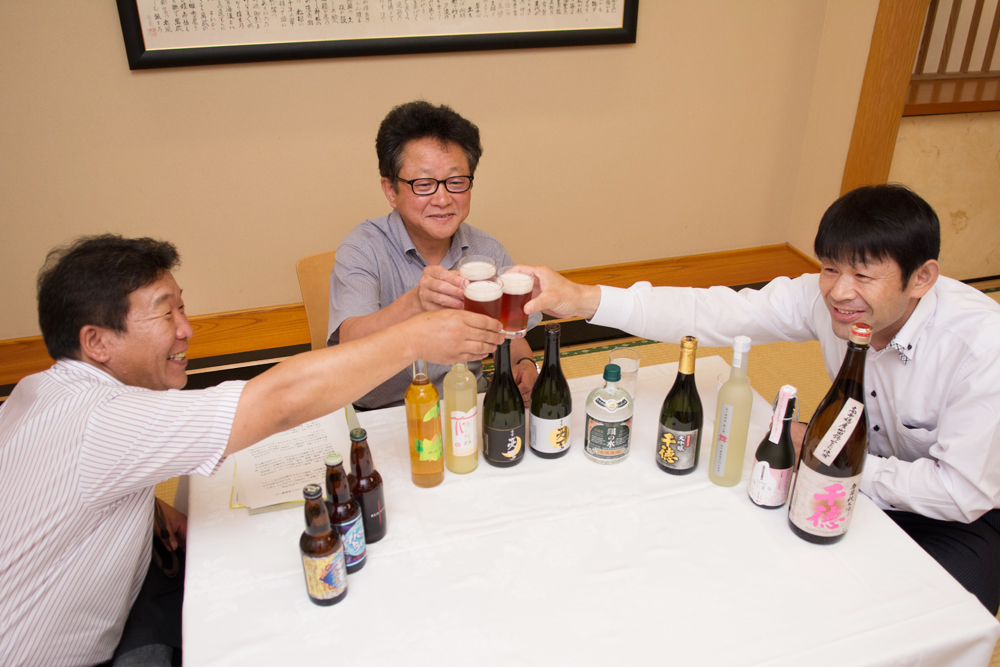
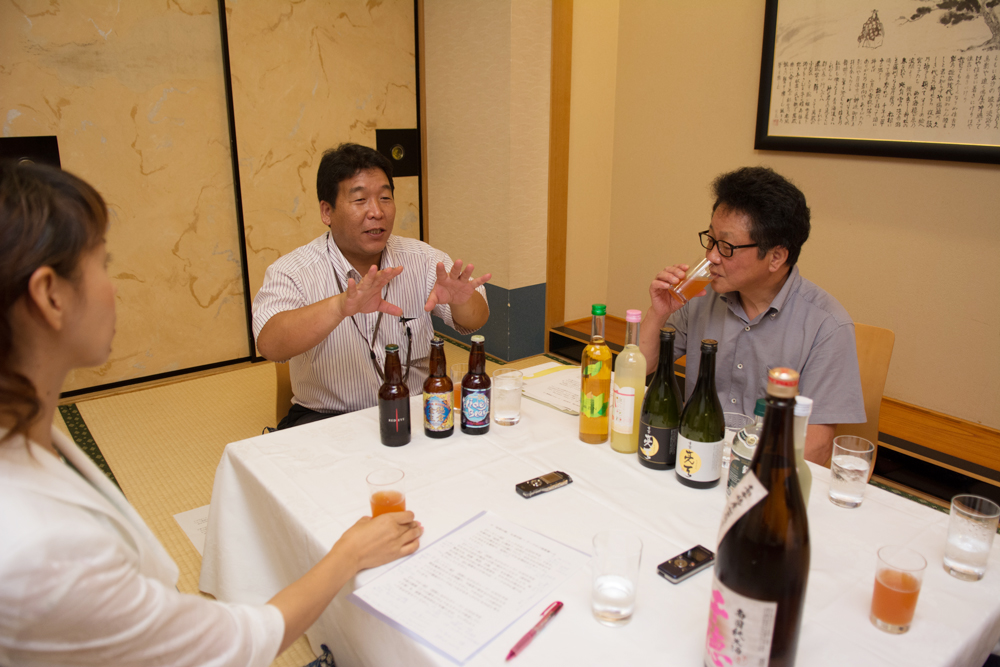
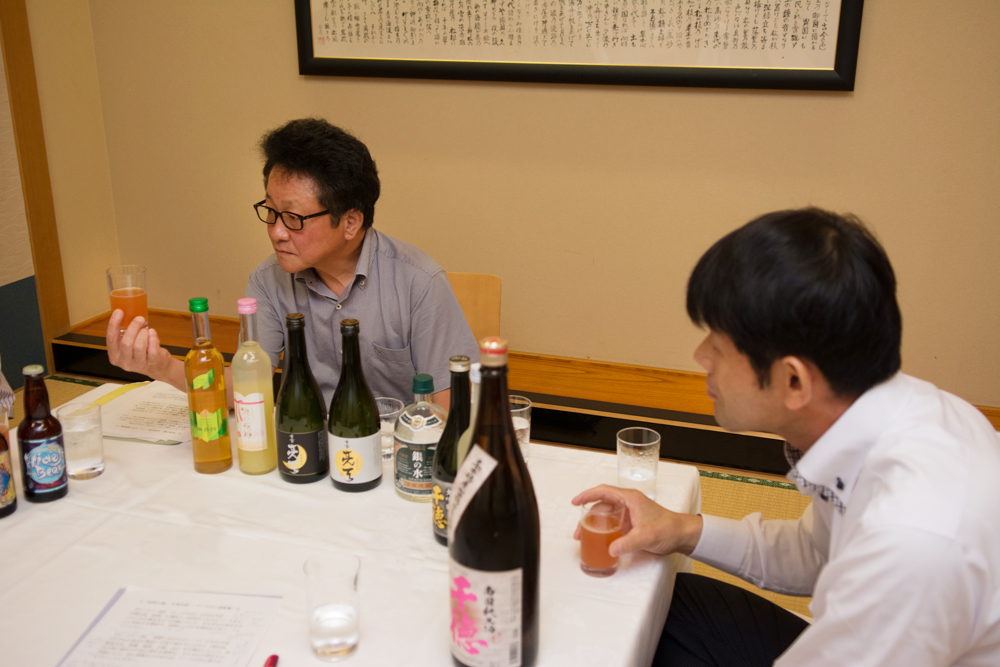
(One representative product from each company and one product that is the focus of new initiatives, etc., were selected for tasting and discussing their characteristics and impressions.)
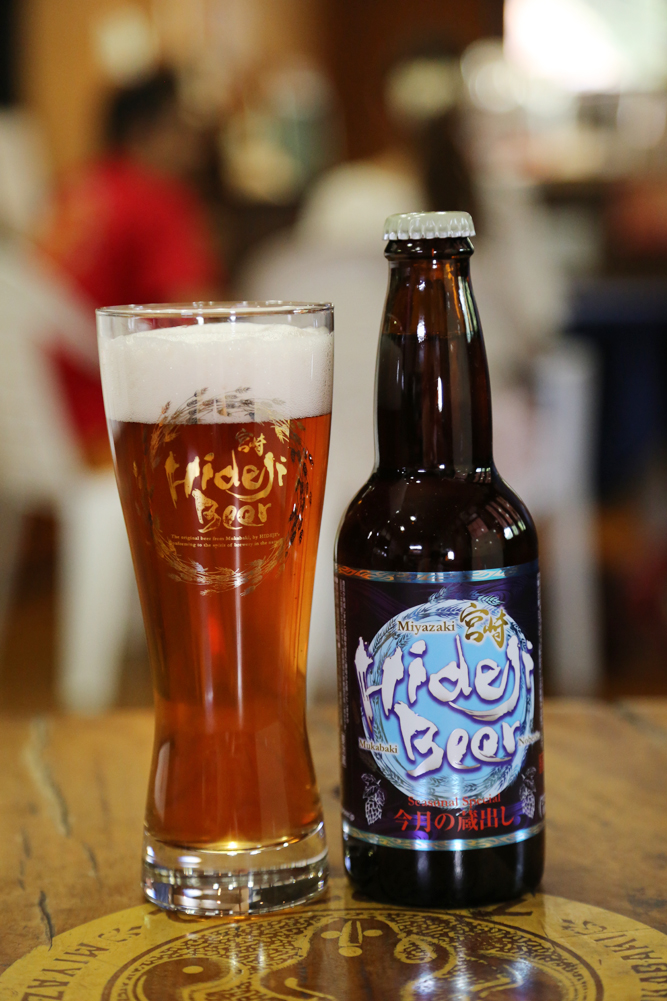
This month's warehouse release (Miyazaki Hideji Beer Co., Ltd.)
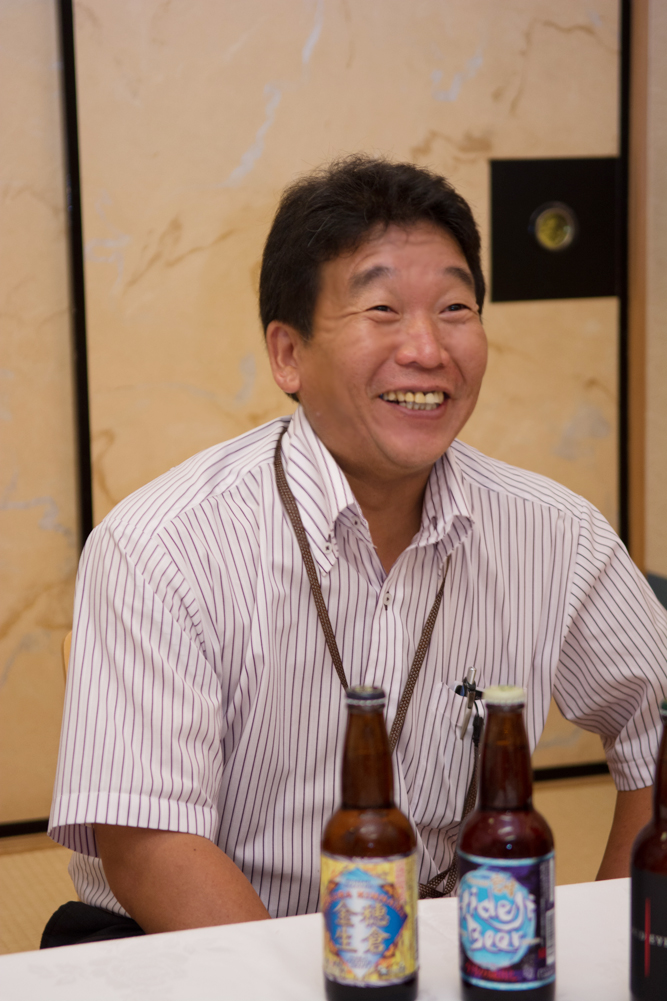
Mr. Mizue (Sato Shochu)
It's like apricot color, not Bordeaux.
Mr. Nagano (Hideoji Beer)
The front label is not changed each month, but the contents are changed; in July (at the time of the interview), black rice (ancient rice) produced by an agricultural corporation in Miyazaki was used, giving it this coloring. The lager type beer has a crisp, refreshing taste. Last year, we made a higher fermentation temperature type with the same ingredients, but it had the color of the main ingredient, malt "pale ale". This time, we made a lager type to directly show the color of the ancient rice.
Mr. Kadota (Sentoku Sake Brewery)
The use of rice, the same ingredient used for sake, is interesting. The purple-ish color of the ancient rice itself comes out.
Mr. Mizue (Sato Shochu)
The subtle sweetness of the aftertaste is feminine.
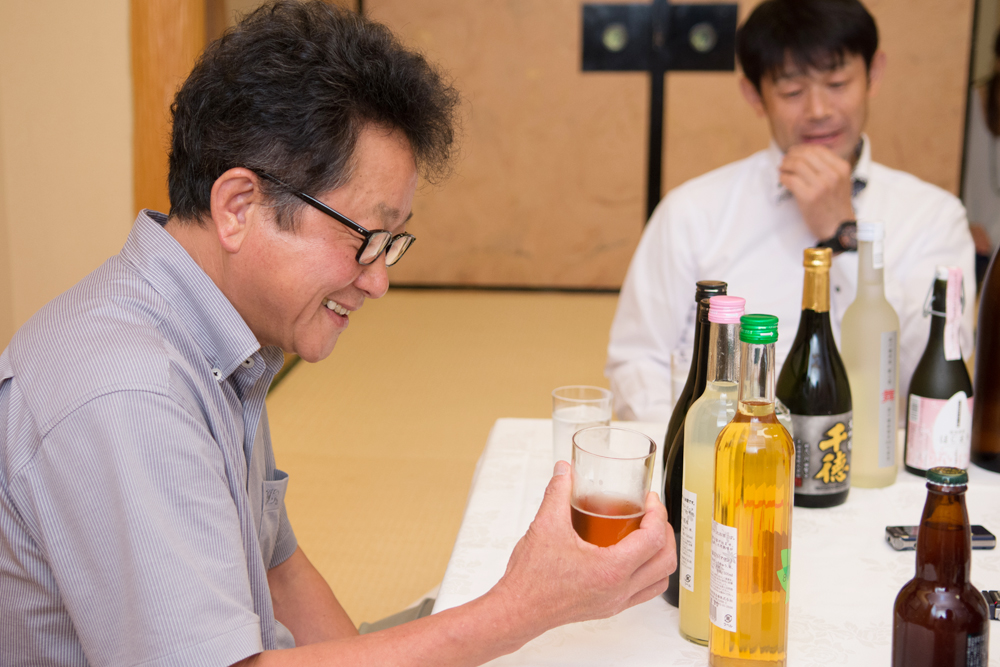
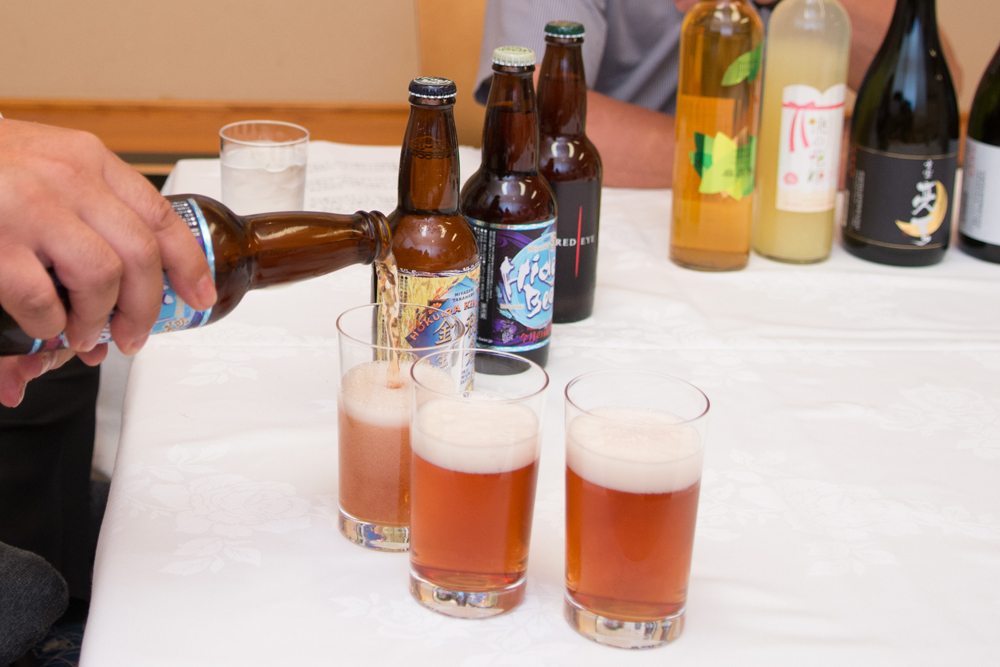
Mr. Nagano (Hideoji Beer)
Japanese who are accustomed to drinking beer made by major breweries may have a strong image that beer is "refreshing" and to be gulped down in gulps. However, the process of enjoying and savoring local beer slowly is important. ...... The process of "enjoying and savoring" is important.
Mr. Mizue (Sato Shochu)
You are right! National brands leave a pale impression that only leaves a gustatory impression and doesn't leave a lasting impression. But this beer can talk about taste. You can enjoy the aftertaste. It has a wide target.
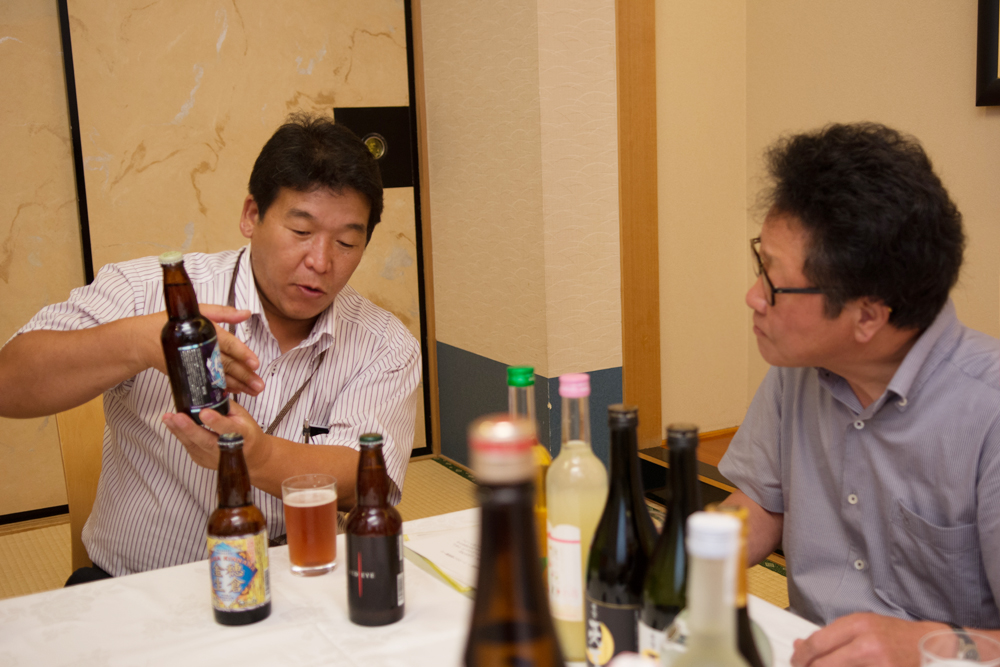
Mr. Nagano (Hideoji Beer)
Even if this beer is slightly lukewarm, the aroma is enhanced and can be enjoyed in a new way. By the way, "lager type" is a "refreshing beer" that should be cooled down to a crisp. On the other hand, the ale type is a beer to enjoy the taste of barley and hops. All beers made in Japan are only available in the "Pilsner" type, and many Japanese people think, "This is beer! Many Japanese people are under the impression that "this is what beer is all about!
However, beer also takes different forms in different countries and climates. In warmer climates, lagers are preferred chilled, while in Europe, where it is cold year-round, beers are enjoyed at room temperature or warmed up, and long-aged, robust beers are available. The original way to enjoy beer is to taste a wide variety of beers.
Mr. Mizue (Sato Shochu)
What is important for us is to feed our palates. To do so, we need to taste the flavors. I feel that local beers offer a series of such experiences.
Mr. Kadota (Sentoku Sake Brewery)
I drank Hideoji beer when it was founded, and I think it is amazing that it has "evolved" into a completely different form now, in a very good way. The initial cloying taste is gone, and the aroma, taste, throatiness, and aftertaste are all clear. The taste does not interfere with food.
Mr. Nagano (Hideoji Beer)
Hideshi Beer aims to create beers that can be drunk in a variety of ways to suit different occasions, such as as a mid-meal drink, an aperitif, a relaxing time before going to sleep, or a dessert beer. The brewery makes nine kinds of beer at any given time, and a new "This Month's Kuradashi" is brewed every month. Some people say, "Wouldn't it be more economical to squeeze more efficiently? However, as a young company, they believe it is time to challenge and propose new things, so they continue to use this style, even though it is time-consuming and labor-intensive.
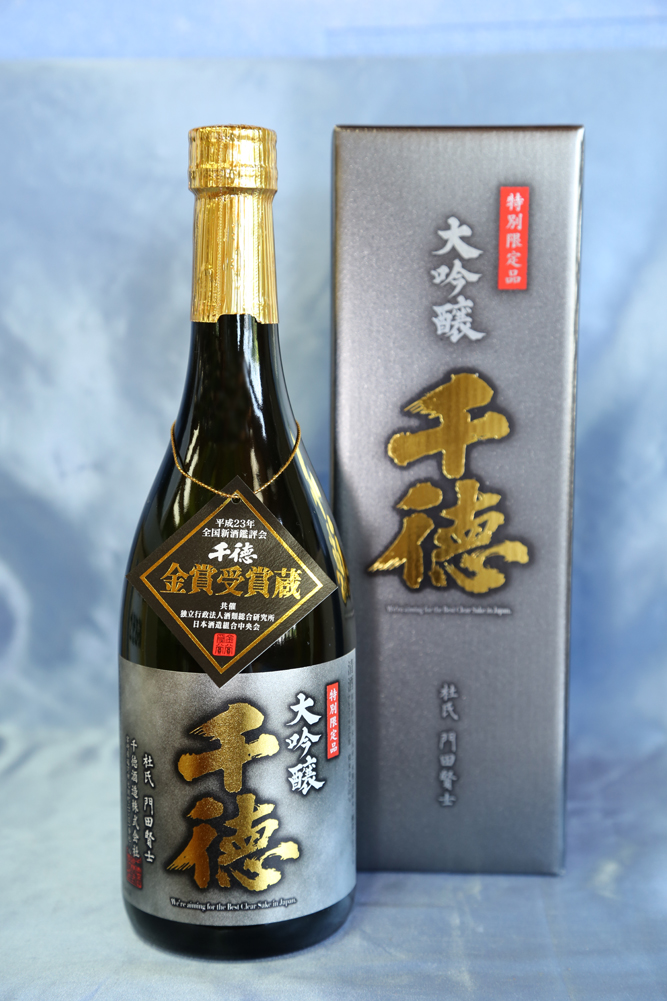
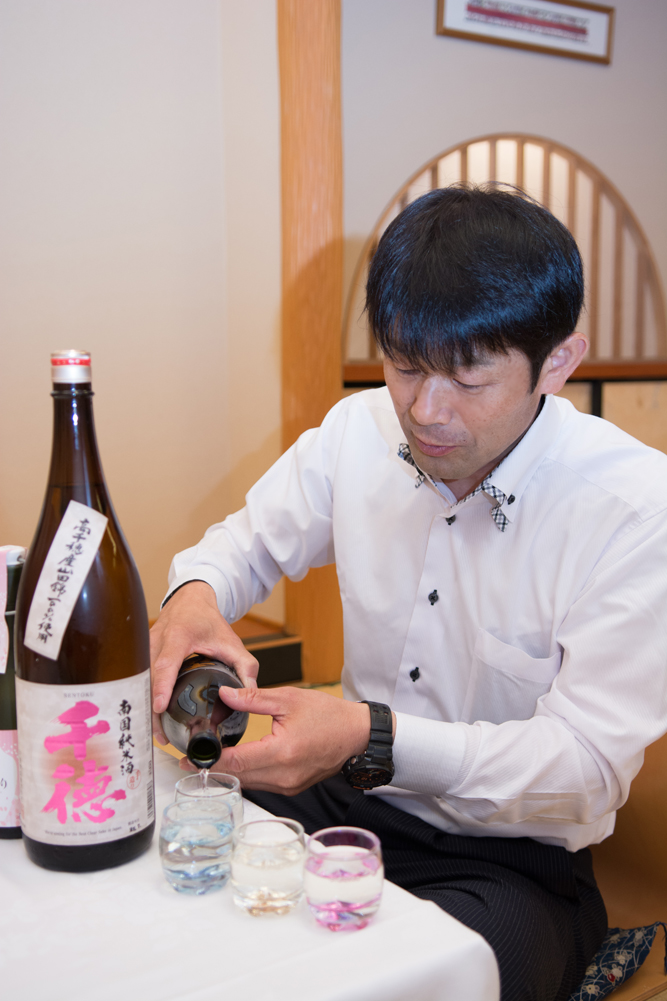
Daiginjo (Sentoku Shuzo Co., Ltd.)
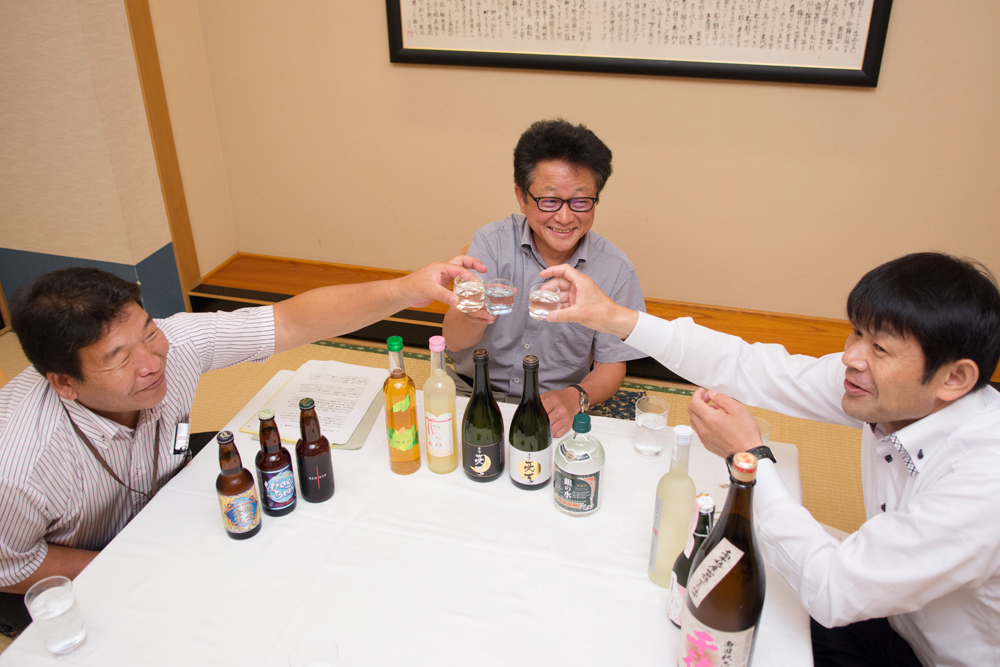
Mr. Mizue (Sato Shochu)
Highly aromatic!
Mr. Nagano (Hideoji Beer)
Is it called "ginjo ko"?
Mr. Kadota (Sentoku Sake Brewery)
Limited edition of only 1,000 bottles. This is a product that I put a lot of energy into as a toji (master brewer). The rice used to make this luxurious sake is shaved down to 601 TP3T and only the core of the rice is used. It has an alcohol content of 17-18%.
Mr. Nagano (Hideoji Beer)
I have never actually seen daiginjo brewing at Sentoku Shuzo's brewery, but just by looking at the materials and watching other breweries, I can tell that it is a very demanding world. It is truly a "man's work.
Mr. Kadota (Sentoku Sake Brewery)
Daiginjo is prepared entirely by hand. The process of straining is done the old-fashioned way, without the use of machines. Basically, seven people are involved in the brewing process. In the middle of winter, the brewing process often starts at 5:00 in the morning.
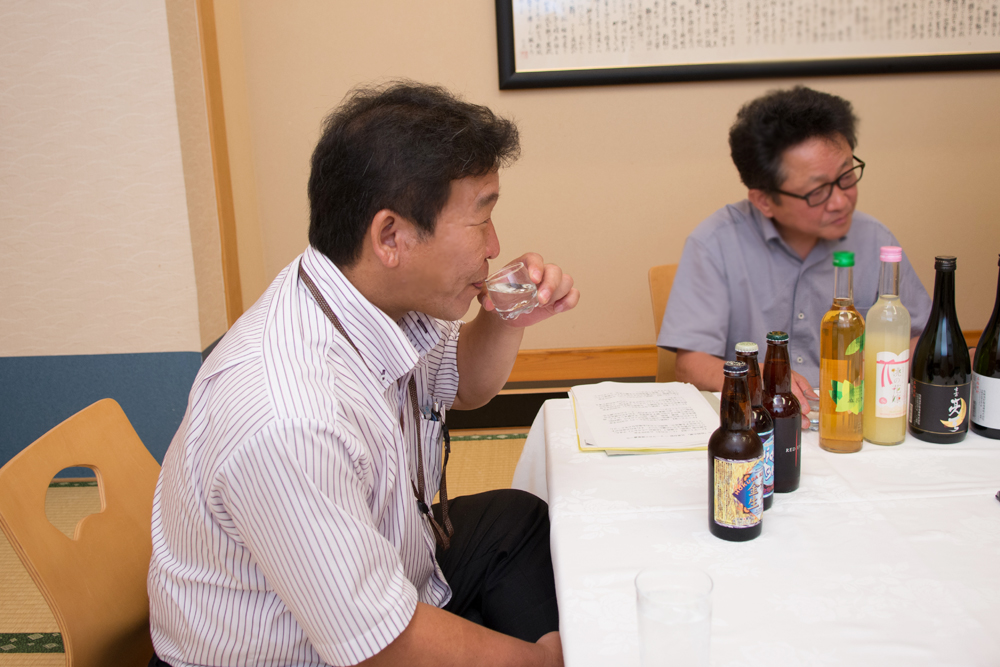
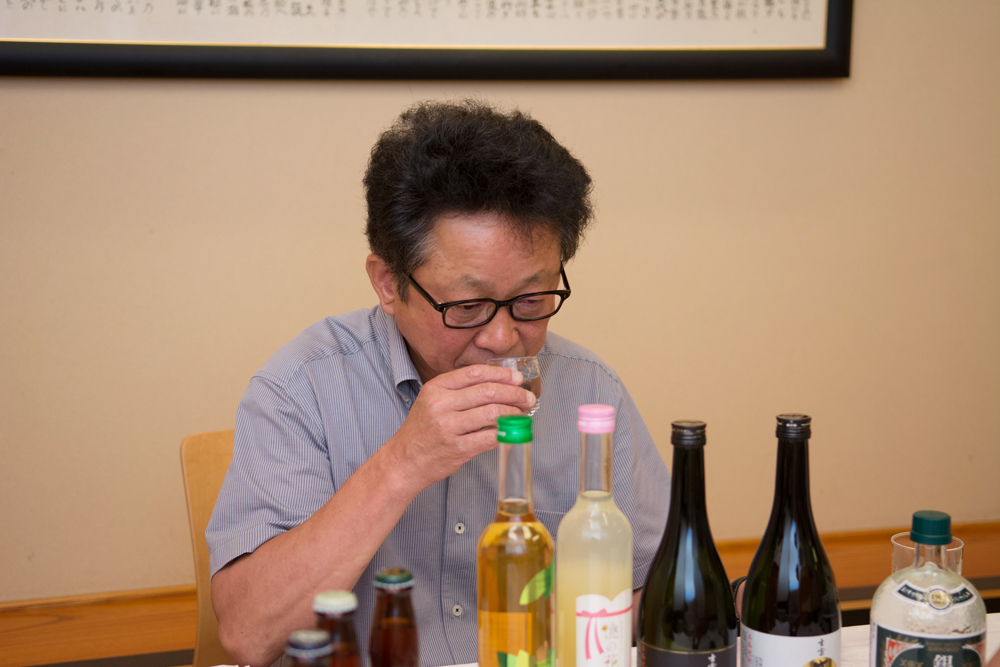
Mr. Mizue (Sato Shochu)
Because I am a shochu maker, I feel that the image of sake is even more "harsh". This is what gives the flavor its softness. I am smitten with the very idea that "this is daiginjo". The brewer is responsible for the ingredients and the producers of the sake, as he or she has to cut down on the amount of raw materials. This is the essence of sake. When I drink it with this in mind, I am even more impressed.
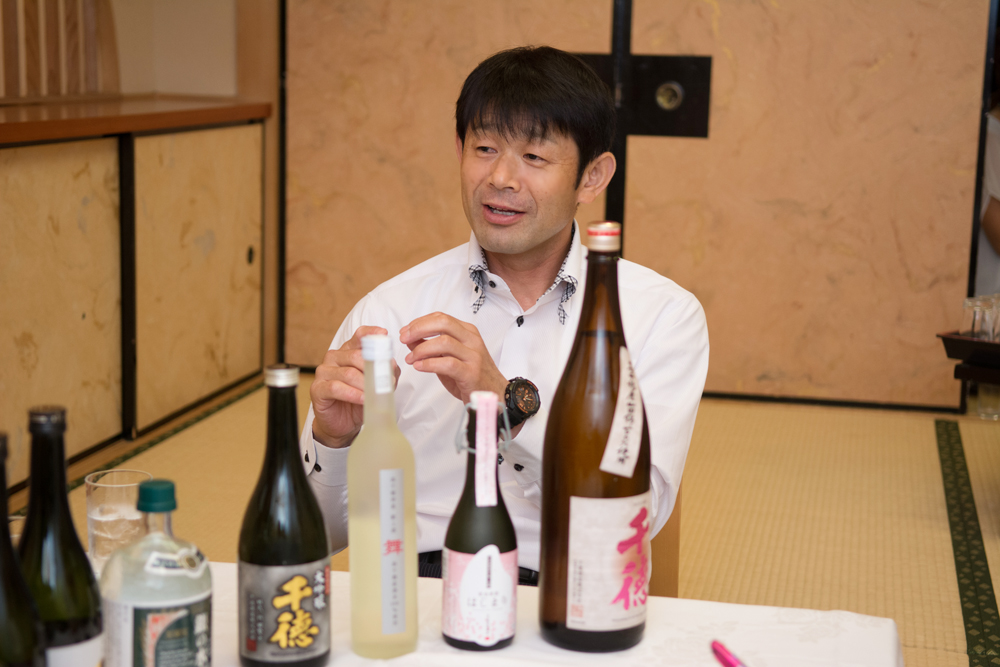 Mr. Kadota (Sentoku Sake Brewery)
As a creator, I am happy to hear that. It is a feeling like being saved. The more we work, the wilder our feelings become, but I believe that it is precisely because we take our work seriously with such rough and stormy feelings that we are able to express this soft and slightly sweet flavor.
Mr. Mizue (Sato Shochu)
Consumers can only see the products after they are made and on store shelves, so in many cases, the only information they have to judge the products is the common sight they see at liquor stores and word of mouth. Of course, sometimes there are tastings, etc. ....... However, when you drink sake while imagining the story of how craftspeople have suffered in their respective environments to create such commonplace products, you will be deeply moved by the taste of the sake. This is what it means to be in touch with culture.
Because various "cultures" have been given so much importance in Japanese tradition, a "tradition" was born to pass them on to future generations. The source of this culture is the "handiwork" that people have learned from nature. In these days of mechanization, the sake industry is probably the one that has placed the greatest emphasis on "handiwork. Sake is brewed by hand with all five senses, including taste and smell, as well as the six senses. In our world, sake is particularly time-consuming. ......
Mr. Nagano (Hideoji Beer)
Beer can be made year-round. However, both shochu and sake must be made in accordance with the harvest of raw materials. This is a difficult task because we have only one chance to make the raw materials, and we must put our heart and soul into it.
Mr. Kadota (Sentoku Sake Brewery)
The color is golden. Sake is supposed to be clear, but most sake is made by adding carbon to remove the color. We don't use carbon because it removes both flavor and aroma. That is the style of Sentoku's sake.
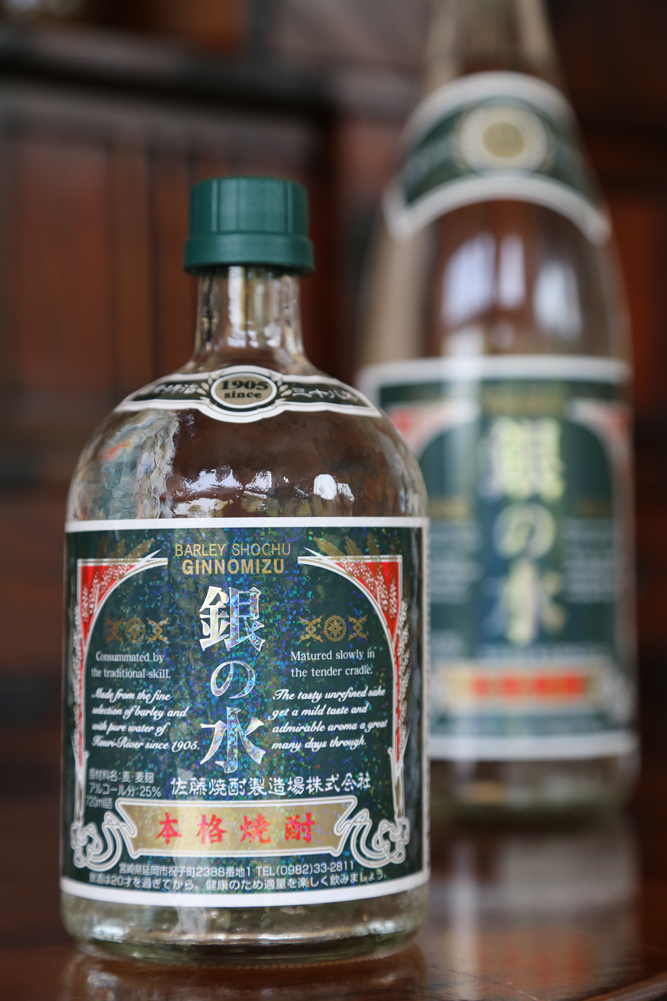
Gin-no-Mizu (Sato Shochu Seizosho Co., Ltd.)
Mr. Mizue (Sato Shochu)
This shochu was made in 1997 and was a new challenge for me when I established my own company in 1998.
The origin of the name "silver water" can be explained by the fact that right in front of our brewery is the Shukuko River, which flows from Shukuko Valley, and the water is so beautiful that we never get tired of looking at it every day. The shimmering water is like silver and can be seen at ....... Such scenery inspired the name of the product.
In Kyushu, "imo-jochu" (sweetpotato shochu) has gained ground as a regular drink for evening and in-meal consumption. However, we have focused our efforts on "barley. The world's three major distilled liquors are made from barley. That is why we decided to make the world's three major distilled liquors our goal. In Asia, there is a "koji culture," and we were convinced that the Japanese culture would surely become the third distilled spirit, and that barley would be the future sake of the world.
The water that is important for sake brewing is deep seawater from the Shukushigawa River system, which spreads out before our eyes, and is unusually clear and soft in Miyazaki Prefecture, where water with high hardness is common. The water of the Shukushigawa River flowing through the deep mountains and huge granite rocks of the Shukushigawa Valley is indispensable as the "water of life" that nurtures the magnificent nature. Research has revealed that this soft deep water is suitable for brewing, and it is now used as raw material for our products.
I think the two of you, as well as others, have an image of what you are aiming for, something that enters the body as smoothly as water does, or something similar to that.
It is true that water has a great impact on production, but in pursuit of the ideal form, it is not enough to be particular about water and raw barley; the air and environment are also important. This is because the microorganisms that do the most work in brewing also breathe. Now, how to intertwine this water, raw materials, microorganisms, and everything else involved to produce ....... You can't do it with just the wheat you harvested as raw material. We believe that it is our role to produce the finished product and communicate it to the public.
It is a shochu that produces the taste of the shining river and beautiful water in front of you, and has a clean aftertaste like daiginjo, which is loved by people in eastern Japan who grew up in the sake culture and are imbued with memories of its flavor.
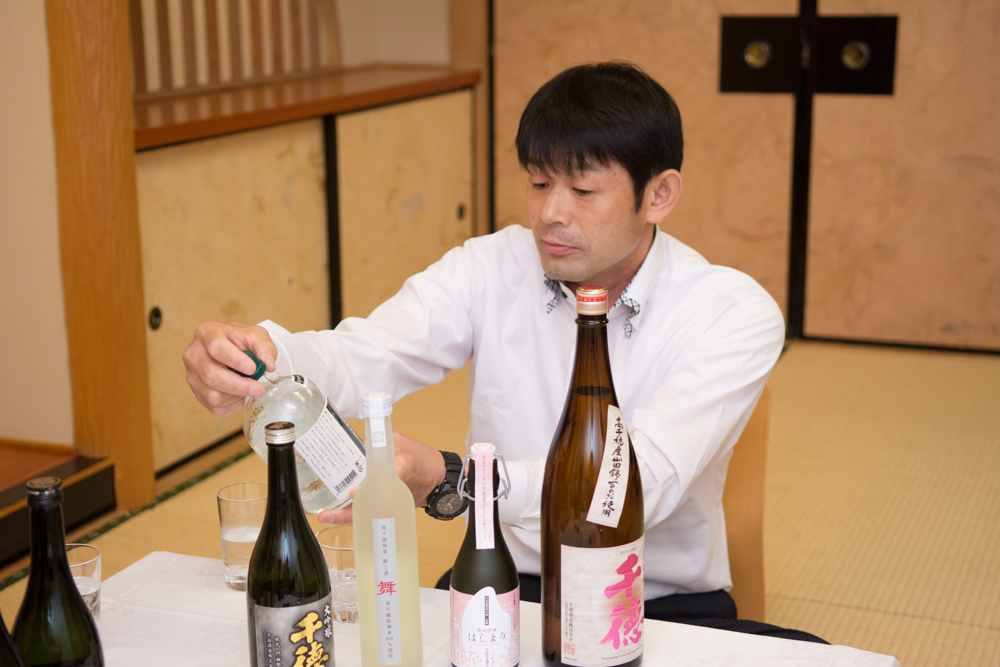
Mr. Nagano (Hideoji Beer)
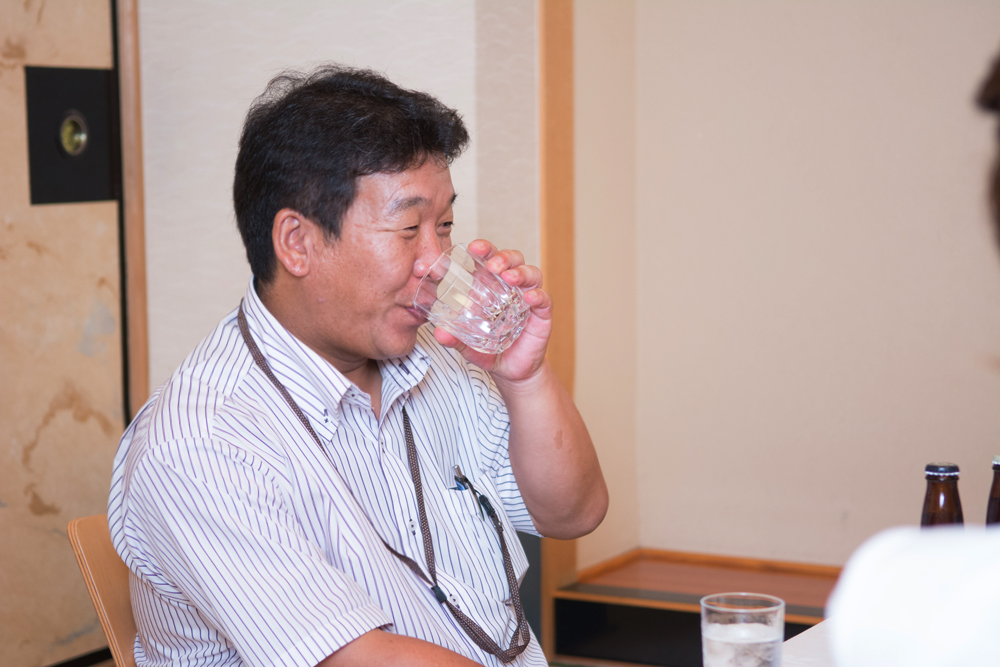
Shochu is usually drunk on the rocks or with water, and I have never had the opportunity to drink it "raw". Drinking it as it is, you can directly feel the flavor of the ingredients. Each sip is deep, yet crisp and leaves no aftertaste.
Mr. Kadota (Sentoku Sake Brewery)
As a creator as well, I only challenge myself every day to make people feel "good". My daily work is always a tough challenge.
Mr. Mizue (Sato Shochu)
We want to create a taste that will be familiar not only to older people who are familiar with shochu, beer, and sake, but also to young people who will be responsible for the future. Also, since we brew our shochu with an awareness of tradition, we want our shochu to be able to create a space where people can enjoy drinking it together while thinking about Nobeoka's history and culture. We also want our shochu to soothe the soul and nourish the spirit of innocence (purity, childlike spirit). It should be an item that allows people to expose their honesty through alcohol, to let out unpleasant and painful things, to make their hearts healthy, and then to find personal growth. Above all, it is possible to come up with new and innovative ideas that would not have occurred to you in a space where there is no alcohol. The charm of alcohol is that it can create such a space. Or perhaps it is its magical power. The alcoholic beverage industry is essential to people's daily lives.
Mr. Nagano (Hideoji Beer)
The world of distillation is a mysterious technology that transcends human endeavors, as Mr. Chitoku must have sensed. Although we have our own "brewing" process, we cannot imagine the technology of once gassing the ingredients. One wonders how the flavor of the ingredients is brought out in this process.
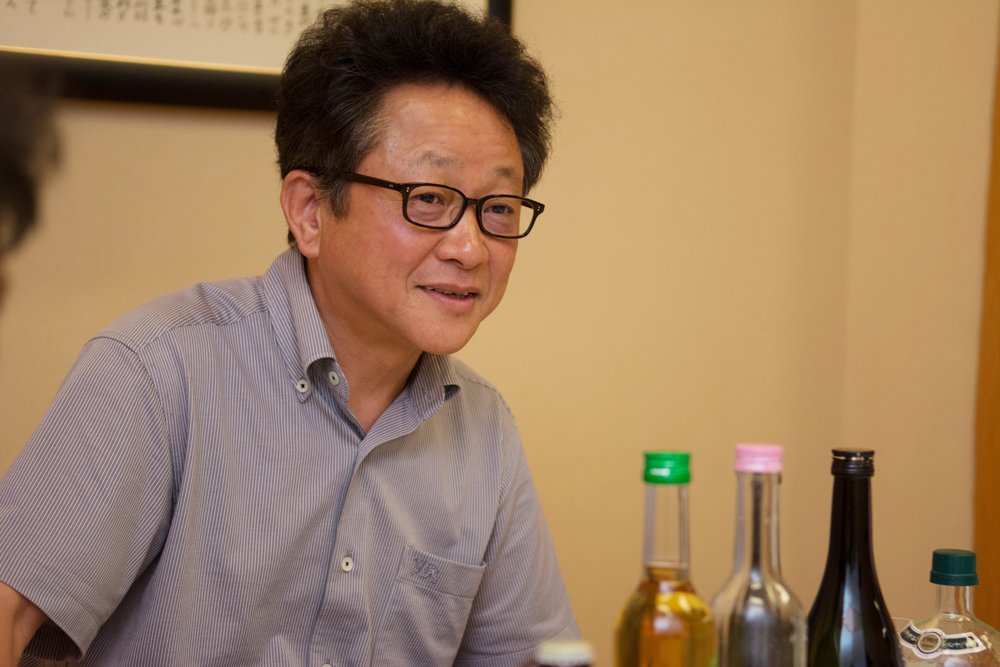 Mr. Mizue (Sato Shochu)
This is something that is arrived at through trial and error over and over again. But in the end, I feel as if I am forcing people to drink what I like. I continue to make wine for myself, and I do not bend my own style. This is important as a winemaker.
Mr. Nagano (Hideoji Beer)
Come to think of it, I was so happy to see "silver water" in a high-end restaurant in Singapore that I took a picture of it lol.
Mr. Mizue (Sato Shochu)
We would like to convey Japan's unique "fermentation and koji culture" in various settings.
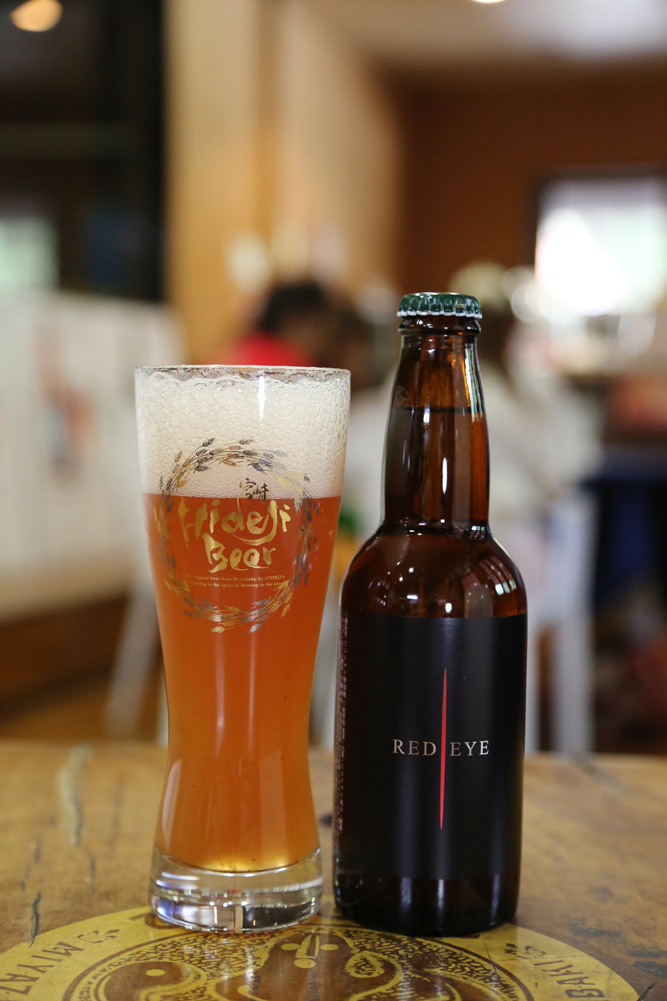
Red Eye (Miyazaki Hideji Beer Co., Ltd.)
Mr. Mizue (Sato Shochu)
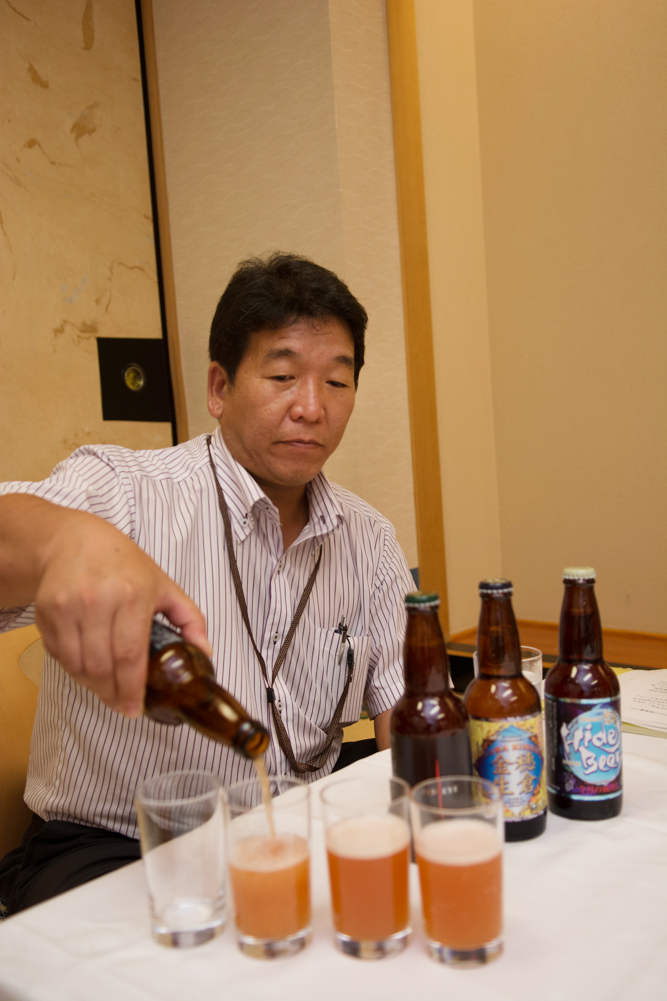
A beer cocktail made with tomatoes from the town of Miyakono. A red eye that is bottled but still tastes great.
Mr. Nagano (Hideoji Beer)
Typically, the Red Eye cocktail is made by mixing half beer and half tomato juice in a glass. We really wanted to make it in a tank. However, the actual process of making it took a lot of time and effort. The kumquat and hyuganatsu flavored beers that we had been working on for some time were able to convert the sugar from the fruit into alcohol during the temporary fermentation process, but when tomatoes were mixed in from the beginning, the fermentation process did not mature well. As a result, the beer was aged on its own during the primary fermentation to develop the flavor of the beer itself, and the tomatoes were mixed in during the secondary fermentation aging to create a beer cocktail.
However, when we got to that point, we ran into a further problem. The specific gravity of the beer and tomatoes was too different, and the tomato component would settle out in the tank. ...... So I periodically blew in carbon dioxide gas from below to mix and age the beer. This process is especially important during the final bottling. The beer and tomatoes must be evenly filled, so the beer and tomatoes are only bottled when they are thoroughly mixed. Tomatoes settle in the beer bottle while it is on the shelf, so before opening the bottle, the beer is "slowly" turned upside down to mix the beer and drink it. Since beer is not usually drunk by stirring the contents, this is another new way to drink beer.
Mr. Mizue (Sato Shochu)
Hideji Beer's product development style and approach, when considered comprehensively, is like the fashion industry, which pioneers and offers new designs while incorporating new genres. I sense a dynamic and very active atmosphere. Initiatives with an eye on the younger generation?
Mr. Nagano (Hideoji Beer)
We are thinking about that too. First, speaking of the beer industry, the younger generation is no longer drinking beer. Just a short time ago, they would order beer along with the phrase "draft for now," but in recent years, men in their twenties have stopped drinking beer and are ordering sour beers.
However, amidst all this, "microbreweries" are gradually experiencing a boom. Women are supporting it. Women have the ability to take in new things, culture, and gourmet food from a different perspective than men, and skillfully incorporate them into their own lives as enjoyment. In addition, women like to drink flavored beers as well as orthodox styles, and as if in response to their needs, microbreweries are beginning to expand, creating a "microbrew culture unique to Japan" that has never existed anywhere else in the world. At a time when a microbrewery culture is emerging, I believe we must take advantage of Miyazaki's treasure trove of food ingredients, especially its excellent fruit farming.
As for Hideji Beer, the four items that form the foundation will remain the same, but we intend to expand the world of local beers with flavors. Maybe 5 or 10 years from now, flavored beers will no longer be favored, or maybe they will be brewing a different style of beer ....... However, flavored beer has a role to play, and it serves as an opportunity to broaden the consumer base so that even "beer haters" who say they can't carbonate or don't like bitterness can drink it. From there, we are trying to get people to learn how to enjoy beer, and pull them back to the basics of beer.
Mr. Mizue (Sato Shochu)
I was surprised. Tomatoes were an option as an "ingredient to add"? and ....... I was made aware of ....... I wondered if there is another license for shochu because it is different from shochu. I wondered about that. ...... I don't think any other microbrewery has such a wide variety.
Mr. Kadota (Sentoku Sake Brewery)
It dispels the stereotypes of "raw materials have to be this way" and the conflict of "I want to use this raw material but it's hard to use.
Mr. Mizue (Sato Shochu)
However, while "varied local beers" sounds good, I think, because I am a business owner, it would never be economical. However, I am surprised by the move to create something new as a business. The fact that they are using mini-tomatoes from Miyazaki Prefecture's Miyakono Town is a nice touch. The local point, which is not well known to the public, can be transmitted to a different genre beyond a few barriers. There are many advantages for the farmers. They are creating a good opportunity.
Mr. Nagano (Hideoji Beer)
Hideshi Beer is involved in an activity called the "Miyazaki Noen Project. The project is a collaboration between Hideshi Beer and Miyazaki Prefecture, using local products from various regions. The company is also working together with Hideoji Beer to promote the local ingredients and the region through the channels they have developed. The flavored beers they have developed so far, made from Hyuga's hebes, Nichinan's oranges, black rice, and red rice, are a part of these activities. Rather than boasting, "Hideshi Beer has succeeded in brewing this beer using these ingredients," we believe that what we should do, and what is necessary, is to market the region as well and help revitalize the region.
Mr. Kadota (Sentoku Sake Brewery)
I sympathize with you very much. We are with them. We do not want to boast about using raw materials, but rather we want to revitalize the farmers and the region. In the same way, the sake we make tastes ideal because the farmers grow wonderful crops.
Mr. Nagano (Hideoji Beer)
There is an Omi merchant's saying, "Sanpo-yoshi = good for the seller, good for the world, and good for the buyer. However, I consider it to be even more "four-way good. I have added "producer goodness" to the above, and my theme is to create work that makes the producers smile and laugh. We have a role to play in supporting Miyazaki's agriculture. With this in mind, all employees are working together on this project.
Mr. Mizue (Sato Shochu)
Our company is involved in the same activities as the others, from agriculture to consumers as a single flow. I think this is really important. I wonder how we can leave our mark on the times in which we lived through activities that are true to our beliefs. ...... Regardless of age, I believe that we are in the midst of our youth. It is truly rewarding and a lot of fun.
Incidentally, I once saw a scene in Malaysia where a small bottled beer called Corona, corked with a cork, was uncorked by popping the cork like champagne. I remember how beautiful the bubbles were.
Mr. Nagano (Hideoji Beer)
It is difficult ....... It is hard to change the style because of the filling machine line. There is a way to fill them by hand, but that would not keep up with production. But eventually I would like to change the shape of the bottles, change the caps, and play around with the bottles. Right now, the fact that we can only use this bottle and this cap is stressful.
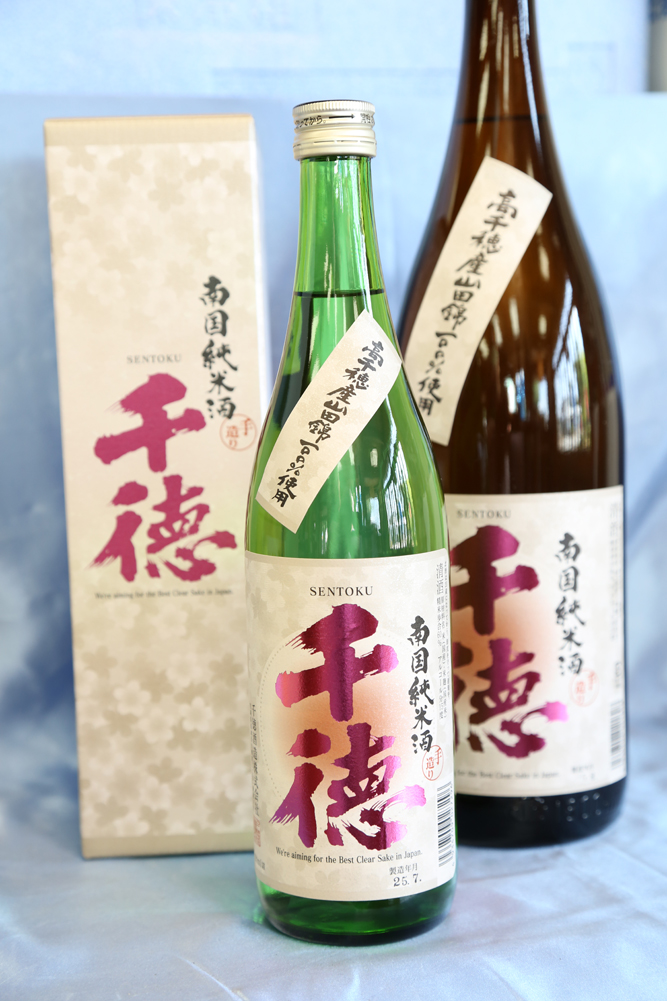
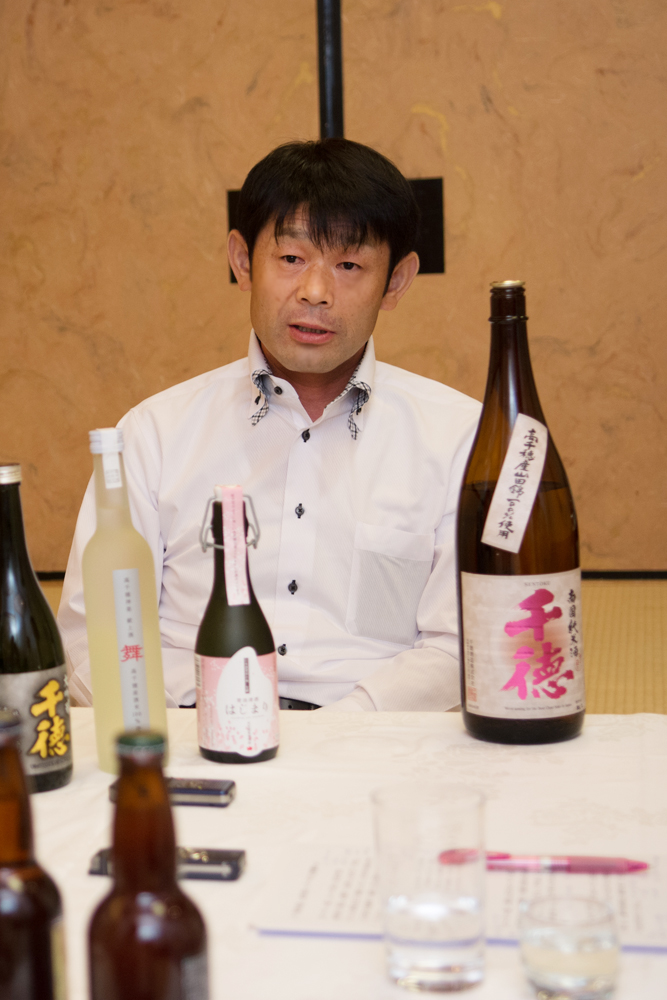
Junmai Sake Sentoku (Sentoku Shuzo Co., Ltd.)
Mr. Nagano (Hideoji Beer)
I love junmai sake. The subtle golden color is beautiful.
Mr. Kadota (Sentoku Sake Brewery)
It was created to be a perfect food wine with a casual taste so that it does not interfere with the meal.
Mr. Nagano (Hideoji Beer)
I hear that sake lovers are particular about junmai sake. It seems that as one moves toward the center of the city or further north, they are particularly particular about junmai sake.
Mr. Kadota (Sentoku Sake Brewery)
Sentoku uses "Yamadanishiki" from Takachiho as its raw material. The sweetness of the rice is emphasized and the rice is not overly polished.
Mr. Mizue (Sato Shochu)
When I make shochu, I polish it with less than 3 tons of 701Tp. I always think it is a waste while polishing (laughs). Why do you use rice from Takachiho?
Mr. Kadota (Sentoku Sake Brewery)
The previous master brewer was from Hyogo and brought with him the Yamadanishiki rice for sake brewing that he had used there during his Hyogo days. He searched for a region in Miyazaki Prefecture with a suitable temperature difference for rice production and chose Takachiho. At first, they used rice from Kobayashi City and other areas, but the Yamada-Nishiki grown in Takachiho was the best choice. Currently, there are 34 Yamada-Nishiki growers in Takachiho.
Mr. Nagano (Hideoji Beer)
What is the difference between sweet and dry?
Mr. Kadota (Sentoku Sake Brewery)
The difference between sweet and spicy is determined by the fermentation time. If it becomes too spicy, the umami flavor will fly away, so I try to make it a little less spicy. However, of course, there are those who prefer a crisp, dry taste, so as Mr. Mizue mentioned earlier, I let people drink it the way they like it. Of course, I have my own particular taste, but even after many years, I am still troubled by the taste.
Sake has a strong image of the light, dry flavor produced in the Tohoku region, and some have requested that it be made to taste like that. However, I think "Nobeoka can produce this taste because it is in Nobeoka. You can never get this flavor in the Tohoku region.
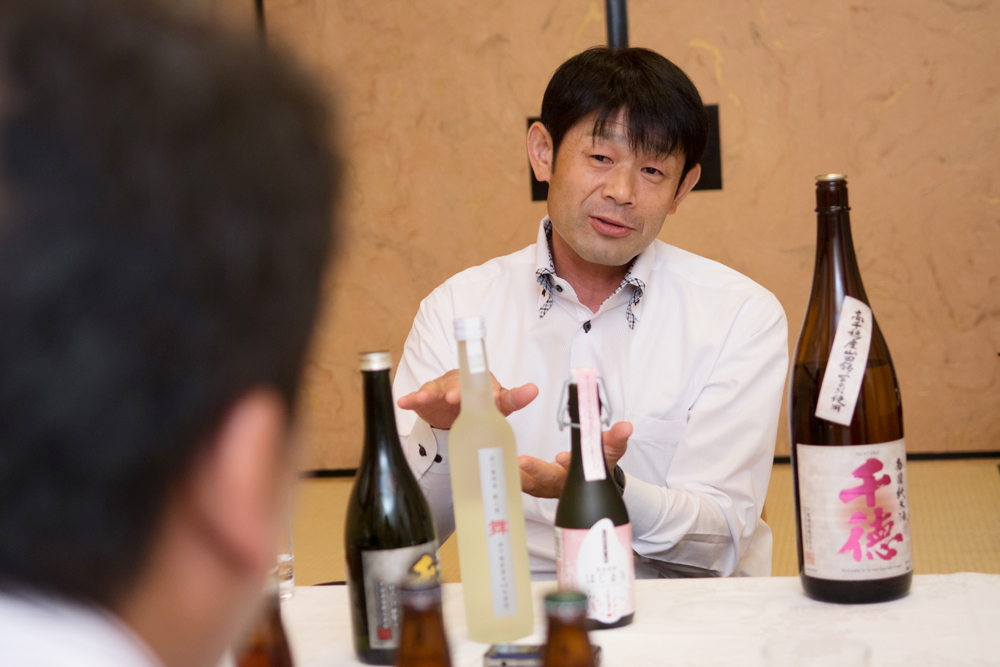
Mr. Nagano (Hideoji Beer)
As was discussed earlier, there are difficulties in building in the southern region. I heard that Miyazaki has more "cooling" work than other regions because of the rising geothermal heat.
Mr. Kadota (Sentoku Sake Brewery)
The brewing temperature is 6~7 degrees Celsius, but since the outside temperature is high, ice is used along with water. Since we have a three-stage brewing process, we sometimes use ice instead of water at the end of brewing.
Mr. Mizue (Sato Shochu)
I have an acquaintance who makes sake, and he told me that when the temperature rises, he uses a square of huge ice cubes to cool it down. Just imagine how much work it is.
Mr. Nagano (Hideoji Beer)
In a cold region like Tohoku, you don't have to do that kind of work, but because it is Miyazaki, it takes a lot of time and effort. On the other hand, is there anything good about being in Miyazaki?
Mr. Kadota (Sentoku Sake Brewery)
In Tohoku, you would have the problem of temperatures getting too negative, freezing, and no water supply. Well, I guess there are ways to deal with that. In the past, even within Miyazaki Prefecture, there used to be ice in the winter, and perhaps temperatures were not that much of a problem. In recent years, global warming has made brewing more and more difficult. Frankly speaking, cold weather is still more suitable for brewing sake. We are very careful to make sure that the temperature does not rise until the end of each brewing.
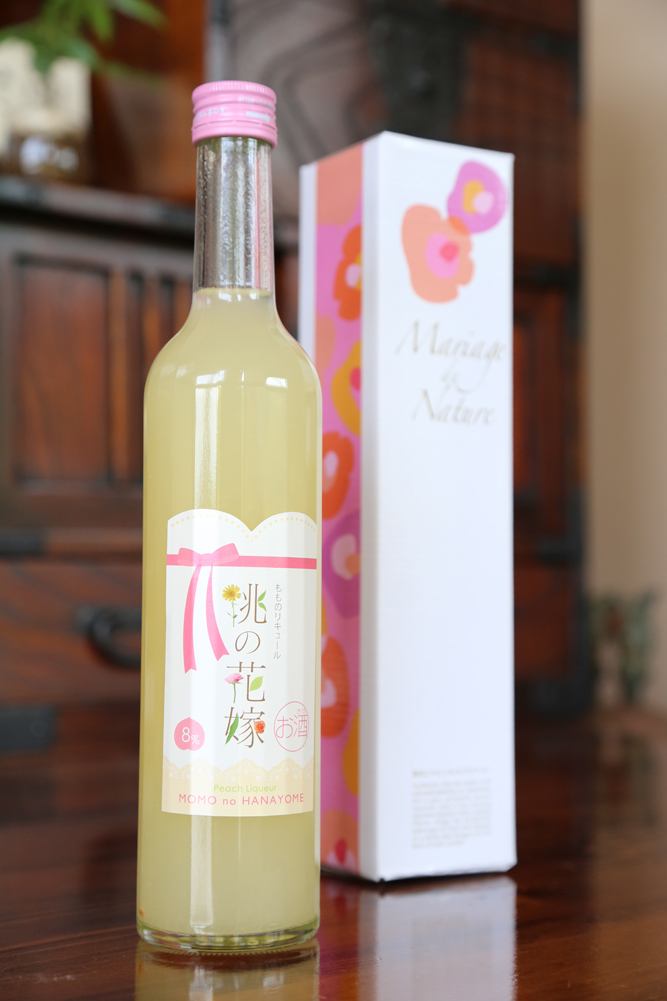
Peach Bride (Sato Shochu Seizosho Co., Ltd.)
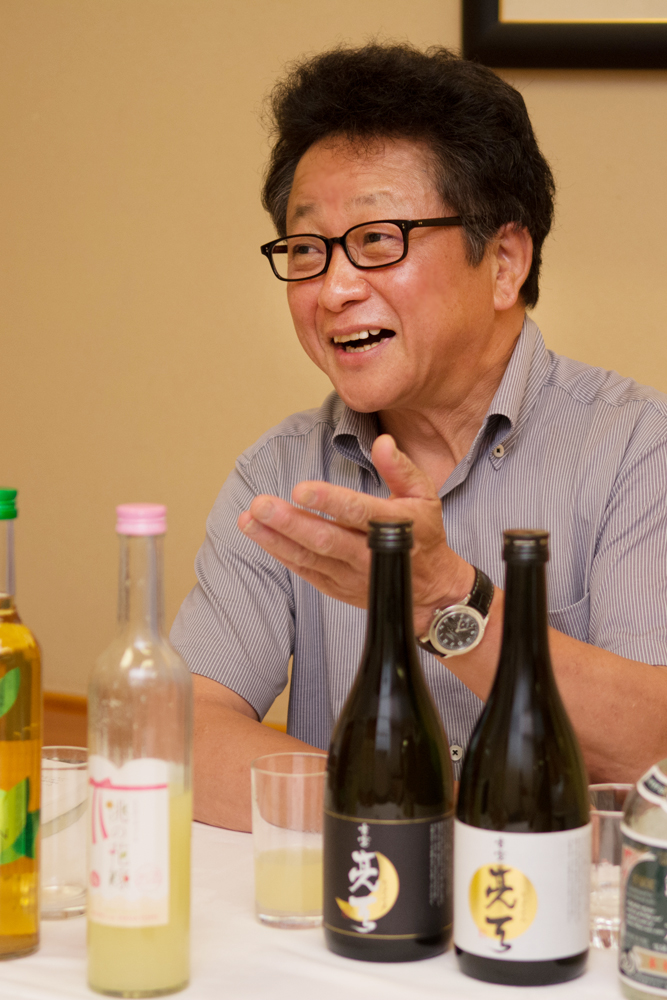
Mr. Mizue (Sato Shochu)
Since the peach ingredients are precipitated, mix slowly while turning the bottle up and down and drink.
This liqueur is made from a peach variety called "Hayayome" grown in Kitagata Town. As Mr. Nagano mentioned earlier, this is a product that we have been working on with the hope of helping the local community. The phrase "Thank you for the fruit" is added to this product to express our gratitude for the fact that the ingredients made it possible to produce this product. As a practical matter, farming in mountainous areas is difficult to manage. I think it is important to do what we can do as a sake brewer in Nobeoka to help solve this problem, even if it is only a little. I named it straight after the raw materials, but I also wanted to say "Welcome Bride" so that it would resonate with the declining birthrate and aging population in the mountainous areas (laugh).
In fact, there is a hidden theme behind this project: the "excitement of a man's heart. We want people in our generation to recall the sweet and sour memories of love and the pale youth they experienced in the past, and to evoke their "manly hearts" while thinking back to those times. Such are some of the thoughts I have in mind.
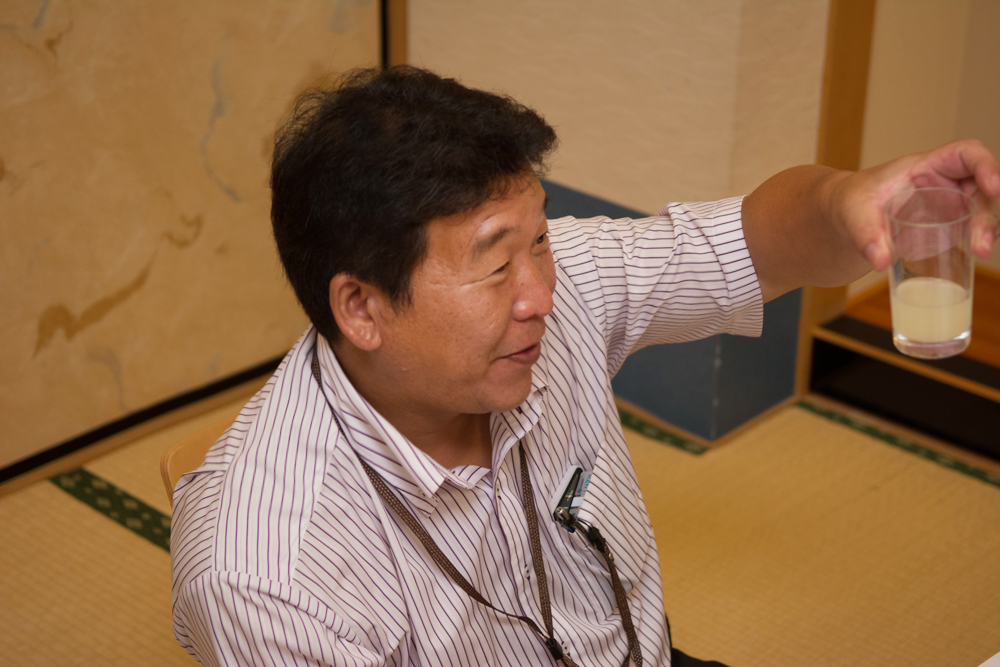
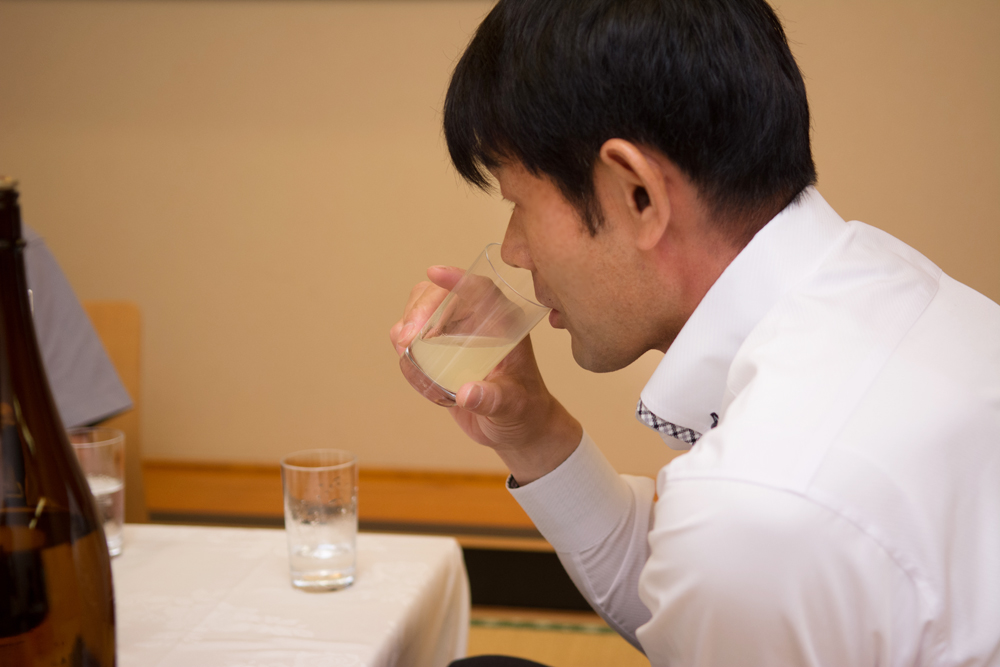
Mr. Kadota (Sentoku Sake Brewery)
After all, sake is made from raw materials. We cannot do everything the way we want. That is why it is important to share awareness with farmers, and we need to cooperate and grow together to create an environment where we can both work harder, otherwise it would be impossible to continue for decades. There must still be passion there. ......
Mr. Mizue (Sato Shochu)
I had been thinking of making a passion fruit liqueur that would produce passion and faint memories for some time, and was inspired by a woman I happened to meet who works at the Kitakata General Branch Office and heard about her passion for the community. Since Kitagata-cho produces a large percentage of peaches, she decided to make use of the local specialty, peaches.
We hope that the brand name and products will help people learn about Kitagata Town and the thoughts of its producers. Furthermore, I hope that love blossoms and a man's heart will be awakened. On the other hand, there are many women who do not take grooms, so we thought it would be interesting if parents would be quiet and offer "peach brides" as an item to help their daughters understand, "I see, my parents have such wishes. There are also many other chestnuts and persimmons produced, so we would like to create a product that can create a fun time while providing a topic of conversation with a ton of interesting names.
We have something to do as local sake brewers to protect the landscape of the mountainous area. Not only to solve the shortage of successors, but also to leave behind a form of having been active to the best of our ability, even if only in this own time, while being happy, angry, and sad with the local community. While showing this attitude to people in Japan, I want them to know that each product has its own dramatic drama, and beyond that, I want them to have the global mindset of wanting to do their best not only in Japan but also abroad. I intend to continue to add depth to the liqueur.
I think this approach is stimulating the producers. Both the producers and the brewers may be getting older, but their minds are still young. I am sure that people in their 70s and 80s today are the same way. Even if they cannot move their bodies, their brains still work, and I think it is our own initiative to help them achieve the goal of revitalizing the mountainous areas. I believe that this activity will permeate the mountainous areas and inspire them. I believe this will support our business.
Trilogy #3 Theme: Issues facing the industry
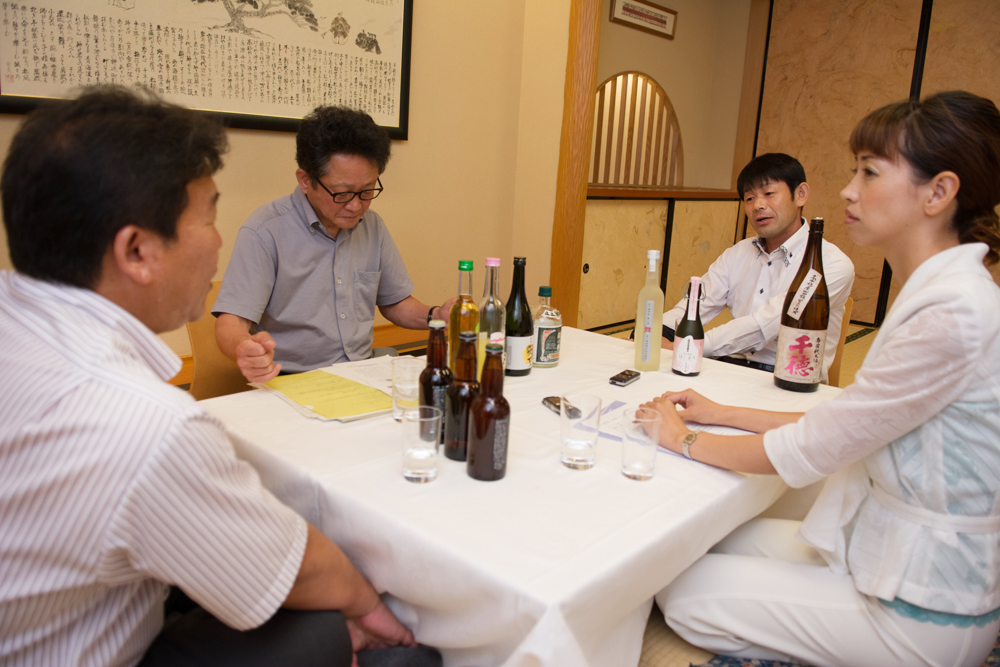
--What are some of the problems the industry is currently facing?
Mr. Mizue (Sato Shochu)
Isn't the common denominator of the problem "stable management"? The industry has changed since deregulation. Retail liquor stores used to have sales of 701 TP3T, three years ago the figure was 301 TP3T, and now the figure has dropped to 201 TP3T. On the other hand, liquor sales in supermarkets and drug stores are increasing. The distribution channels we have cultivated so far are experiencing difficulties. But on the other hand, we have a responsibility to protect our cultural traditions. They say that no matter what the situation is, they must push forward. ......
In order to preserve culture and tradition, local production for local consumption and local products must be revitalized. Perhaps we have not been good at communicating this until now. This leads not only to corporate profits but also to "the power to direct the community. We must not only promote our products, but together we must produce a "beautiful hometown, beautiful Nobeoka = the atmosphere of a castle town surrounded by the unique nature of Nobeoka".
How Nobeoka can attract attention while successfully promoting both the hard and soft aspects of the city can be found at ....... We believe that the sake culture, shochu culture, and recently beer culture, which have supported Nobeoka's long history, will play a major role. In order to successfully appeal to the public, not only products but also other industries must work together. How to build that stage, how to stage it, and above all, how the citizens of Nobeoka perceive it. ...... We want more and more local citizens to be interested in the culture and traditions that we have supported. I believe that continuing the current activities is the only way to ensure that the cultural traditions are passed on.
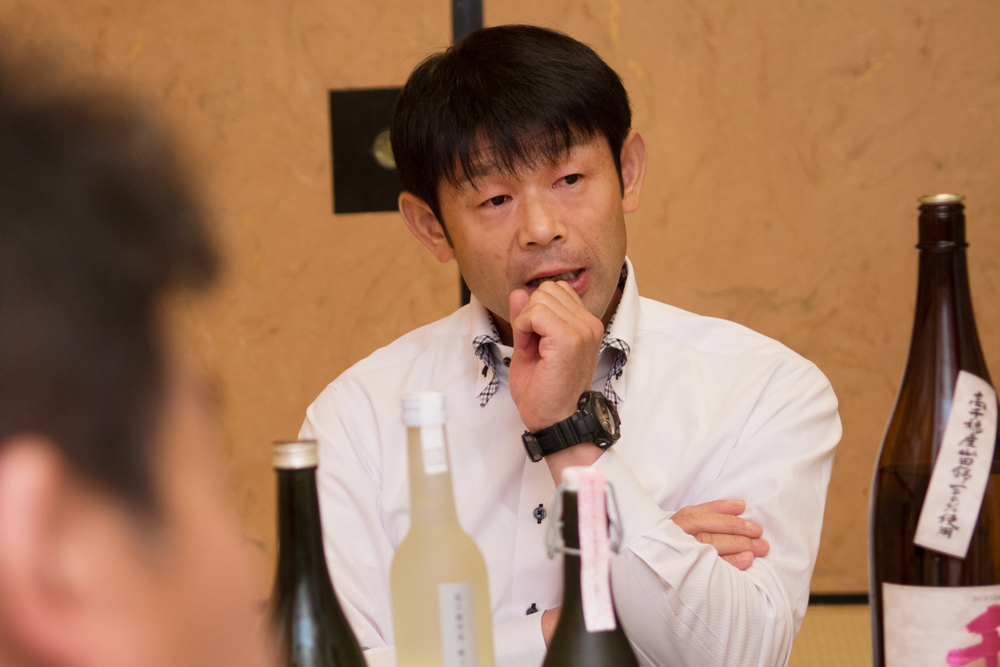
Mr. Kadota (Sentoku Sake Brewery)
Although "liquor stores" still exist today, the number of traditional "retailers" has drastically decreased and the shape of distribution has drastically changed. There used to be retail stores that only carried Sentoku. ...... Currently, they do not purchase from local liquor stores or wholesalers, but bring in their products from other routes.
Distribution at a major shopping center in the city also has rules, and despite the fact that the store is right in front of them, the products are sent once to Saga before being displayed in Nobeoka. This is an extra expense.
On the one hand, there is the "good side" that the opening of the entire expressway will improve transportation, but on the other hand, there is the concern that more and more new things, things from other regions, will enter the area, wreaking havoc on the local market and forcing us into a difficult situation. The only way for us to survive is to just keep making good products and sending them out. Like Mr. Nagano, I believe that we must engage in various activities on the front lines of sales ourselves.
--The same can be said for urban centers, but especially in rural areas, once people start leaning toward supermarkets and convenience stores, the flow is too rapid to even prepare to stop it.
Mr. Kadota (Sentoku Sake Brewery)
As you say, there really are more and more convenience stores. I guess it is convenient for consumers because you can get alcohol at convenience stores and a lot of household goods at .......
-The more convenience stores are built, the less money stays locally, they say. People may be happy that convenience stores are being built and that they are more convenient, but local retailers are losing sales and local banks are not keeping their money. ......
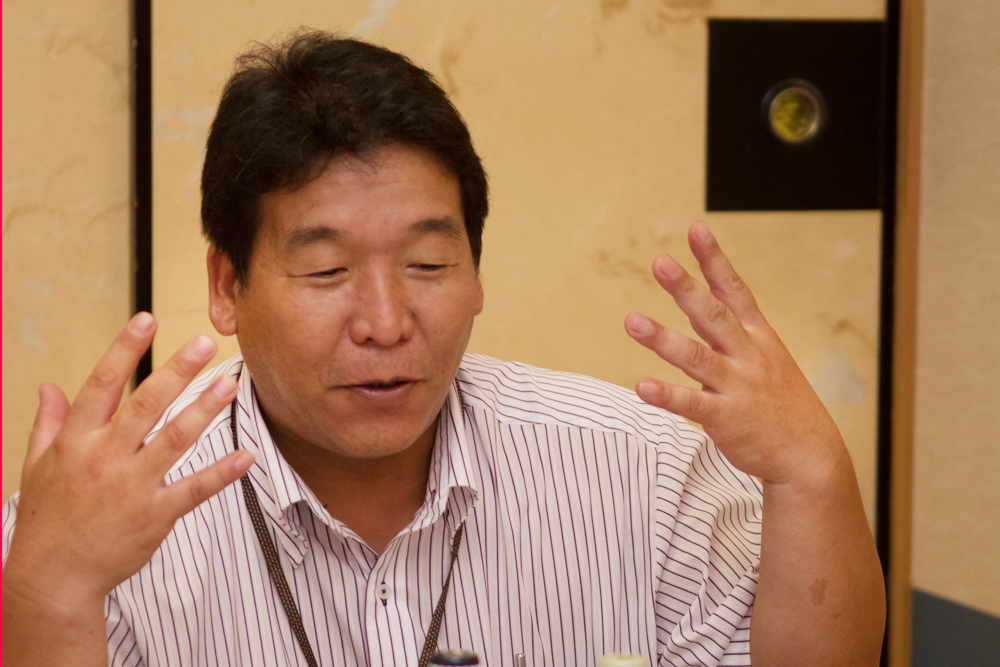 Mr. Nagano (Hideoji Beer)
The microbrewery industry is currently in a state of polarization and is still in the process of being weeded out. It is now becoming clear whether there will be any left or not. There used to be more than three hundred microbreweries, but now there are only about two hundred, and in another five years there will be only about one hundred. So what should we do to survive? ......
As you all mentioned, existing distribution channels are disappearing. So the issue will be how to take care of the consumers at the end of the line. In such an online society, both local and otherwise, we have no choice but to have the knowledge to operate with a broad perspective.
-Is there a primary focus on direct-to-consumer delivery? Will you utilize the Internet as a business or work with traditional wholesalers to establish product sales channels? What is the balance between the two?
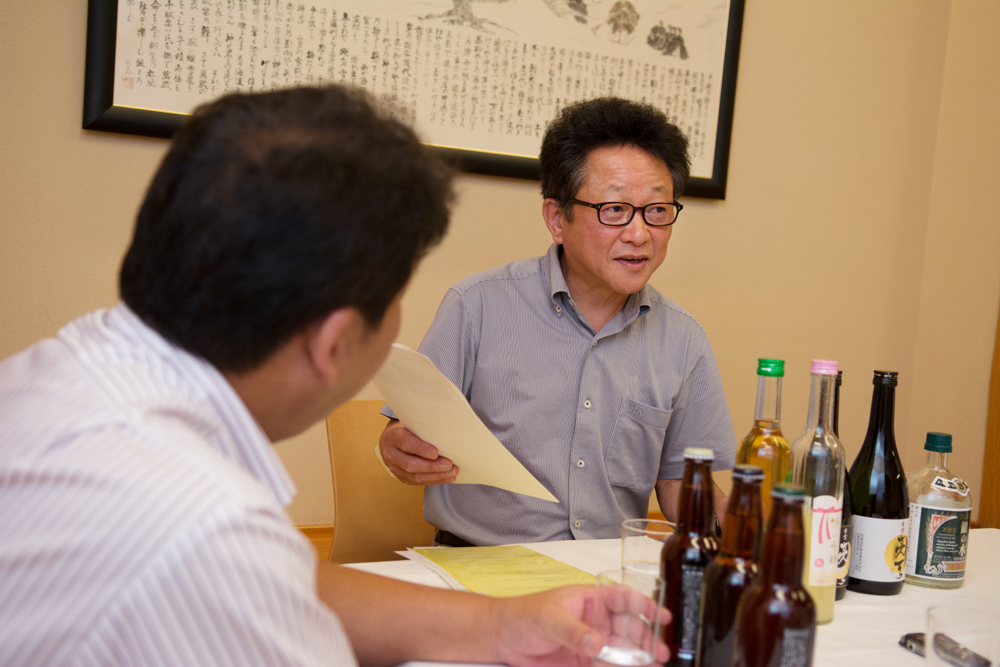 Mr. Mizue (Sato Shochu)
We believe that our products still come alive through the old-fashioned wholesale distribution. This is because "people" are involved. By talking with people who can empathize with us, the products we work on will come to life. It is not enough to simply think about distribution; it is important to communicate our thoughts and ideas while interacting with people. It is precisely because there are people who can empathize with us that the value of our existence is greatly enhanced. We need to do work and activities that will make these people proud of us.
Mr. Kadota (Sentoku Sake Brewery)
I really think that is true. In addition, the opinions of ordinary consumers are also important. No matter how good the product is and how satisfied I am with it, it is the general consumers who decide who drinks it. Our work and efforts are not understood unless we offer our products and have people drink them. It is necessary to provide situations in which people drink our products in various situations. While accepting this, we must also believe in ourselves and protect our style. If the style disappears, it is not necessary to be Sentoku. ...... That is the difficult part. ......
--you maintain a taste and quality that the big manufacturers cannot achieve. However, even though we want people to drink our products, the reality is that we cannot compete with the major manufacturers in sales. What is the dilemma of such cost-effectiveness, etc.?
Mr. Mizue (Sato Shochu)
It is true that this is a reality, and of course we cannot turn our eyes away from it. That is why it is important to communicate this to the local community and make them feel proud and support us. This is the only part of the emotional aspect that major manufacturers cannot get into.
However, considering the current situation in which the local people are not showing us the kind of movement we would like to see, it is clear that the history, culture, and traditions of Nobeoka are not being conveyed to the local people. Moreover, it is our own fault that we have not been able to convey this information. Therefore, it will be important to make people aware of this and have it imprinted in their memories. If we can clear this part, I think we will be able to convey the good qualities of Nobeoka City. The citizens of Nobeoka speak for us. If we can spread the word about Nobeoka's richness of emotion in the places we visit, not only our industry, but also various people and companies will become interested in Nobeoka and become involved. It is up to our future efforts to create such opportunities.
Trilogy Part 4 Theme: Future Prospects
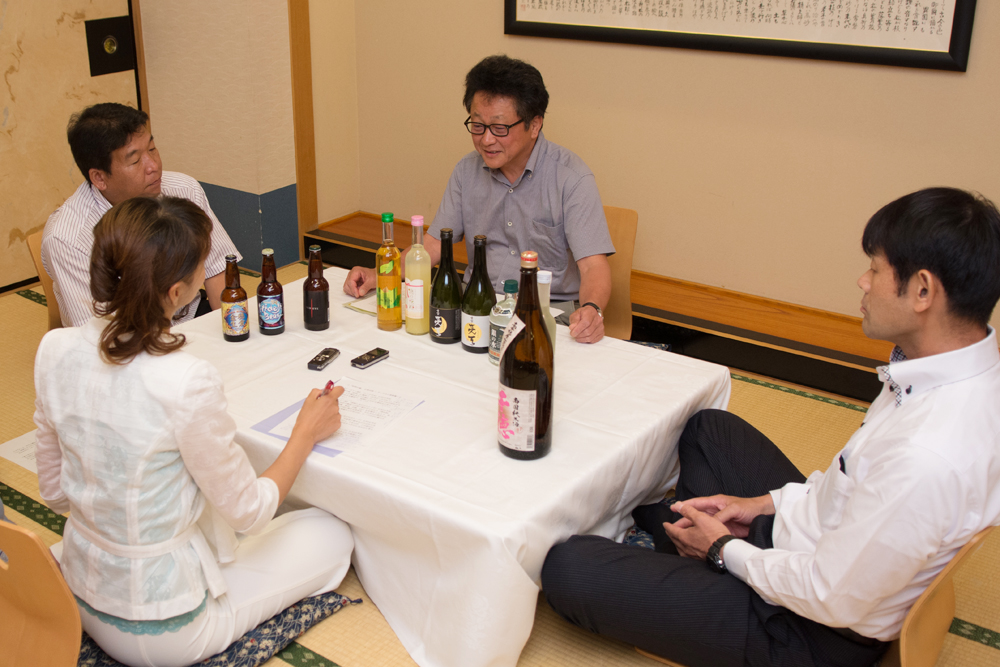
-- Not only have some of our products won awards domestically and received high acclaim in specialized fields, but some of them have even received top ratings on the world stage. However, you all have said earlier that the general public has not yet been properly informed about our products.
Mr. Kadota (Sentoku Sake Brewery)
I feel that it would be tough to communicate only on my own. Since there are many different liquor companies in the city, I would like to see them join hands and organize a large tasting event, even if it is only a few times a year, so that we can communicate directly with consumers.。If you drink it while listening to the thoughts and persistence of the brewer, you may become more attached to it. I think so.
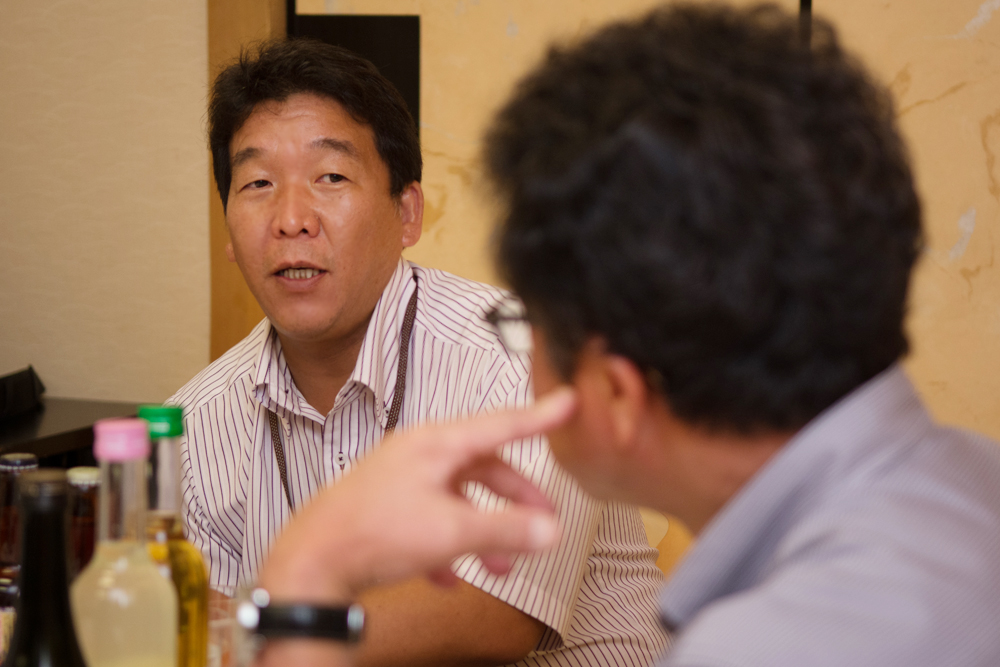 Mr. Nagano (Hideoji Beer)
That is a bit of a challenge. We have to start our own business because such an opportunity will not happen if we wait for it. I think there are consumers who are waiting. I think it would be best if they could learn enough about our efforts and the regions we are involved in to make them proud of their own region.
The time has come for local cities to compete with each other in what they have refined, rather than being conscious of the conventional trends in the city center or in the world. First of all, I would like to see a good spiral increase in the number of Nobeoka citizens who know, like, and are proud of their hometown. Nothing will change if we wait for this to happen, so I think we must do something about it.
--For example,Kofu City in Yamanashi Prefecture has many wineries.We are actively engaged in wine tasting and other activities in a wide range of areas. In addition, there are many similar large-scale sake tasting programs in the Tohoku region. Furthermore, it is quite popular as a tourist destination, and many people actually visit.
Mr. Mizue (Sato Shochu)
I believe that people in regions such as Tohoku and Yamanashi are making efforts to promote local pride. In the same way, we have coined the theme of "Jisou Jien," which means "Creating one's own garden. This is our community development activity based on the concept of "for people, for smiles, and for enrichment. This theme was coined in the hope of creating a place for enrichment in Nobeoka, and the "Kura" will set the stage for such a place.
In keeping with the theme, we envision an agro-industrial sponsorship concept. As mentioned at the beginning, agriculture and breweries are deeply intertwined. We are one of the companies in the alcoholic beverage industry, but there is a great deal of drama in the industry. Our strength is our "drama," or the story behind our products. The major companies are developing and marketing products that are safe, reassuring, and low in calories, but our "people's work" is no less important than theirs. We can continue to develop because our warehouses are used in the daily lives of the citizens of Nobeoka and are connected to society, creating a variety of stories that circulate through our business activities.
Where did the word "Nobeoka" come from? It is called "Nobeoka" because the land was reclaimed in the old days and Oka was extended. It would be nice if we could grow and develop in the same way. The root of the stage that triggers something is tradition. We, who have inherited the tradition, have a responsibility to carry it on. We may be just one company, but if each business person gathers together, we will become a great power. Like the agro-industrial sponsorship concept, we must work to increase self-sufficiency and make children who will follow in our footsteps aware of these things. We want to create an opportunity to provide healing to the world by processing natural raw materials. This is what I want to continue to do even if I have to spend all my money.
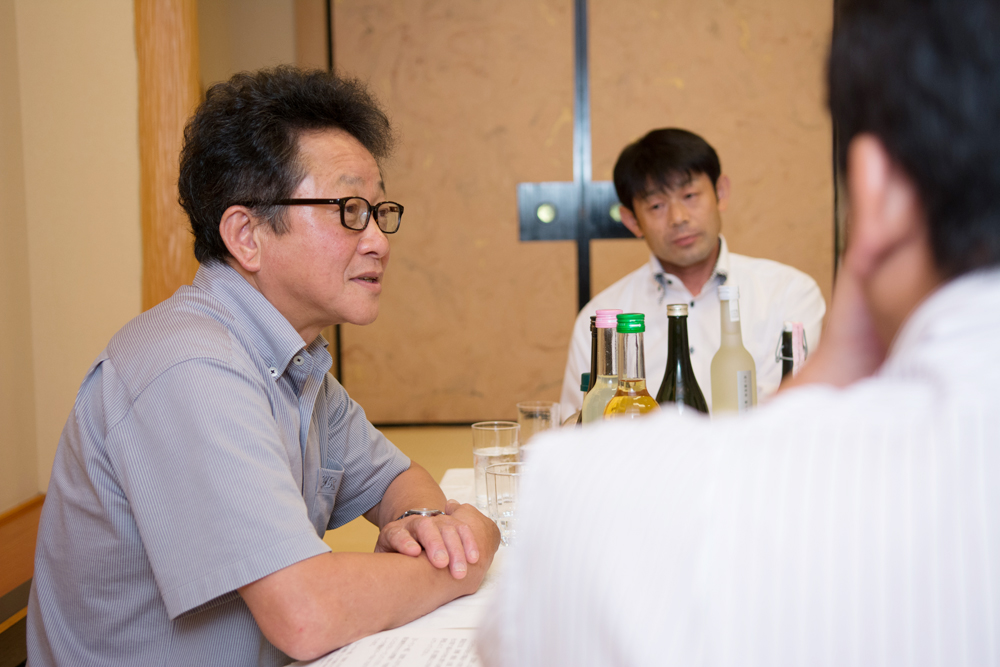 --Do you have any specific ideas to revitalize the local community with the theme of "kura"?
Mr. Nagano (Hideoji Beer)
Several years ago, only the "technicians" from these three companies got together, and at that time, the idea of "improving the sake culture through technical exchange" came up. The media and public organizations paid attention to the word and indirectly supported the project. This is an amazing thing to think about, and while the launch of a single company alone would not generate much buzz, the three companies joining hands will resonate with people in other genres. This is why we must create words and statements that will make it easier for various people to support the project in the future.
As for tourism, we are getting support in the form of "Sakagura Tourism" ....... That is why it is important for us to create a system in which we have a solid lineup of content that can serve as the axis of tourism in Nobeoka, so that many people will support us. The pride of Nobeoka is Sanzo! It is important for the three companies to cooperate with each other to create a unified expression so that people can say, "Sanzo is the pride of Nobeoka! This makes it easier and more rewarding for us to work. There comes an absolute responsibility. It is important to create ourselves in such a way that people will want to support us.
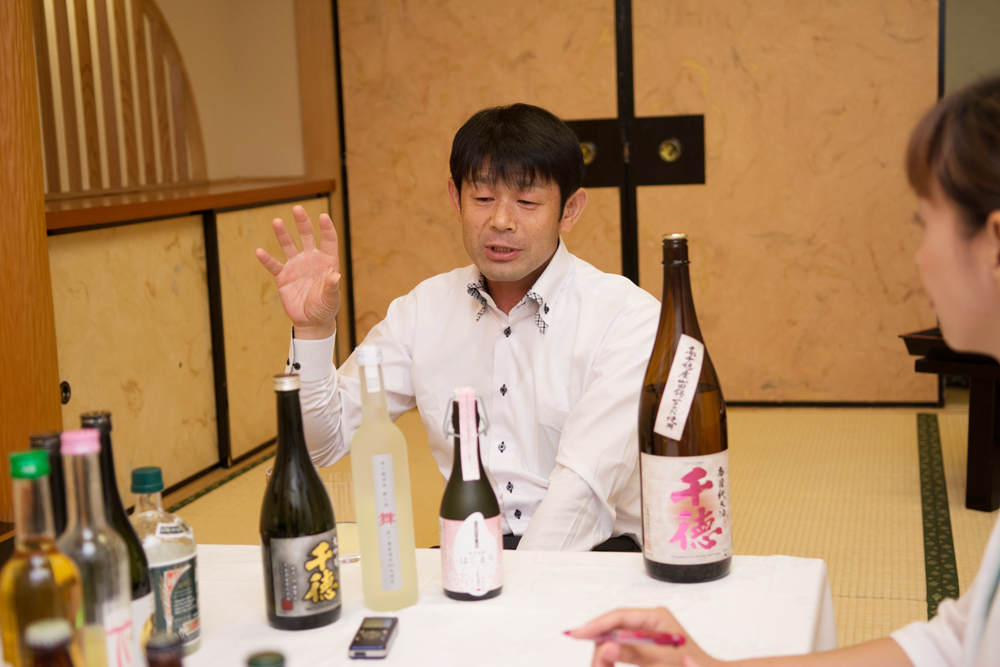
-In fact, there are more and more cases where different industries are actually tag-teaming to create brands, aren't there? If the three companies can cooperate and work together, not only sake but also various other products derived from it can be sold, farms can be enriched, and so on. ...... I can only think of good images from a regional perspective. ......
Mr. Nagano (Hideoji Beer)
I believe that our role must be defined as "for the region," and we must develop better products while keeping in mind the "raison d'etre" of our own "kura" in Nobeoka, and at the same time, we must propose to each other creative ideas and efforts to convey them to the public.
Mr. Mizue (Sato Shochu)
We have worked hard in the past to engage in local activities and contribute to the local community. From now on, it will be important to refine what we have cultivated up to now and make it into a form that can be understood. First of all, we need to raise awareness among citizens to consume local products and create a new form for the environment and the community based on our past activities. I believe that these three companies are the ones who can accomplish this.
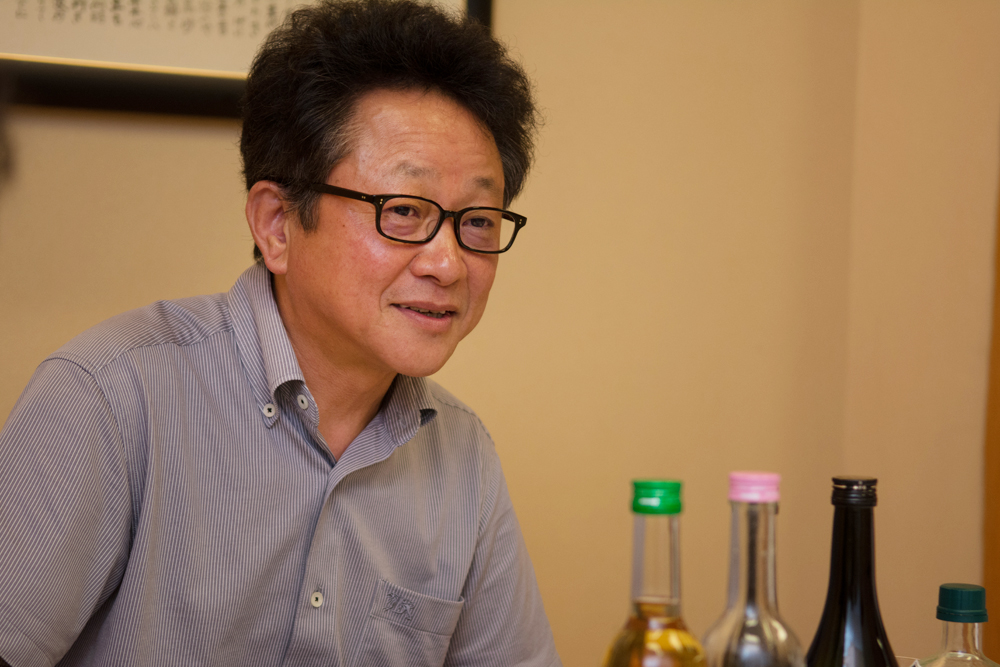
--Do you mean that you are going to take some kind of action as a result of today's trilogy?
Mr. Nagano (Hideoji Beer)
Although the management businesses of the three companies cannot be combined, I think that all three companies already have in mind that "the water from Nobeoka is the best in Japan" and that they want to make sure that their commitment to sake production in Nobeoka will be recognized throughout Japan as "Nobeoka has three breweries". I think that each company already has this in mind as "something that must be done.
For example, the three companies could support activities by saying, "These three companies support the activities of XX," or hold "meetings to enjoy Nobeoka's sake culture," etc. If the three companies could keep pace with each other, I am convinced it would be a big thing.
Mr. Mizue (Sato Shochu)
Fifteen or six years ago, we used to have a "Jizake no Enjoyment Party". Once again, it is necessary to convey the significance of local sake in our daily lives, not by making it an extraordinary event, but by taking a new approach to the concept.
Rather than simply trying to increase the number of consumers, it is crucial that we can convey the message that there is a local cultural tradition at the back of the product. Through the activities of the three companies, we want to make people remember the cultural traditions of this region.
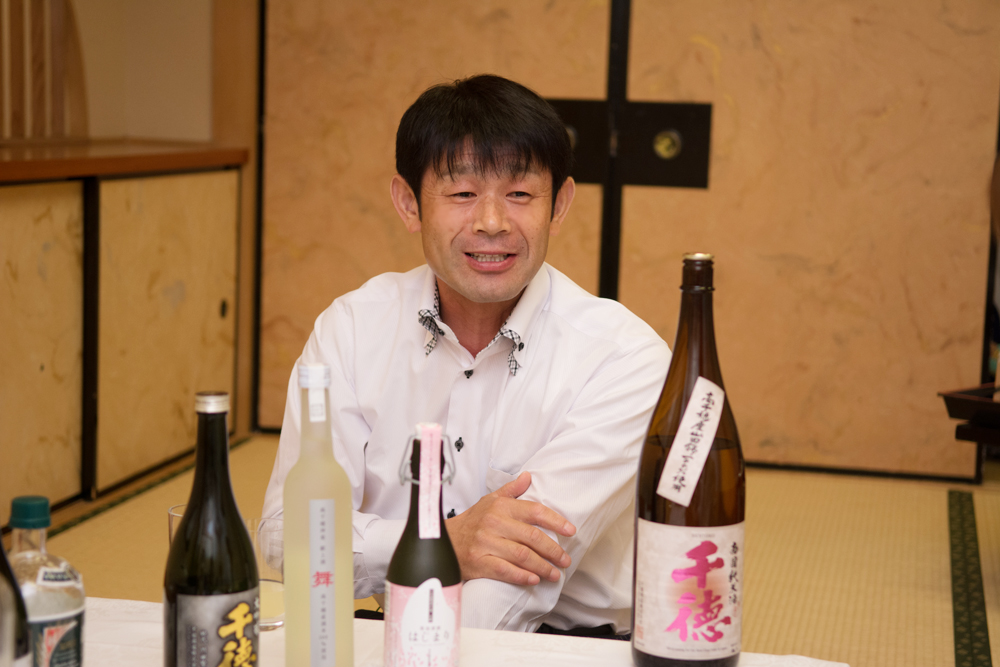 Mr. Kadota (Sentoku Sake Brewery)
Now let's have a big tasting.
Mr. Nagano (Hideoji Beer)
I'd love to.
Mr. Mizue (Sato Shochu)
If it's a tasting, I'm sure we can do it in the near future. I think this article could be the catalyst for some action. I'd love to share some crap at a party to enjoy new local sake, if possible. There is always inspiration in a place that was created through sake. There are things that are born because of the sake. It is important for sake breweries not to offer something that is "just enjoyable in the moment," but to play a behind-the-scenes, supporting role in the stage where something is created and directed. If everyone's hearts become richer and their lives more fulfilling around sake, I am sure Nobeoka will attract more attention.
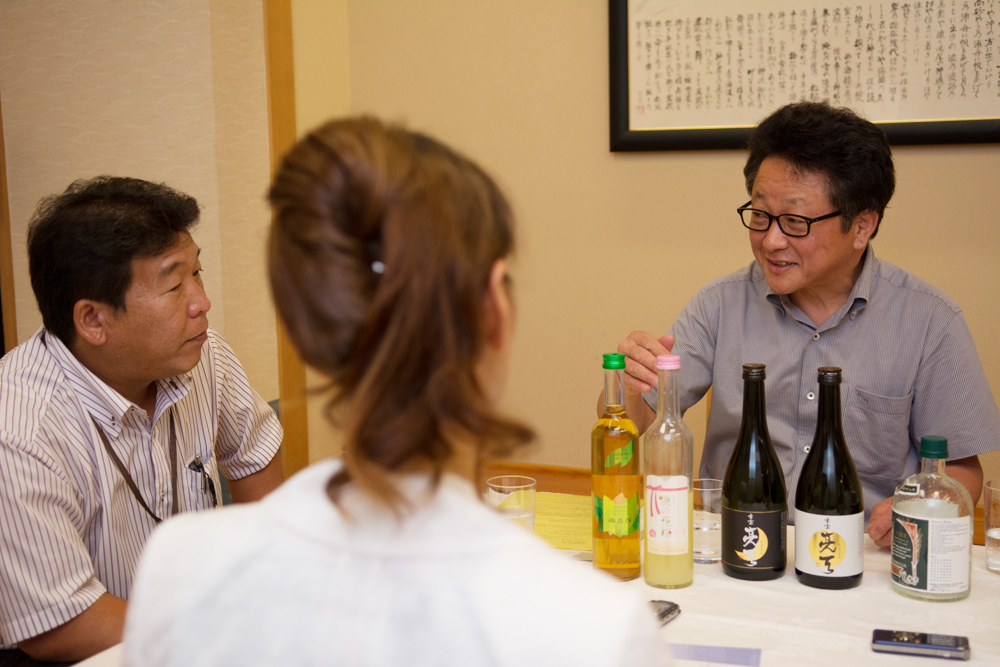 Mr. Nagano (Hideoji Beer)
People in Nobeoka learn about, experience, eat, and drink local products. This will change their consciousness. That is right! We must change. In such a situation, we may have to take a leadership role.
Mr. Mizue (Sato Shochu)
I would like to proceed while making various suggestions. We worked hard in the past, but I feel that nothing has been left behind.
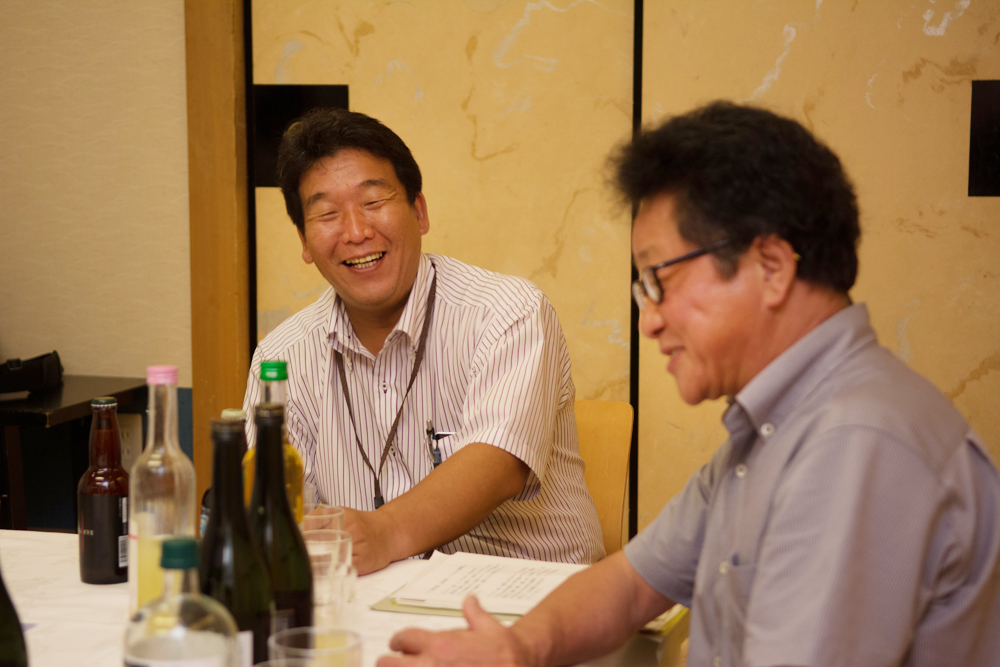
Mr. Nagano (Hideoji Beer)
I am involved in similar activities, but I have different roles in community building that I do when I am young and when I am older.
Mr. Mizue (Sato Shochu)
How do we design our activities and how do we preserve our form? We have also created a new warehouse with an eye to overseas markets.
The more self-reliance each person has, the more they can create their own symbol and a place for exchange. Then, they will be able to plan and execute projects that will inspire them. The use of oneself will create various forms. We will design a form in which local products are consumed by the local community. How will we evaluate what we have created and how will we evolve it? If we leave good things behind, surely those who follow will think better of them. In this way, a form called "Nobeoka New City" will be created. Those who leave behind a form, such as ourselves, must express it properly and make it easy to understand.
--What do you mean by "easy to understand"?
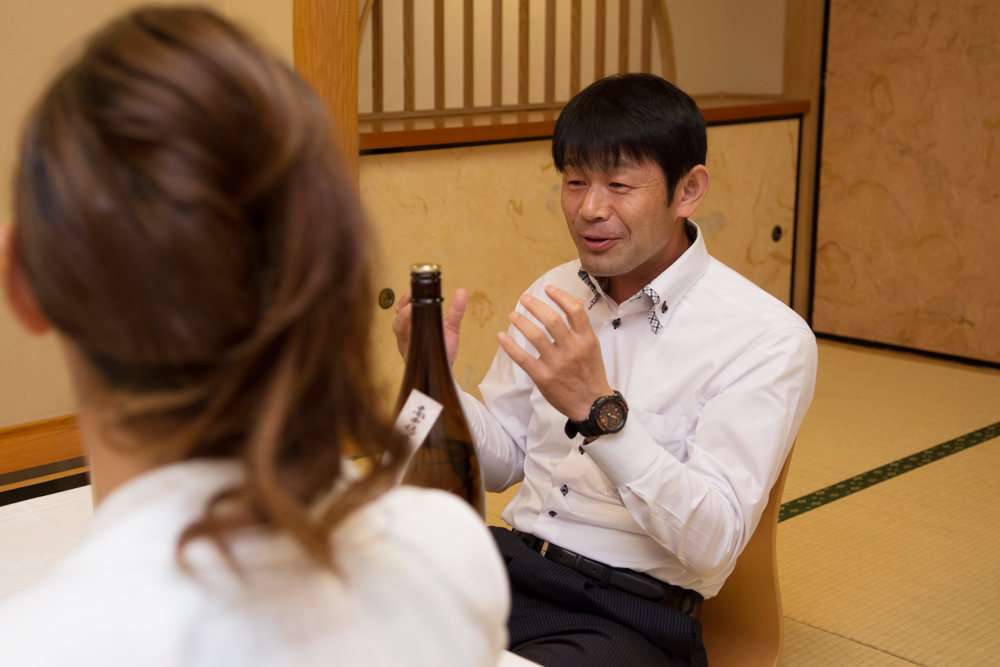
Mr. Kadota (Sentoku Sake Brewery)
The PR pattern for new products is often planned by wholesalers. In a sense, it is a business-like method of gathering people together, having them drink the finished product, and explaining it to them. This is fine for a single company, but if three companies get together to start something, each company has a different history and different sales channels. Therefore, the ideal is not to use celebrities, etc., to impose an image, but to spread activities that people can relate to as much as possible.
Mr. Nagano (Hideoji Beer)
We are happy to introduce not only our products but also local products in this way. We would like to hold a tasting event, not only to taste the finished product, but also to have the brewer come to the event, bring the ingredients, explain them, and convey the information to the visitors. ...... I would like to hold a tasting event by all means.
Mr. Mizue (Sato Shochu)
If such a place were to be created, we would like to convey the spirit of care for the community, "These three companies are here! We would also like to convey the significance of the event in a way that is easy to understand. We would also like to convey the significance of the event in an easy-to-understand manner.
Alcohol is said to be the best of all medicines, something that maintains peace of mind for a stable life, something that makes people grow in joy, anger, sorrow, and pleasure, and something that nurtures a kind of energy that gushes out strongly and vigorously. We also want to convey why alcohol is necessary in our lives. I think it is necessary to depict it on the screen in an easy-to-understand way. I would like to make a movie about it.
--I am looking forward to seeing the action in the near future! I look forward to it. Thank you for your time today.
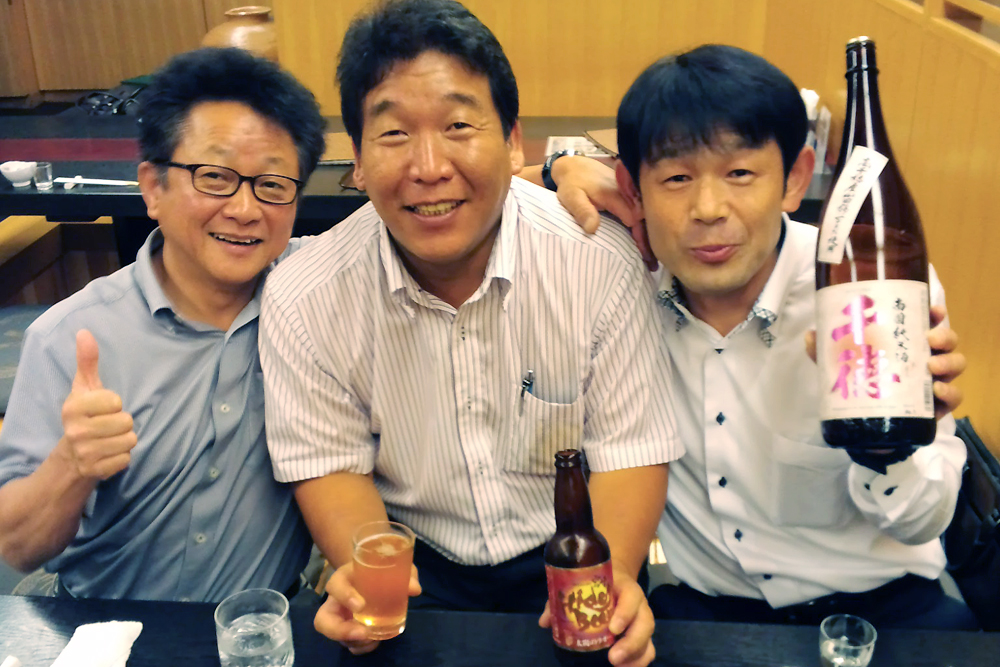
Scene after the trilogy
We also asked Chiho Takei, a female sake connoisseur, for her recommendations and suggestions on how to drink sake in a way that only a woman can.
Report on Sato Shochu Works Co.
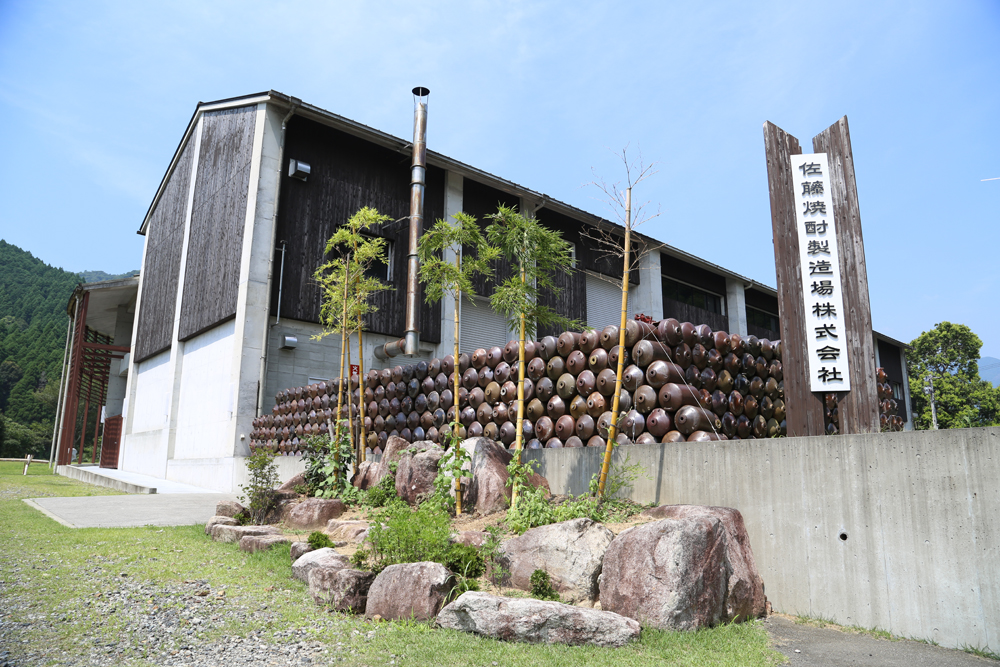
Address: 2388-1, Shukushi-cho, Nobeoka City, Miyazaki Prefecture
Phone: 0982-33-2811
FAX: 0982-33-2888
URL:http://www.sss-sato.jp/
Sato Shochu Seizosho Co.
1905 Matsutaro Sato I obtains sake brewing license
1948: Birth of the representative brand "Sandai no Matsu".
1975 Establishes Japan's first production process using Hyuga-yama chestnuts as raw material
1976 "Kuri Shochu" (chestnut shochu) from the Sandai no Matsu series is released.
1977 In-house development of reduced-pressure distillation method 1989 Revision of liquor tax requires use of oak barrels for aging
Introduced. Rice shochu "Ranju" is released using these barrels. Liqueurs
Obtained a manufacturing license and developed and marketed againtari sake.
Established as a corporation in 1997
2001 Four items of three kinds of barley, rice, and chestnuts won the first prize at the Sake Competition.
Won a prize in the Kumamoto Sake Competition every year since 2003.
2008 New shochu warehouse built at current location
2008 Excellent Urban Landscape Award, Nobeoka City, Japan
Talk: Junji Mizue, President and Chief Technical Officer
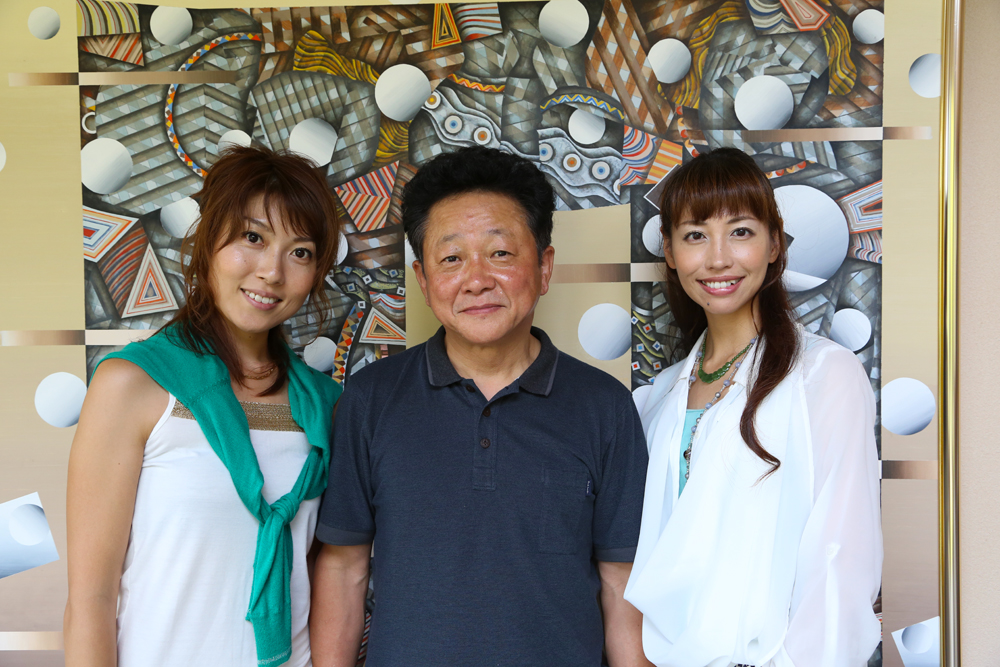
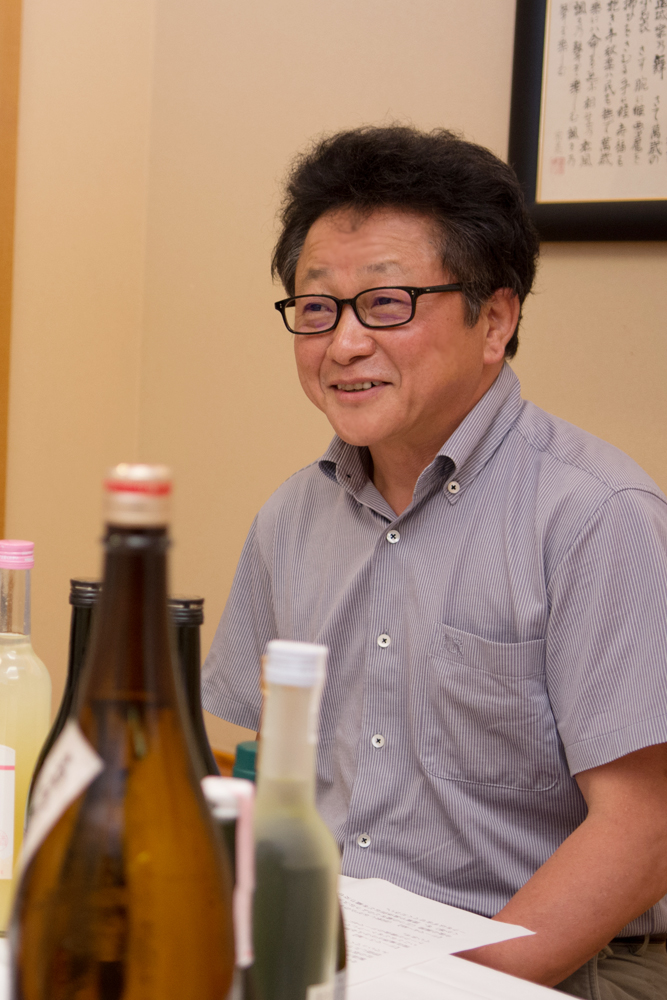
Left: Chiho Takei (sake taster) Center: Junji Mizue (Sato Shochu Factory)
Located along the Shukushigawa River flowing from the Shukushigawa Valley in the Grandmother Tilt National Park, a series of huge granite formations, the Sato Shochu Factory is an impressive building with a sophisticated design that looks like a museum.
Based on the concept of "Jisou Jien" (creating one's own garden), where Nobeoka's beautiful nature, agricultural products, human connections, history, and culture are in harmony, and where people can live together in harmony with each other in abundance, we are still evolving and expanding our business not only domestically but also internationally, even in our 106th year of operation.
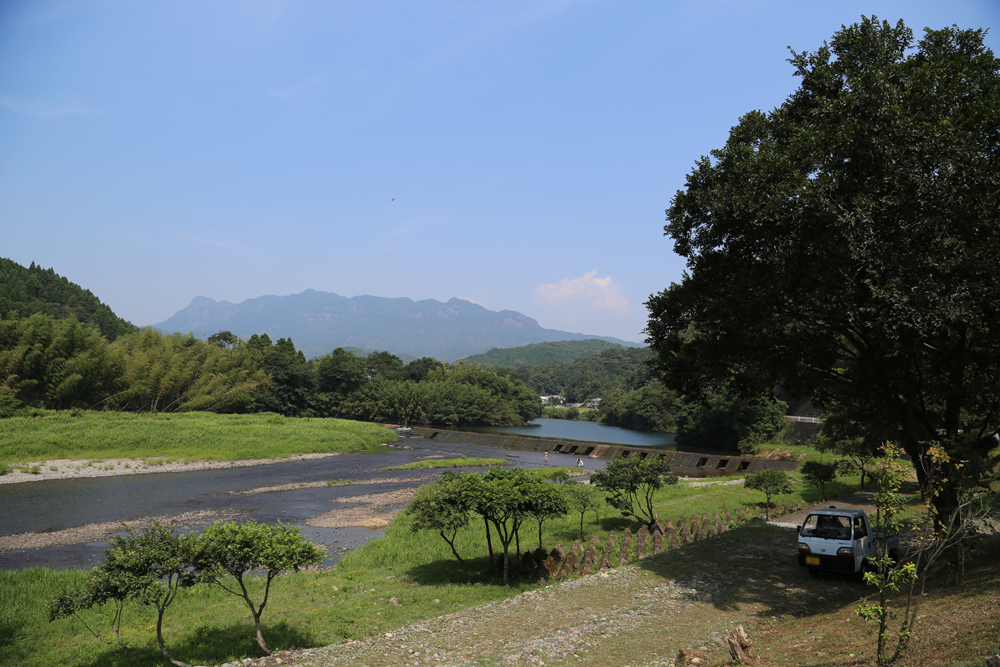
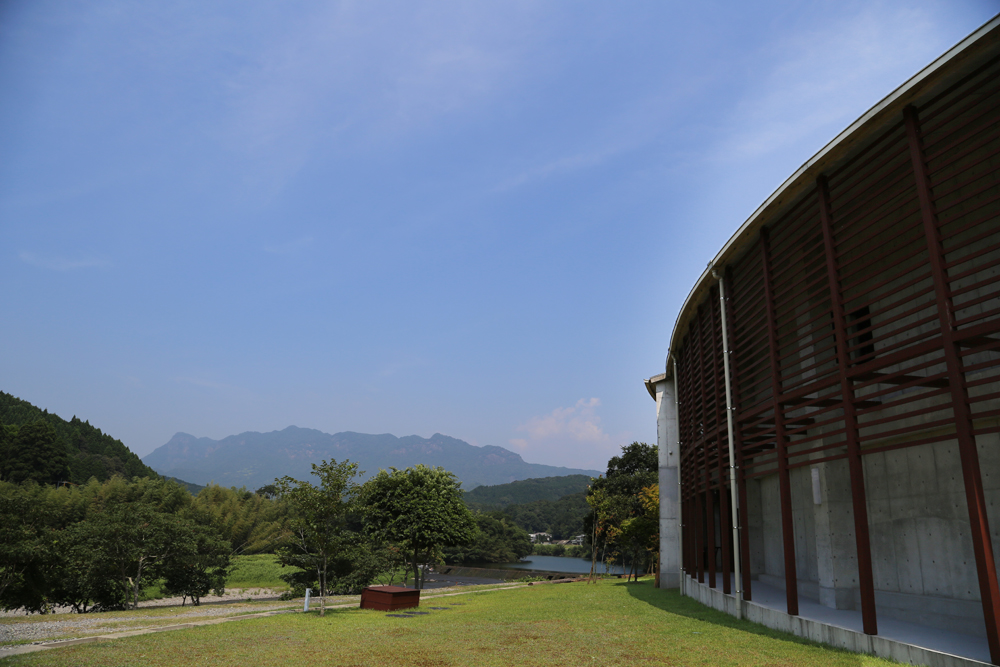
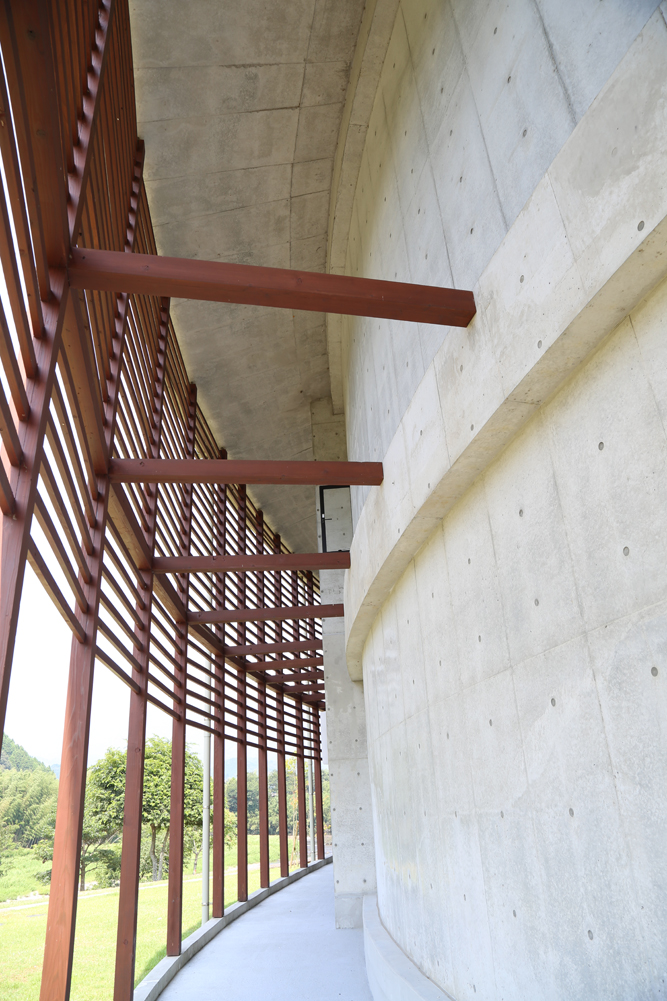
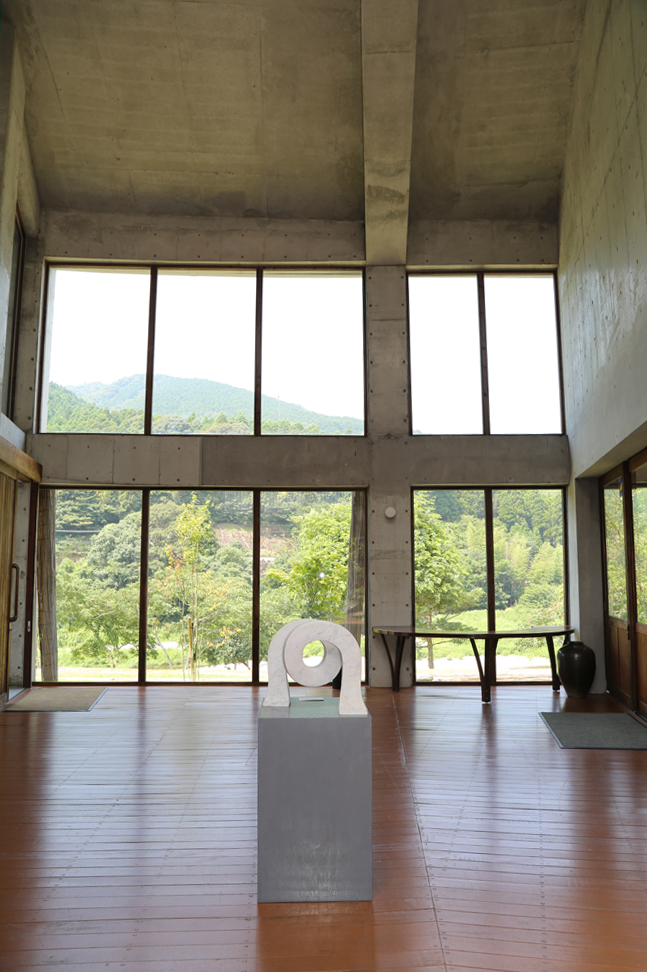
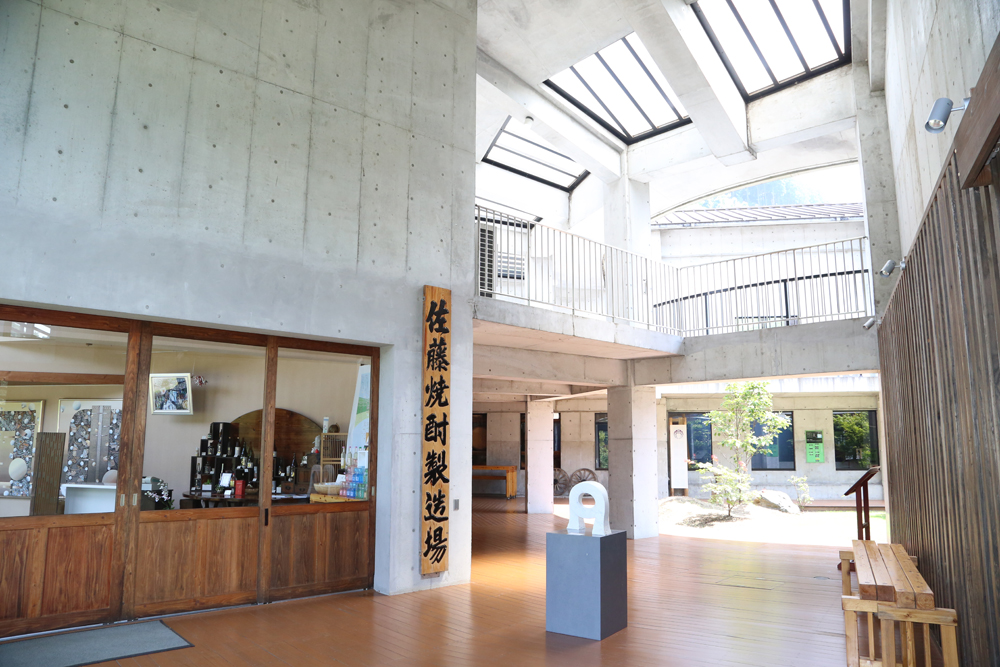
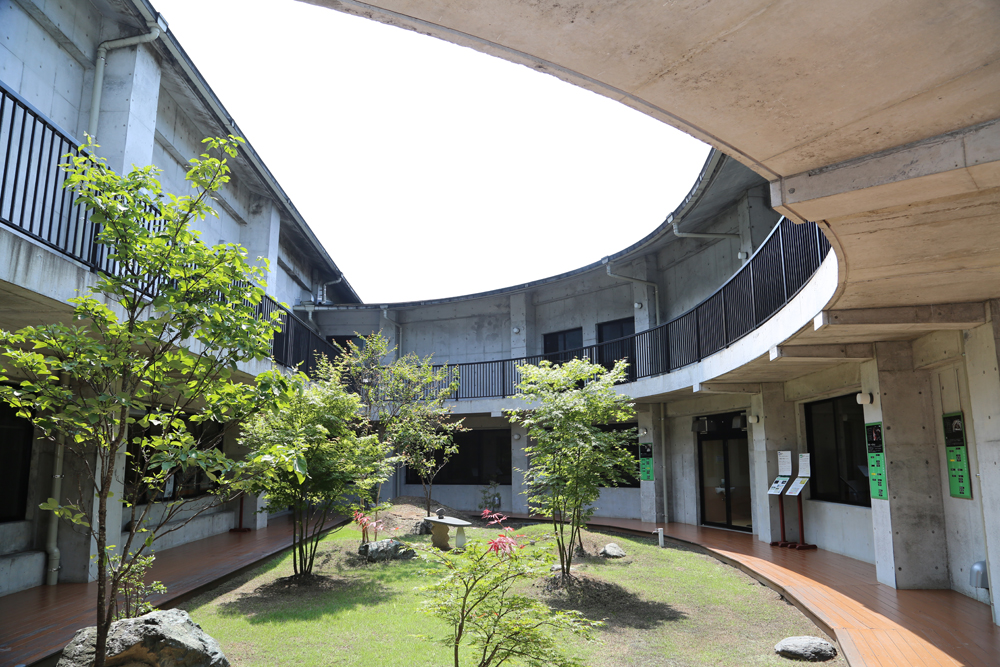
We believe that while the ingredients are of course important for making shochu, the environment in which the brewer works is just as important. We have a glass wall that allows outside light to shine in and the trees in the courtyard to be seen, and we have painted a picture of a blue sky on the wall of the preparation room so that the brewers can work comfortably and feel a sense of openness, even if only a little.
As Mizue says, "We are not only taking care of the trees, plants, and flowers on the grounds, but also the various artworks and paintings on display in the building, and the attention to detail in creating a pleasant environment can be felt everywhere.
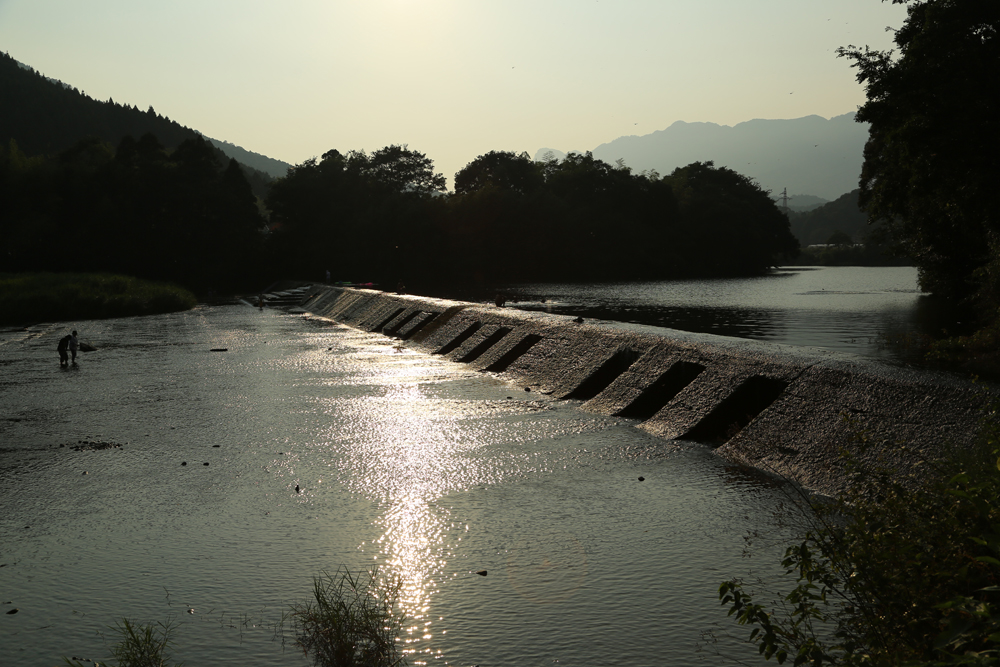
From the building, you can enjoy a spectacular view of the Shuko River and Mt.
Incidentally, the ingredients are agricultural products from the region, mainly from Nobeoka City, and deep seawater from the Shuko River.
The long history of Sato Shochu Factory shows the various challenges it has taken on, such as establishing "Japan's first Kuri Shochu" production method, being one of the first to develop a reduced-pressure distillation method, and maturing the product in barrels to create a whiskey-like flavor.
The product lineup also shows the unchanging sensibility and strong energy that has pursued "a delicious cup of sake and a cup of happiness" that people can enjoy and have a pleasant time while drinking.
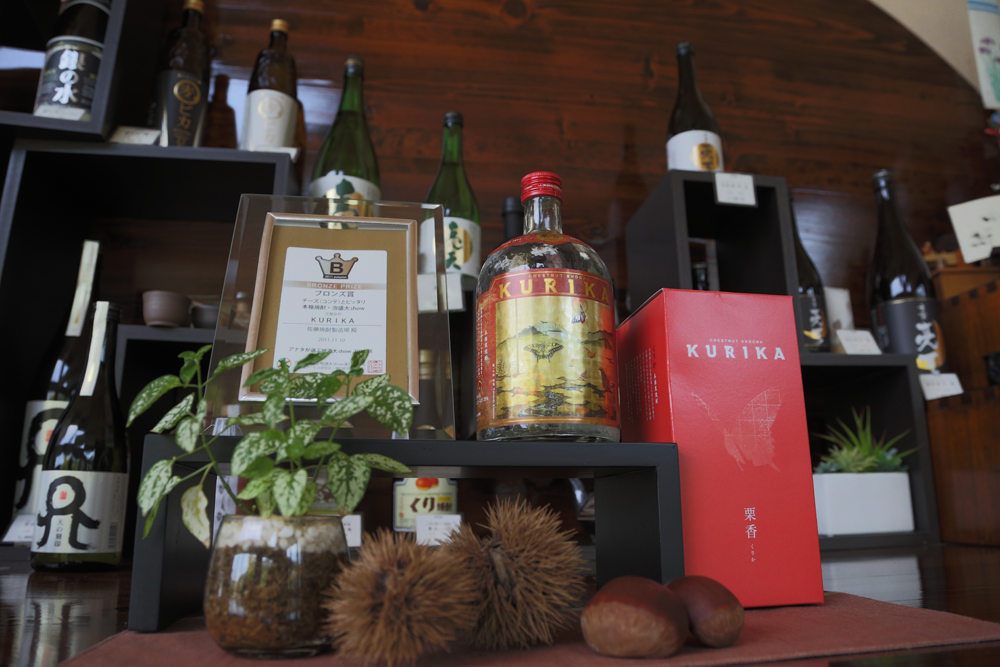
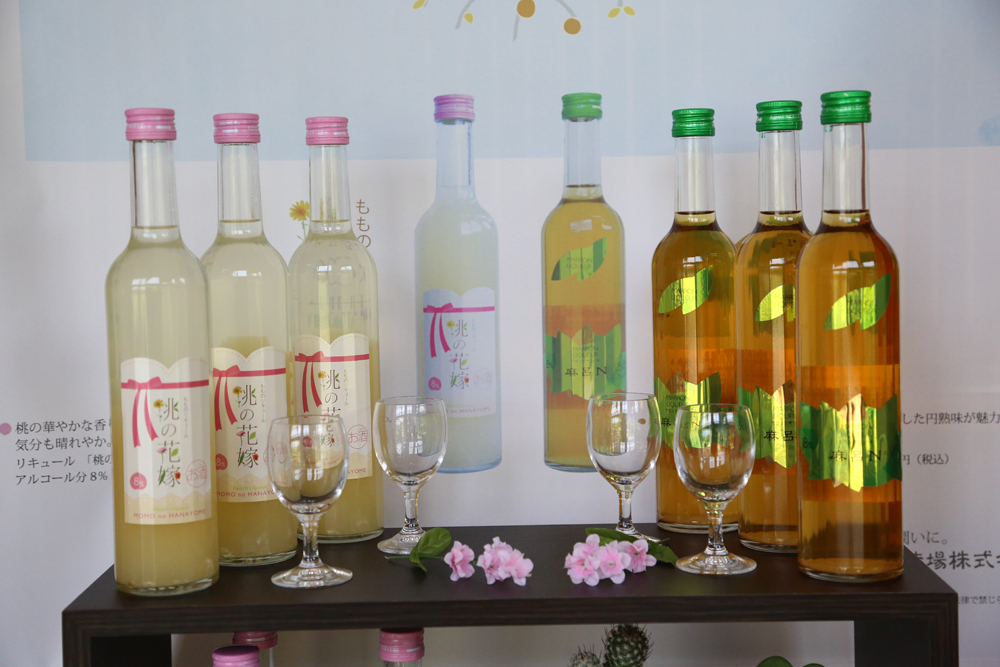
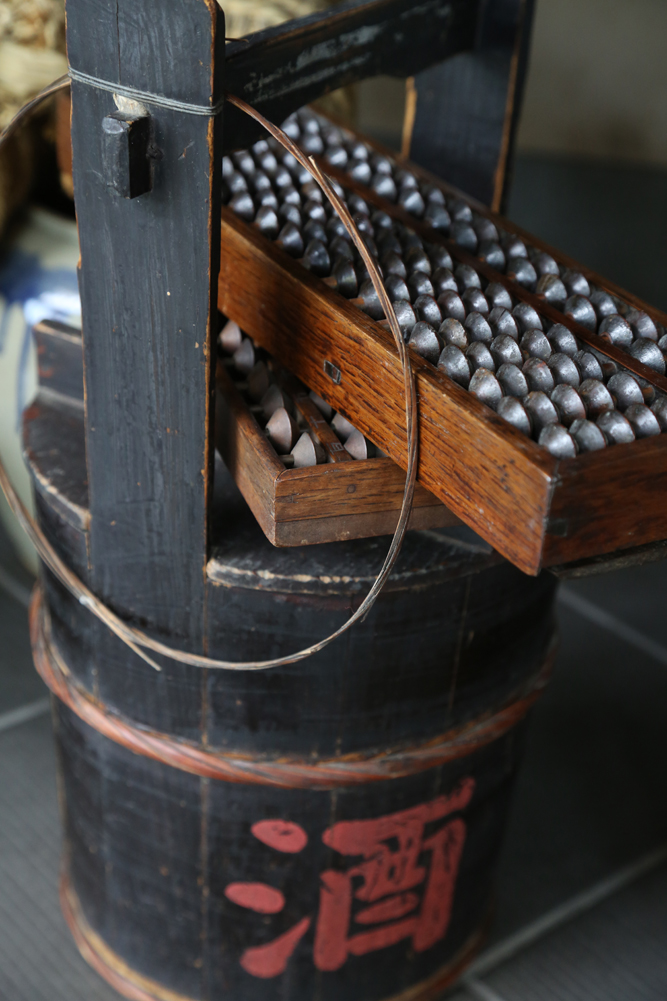
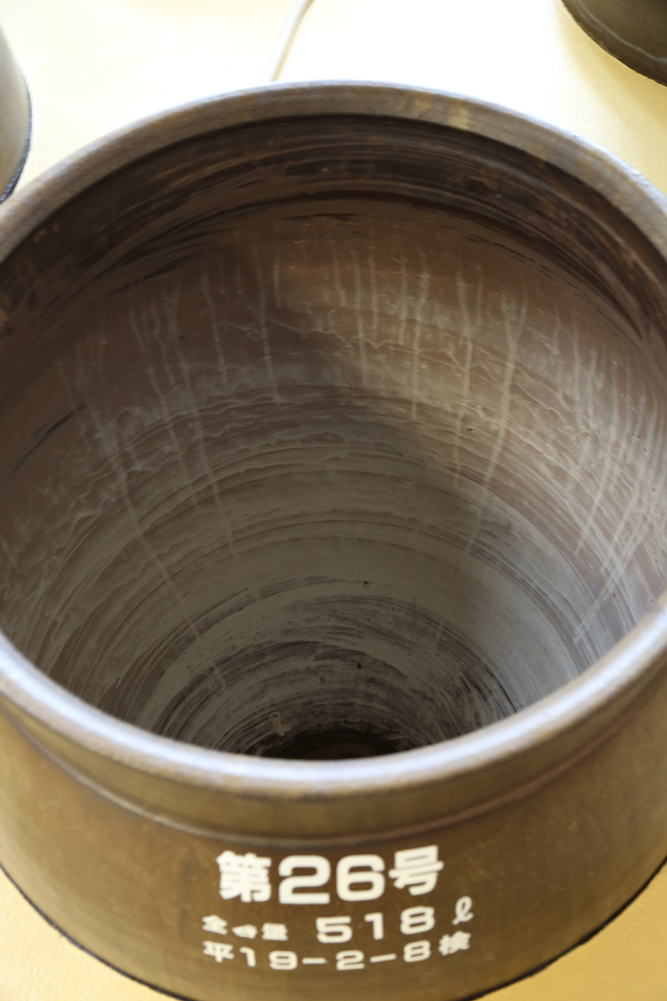
The white streaks on the walls of the maturing room, which seem to fade from thick to thin, represent the microorganisms as they move from being active, working vigorously, to quietly settling down after their work is done. This is a shochu brewery, and we think it is very important to create a pleasant atmosphere for both the people working inside and those who come to visit. We also want the microorganisms to work in a comfortable environment, as if they were in a bath with just the right amount of hot water, so we have combined several types of sand and soil to make the ”kame” itself breathe. We have also combined several types of sand and soil to create a good balance so that the ”turtles” themselves can breathe. Incidentally, this ”kame” is a precious pottery made in Japan during the Taisho period (1912-1926). The power of the pottery allows the shochu to slowly convect and mature, making the shochu mellow and rich in flavor.
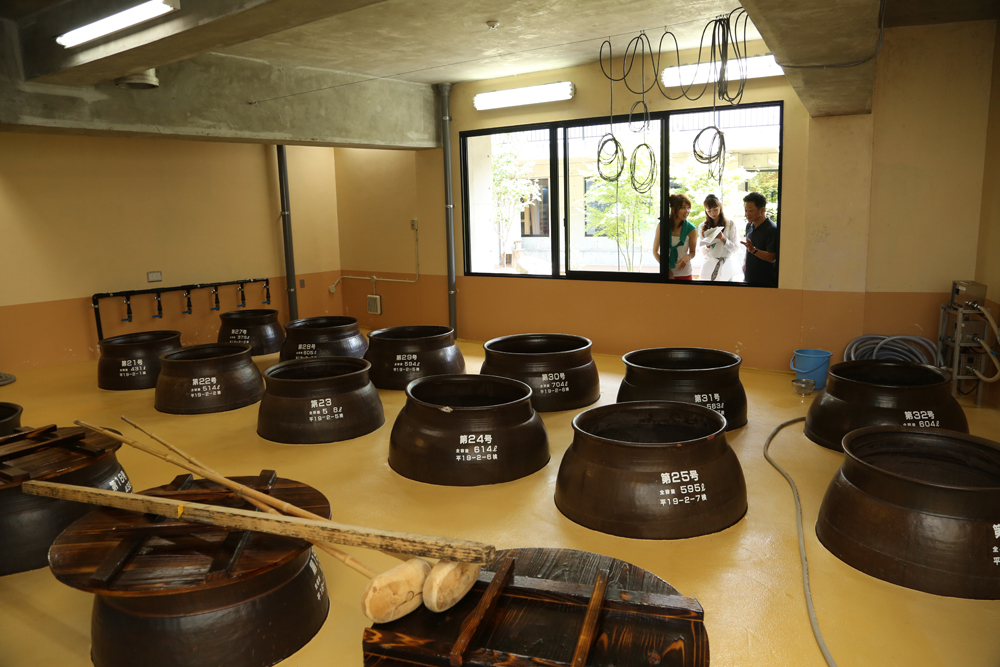
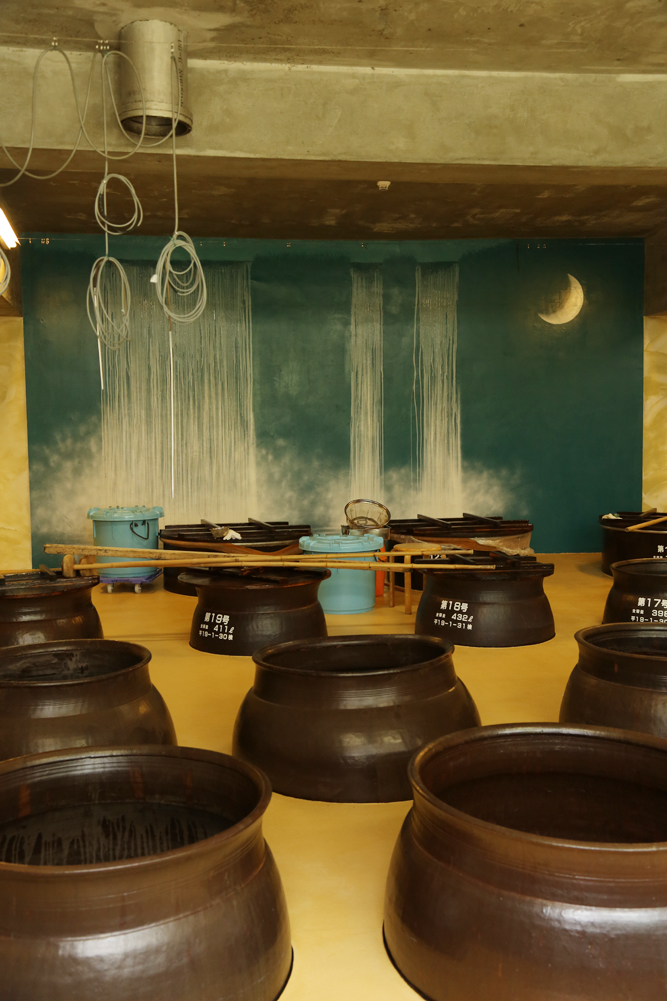
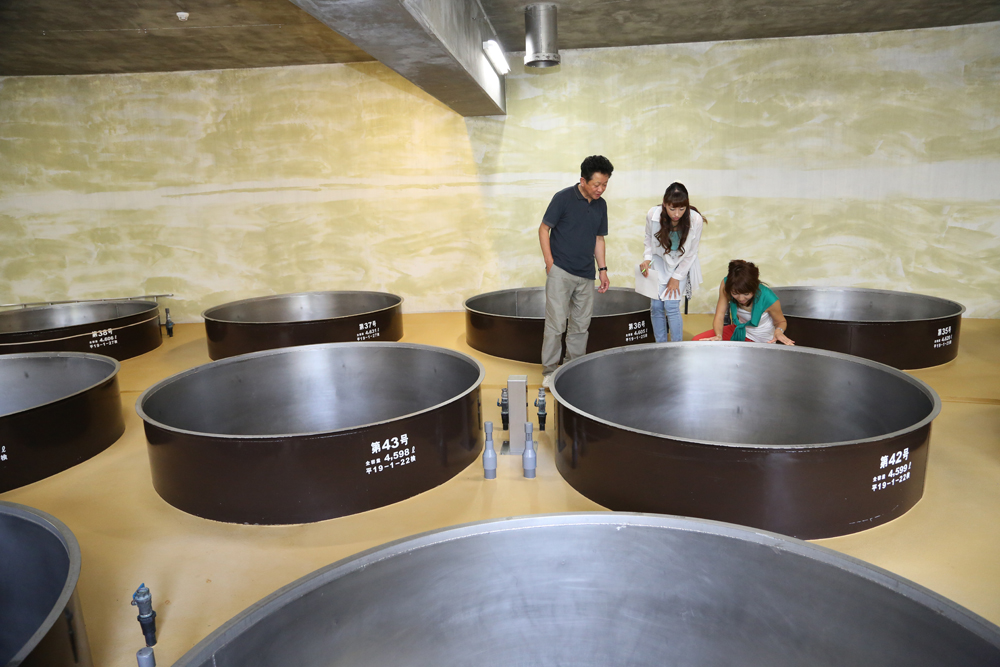
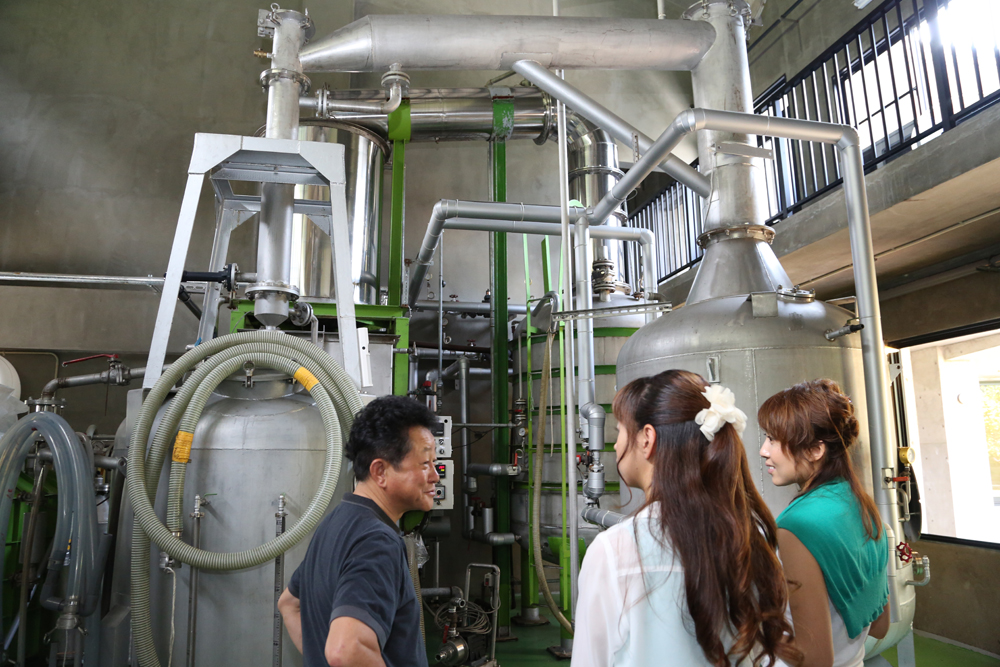
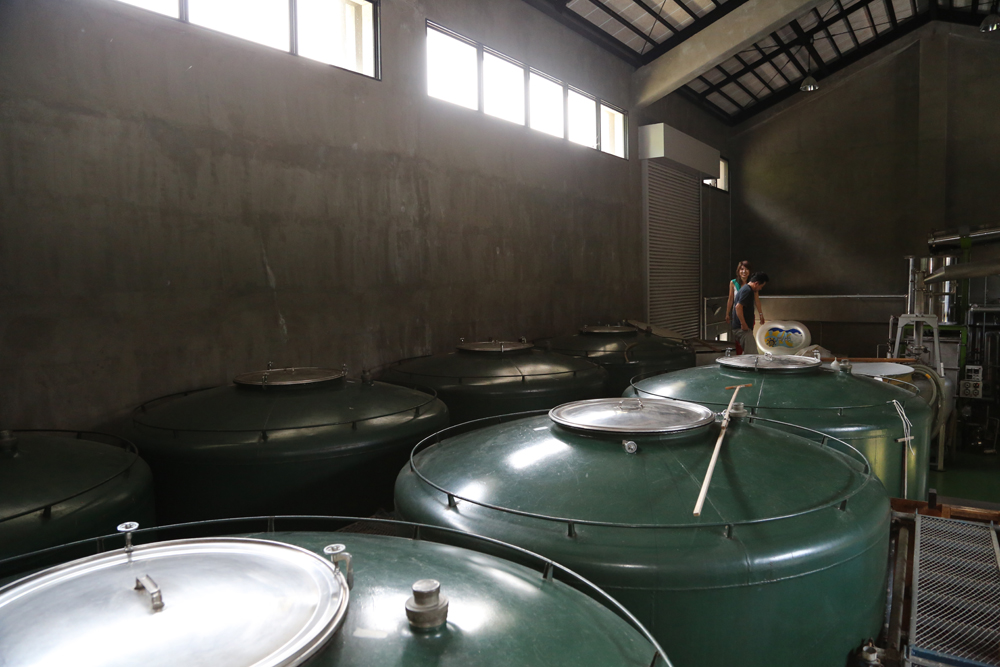
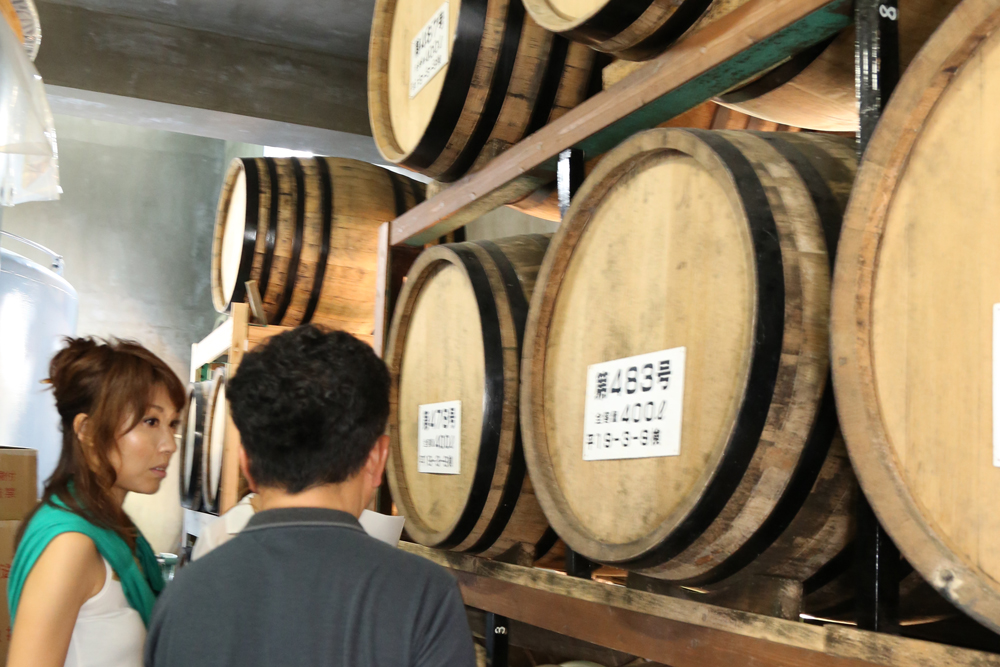
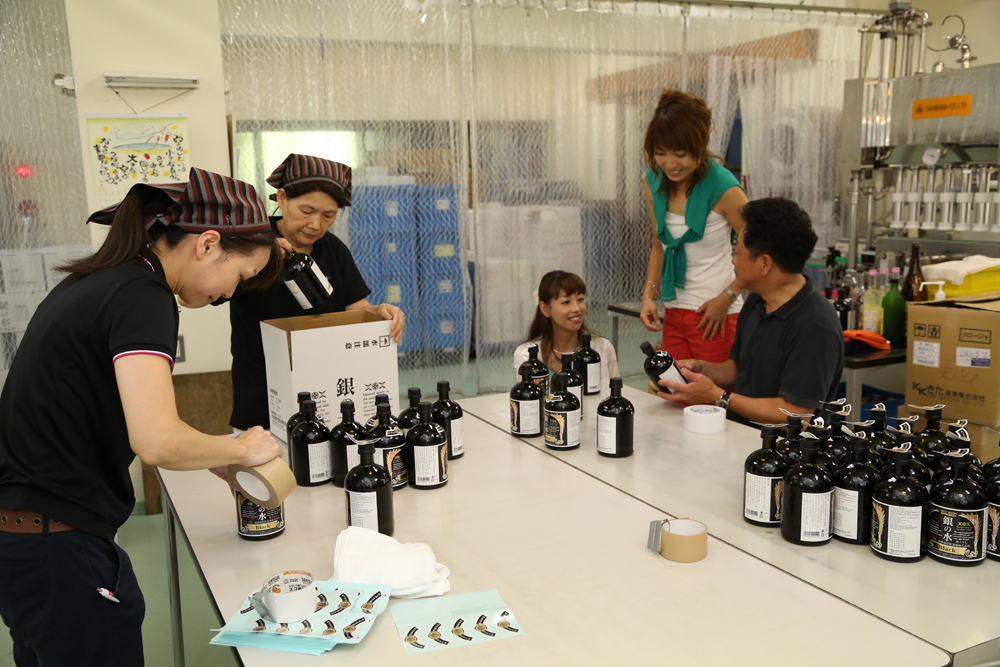
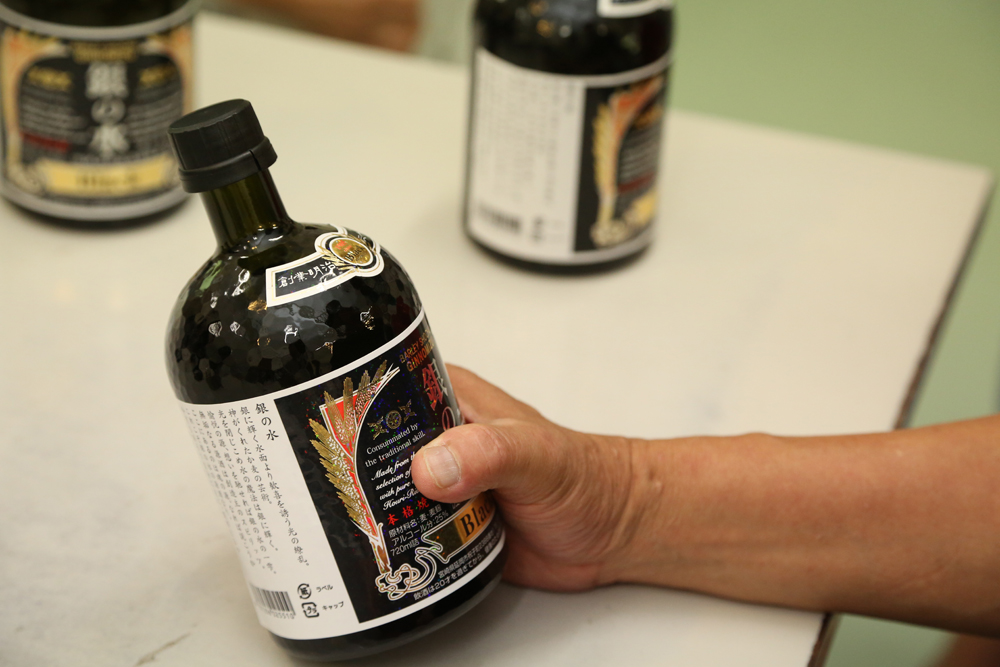
Shochu is made from a well-balanced combination of black, yellow, and white malt fungi, and finally, the ideal flavor is created by calculating the maturation period. The final step is distillation, a unique technique that vaporizes the liquor and then reconstitutes it as a liquid, which is the key to its flavor. The color of the distillate is not clear, but a fresh cobalt blue, which surprised me.
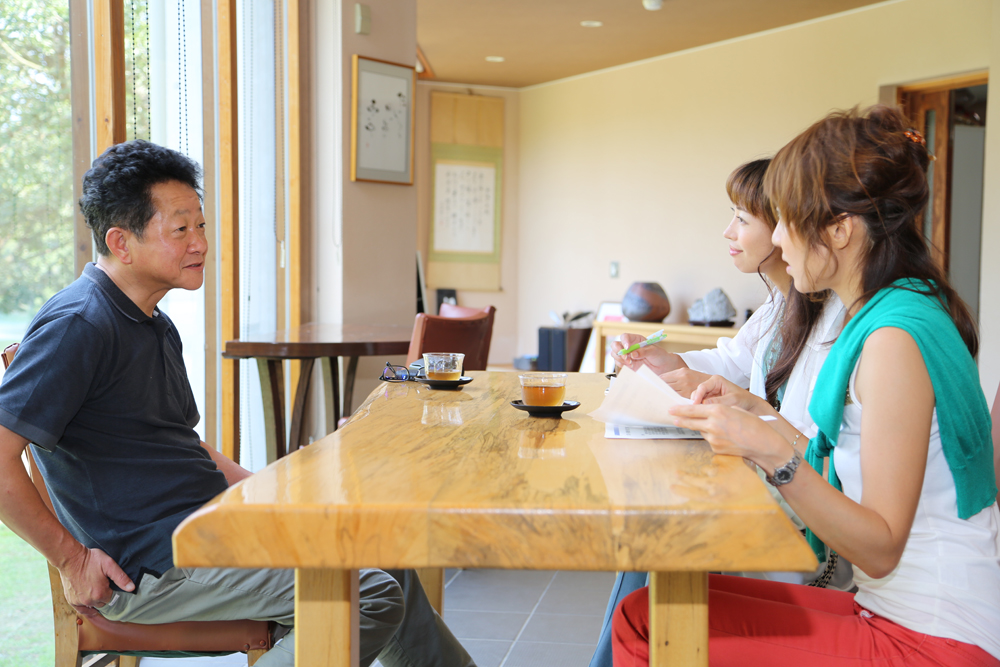
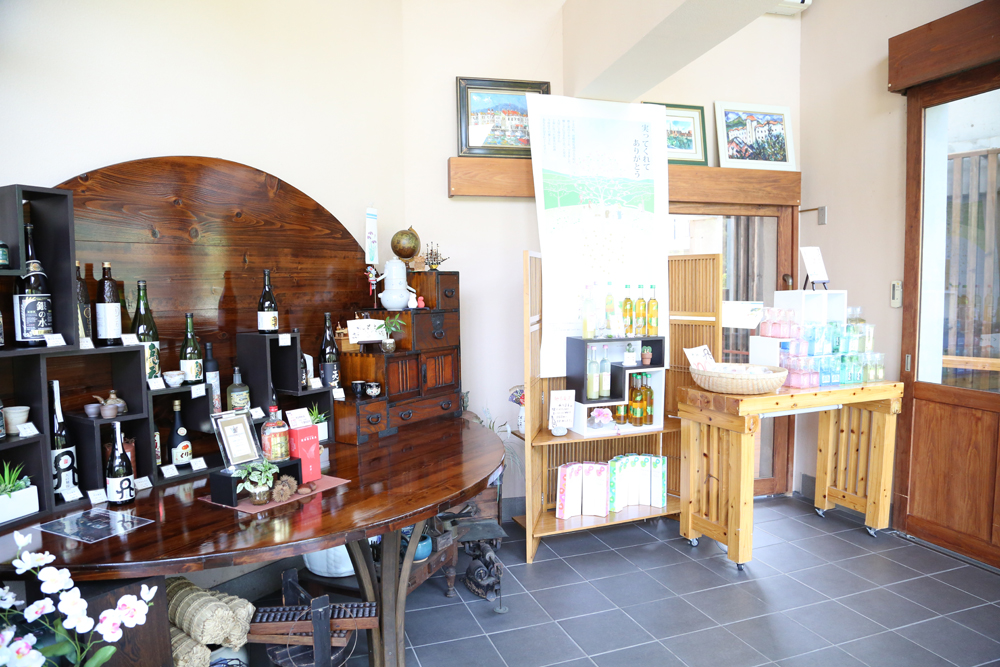
We sake brewers can only exist because of the culture, history, people, and crops of the region, and conversely, we must be necessary to the region as well. Since ancient times, people have lived hand in hand, needing each other. We believe it is important to maintain this kind of "village community" connection in the modern age, and to develop the community together. We built a new warehouse in the year that marked the 100th anniversary of the company's founding so that this place would become a place for such exchange. As we gradually give shape to our thoughts in this way, we will continue to refine our processing techniques for the "next 100 years," improve the quality of our products while working with farmers from the soil preparation of raw materials, and expand the products born from these relationships to overseas markets.
Female sake taster: Chiho Takei's recommendation☆.
(Tasting report by Chiho Takei, sake taster)
Mark of Heaven
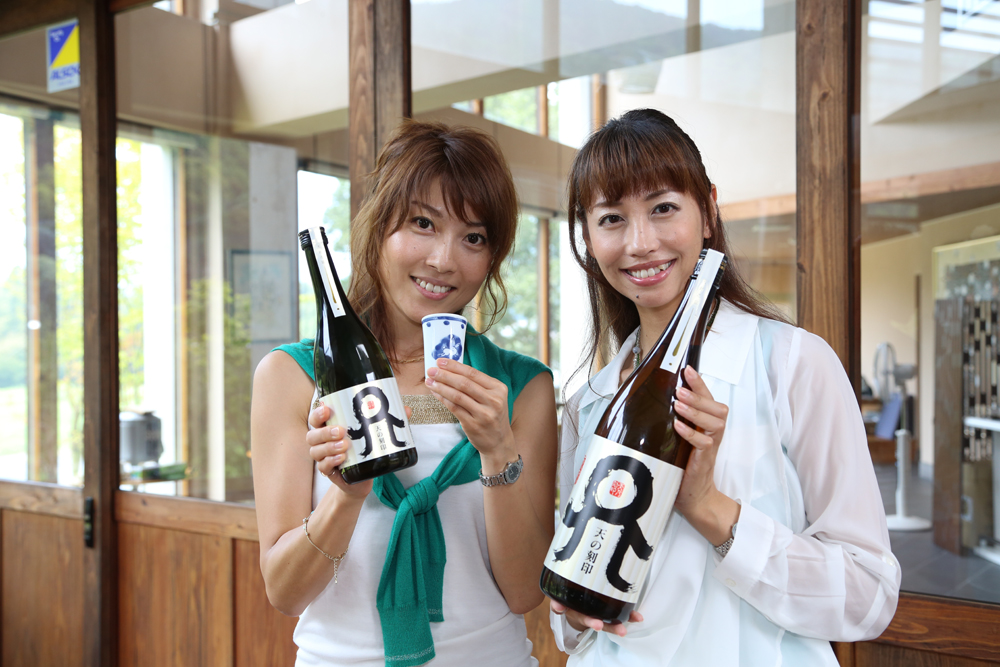
Left: Chiho Takei
Product Description】
Mugi Shochu is made from 2-row barley, cultivated by dedicated farmers. The shochu is stored in the basement, where the influence of the outside air is minimized, and it matures slowly. The name "Ten-no-Mark" is derived from the idea that "the relationship between man and heaven is like the encounter between a person who wants to drink delicious shochu and this Mugi Shochu "Ten-no-Mark".
Recommendations】
The mouthfeel has a clean barley freshness and sharpness that comes from moderate aging. The sharp barley aroma does not interfere with the food, and it glides down the palate as if it is cleaning the throat. It is a perfect food sake and goes well with oily food. The aftertaste is also smooth, but it leaves a strong umami taste in the mouth, and the mildness that lingers afterwards makes you want another glass. It is a pleasant shochu that you can always have by your side to heal you when you are tired and to fill your heart!
Liangtian Yoshiho
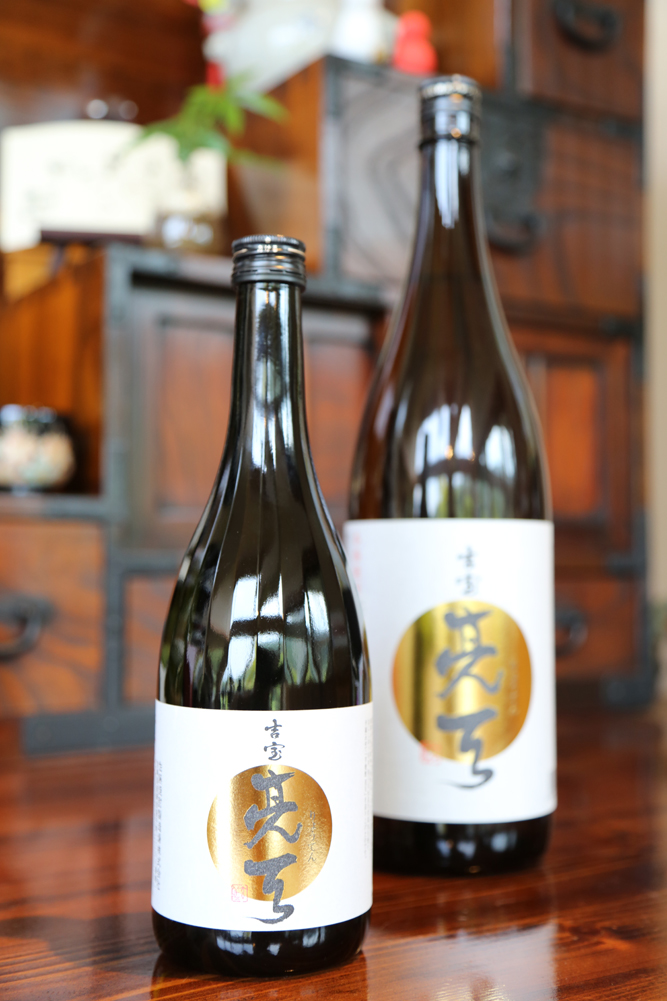
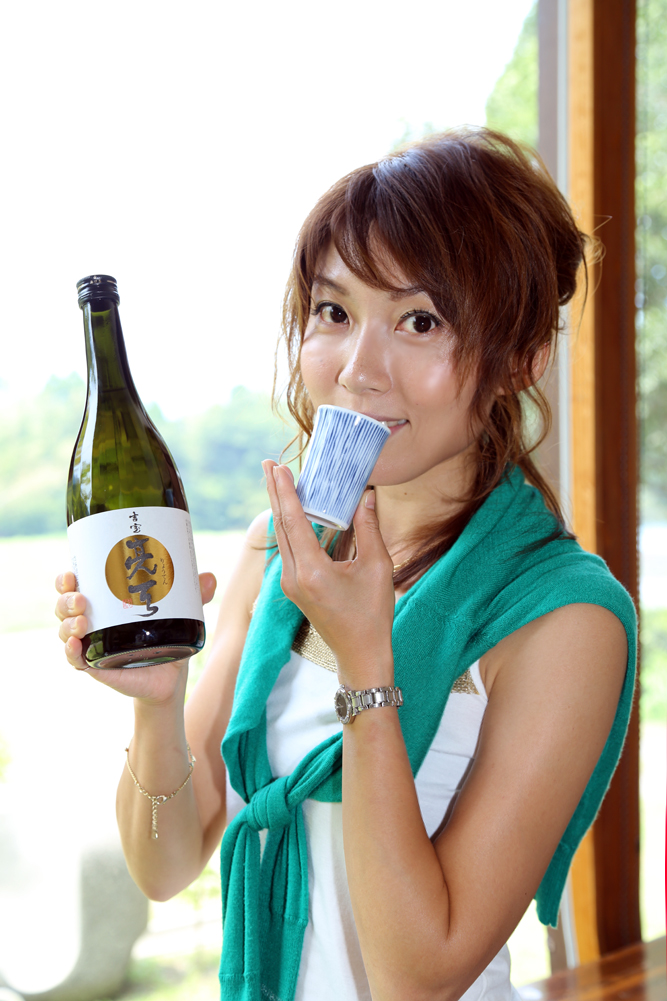
Product Description】
This sweet potato shochu is made from high-quality sweet potatoes and carefully brewed and distilled with soft water from the Shukushigawa River system. Brewed with white malted rice, it has a clean and refreshing taste that brings out the deep sweet potato flavor. A product brewed with black malted rice under the same brand name of Kippo Ryoten is also popular.
Recommendations】
The aroma is soft and sweet, but not too strong and light. The mouthfeel is not sharp, and the sweetness and umami of the original sweetpotato are in harmony, giving a very soft impression. The taste of sweetpotato can be felt well, but it is not too assertive. There is such an elegant sweetpotato shochu liqueur! I would like people who don't like the unique aroma of sweetpotato shochu to experience it. At the end of the day, pour it into your favorite cup and be enveloped by this sweet and bewitching aroma and its full lingering taste. ...... It is truly a blissful time!
Report on Sentoku Shuzo Co.
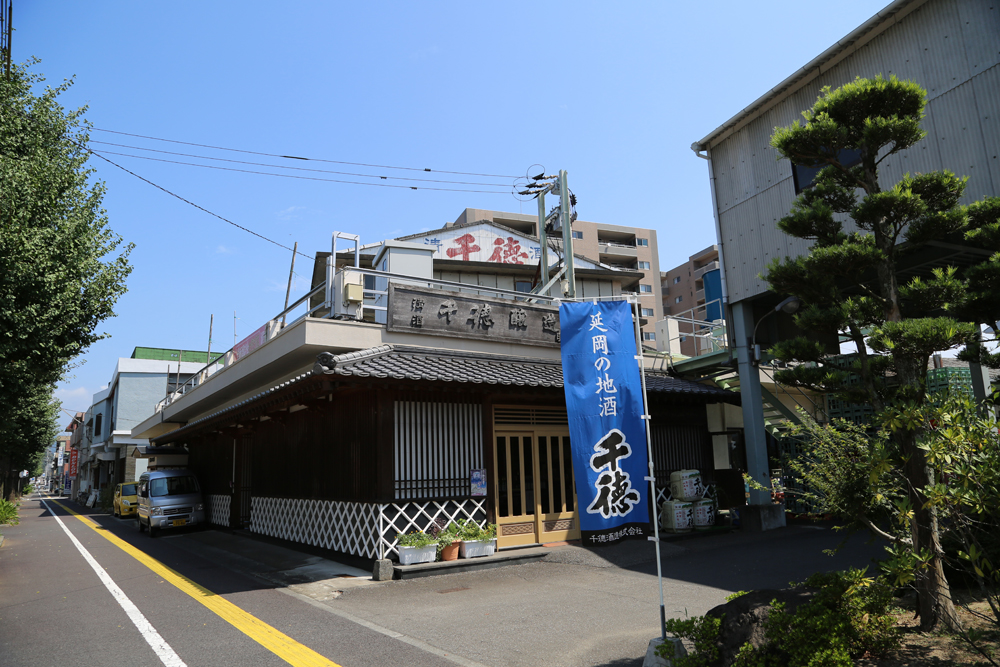
Address: 2-1-8 Ose-machi, Nobeoka City, Miyazaki Prefecture
Phone: 0982-32-2024
FAX: 0982-32-2169
URL:http://www.sentoku.com
Sentoku Sake Brewery Co.
1903 Tsunetomi Sake Brewing Joint-Stock Company is established on the present site.
1927 Tsunetomi Sake Brewing Joint-Stock Company is dissolved and Nobeoka Sake Brewing Company is newly established.
In 1944, due to the Control Law, three breweries including Nobeoka Shuzo merged and became Nobeoka Shuzo Brewery,
Established Hyuga Brewery Co.
1961 Hyuga Shuzo is renamed Sentoku Shuzo and the company building is renovated
1988: The brewing warehouse is reconstructed.
2003 Kumamoto National Taxation Bureau Sake Distinctive Merit Award
Gold medal in the 2004 National New Sake Competition
2005 Hanakagurakan opened.
Daiginjo Sentoku" won the Gold Prize in the 2005 National New Sake Competition.
2007 Second Prize, 2007 Spring National Sake Competition
2008 Kumamoto National Taxation Bureau Sake Distinctive Merit Award
Won the Gold Prize in the 2009 National New Sake Competition
Won the Gold Prize in the 2010 National New Sake Competition
2011 Kumamoto National Taxation Bureau Sake Distinctive Merit Award
2012 New brew of sake competition, Finalist, National New brew of sake competition
Kumamoto Regional Taxation Bureau Sake Competition, Superior Award Representative
Speech: Mr. Kenshi Kadota, President & Toji, Sentoku Shuzo Co.
Located near the Ose River, Sentoku Sake Brewery is the only sake brewery in Miyazaki Prefecture. Currently, there are 38 sake breweries in Miyazaki Prefecture (registered with the Miyazaki Prefecture Sake Brewers Association) that make shochu, sake, wine, and beer. Among them, only one brewery, Sentoku Sake Brewery, produces only sake.
Sentoku Sake Brewery is committed to "traditional manual work. From rice washing to shipping, the processes that can be done by hand are done by hand, and when a machine is used, the brewery always checks with its own eyes to understand the details of the process.
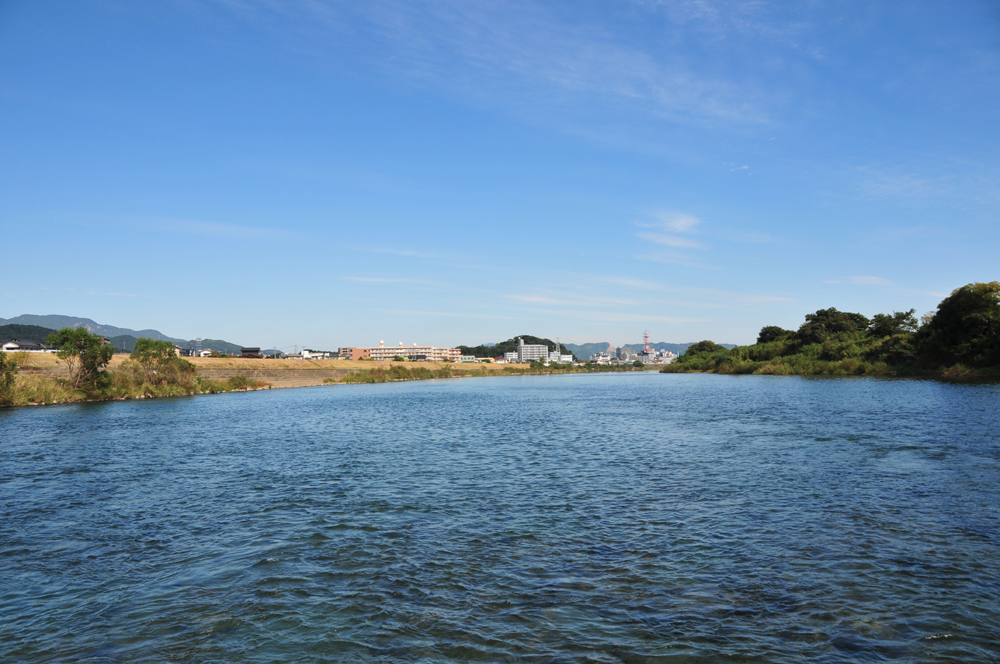
The Ose River runs near the Sentoku Sake Brewery. The Ose River flows near the Sentoku Sake Brewery, and in autumn it is covered with "ayu yana" (sweetfish), a typical Nobeoka sight.
A cause like the slightest misplaced button can drastically alter the taste of the finished sake. To avoid overlooking even the slightest cause, I not only give instructions but also check with my own eyes without fail. I can't let up until the sake is finished," says Kadota.
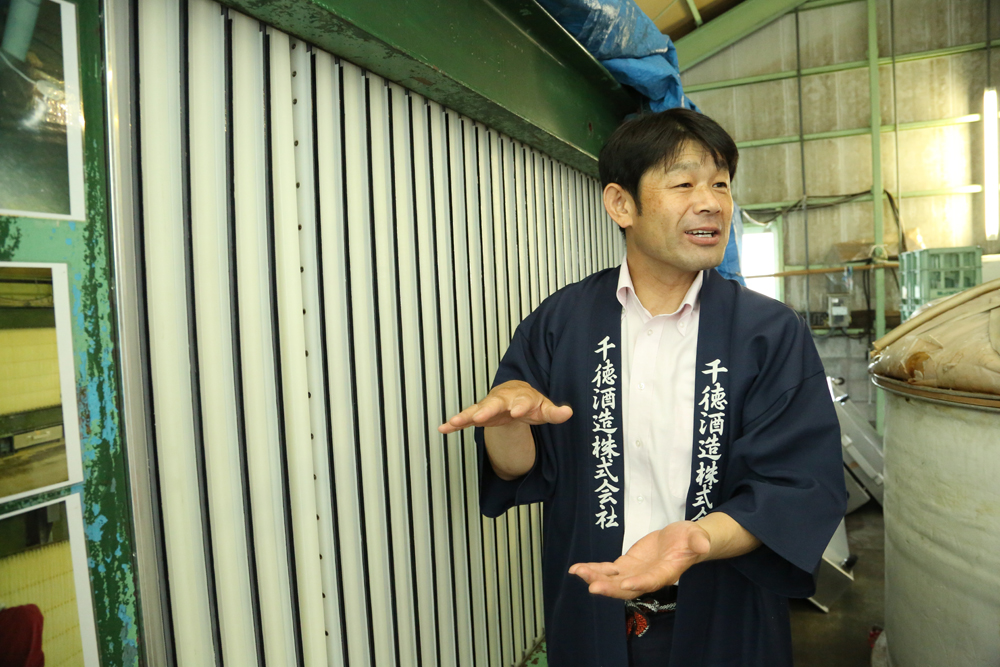
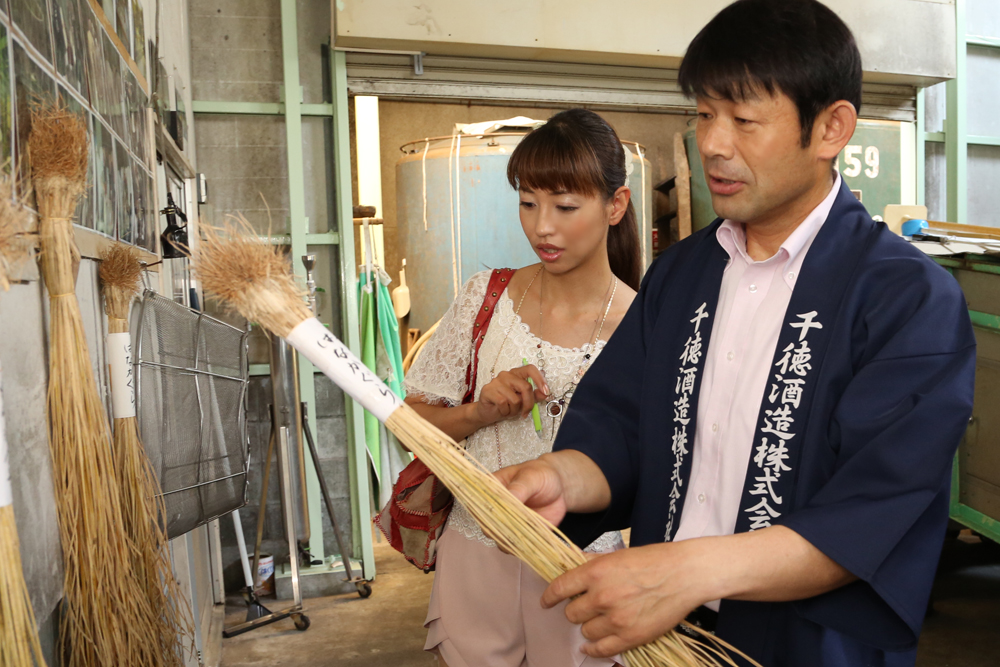
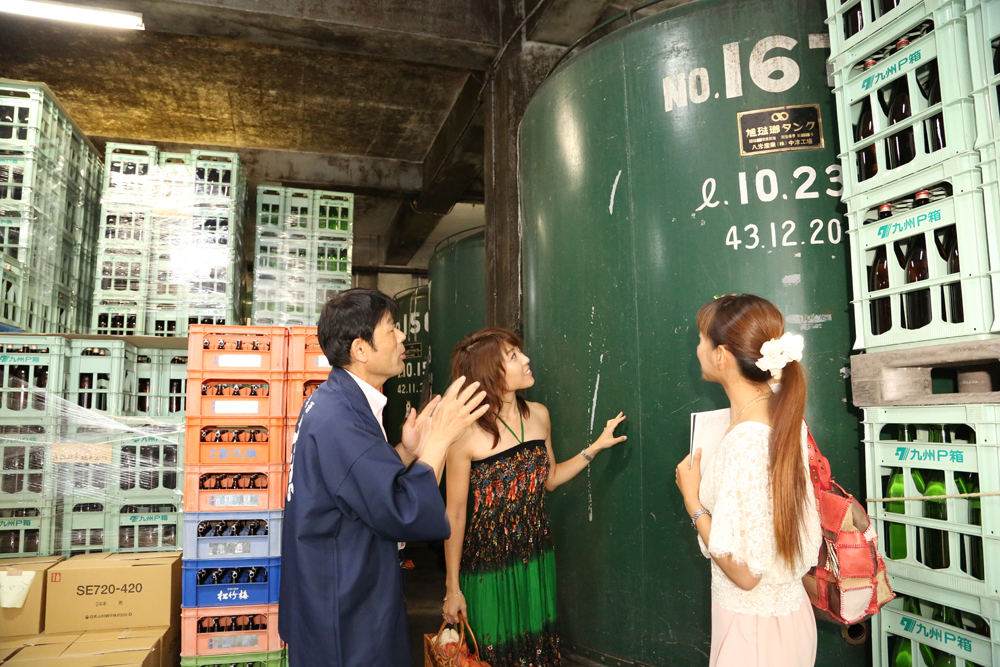
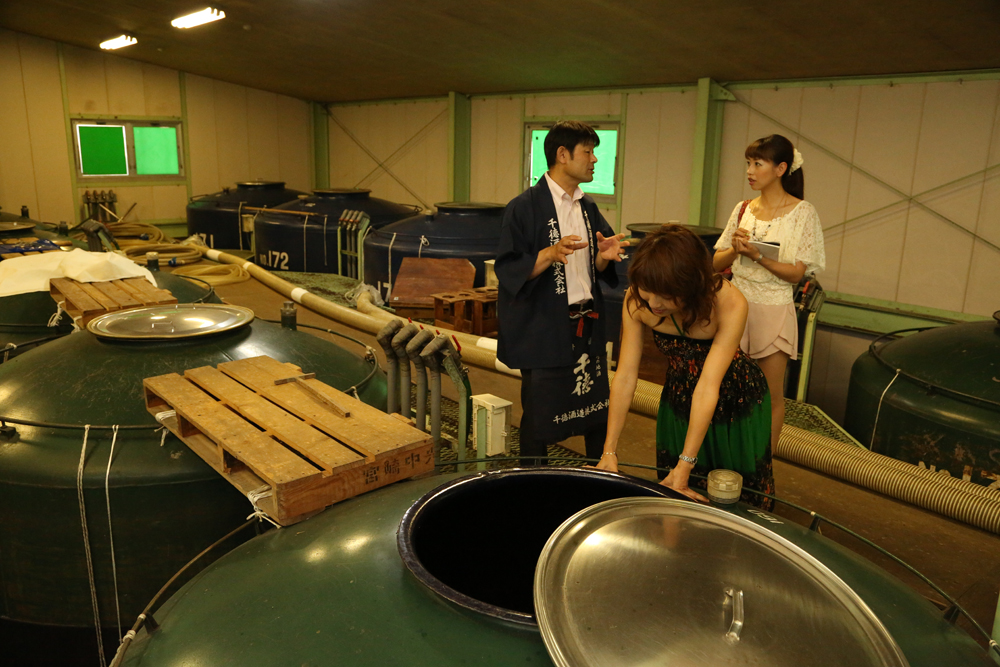
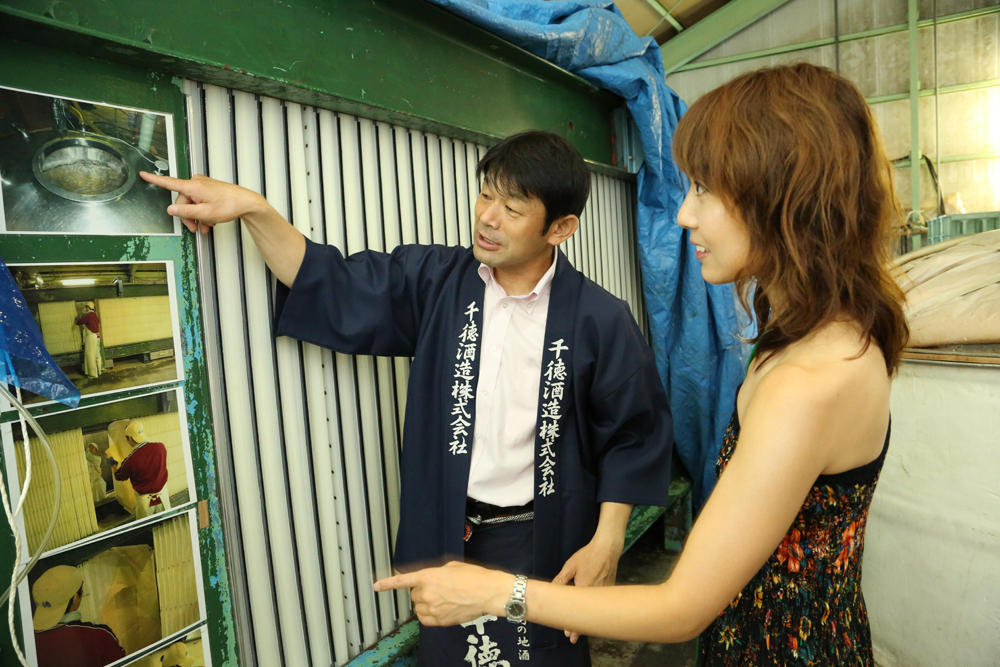
The rice used as the raw material is Yamadanishiki produced in Takachiho, and another variety called "Hanakagura" is being developed in Miyazaki Prefecture. The rice used as the raw material is produced by designated farmers, and the sake is brewed in the three-stage brewing process, which is characteristic of sake brewing, from the rice polishing process.
The sake brewing process is a true test of craftsmanship, as the ideal taste cannot be expressed without careful attention to every step of the process. For example, the time required for washing rice is measured, rice is always polished by a "rice polisher" because any variation in the type of rice can affect the taste, and the polished rice is then sieved to uniform size. The brewing process in Miyazaki Prefecture, with its high temperatures, is difficult to control and requires the use of huge ice cubes, and the entire process is very nerve-wracking. In particular, the most nerve-racking part of the brewing process is the koji making process.
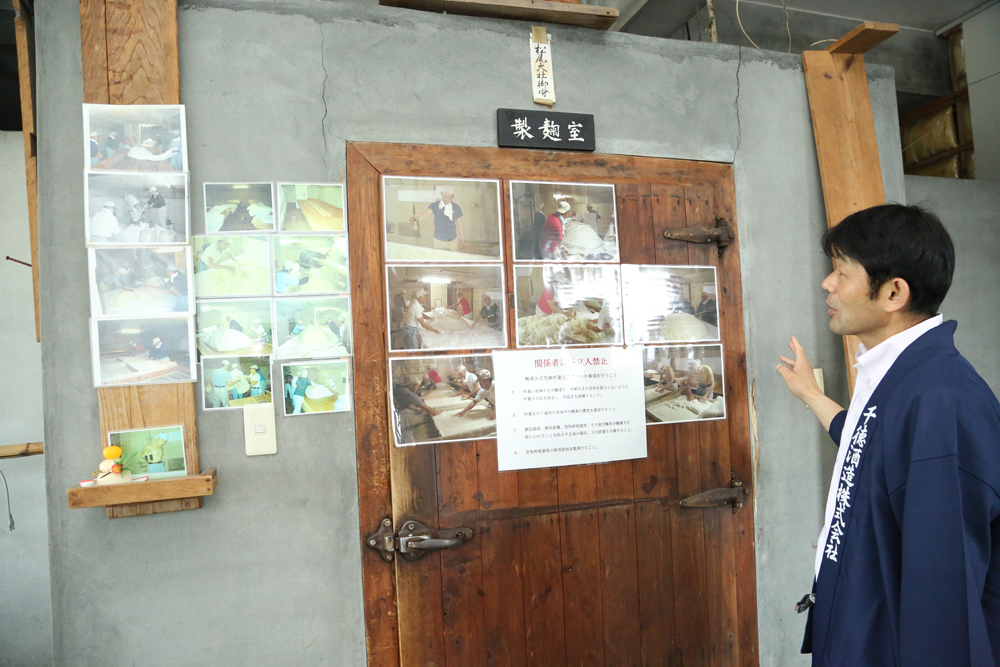
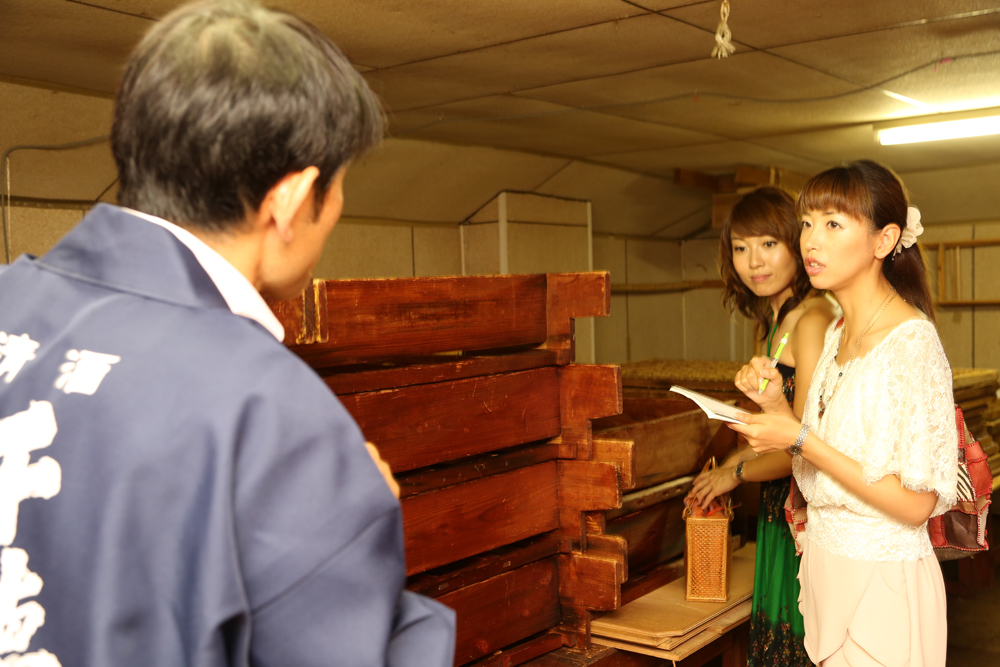
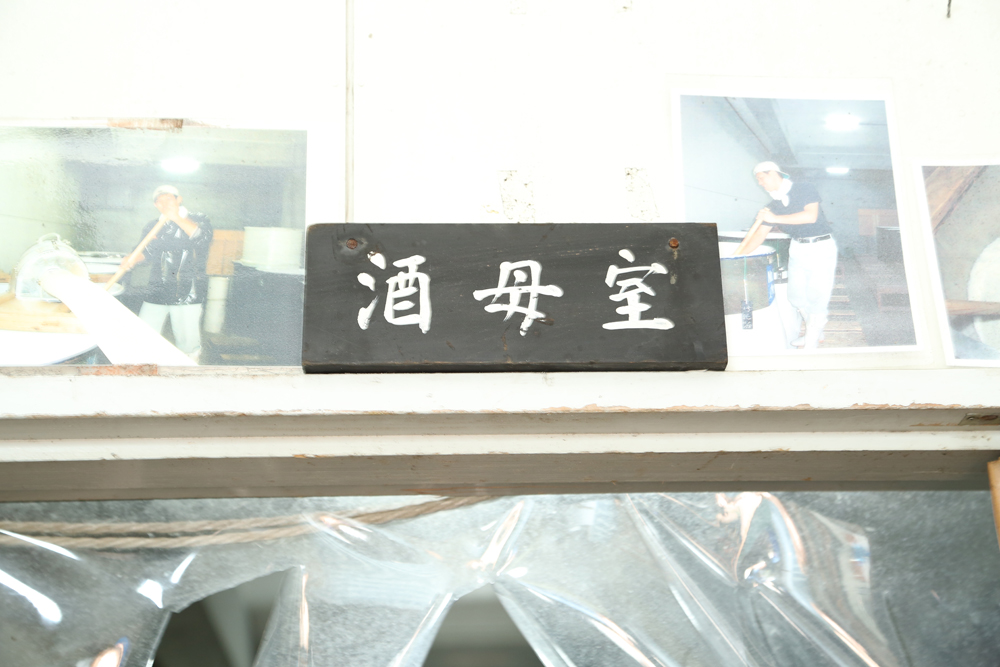
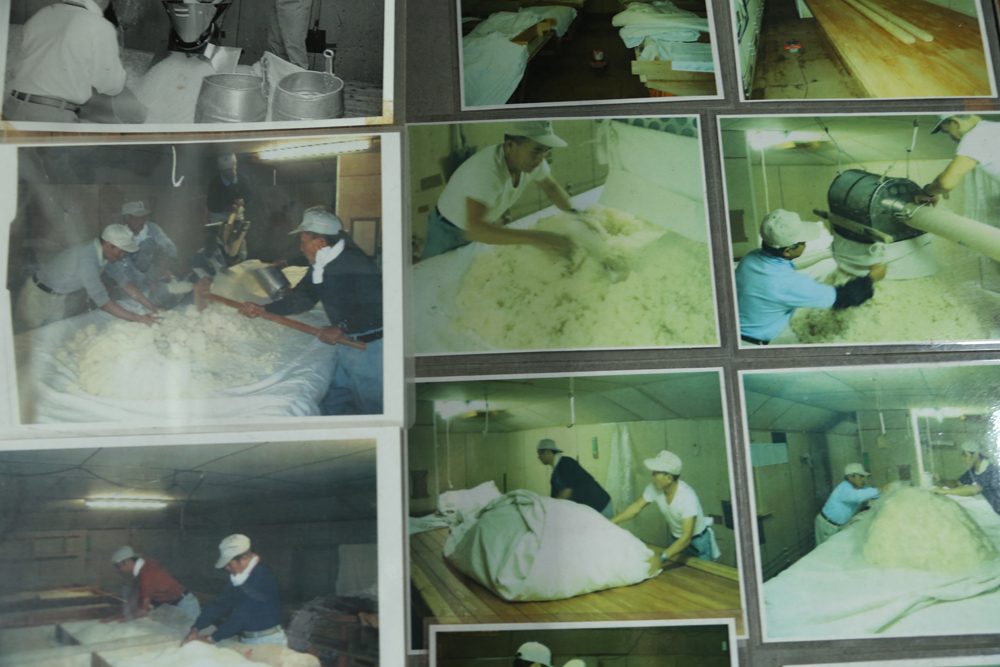
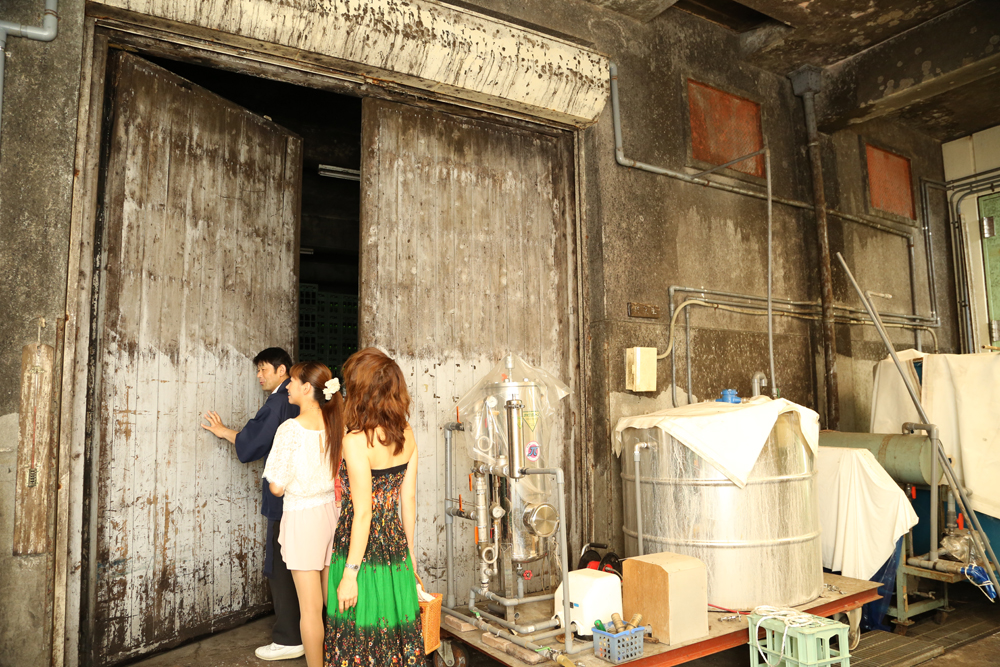
We were allowed to enter the koji making room and the sake brewing room on this occasion. Normally, only the person in charge is allowed to enter these rooms for sterilization.
Koji is the lifeblood of sake brewing. If good koji is not grown here, the alcohol content will not be stable and the ideal flavor cannot be produced. In order to grow healthy koji, we take care to prevent bacteria from entering the koji room and control the temperature to produce koji. The koji room used to be a sacred work place for men, so much so that it was considered "women-only. Koji is a living creature, so we thoroughly control the temperature and humidity to make it most comfortable. It is like your own child or lover. ...... Or rather, we raise it with great care and tenderness, as if we were treating it like a princess."
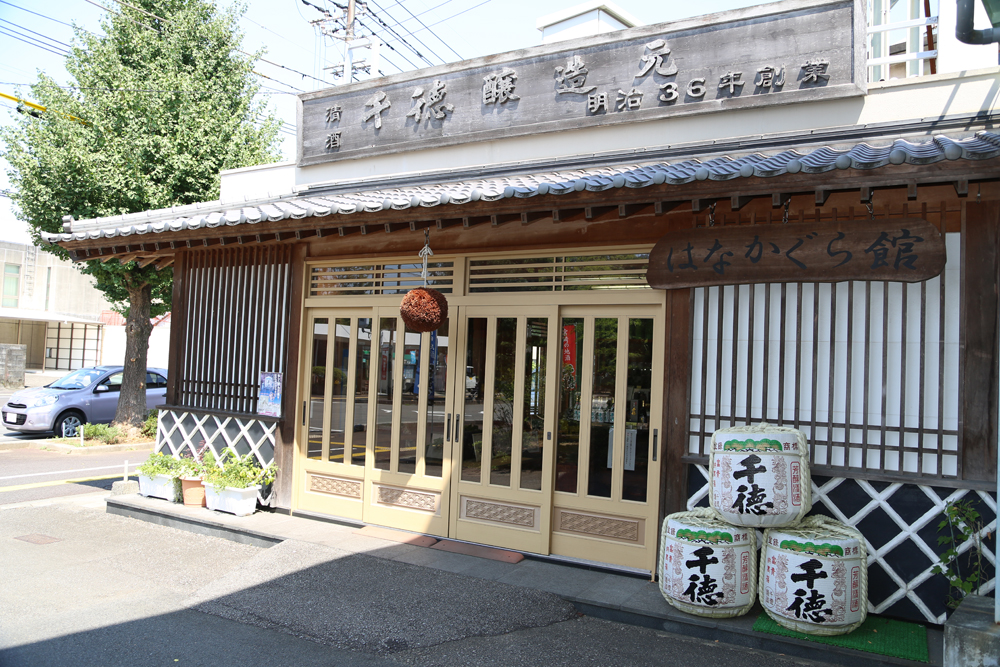
Hanakagurakan," a store completed in 2005 where you can directly purchase Sentoku Sake Brewery's sake.
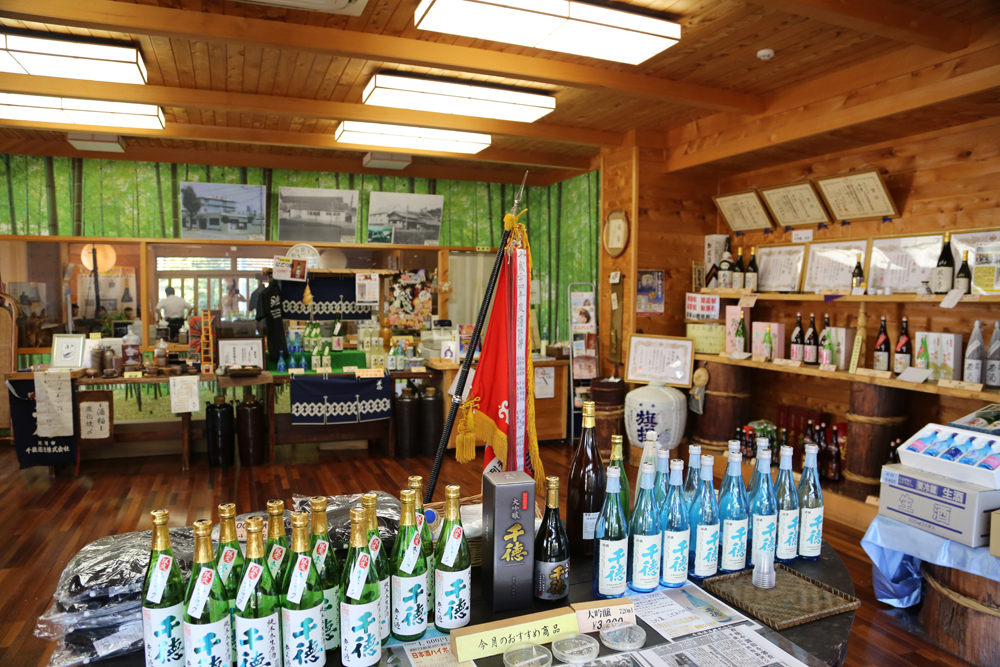
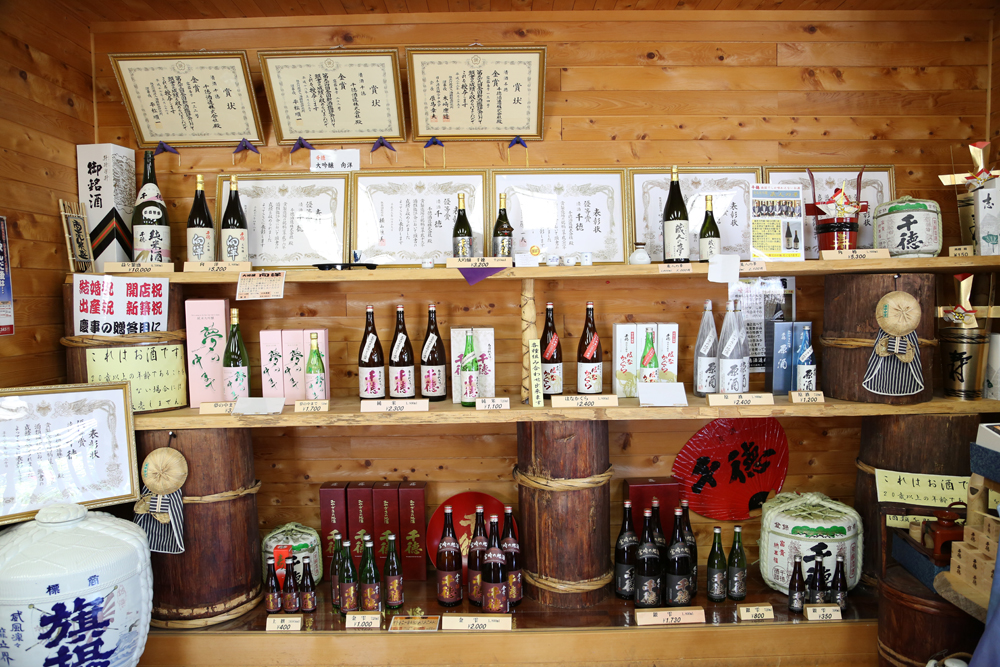
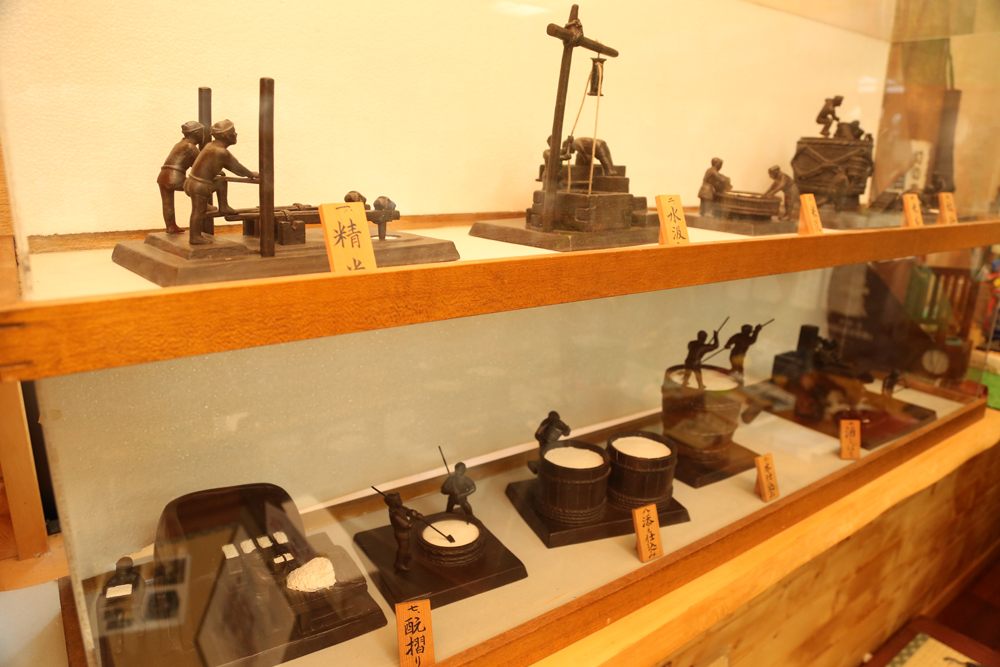
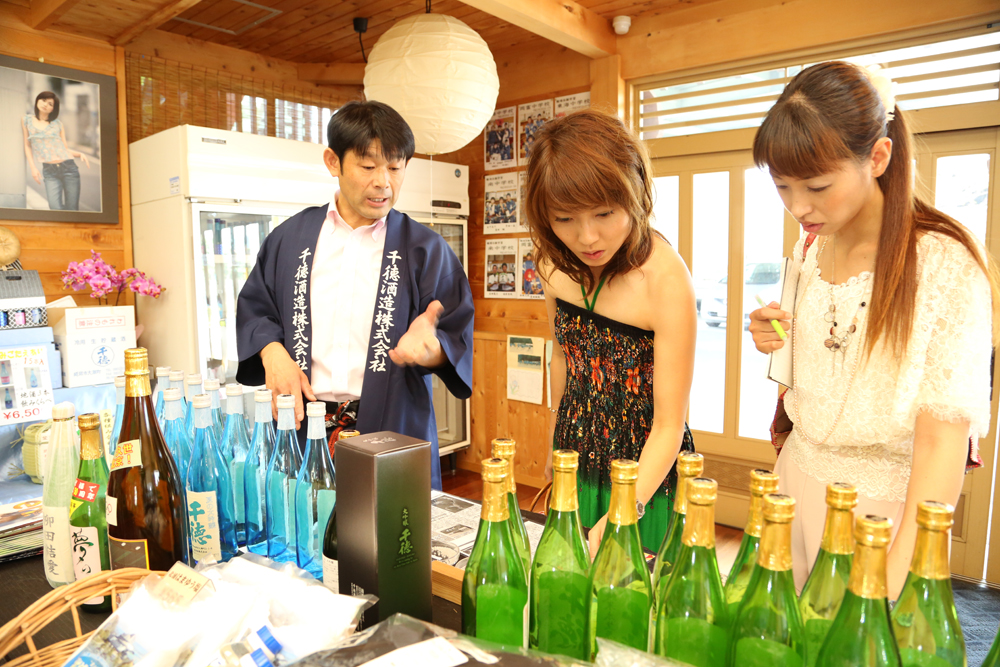
In the future, in addition to maintaining the basic products of the Sentoku Brewery, we would like to propose new ways to drink sake, such as white wine-like sake with a lower alcohol content or sake that can be mixed with alcohol or used in cocktails, so that people who were not familiar with sake can become familiar with it. In addition, we would like to increase opportunities for local people to become more familiar with local sake by holding tasting events. It is true that sake production in Miyazaki Prefecture, with its high climate, is becoming more difficult with global warming. However, we would like to maintain the traditions that we have continued up to now and, conversely, develop a new form of sake that we can only undertake because we are the southernmost sake brewery in Japan.
Female sake taster: Chiho Takei's recommendation☆.
(Tasting report by Chiho Takei, sake taster)
Junmai hon-nama sake Sentoku
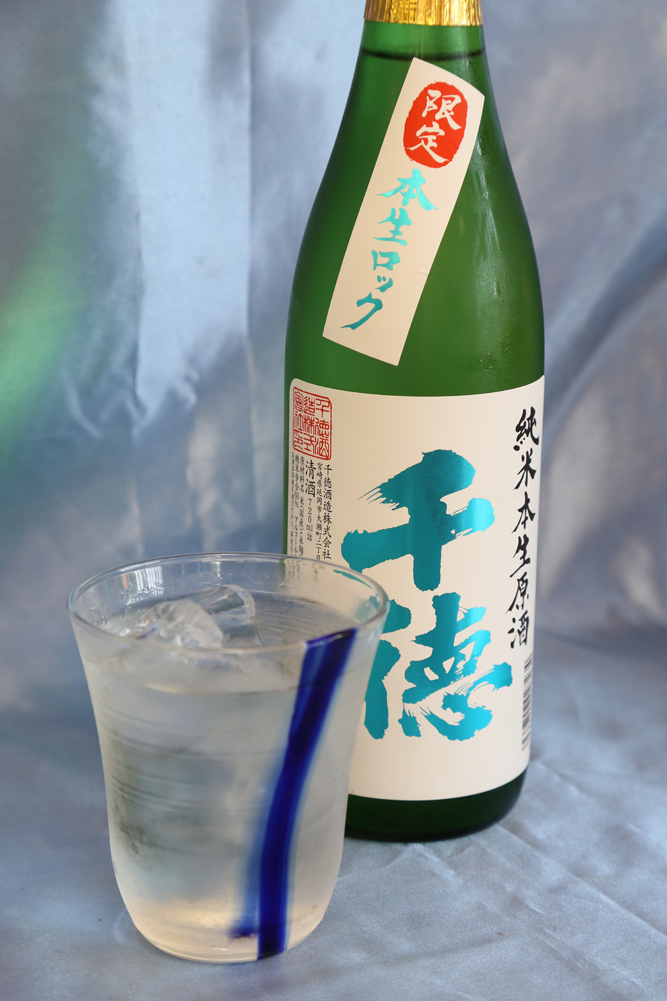
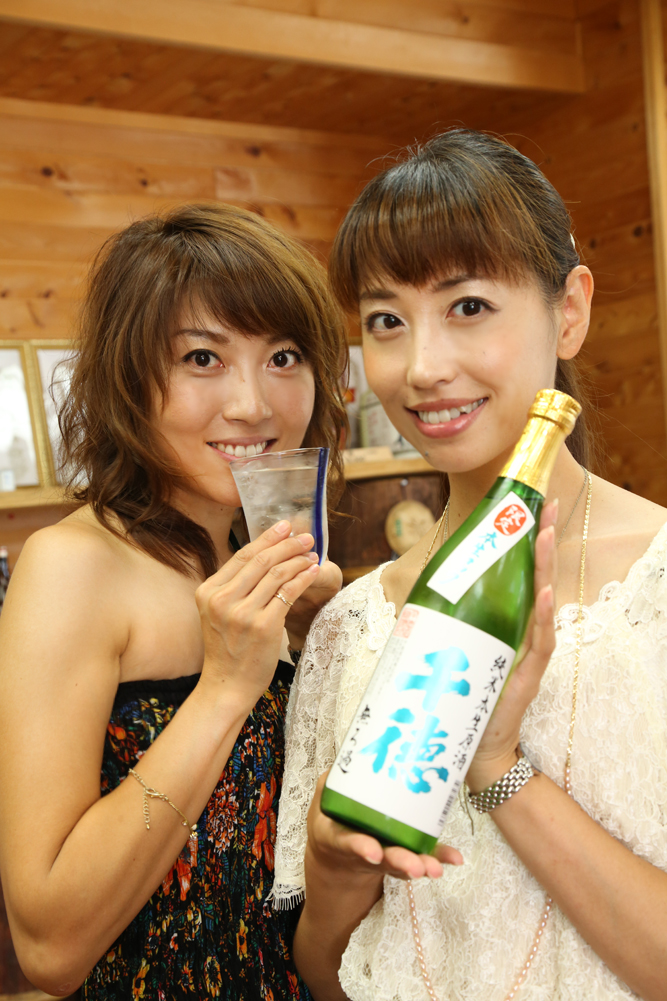
Product Description】
This limited summer product is made from 100% Yamadanishiki produced in Takachiho. It is brewed with in-house cultivated yeast and aged at low temperature for six months without filtration. The alcohol content is high at 17% because it is a "junmai hon-nama sake," but the concept is that it can be enjoyed over ice or other drinks.
Recommendations】
Even if you are a sake lover, you may feel a little ...... during the hot season. But this is a sake that is not only for the sake itself, but also for the sake of the people around you. However, this is a groundbreaking product that the brewery dares to suggest, "Let's drink it with a glass of sake! This is a groundbreaking product proposed by the brewery. Pour it into a rocks glass filled with ice, and you will hear a cool clinking sound. As one would expect from a junmai sake that is full of the flavor of the rice itself, even when mixed with soda, it retains its richness while maintaining a refreshing sensation down the throat. It can be mixed with soda to make a sake highball, or you can find your favorite way to drink it. Of course, if you are used to drinking sake with a strong and robust flavor, you can also enjoy it as it is!
Happoshu Hajimari
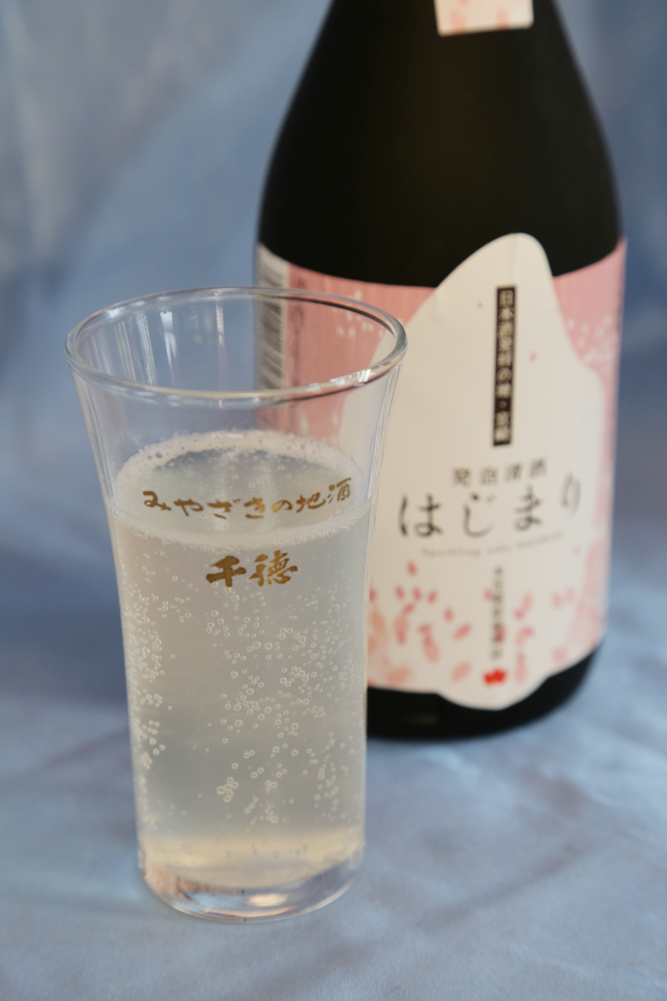
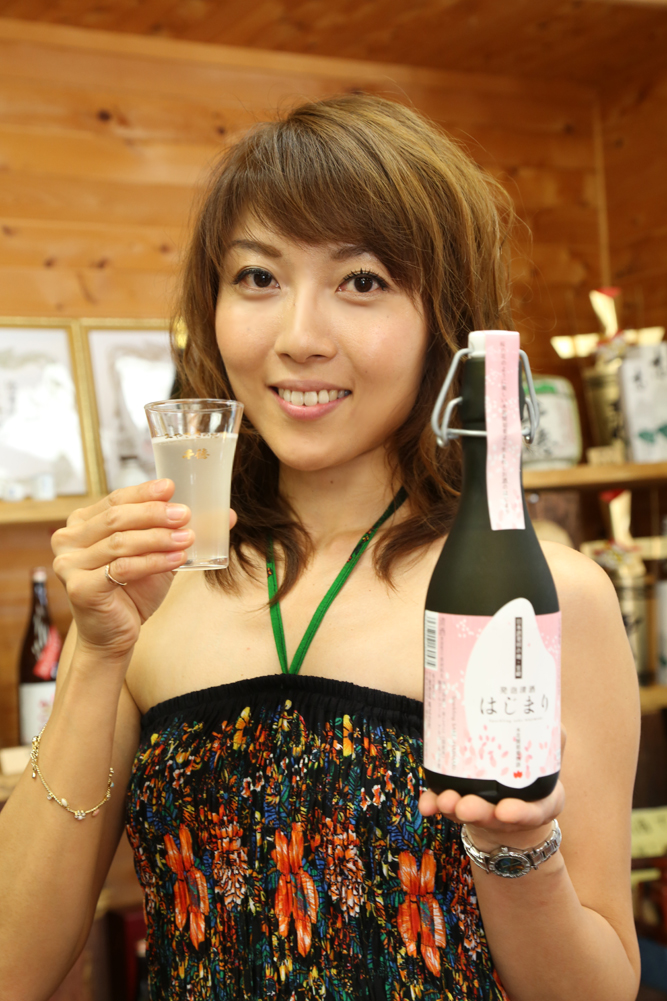
Product Description】
This sparkling sake is made from "Hanakagura" sake rice produced in Miyazaki Prefecture and fermented in the bottle to produce carbon dioxide gas like champagne. The alcohol content is low at 9%, and the cute pink label is eye-catching.
Recommendations】
Recommended for sake beginners and women, after all! The moment you put it in your mouth, you may think, "Is this really sake? The first mouthful is so juicy, sweet and sour that it makes you wonder if it is really sake, but the aftertaste is smooth and non-greasy. Even those who have always had aversion to sake may be surprised. ...... Pour it into a flute glass and its gorgeous aroma rises with the bubbles, making it beautiful to the eye and perfect for a toast. It is a bottle that will make a wonderful "beginning" for you.
Miyazaki Hideji Beer Co.
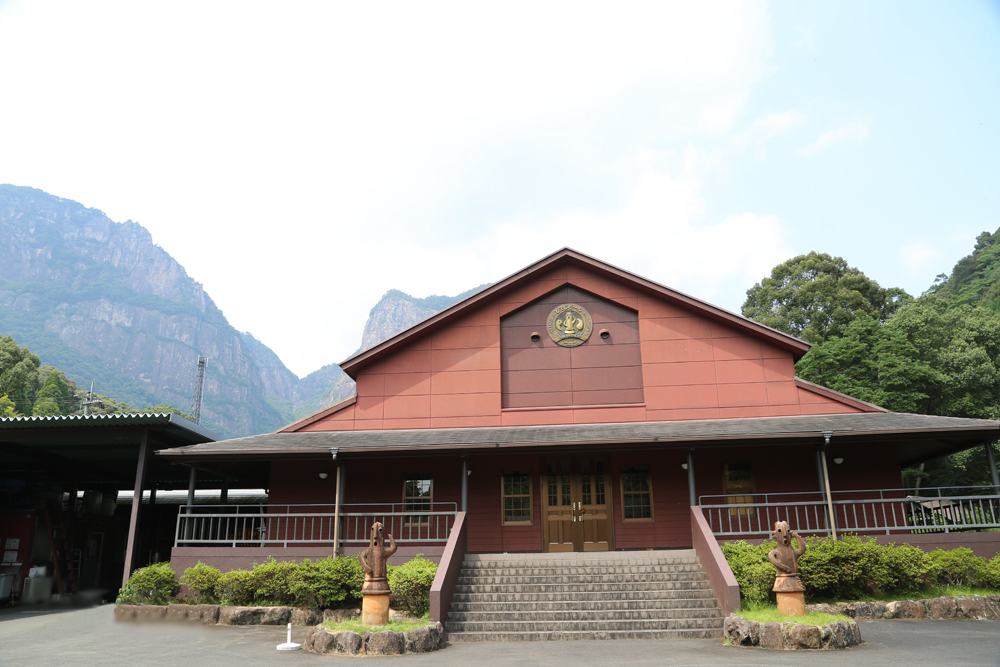
Address: 747-58 Mukabaki-cho, Nobeoka City, Miyazaki Prefecture
Phone: 0982-39-0090
FAX:0982-38-0080
URL:http://www.hideji-beer.jp/
Miyazaki Hideji Beer Co.
1996 Hideji Beer Brewery established in Gyodarning-cho, Nobeoka City
1996 Restaurant "Riverpia" opened in Nakamachi, Nobeoka City.
1997 Bottling equipment was installed and sales in bottles began.
2006: Beer yeast pure autoculture technology introduced.
2007 Awarded the Excellent Taste Award by the iTQi International Food Jury
2009 First Miyazaki Prefecture Superior Prefectural Product Recommendation System Certification 2009 Japan Asia
A Beer Cup 2009
Gold Medal in the Pilsner Bottle category for "Lager of the Sun
Second directly managed restaurant "Nobeoka Barley Sake Store Hideji Japanese Kitchen" opens.
International Beer Competition 2009
Gold Medal in the German Pilsner category for "Lager of the Sun
Mole (now Morikan no Pale Ale)
American Pale Ale Bronze Award
2010 Japan Asia Beer Cup 2010
Dark Lager of the Month" Bronze Prize in the Dark Lager Bottle Category
2010 Miyazaki Hideji Beer Co. established from Nishida Co.
*Beer production and sales division* becomes independent and operational
2012 International Beer Competition 2012
Hozakura Kinsei" Gold Award
Story about: Tomoyuki Katahekabe, Head Brewer
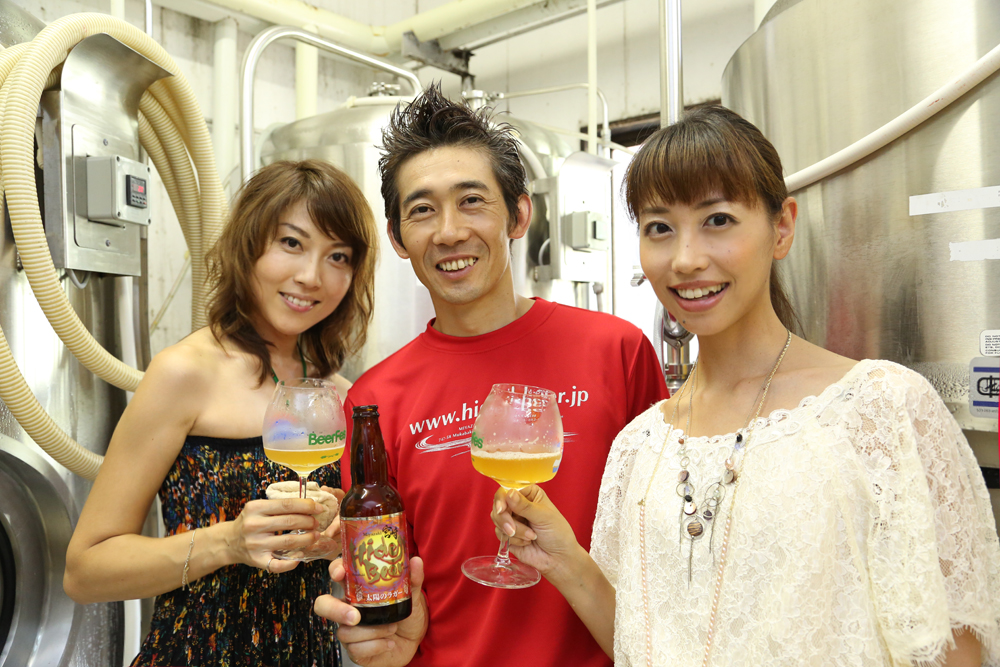
Miyazaki Hideji Beer is located at the foot of Mt. Gyodasu, a mountain rich in nature located in the upper reaches of the Gokase River system, and has won two gold medals in two major domestic microbrewing competitions, as well as a gold medal (world's best) in a global competition.
One of the characteristics of this beer is that it uses water from Mt. Gyodari, a mountain rich in nature where the factory is located, and ingredients such as flavored beer are produced in Miyazaki Prefecture, always keeping in mind "a local beer that can only be expressed in this region.
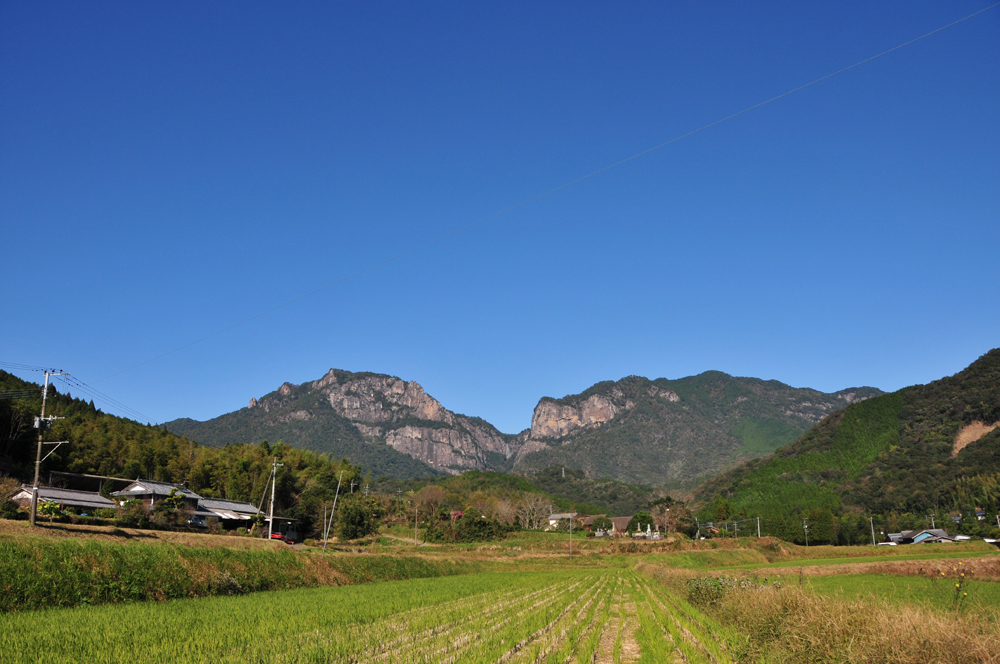
Gyodarning from near Miyazaki Hideji Beer Factory
When it was first established in 1996, the brewery imported raw materials and technology from both inside and outside of the city to produce and brew its beers. However, the brewery renewed its brewing technology and worked single-mindedly to develop high-quality, safe, and reliable products, and today it has won the world's top award and is the focus of attention not only in Japan but around the world.
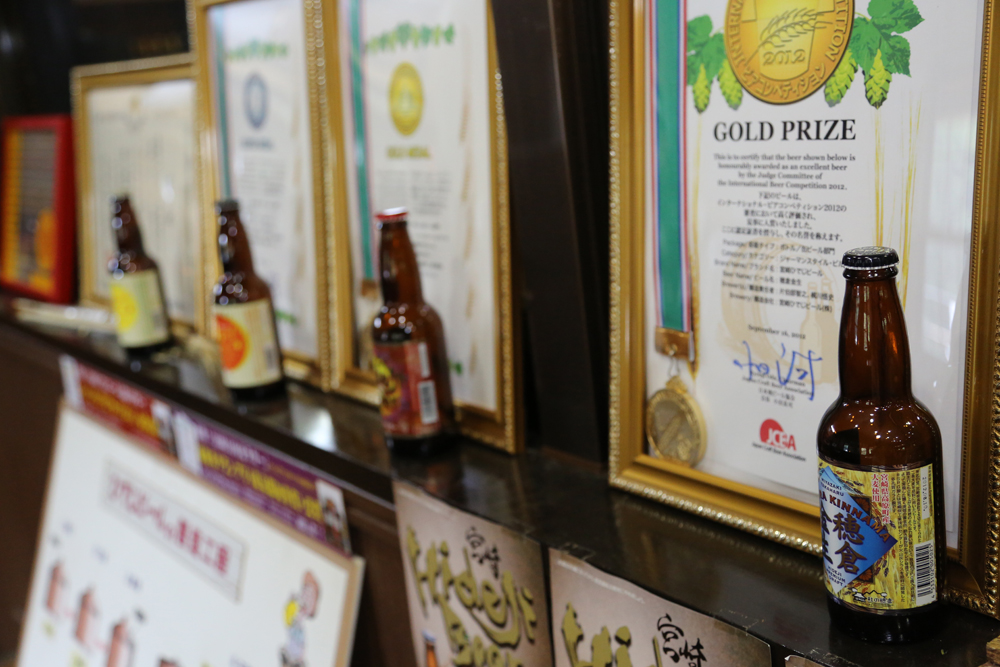
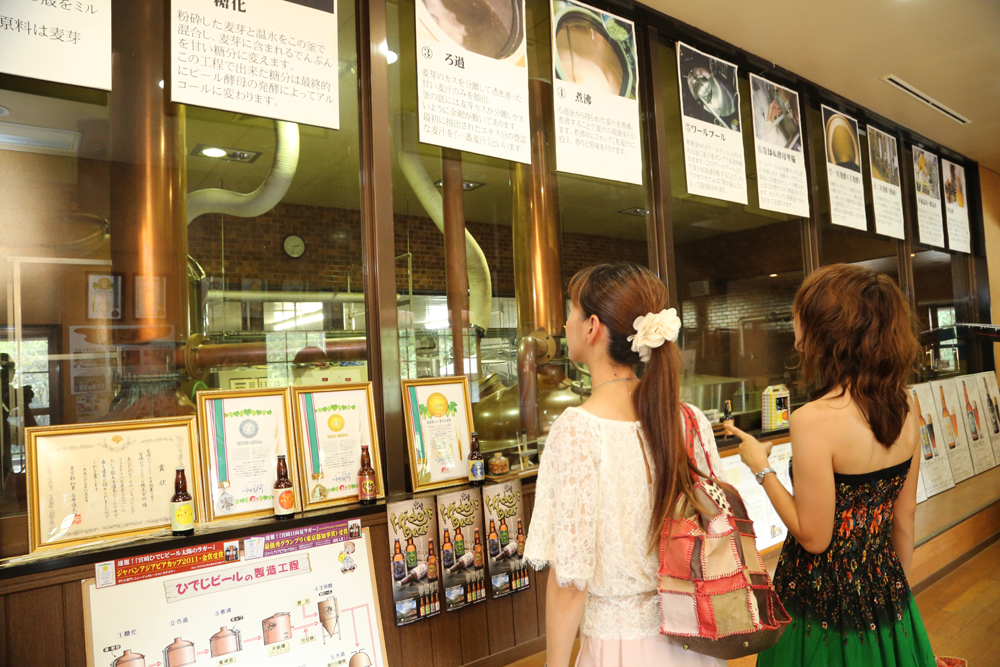
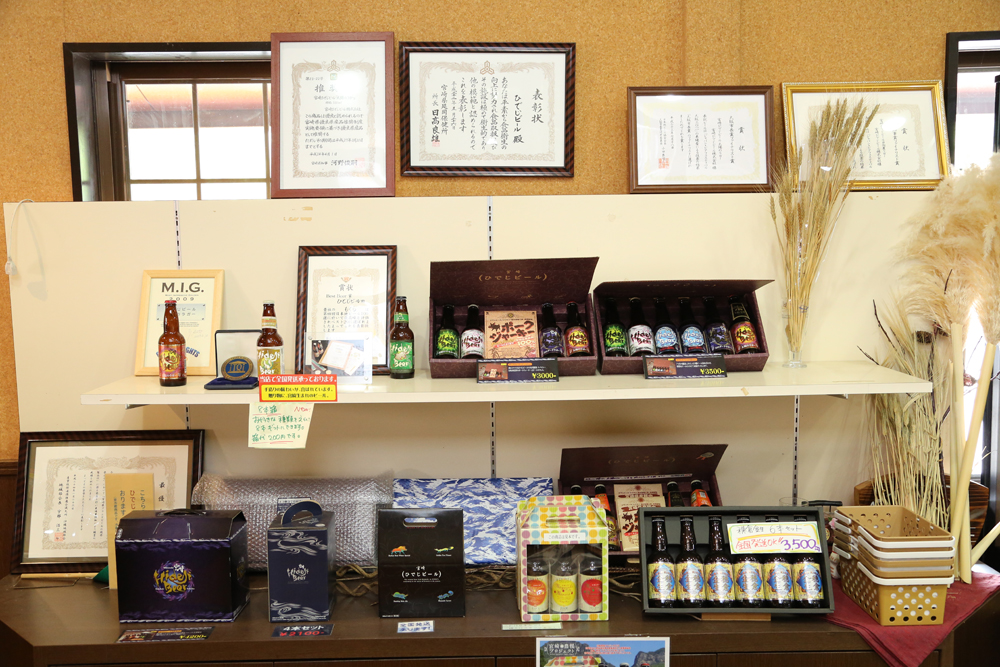
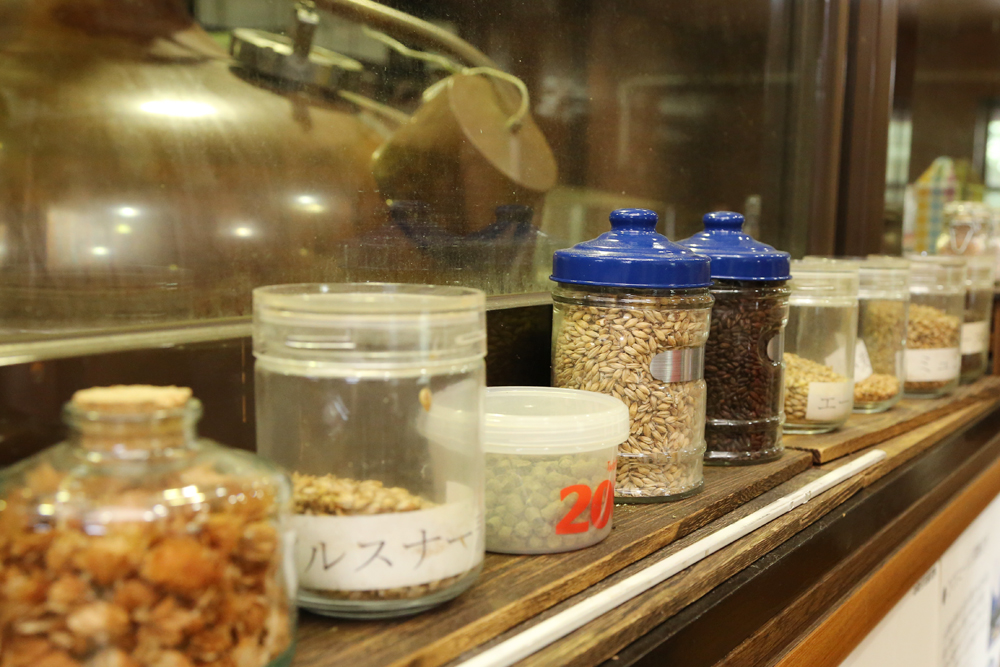
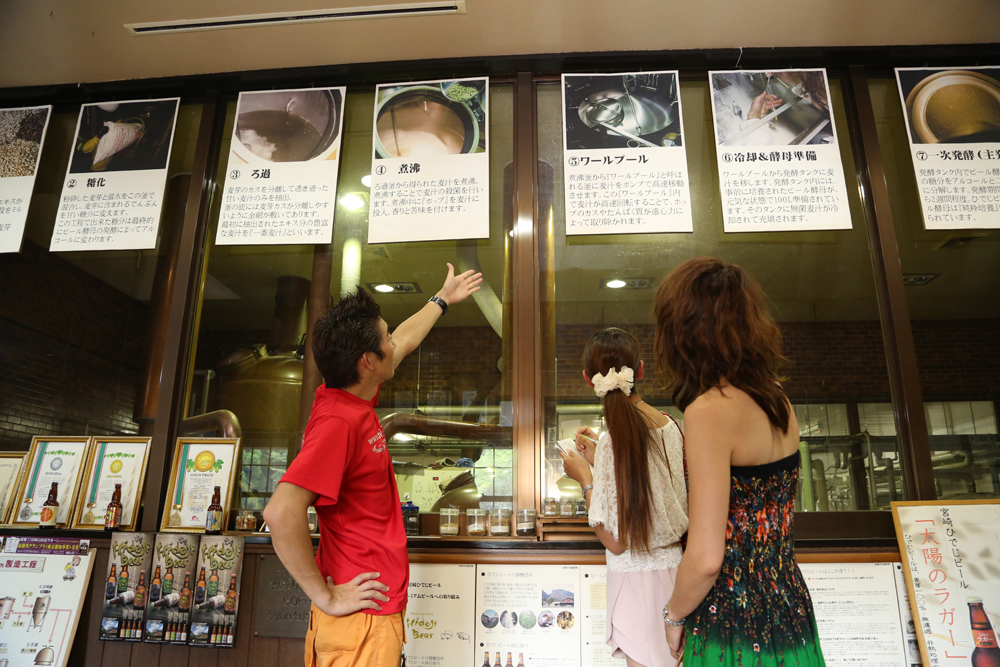
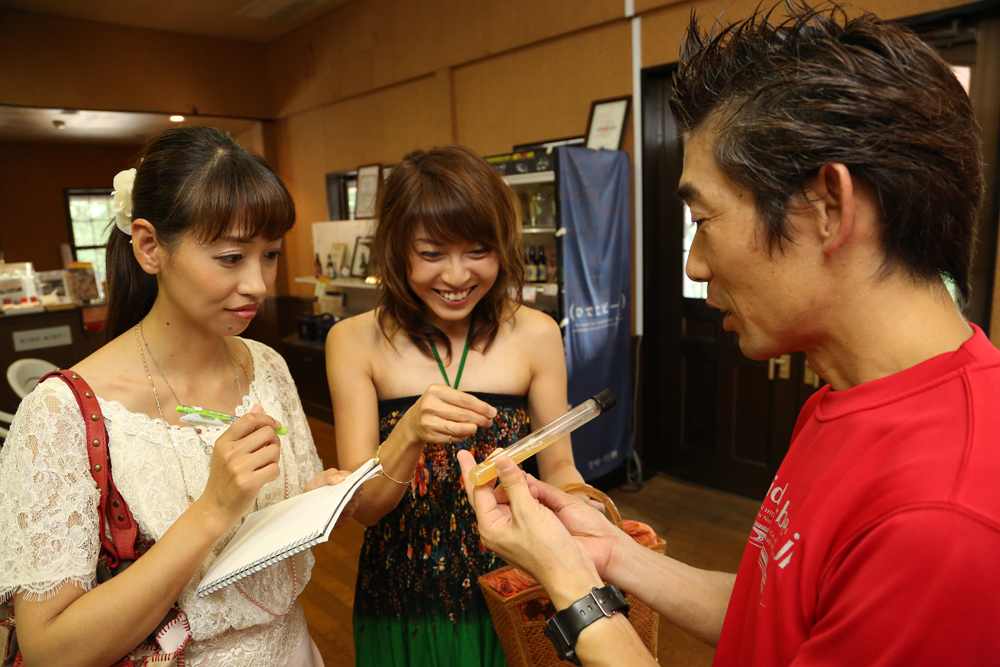
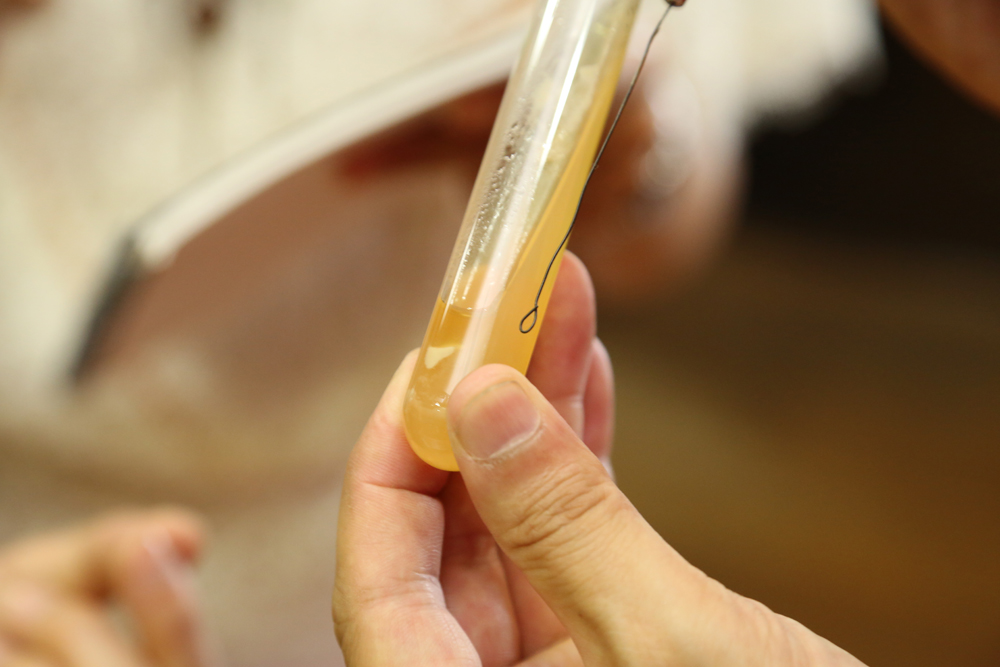
▲Completely home-cultured beer yeast
The most important thing in beer brewing is yeast, just like sake and shochu. When we first started, we used to import high quality yeast from Akita, but even though it was high quality, yeast is a living organism that gets tired and loses its energy after being transported for a long time and over a long distance, just like humans. So, even if we mixed the yeast, it took a few days for fermentation to start, or the yeast was not fermented properly, or the process did not proceed as expected, and the flavor could not be expressed. Then, we adopted a complete autoculture technique, which made it possible to cultivate pure yeast and use elite-grade, healthy, fresh yeast. That's when Hideoji Beer took off," says Katahekibe.
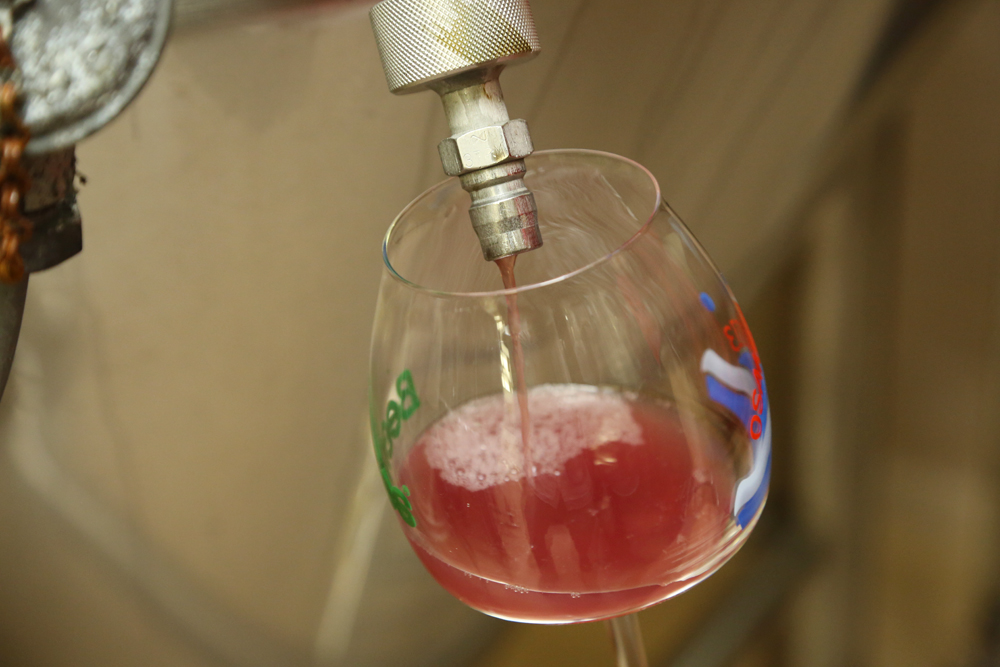
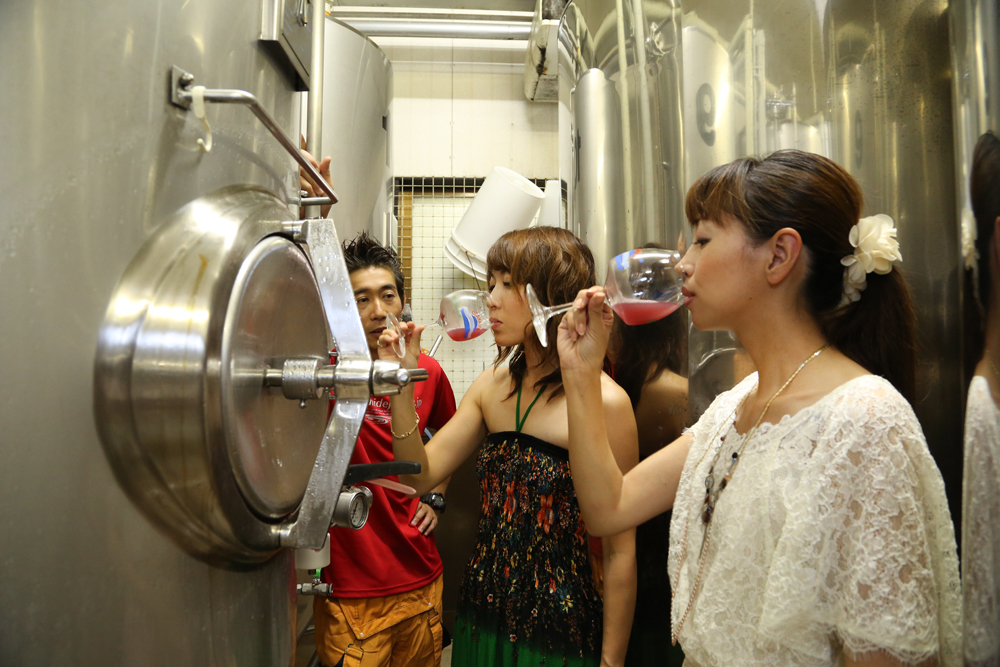
The malt juice (before it is turned into beer) of the beer made from purple sweet potatoes produced in Miyazaki is tasted. The sweet flavor and color of the purple sweet potato is very impressive.
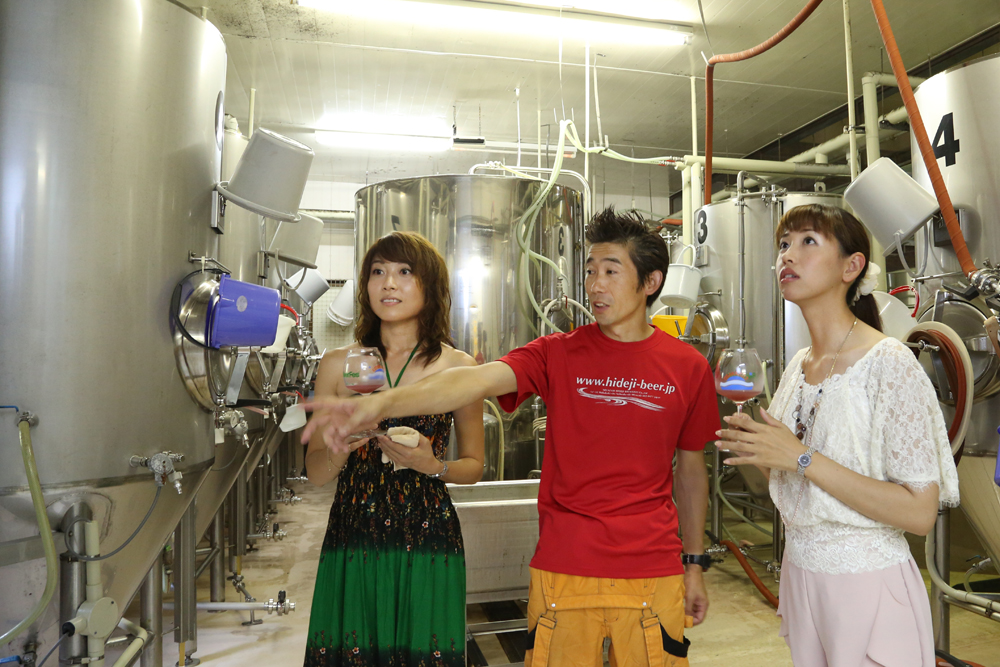
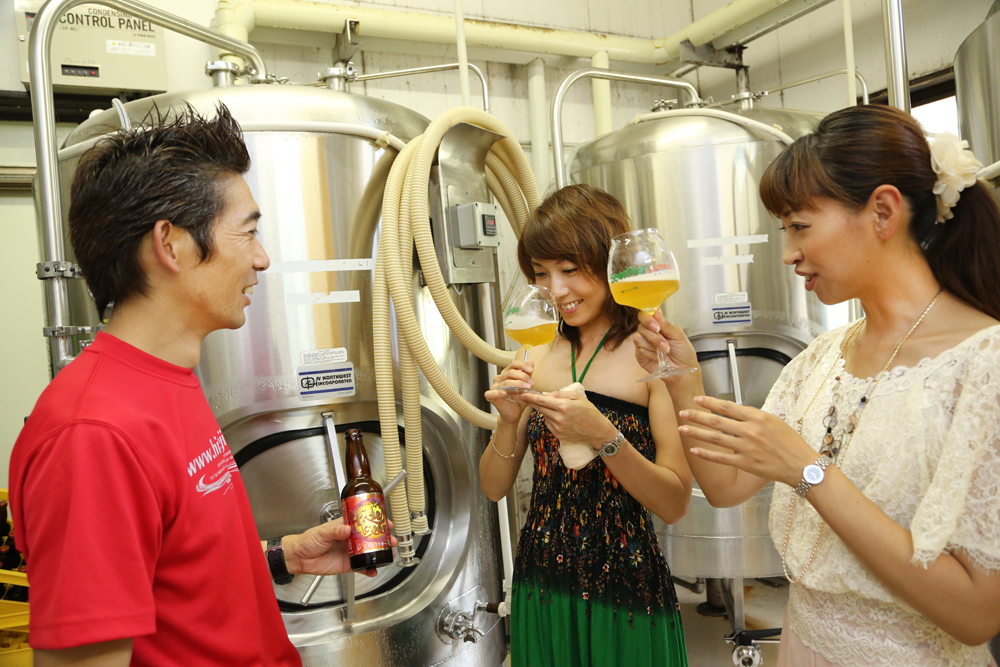
The most important part of the beer brewing process, even more important than the quality of the ingredients, is the cleaning process.
The great enemy of beer brewing is "bacteria. Bacteria weaken the yeast, resulting in a bad smell and loss of sharpness. The reason beer developed in Europe and became recognized around the world as a national alcoholic beverage is largely due to Europe's cold climate, which is ideal for brewing beer because it is less prone to the growth of bacteria. On the other hand, Japan has a humid and warm climate, which is not so suitable for beer brewing because it is easy for bacteria to grow. There are also germs in the air, so just opening the lid of the tank a little bit can cause germs to get in and the beer to deteriorate. Therefore, making good beer is a battle against invisible germs. Once the tanks are used, all pipes are disassembled, cleaned, disinfected, and sterilized to ensure thorough hygiene control.
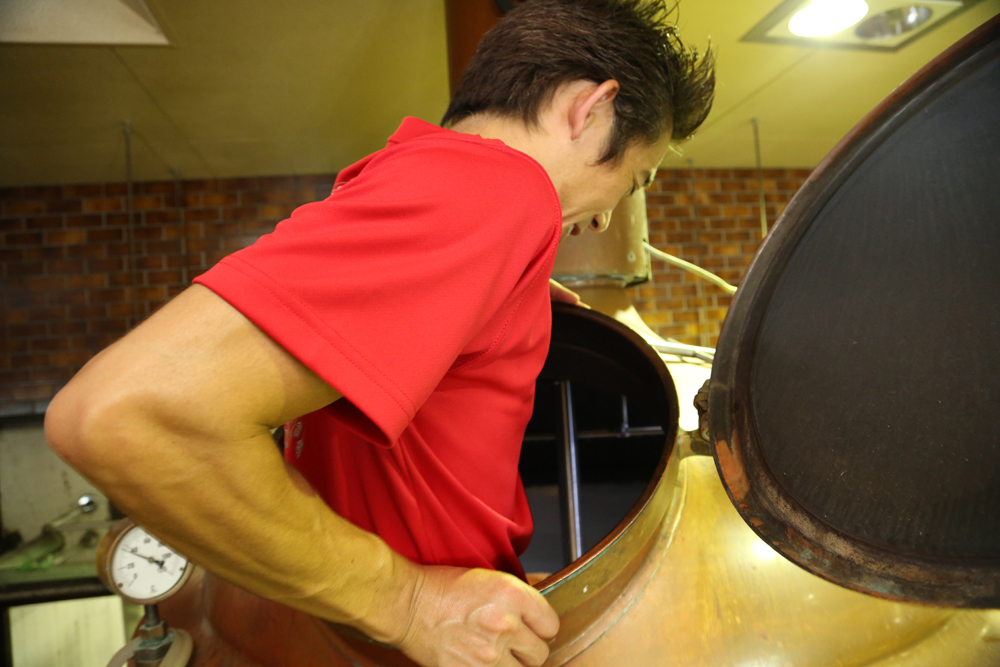
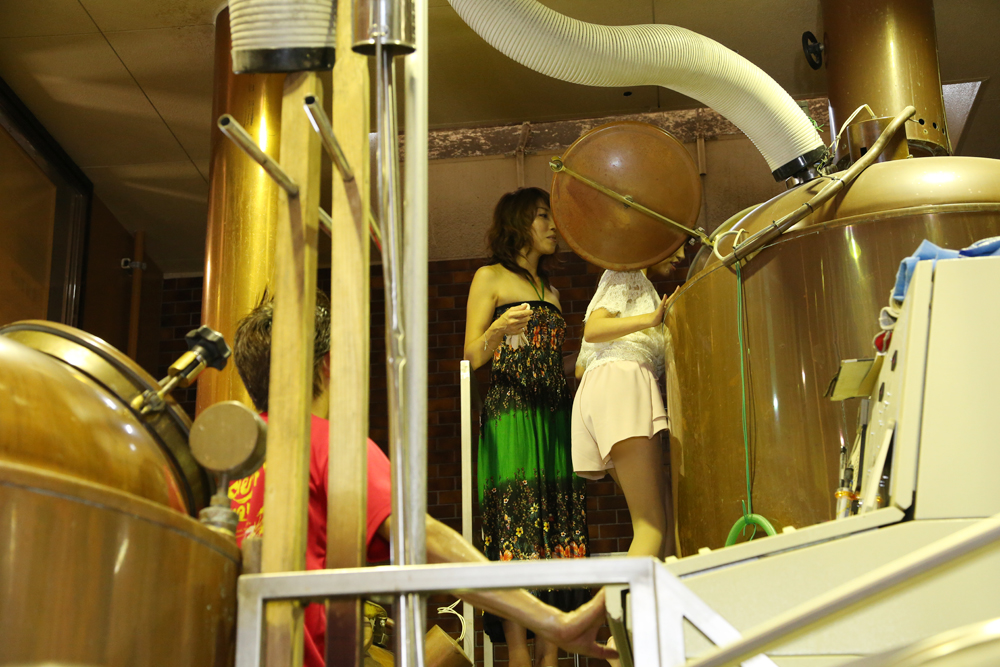
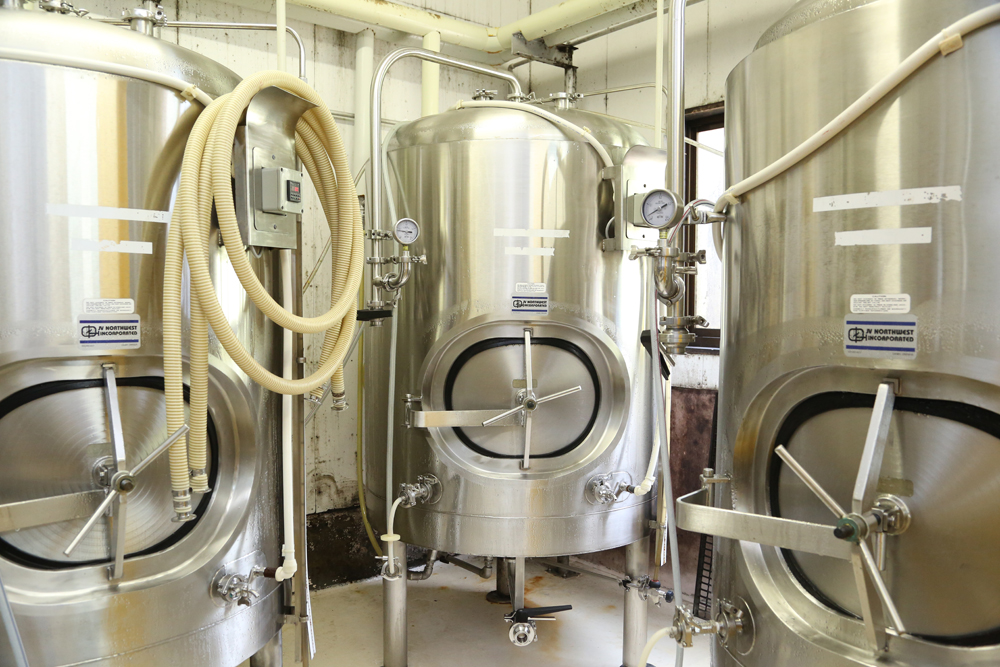
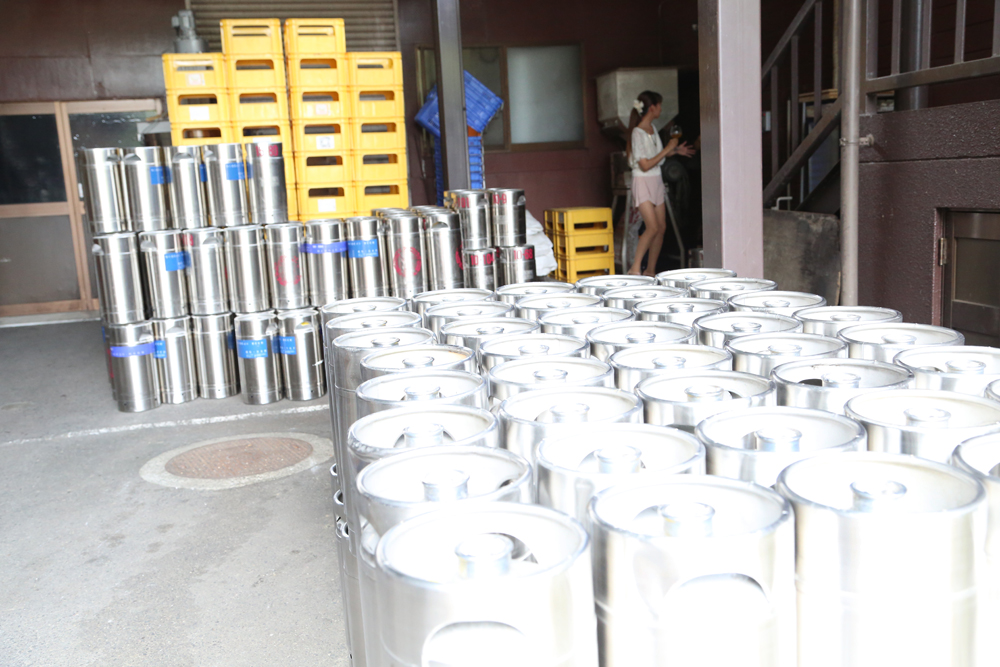
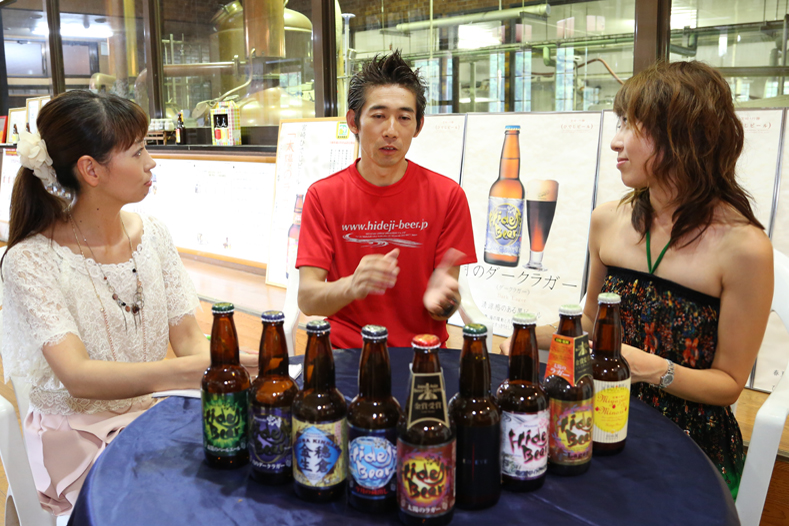
In the future, I would like to use agricultural products grown in Miyazaki Prefecture, including those from the Miyazaki Farm Project that Miyazaki Hideoji Beer is currently working on, and take on the challenge of brewing beer that only Miyazaki Hideoji Beer can make, in order to differentiate ourselves from other beer breweries. On the other hand, as a brewing engineer, I would like to pursue "real beer" while looking around the world.
Female sake taster: Chiho Takei's recommendation☆.
(Tasting report by Chiho Takei, sake taster)
Flower White Weiss
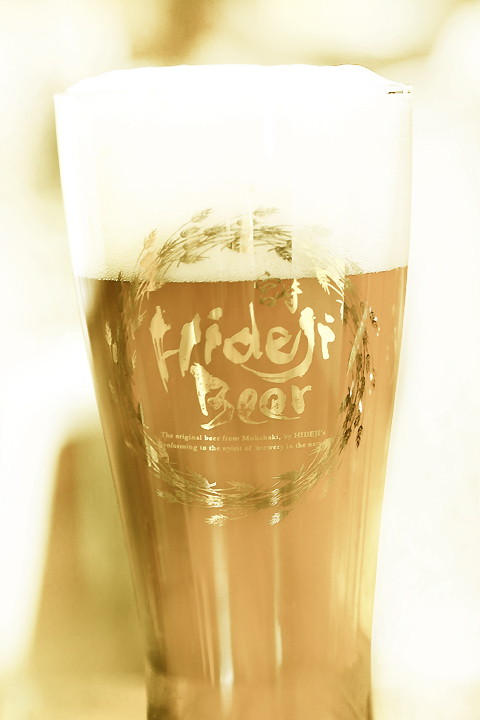
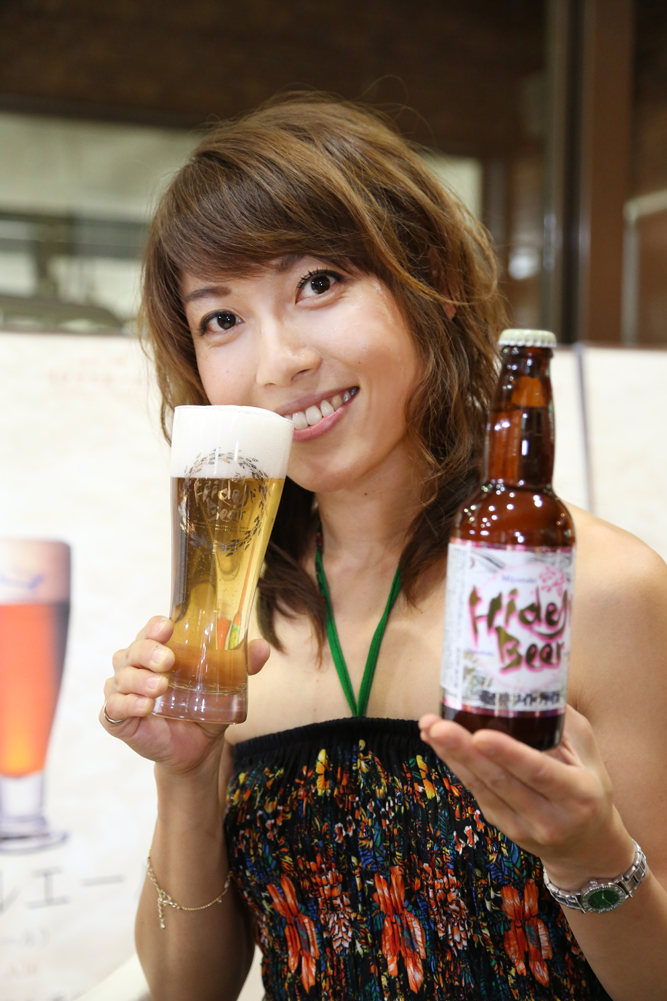
Product Description】
This fruity beer is inspired by the pretty flowers of Miyazaki. As the name suggests, it is a white Bergen type beer made from wheat, but herbs and spices are used as secondary ingredients to give it a unique aromatic flavor. It is one of Hideoji Beer's standard products.
Recommendations】
The first thing you sense is, "What is this ......?" The first thing you notice is the seductive scent that draws you in. As the name suggests, it is floral and gorgeous, but that's not all. ...... As if lured, you take a sip, and the fruity, mellow, soft bitterness of the wheat beer glides down your throat in a very elegant way! The spicy freshness lingers in the aftertaste, and personally, this beer gives me an image of a sensual, good-looking woman (laugh)!
Hyuganatsu Lager
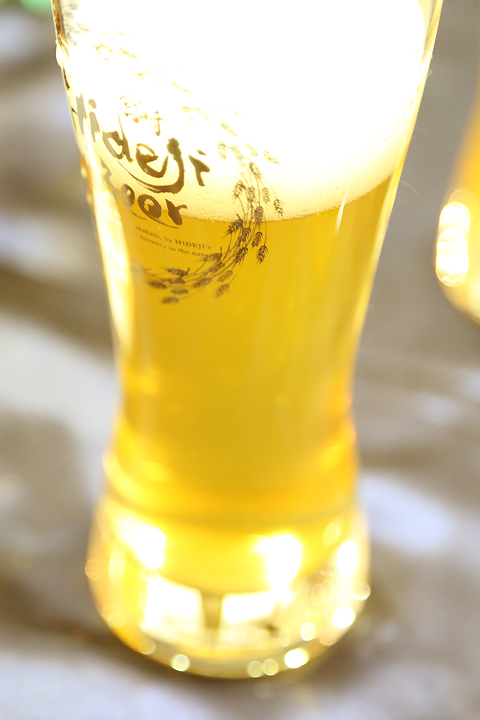
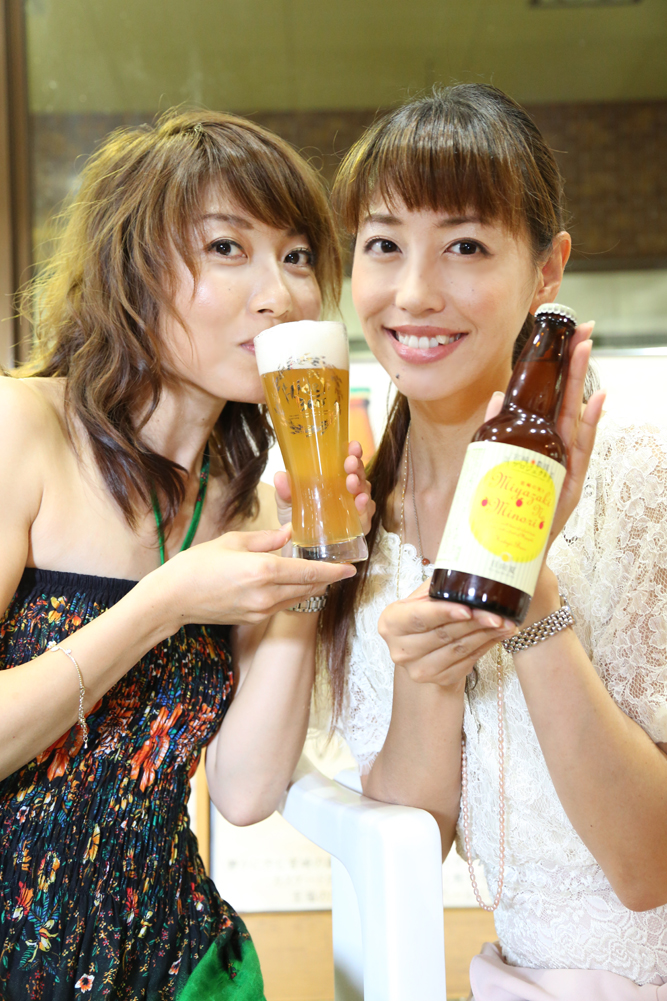
Product Description】
This is one of the "Noen Project Products" that Hideshi Beer Co., Ltd. is working on to revitalize the local community in cooperation with agricultural producers in Miyazaki Prefecture. This refreshing fruit beer is made from the juice of Hyuganatsuma, a variety of hyuganatsu (Prunus dulcis), which is native to Miyazaki Prefecture and boasts the largest production in Japan. It is especially popular among young women, and won the Governor of Tokyo Award at the 2011 Japan Beer Festival.
Recommendations】
Hyuganatsu is one of the representative fruits of Miyazaki Prefecture. I wondered how well it would go with beer. I wondered how it would go with beer, but to my surprise, it went perfectly. With its fresh aroma, balanced acidity and bitterness, it tastes like a white wine, but it goes down your throat with a refreshing sensation! The clear, golden liquid reminds me of the bright lights of Miyazaki, and if it were me, I would enjoy it on a terrace overlooking the ocean during brunch on a holiday. It has a wide range of applications as an aperitif or dessert beer, which explains why it is so popular at beer pubs in the city!
Interview and editorial staff
Model Report: Chiho Takei, Nozomi Nakamoto / Editing: Nozomi Nakamoto
Photography and production: VOKE Ltd.
Cooperation of trilogy venue: Hotel Meritage Nobeoka
Address: 1-4-28 Konyacho, Nobeoka City, Miyazaki Prefecture
URL:http://www.merieges-n.co.jp