


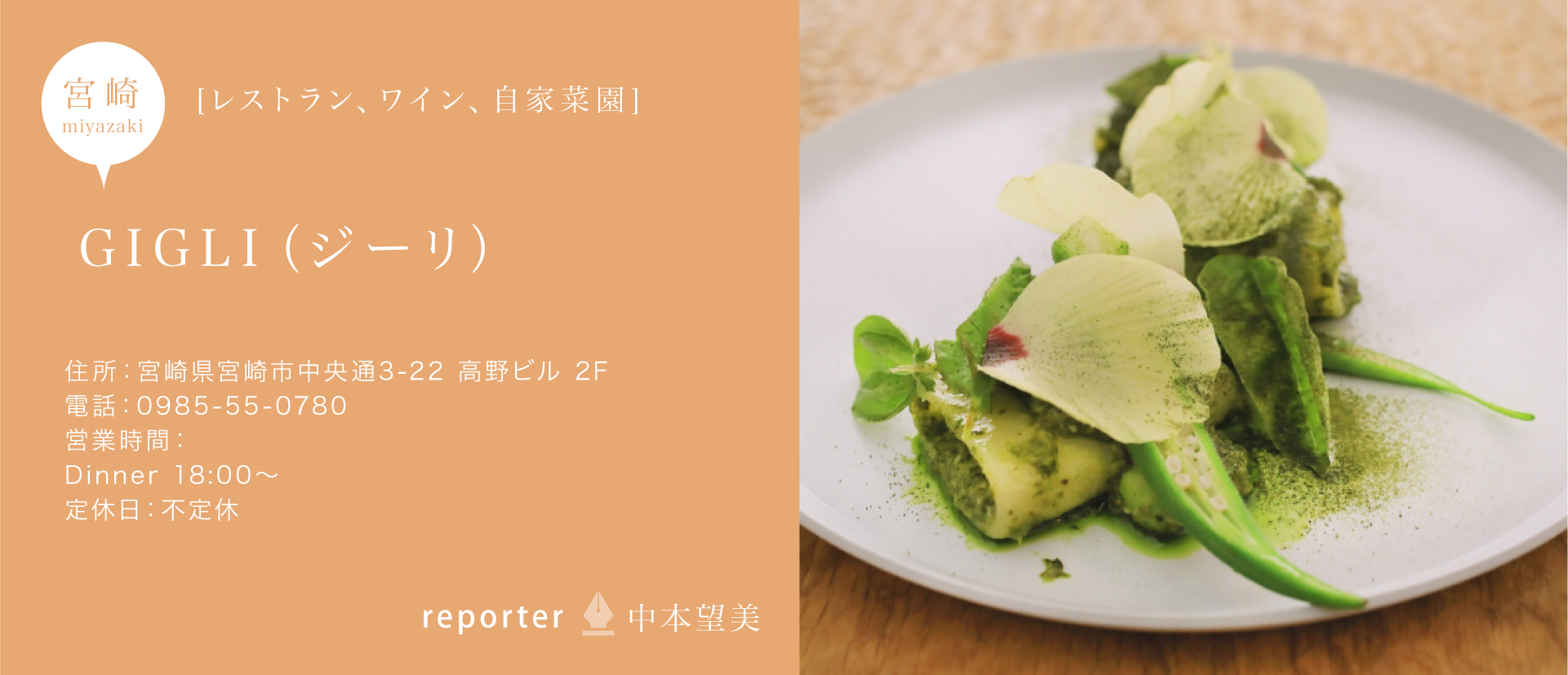

We grow our own vegetables in accordance with the laws of nature,
Facing "true ingredients" delivered from producers who seek quality.
Such "Ryoriya" proposes surprises and discoveries in everyday life.
Programming in Logic
About a 10-minute walk from JR Miyazaki Station, GIGLI is located on the first floor of a building in the city center where many izakayas (Japanese-style pubs) are lined up. Since its opening in 2011, GIGLI has been using a variety of carefully selected ingredients, including "home-grown pesticide-free vegetables (and rice)" grown by the chef himself.
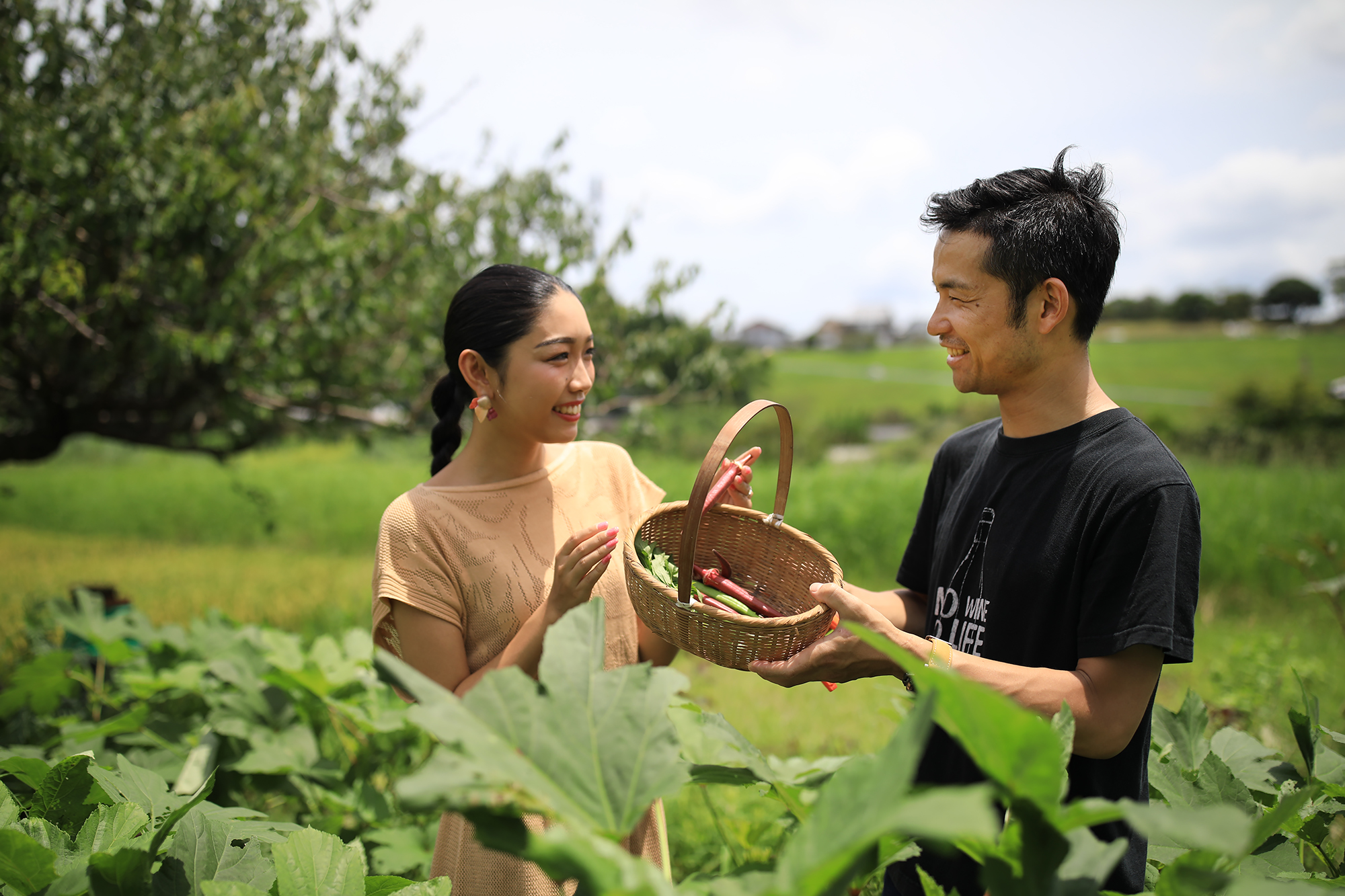
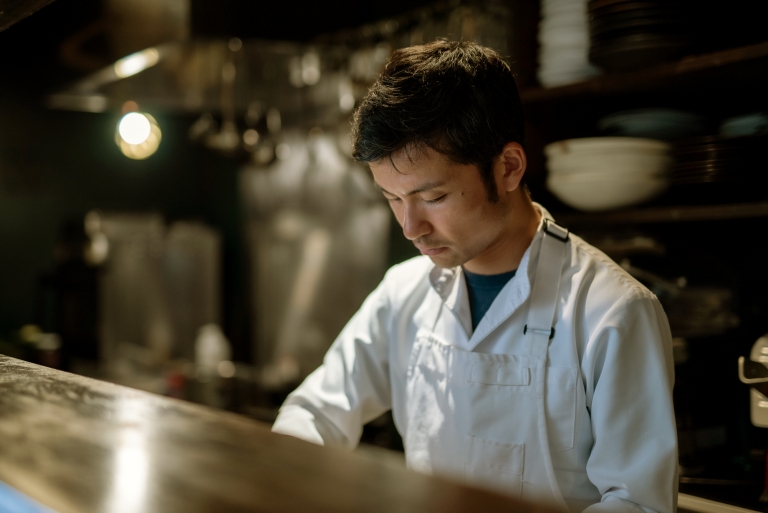
「Although pasta and other Italian dishes are the base of our menu, we are not particular about any particular genre, but pursue our own style and keep changing things in a positive sense through daily trial and error. At the same time,I want to create a restaurant where customers can feel at home from the moment they step into the restaurant," says owner-chef Shin Toyama (above right).
that (something or someone distant from the speaker, close to the listener)In his soft demeanor, I sensed a quiet, burning passion to take on various challenges and grow the store into something even better, while keeping a playful spirit in mind.
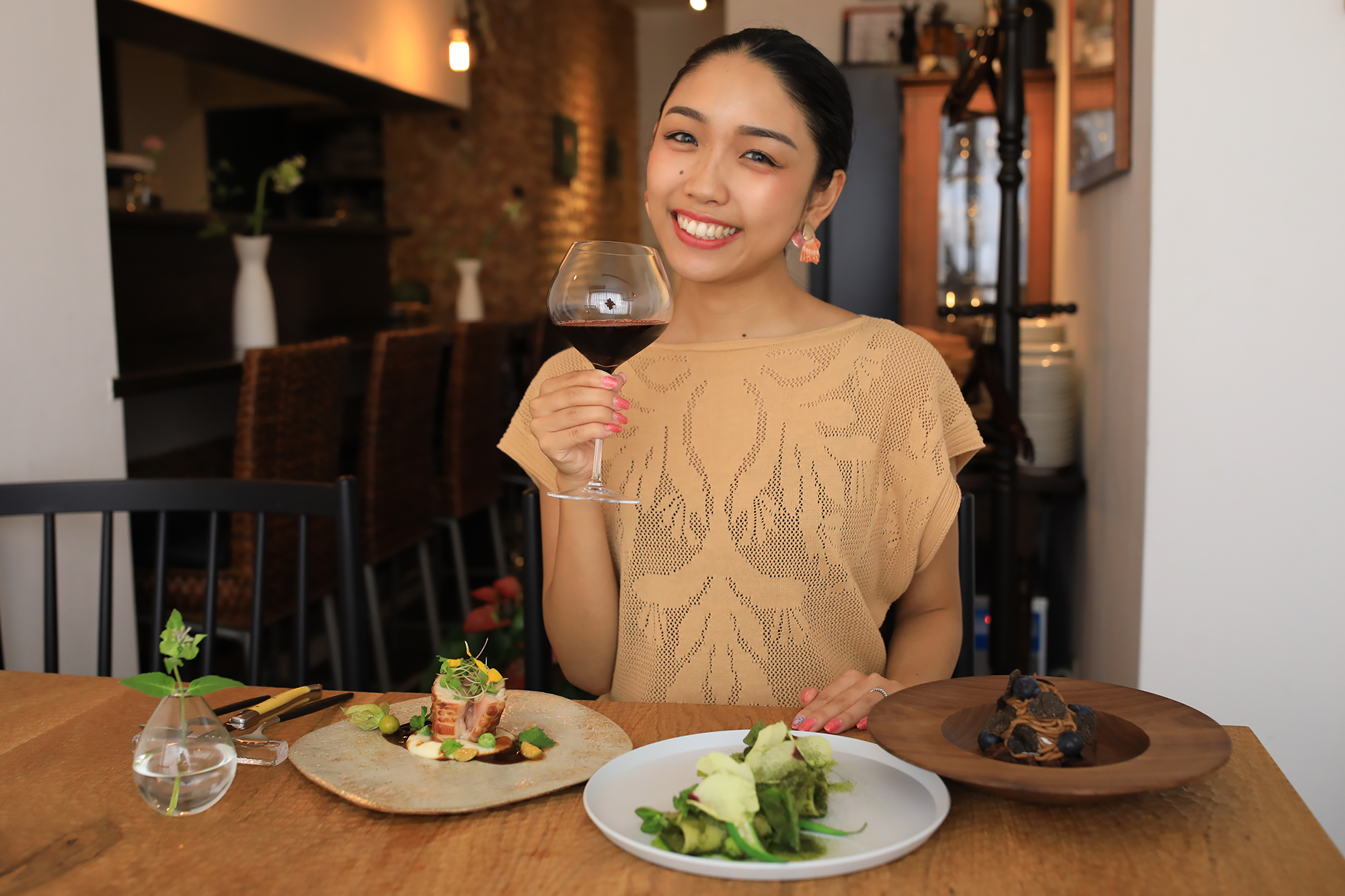
In this report, in addition to a look inside the restaurant and an introduction to the menu, we also hear about the harvest from the vegetable garden, how Mr. Toyama opened his restaurant, and what he considers to be the "ideal restaurant. We also asked him about his thoughts on what he considers an "ideal restaurant.Please take your time and look at it until the end.
Model Report: Momoko Oshima
Edited by Nozomi Nakamoto
Filming and production: VOKE Co.
Introduction of Home Vegetable Garden
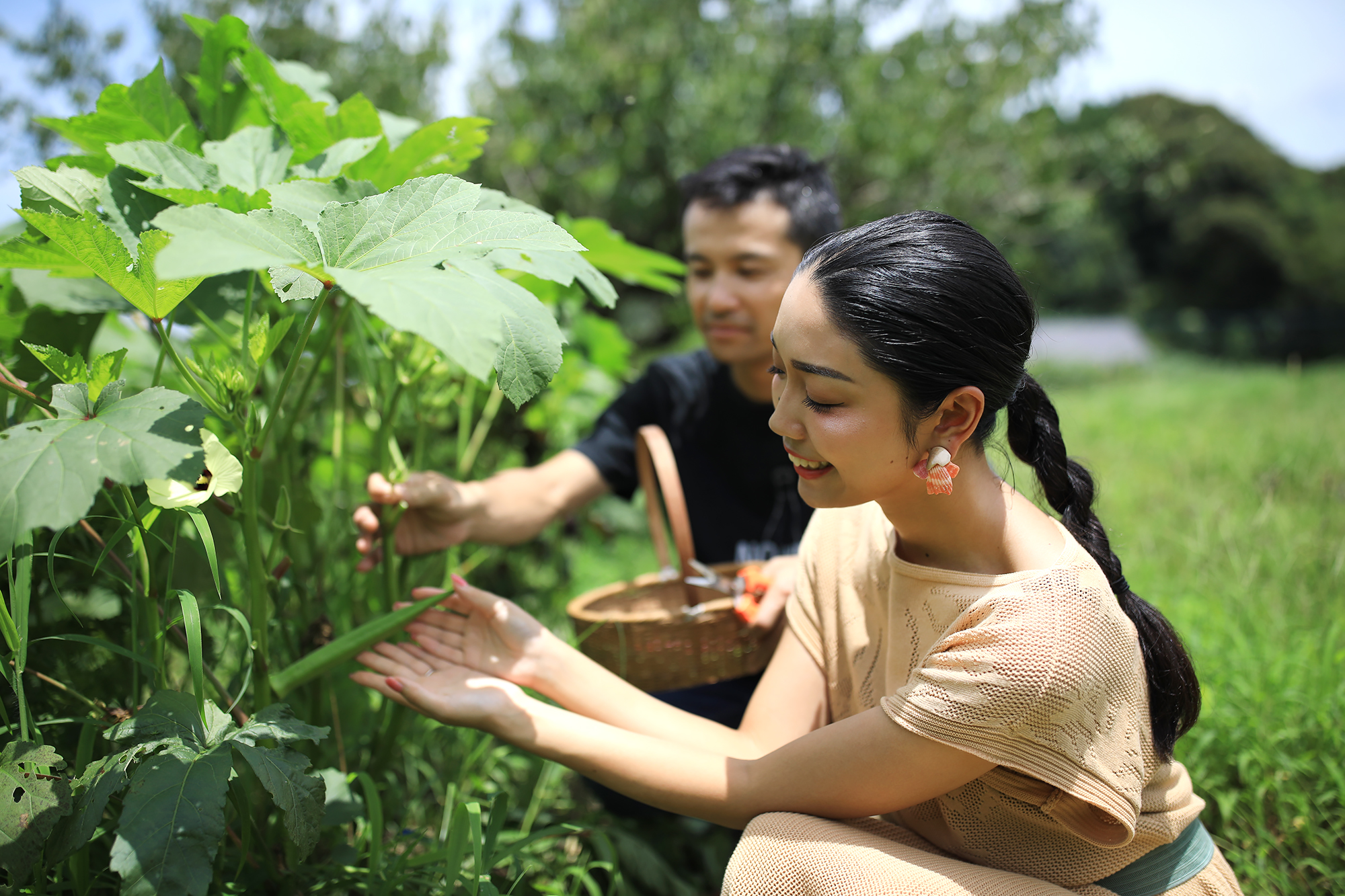
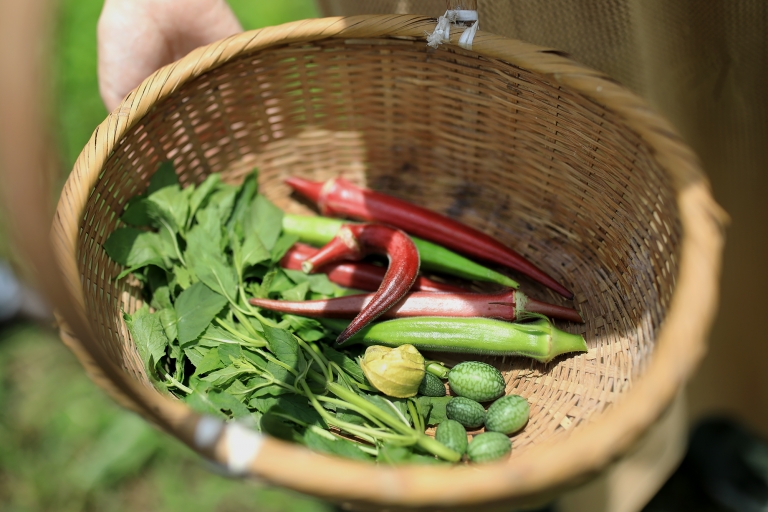
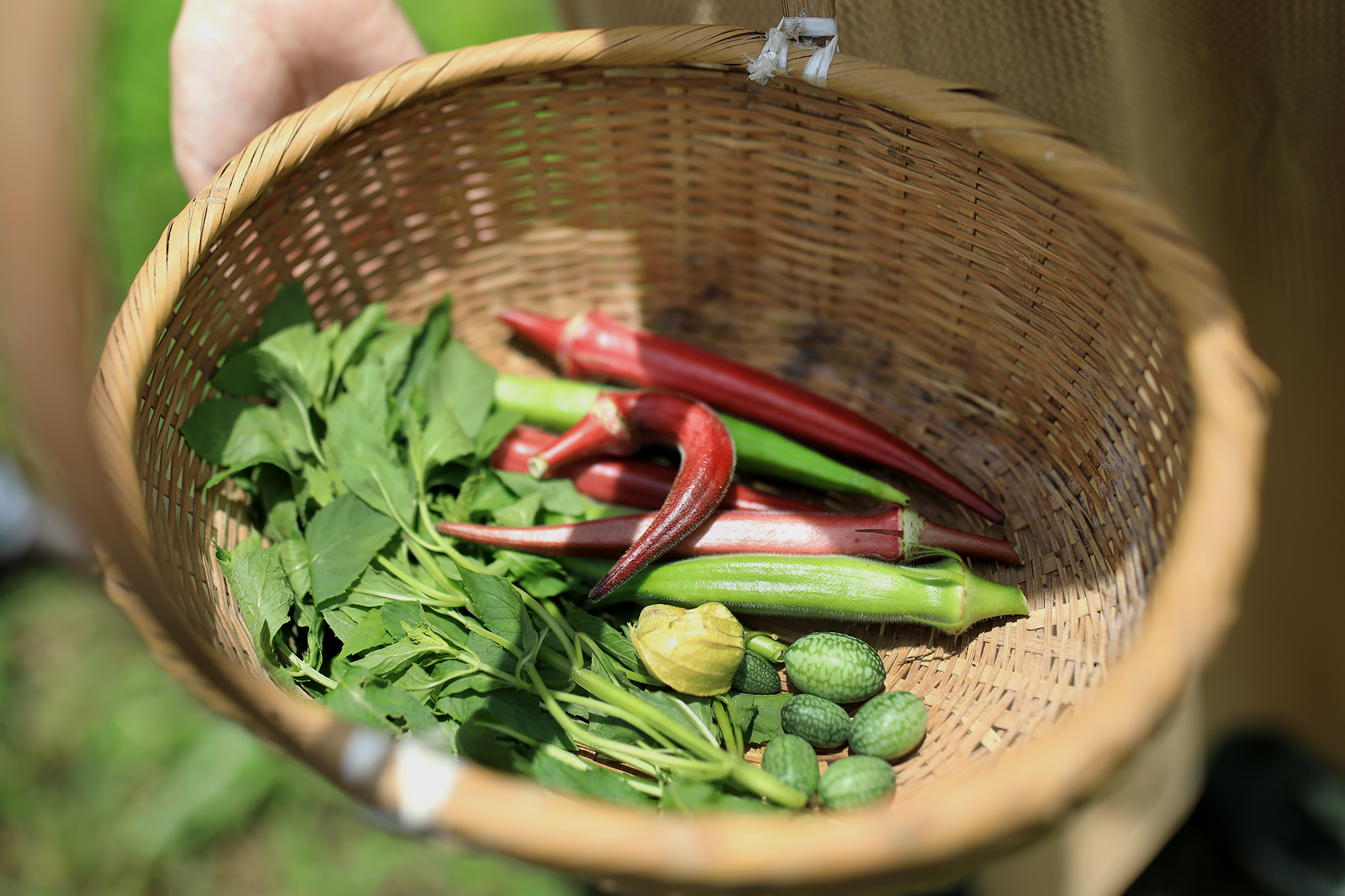
In his "private vegetable garden" adjacent to his home, Mr. Toyama grows seasonal vegetables, herbs, and flowers "without pesticides" in accordance with the "laws of nature. At the time of the interview, sweet and sour "edible hoozuki," which is like a tomato and like a fruit, and "mini cucumbers," which are like ping-pong balls or dice in size, were in full bloom, and we actually got to taste them.
Watching the variety of vegetables, some brightly colored and others more nutritious than their appearance would suggest, grow and thrive in the full sun of Miyazaki, I realized that the existence of this private vegetable garden plays a role in Mr. Toyama's inspiration.
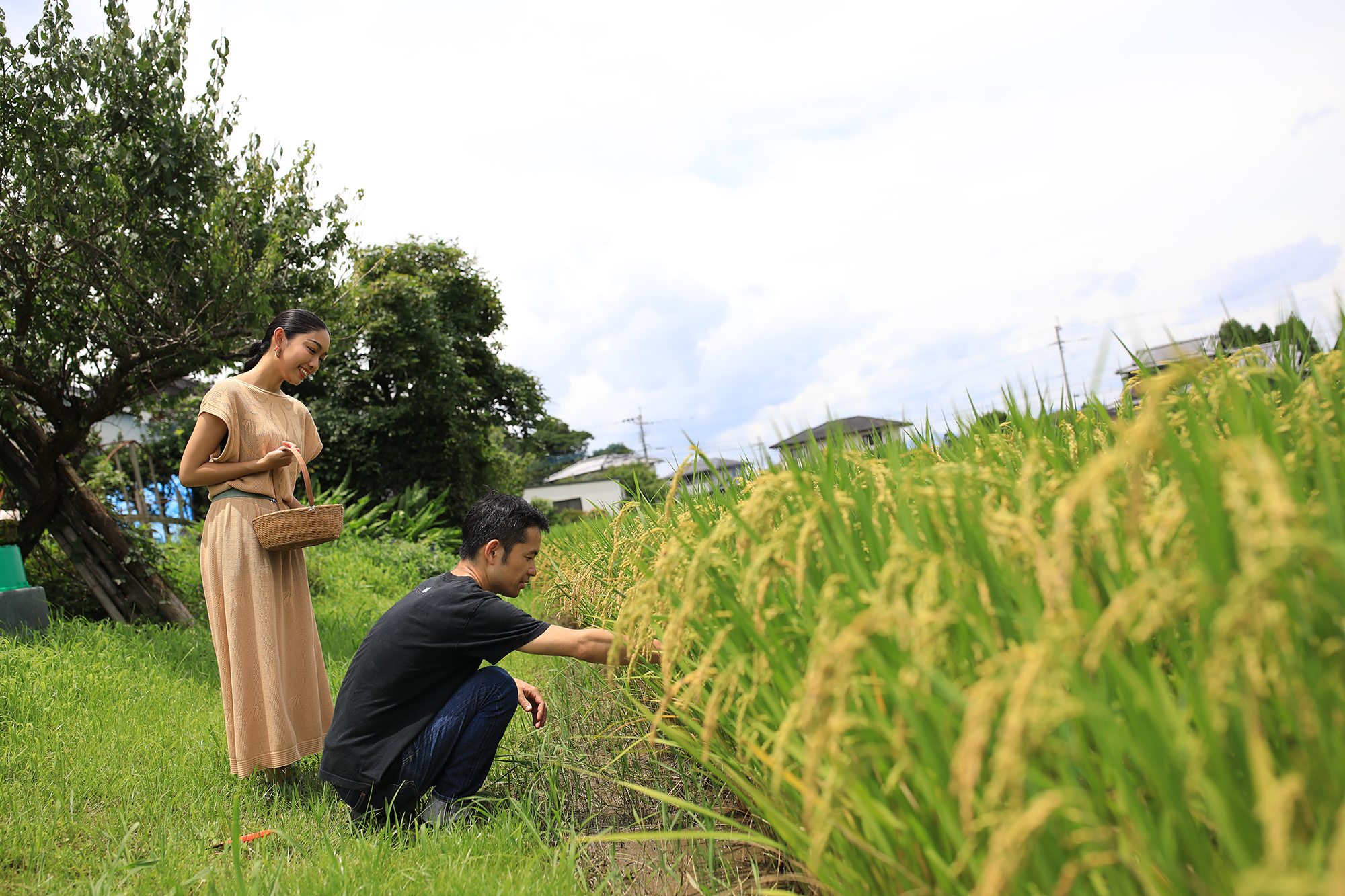
Rice is also grown "pesticide-free" in the rice paddies
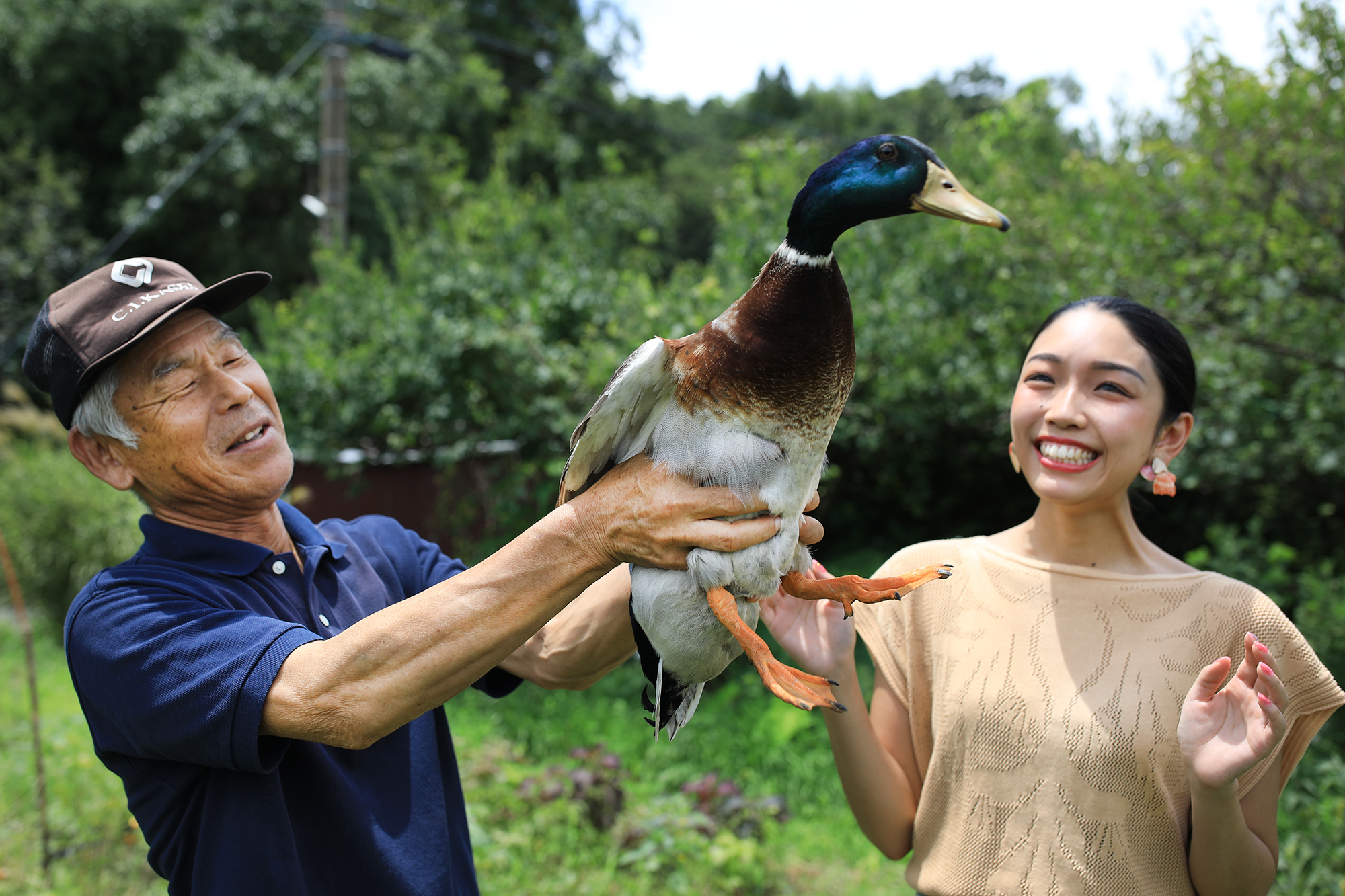
The image above is of Mr. Toyama's father, who taught us about the fields and animals with us, and Pippi, a duck he keeps in a corner of the field.
His father held him in his arms and told us, "They eat bugs in the field. Sometimes, they even go after a neighbor who is taking a walk, and the neighbor turns around and says, "I'm following you! Sometimes, they even follow their neighbors who are taking a walk, and the neighbors turn around and say, "I followed you!
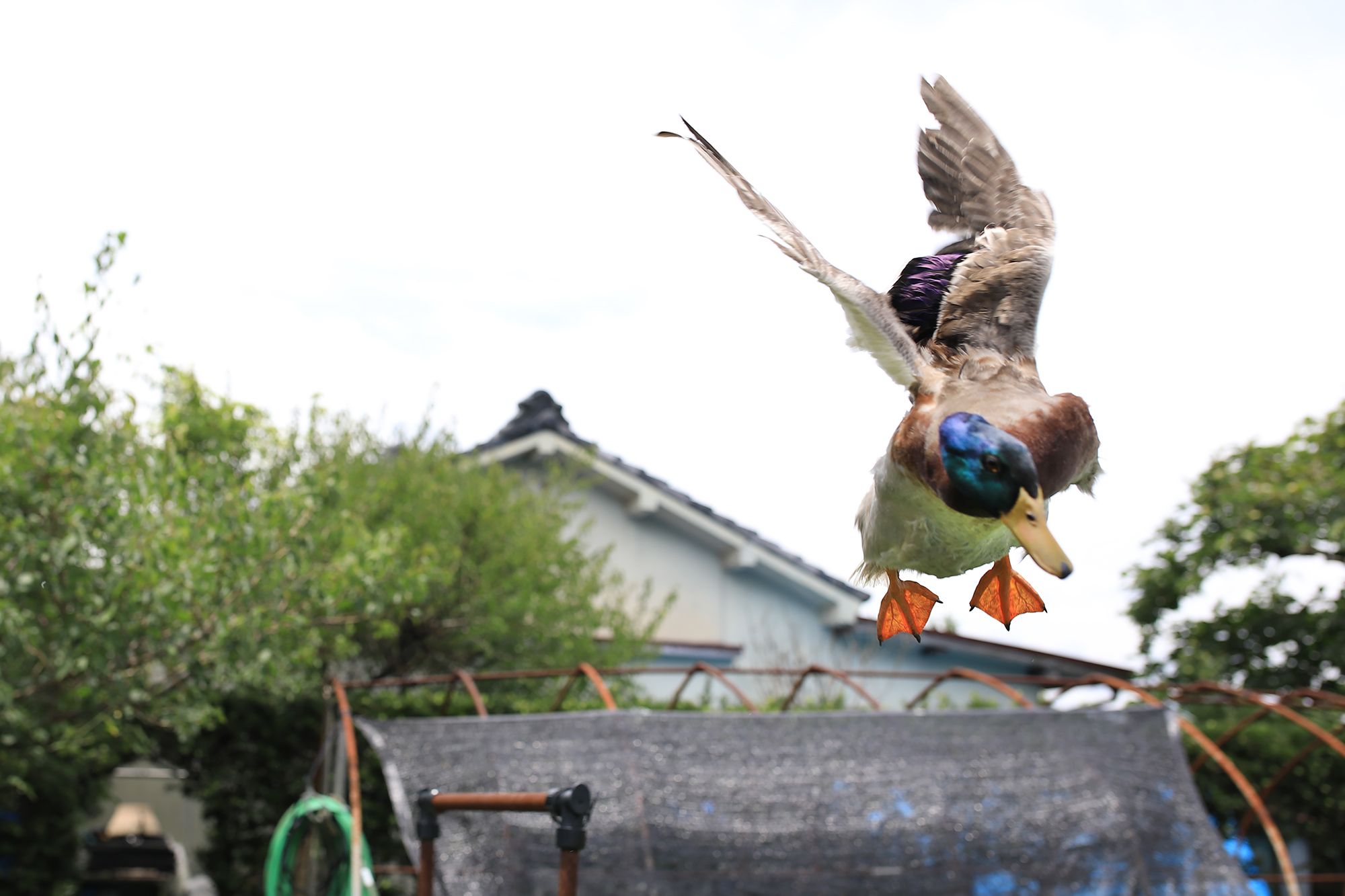
Pippi plays a major role in organic farming by eating pests in the rice paddies and vegetable gardens. It is no exaggeration to say that without Pippi, OSTERIA GIGLI's cuisine would not be possible!
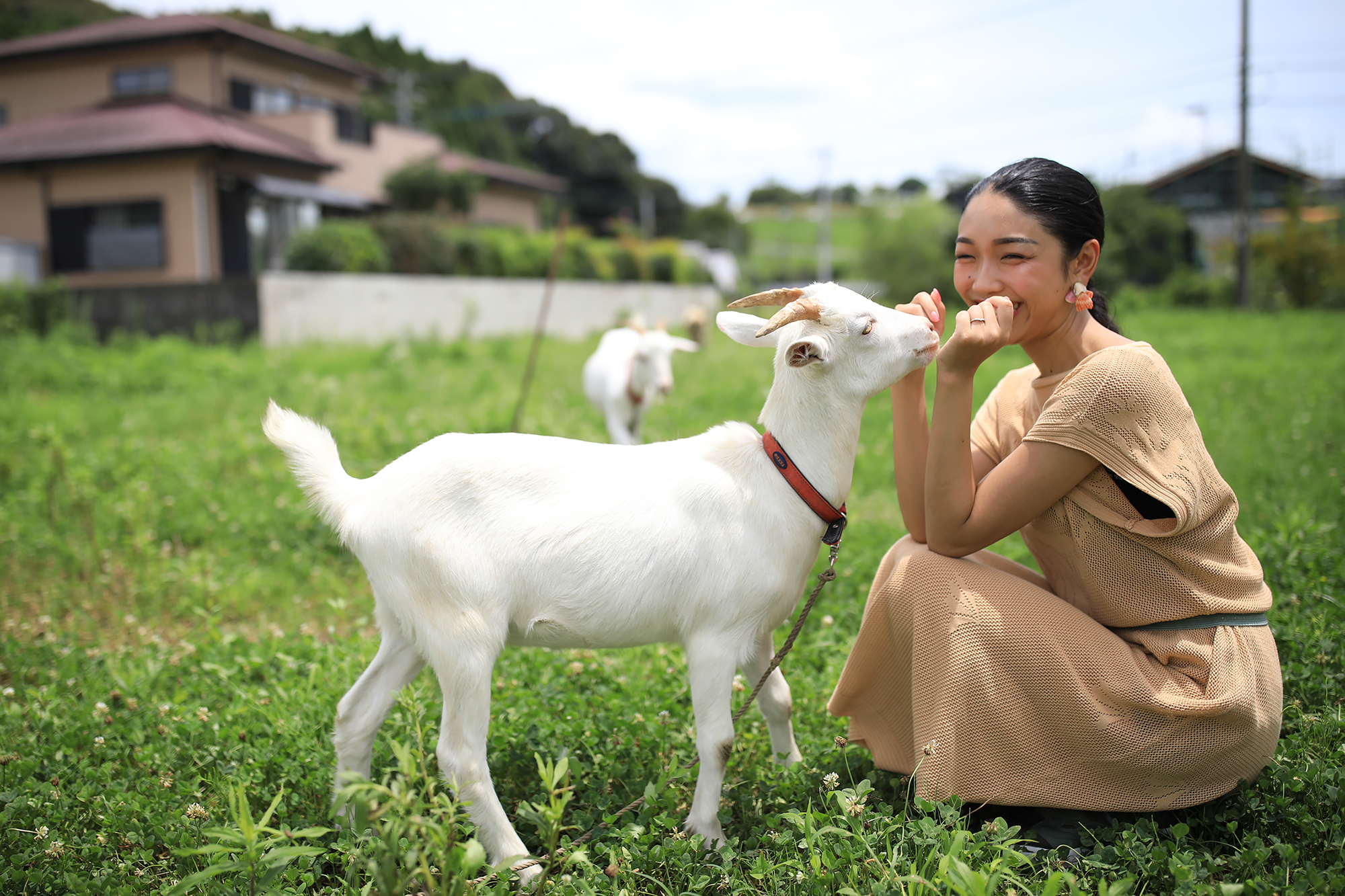
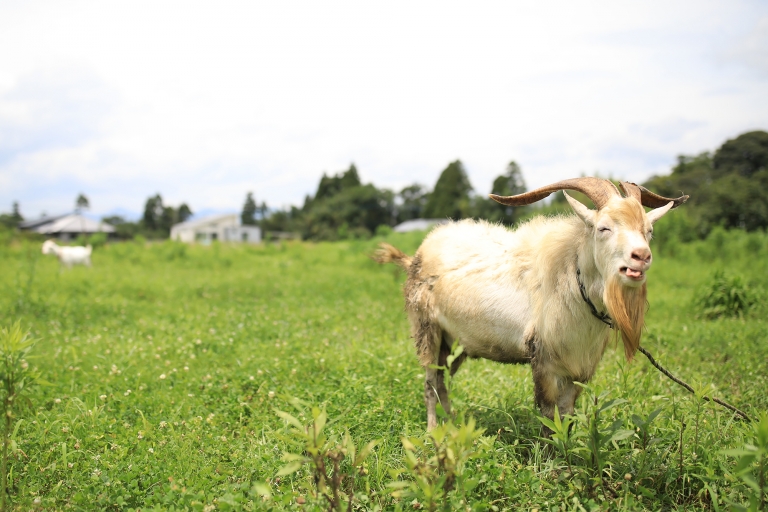
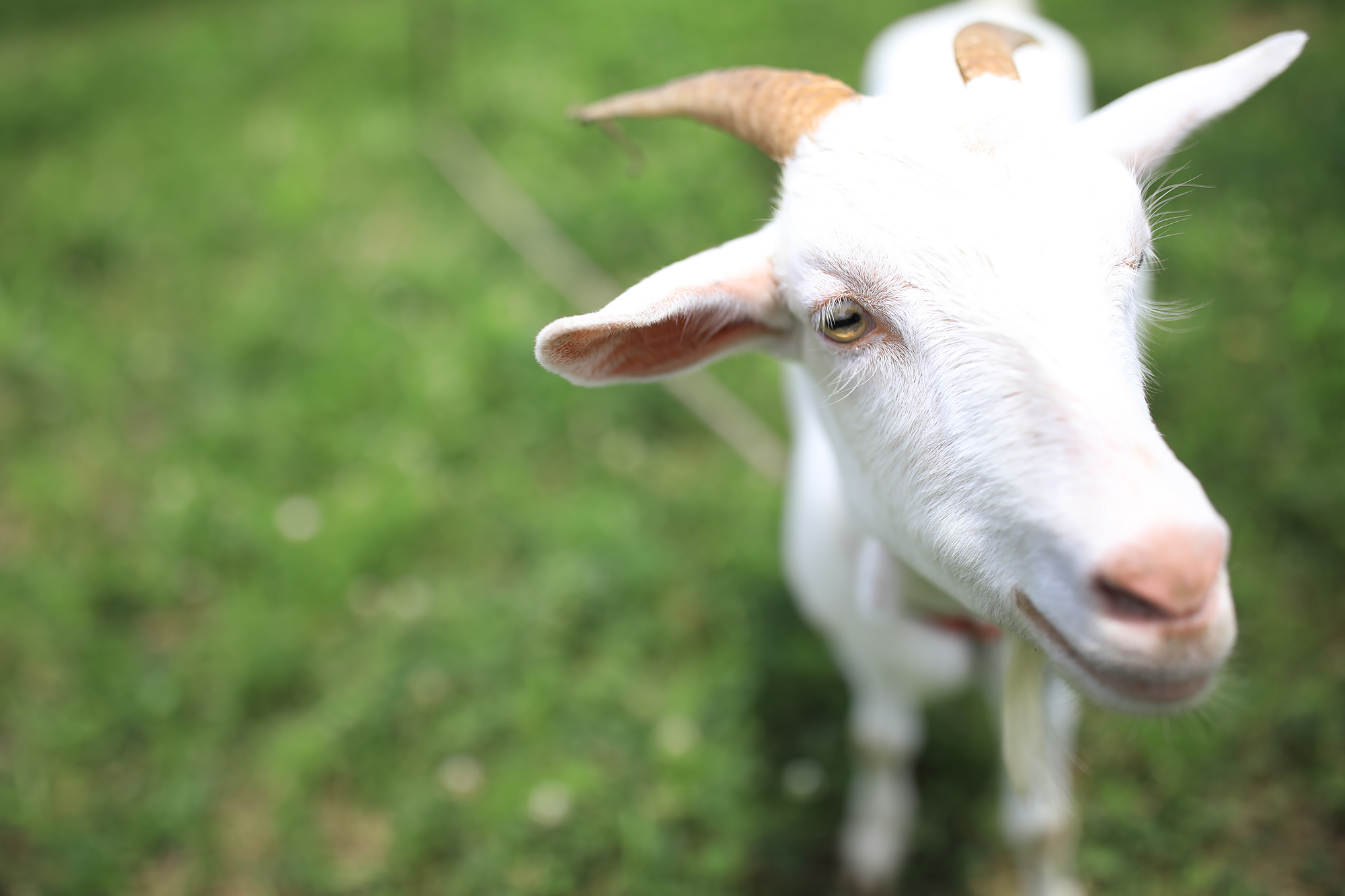
Three cute goats also greeted us a short distance away from their own vegetable garden. They seemed to love people too, wagging their tails and eager to play when we approached them. We felt that this beautiful space with its rich natural surroundings and animals had a positive influence on the taste of the ingredients we could savor at Zili.
Store Locations
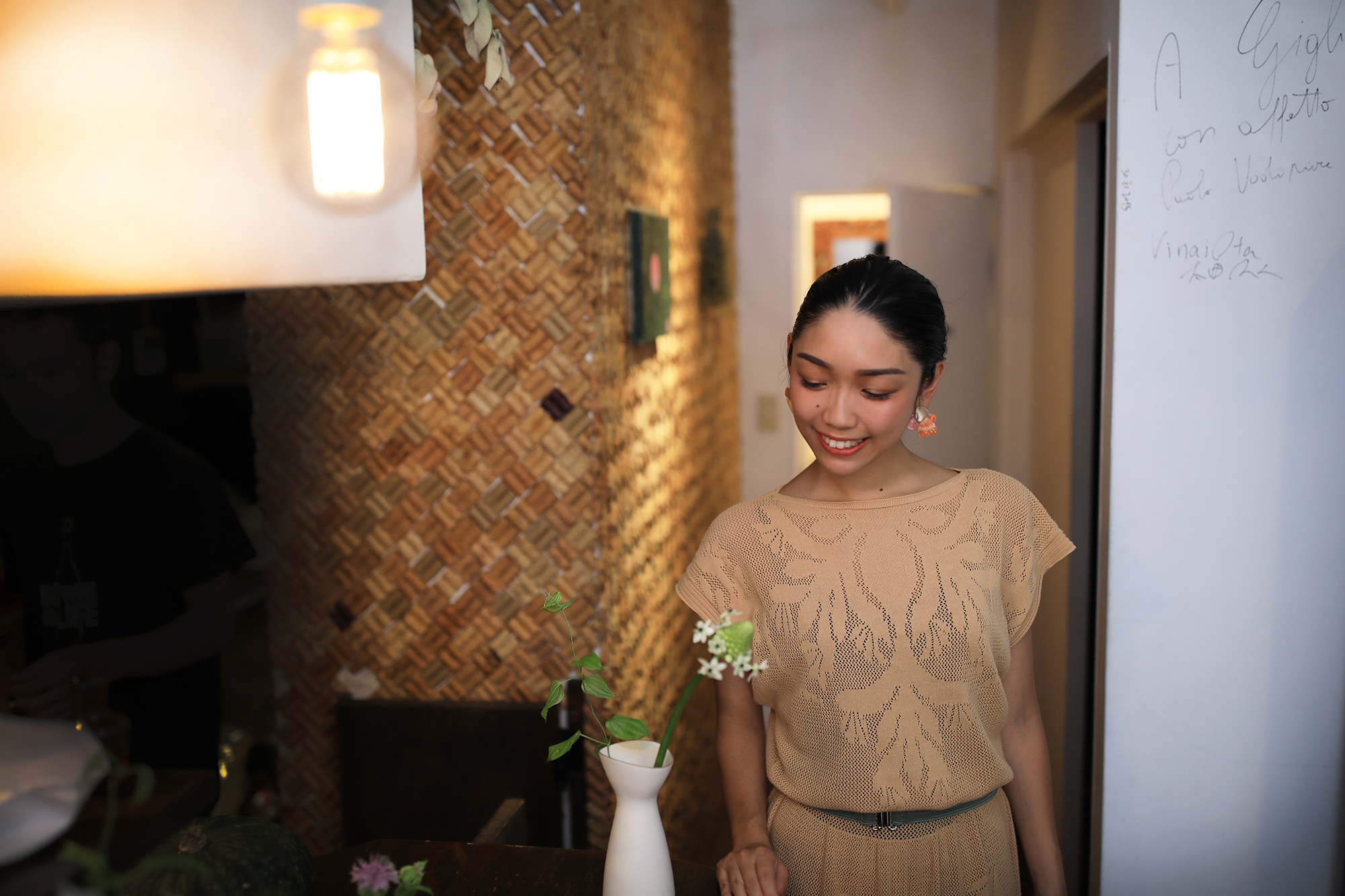
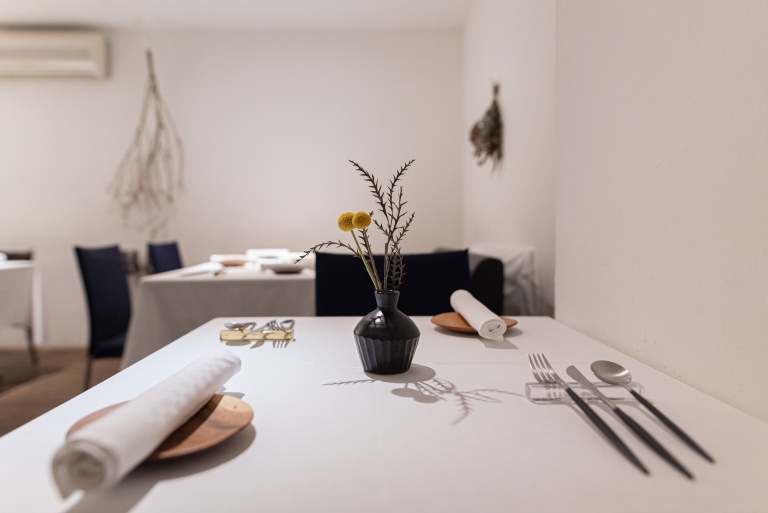
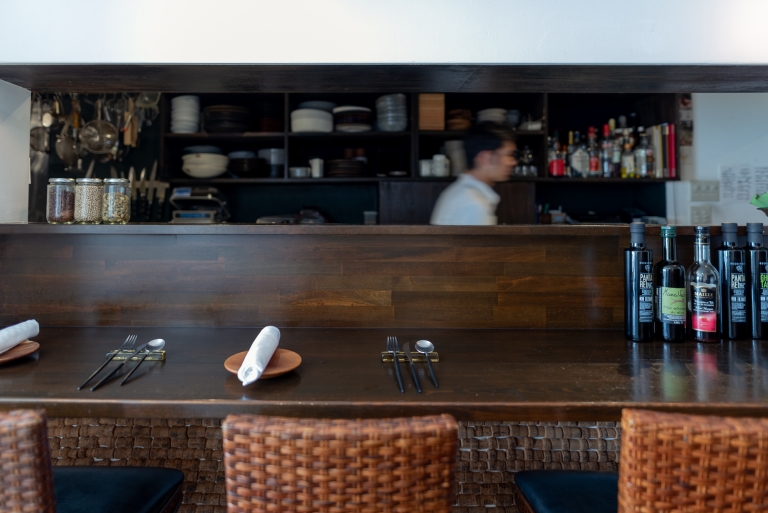
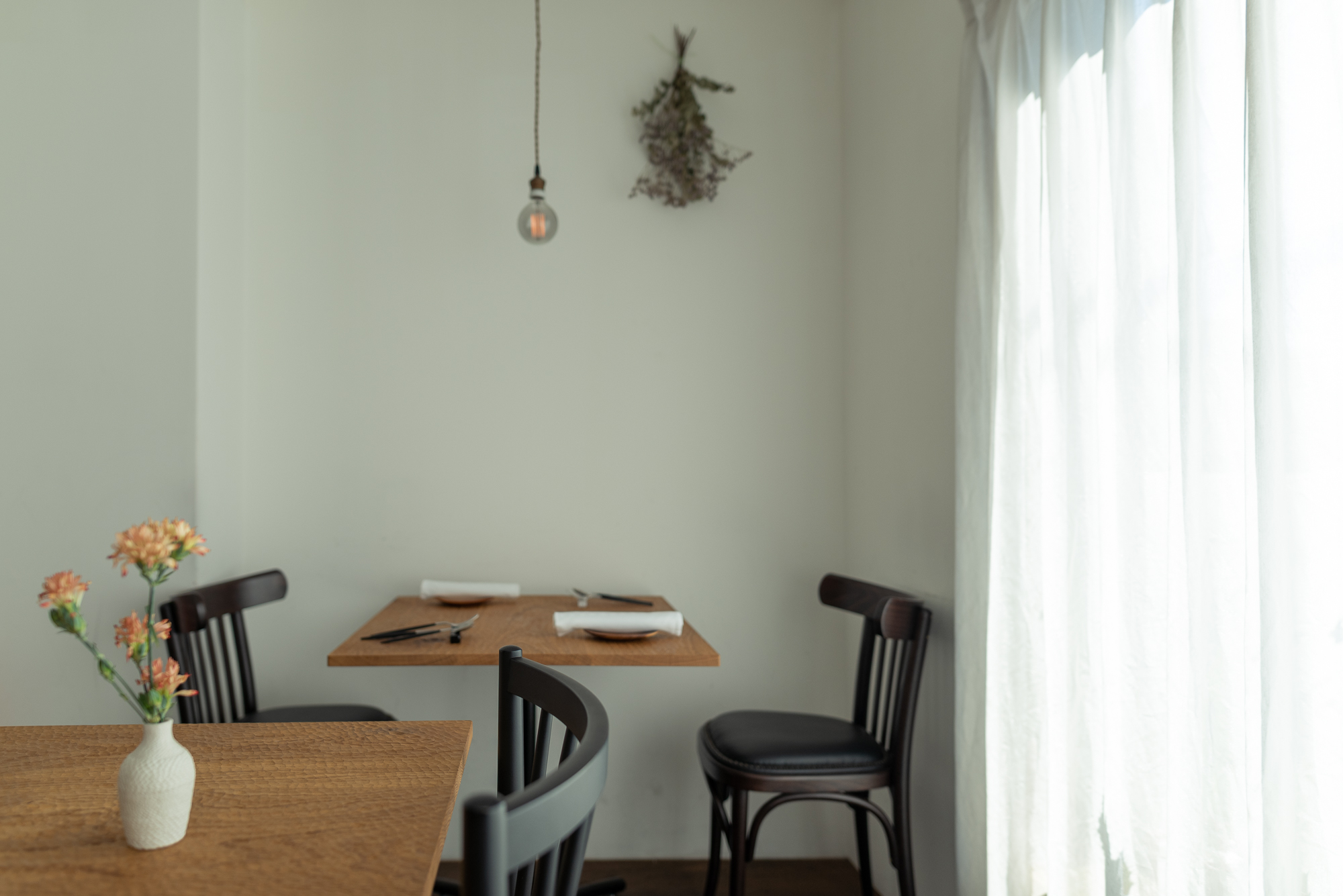
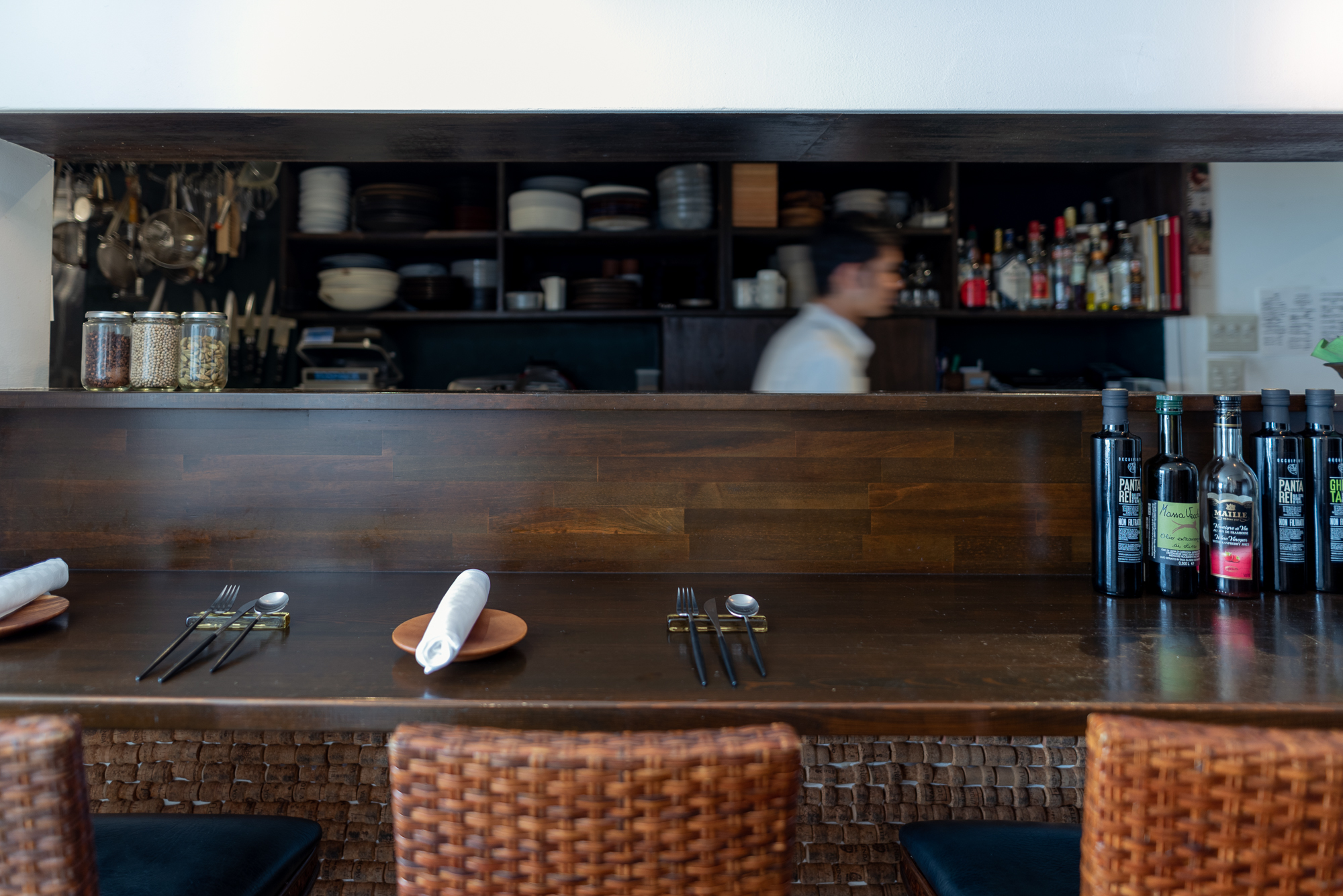
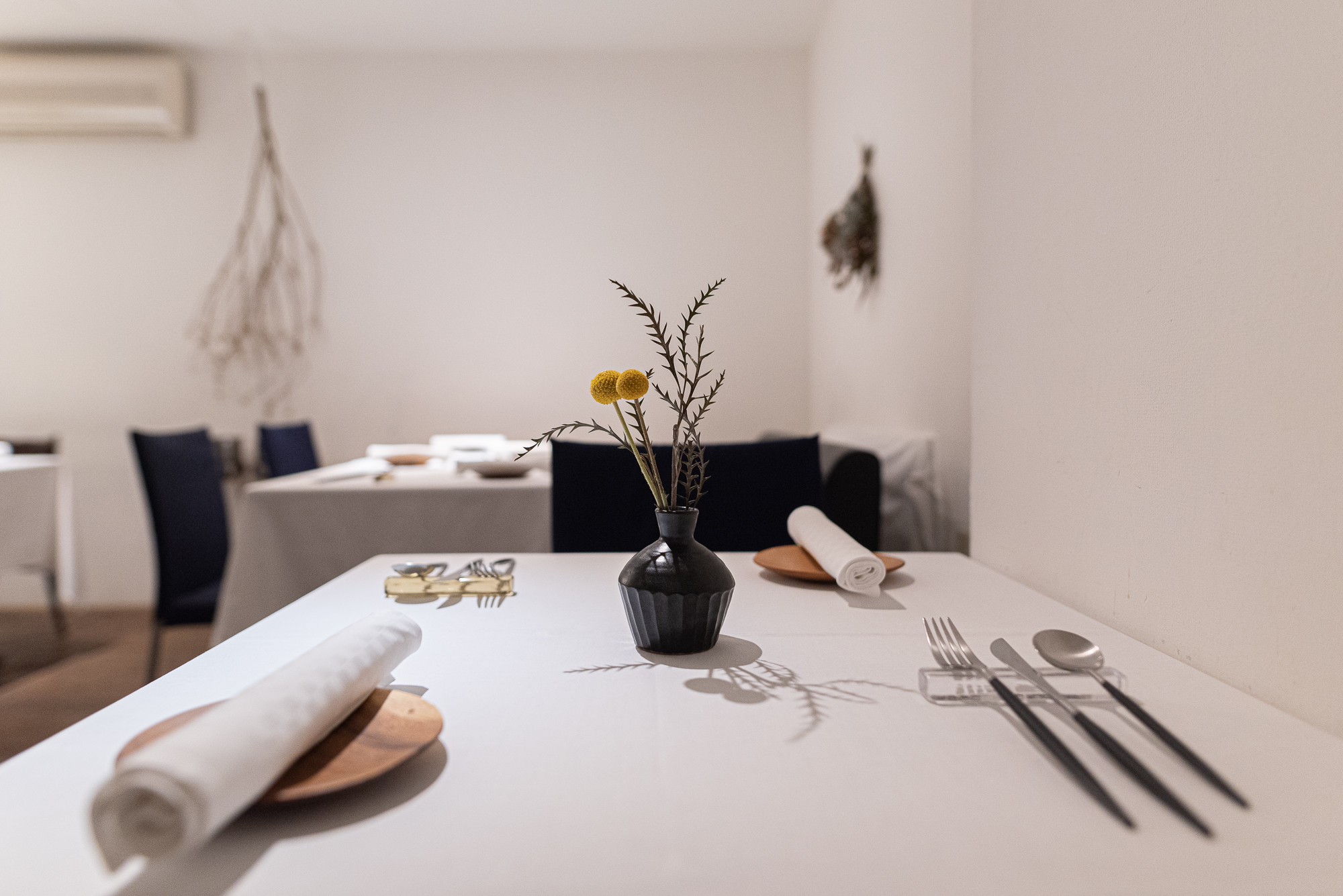
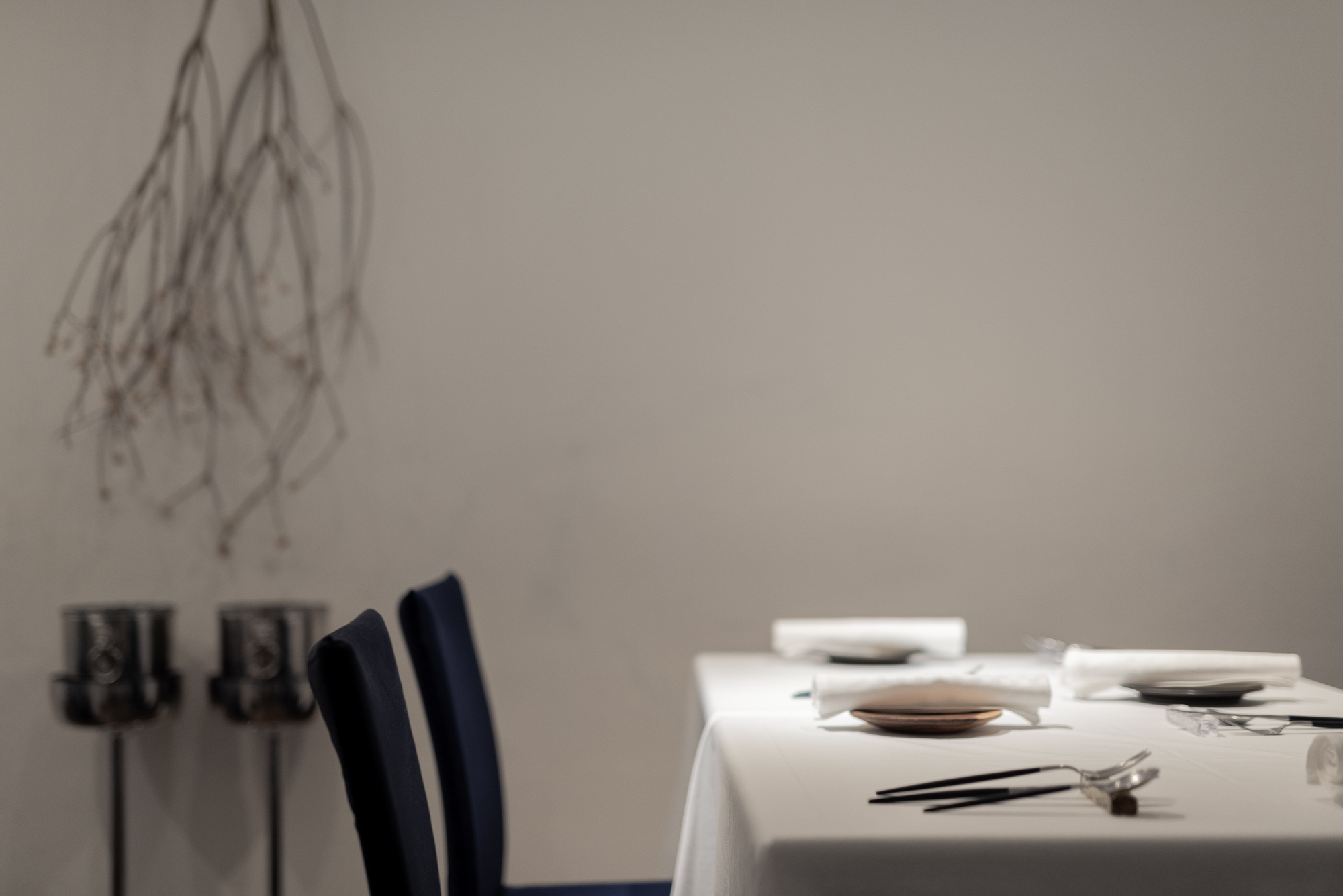
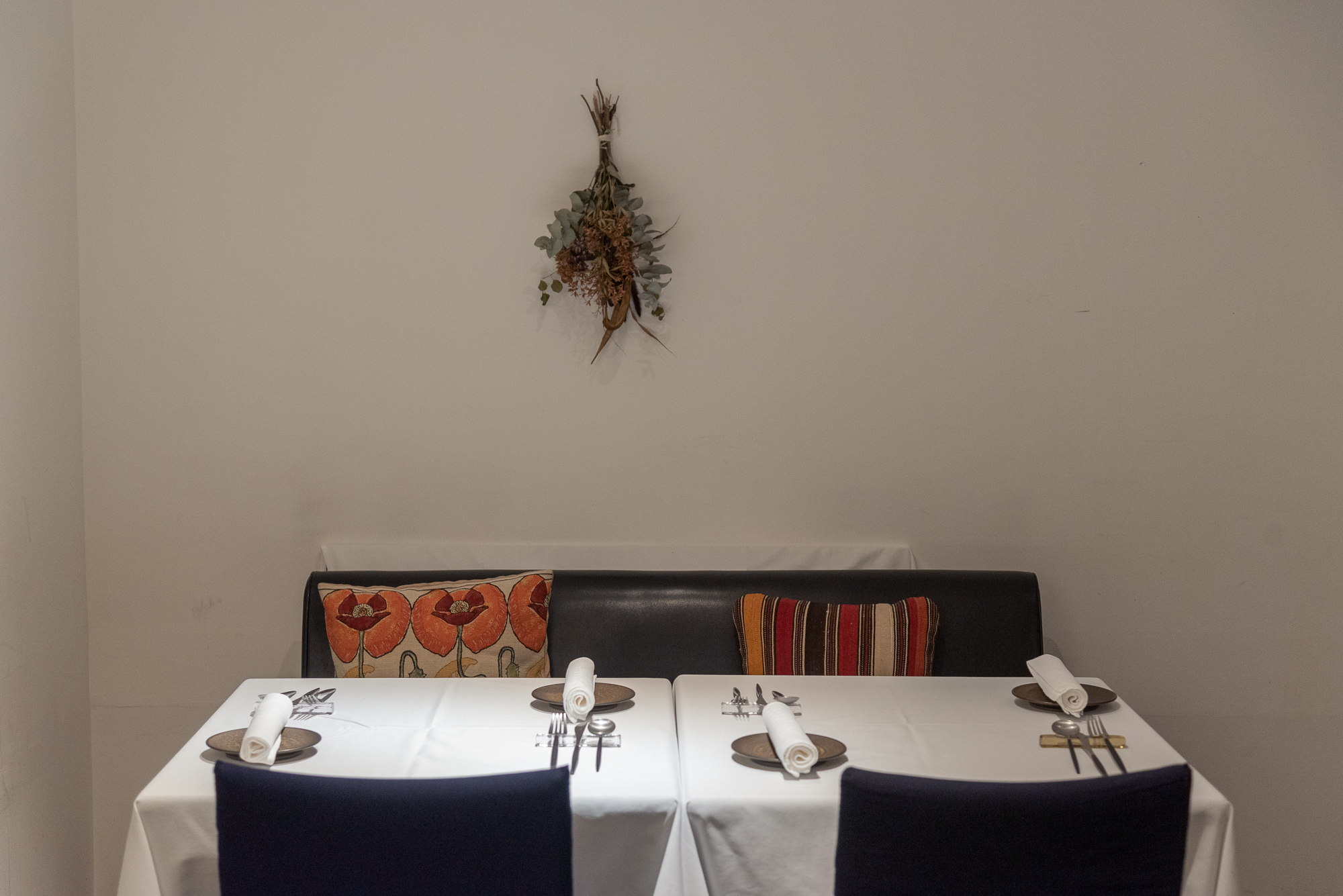
Upon entering the restaurant, one is confronted by a wall covered from floor to ceiling with tightly-packed cork, which makes quite an impact. The interior of the counter next to the cork wall and the tables behind it are furnished with mainly walnut wood furniture, creating a relaxed atmosphere.
Just imagining the encounter with the food in that space and the harmony with the wine selected by Mr. Toyama, which makes use of the power of nature, makes one's heart swell with anticipation. Also, the seasonal flowers casually decorated in the restaurant are lovely and relaxing. These flowers are also picked in the field or purchased at a flower shop and arranged by Mr. Toyama himself.
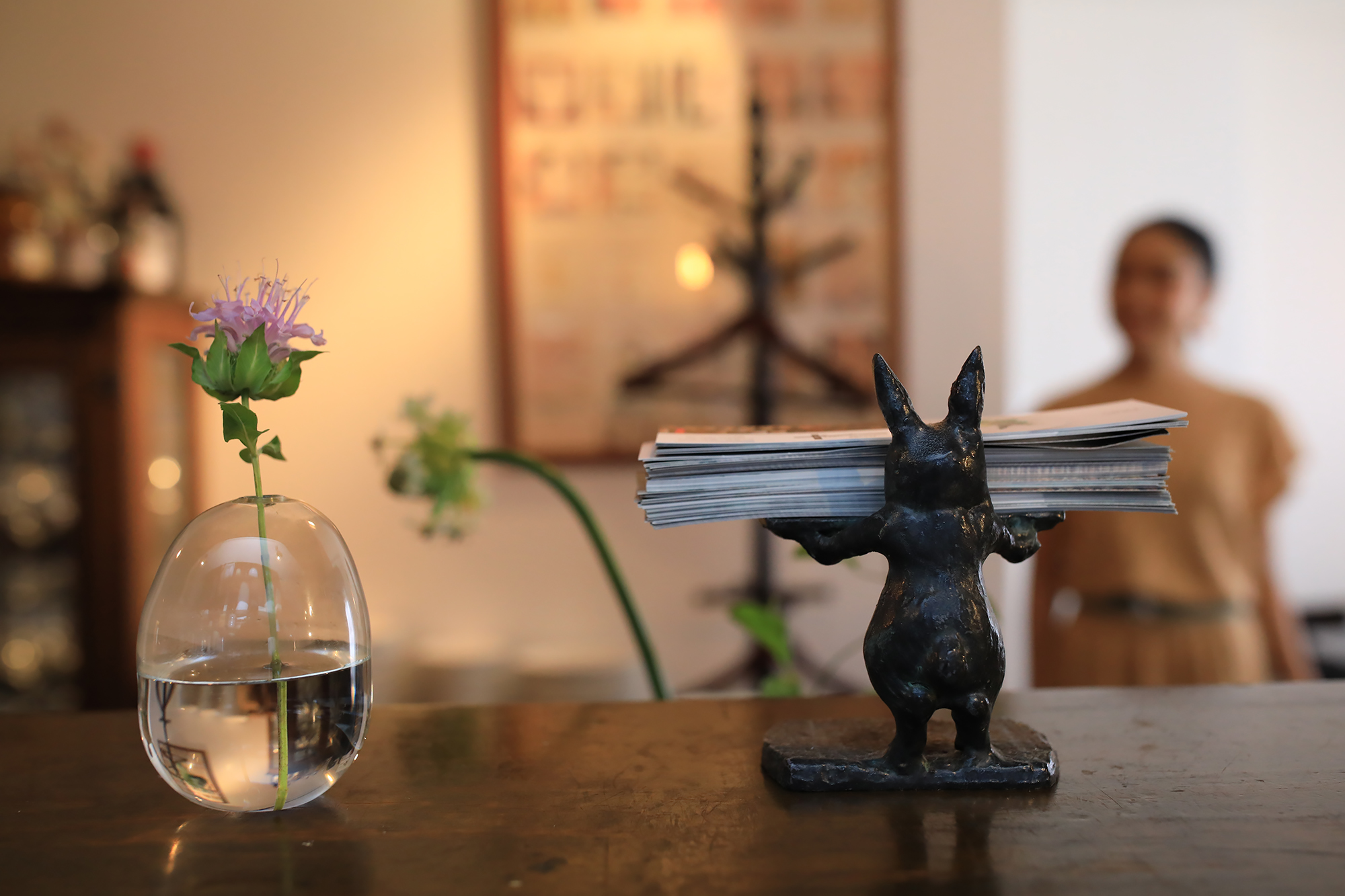
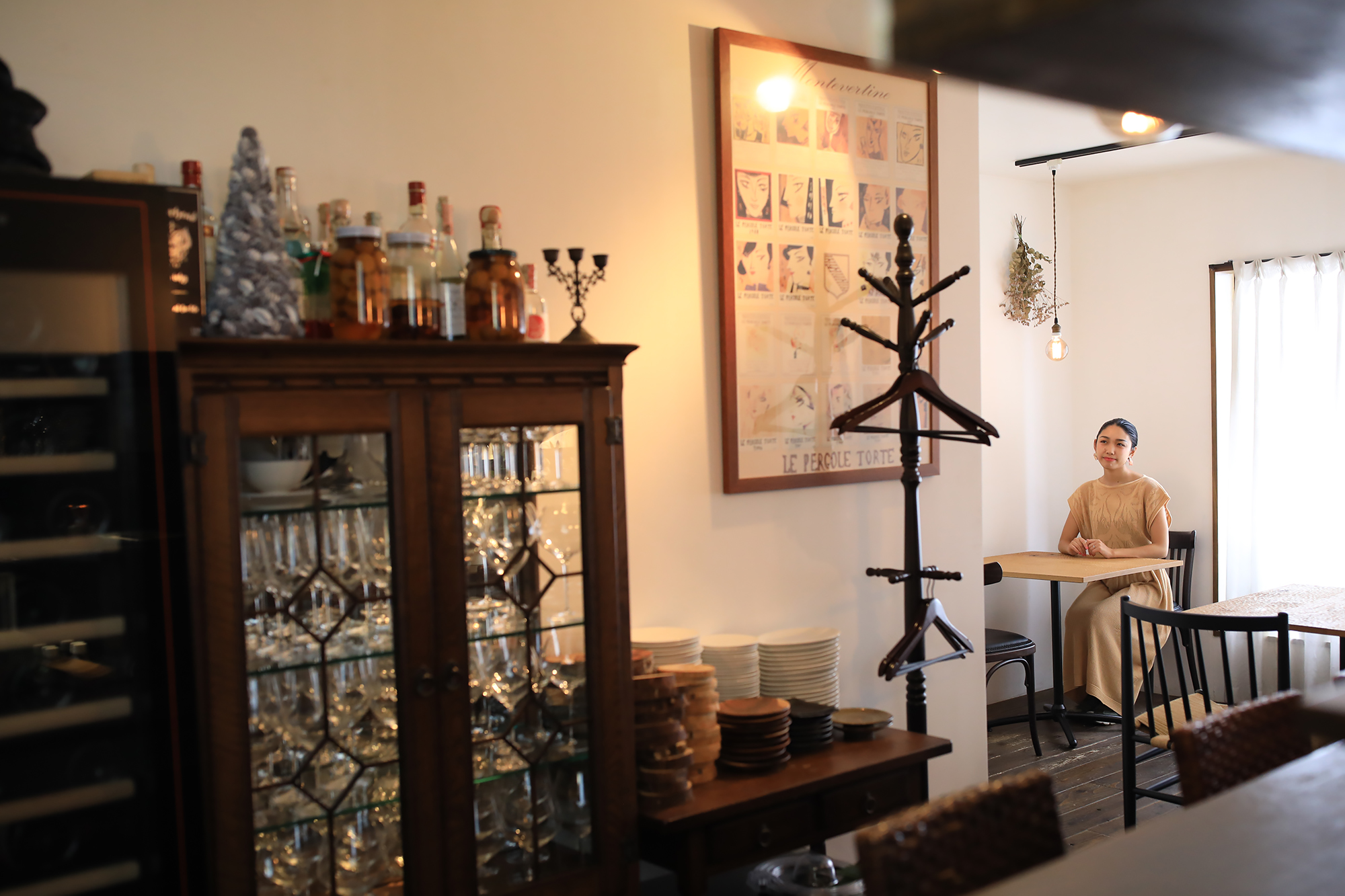
The restaurant's unpretentious atmosphere is filled with a sense of style that seems to ooze out of Mr. Toyama's personality.
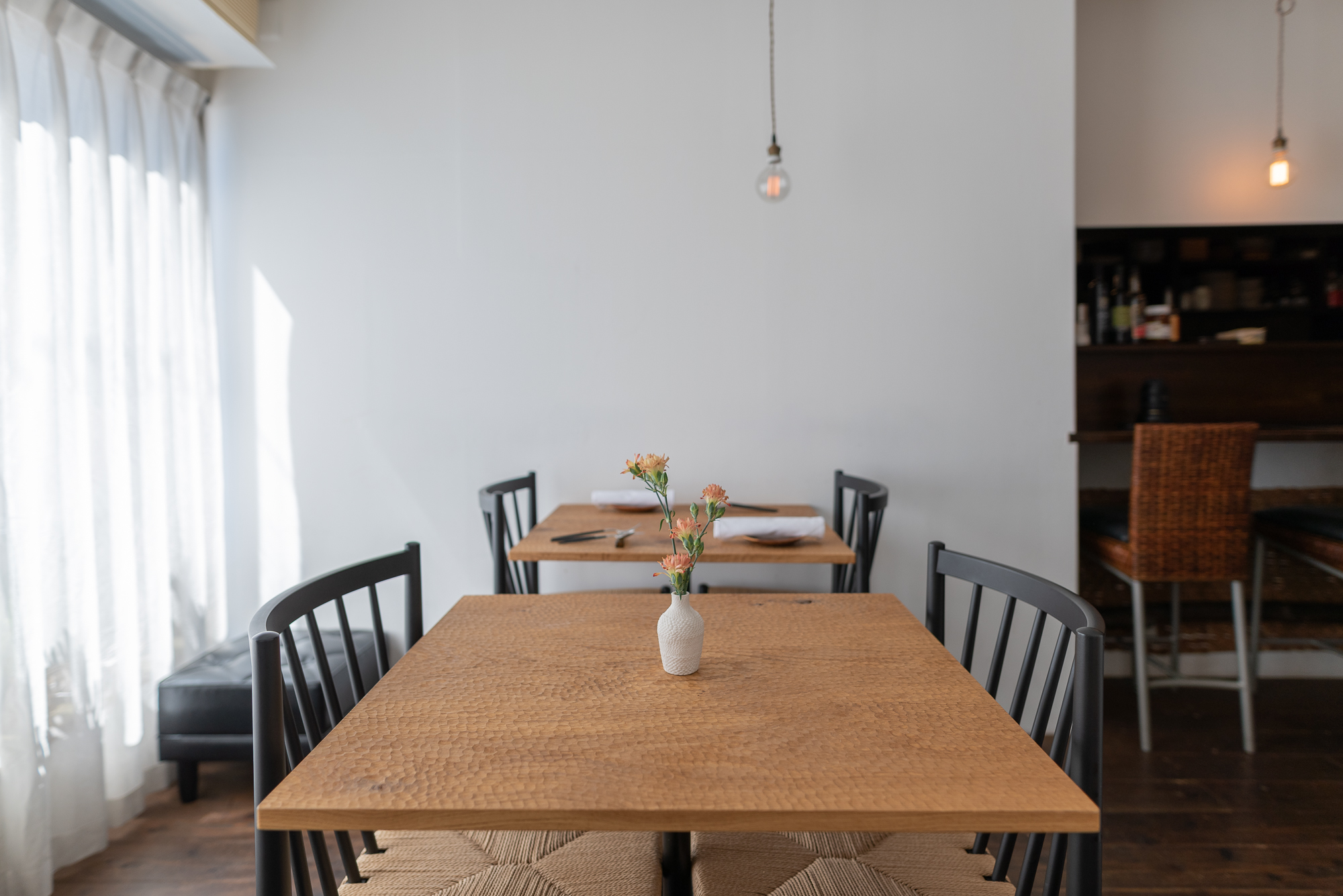
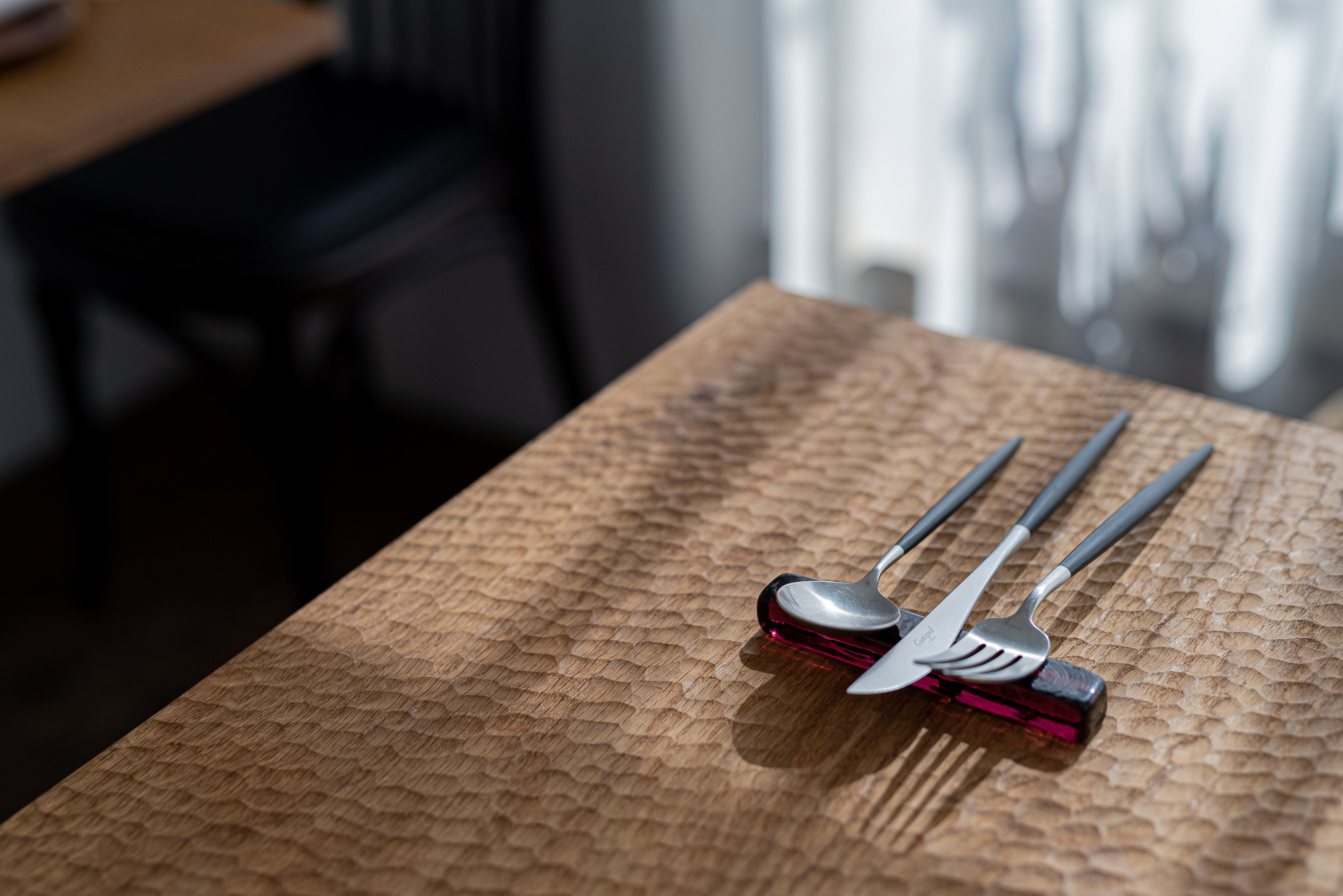
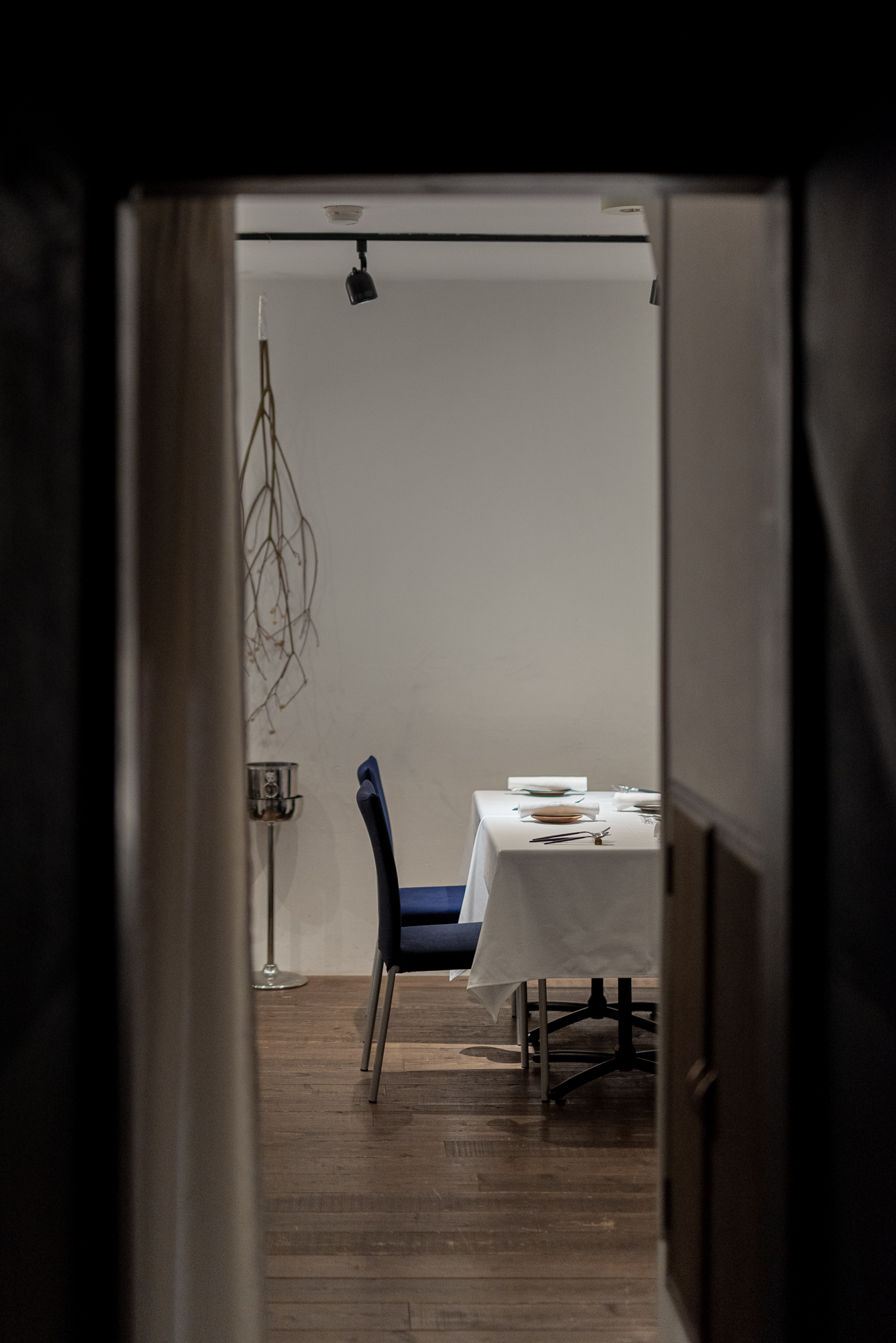
The store is divided into two rooms around a door. The back room, which is separate from the room with the counter, has a slightly different impression, with a simple atmosphere centered on monotone colors and accented with dried flowers and other items.
Cooking Introduction
Genovese pasta
This colorful pasta is made with an abundance of home-grown organic basil. The ring-shaped pasta, called paccheri, is beautifully accented with green edamame and okra on a white grilled plate, and the accompanying okra flowers look like butterflies that have fluttered down to the meadow, a delightful accent to the eye. Crushed basil seed powder is also used to spice up the aroma.
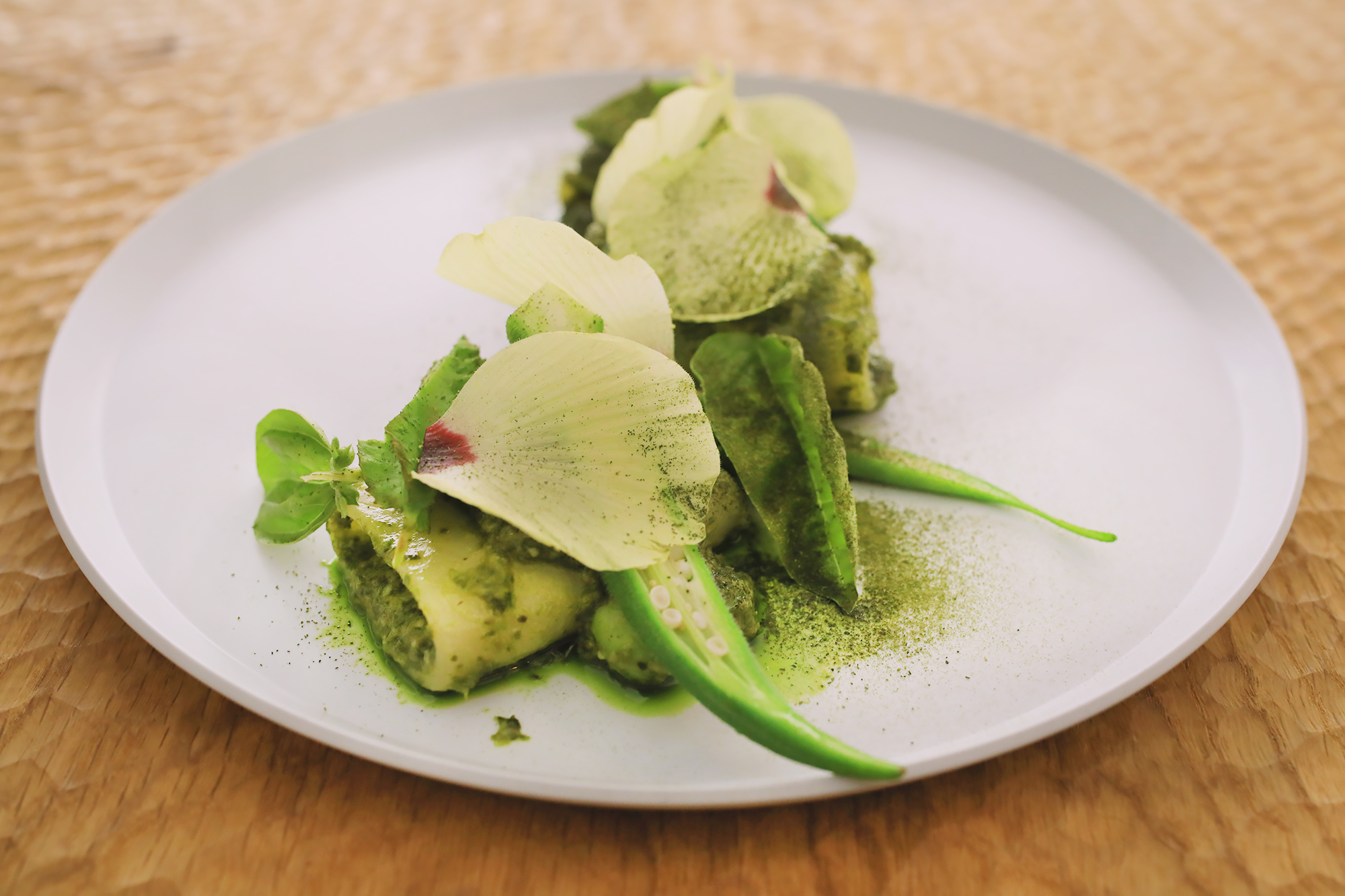
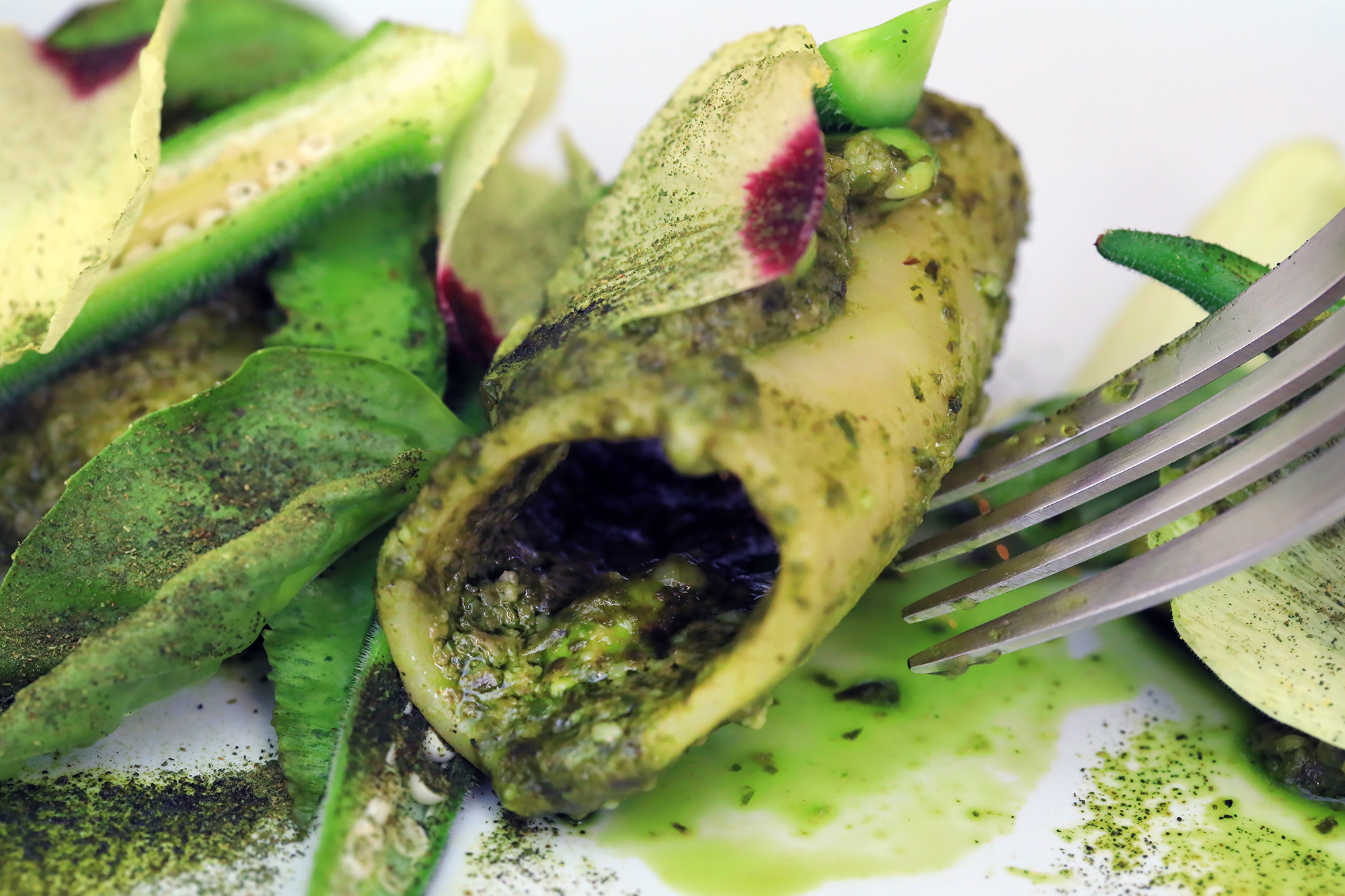
The pakery is more elastic and sticky than one might imagine, and it is well intertwined with the basil pesto. One bite was as refreshing as a fresh breeze passing through my body.
Char-grilled red chicken
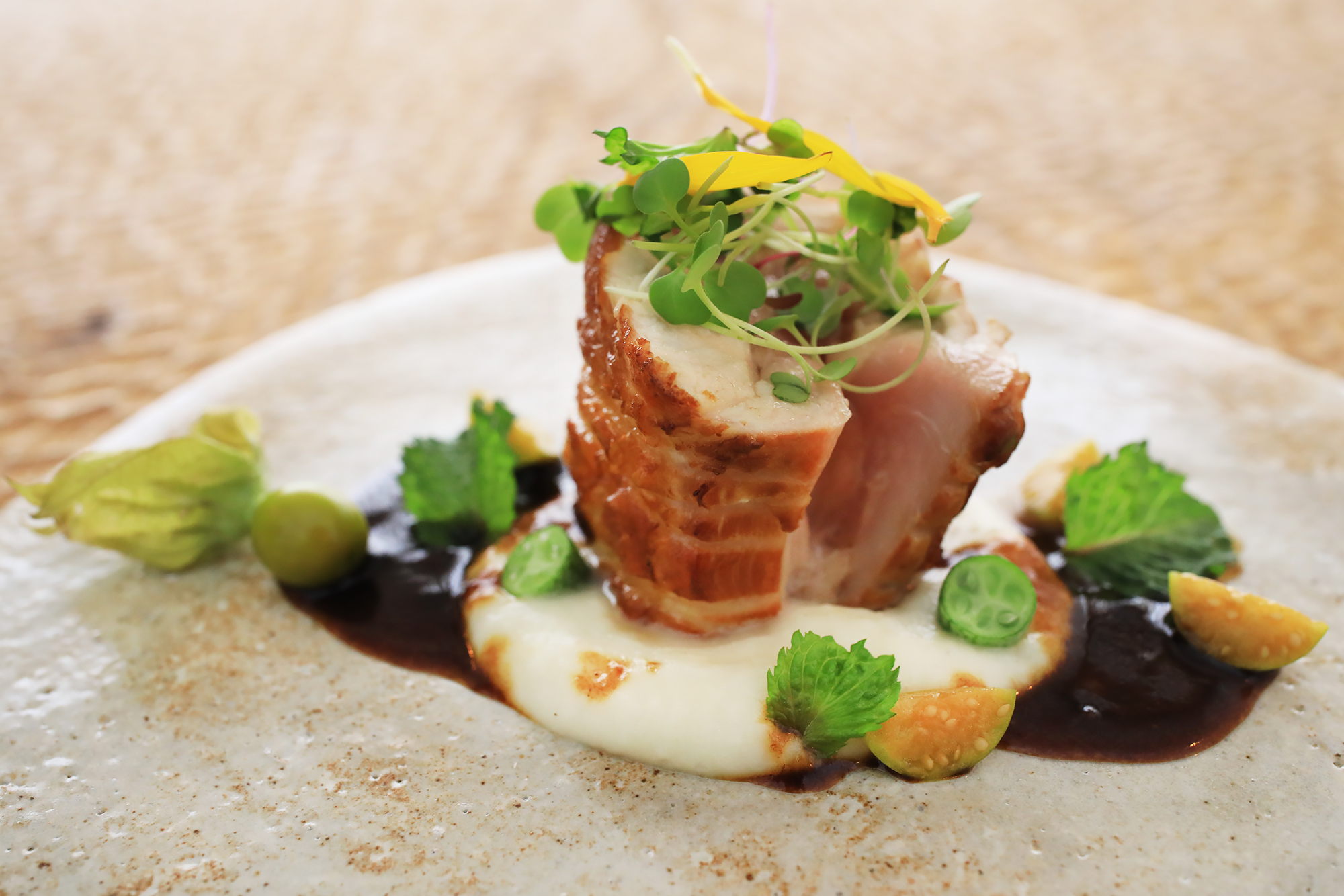
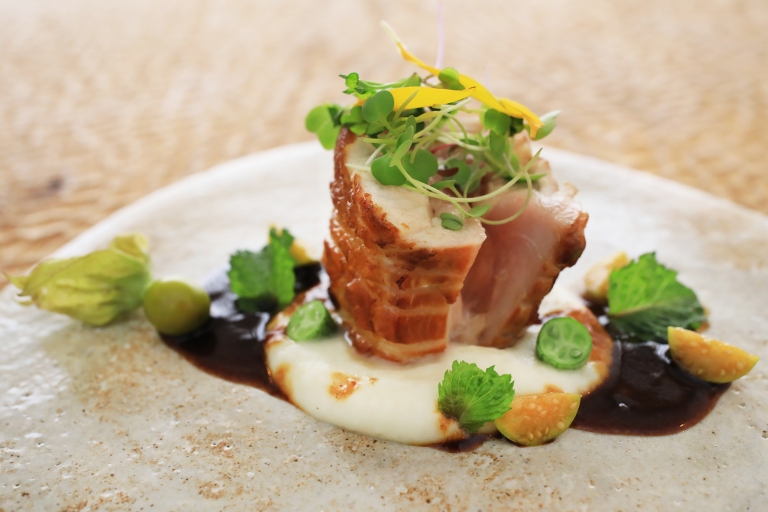
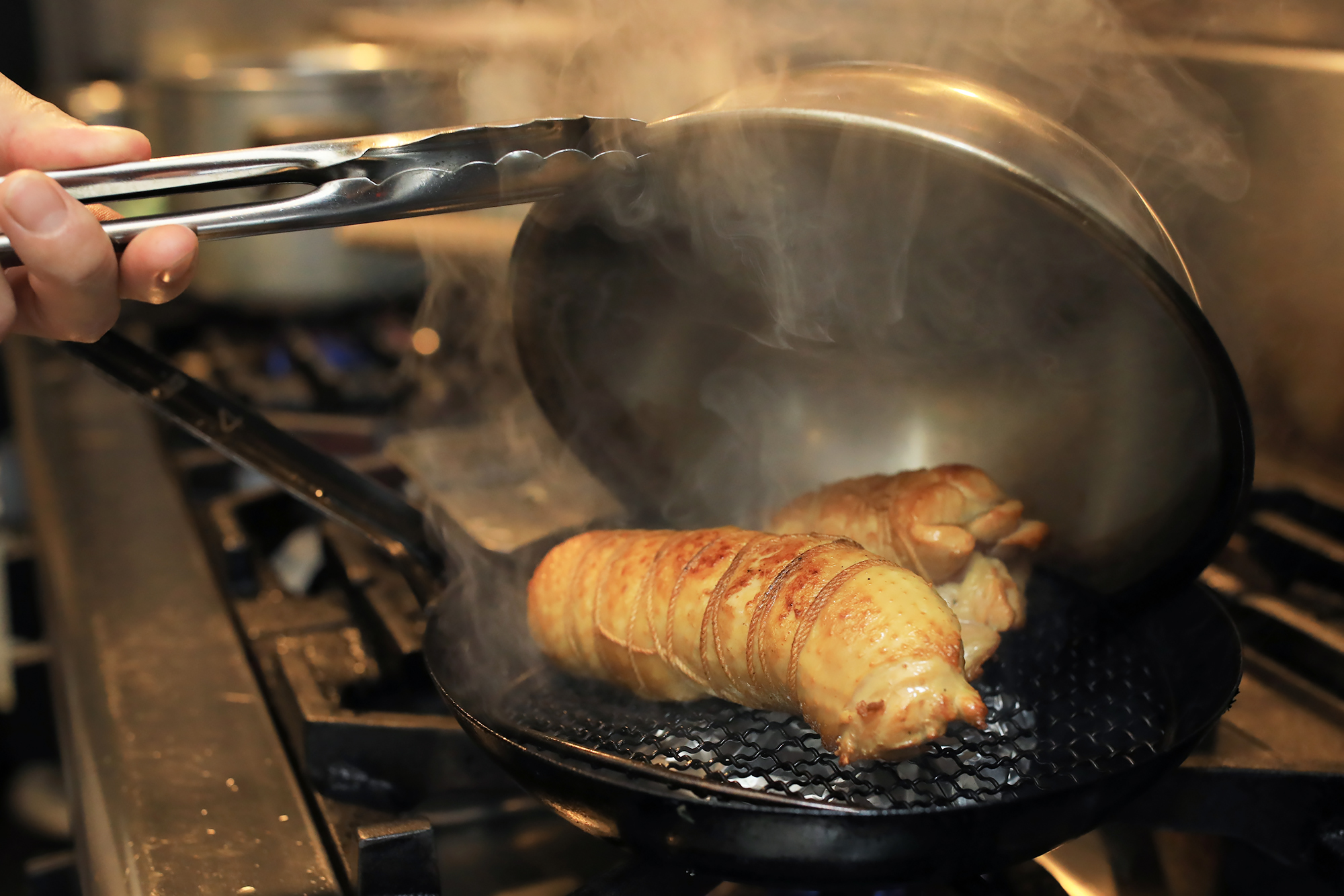
Despite its bold appearance, the char-grilled red chicken is marveled at its tender meat. Mini cucumbers and hoozuki mushrooms harvested with Mr. Toyama in his vegetable garden are also served on the side.
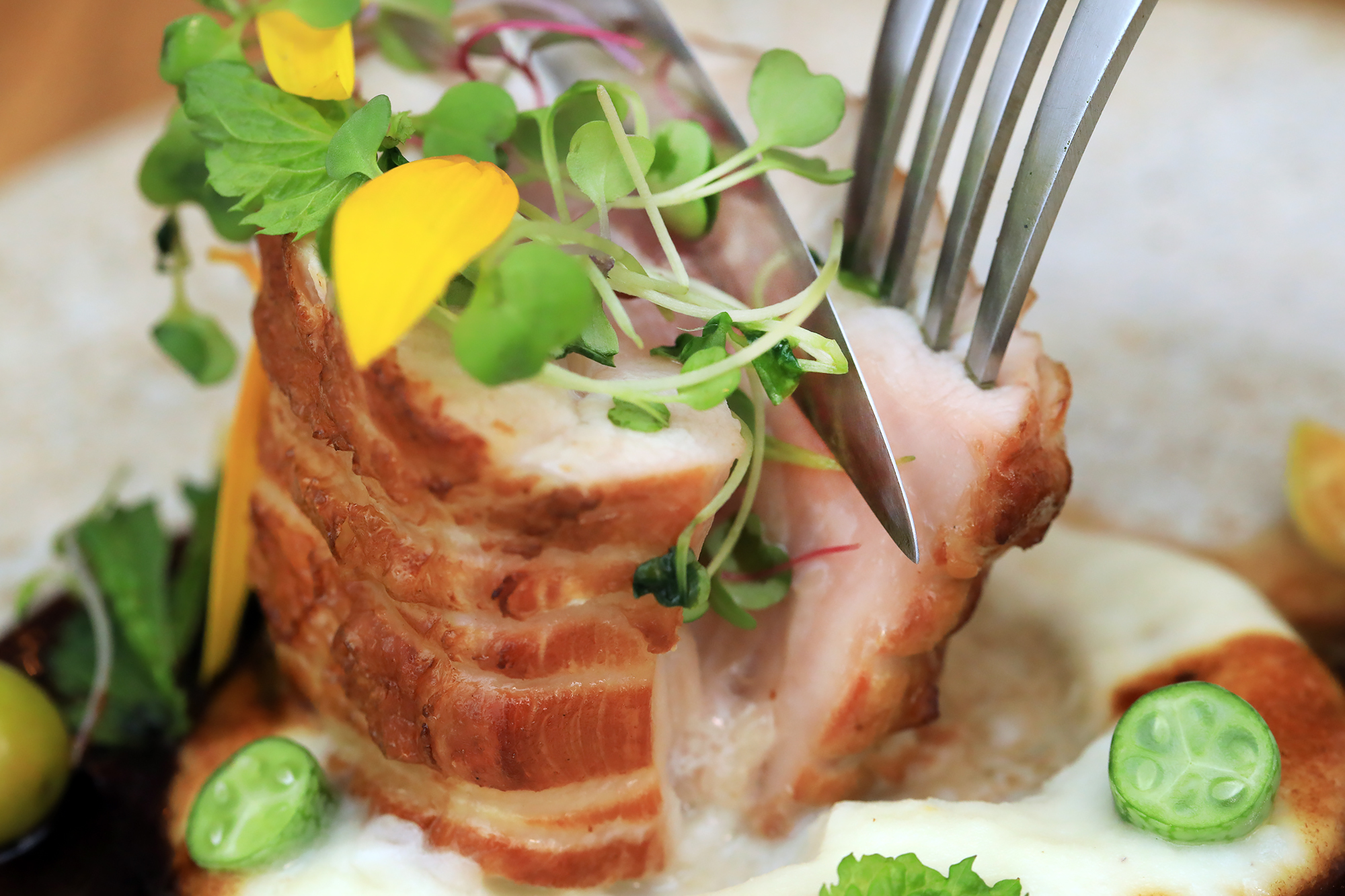
The yellow petals are sunflowers. When Mr. Toyama happened to see them blooming and asked about them, he learned that they are grown without pesticides and was inspired to use them in his dish. The dish is not only hearty and satisfying, but also offers a sense of the season.
Mont Blanc with Black Beans and Black Truffle
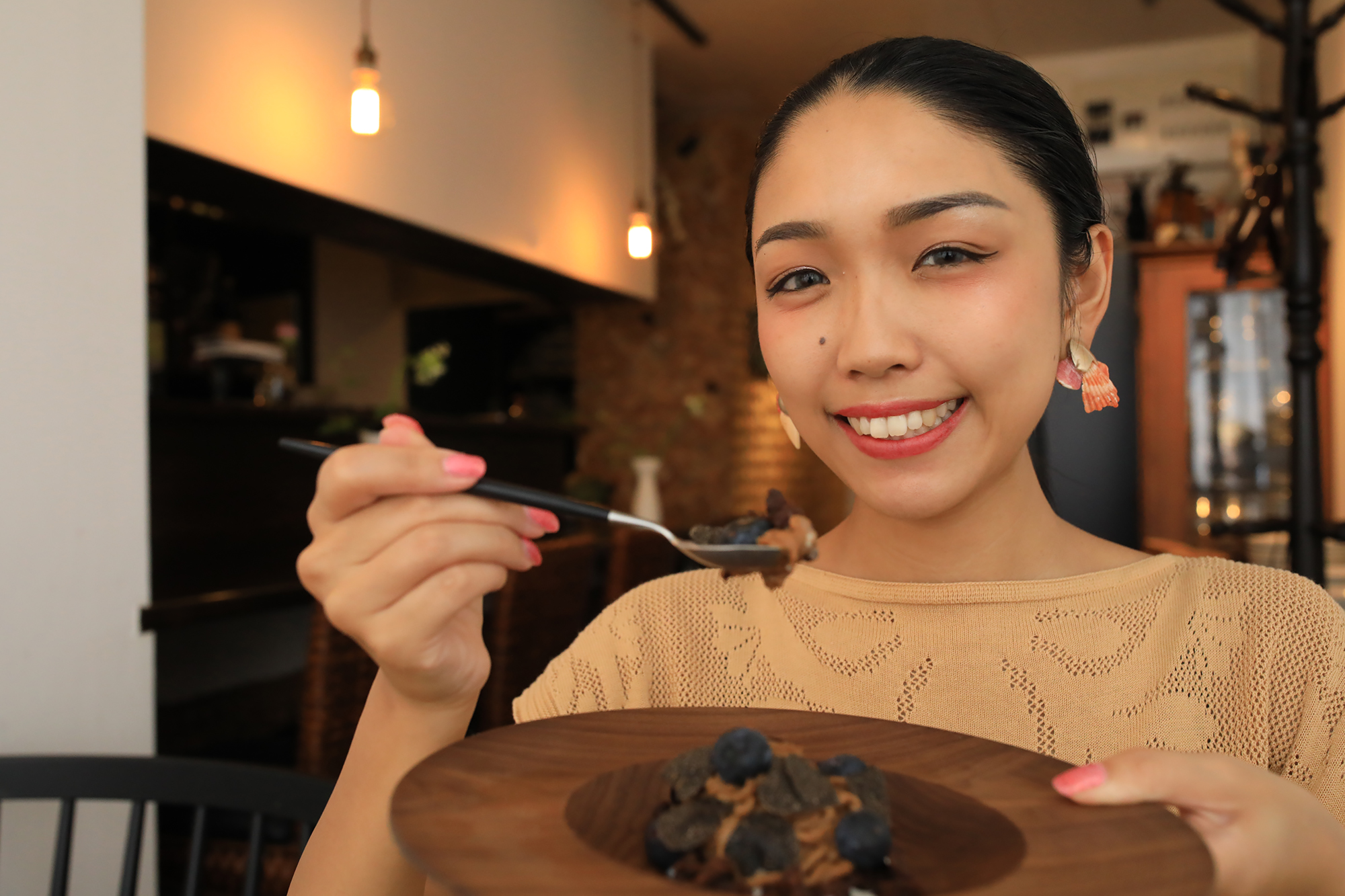
Montblanc is made from black beans grown in his own vegetable garden and cooked into a sweet paste. During the New Year's holiday, these black beans are sweetened and cooked for Osechi cuisine, which is served on the table at home. It is a dessert with a Japanese taste, which is different from the chestnut paste mont blanc that one might imagine.
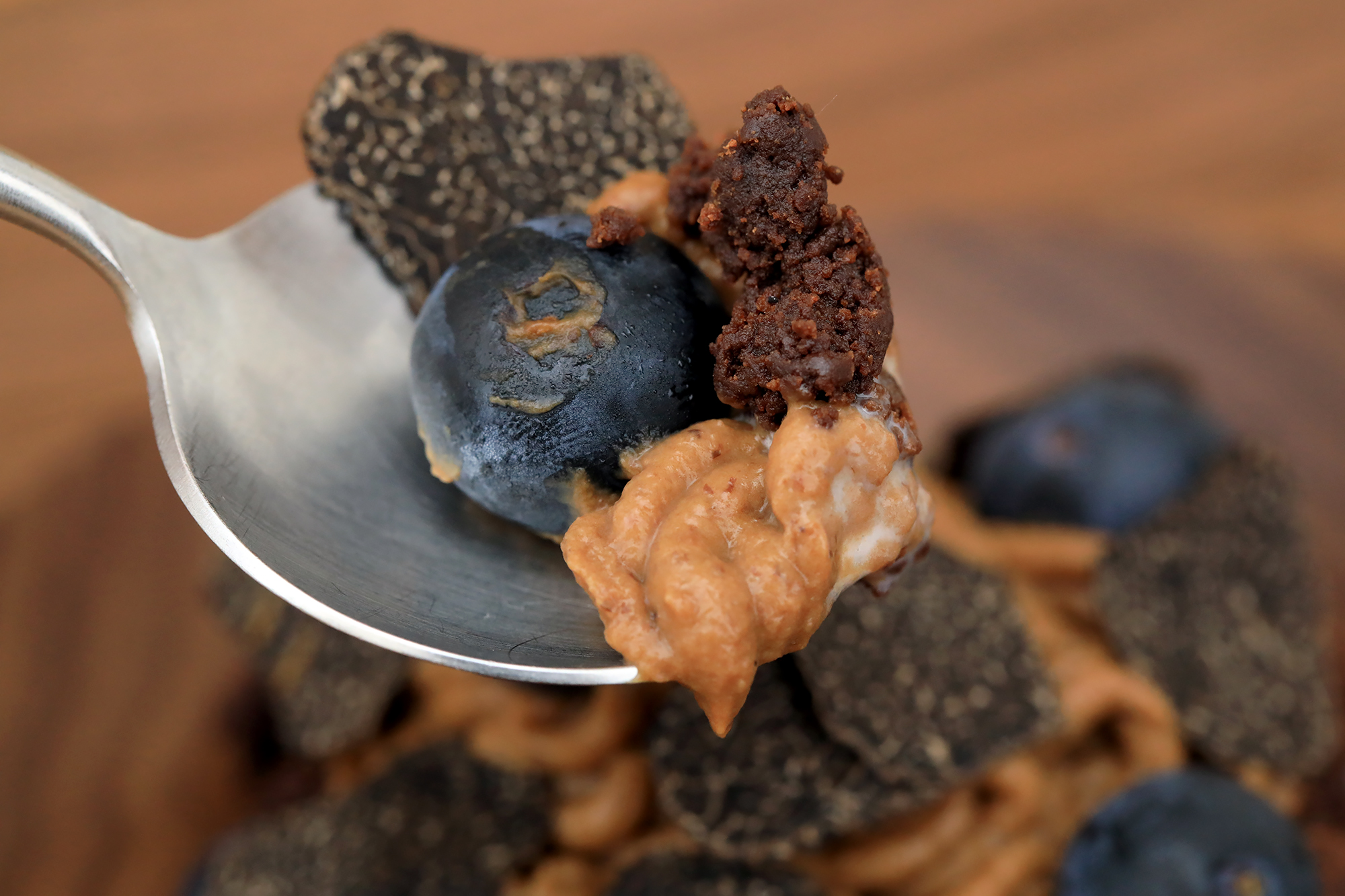
Ice cream was hidden under the black bean paste. The truffle topping was richly fragrant, and the sourness of the blueberries refreshed the palate. You can enjoy a variety of textures and aromas in one dish.
Other Menu Introduction
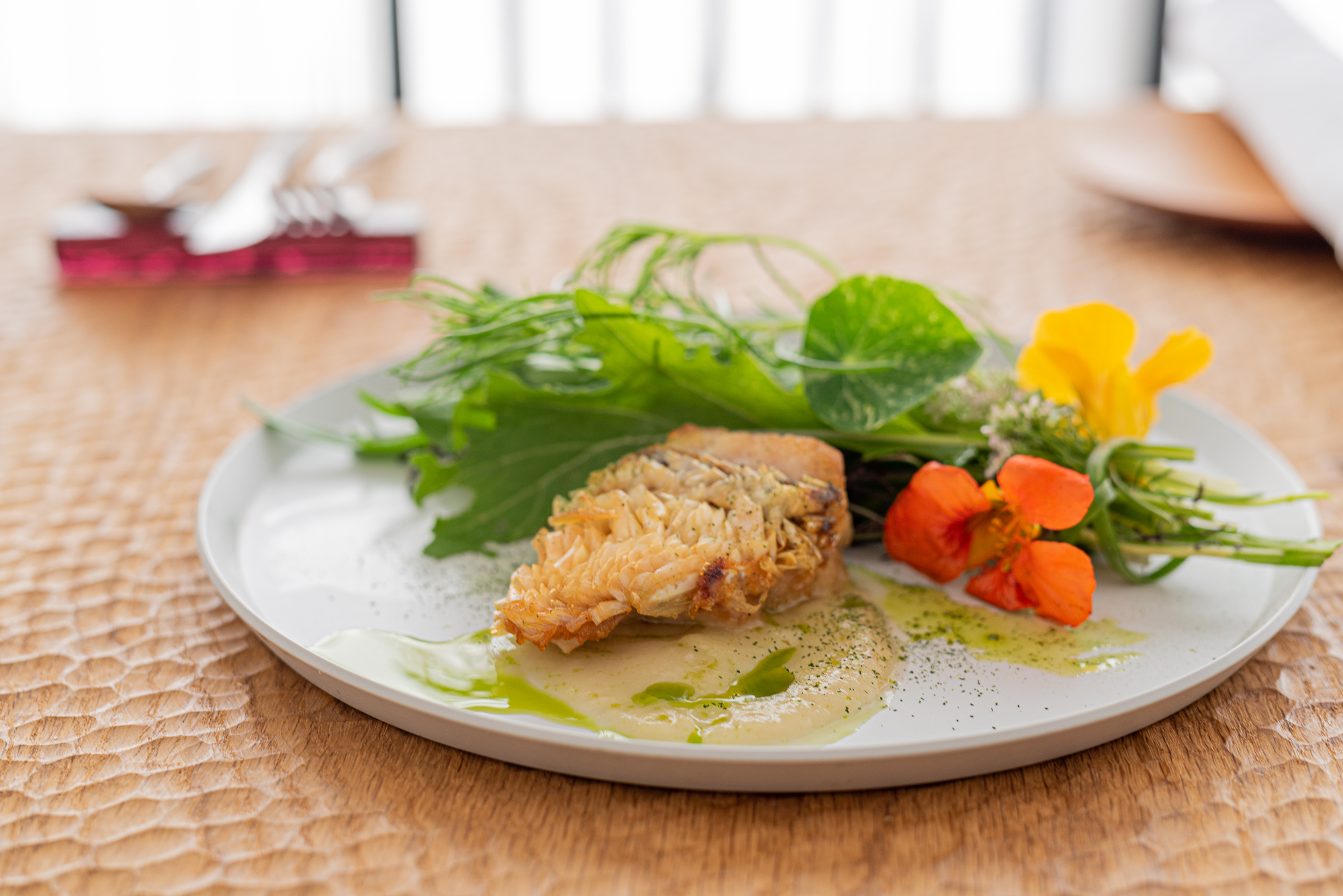
Sauteed sea bream with radish and fennel sauce and herb salad ¥1,800
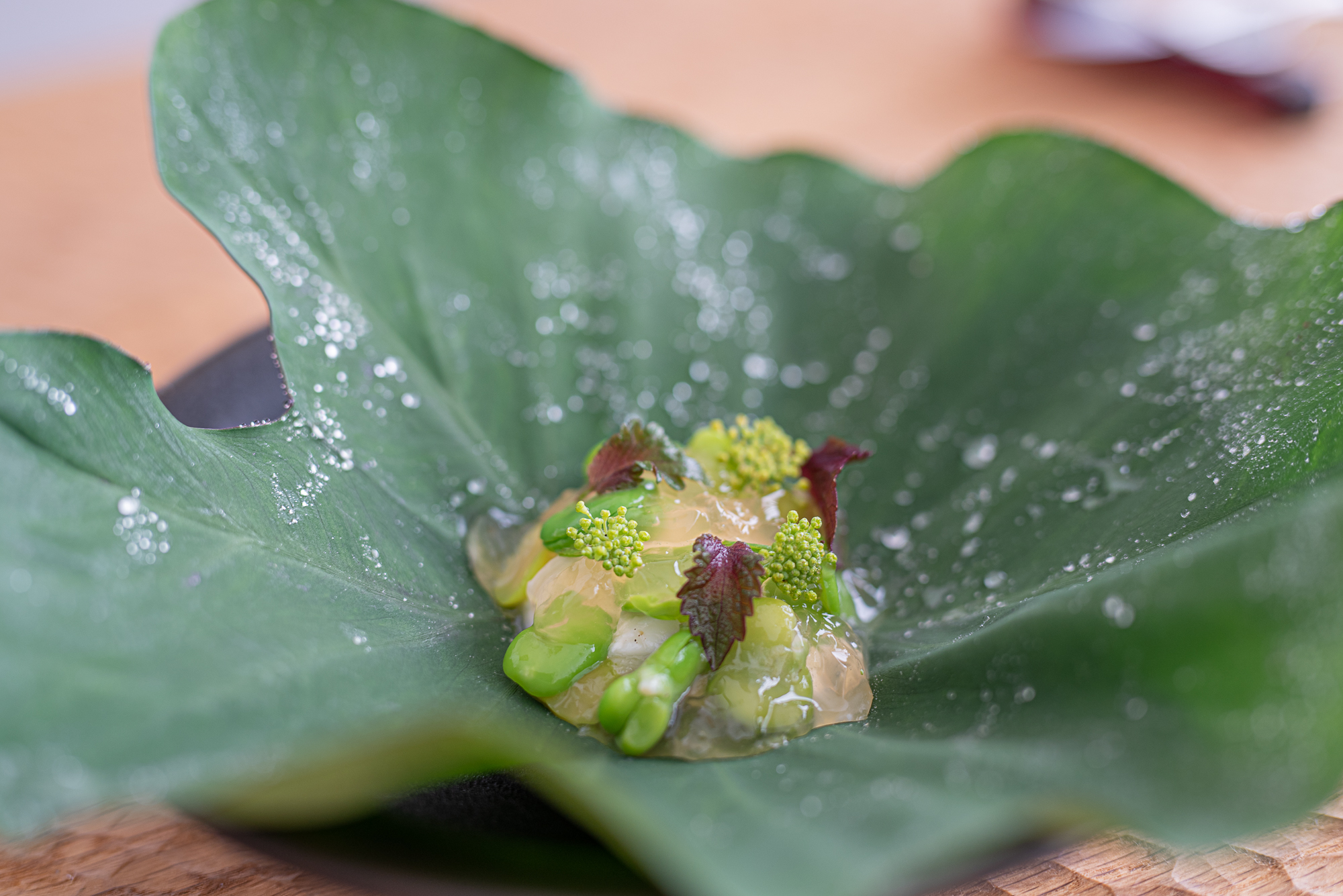
■Taro gnocchi with cloud peas and seawater jus 1,200 yen
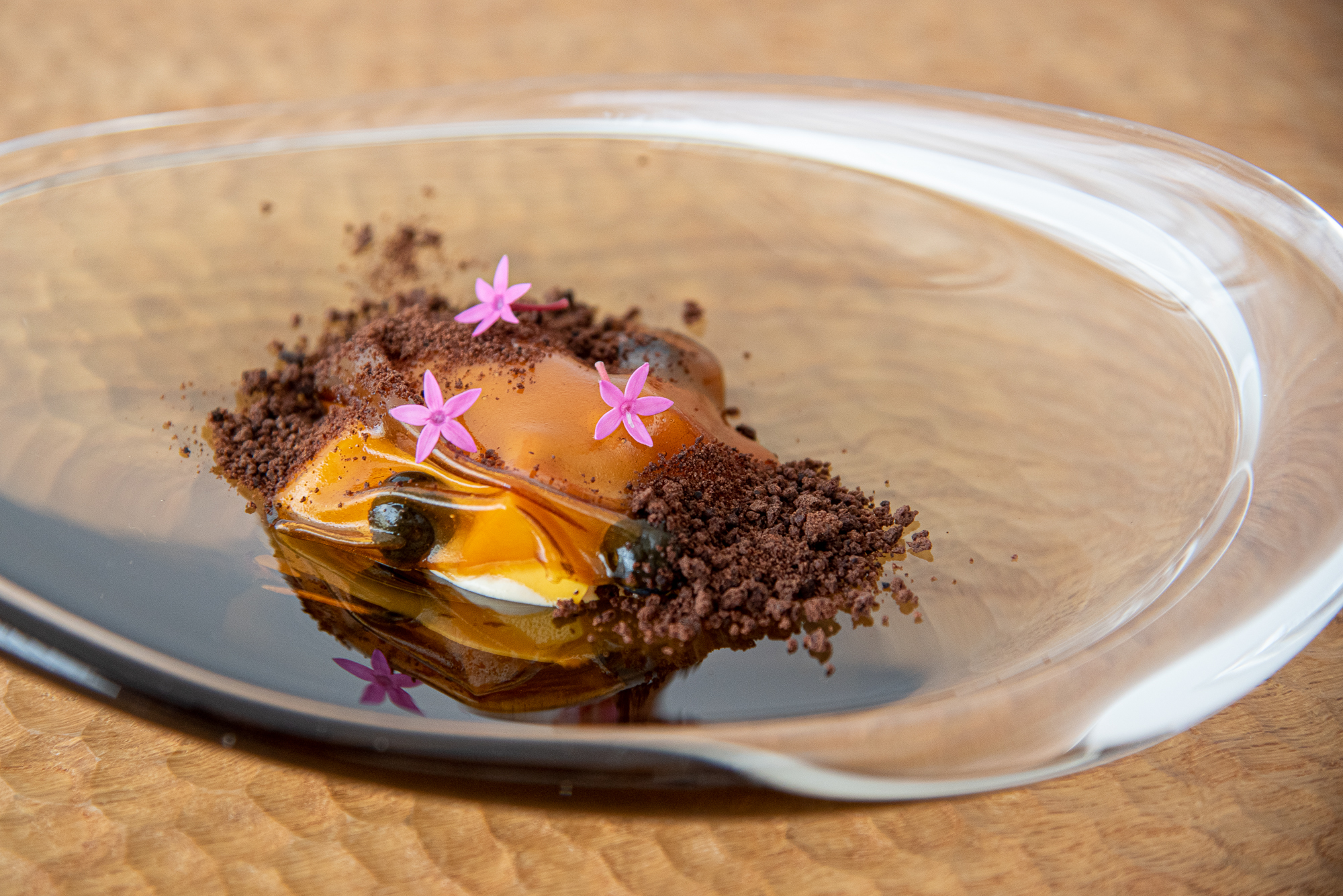
Tiramisu 780 yen
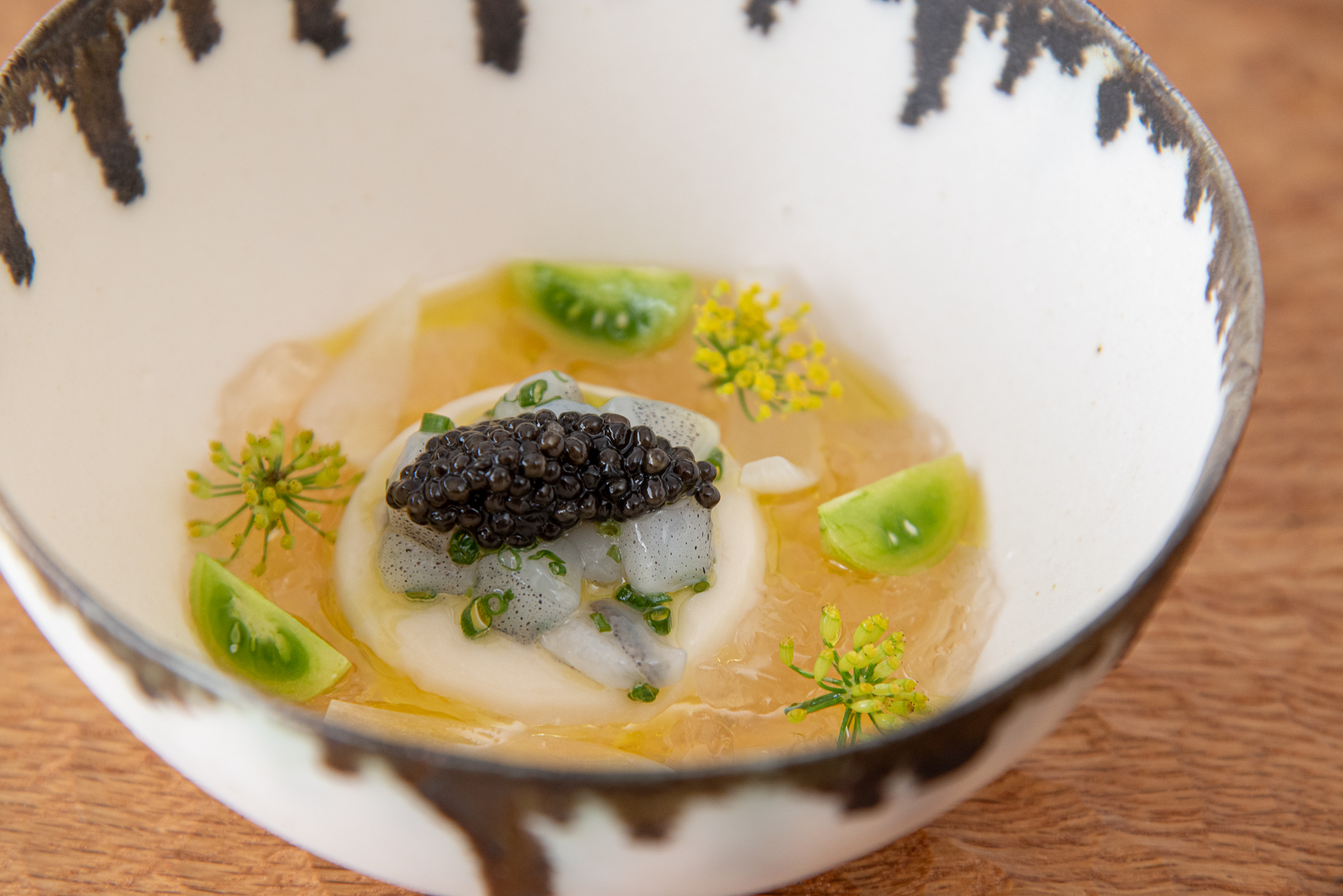
■New onion panna cotta with caviar ¥1,400
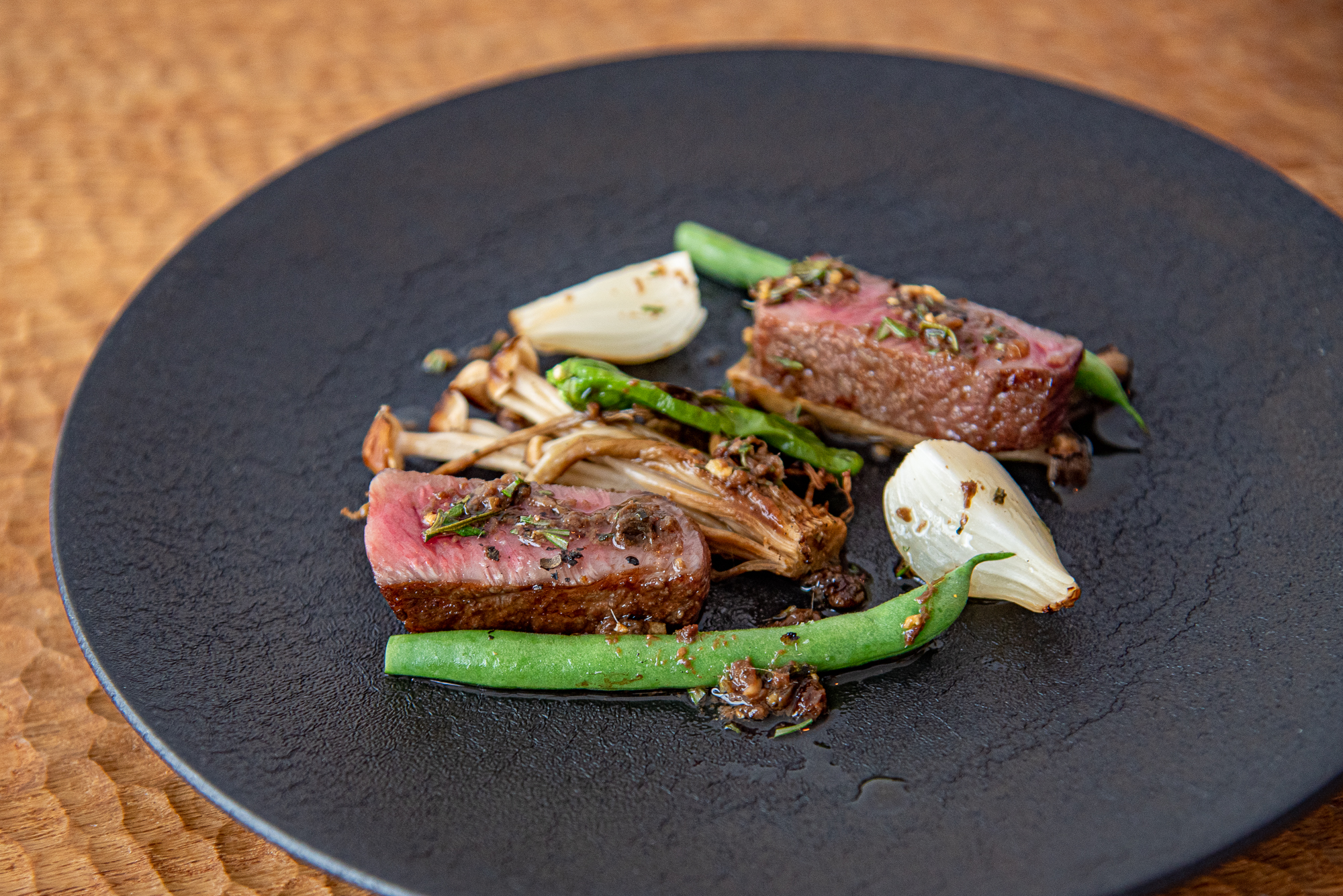
■Charcoal-grilled Tomo of Toman beef, 2,800 yen
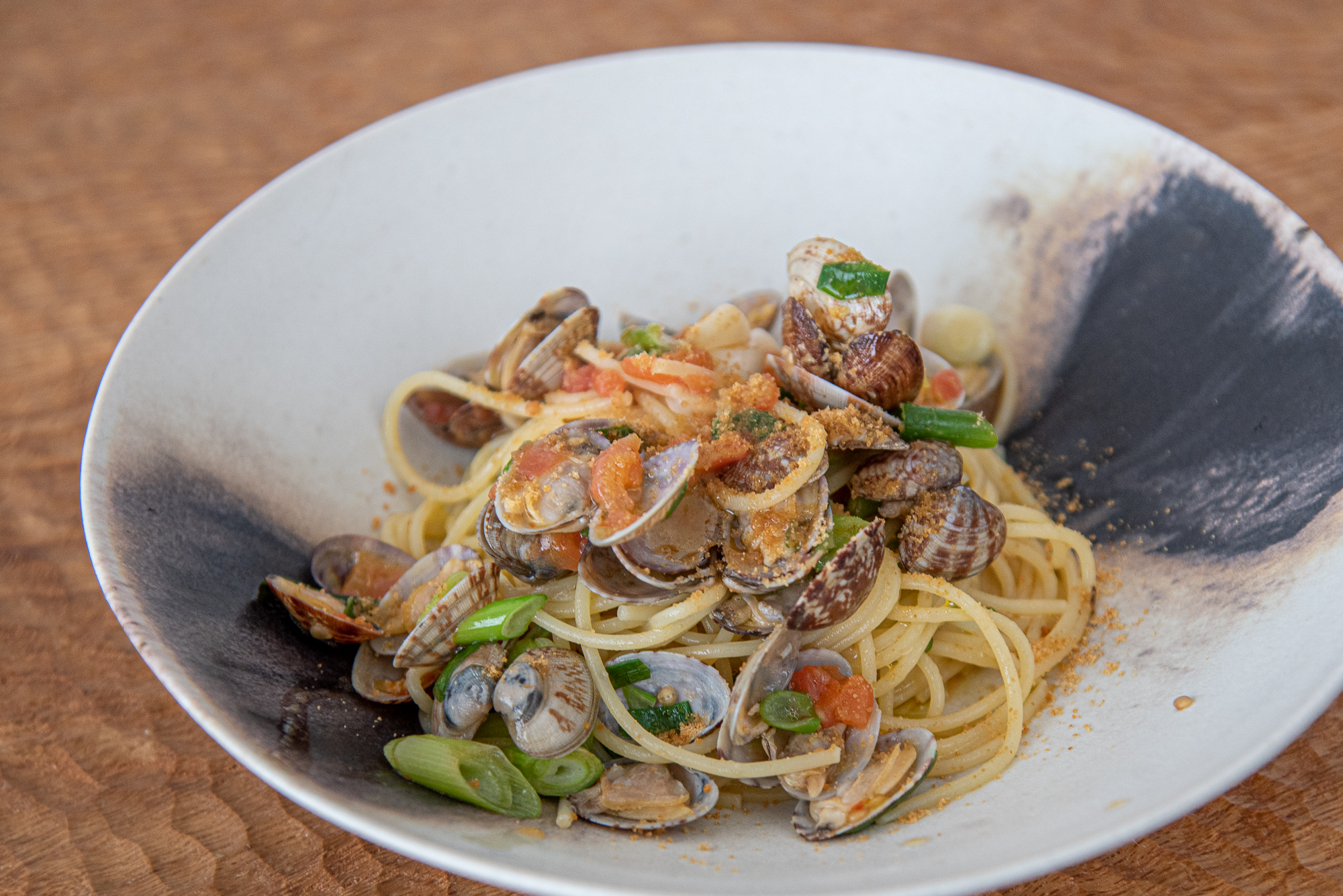
Spaghetti with clams 1,600 yen
Interview with Shin Toyama, Representative
Don't use fewer herbs in your cooking because you are concerned about the cost.
I'm kind of missing something, so I'm going to go to .......
With a home garden, you can get expensive European vegetables and
I can freely grow the vegetables I want,
We can offer dishes with ingredients that are not available in the market.
Q: How and why did you open the restaurant?
I worked in Italian, French, and Romanian restaurants in Tokyo until I was about 30 years old. I think of my life in terms of a five-year span, and when I turned 30, I was asked to become a chef at a restaurant in Tokyo, but I also wanted to go to Italy to study the real taste of the country. However, I also wanted to return to my hometown someday and open the restaurant I envisioned, so I asked myself these three choices. Finally, I went to Italy and visited various restaurants! I decided to return to my hometown Miyazaki to create the restaurant I envisioned, and I opened this restaurant in November 2011.
Q: What is your store's policy and commitment?
「I had been working in a variety of restaurants such as Italian, French, and Romanian cuisine, and I aimed to create dishes that could be realized only in Miyazaki, such as gibier cuisine widely favored in Europe and ingredients that were familiar as local cuisine in Miyazaki, which could be made familiar in a new way by cooking them myself. I was also aiming for dishes that could be realized only in Miyazaki.It's a simple commitment to making delicious food with Miyazaki ingredients, but we also delved deeply into the ingredients.The restaurant was opened in 1949, and it has since become a popular place to eat wild boar meat. Although nowadays people in Miyazaki have more opportunities to enjoy gibier cuisine, at the time of the restaurant's opening it was not yet widespread, and there were no wholesalers of venison or wild boar meat, so I obtained a hunting license and a blowfish processor's license so that I could prepare high-quality, safe Miyazaki ingredients by myself. Fugu is usually served as sashimi or nabe (hot pot), but fritters and carpaccio give it a different taste.」
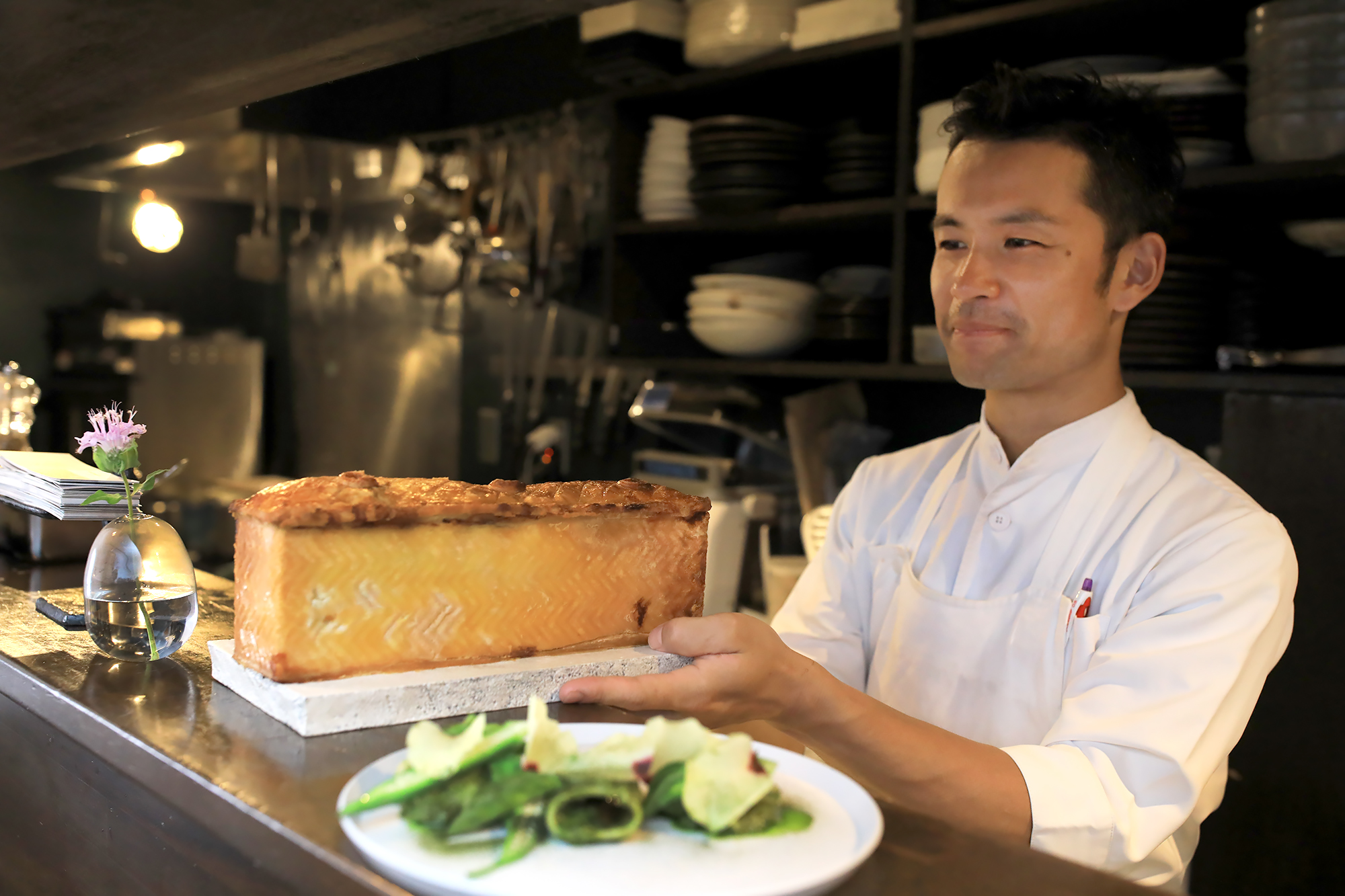
Q: How long have you had your own vegetable garden?
It was before we started the restaurant. I have been allowed to use the field that my father used to work in. If you are concerned about the cost and use fewer herbs in your dishes, they will be somewhat inadequate. ...... If you cut back on that part, it doesn't taste good. So I wanted to use them to the fullest, so I put a lot of effort into growing herbs, especially from the beginning."
Q: What kind of food do you grow?
「It varies from vegetables, herbs, and flowers, and we also grow loquats and blueberries. With a private garden, I can freely grow expensive European vegetables and vegetables that I want, and can serve dishes using ingredients that are not readily available in the market. I can use the vegetables at different stages of growth, such as sprouting, flowering, and fruiting, in dishes, finished designs, and flavors, and when I have a large harvest, I can preserve them by turning leaves into powder, tomatoes into dried tomatoes, and fruits into jams and pastes. When we have a large harvest, we use them carefully.」
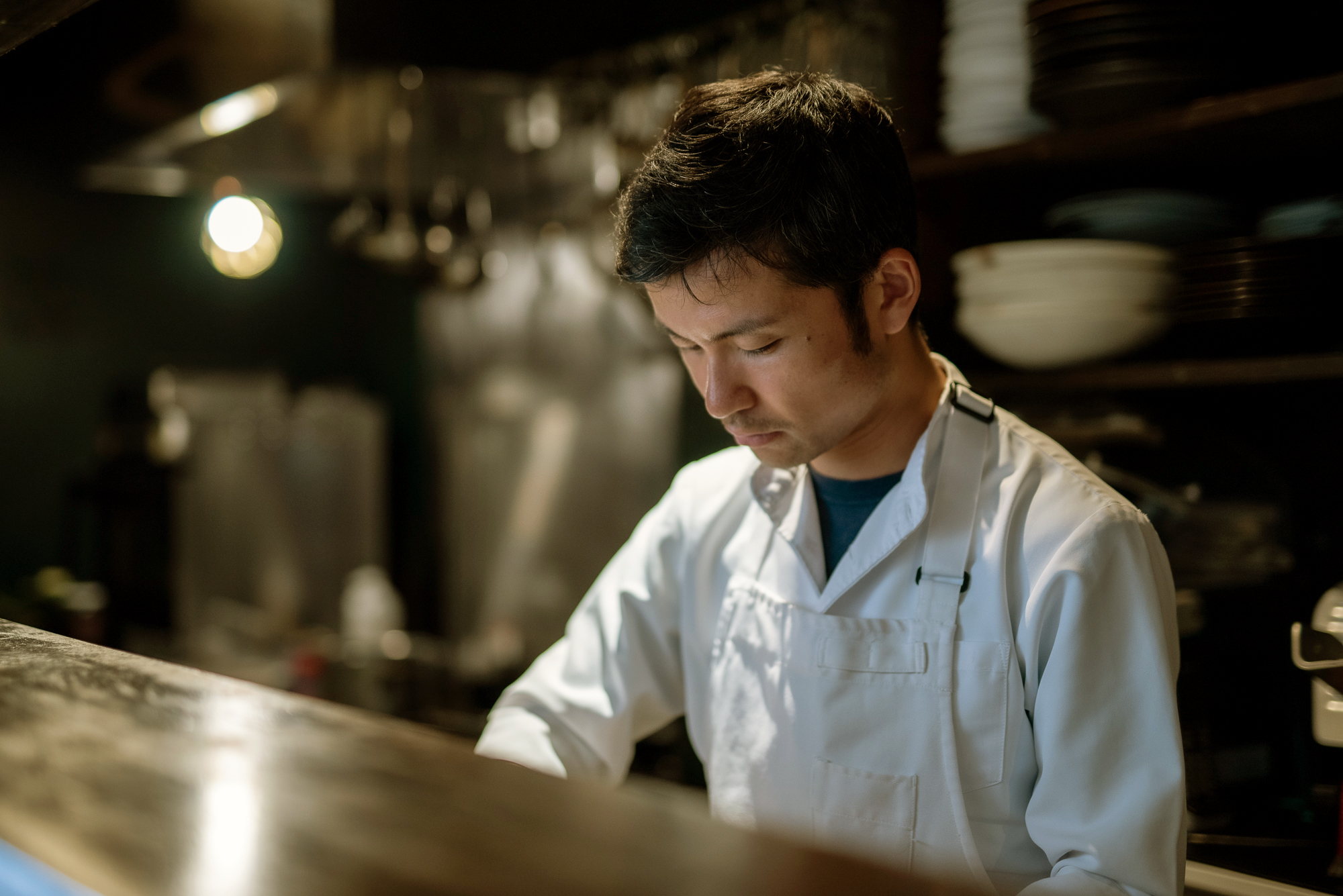
Q: Do you have a vision of how you would like to make this store like this in the future?
I feel that there are fewer "ordinary restaurants" in Miyazaki than in other parts of Japan. There are many izakaya-like restaurants that offer everything from local cuisine to seasonal sashimi and steaks, or restaurants that are like teishoku-ya (set meal restaurants) where anyone can easily come in in everyday clothes. The development of popular eateries where people can enjoy their meals and drinks with gusto is due to Miyazaki's strong shochu culture, and I believe this is an important part of Miyazaki's culture. Even in such an environment of Miyazaki, on the other hand, I hope that the culture of eating at a simple restaurant, where the chef serves dishes that he pursues without bending his beliefs, will take root more. It is difficult to define what an "ordinary restaurant" is (......), but I think it is a restaurant where customers feel comfortable the moment they enter, enjoy their meal, relax, and want to come back again. I think it is a restaurant where customers feel comfortable, enjoy their meal, relax, and want to come back. Ideally, the restaurant should be centered around the cuisine that is uniquely mine."
Q: So, what is your sense of self for you, Mr. Toyama?
I think there are two types of chefs: those who master simplicity and those who change in a positive way. I think there are two types of chefs: the ”craftsman type who sticks to simplicity” and the ”type who changes things up in a good way,” and I think I am the latter. I grow my own vegetables, but sometimes I try to be playful and use weeds and such. I try to make different discoveries, and then I pursue different changes. Because we are doing this while raising the children and making the food, there is a lot of blurriness, but I think that's fine. The cuisine at the restaurant is based on Italian cuisine, but it is not a specific genre. It is okay to be influenced by others, even if it is your own style. I think it is important to enjoy change.
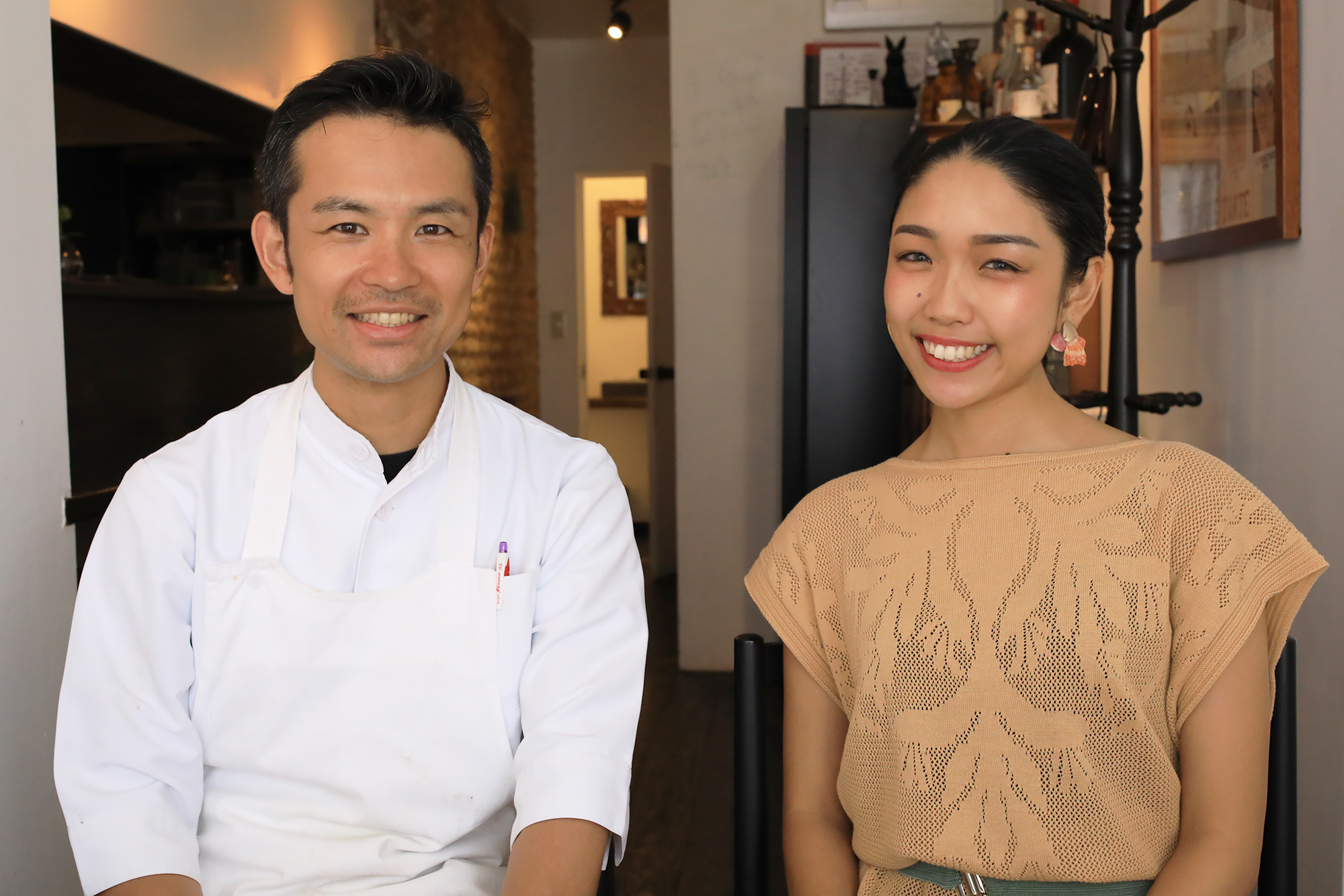
▲Shin Toyama (left), representative of GIGLI (Osteria GIGLI)
Q: Mr. Toyama, thank you for your time.
Epilogue: After the interview
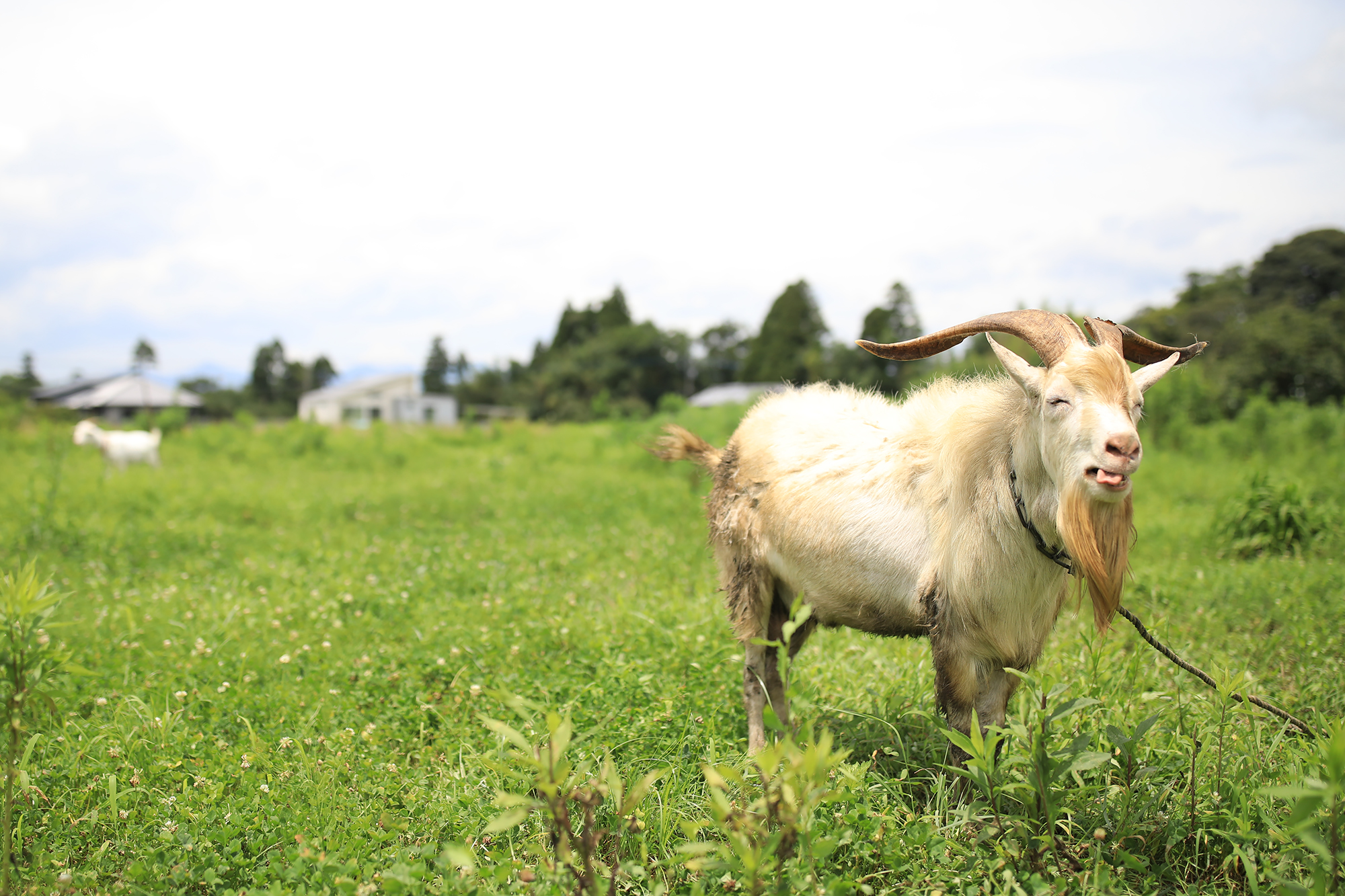
It is important to enjoy discovery and change without fear. I felt that such flexibility is truly characteristic of Mr. Toyama. On the one hand, there is the muddiness that can only come from being in contact with nature, and on the other hand, there is the urban sensibility that he has cultivated while studying books from abroad and gaining experience at restaurants of various genres in Tokyo. It is precisely because Mr. Toyama possesses these two aspects that we felt he is able to offer a cuisine and space that cannot be found in any other restaurant. We are bound by fixed ideas of what we should be and what we should become, and perhaps we overlook the timing when we can challenge something. It is important not to be afraid to change day by day. Through this interview, we realized how important it is not to be afraid to change day by day.
Access
GIGLI ((G.L.)
Address: 1F Takano Building, 3-22 Chuodori, Miyazaki-shi, Miyazaki
Phone: 0985-55-0780
Opening hours: Dinner 18:00~.
Closed: No regular holidays
https://gigli-miyazaki.com/
MAP
3-22 Chuodori, Miyazaki-shi, Miyazaki 880-0002, Japan
Interview and editorial staff
Model Report: Momoko Oshima
Editing: Nozomi Nakamoto
Photography and production: VOKE Ltd.