


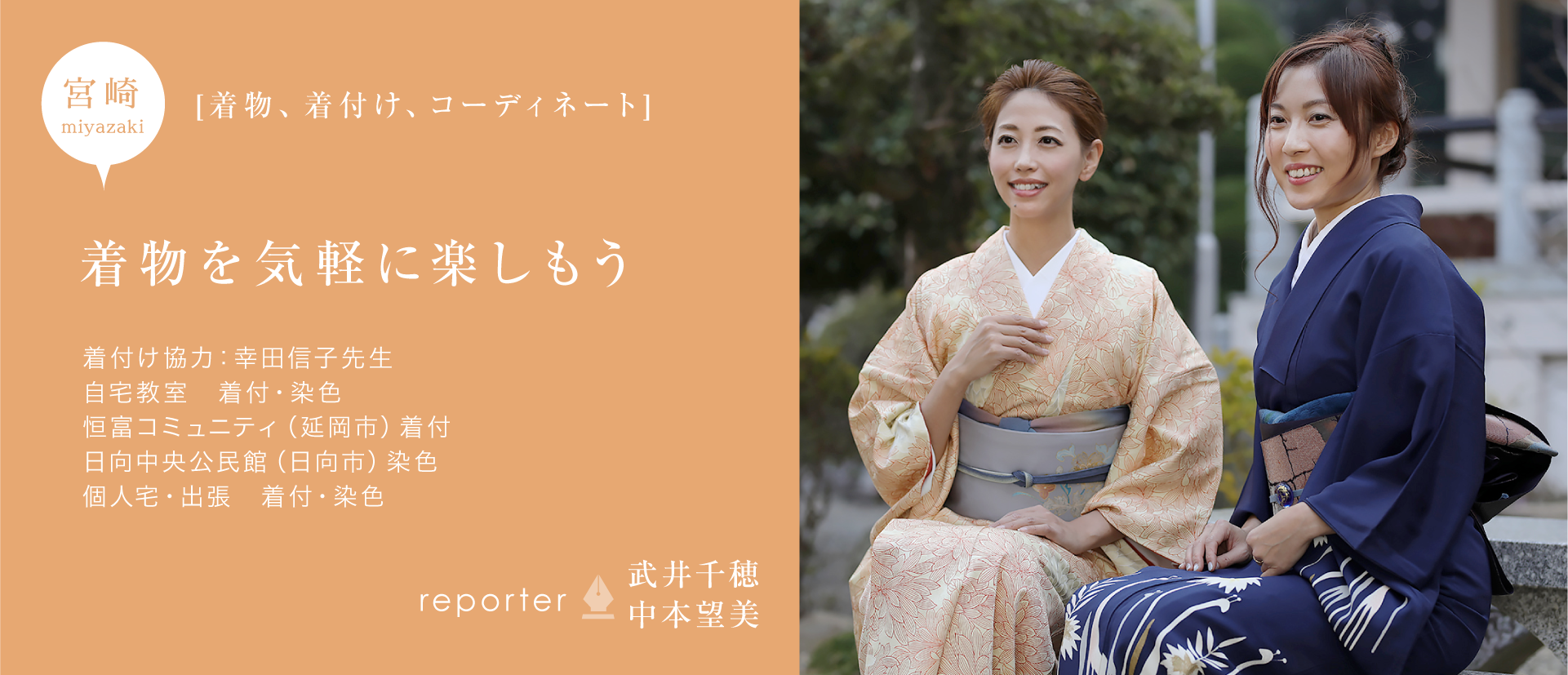

I want to enjoy kimonos in my daily life without any doubts or concerns about them."
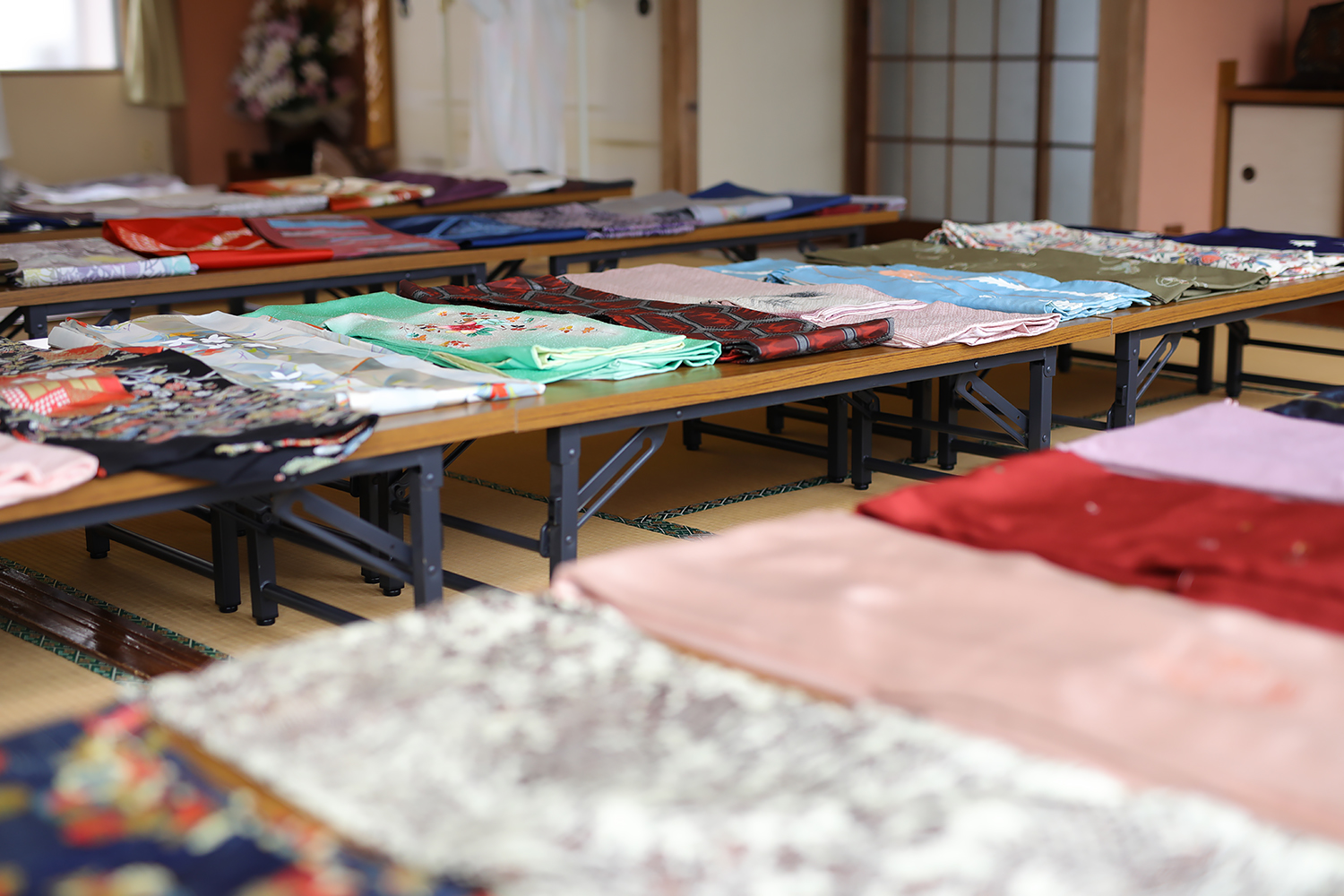
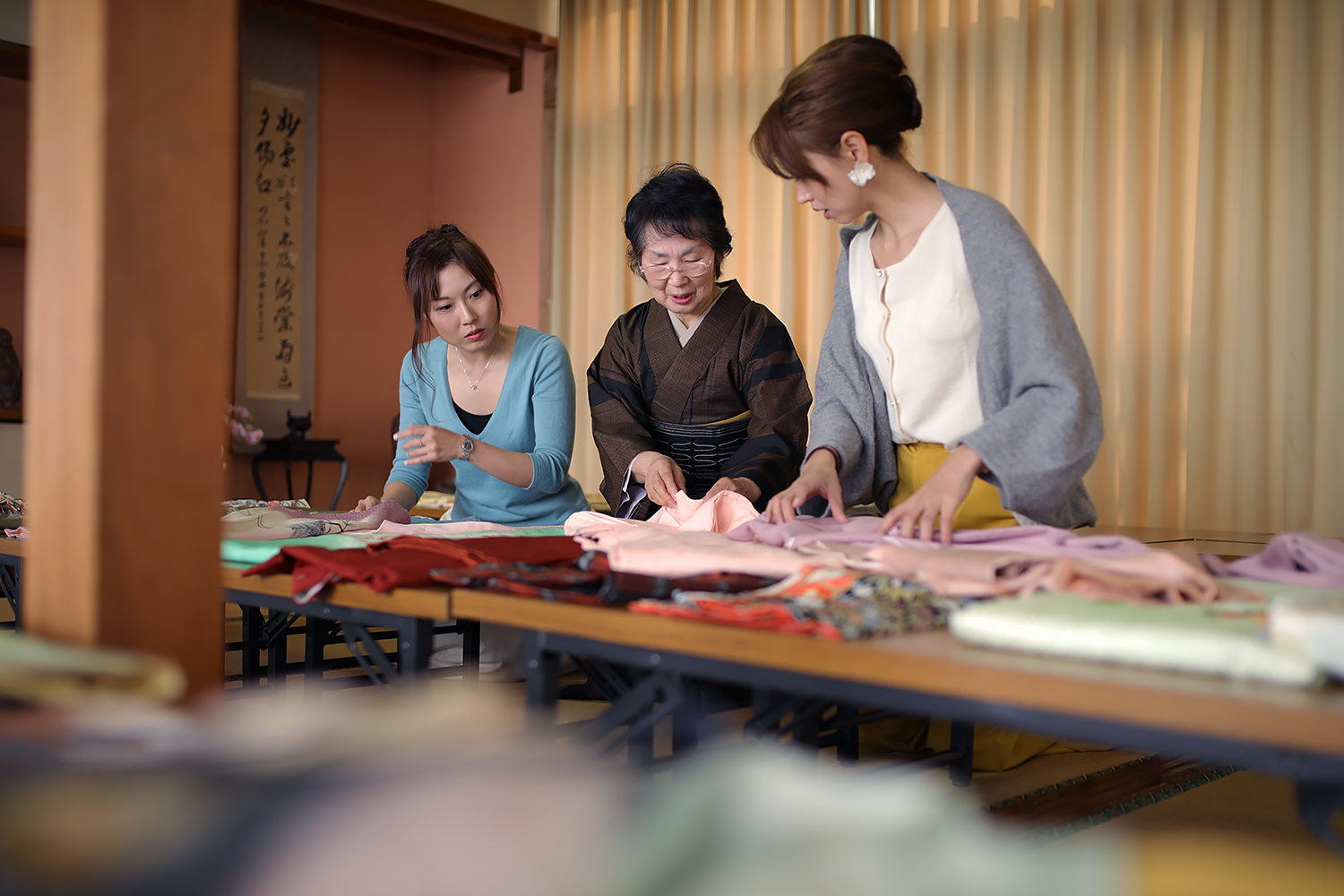
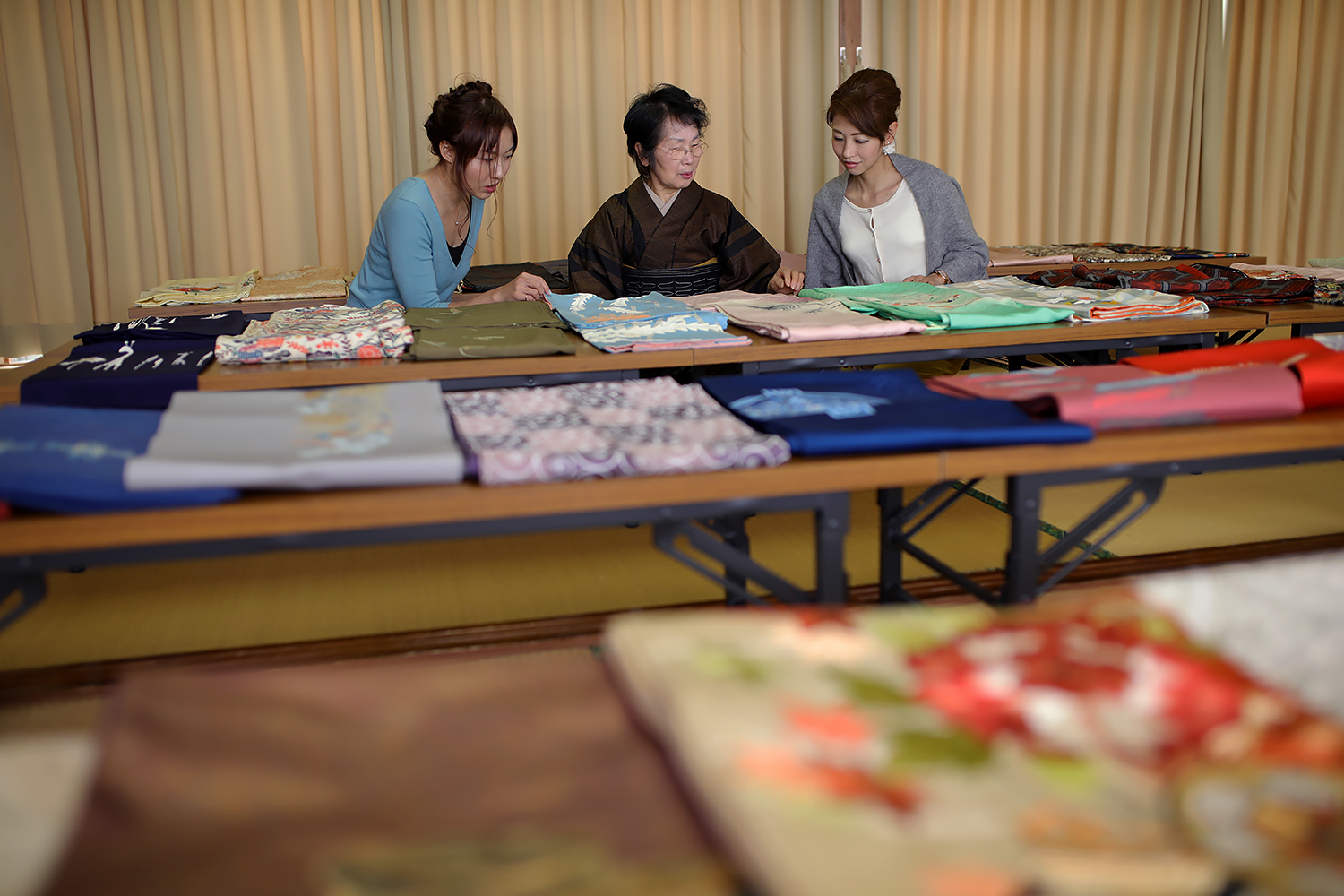
While comparing a wide variety of kimonos side by side
Try on a coordinated look for a graduation/entrance ceremony or a walk around town.
Prologue Kimono is not difficult "Just try it on!
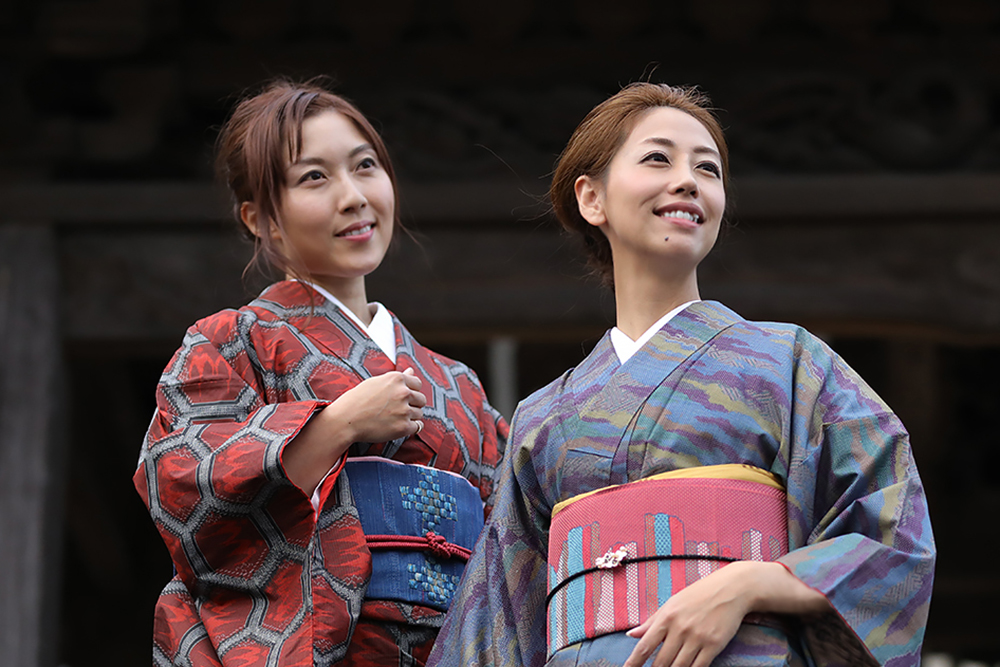
Today, the overwhelming majority of what we wear, from everyday wear to formal attire, is Western-style clothing, and it has become an established necessity of daily life, with a plethora of designs and functions as well as genres ranging from fast fashion to high-brand fashion and sportswear. However, until around the mid-Showa period, kimonos were worn as much as western clothes and were a part of daily life, and every household had a kimono at home. There are people who inherited the kimono from their mothers, grandmothers, or relatives and decided to try it on, but were not sure what to do as there seemed to be many difficult rules to follow, and those who became interested in the kimono and wanted to try it on. There may be many people who are facing the culture of kimono, such as those who are interested in kimono and want to try it on, or those who are learning tea ceremony or flower arrangement.
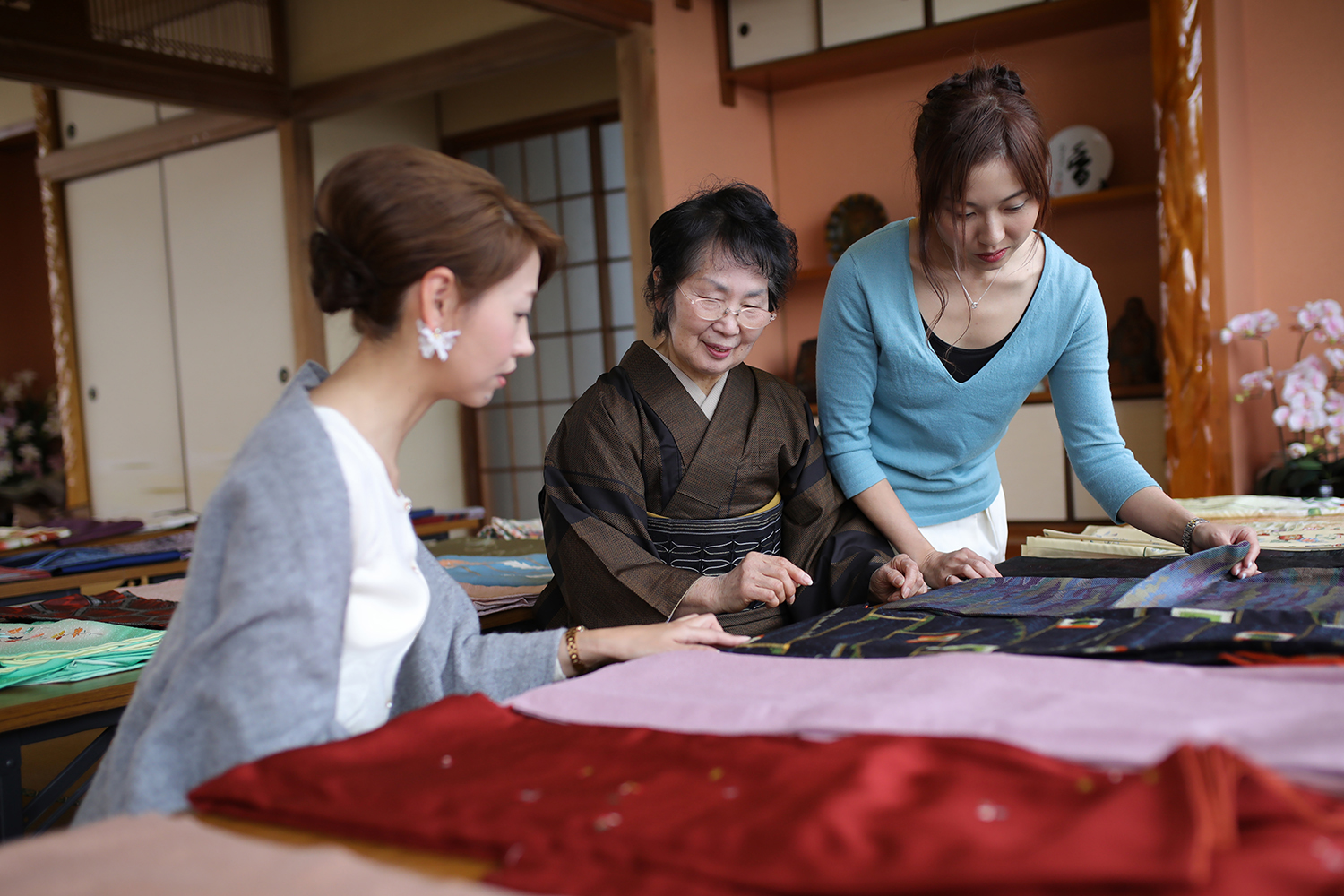
In this report, we have invited Nobuko Koda of "Koda Kimono Dressing School" to talk about kimono and obi that are lying around in our homes, and to resolve simple concerns and anxieties about kimonos. She also taught us how to coordinate kimonos that are stored at home and how to match them to graduation/entrance ceremonies, etc.
Dr. Koda.
Just as there are different types of clothing, such as everyday wear, fashionable clothing, dresses for ceremonies and parties, suits and jackets for business use, and so on, there are different grades and types of kimonos as well. First of all, which occasions can your kimono be worn for? It is difficult for a complete beginner to understand. It is sometimes difficult for complete beginners to understand, so you should ask your family or acquaintances who know kimonos.
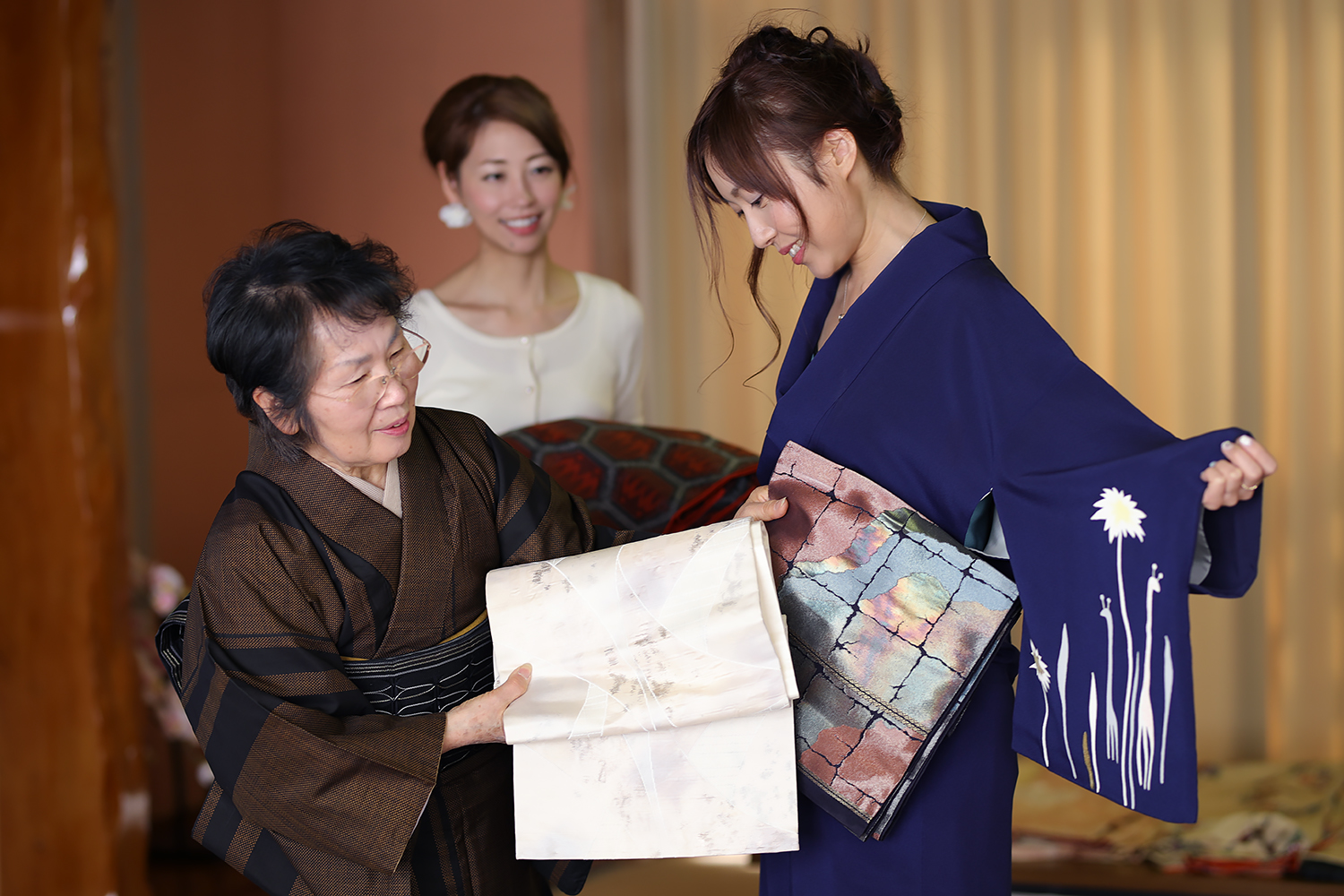
Kimonos are interesting not only because of the combination of the kimono and obi, but also because the overall impression and even the facial expression can be changed by the way the accessories are matched. We would be happy if this report can help you to eliminate your anxiety about kimonos and encourage you to casually enjoy them in your daily life.
Enjoying Kimono Part 1: Know Your Kimono
Dr. Koda.
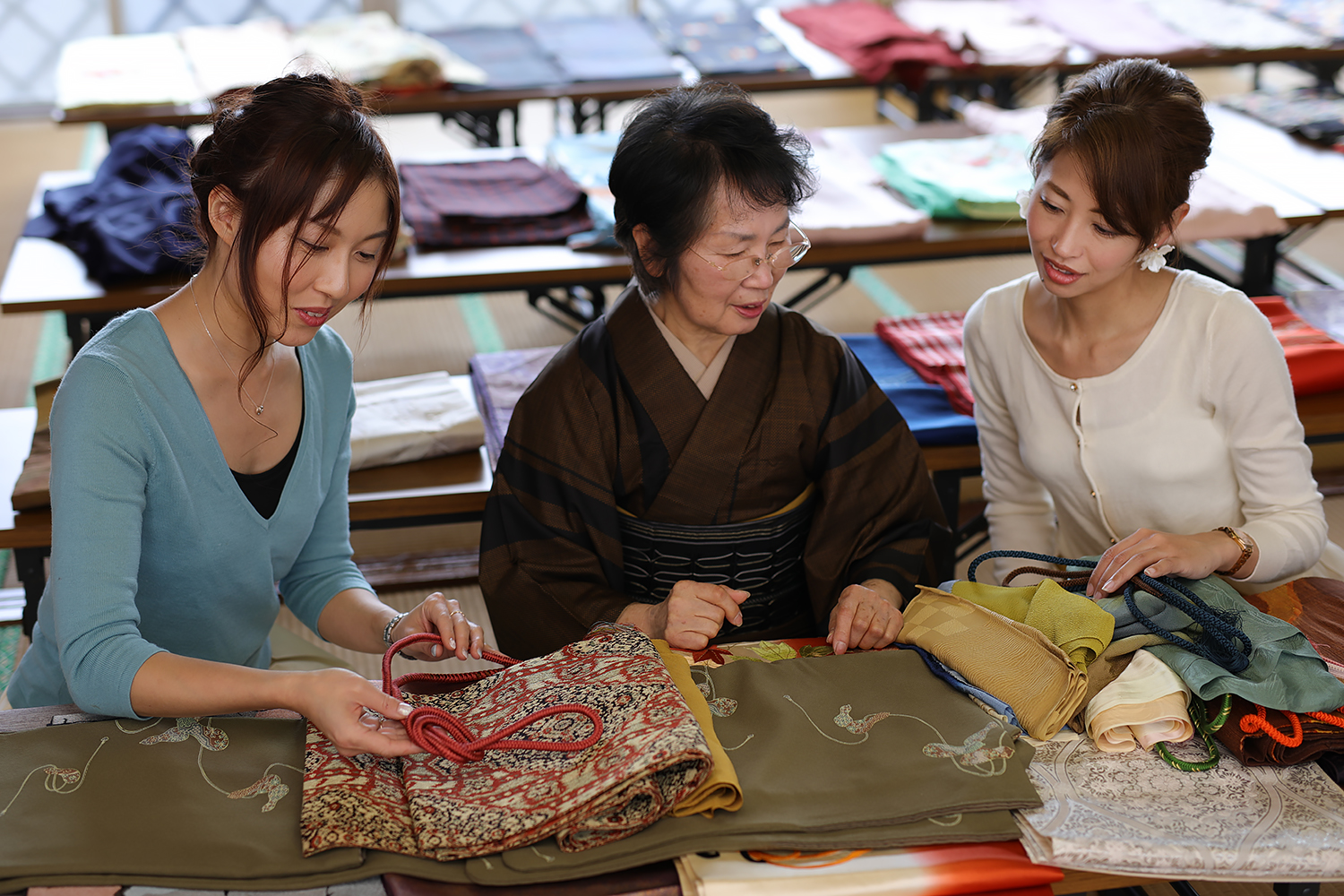
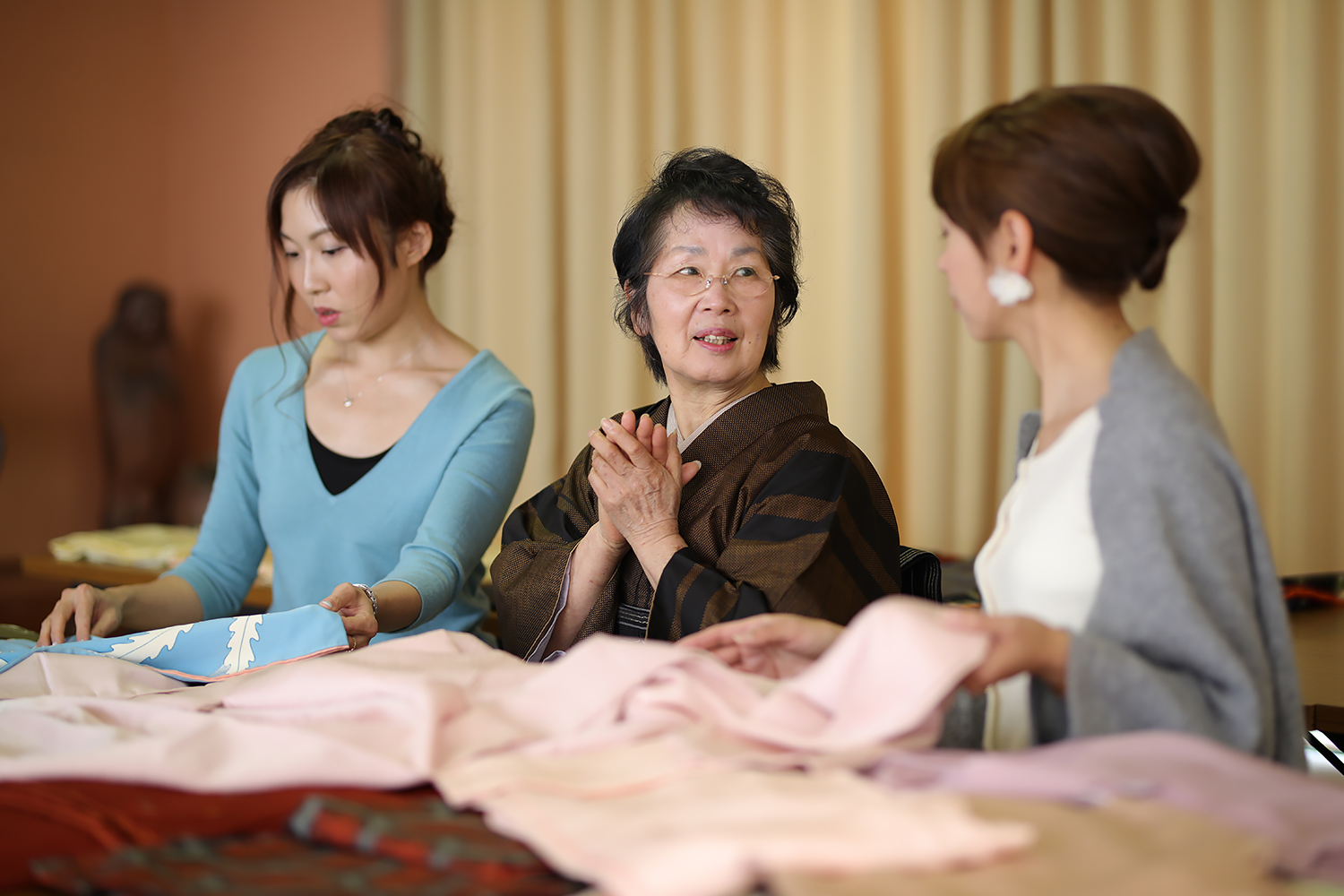
”Kimonos are like clothes, they can be flashy or calm, spring colors or fall/winter-like, it's easy to tell when you compare them.” When you want to wear a kimono, if you are at a loss to decide, I think it is a good idea to try to choose a kimono as if you were wearing a piece of clothing. The transparent fabrics called "ro" and "gauze" that you see here and now are summer kimonos. If you see autumn leaves on a combination of red and brown, it is an image of autumn, right? If you feel that it might be too gaudy for this place, you can choose a sober color. If you feel that it might be too gaudy for this place, you can choose a kimono with sober colors and few patterns. Hitoe" is a versatile kimono without the "lining and hakkake" that is the lining of the "awase" kimono. The Japanese culture of enjoying the seasons and customs is evident in the fabrics and patterns, and some patterns can be worn regardless of the season, so there is no need to think too hard about it.
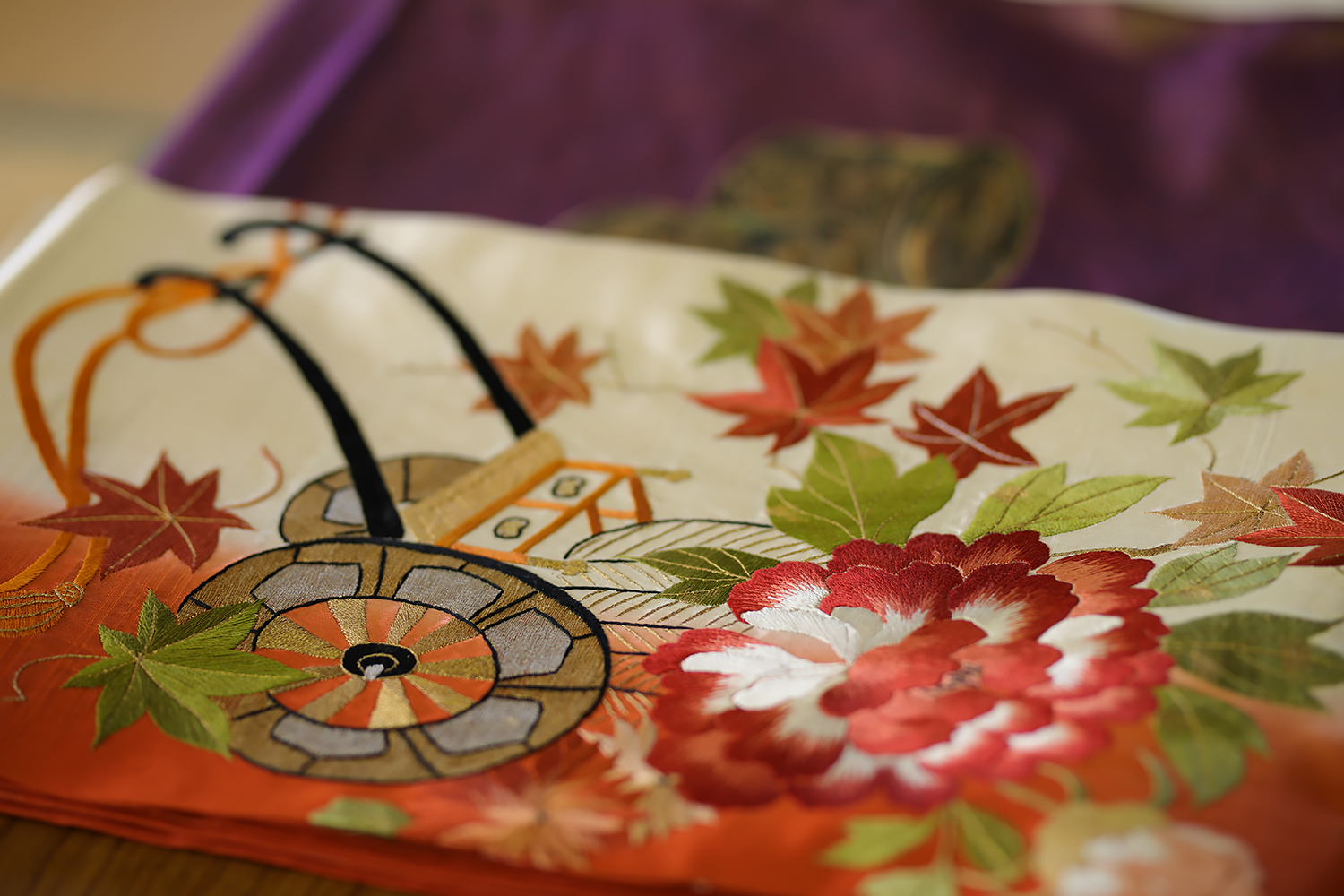
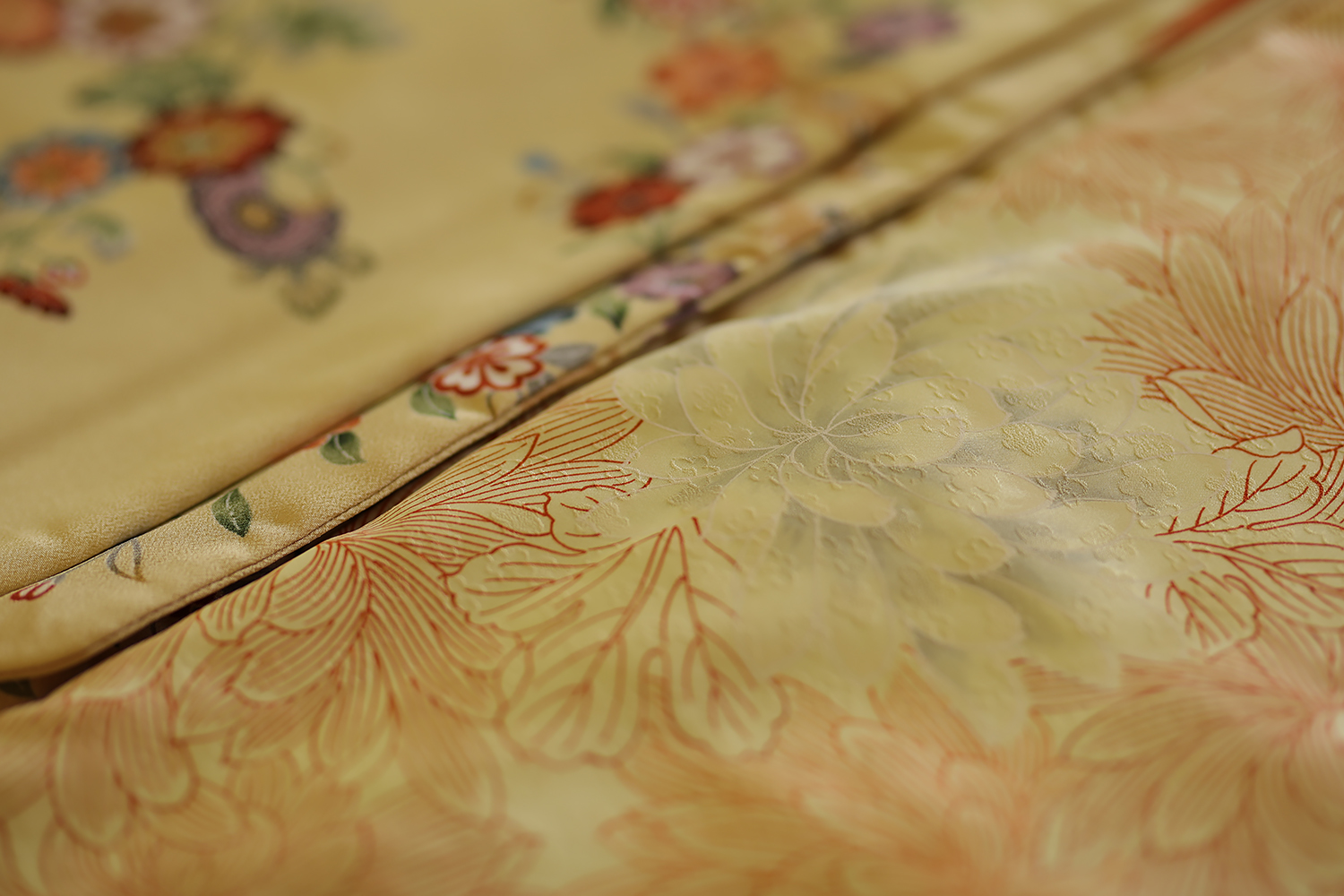
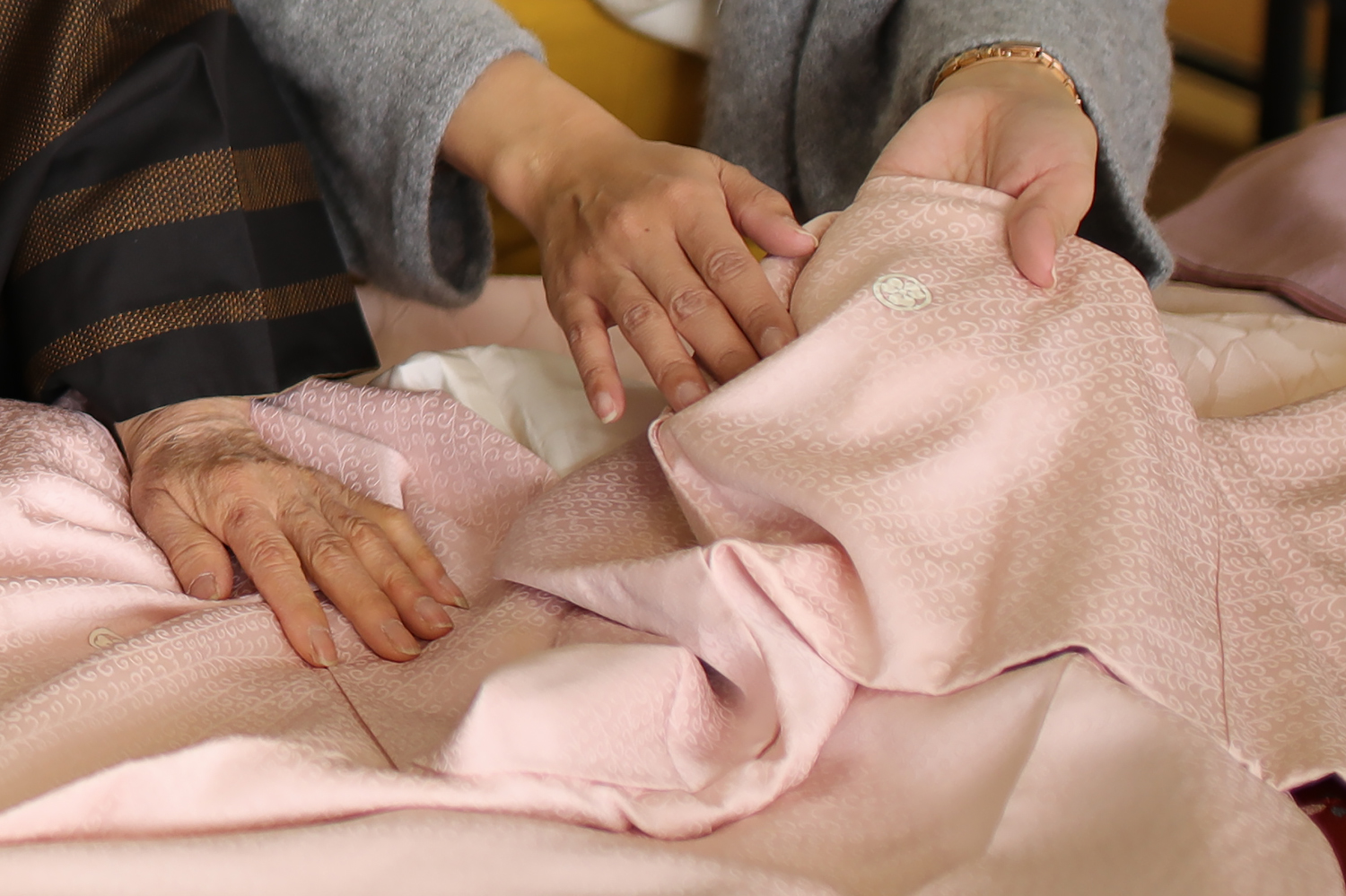
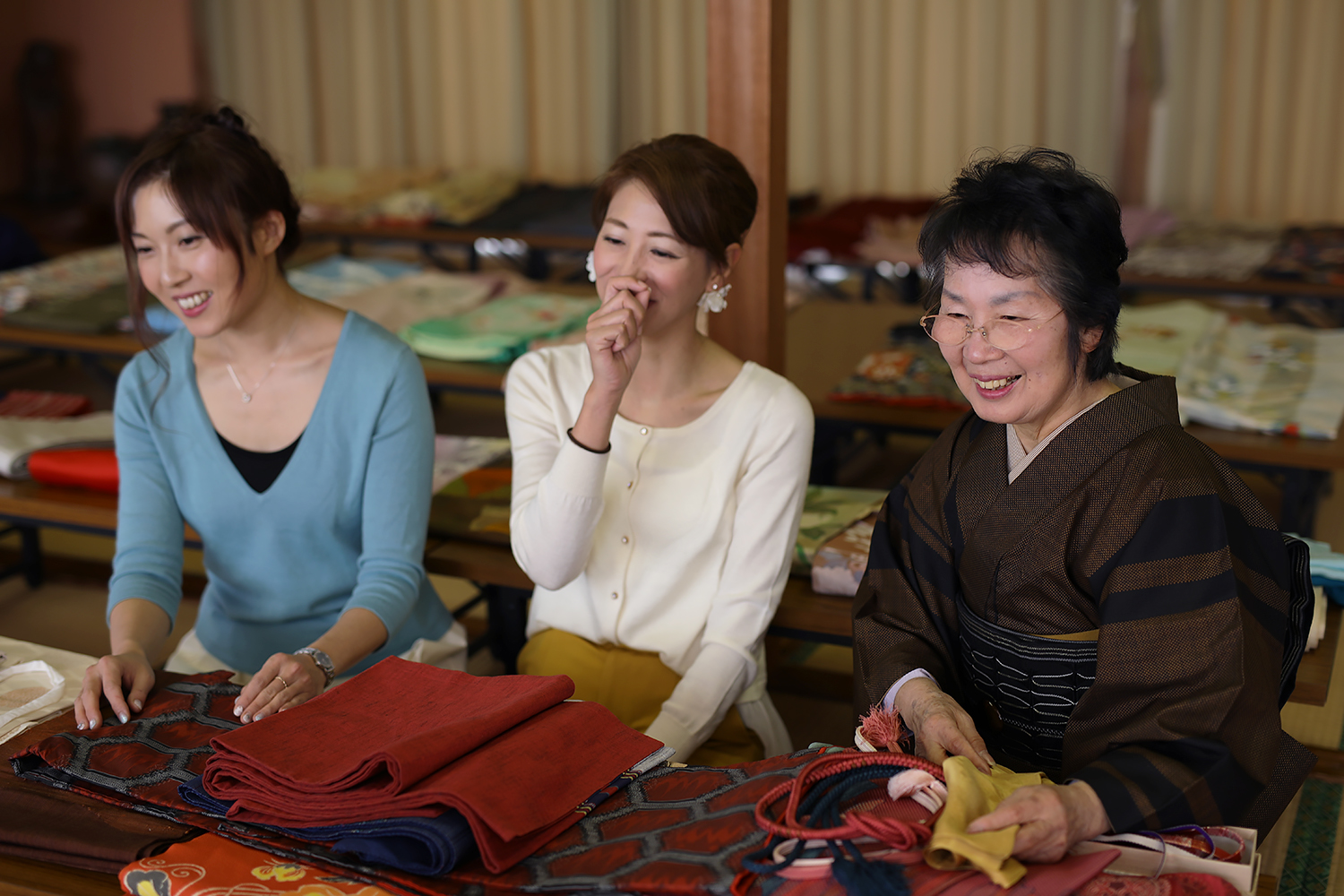
There were many types of kimonos that they had, including everyday wear such as tsumugi and kasuri, which express unique colors by combining dyed threads, woven white fabric with patterns, colored plain fabric without patterns, kimono with crests, kimono for parties with gorgeous patterns, and color tomesode, which is a highly prestigious type of kimono. By the way, the above picture shows the explanation while comparing the different types of kimono, such as silk and kasuri. As they become more familiar with kimonos, they become interested in the fine weaving techniques and enjoy the feel of the kimono in their hands.
Dr. Koda.
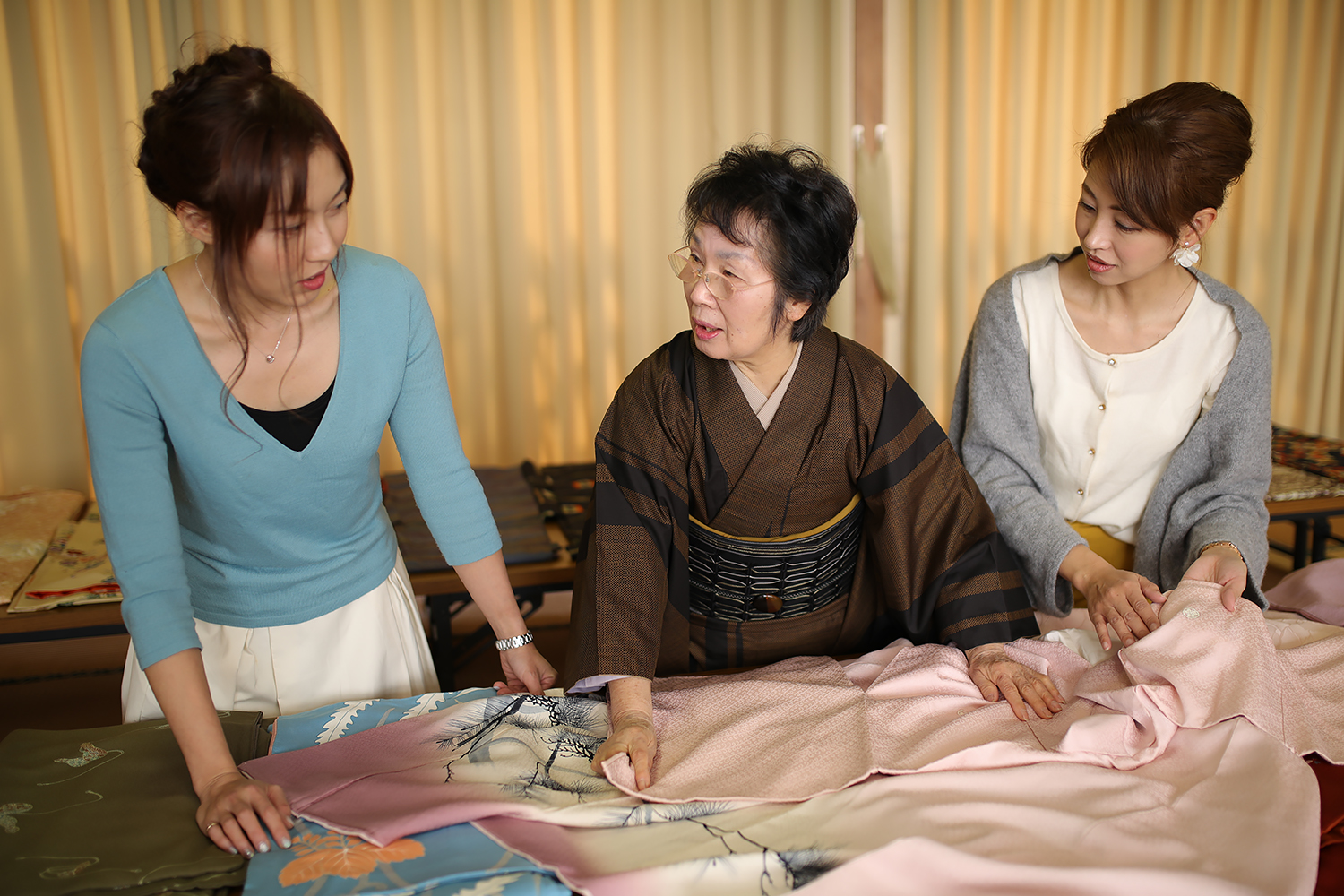
If you add a ”single crest” to the back of the kimono, the kimono is elevated to a semi-formal attire. It has a casual elegance and is perfect for graduation ceremonies and tea ceremonies where the child is the main celebrant. The shiro-tomesode that Ms. Takei owns has ”five crests” on the back, sleeves, and both chests, so it is the same level of first formal wear as the "kuro-tomesode" often worn by the bride and groom's mother. You may not have an opportunity to wear it except at a wedding where the main guest is a close relative or at a very prestigious banquet. However, if it has three crests, you can wear it in a wider range of occasions. If there is no crest, you can wear it as if it were a visiting kimono. ...... The number of crests changes the prestige of the kimono."
Dr. Koda.
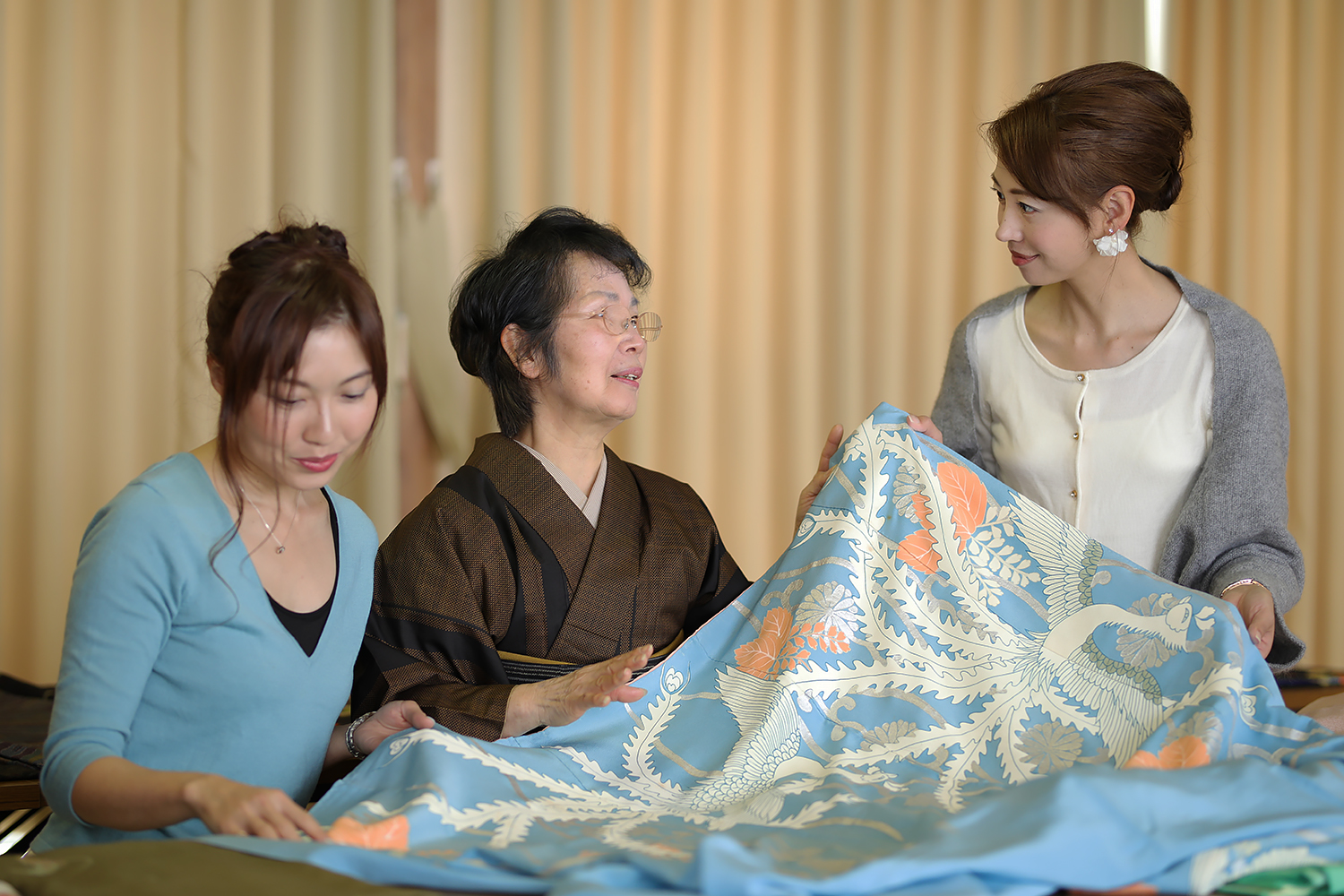
This light blue kimono is a visiting gown with a paulownia crest on a phoenix. However, even though it is a visiting gown, it would be better not to choose it for the graduation ceremony because it would stand out more than your child. On the other hand, it is very glamorous, so it would be good in the sense that it would add a touch of glamour to the wedding of a good friend. I would also recommend it for a lavish party."
Enjoying Kimono Part 2: Selecting a Kimono and Obi for Your Body
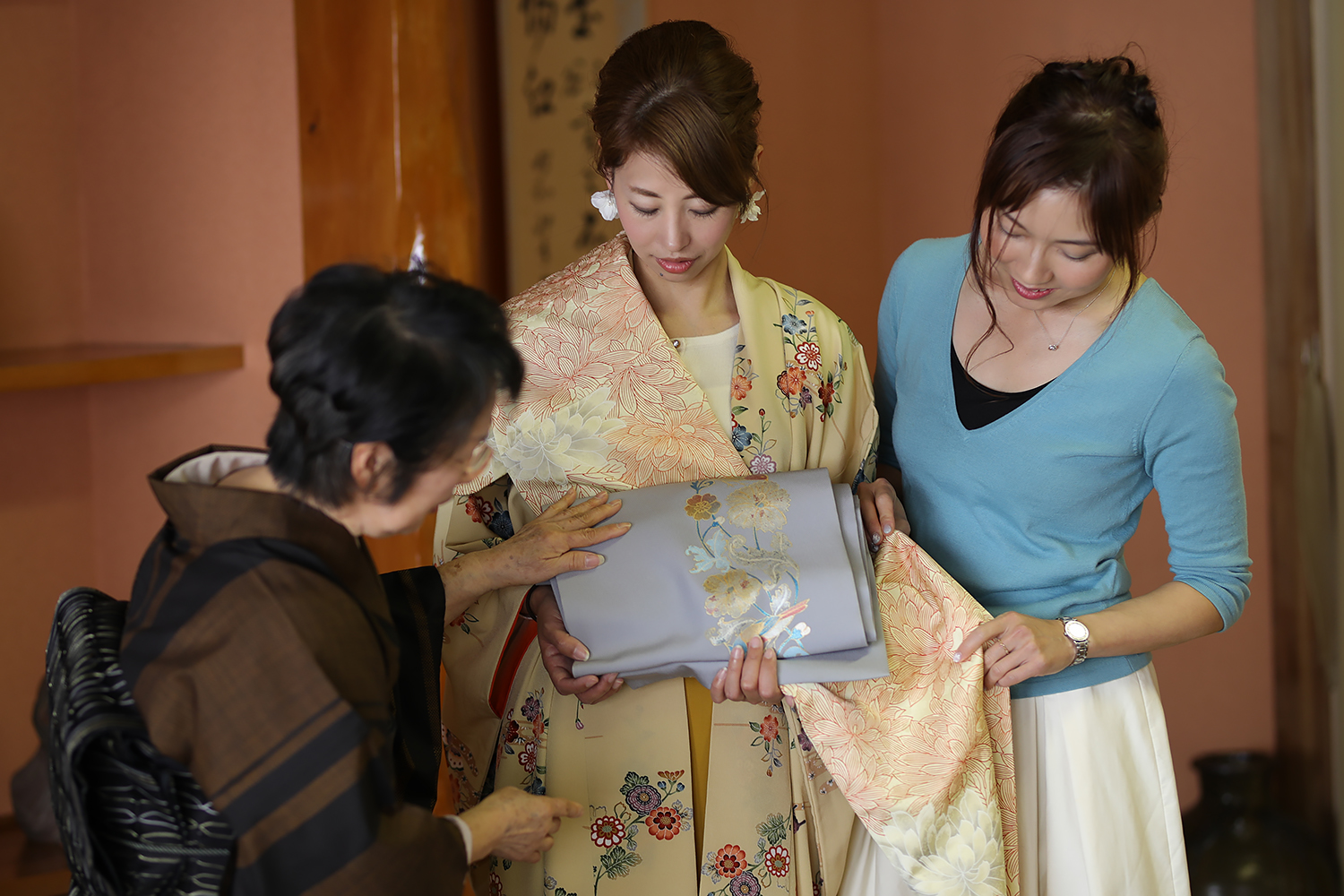
As with clothing, the color and pattern of a kimono can make the wearer look good or plain. Check the kimono and obi by actually placing them on the wearer's body. Also, try to choose accessories to match the kimono and obi to create a coordinated look.
Dr. Koda.
When you are not used to wearing kimono, many of you may be wondering how to choose an obi when you want to wear a multi-colored patterned kimono such as a floral pattern. In such cases, it is a good idea to coordinate with about three colors from the colors of the kimono. If there are too many colors in the kimono, try to keep the obi simple and calm. It is also a good idea to use these three colors as the basis for the obiage and obijime, and gradually expand the range of colors. Each color will have its own individuality.
Enjoying Kimono Part 3: Let's try on a Kimono
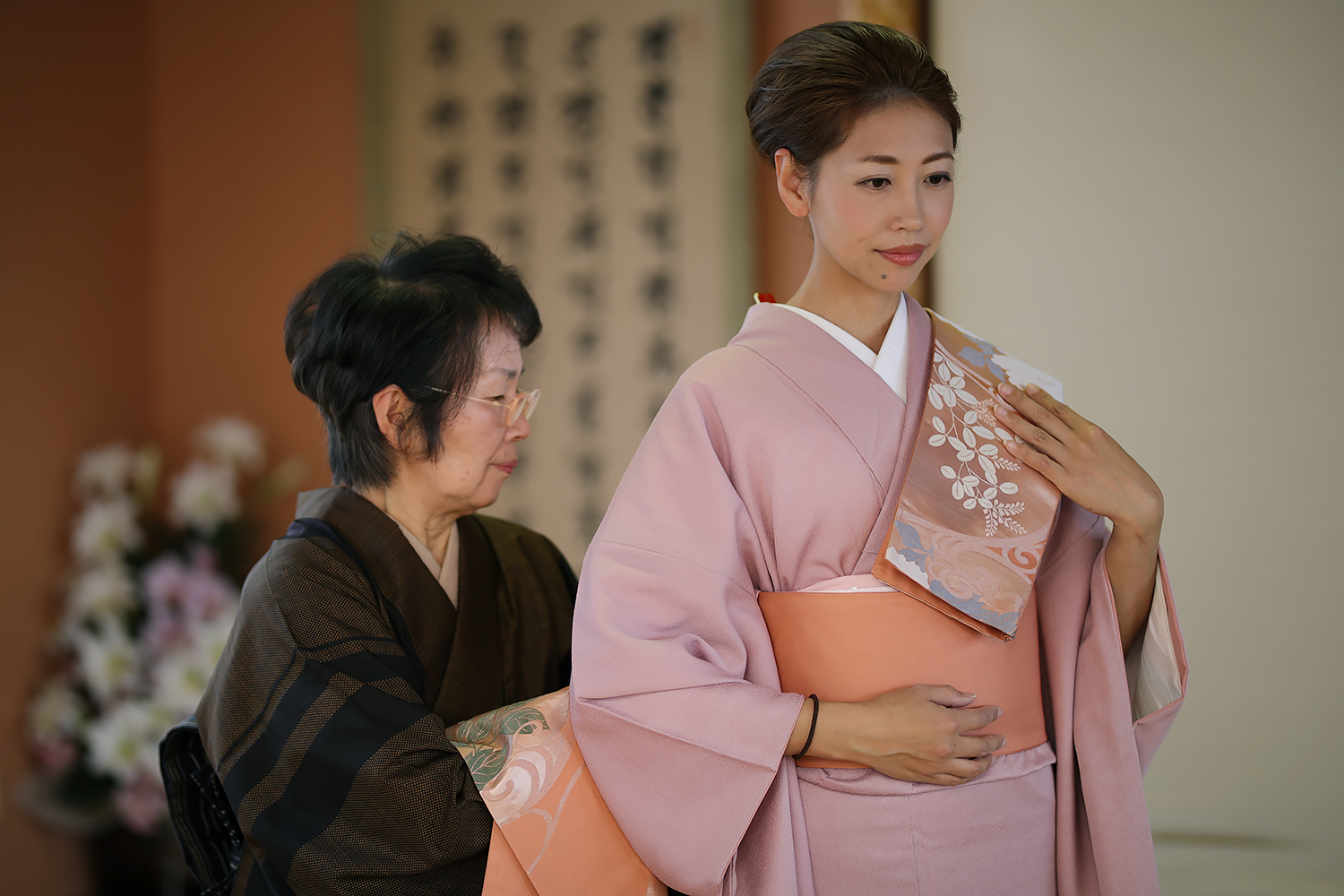
Dr. Koda.
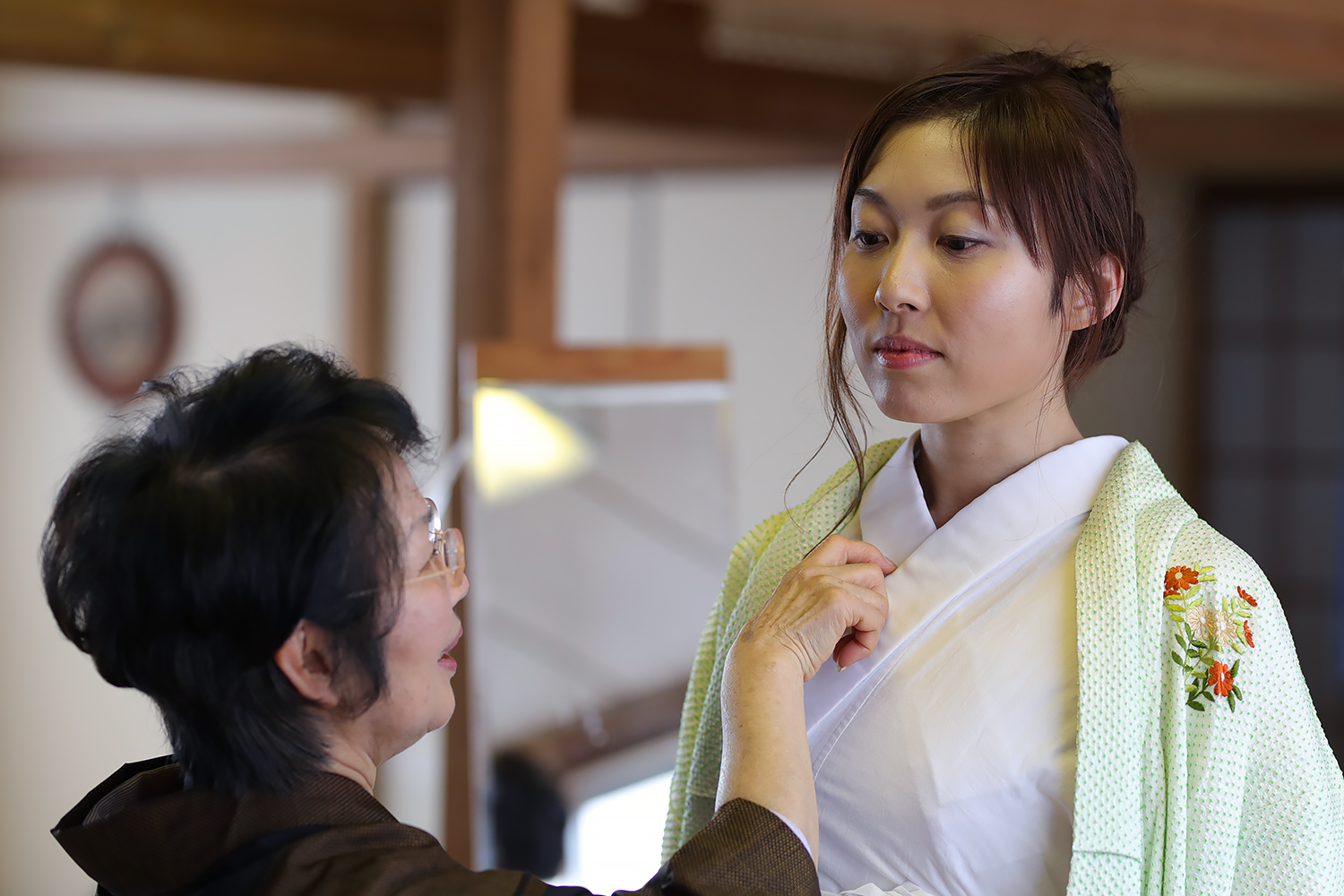
It is not easy to put on a kimono by yourself at first. It is not difficult if you have a kimono dressing teacher or someone who specializes in kimono help you. Even if you don't know the technical words for kimono at first, you will learn it naturally after wearing it several times. Once you learn how to wear the kimono, get used to it, and get the hang of it, you will be able to wear it yourself.
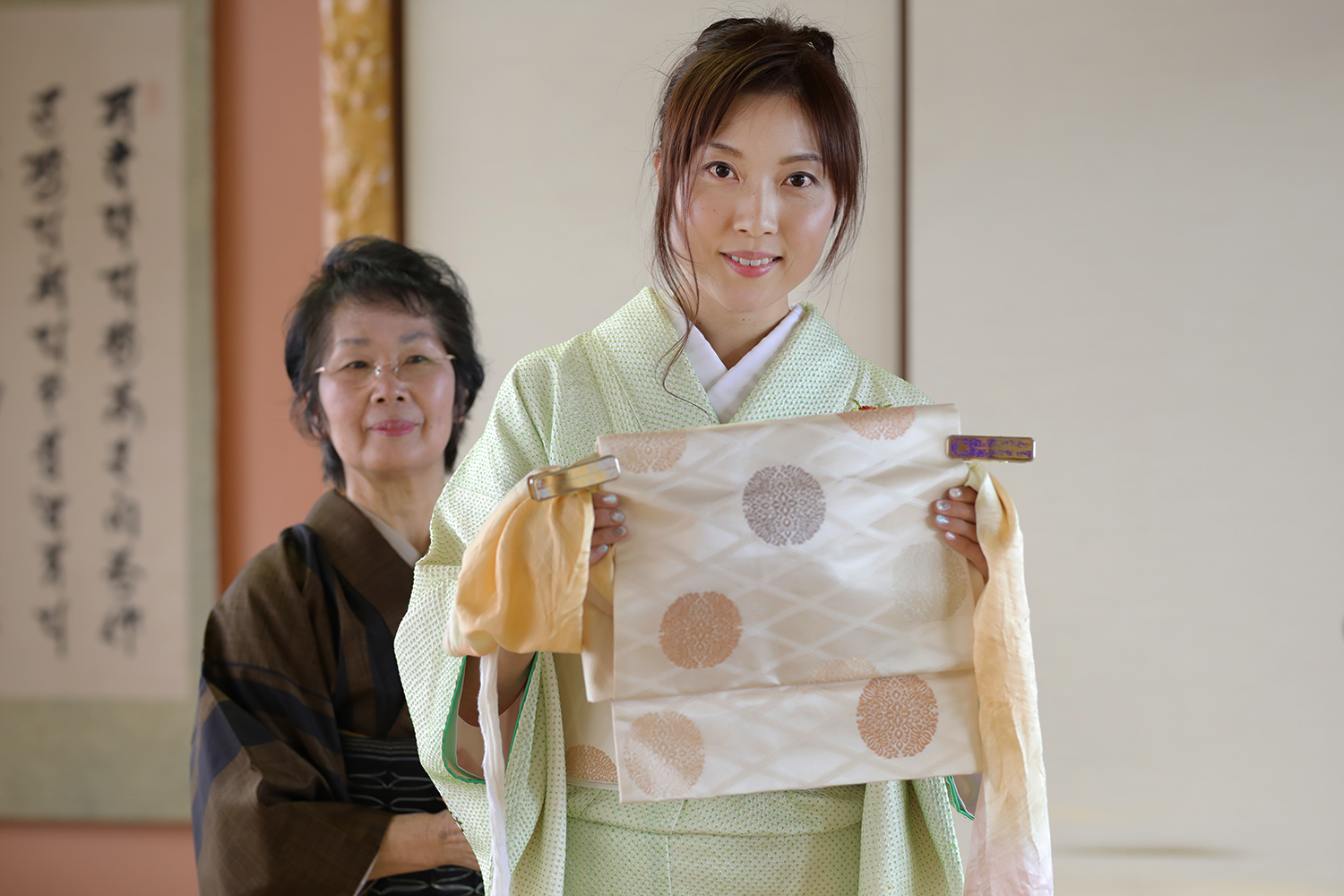
There are also made-to-order obis that can be easily tied by yourself. As shown in the image above, there are also high-grade ones, and having one is useful when you are in a hurry or on a trip.
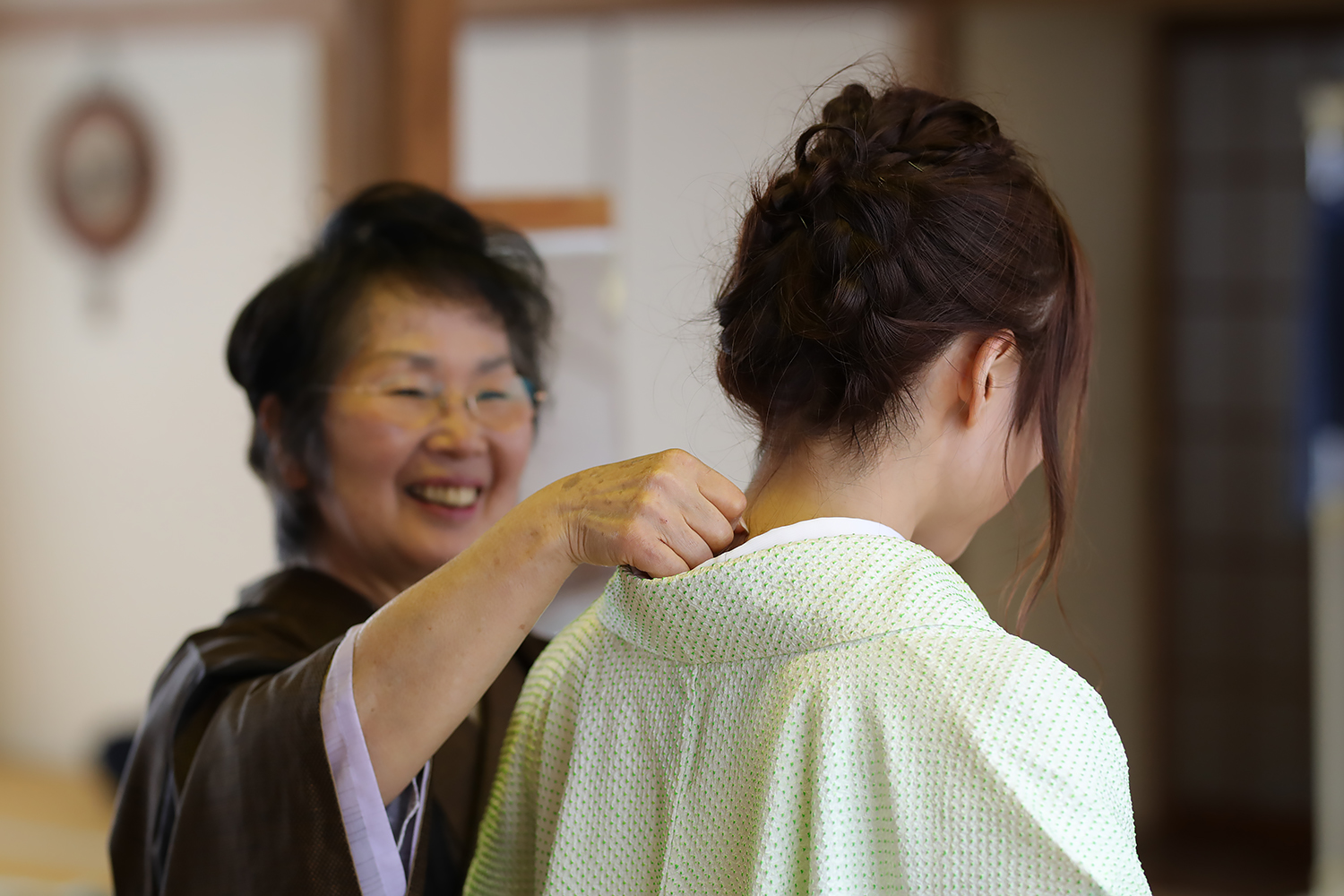
Dr. Koda.
When a young woman wears formal wear, she should be conscious of the width of her collar, which should be as wide as her fist on the floor, and her bosom should be firmly in line with the rest of her body.
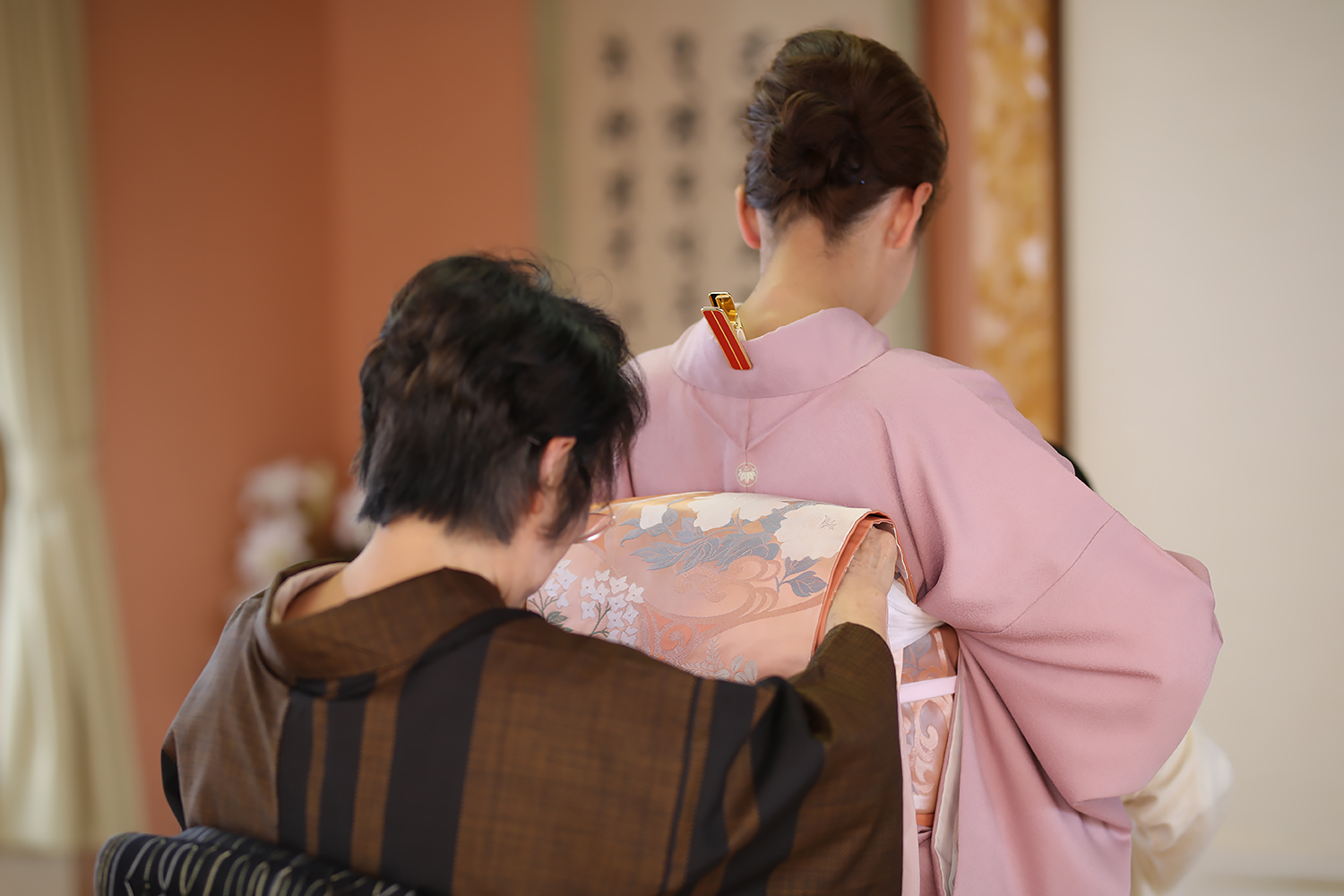
Recommended Coordination for Graduation and Commencement Ceremonies
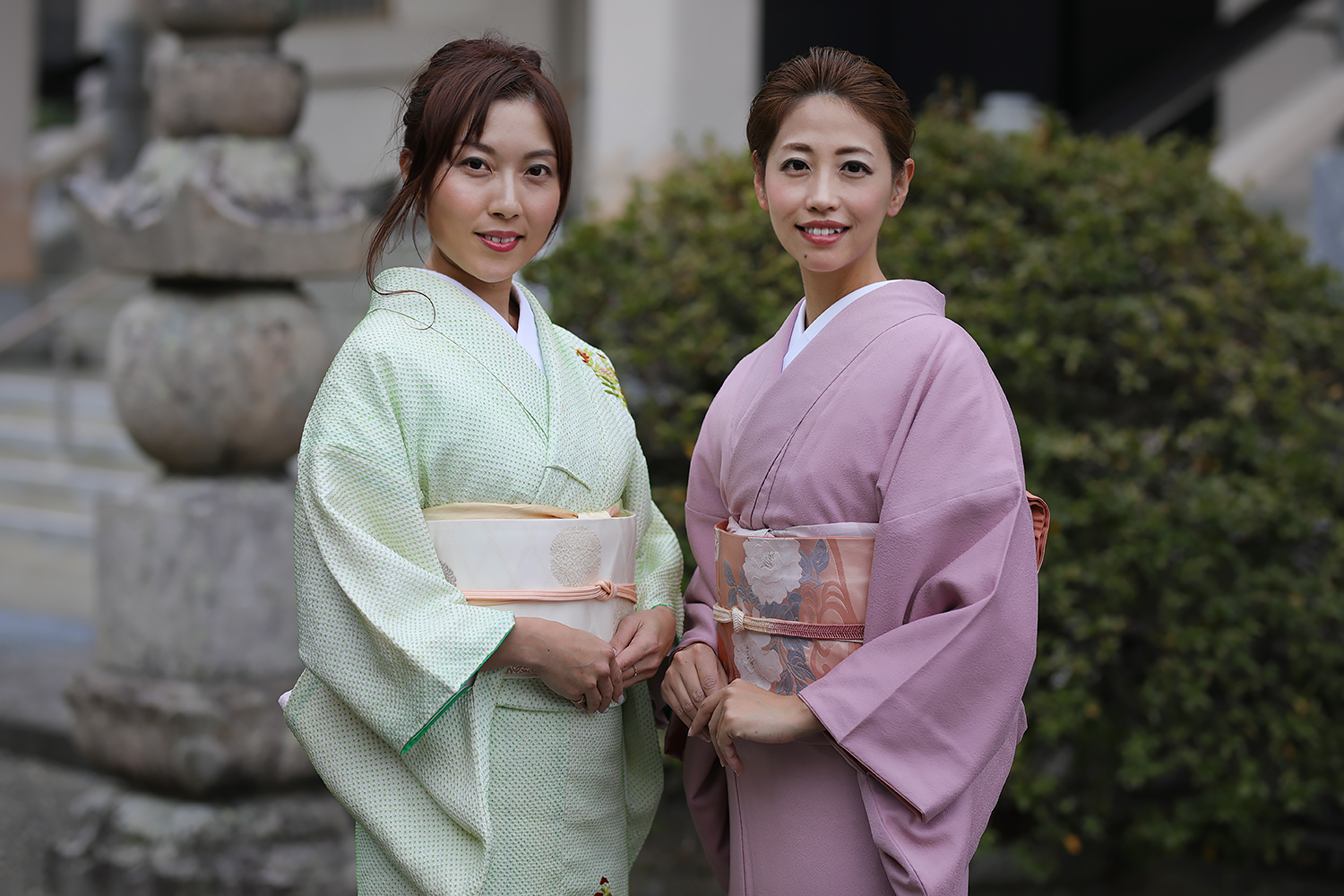
This is a great opportunity for kimono to come into its own. We will try to coordinate with an understated and elegant look that will add a touch of splendor to the Hare no Hare stage with children as the main attraction.
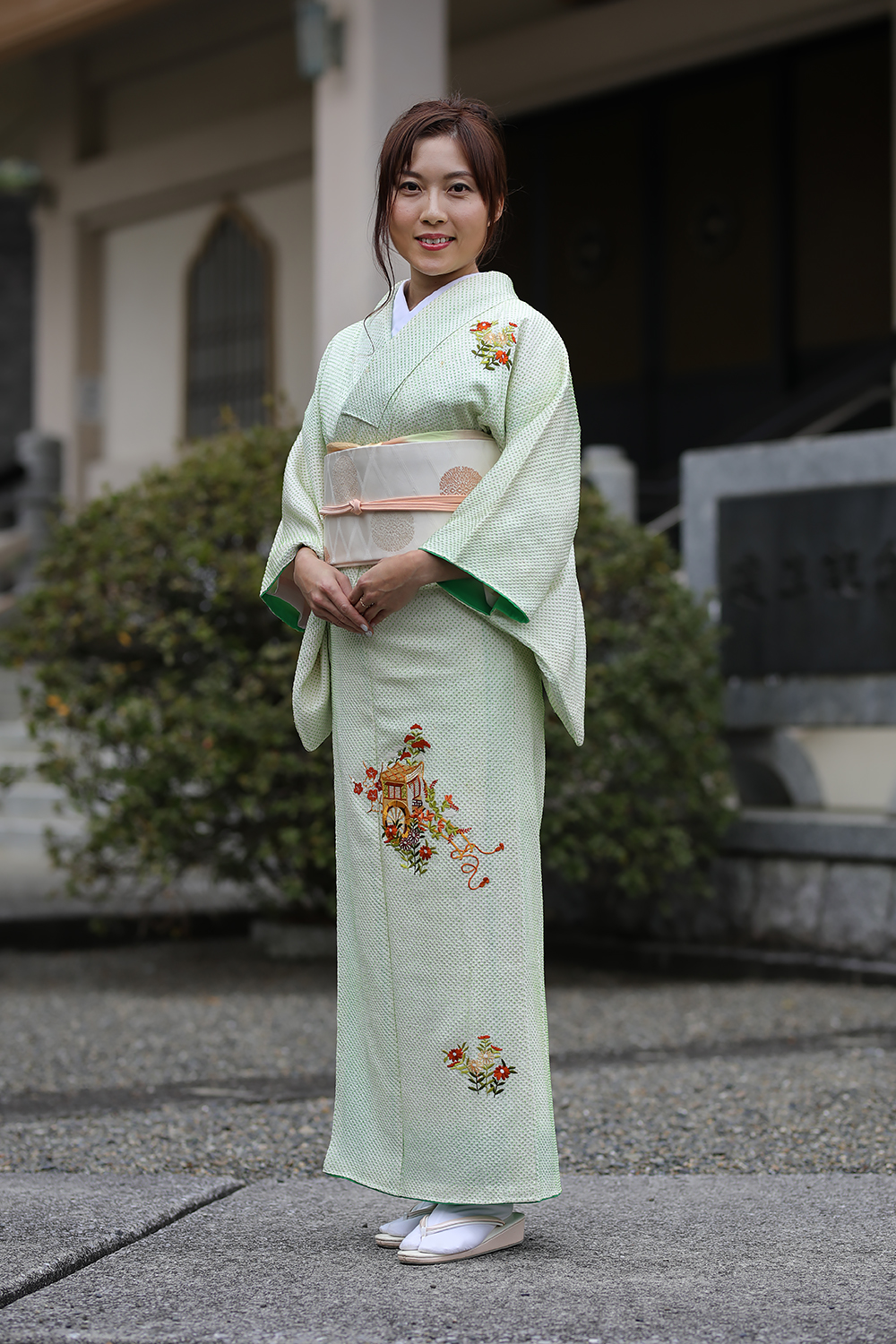
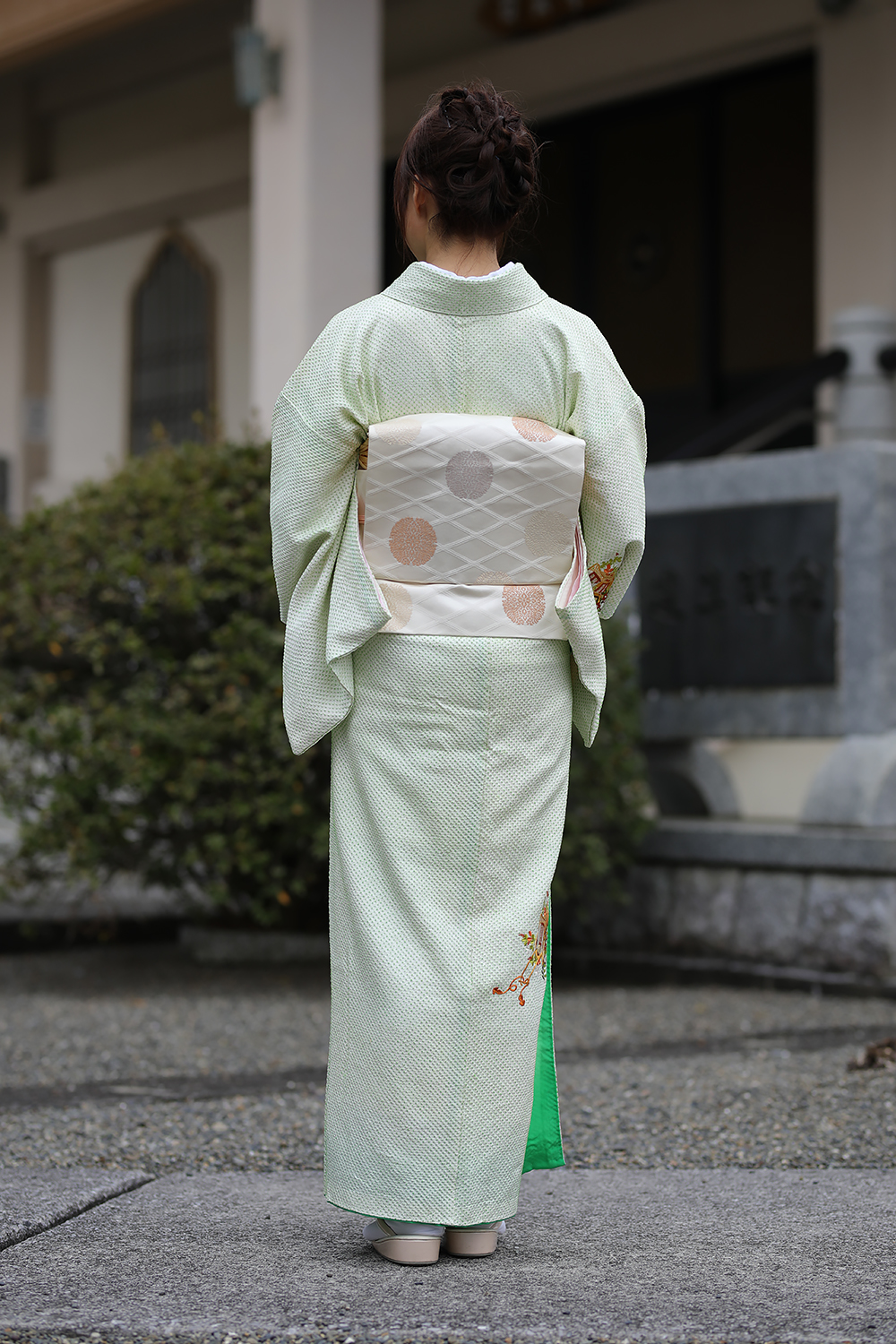
A light green all-over shibori visiting gown that was given to me is matched with a white/pink light-colored obi for a spring-like color palette. The obiage and obijime are also in the same colors.
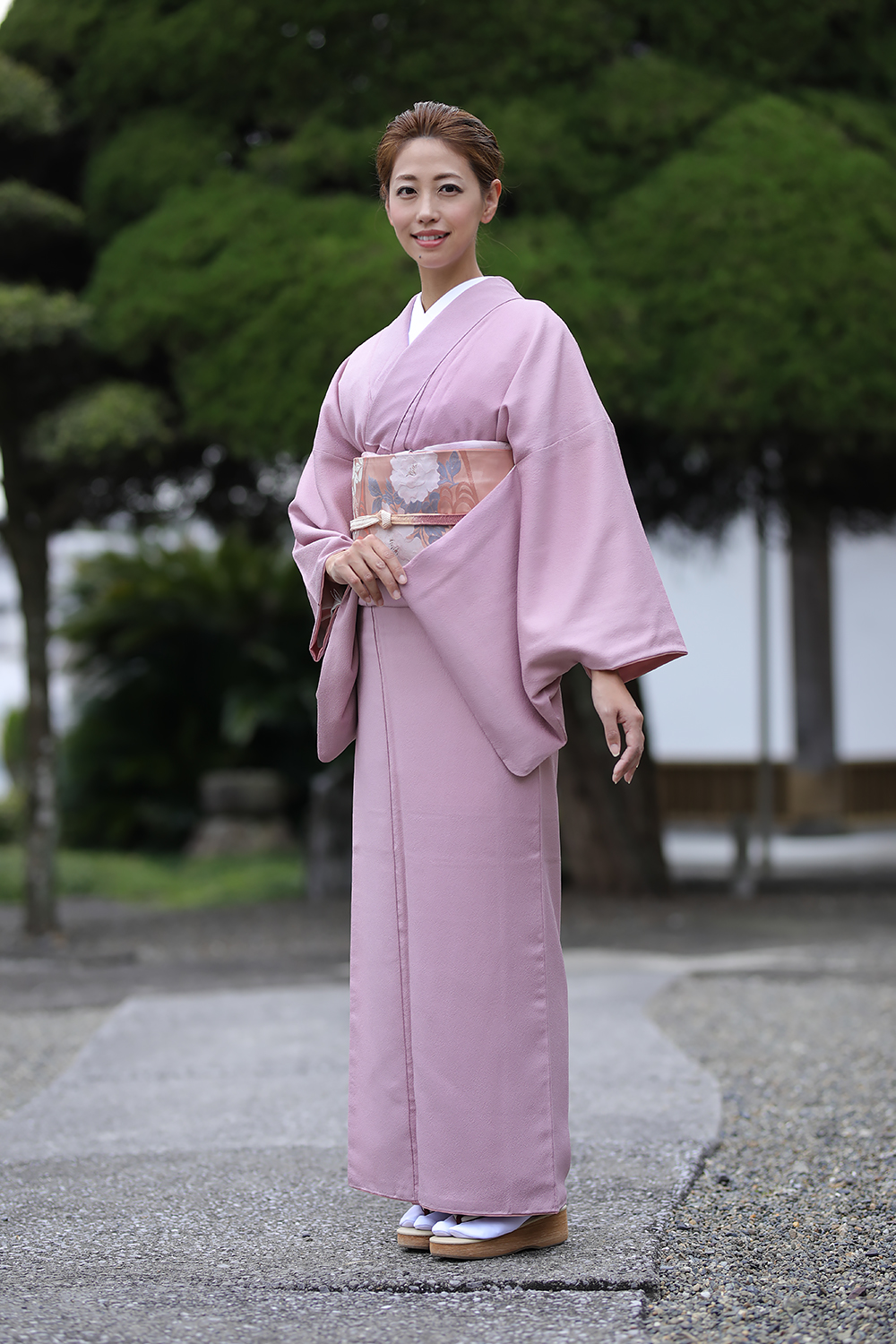
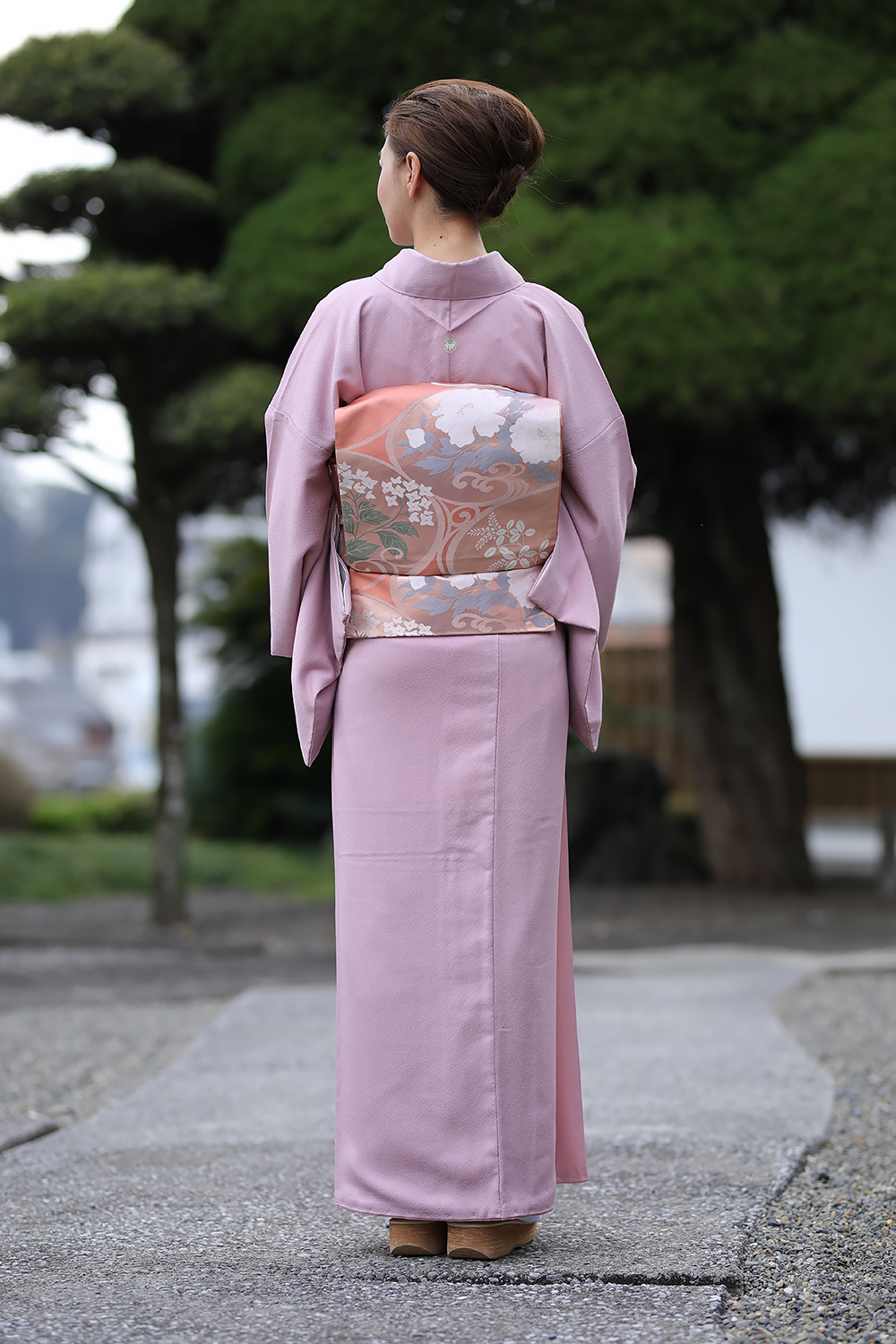
A single patterned kimono is worn modestly with a matching colored obi of the same color. This coordination is also recommended for tea ceremonies.
Variation by changing the obi.
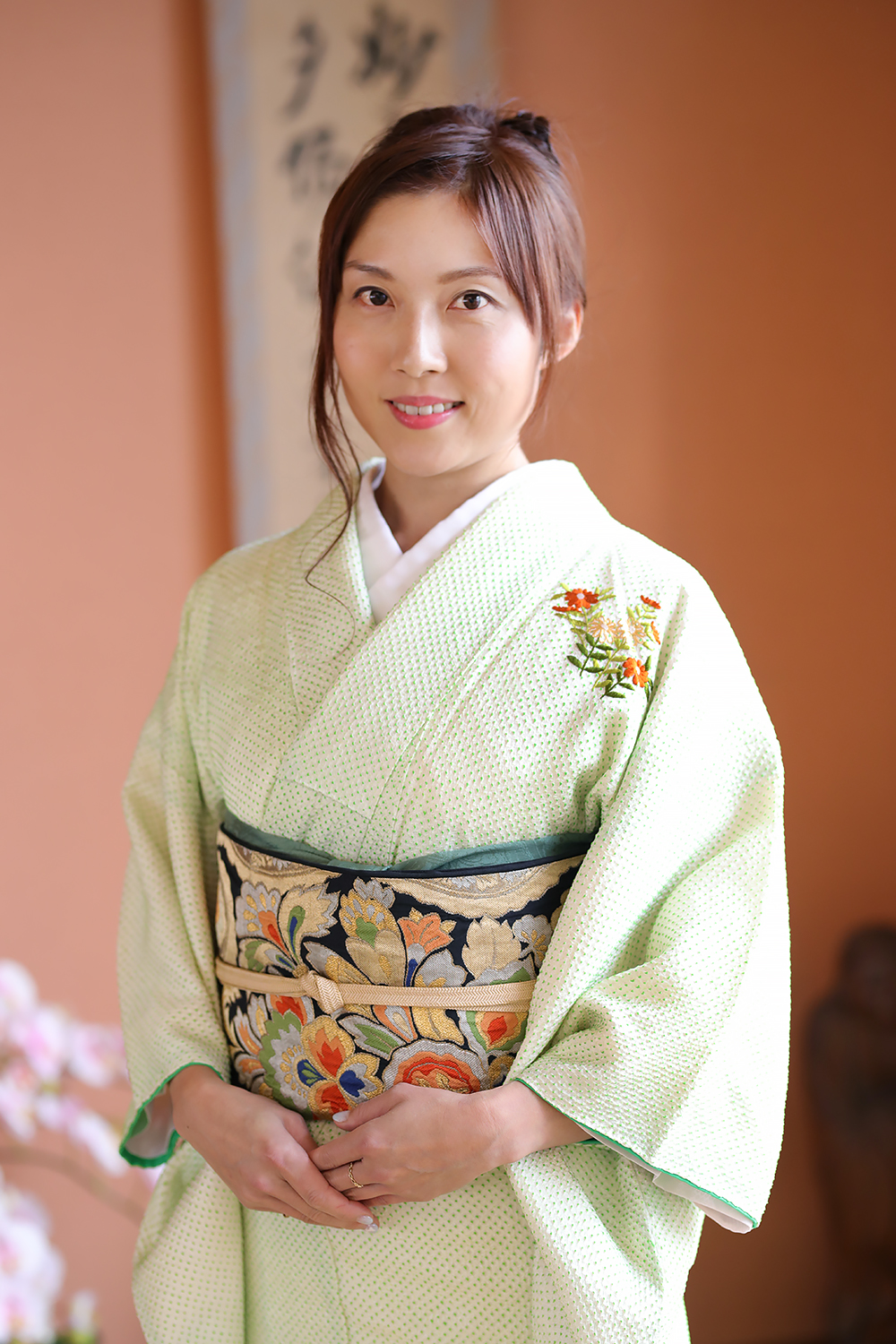
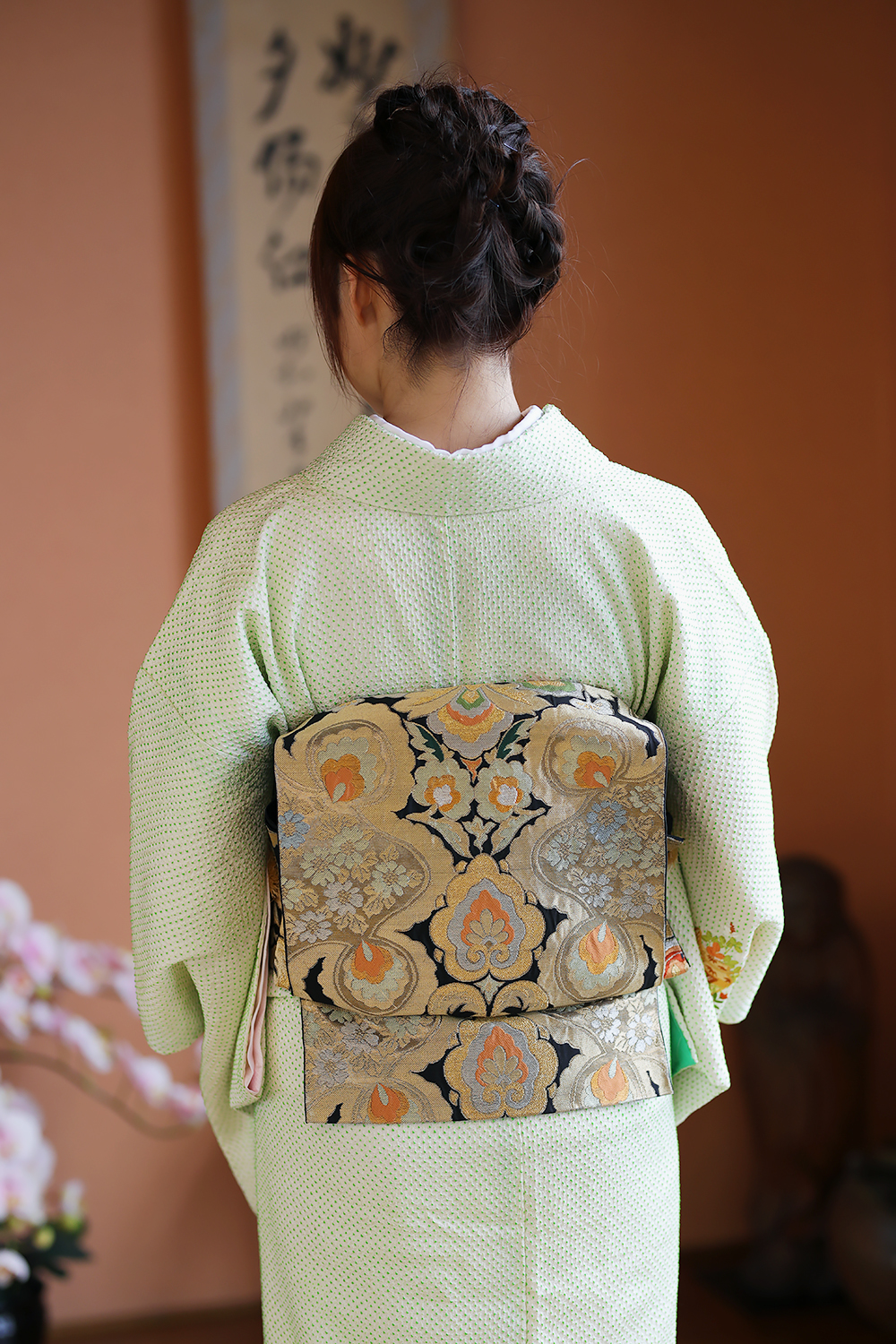
Changing to a black obi will give a tighter impression to the face. The key is to use the same color as the obi for the obiage, and to keep the obijime to a non-assertive color.
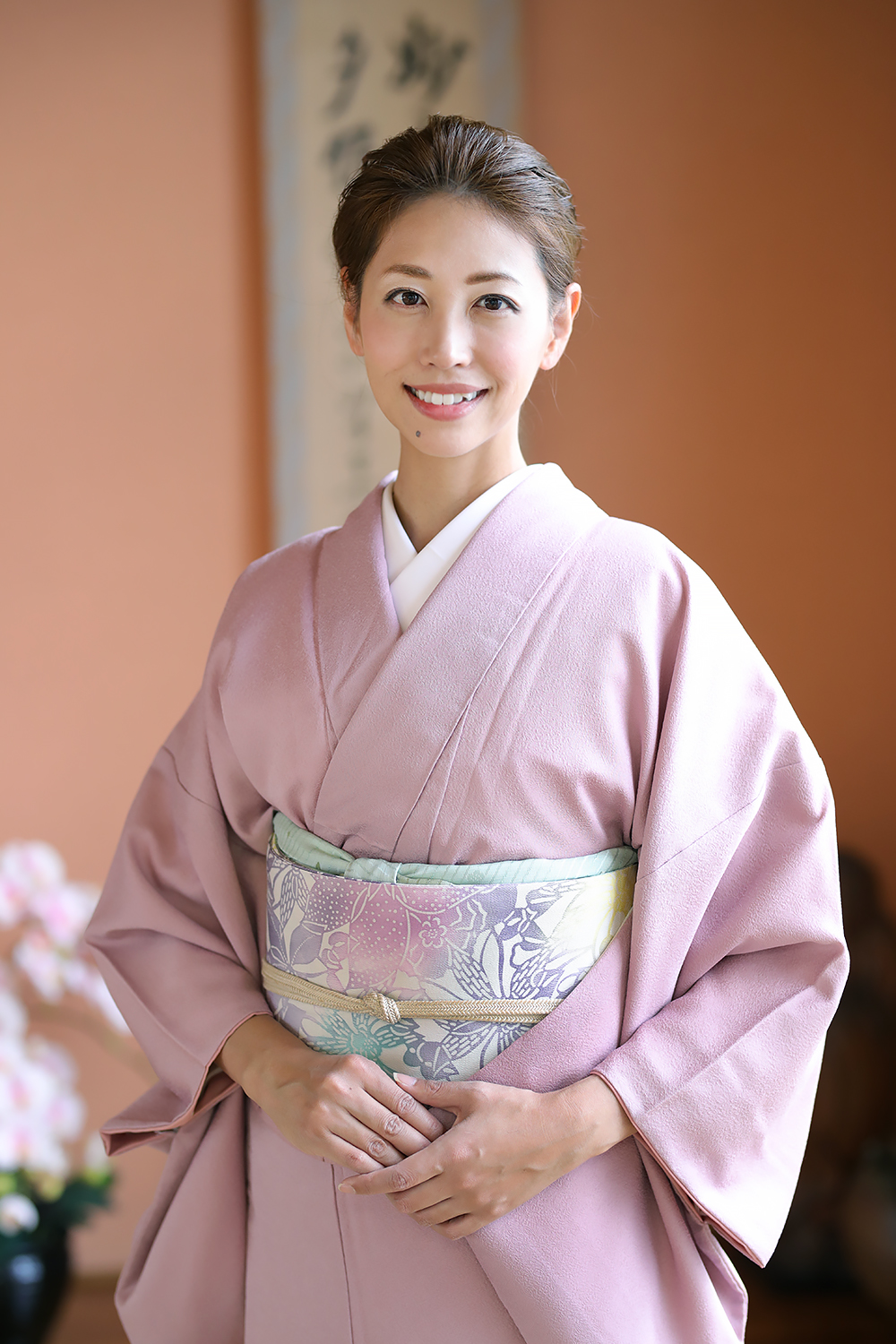
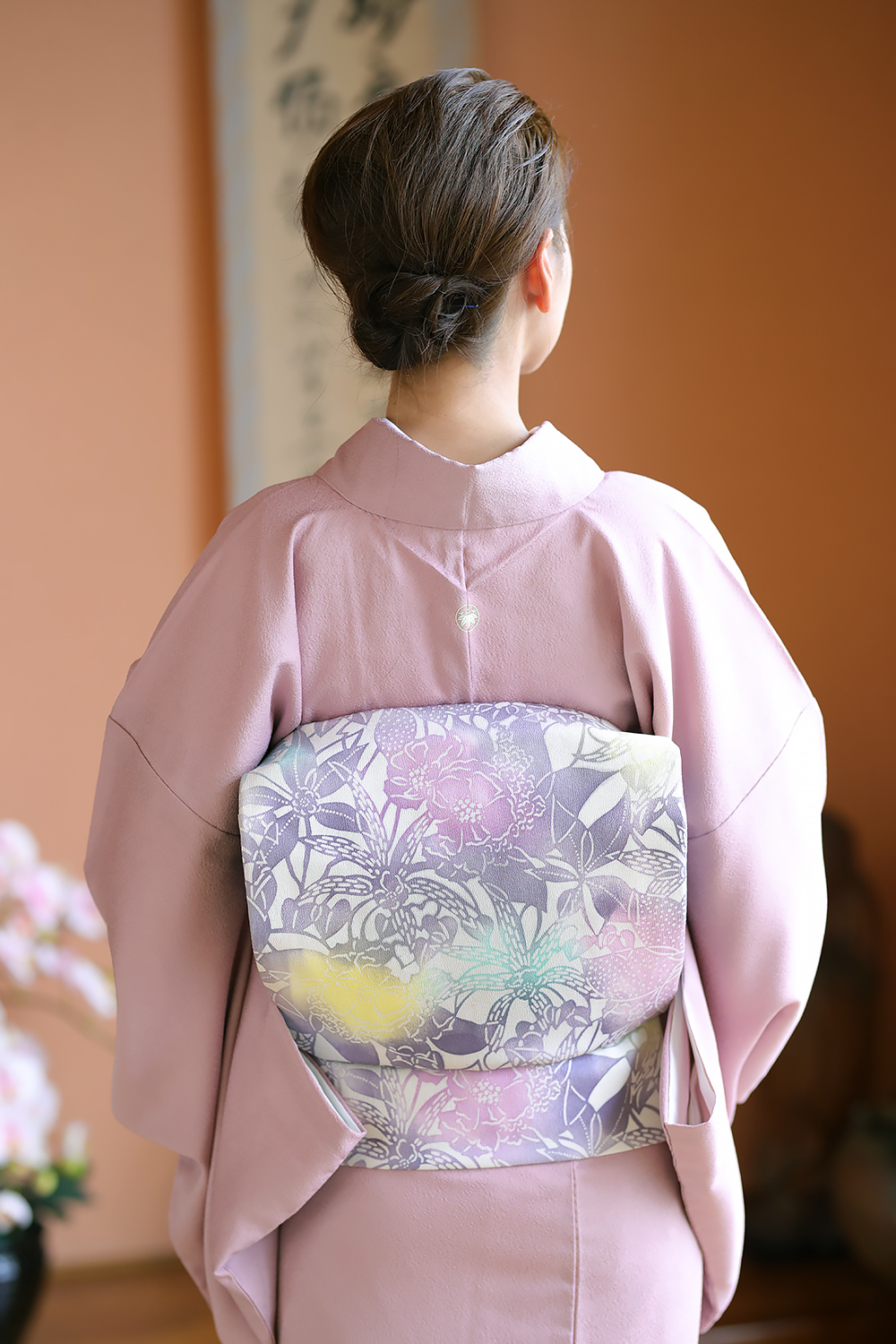
This is an example of how to coordinate a casual Nagoya obi with a kimono, although it is not usually worn with a kimono with a crest. It is recommended for dinner parties and walking around town.
For dinners with friends, shopping, etc.
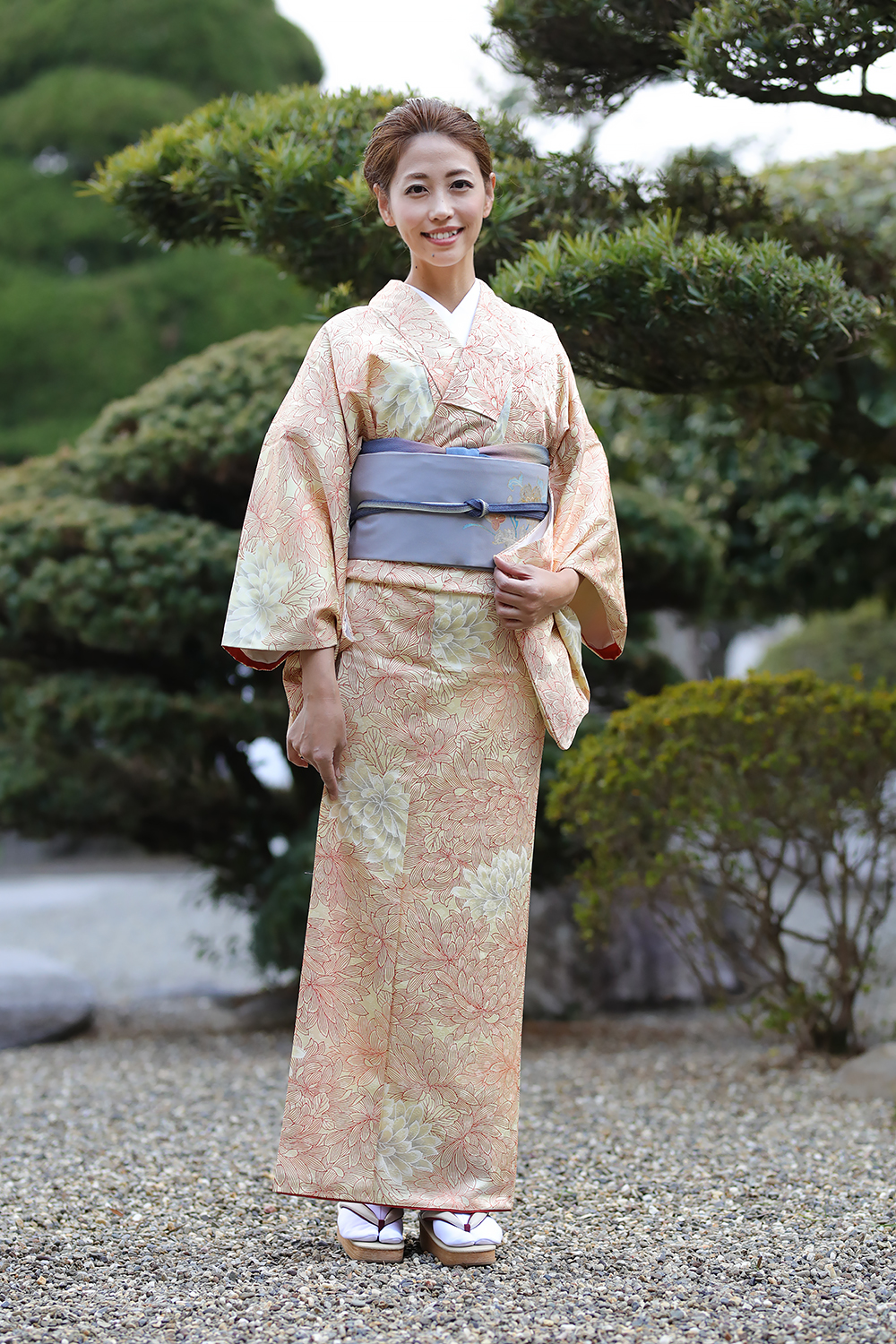
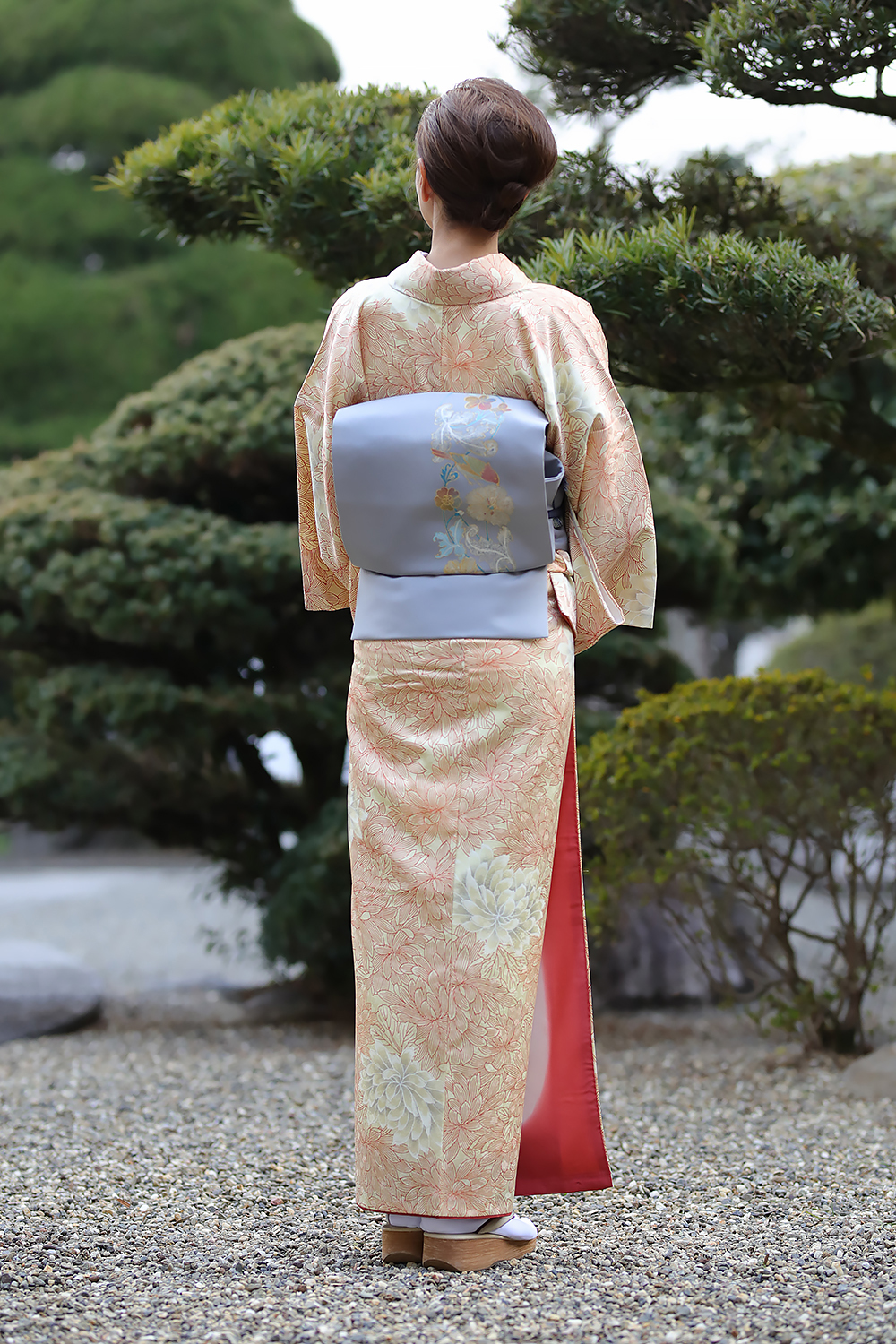
A blue-gray Nagoya obi is worn with a cute flower patterned komon, adding a touch of elegance to this casual outfit. Since the kimono is made of synthetic fiber, it can be washed even if it gets dirty, so it is recommended for street wear.
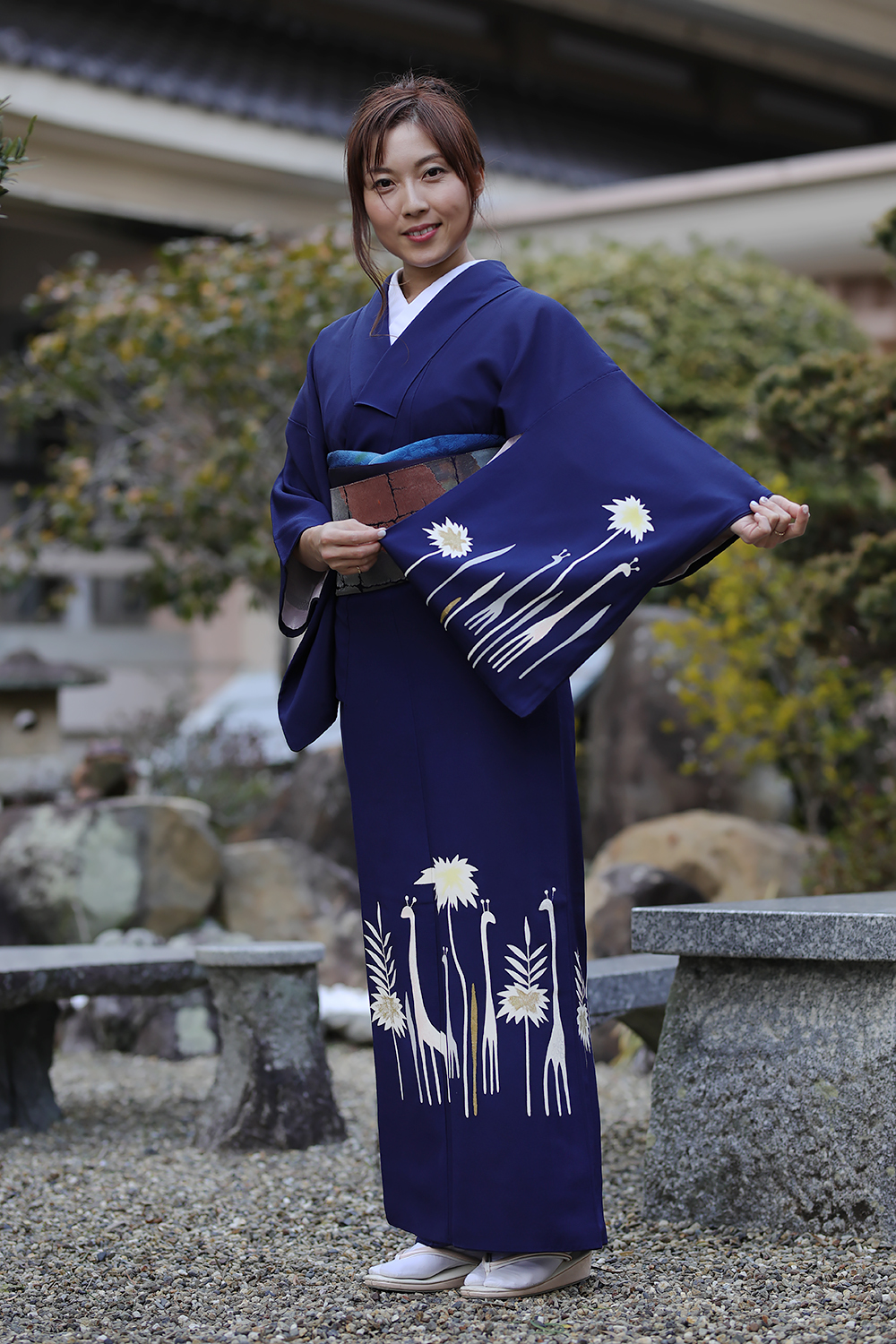
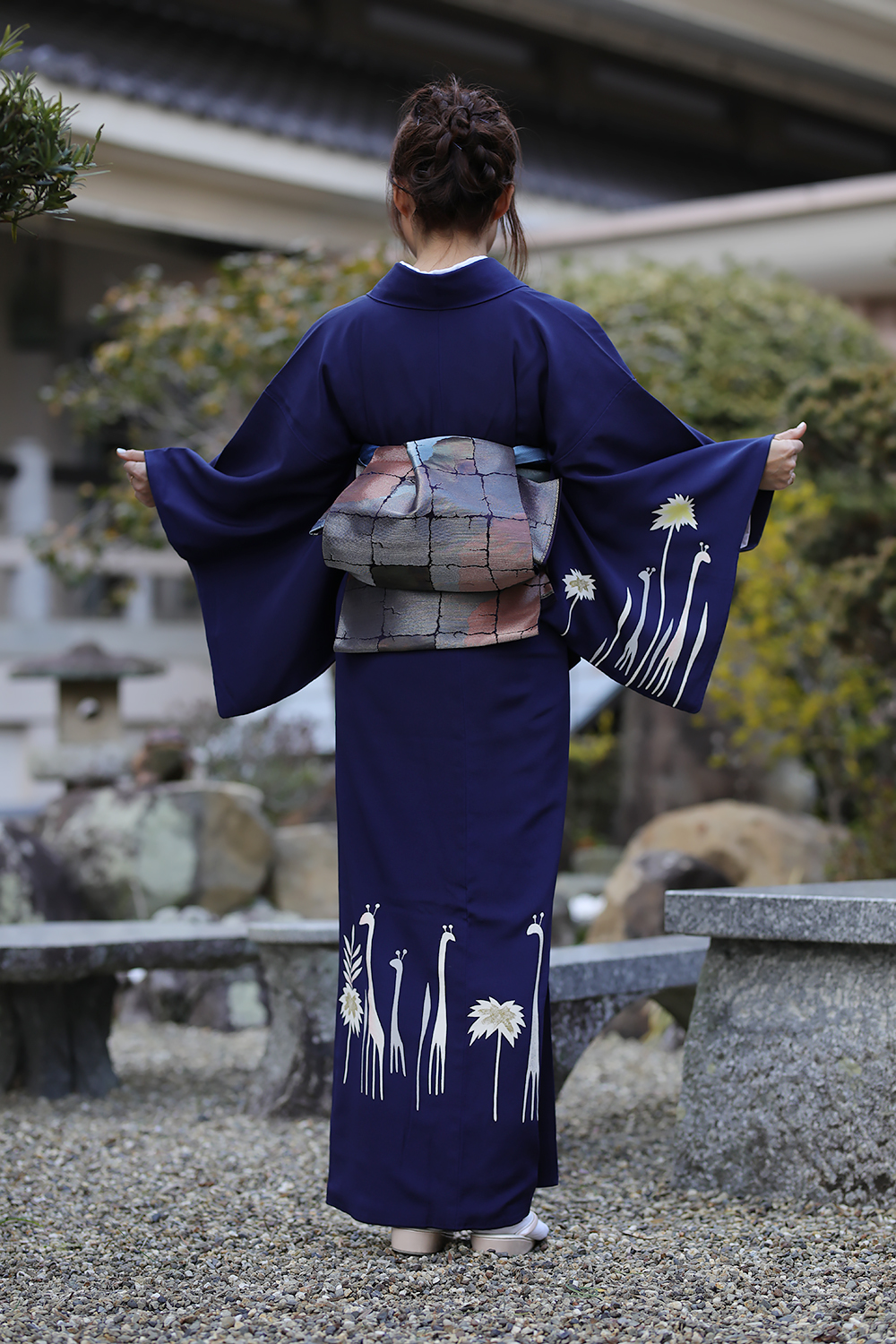
A modern antique tsukebake from the Taisho era and an austere obi are combined for a party style. By tying the obi a little lower, a chic and glamorous look is created. Because of the short length of the kimono, it is not possible to create an "ohasuri" (under the obi), but by creating a neat line with the obi, it can be worn without discomfort.
Perfect for everyday wear. Casual Coordinates
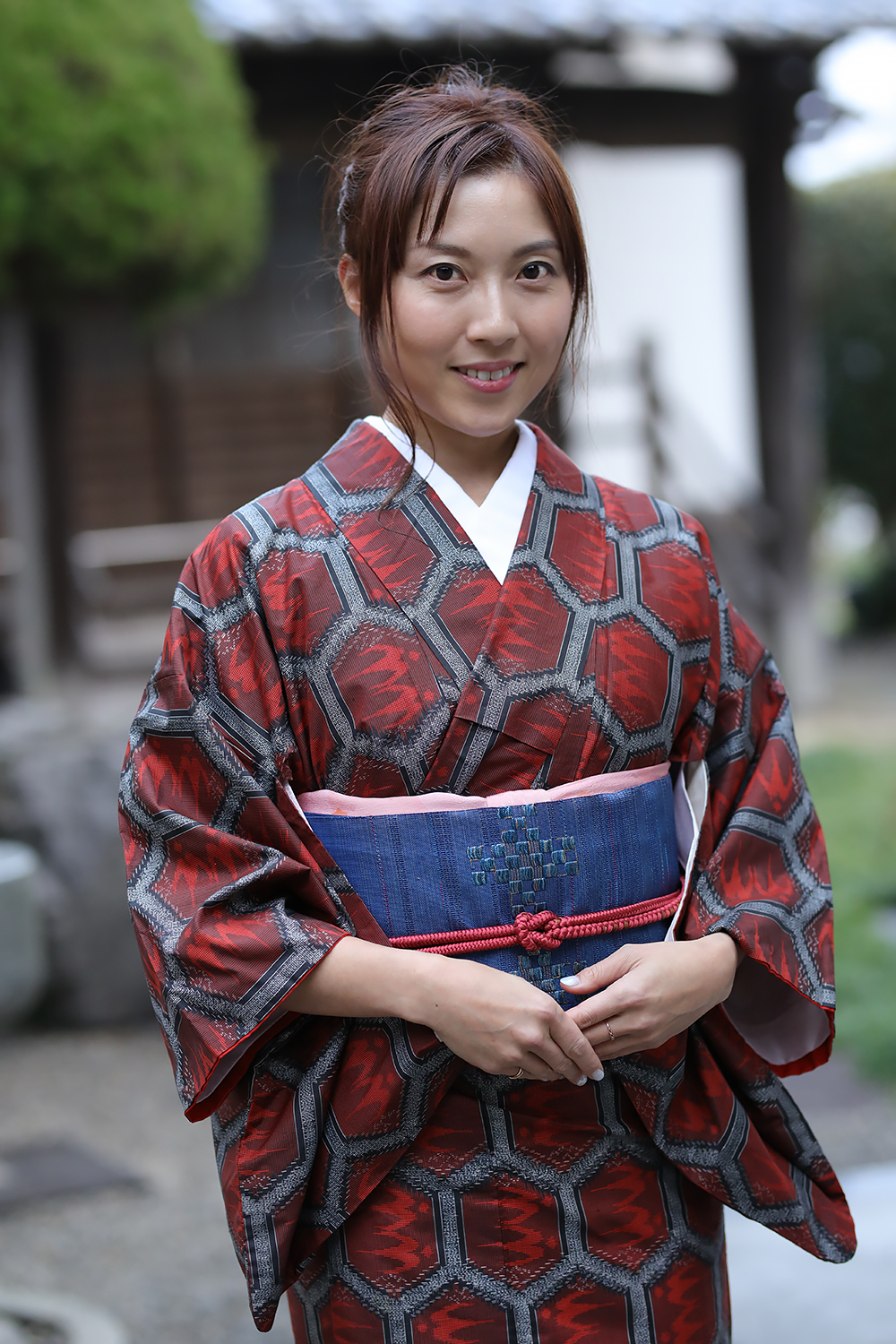
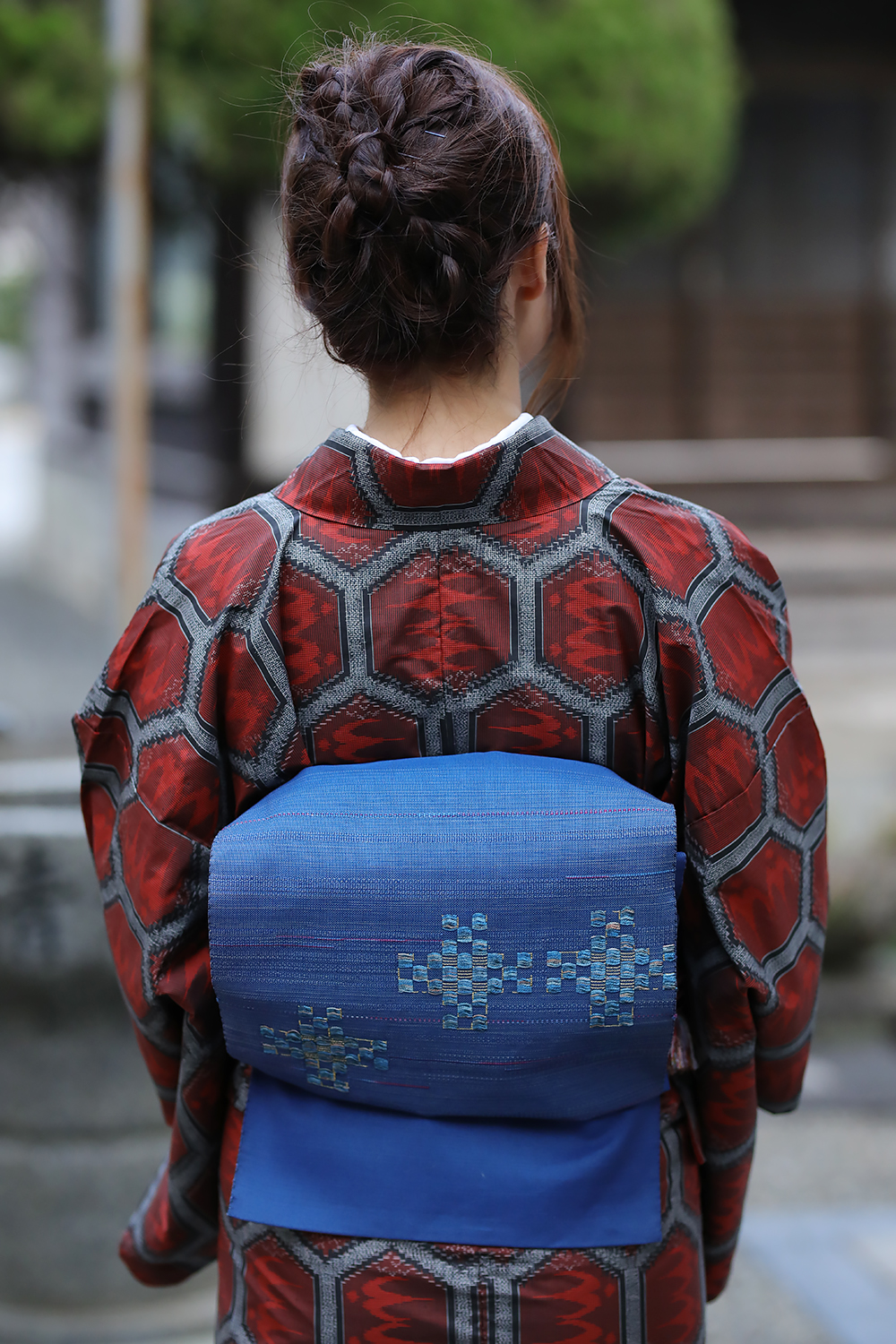
▲The combination of crisp silk and a lapis lazuli-colored woven obi reduces the impression of strong assertiveness of color and pattern. The short sleeve length from the Yuki sleeve does not interfere with daily life or household work.
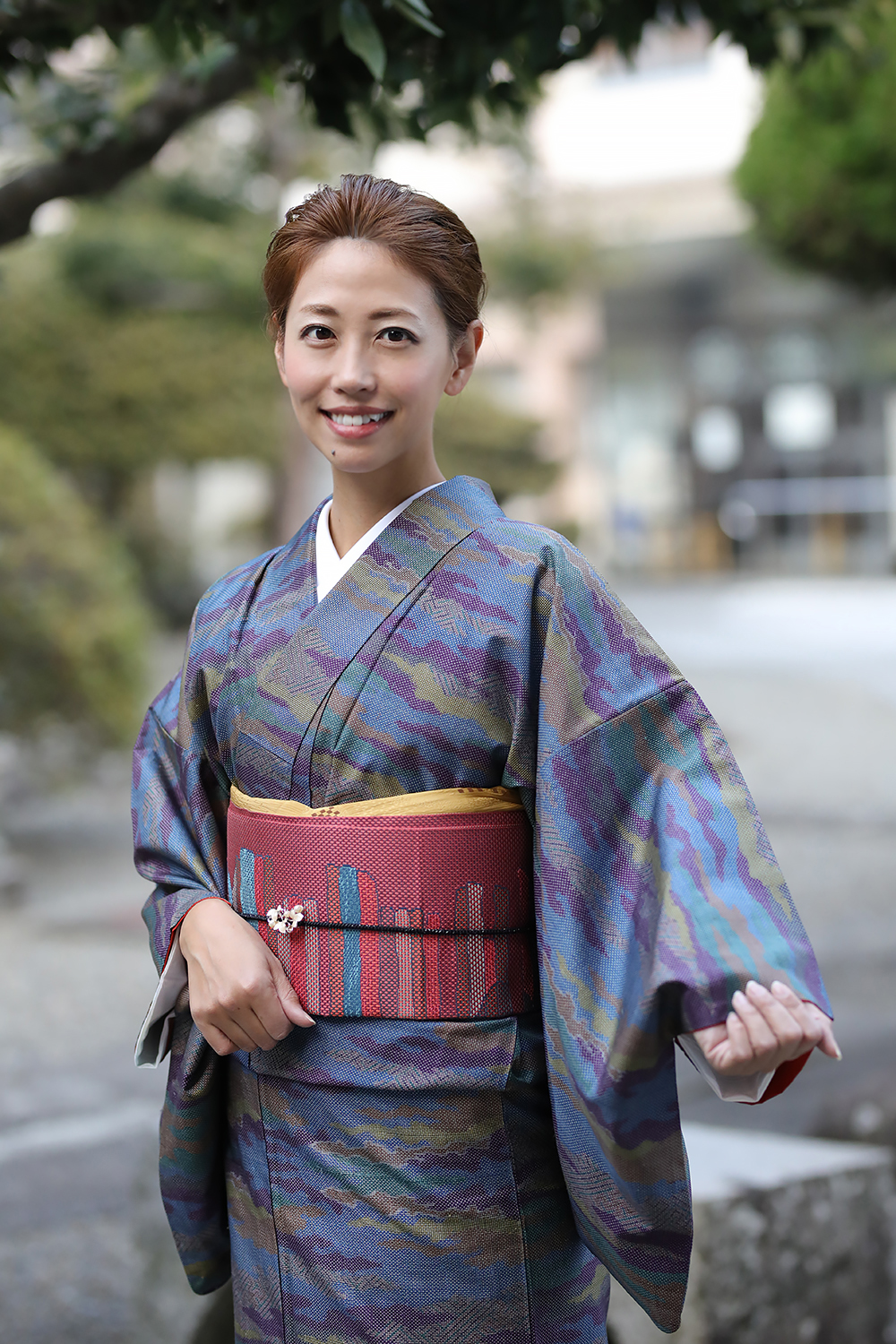
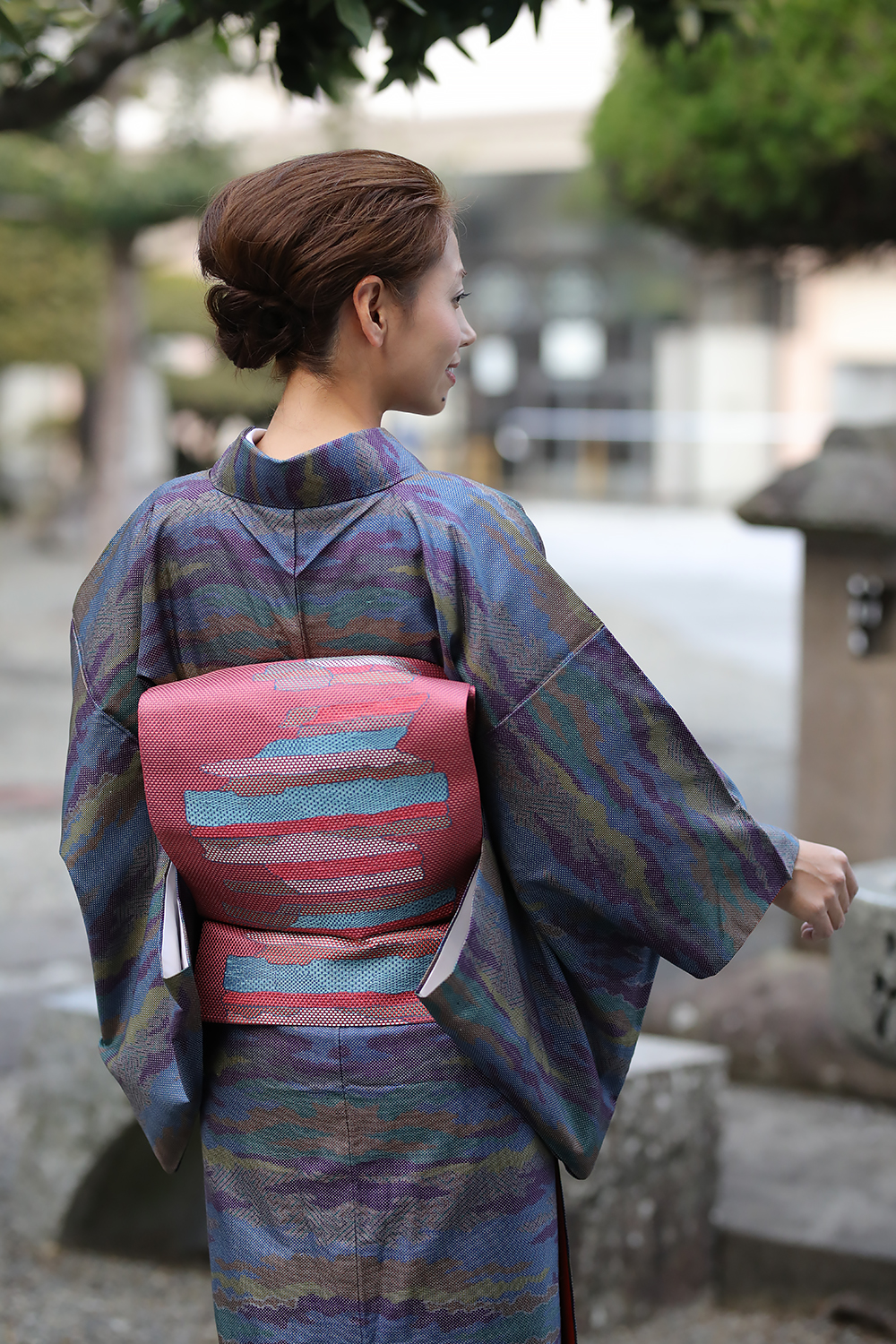
The blue silk is coordinated with a dark pink Nagoya obi. You can play with the colors of the obi clasp and obiage as much as you like.
Ask Dr. Koda about the kimono you have inherited.
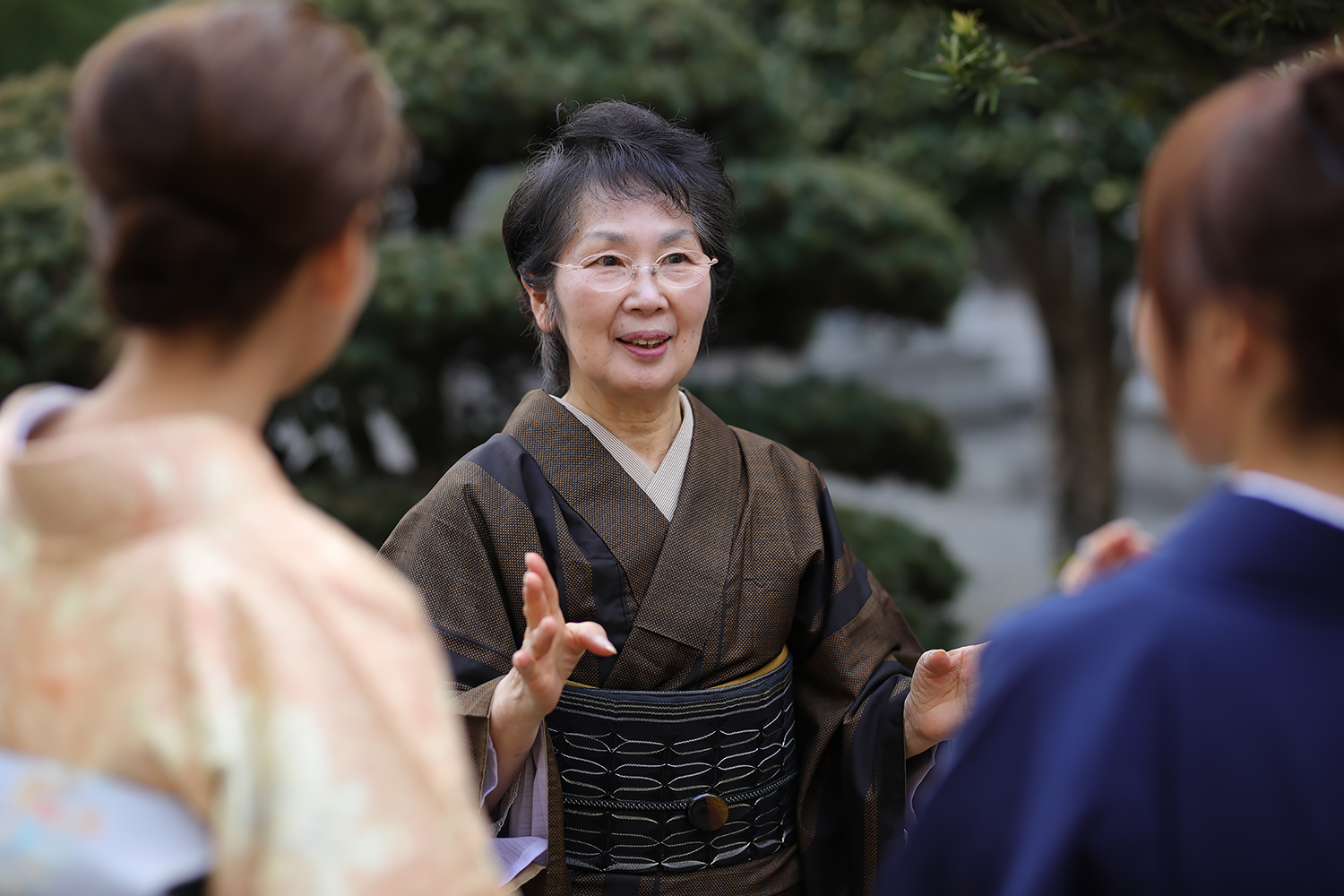
Q. I received a silk pongee as everyday wear, but I heard that it is "valuable". Can't I wear it as formal wear?
A. "As you say, many tsumugi are made with traditional techniques and are expensive, but it does not mean that they are more prestigious, although it depends on the patterned decoration. It is a technique that is necessary for daily life, and in the past, it would have been worn as a matter of course. However, nowadays, they are precious handicrafts, so I hope people will wear them a lot instead of putting them away in the back. Nowadays, we also have 'tsukebake', 'visit kimono', and 'furisode' in silk.
Q. The crest on the colored kimono given to me by my grandmother is different from my own family crest.
A. "The family crest is an important thing, and it is definitely important to know it properly. On the other hand, it would be regrettable if it is treated roughly because it is different from the family crest. Now, it would be preferable to have one's own family crest on a piece of jewelry, but how many people, aside from relatives, are familiar enough with family crests to know when they see one and say, "That's not the same thing! I wonder how many people are familiar enough with family crests to know that it's not the same thing. Also, it seems that "Gosan-no-Kiri", "Ageha Butterfly", and "Tsuta" are common crests for women, so it would be good to take a closer look at the crests. I think it's enough for dressing, tea ceremony practice, or just a little outing wear."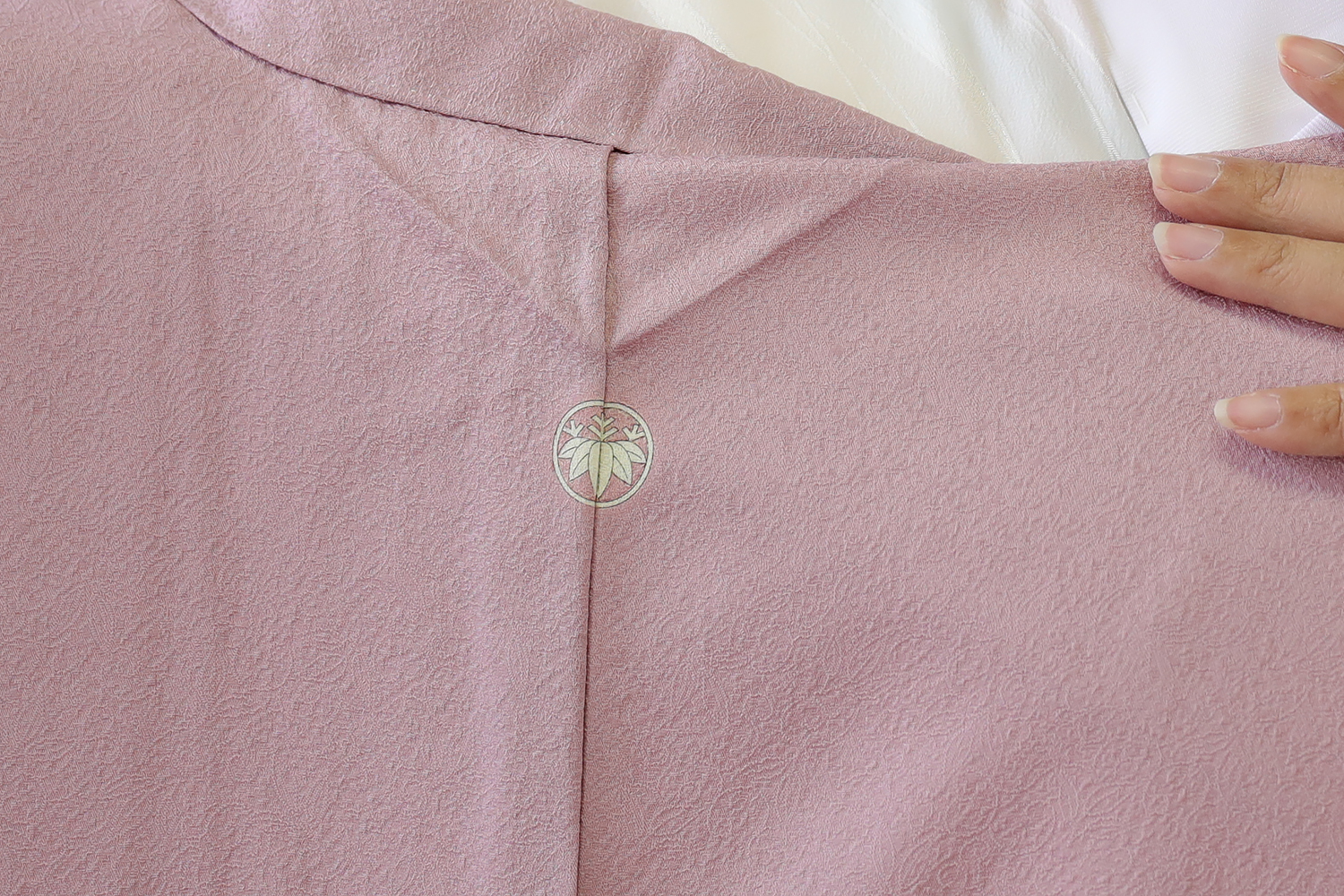
Q. My mother and grandmother were petite, so the length and sleeve sleeves are quite short, and there is no "ohabori". I would like to wear it somehow. ......
A. "In the days when kimonos were worn for daily life, we think that kimonos were worn with short sleeves and just the right length so that they would not interfere with daily life. In the modern age, kimonos have become more unusual, and it may be considered difficult to wear them, but if the kimono cannot be worn without an obi, it can be worn without the obi itself, using the obi as an accent. The slightly short distance from the sleeve to the end of the sleeve does not bother you if you are moving. If you wear it for everyday use, it should be enough. If you have a kimono jacket, you may be able to make the height and sleeve sleeves longer. In short, I think the important thing is whether you want to wear it or not.
Q. My family and relatives have given me a lot of things and I don't know how to store them.
A. "The best way is to use a wardrobe for kimonos, but it may be too large for your apartment, or it may not fit where you want to put it. It may be a good idea to stack kimonos in a plastic wardrobe case the size of a closet, with the wrinkles stretched out, and put mothballs in the case. If you stack too many kimonos, the weight of the kimonos will cause creases on the bottom, so it is best to choose a shallow-bottomed wardrobe case.
Q. I'm not confident about matching patterns and ratings. ......
A. "You may not know at first. The first step is to ask, 'In what situations and places will I wear it?' The shortcut is to make a start by asking yourself, "On what occasion and in what place will I wear it? At that point, consult with someone who knows kimonos or a kimono dressing teacher, and learn how to coordinate them. The next time, you will always want to try a different combination. At such times, try coordinating mainly with kimonos and obis of the pattern you want to wear. If you repeat this, before you know it, you will get a sense of it. Once you start to enjoy wearing kimonos, you will start to pay attention to the position of the collar and the way it is displayed, so the fun is endless (laughs).
Q. Finally, please give a message to those who have similar problems.
A. "First of all, 'don't think too much. When you see a kimono in front of you, you may think, 'Do I have a lot of commitments?' or 'Is this combination right? and "Is this combination right? However, the most important thing is to have the desire to try it on. There are different ways to enjoy coordinating kimonos with clothes. If you are unsure, one way is to ask someone who is familiar with kimonos. In any case, it is important to "try it on and wear it. Please enjoy kimonos more casually.
Epilogue: After the interview
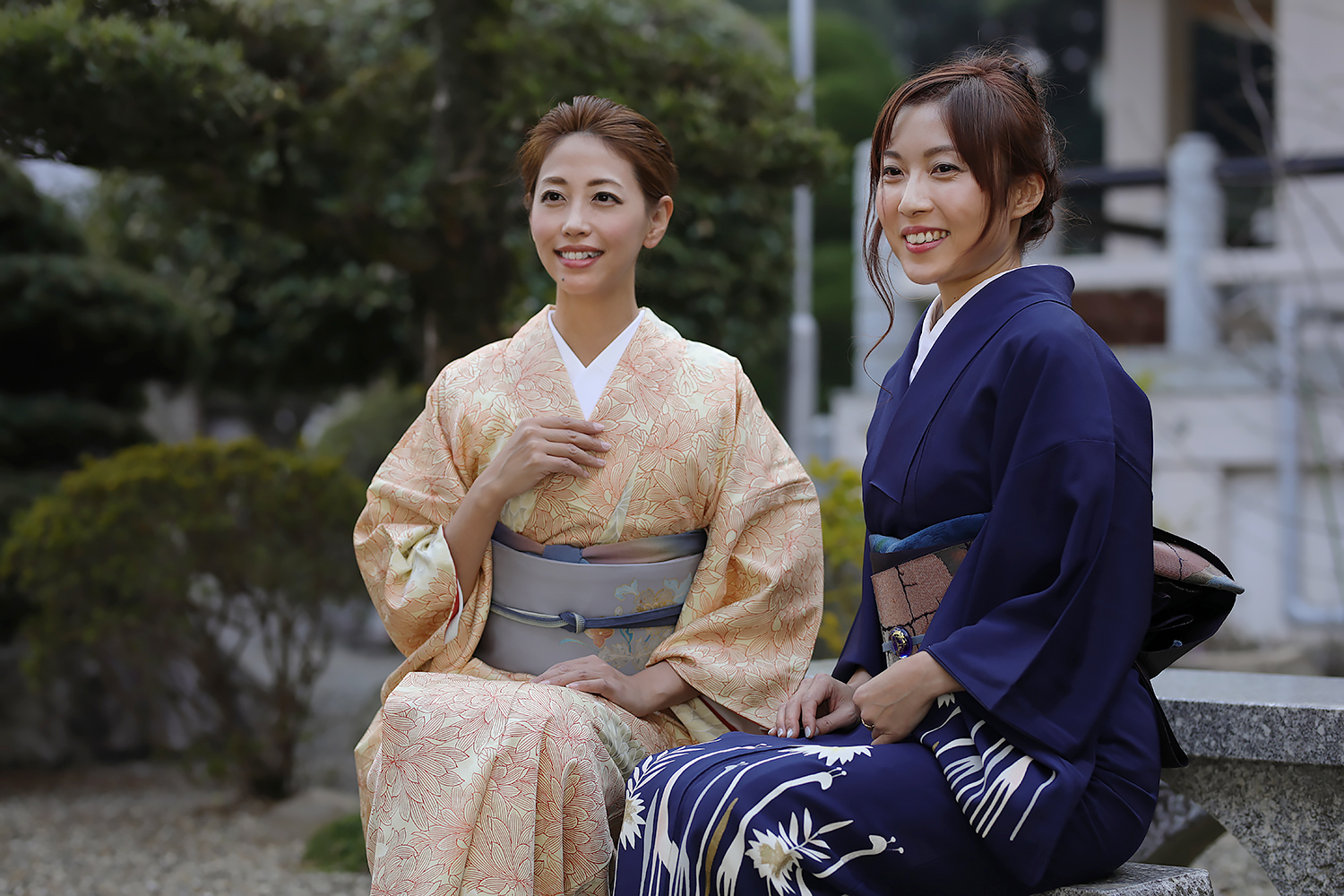
Comment: Chiho Takei
The first step is to know your kimono! I brought in a lot of kimonos to ask the teacher, knowing that I would be shamed. The fabric, the pattern, the type of weave and dye, and the class and the combination of the two...... I knew it was important for me to learn the basics. I was convinced that I was right! I was convinced, and at the same time, I broke out in a cold sweat when I recalled what I had dressed myself in the past (laugh).
What I felt from the words the teacher gave me there was, "That's it, it's okay to think more freely! I was very happy to hear that. Especially since many of the garments were old, not only did they not fit my tall frame, but they were also stored in different conditions and had stains and dirt. I'm not sure if it will be noticeable once you wear it! The most important thing to remember is that you can't just put away a piece of jewelry and put it away. In those days, there were fewer rules and regulations, and people were free to do as they pleased. This is a consideration.
The items that I had been avoiding because I could not wear them with a kimono or because they were a little stained, were a wonder to behold when the instructor let me try them on. Even items that I had never tried on because I thought they would look blurry and unflattering were given a clean, tight look with the use of accessories. It's fun to be honest! The world of kimonos is a deep and traditional one, but I would like to challenge myself to have fun and not be timid.
For those who want to wear kimono from now on
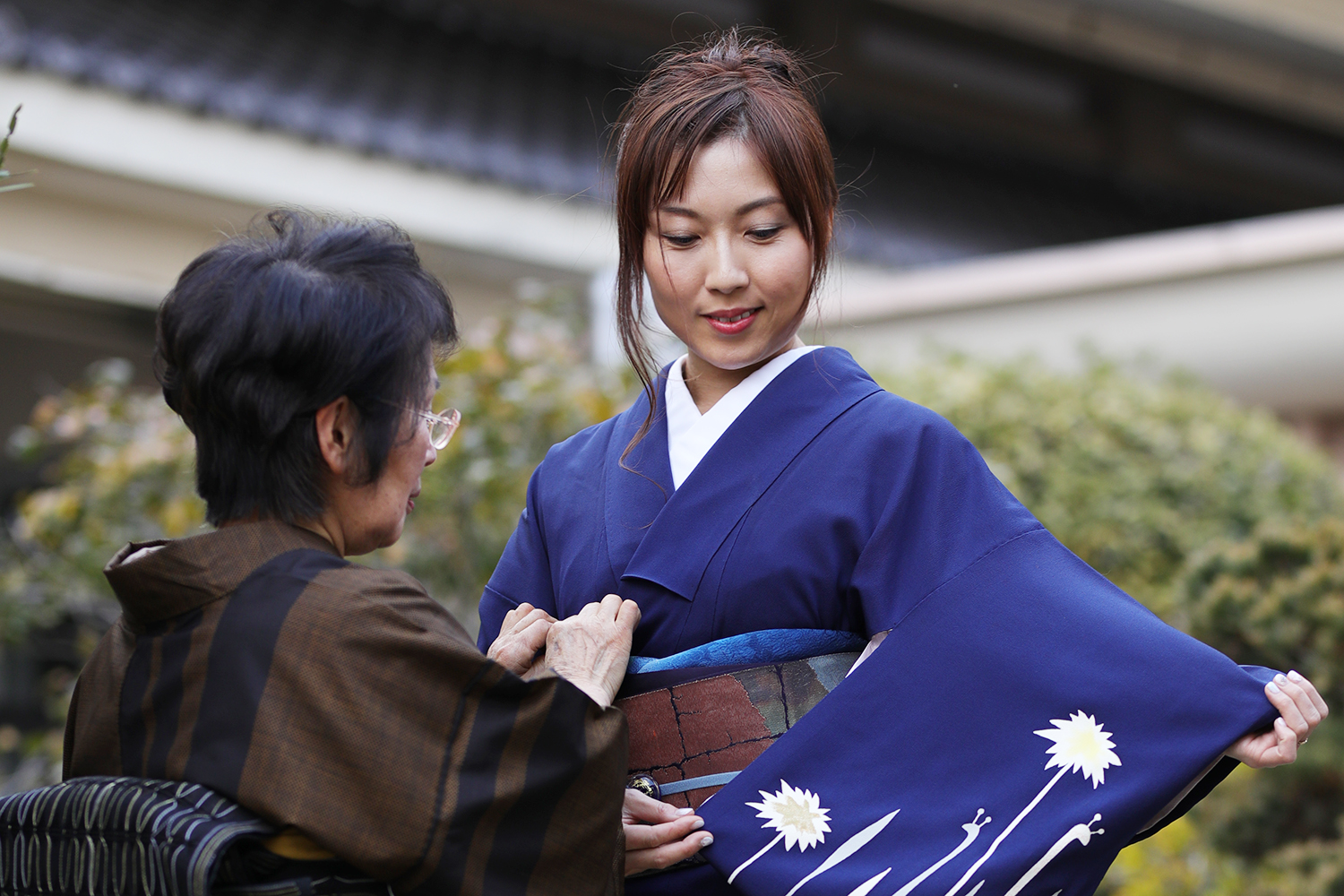 My first encounter with kimono was when I dabbled in the tea ceremony after becoming a working adult, but I think any trigger is fine.
If you don't know about tea ceremony, flower arrangement, Kabuki or Noh (......), you may tend to think of something that is a little difficult to learn. But let's try to touch a little bit of "Japanese" things. Japanese food, Japanese sweets, Japanese sake.
Cherry blossom viewing, festivals. There are castle ruins, shrines, and temples in this town, so take a leisurely stroll. When you look at what is already there, you may be surprised to find it lying around. And putting them into words may be the best way to spread the word!
I want to wear a kimono!" He said.
By doing so, there are people who bring out kimonos that are sleeping, people who can wear them and teach them to others, and more friends who want to wear them together!
Kimonos have more rules and regulations than clothes, and there are some unfamiliar technical terms, so it is difficult to study them silently by yourself by looking them up in a book or on the Internet. Instead, have someone dress you in a kimono as if it were your everyday clothes and try it out. Let's relax your shoulders and discover through experience! Kimono will become much more familiar to you. Kimonos can be worn to Western-style events as well as Japanese-style ones. We feel that kimono makes you and your surroundings happy.
Profile of Dr. Nobuko Koda
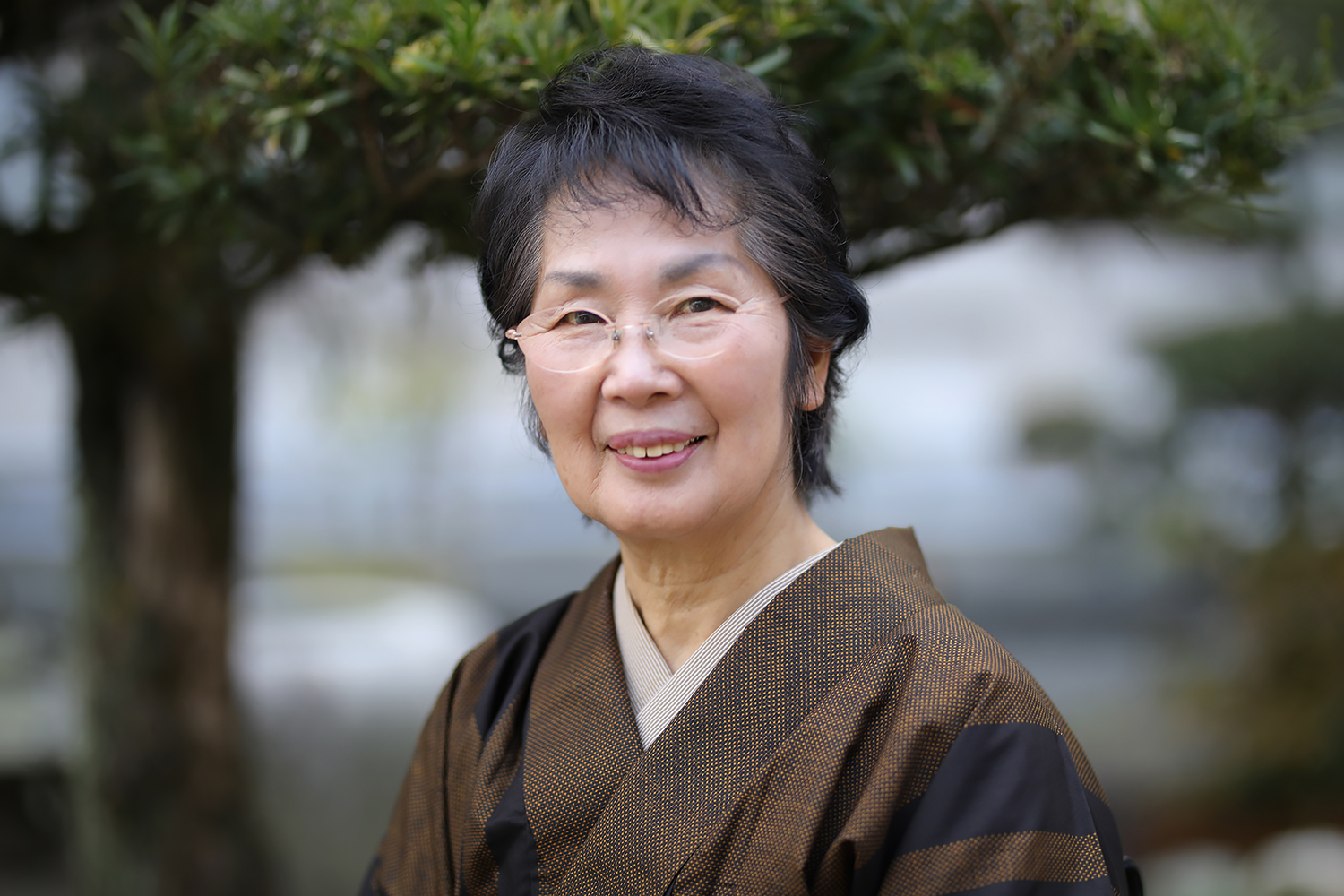 Iwao Japanese Fashion Institute (Headquarters: Kitakyushu City)
1997 Assistant Professor of Kimono
2006 Assistant Professor of Dyeing
Activities
Home Classes Kimono Dressing and Dyeing
Tsunetomi Community (Nobeoka City) Kimono
■Hinata Central Community Center (Hyuga City) Dyeing
Private homes Dressing and dyeing
Family: Husband, one son, two daughters, two cats
Interview and editorial staff
Model Report: Chiho Takei, Nozomi Nakamoto / Editing: Nozomi Nakamoto
Photography and production: VOKE Ltd.
Location: Taiunji Temple, Nobeoka City
Address: 3739 Kitakoji, Nobeoka City
Phone: 0982-32-2251
URL:http://daiunji-nobeoka.or.jp/