


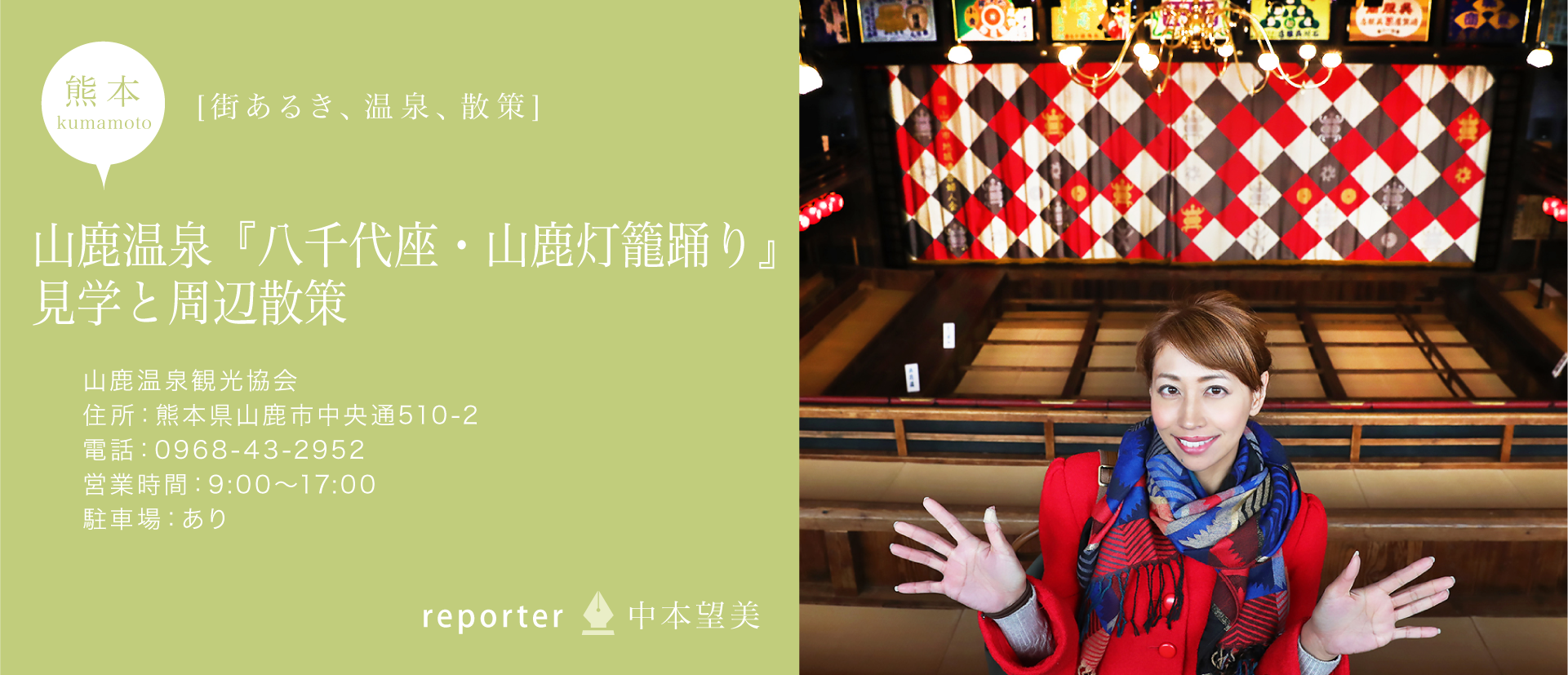

The "gorgeous" Edo Period Kabuki theater-style playhouse "Yachiyo-za" is the centerpiece of the exhibition,
Experience the traditional arts and culture of Yamaga,
A wander through the historical romance of the "Buzen Kaido" road that remains in the vicinity of Yamaga Onsen!
Prologue Yamaga, Lanterns and the Buzen Highway
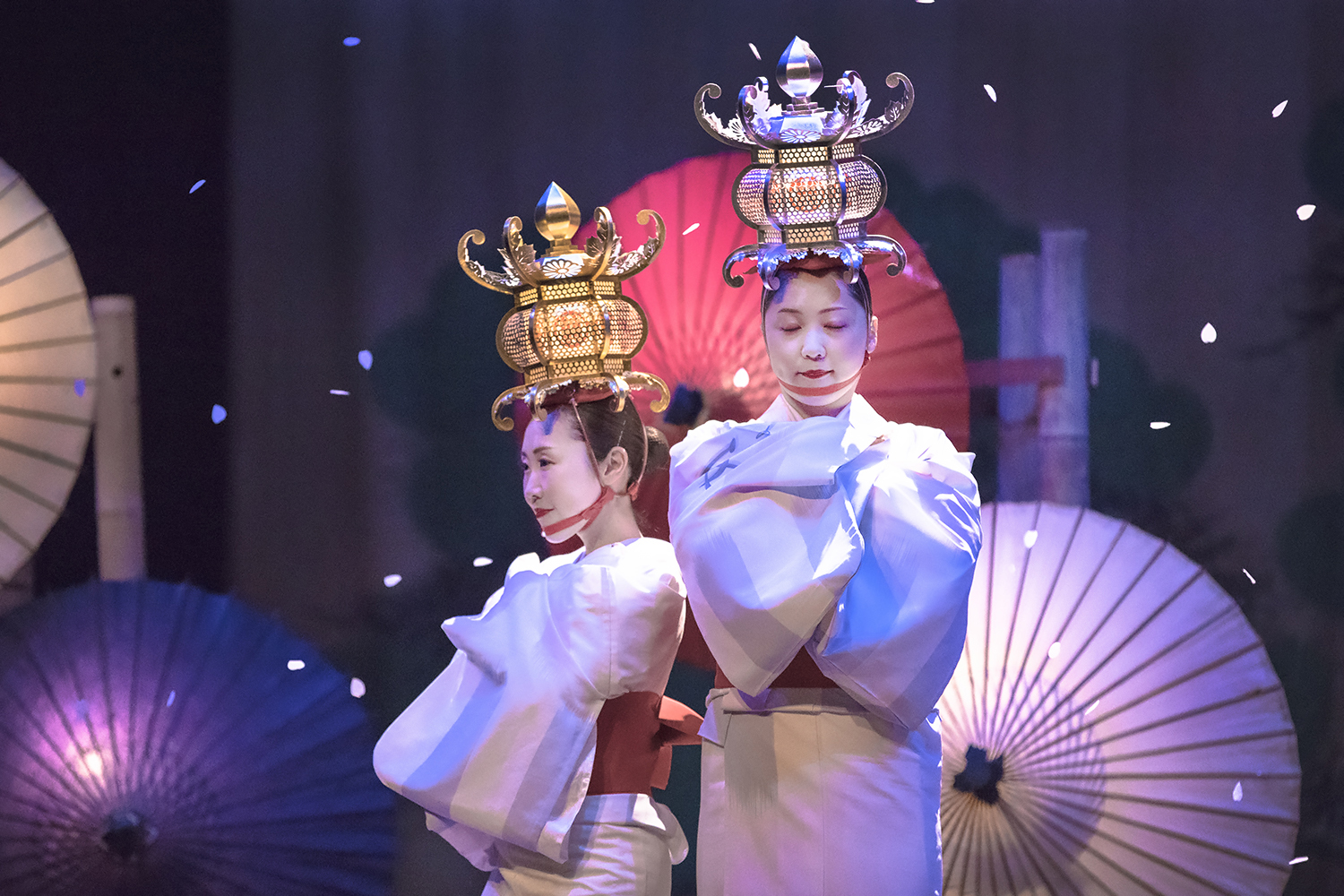
Yamaga City, Kumamoto Prefecture, where the "Buzen Kaido", the route of the Edo period (1603-1868), passes through the center of the city. Today, Yamaga City is a bustling hot spring resort (Yamaga Onsen), but at that time, it prospered as a post town along the Buzen Kaido Road. Even today, the historical romance of the town's glittering development from the Edo period to the Taisho period can be seen in every corner of the town, such as the Kojiya (malt shop) that has been in existence since the Tempo period, the "Sakurayu" hot spring bathhouse that was once the teahouse of the Hosokawa domain lord, and stores and restaurants that used the merchant houses from those days.
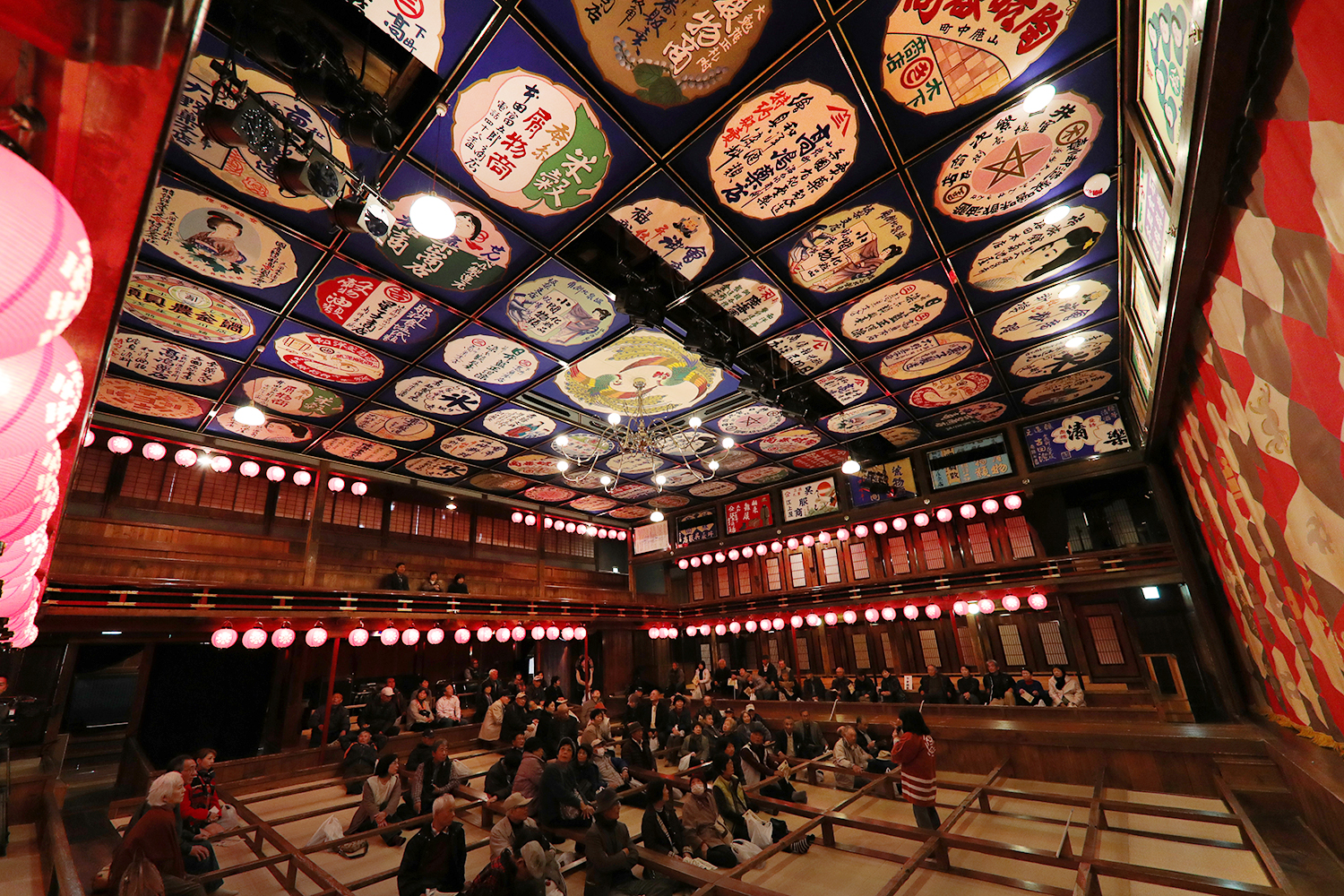
The playhouse "Yachiyo-za," built in 1908, was modeled after a kabuki theater of the Edo period (1603-1868), with gorgeous ceiling paintings and interior decorations, as well as a tour of the "Naraku" area under the stage and flower aisles, which cannot usually be seen. It has gained popularity as one of the main spots in Yamaga.
Even today, kabuki and dance performances are held here, as well as regular performances of the local traditional art form "Yamaga Lantern Dance.
(Later in this volume, we will discuss in detail the culture and history of the "Yamaga Lanterns" placed on the heads of the dancers.)
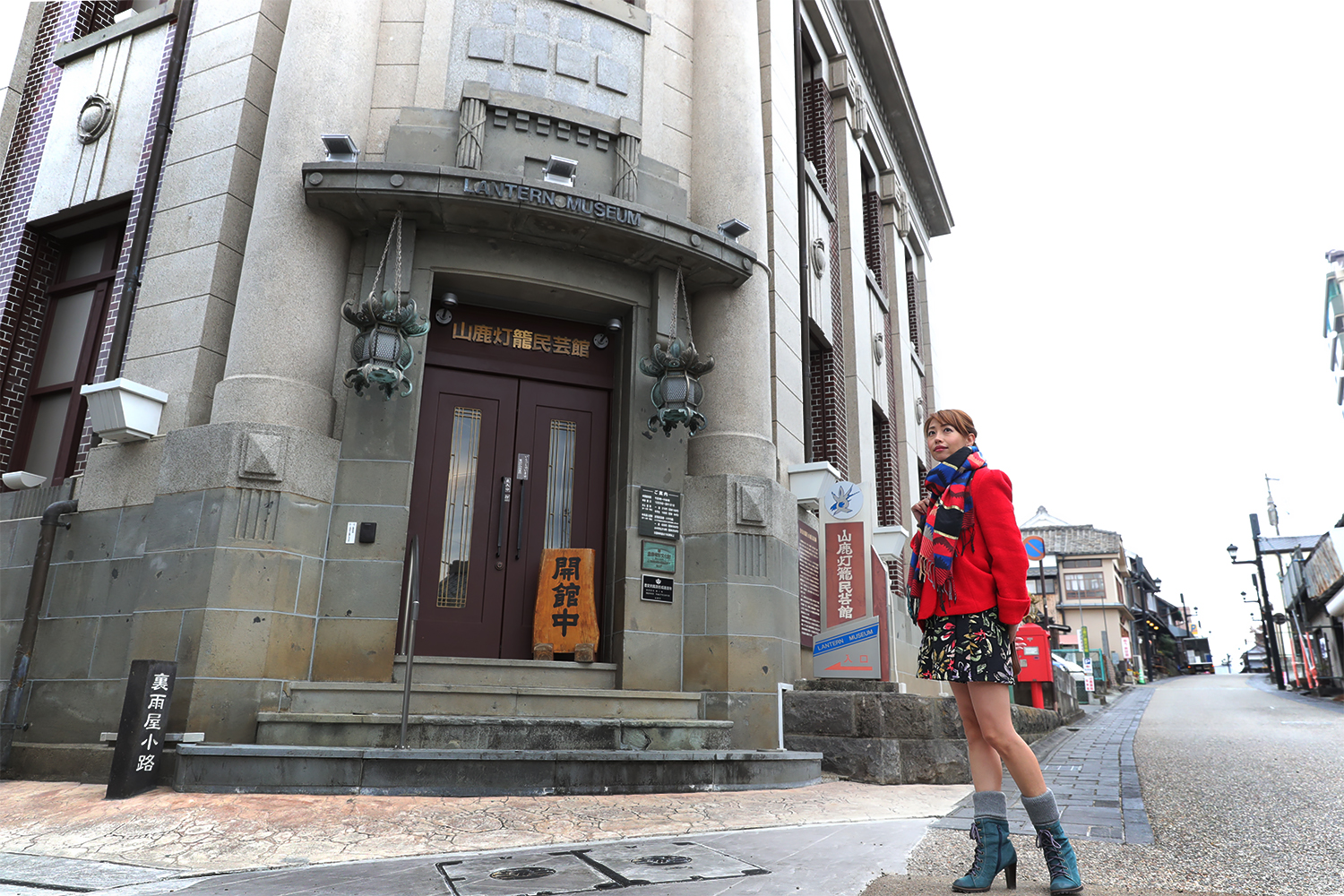
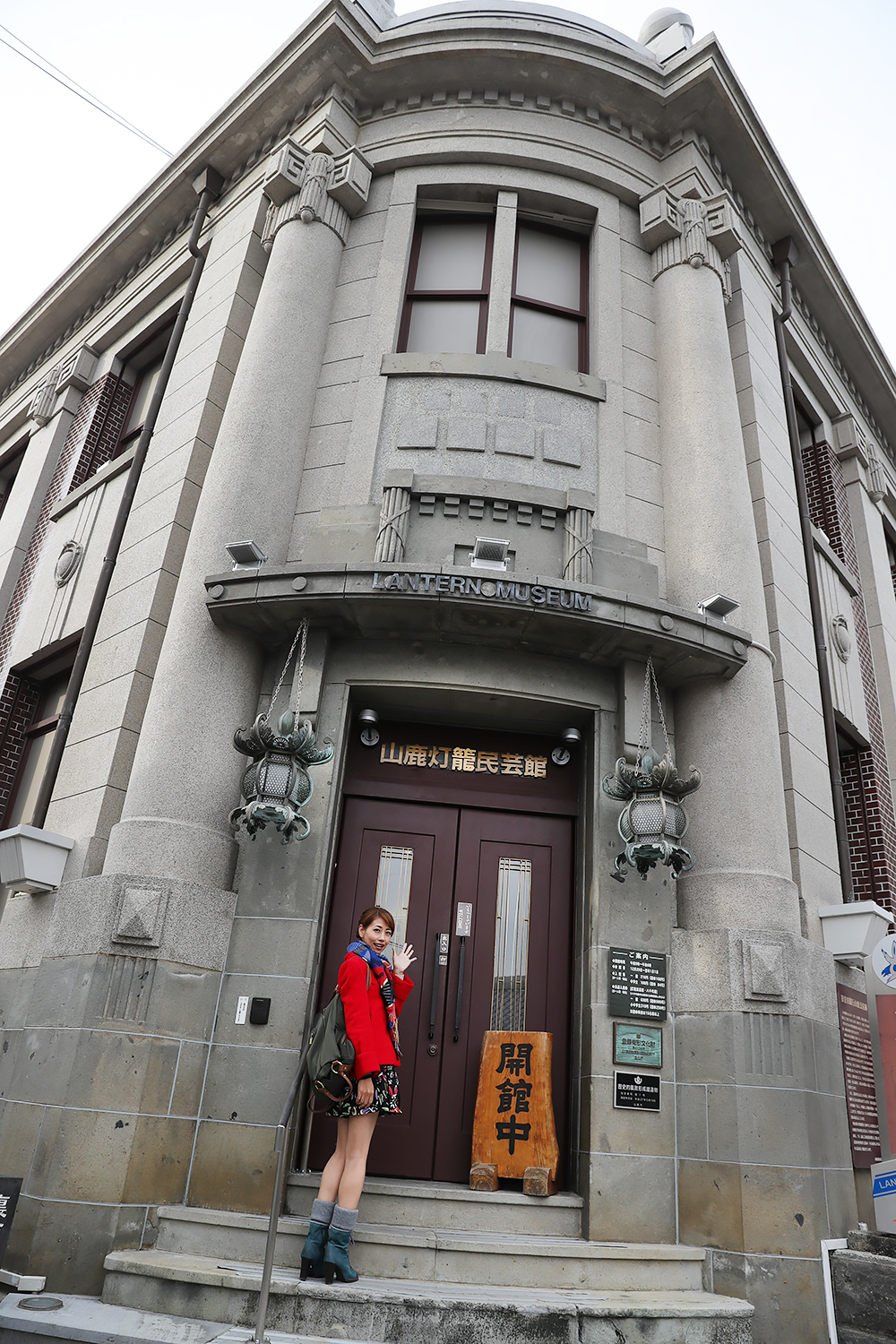
The stately Western-style building (see above), which stands out in the historical and romantic streets of Buzen Kaido, was built in the Taisho era as the Yamaga Branch of Yasuda Bank, and now serves as the Yamaga Lantern Folk Art Museum, where traditional culture is handed down.
Therefore, in this report, we will focus on the above-mentioned Yachiyo-za and other attractive sightseeing spots in the surrounding area that can be reached on foot.
The report also concludes with an introduction to the charms and gourmet menu of Metro Cafe, a bunko goods café renovated from the main building of a sake brewery.
Just by taking a leisurely stroll through the retro streets lined with both Japanese and Western architecture, you will be introduced to a unique world as if you were transported back in time, along with many images.
Yamaga, Lanterns and the Buzen Highway
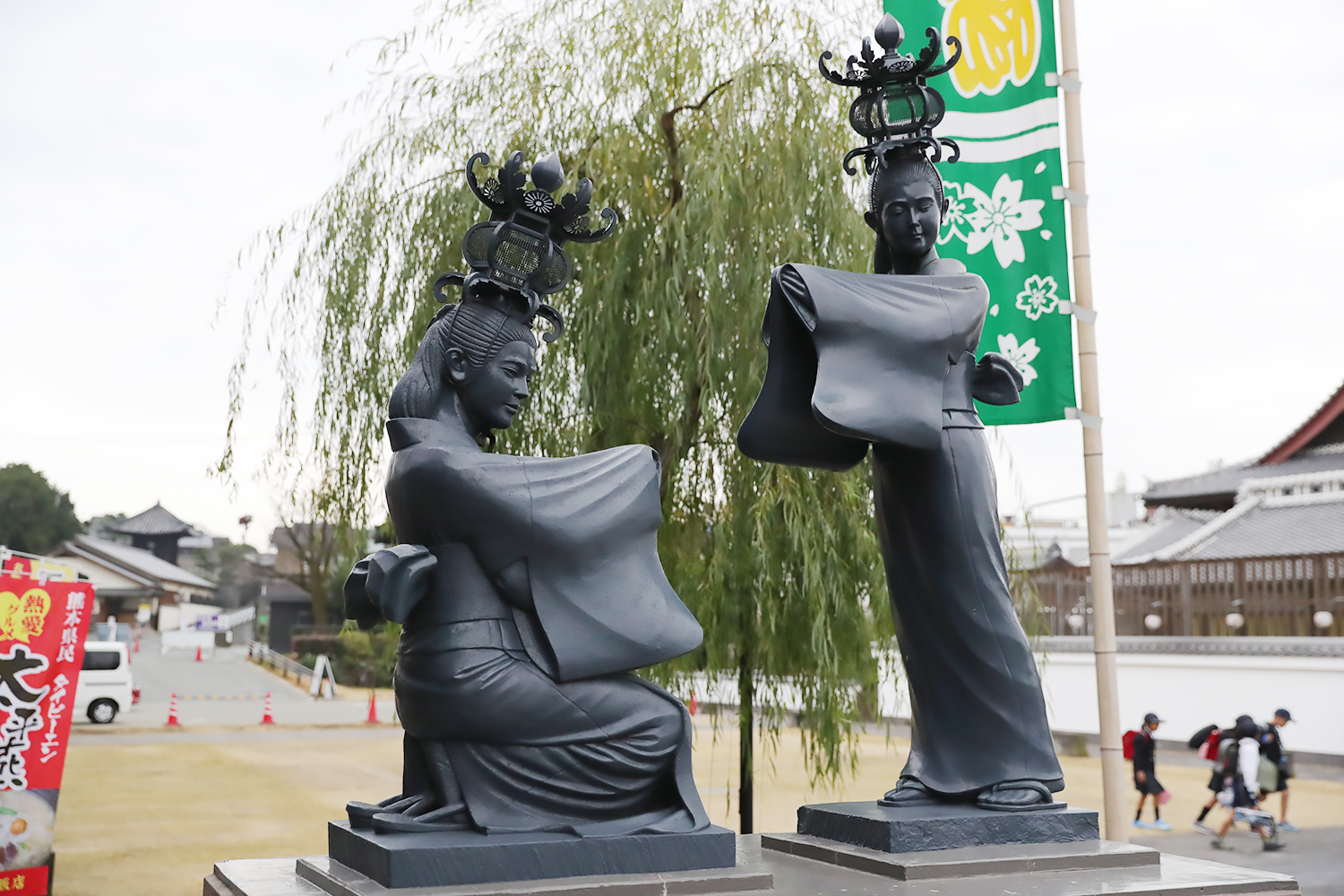
The bronze statue of a woman dancing with a lantern raised above her head is also a symbol of Yamaga's culture.
Yamaga Lanterns
Yamaga City has a long history of the traditional craft of "Yamaga lanterns," and craftsmen called "lantern makers" with expert skills continue to produce them. Yamaga lanterns are made with only Japanese paper and a small amount of glue, and are made for the annual Yamaga Lantern Festival and dedicated to Omiya Shrine, the birthplace of the lanterns.
The origin of this festival is said to date back to the time when the 12th Emperor Keiko landed in Yamaga from the Kikuchi River on his Kyushu pilgrimage, and was blocked by a deep fog in the area. Since then, the villagers have enshrined the Emperor at the ruins of Angu (today's Omiya Shrine), and have offered a torch to him every year since then.
*Further information below (Omiya Shrine).

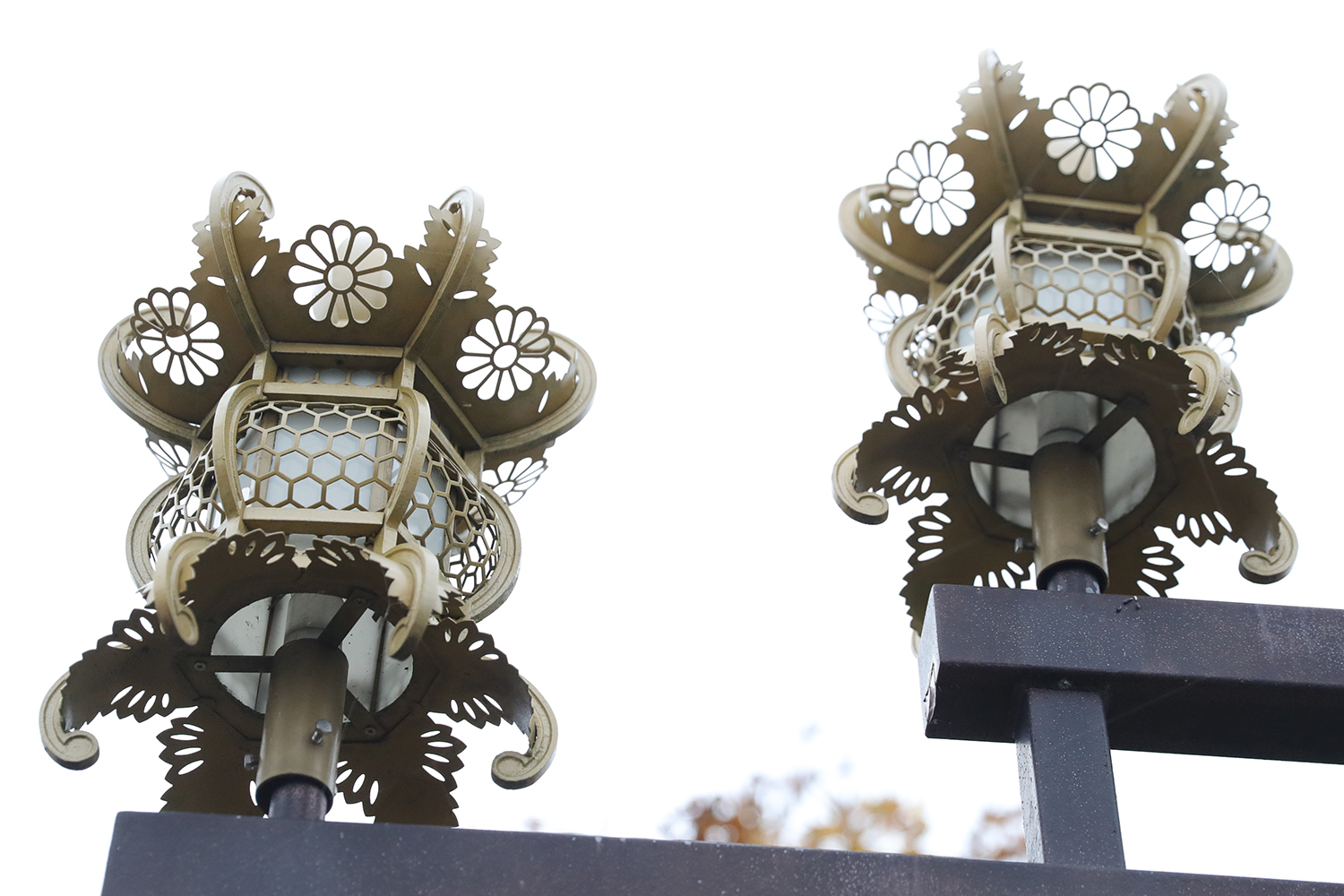
Street lamps, signboards, and wayfinding signs in the shape of "lanterns" can be seen here and there in the city.
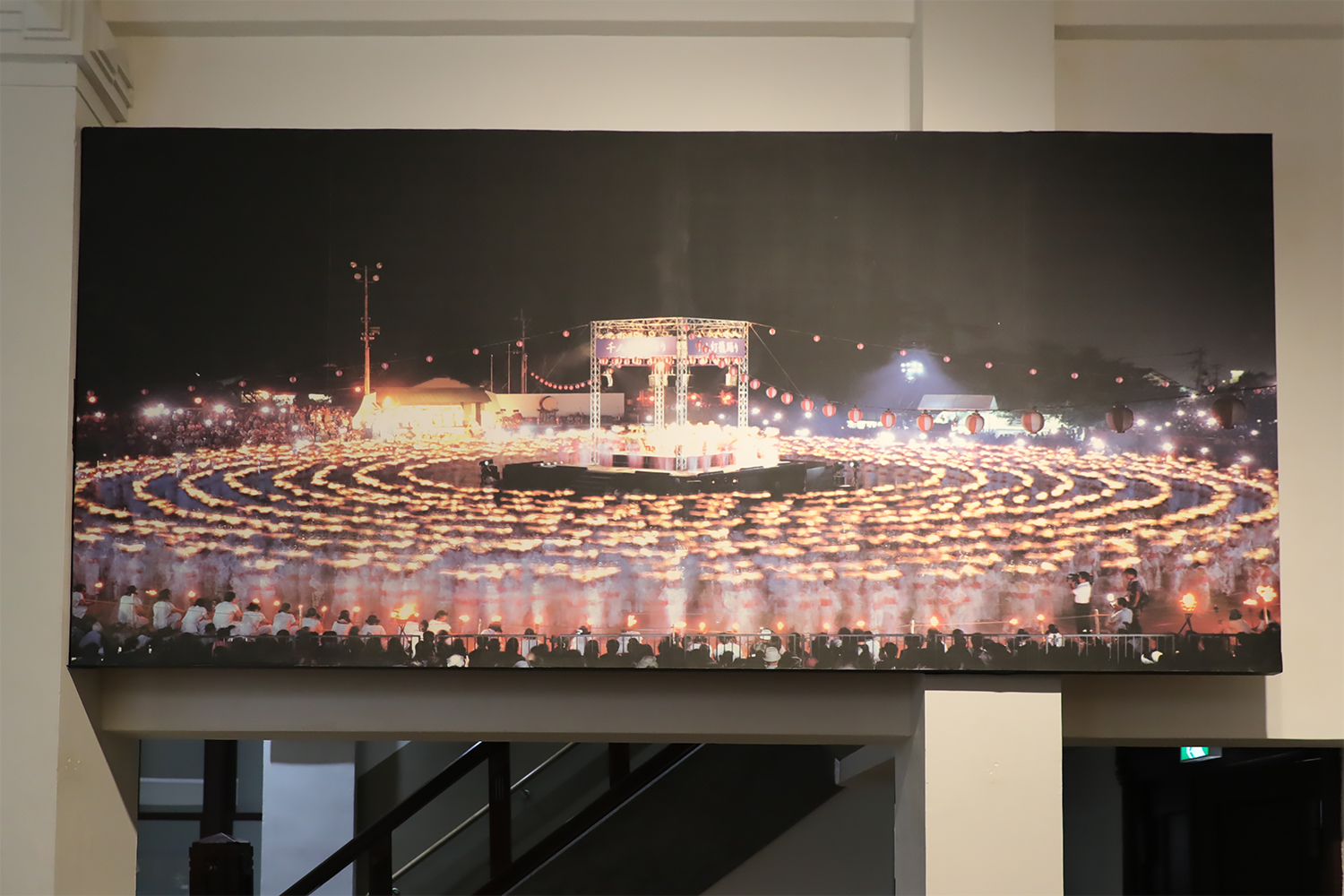
A view of the lantern dance displayed at the Yamaga Lantern Folk Art Museum.
In the Muromachi period (1333-1573), the votive offerings changed from lanterns to paper lanterns. Later, the "Yamaga Lantern Dance" was born, in which women dance with gold and silver "Kanatouro" lanterns on their heads, and the "Sen-nin Lantern Dance," which has become synonymous with the festival, was born, and is still a major event that attracts tourists and camera fans from all over Japan.
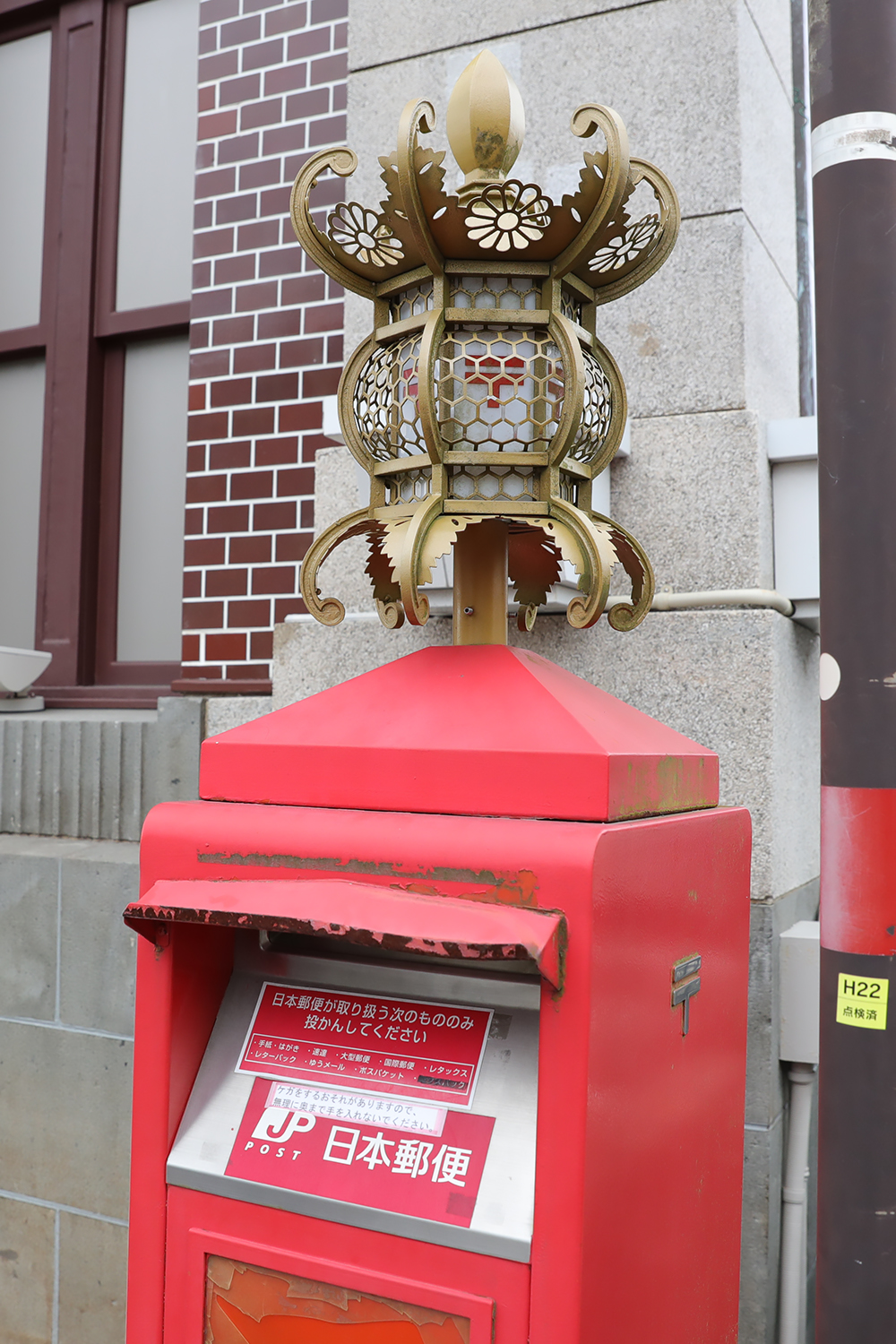
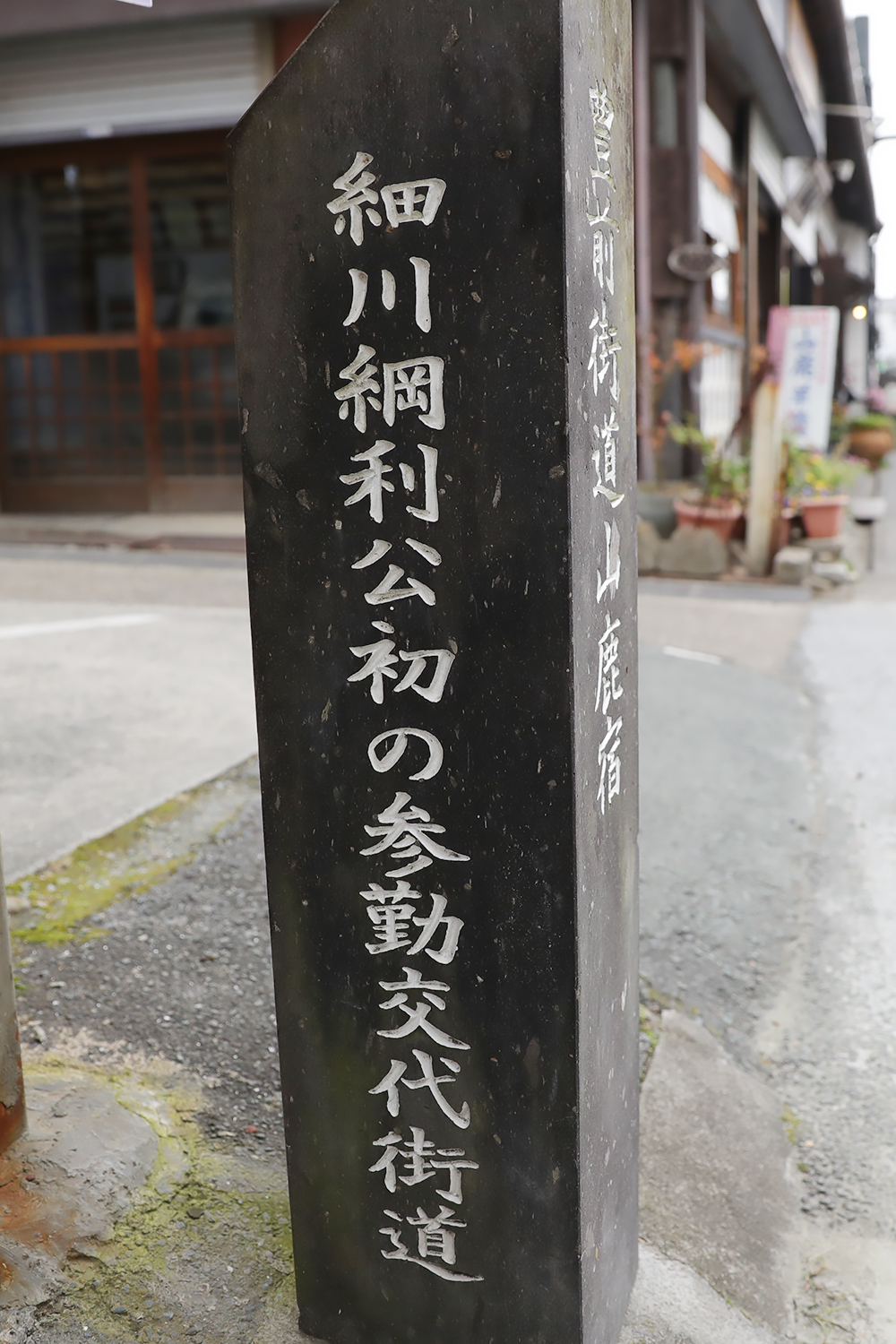
The post box also has a lantern! It is interesting that the Japanese paper inside is "〒".
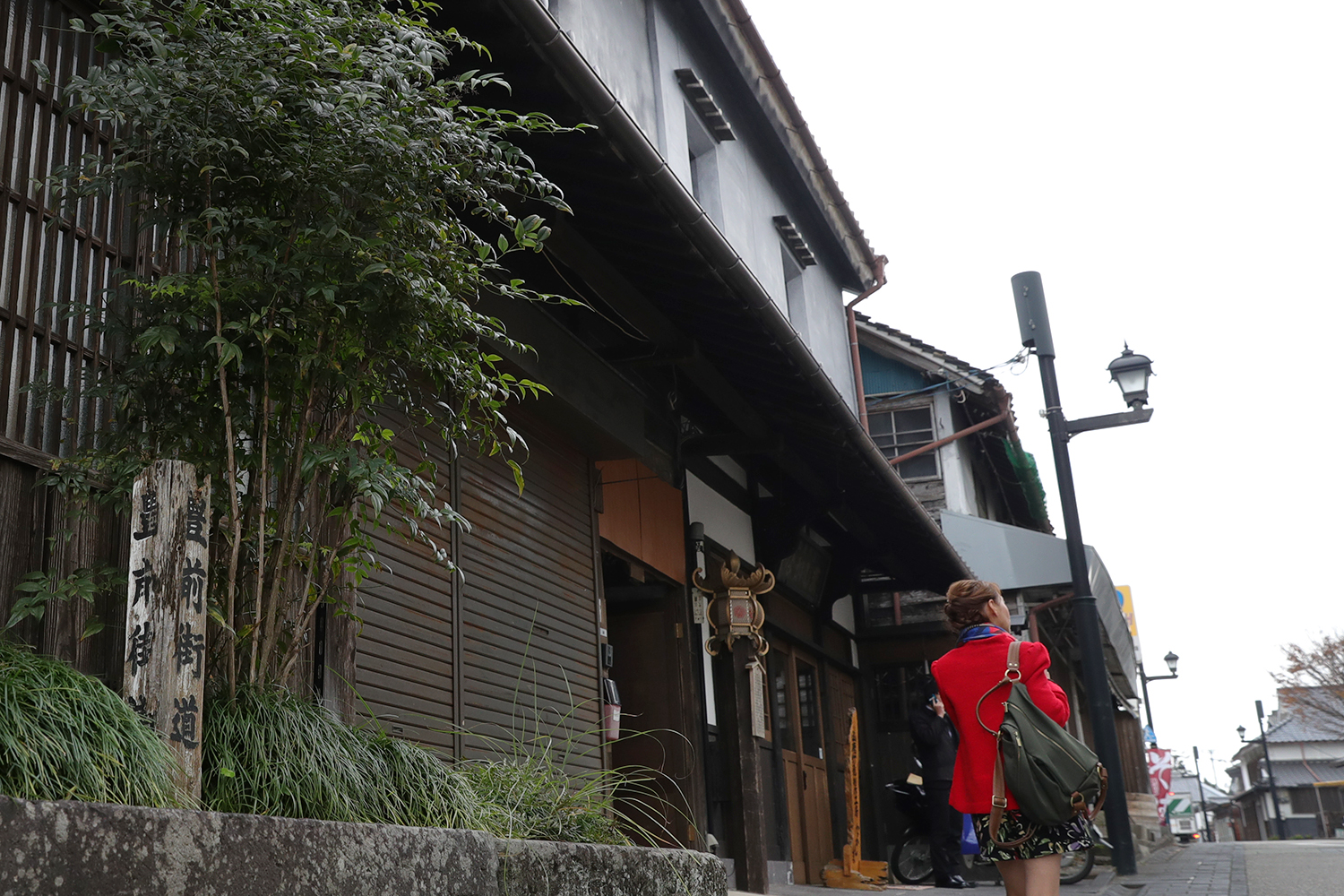
Lanterns with Japanese paper (center of image) with family crests and symbols of each family are displayed under the eaves of the stores. The words "Buzen Kaido" can be seen in the lower left of the image.
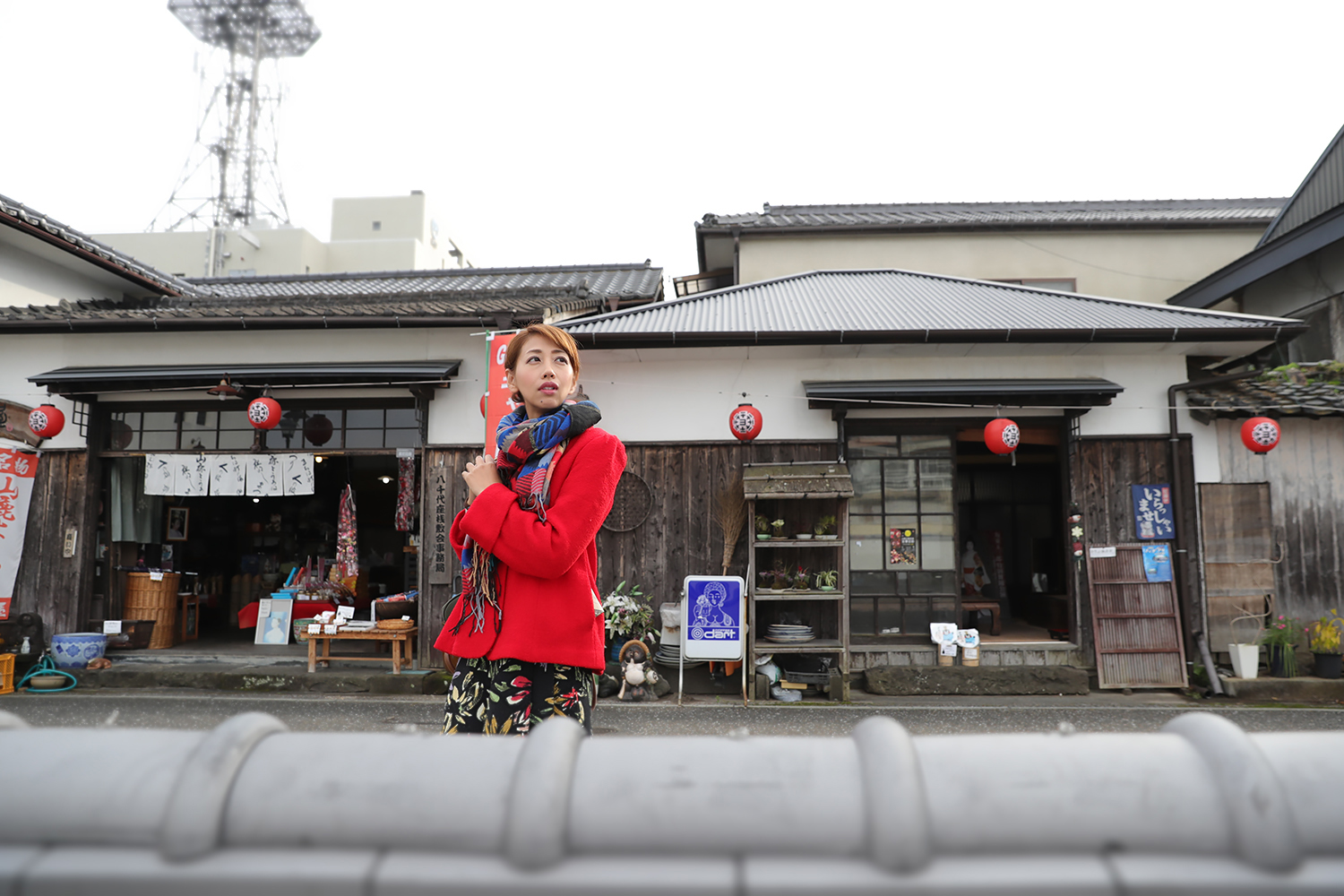
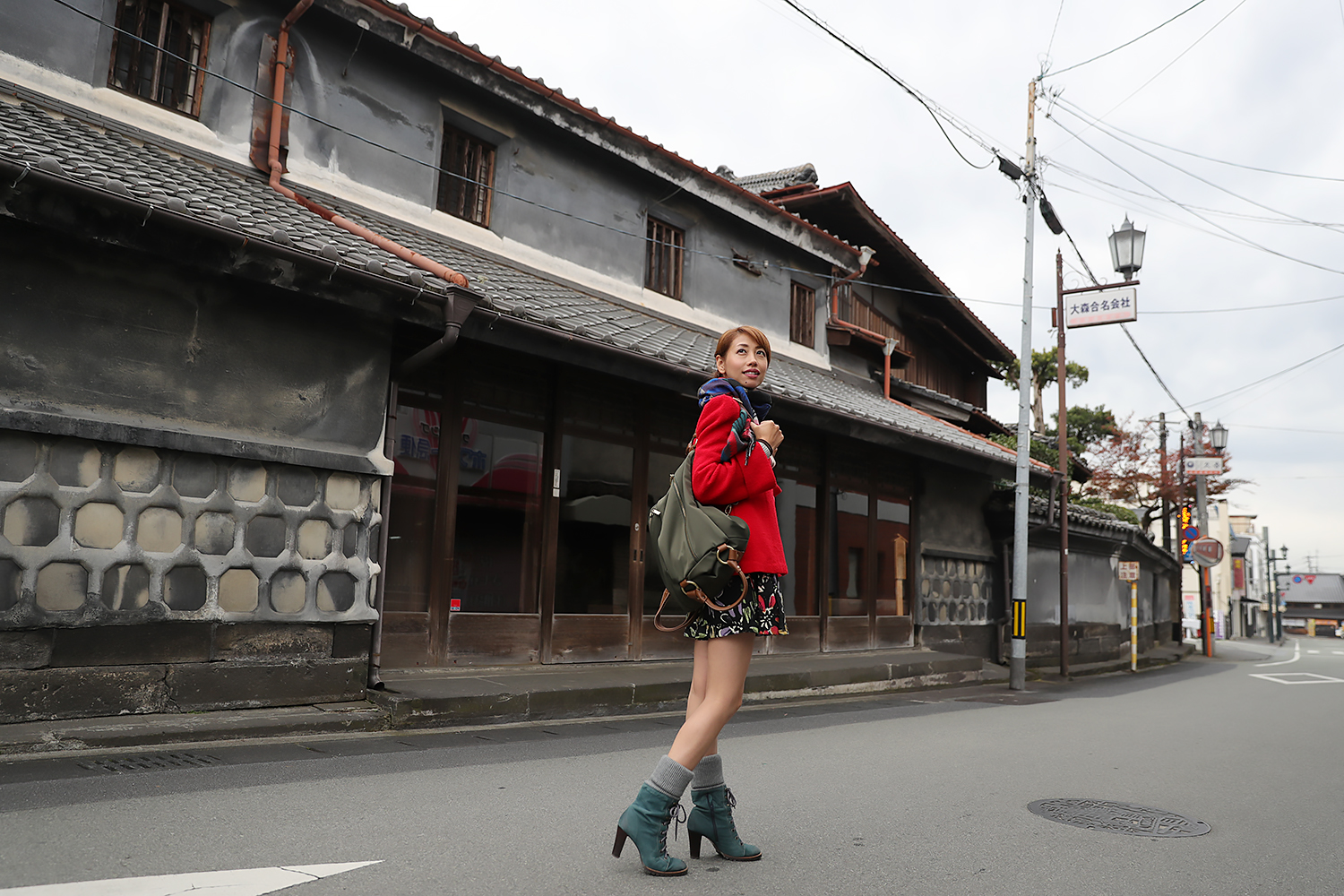
The streets are decorated with banners, castle walls, and lanterns, and just walking along the streets is like stepping back in time to that era.
Wandering around the center of the city (Buzen Highway)
drink made of boiled water poured over preserved cherry leaves and blossoms
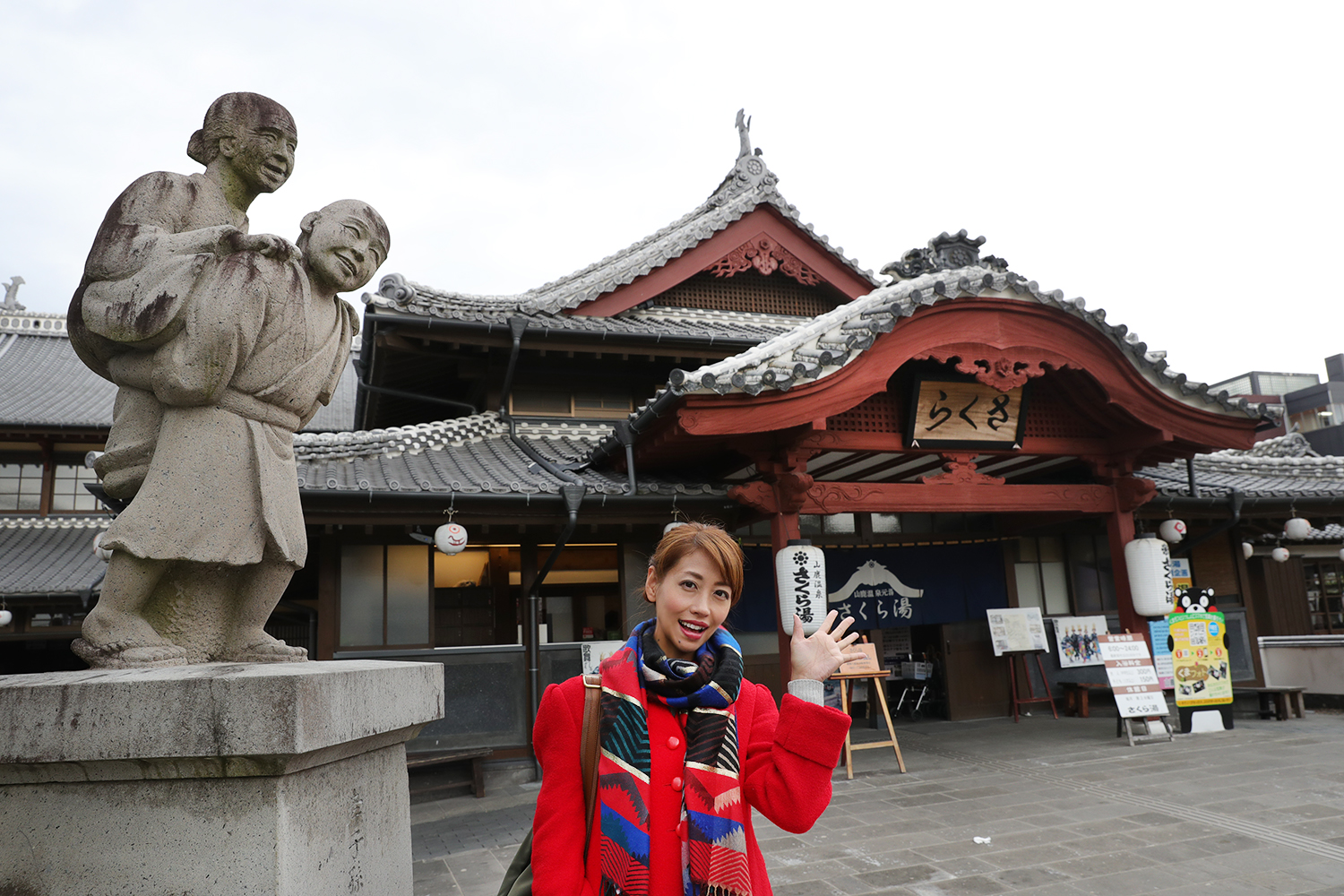
Sakurayu" is the largest wooden-built hot spring in Kyushu and has become nationally famous for its scale. The majestic building, of which records remain as the teahouse of the Hosokawa feudal lord from about 370 years ago, was extensively renovated in the early Meiji period (1868-1912), and is the former hot spring in Yamaga that has been loved as a citizen's hot spring.
Once demolished to make way for the construction of a redevelopment building, it was restored in 2012 in the form of a reproduction of the Edo period style, thanks to the passion of the local people.
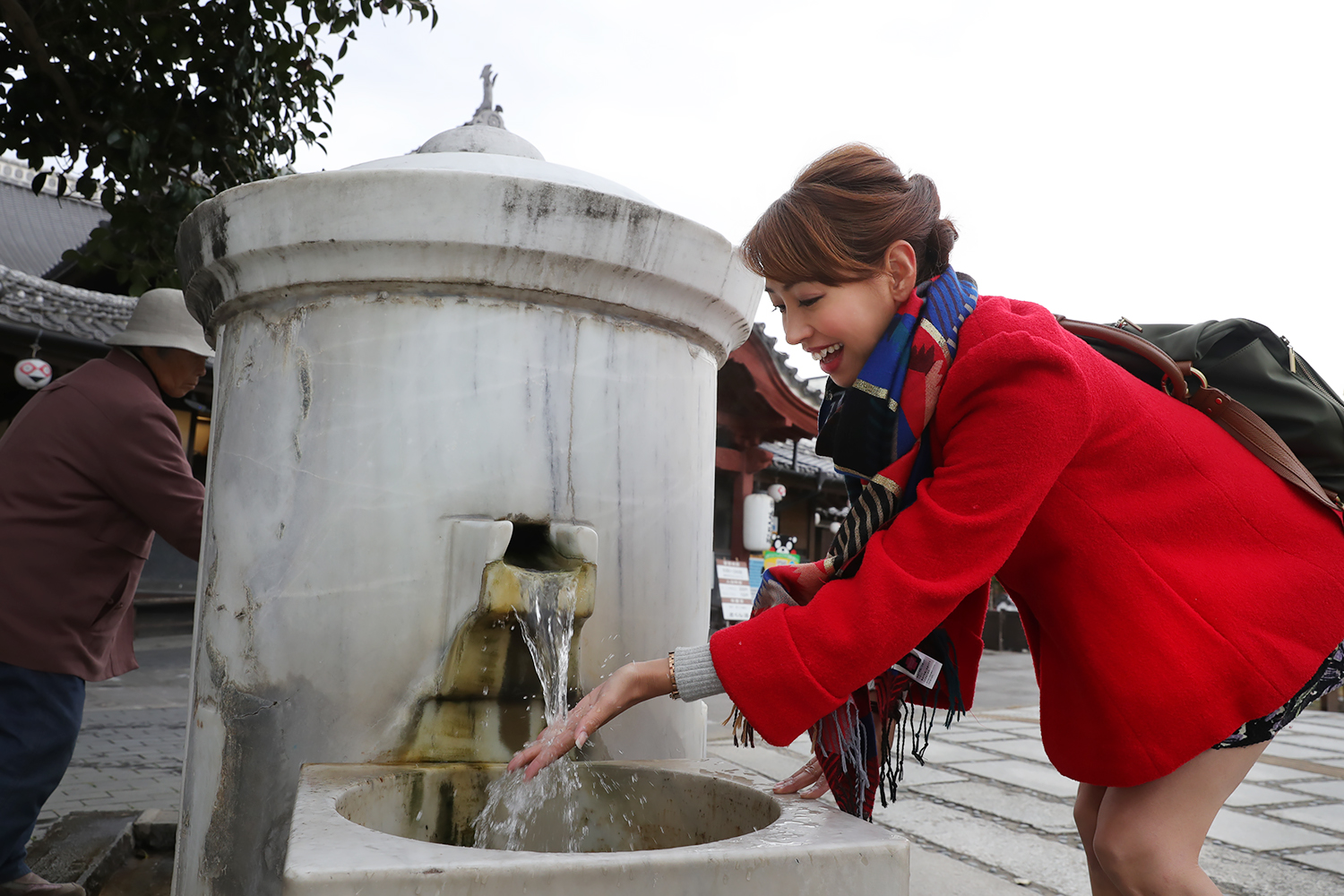
The hand bath is located on the stone pavement in front of the entrance to Sakurayu. It is very warm and comfortable in the cold season.
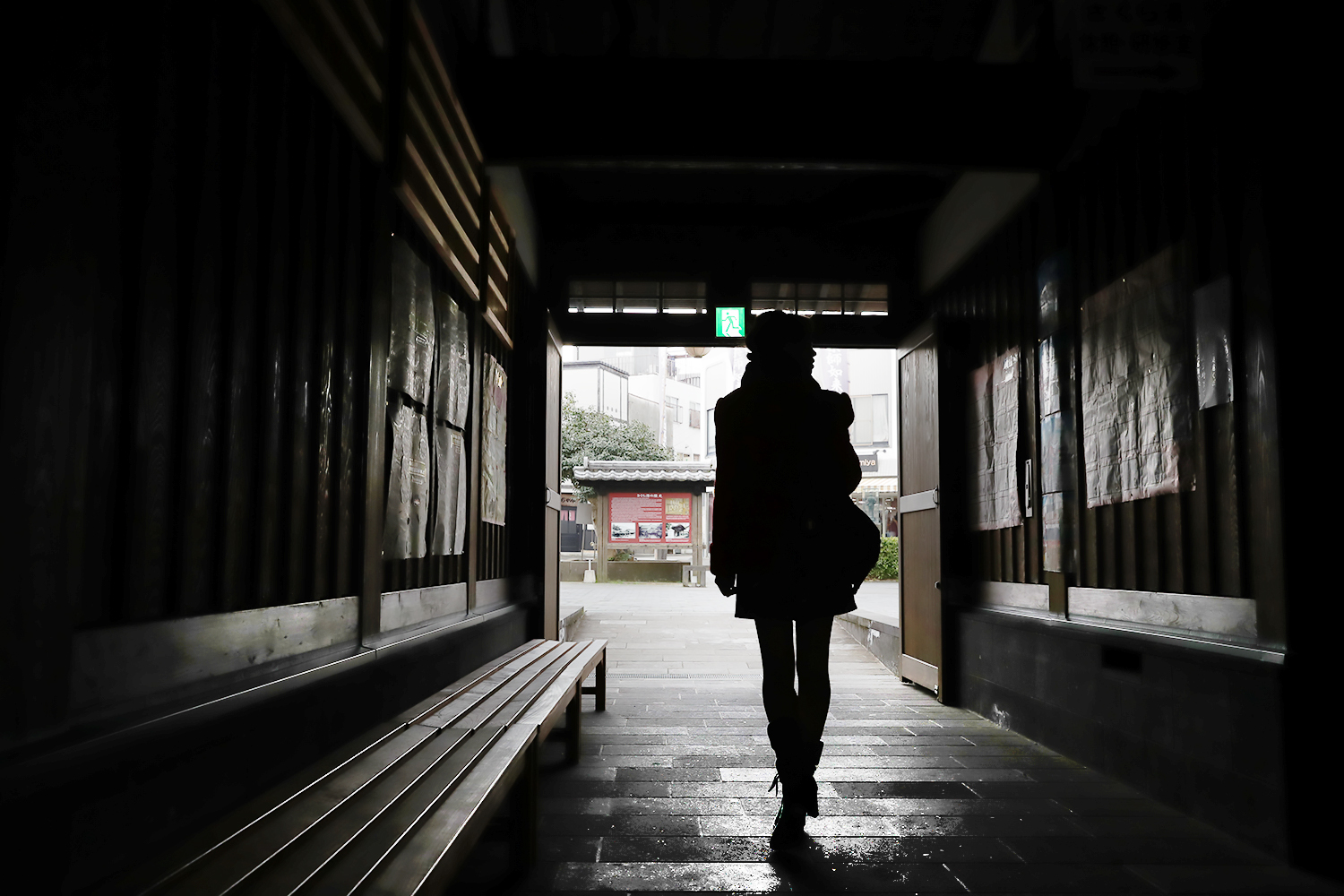
The architectural style of the Edo period has been reproduced as much as possible, including the north and south entrances with karahafu, the unique cross-shaped roof, and the "dragon bath" used by distinguished guests.
Sakura Yu
Address: 1-1, Yamaga, Yamaga City, Kumamoto Prefecture, Japan
Phone: 0968-43-3326
Hours of operation: 6:00 - 24:00
Closed: 3rd Wednesday of each month (or the following weekday if the day falls on a national holiday)
fee for a public bath
Adults (junior high school students and older. Adults (junior high school students and older, same below) 300 yen
Children (3 years old and up to elementary school students. 150 yen
URL:http://yamaga.site/?page_id=1548
Yunohata Park "Ashiyu
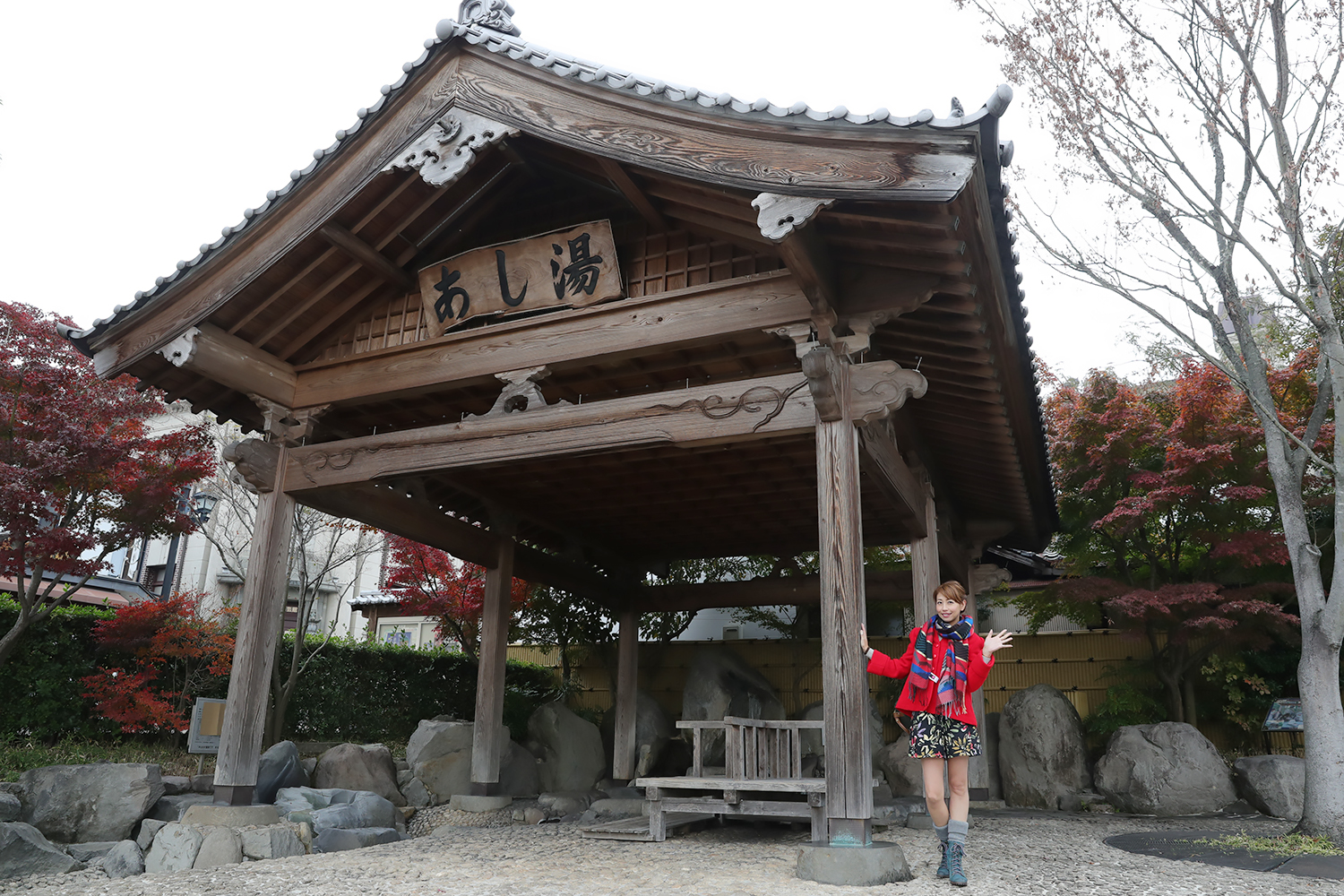
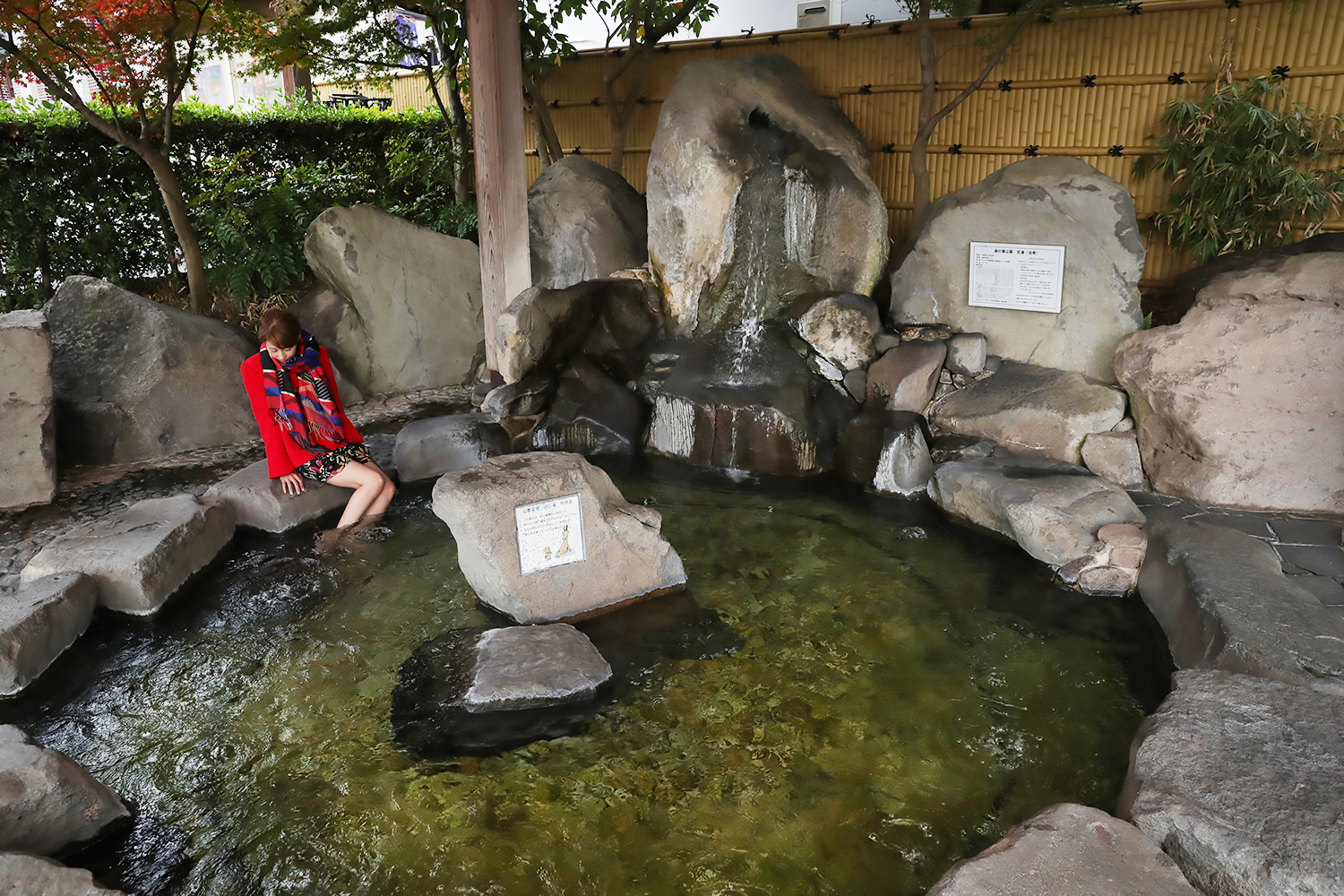
Across the street from Sakurayu is Ashiyu, a healing spot located in a park at the intersection of Buzen Kaido Road and Route 325. It is not too hot or too lukewarm, so even children can enjoy it without anxiety.
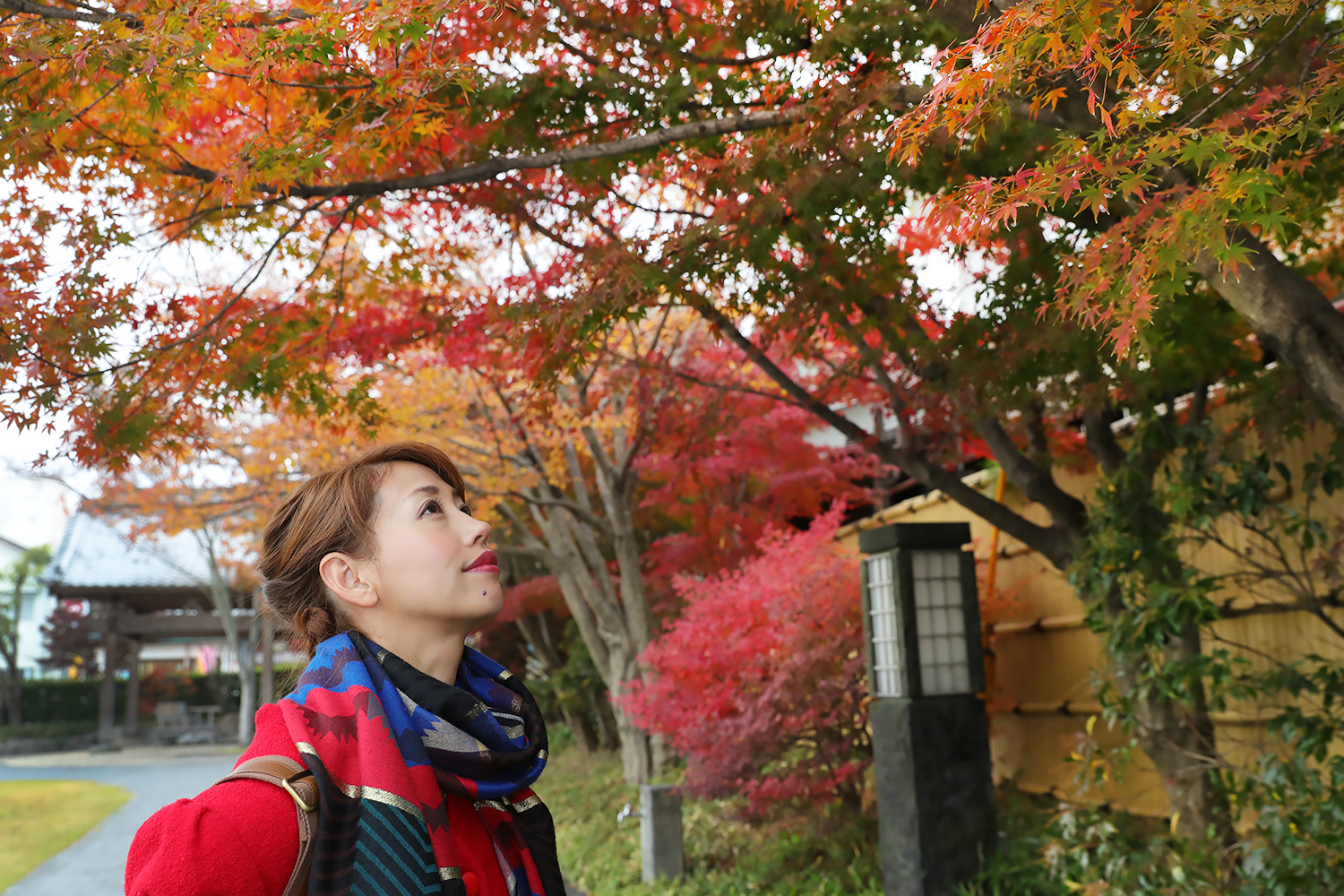
At the time of the report (December 13), the autumn leaves in the park were very beautiful.
Some people sat on benches, spread out their lunch boxes, and enjoyed the autumn leaves while basking in the sun!
Stone Gate" of Kongorjo-ji Temple
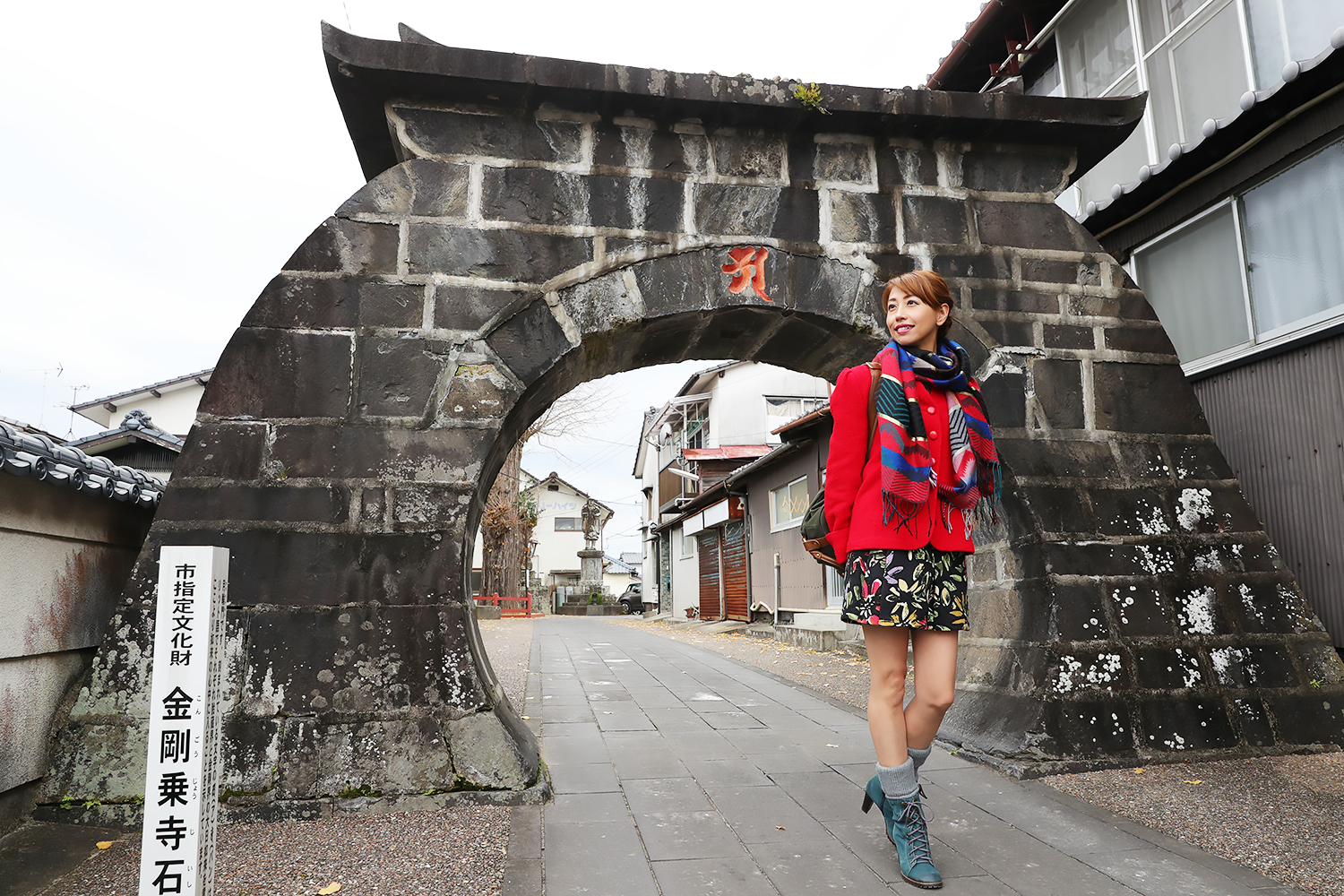
The arched stone gate at the entrance of the temple is the impressive "Gekirinmon" of Kongojyo-ji Temple, which is said to be the oldest temple in Yamaga. This temple, which is said to have been founded by Kukai, is a famous Shingon sect temple and was once called "Koyasan in the west" (Mt. Koya in the west). The unique circular structure of the temple, which makes use of the "Megane-bashi bridge construction technique," one of the few such bridges in Japan, is said to remind people of the concept of a "circle," and is therefore popular among local people as a power spot for bringing people together.
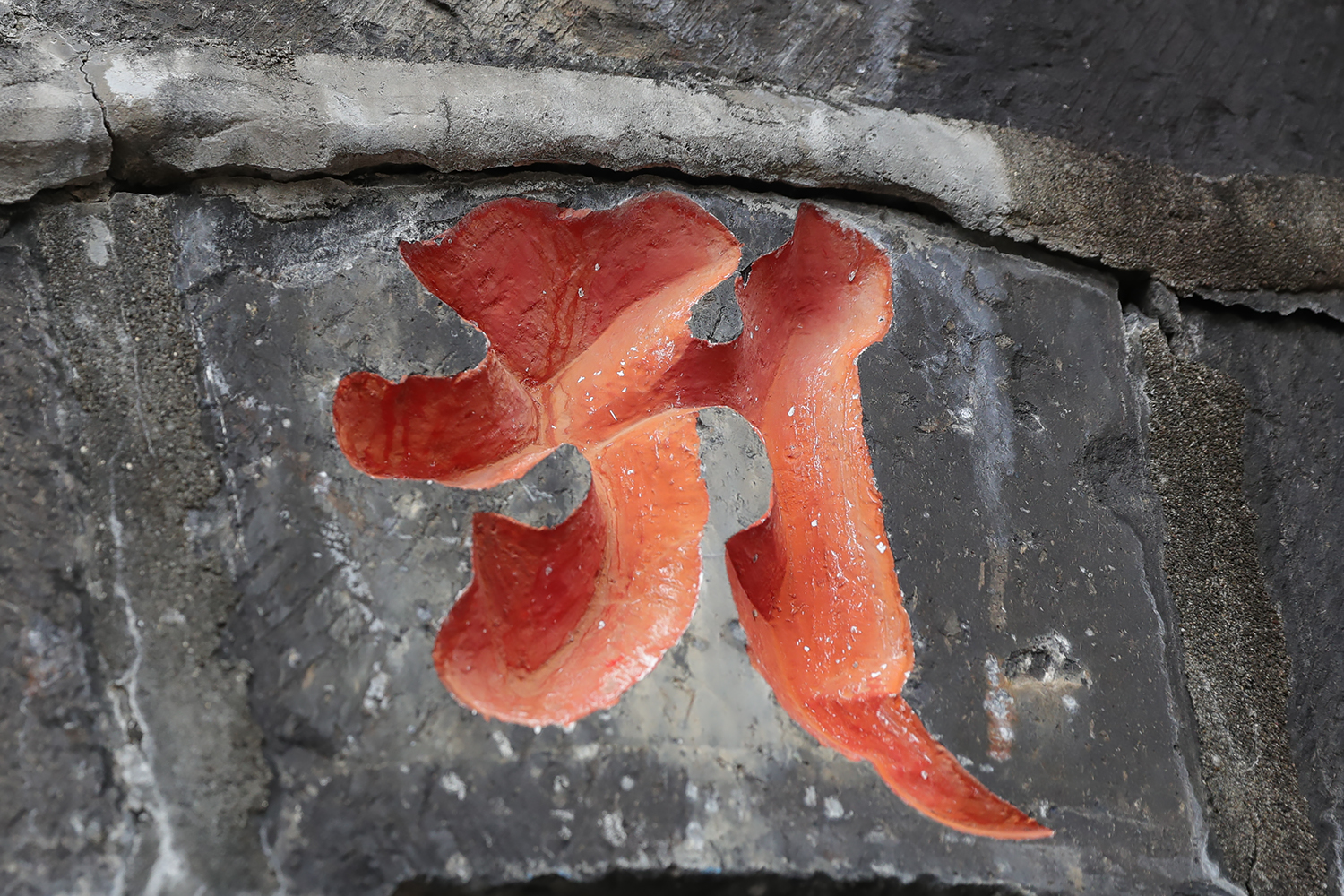
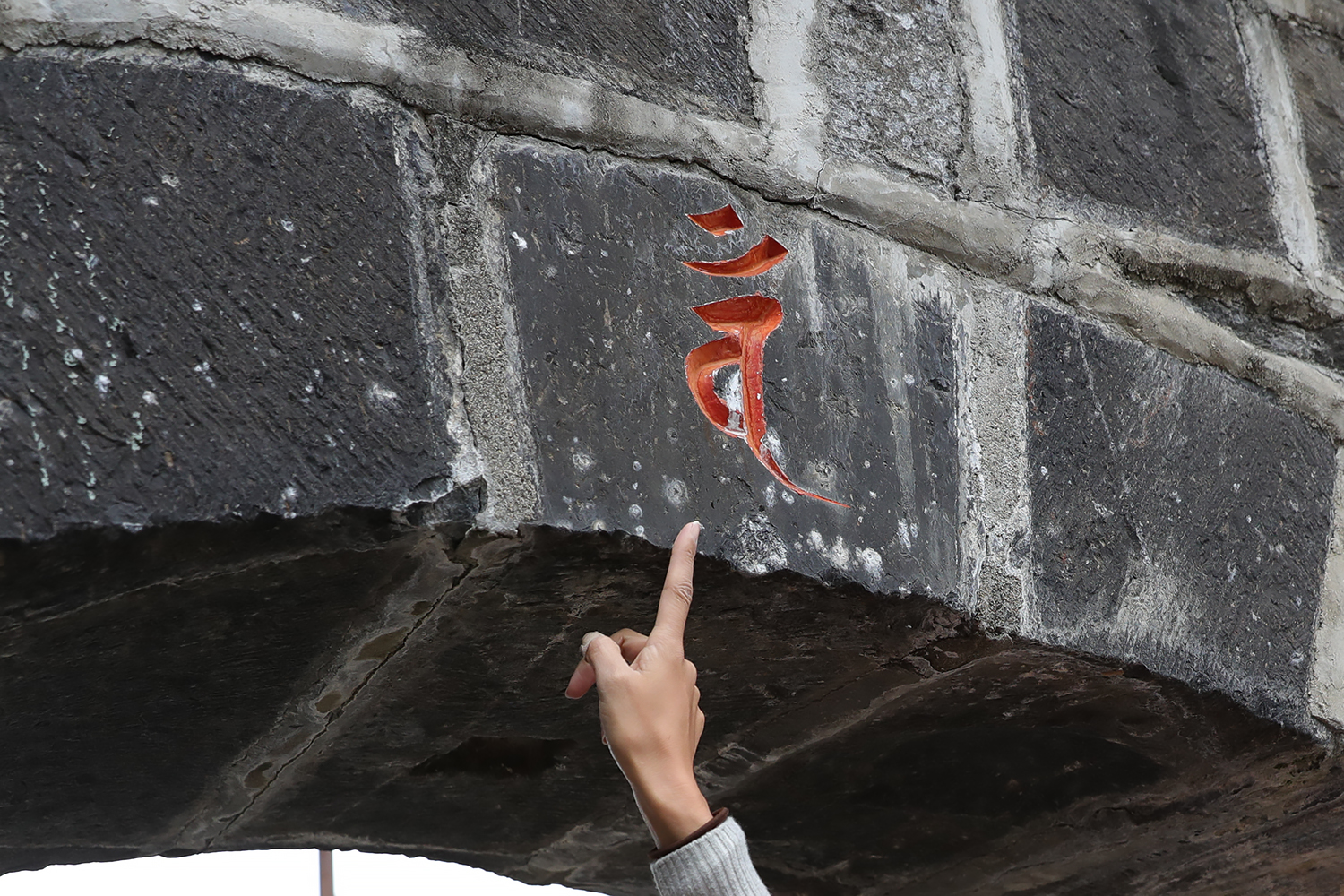
Incidentally, the Bonji carved on the stone gate means "Dainichi Nyorai" in the Sanskrit language, in the Vajrayana and Vajrayana realms.
the Yachiyo Theater
Among the "Buzen Kaido", a symbolic road in the center of Yamaga, the main tourist attraction is probably the "Yachiyo-za", built in 1908.
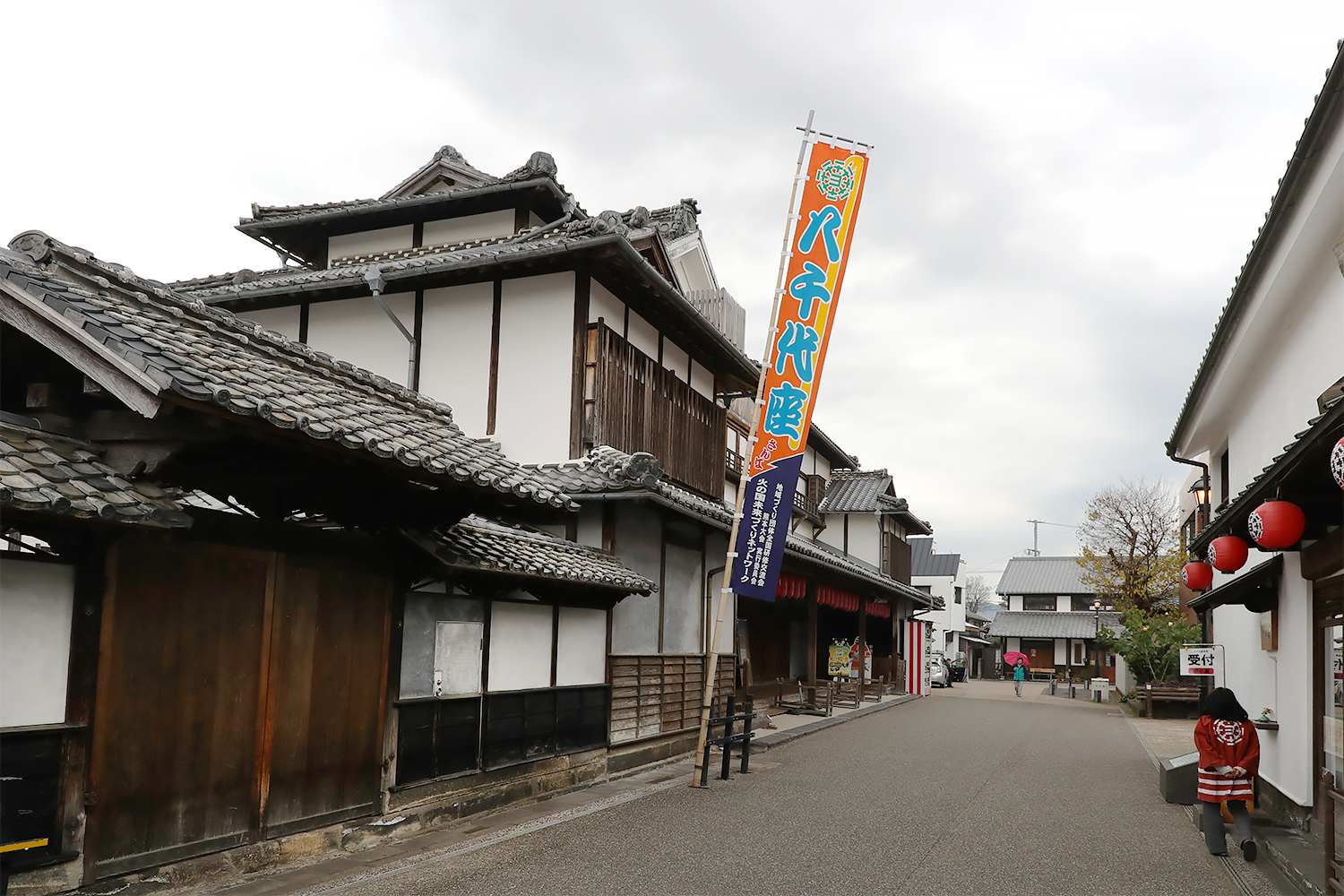
Even today, regular performances of the local traditional performing art "Yamaga Lantern Dance," as well as theatrical and musical concerts, are held here.
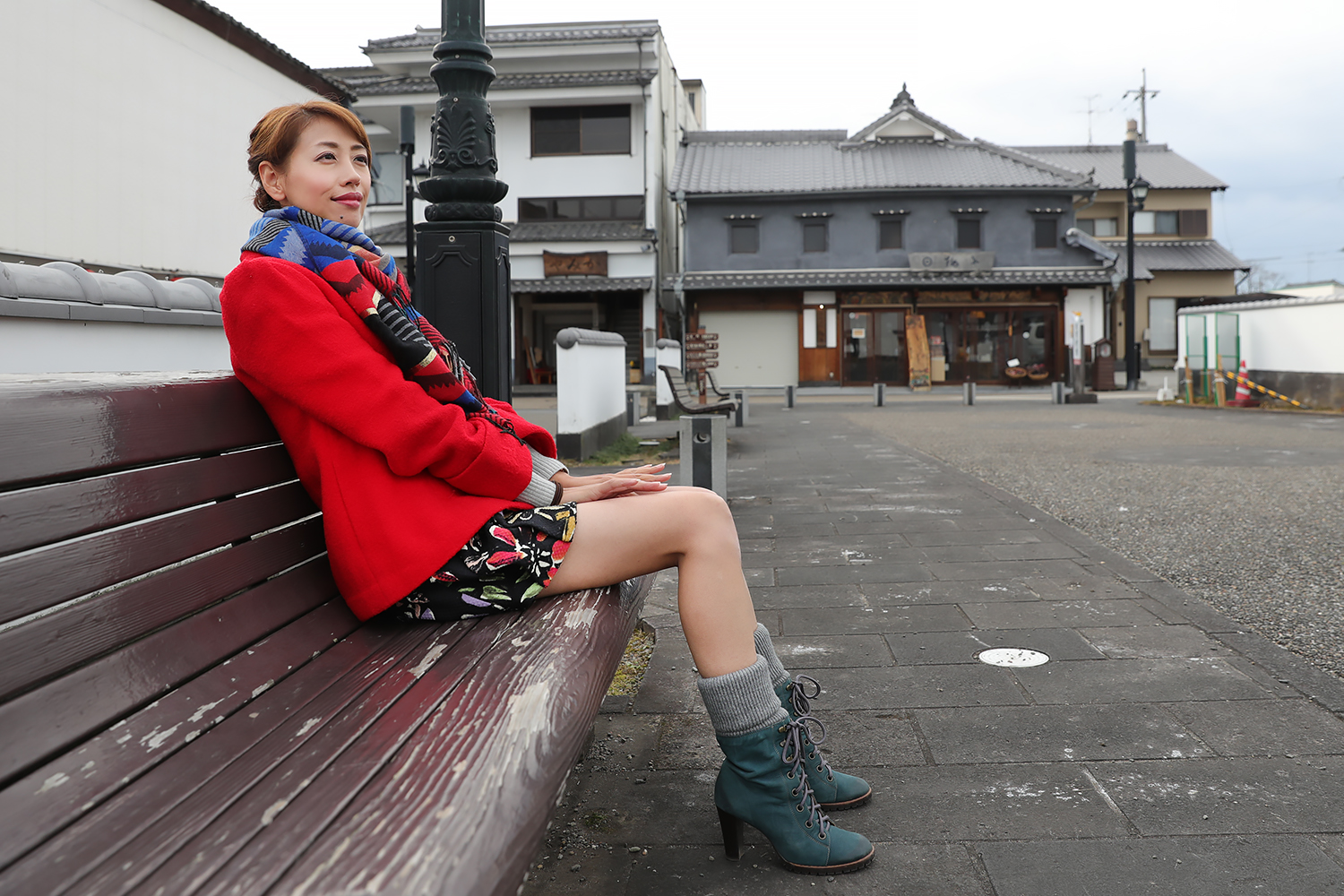
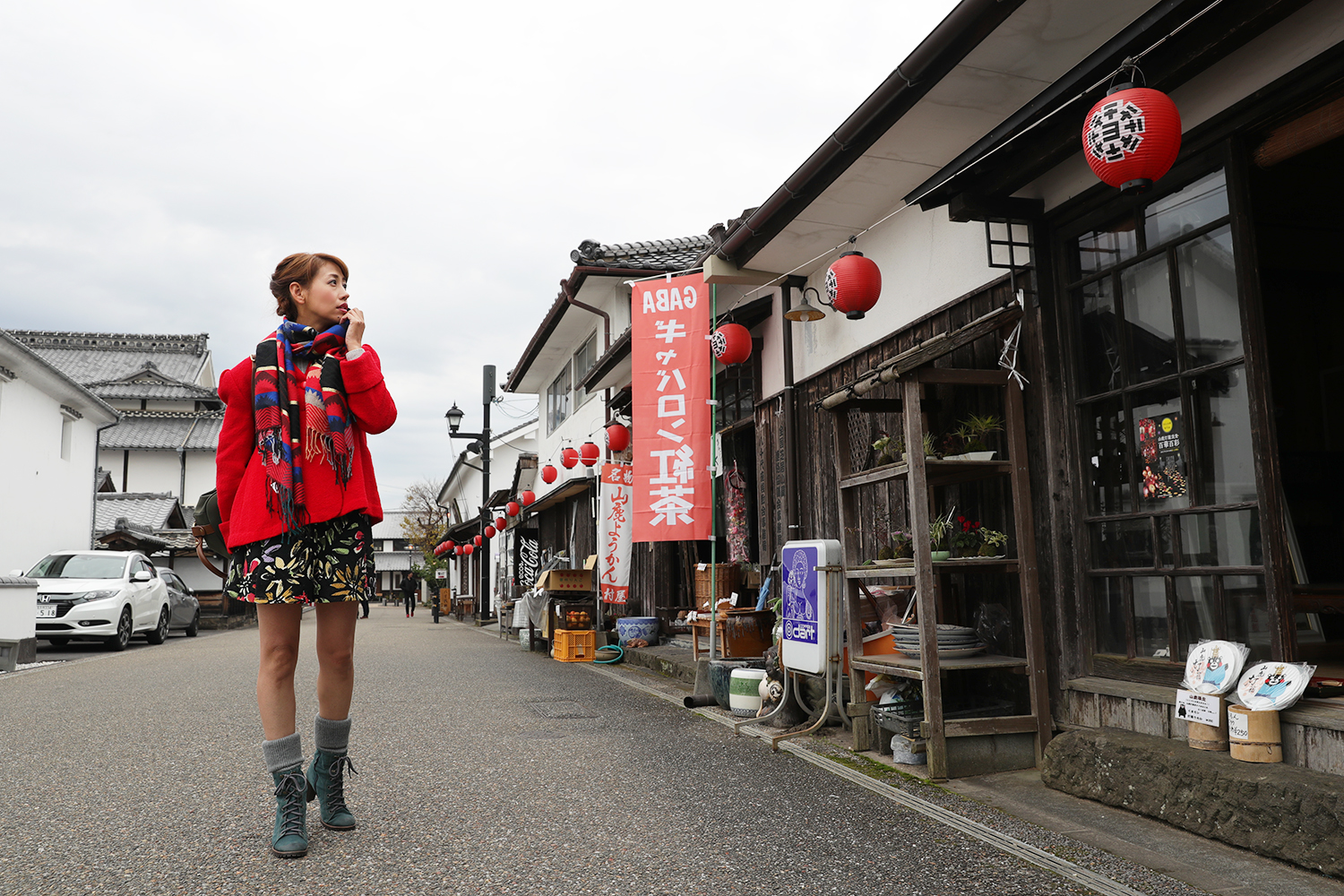
The street facing the playhouse is lined with tasteful coffee shops and souvenir shops.
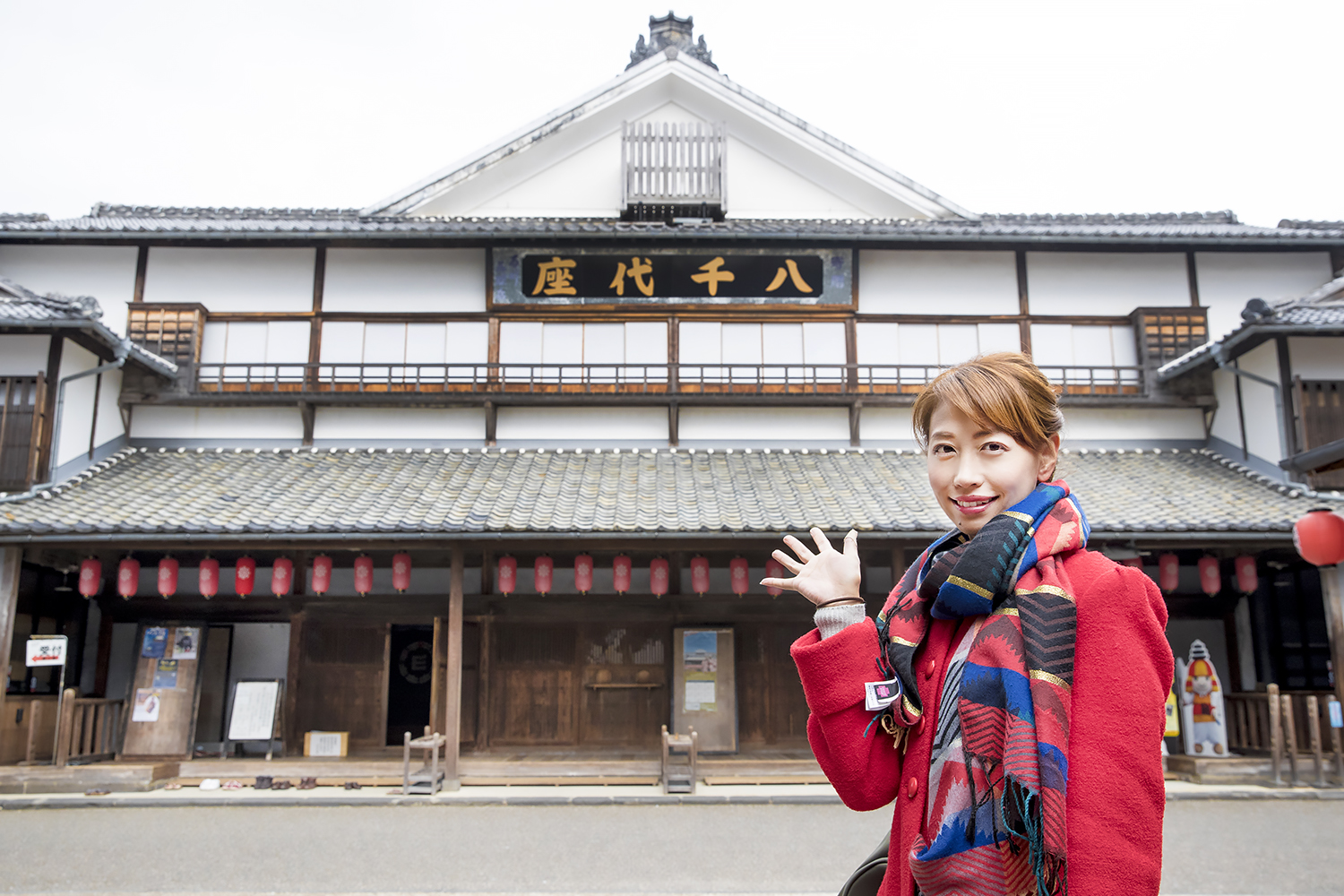
It was built in 1910 by Yamaga businessmen who were called "mistershu. The Yachiyo-za Theater is a playhouse designated as a National Important Cultural Property.
The Yachiyo-za Theater, which celebrates its 100th anniversary in 2010 and its 100th anniversary in 2011, was once considered unnecessary and fell into disrepair with the changing times. After undergoing "Heisei no Dairi (renovation)," which was designated as an important cultural property by the Japanese government, the theater was restored in 2001 as a modern-day playhouse that can accommodate 650 people, and has been presenting performances of all genres.
Among them, the splendor of the "Tamasaburo Bando Dance Performance," a handmade performance by citizens that began in 1990, moved people's hearts and provided a tailwind for reconstruction efforts, further spreading the name "Yachiyoza" throughout the country.
The large roof of the two-story wooden building is covered with 33,000 tiles, and although new tiles were used during the "Heisei no Dairi" renovation, about 1,500 of the old tiles are still in use at the front entrance.
The theater retains the structure of an Edo period Kabuki theater, including the Masu-seats and plank seats, the Mawari-butai, the Supon, and the Sakori, and many actors, including Tamasaburo Bando, still grace the stage.
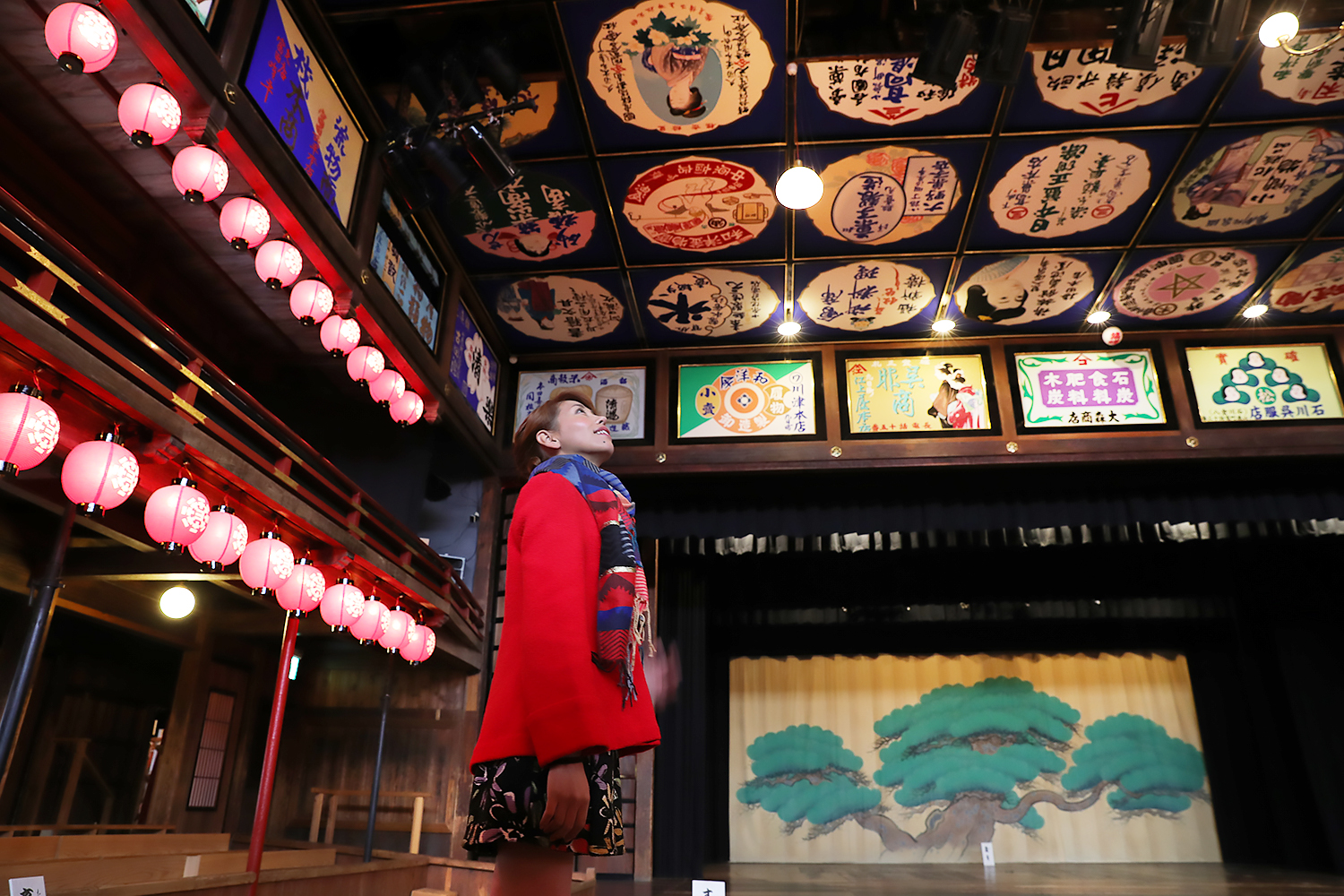
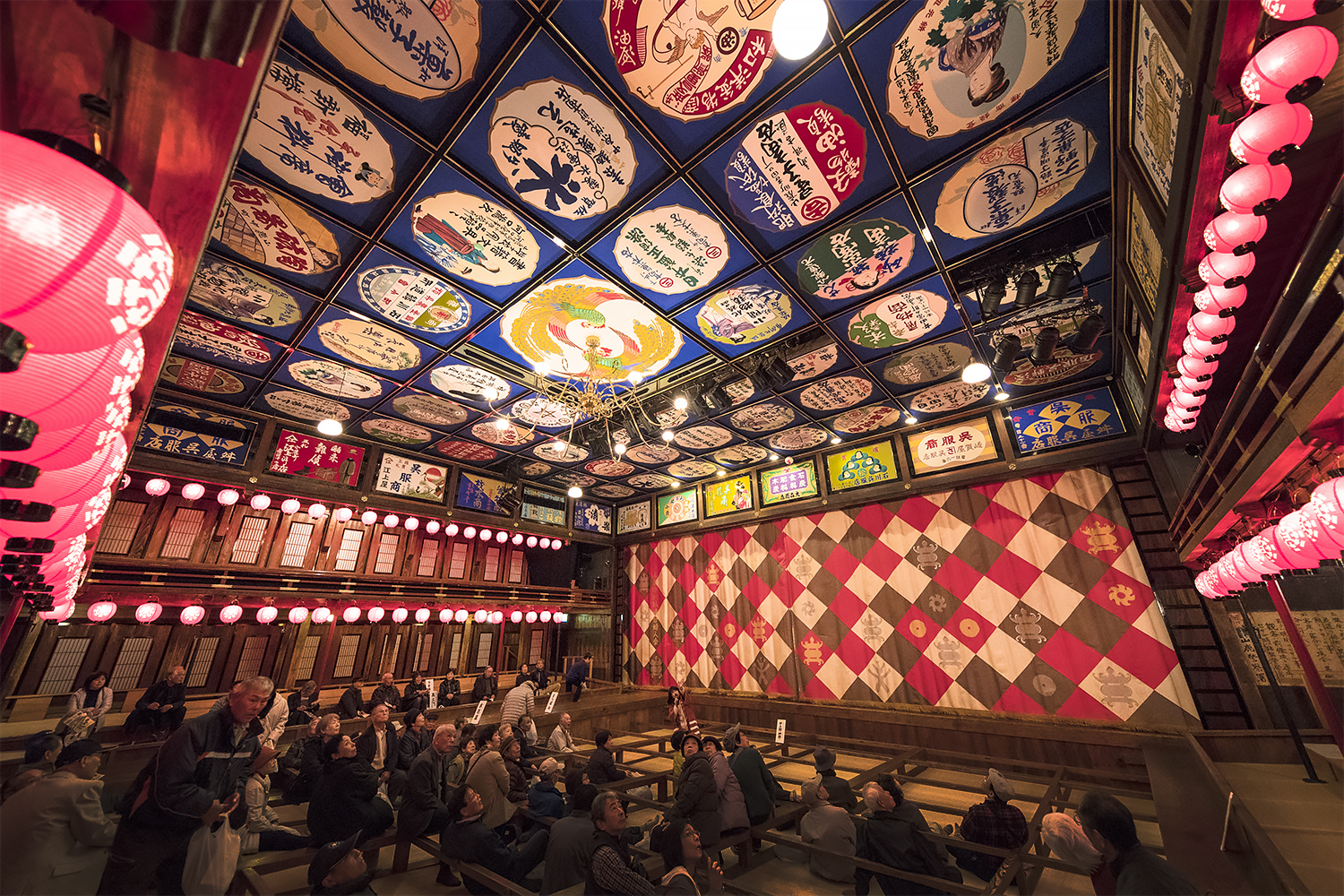
The first thing that catches the eye when stepping into the museum is the ceiling, which is covered with colorful advertisements. The advertisements of the companies and stores of the wealthy "masters" of the time have been restored as they were at the time of construction.
The seats on the first floor are surrounded by a wooden hanamichi and a temporary hanamichi, and are one level lower than the stage height. On both the first and second floors, the seats on the right side facing the stage are called "Ue-janshiki," and are said to be the seats for the patrons.
Yamaga Lantern Dance
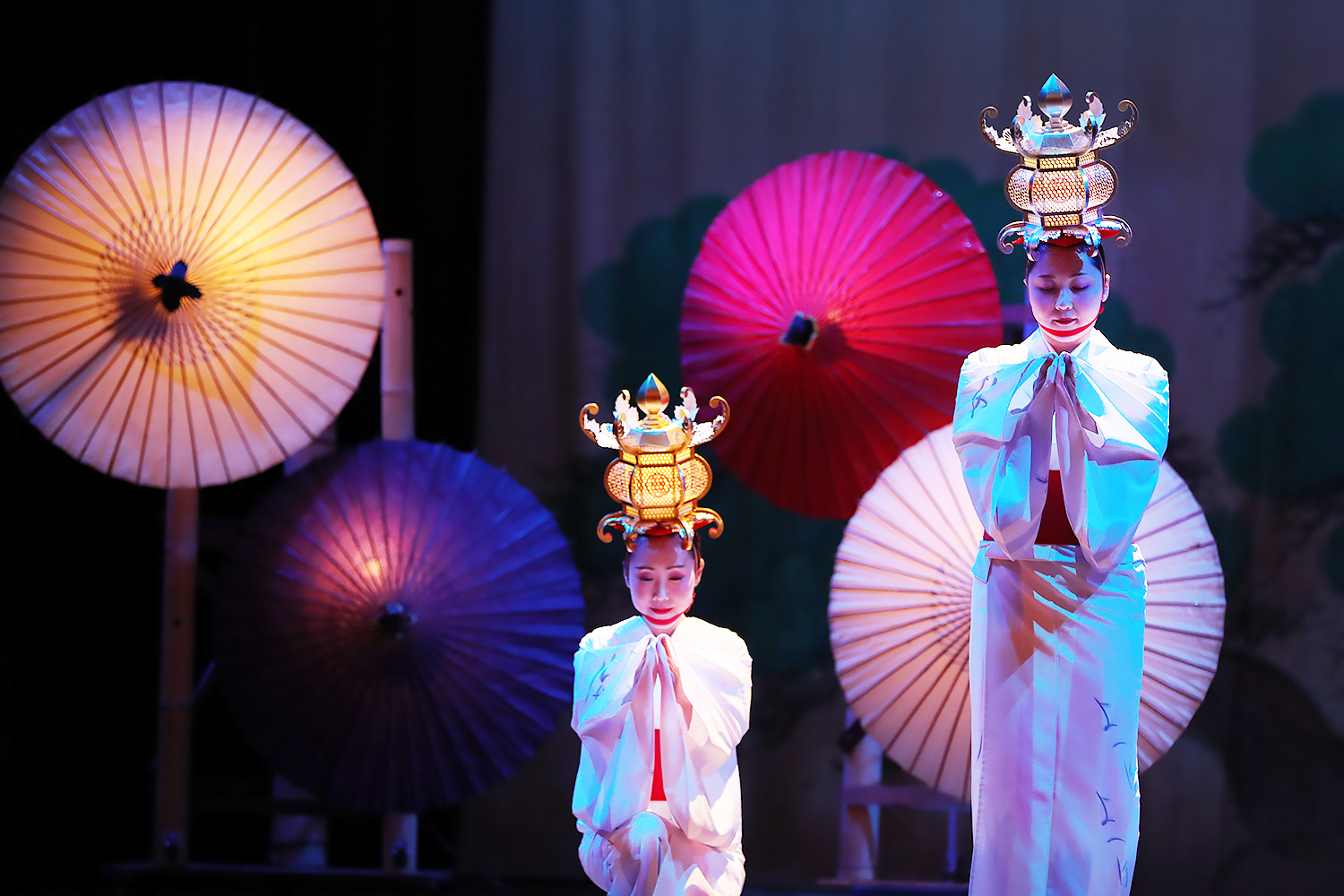
On the stage of "Yachiyoza", until March 2009 (*Note 1), you can see the "Yamaga Lantern Dance" (for details, see "Yamaga, Lanterns, and the Buzen Road" above), in which a woman holding a Yamaga Lantern, a traditional craft designated by the national government, on her head dances gracefully against a set of beautiful Japanese umbrellas.
*Note 1: The "Yamaga Lantern Dance Regular Performance" after March, 2009 is under consideration.
Nushi wa yamaga no konashi lantern yoheho yoheho yamaga senken tarai nashi yoheho yoheho" (from "Yoheho bushi," a dance of a thousand lantern dancers)
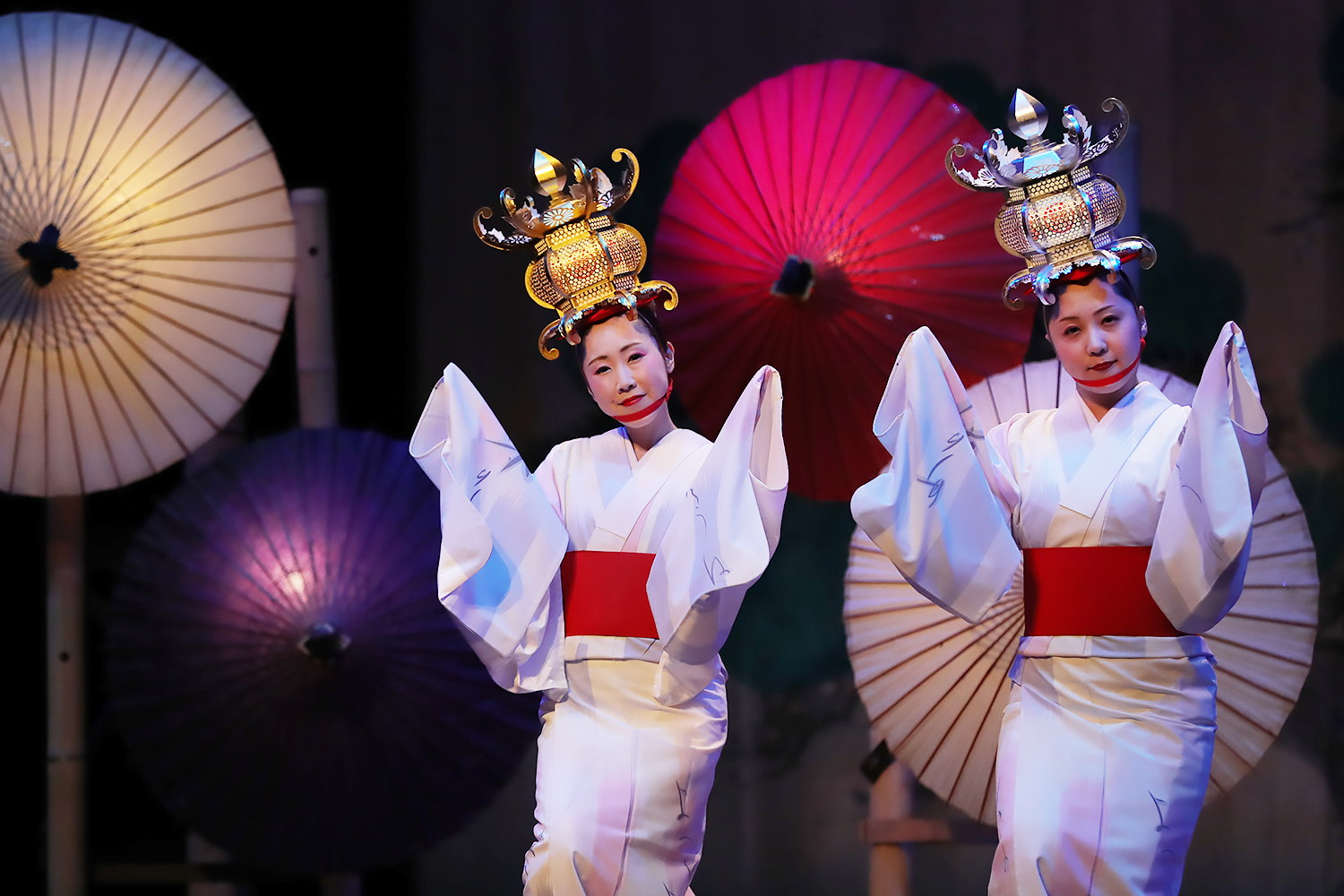
As the unique "Yoheho" music echoes through the air, the soft lights of the lanterns, which sway beautifully in time with the graceful dance, invite the viewer into a magical space.
The impressive “yoheho” means "please get drunk.
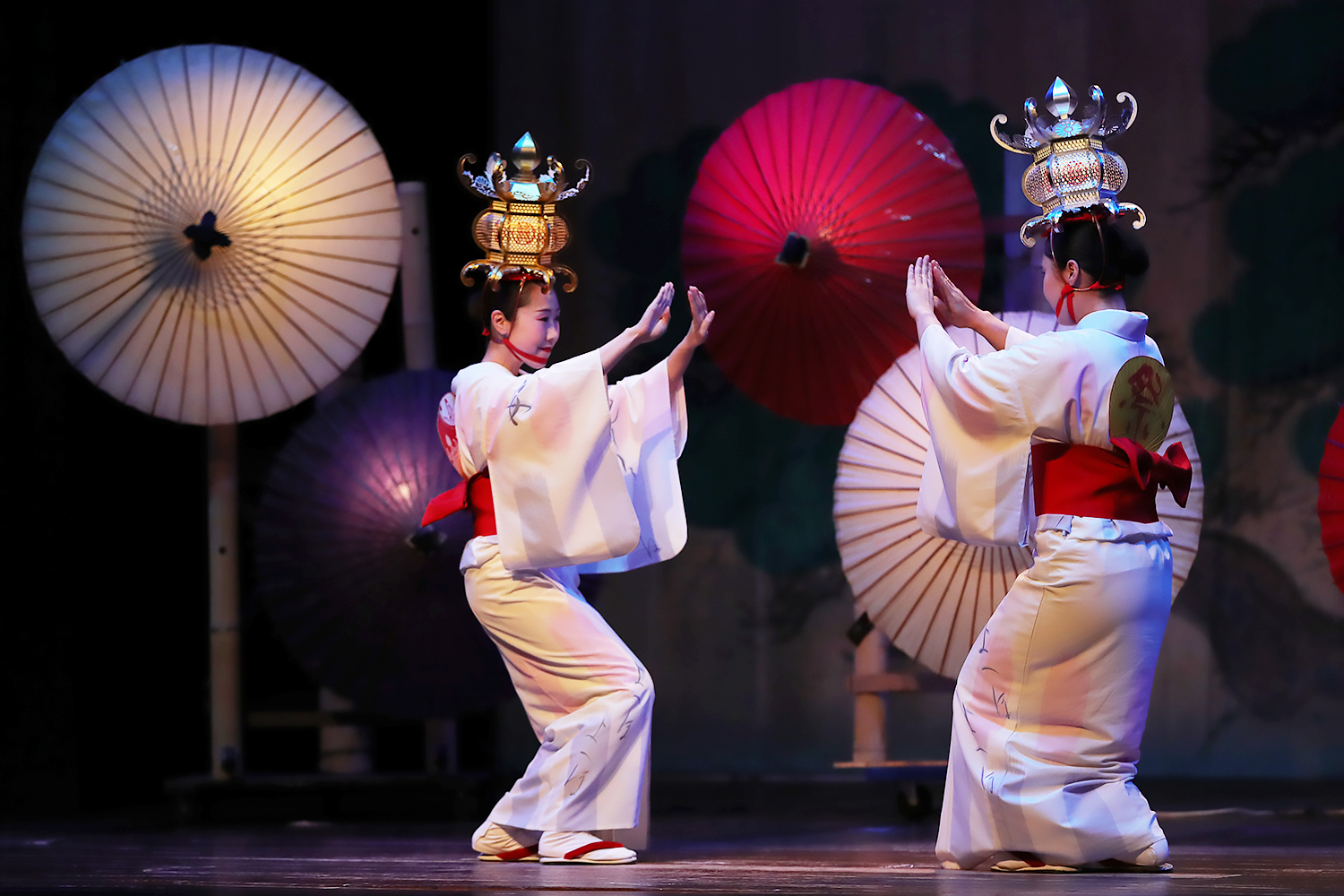
The dancers who perform the "Yamaga Lantern Dance Regular Performance" are members of the "Lantern Dance Preservation Society. According to tradition, only unmarried women are allowed to become members. The members practice strictly in between work and housework to master the graceful movements and graceful gestures.
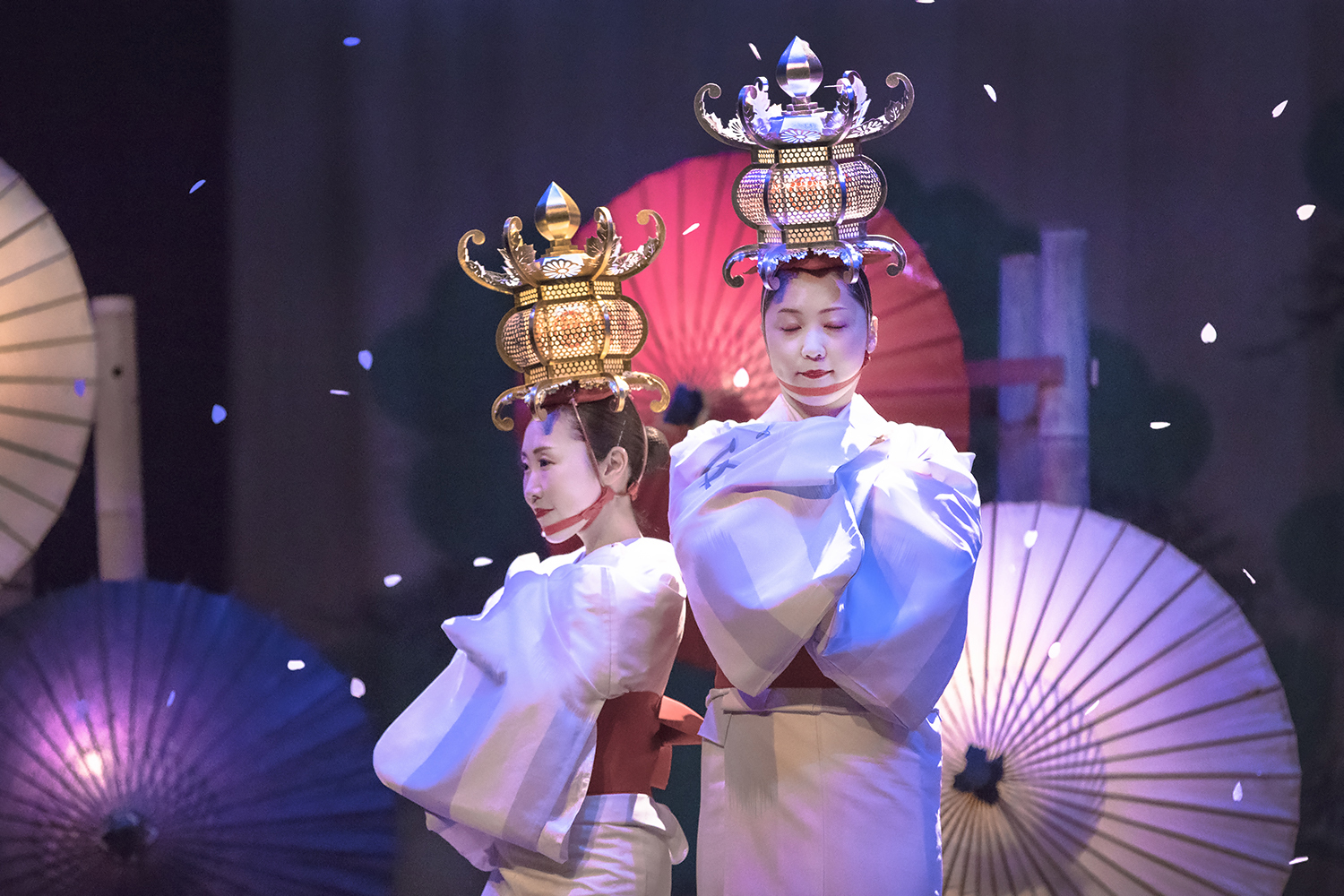
*For the schedule regarding "Yamaga Lantern Dance Regular Performance," please contact the Yamaga Onsen Tourist Association or Yachiyoza.
Tour and commemorative photo
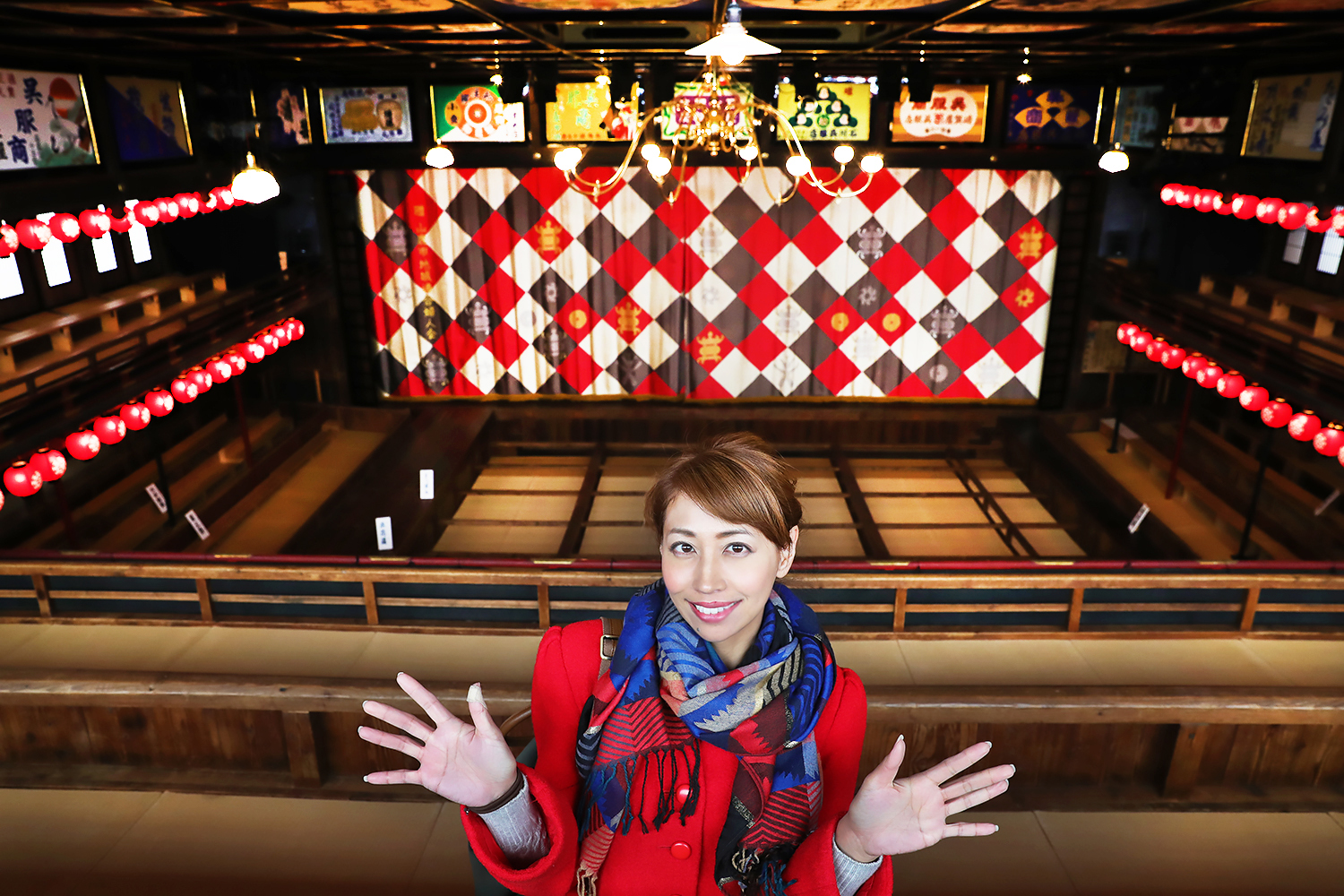
In addition to the "Yamaga Lantern Dance Regular Performance," there was a guided tour of the Yachiyo-za Theater.
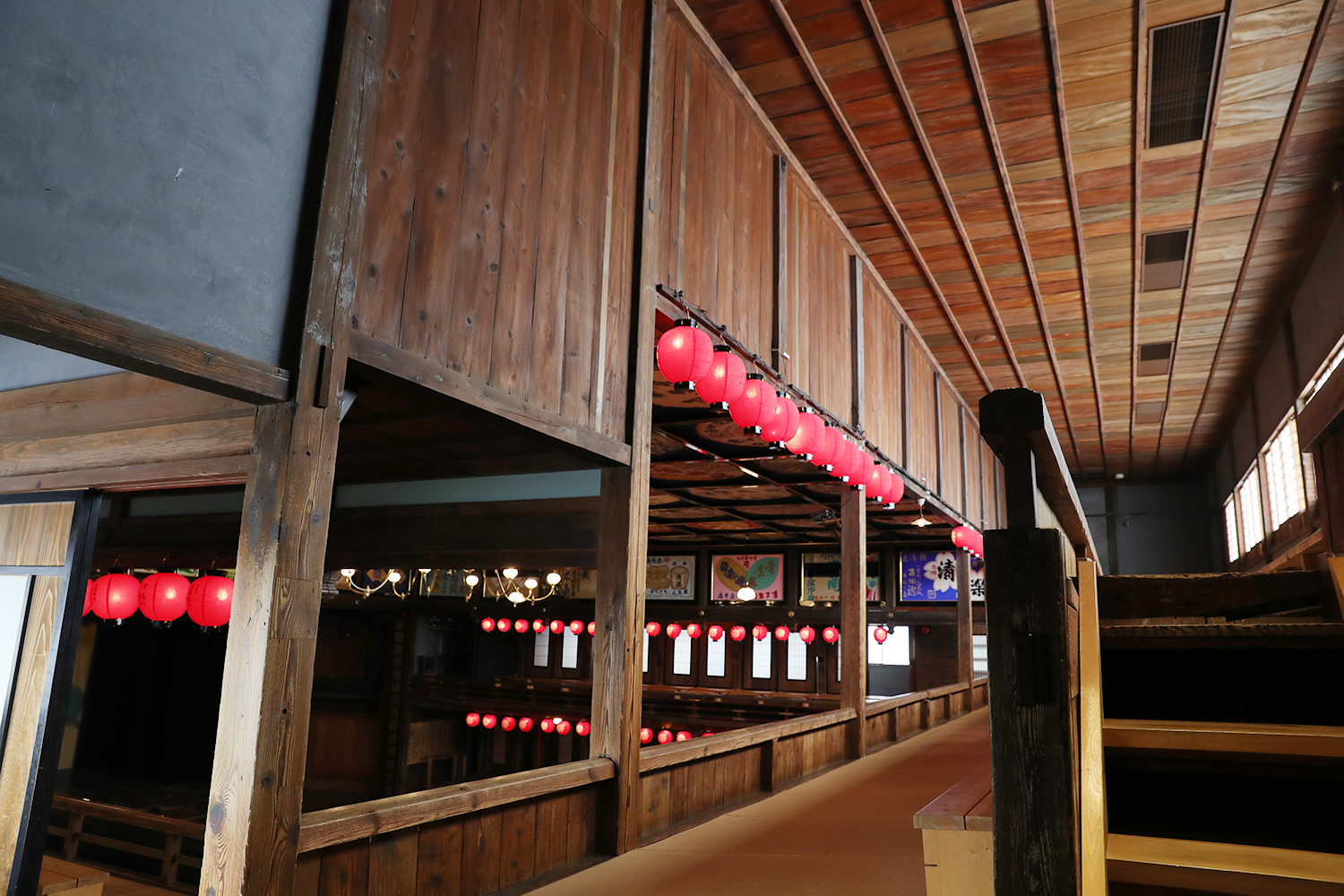
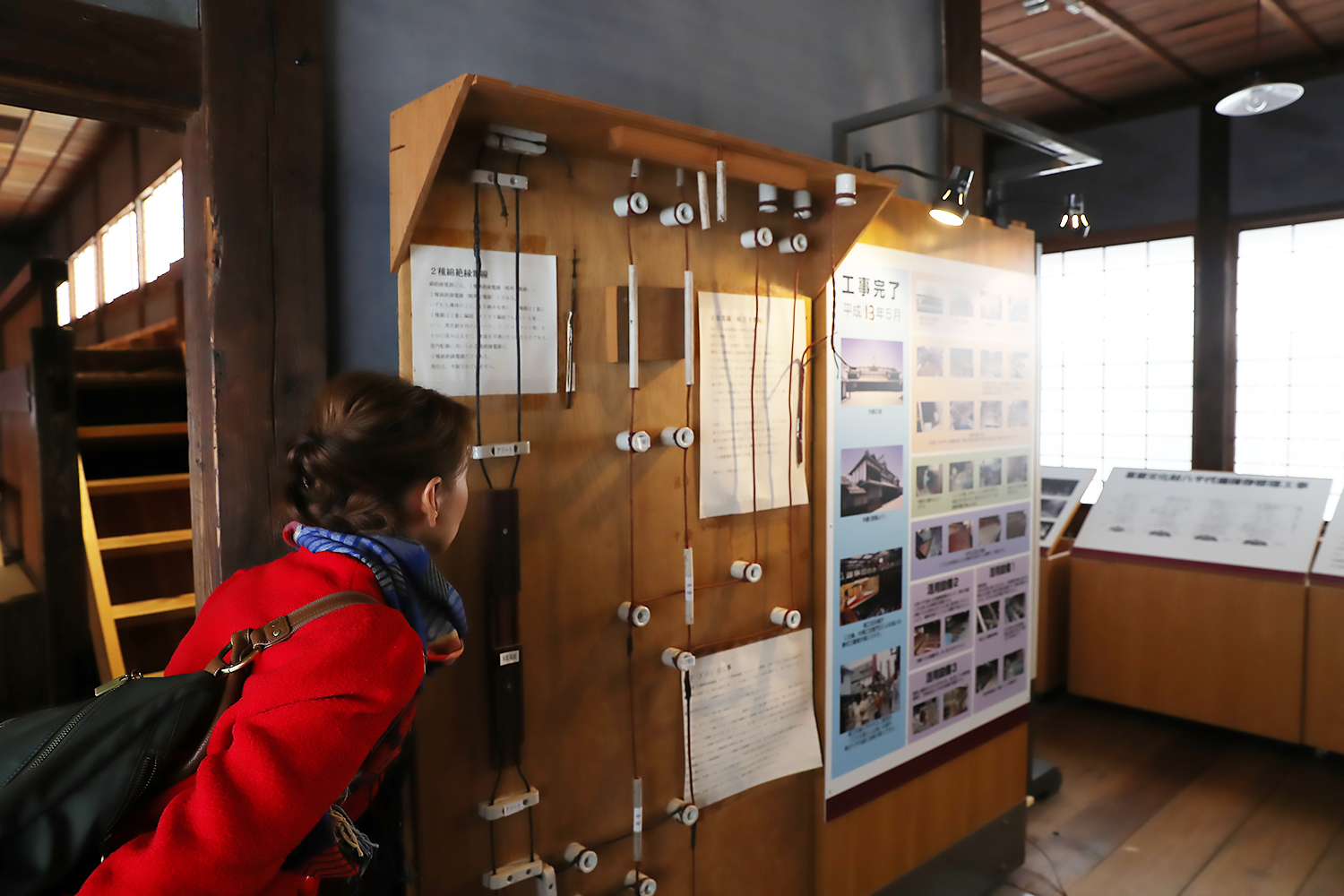
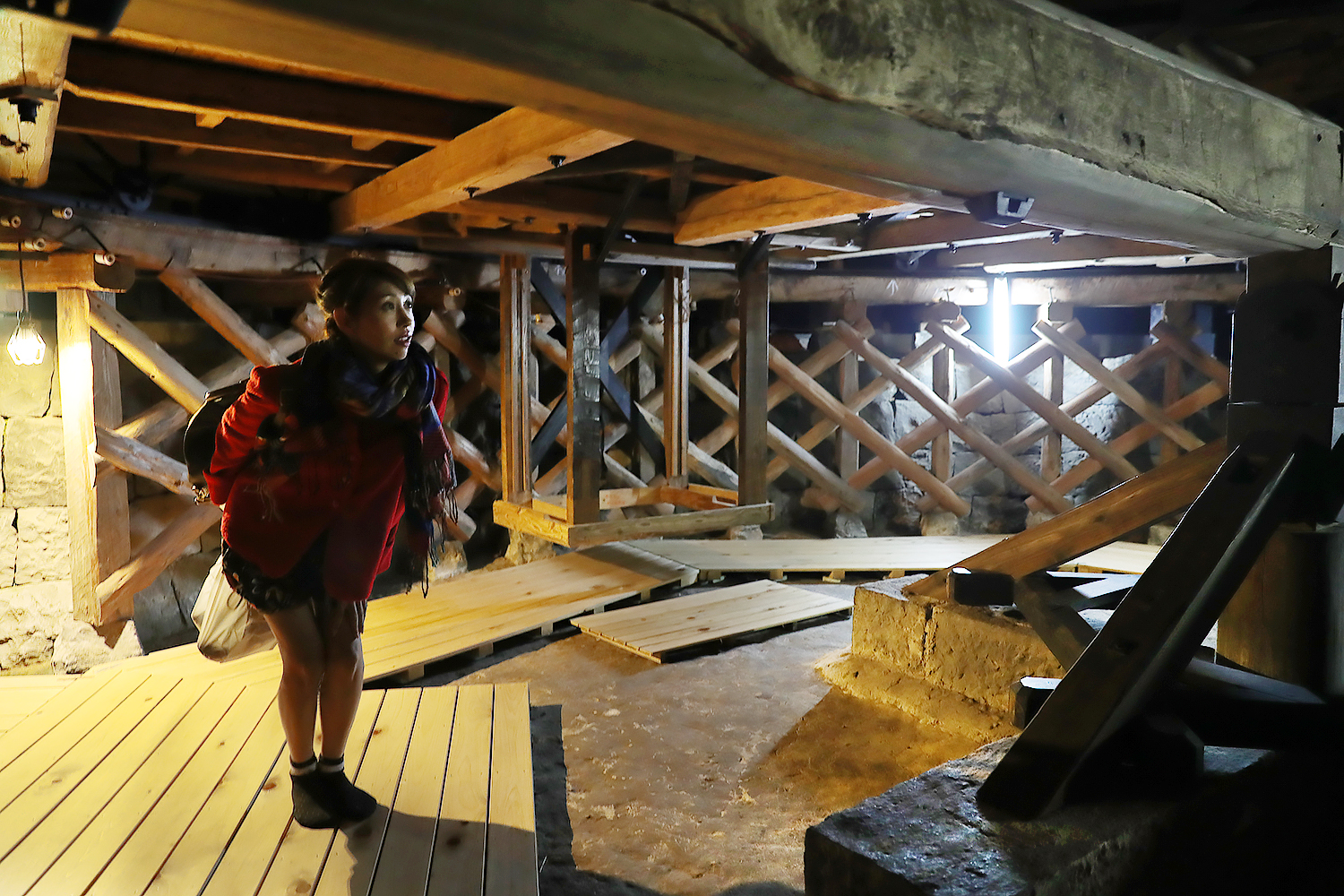
In addition to an explanation of the building, we were given trivia about the lantern dance and Kabuki, as well as a tour of the "Naraku" stage and the underfloor area of the hanamichi (see image above), which are not normally open to the public.
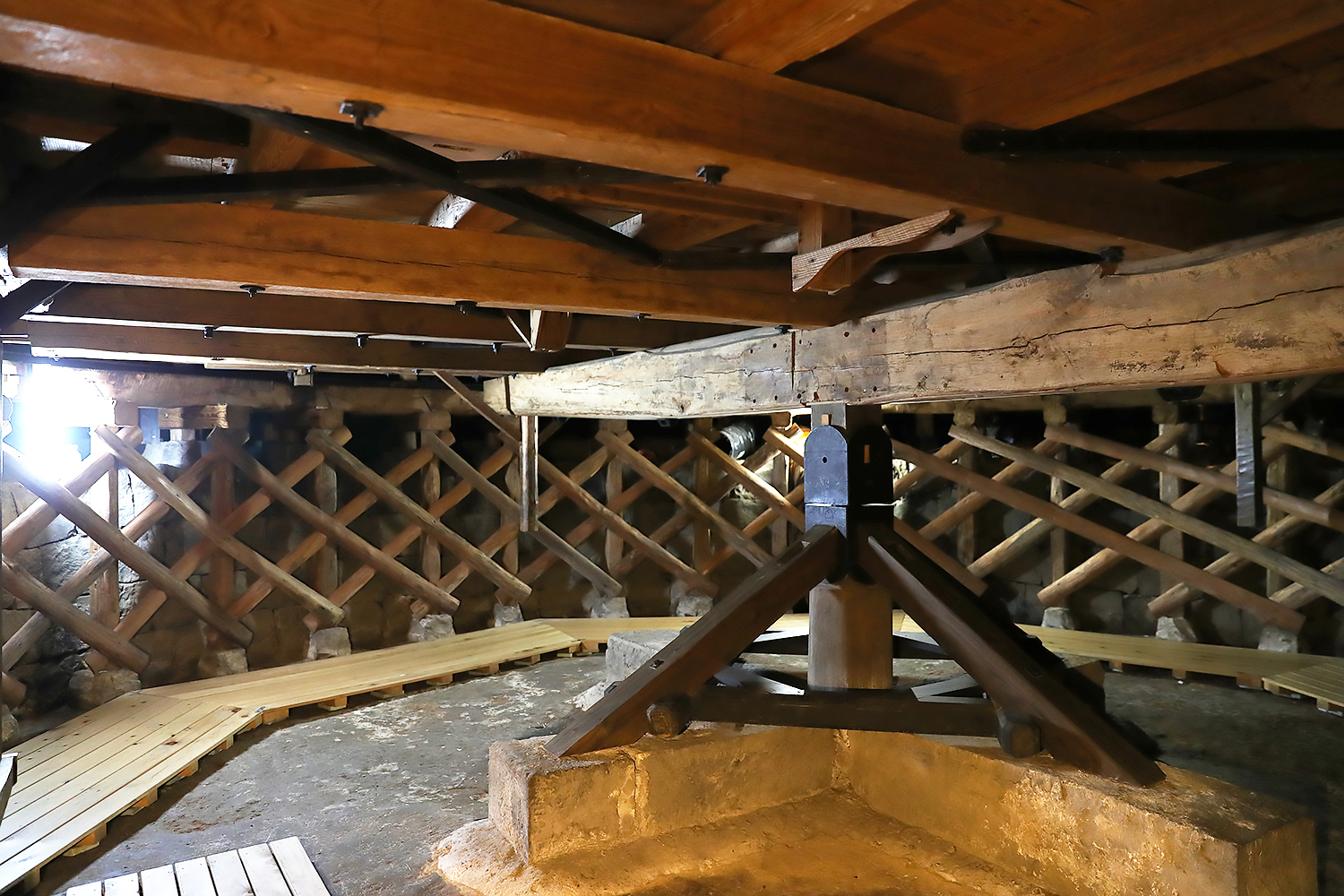
The left is a stage device called "Nahori Mawari Butai Sakari," which is effectively used to speed up scene changes in Kabuki and other theatrical arts. The rails and wheels supporting the Mawari Butai are made by Krupp of Germany.
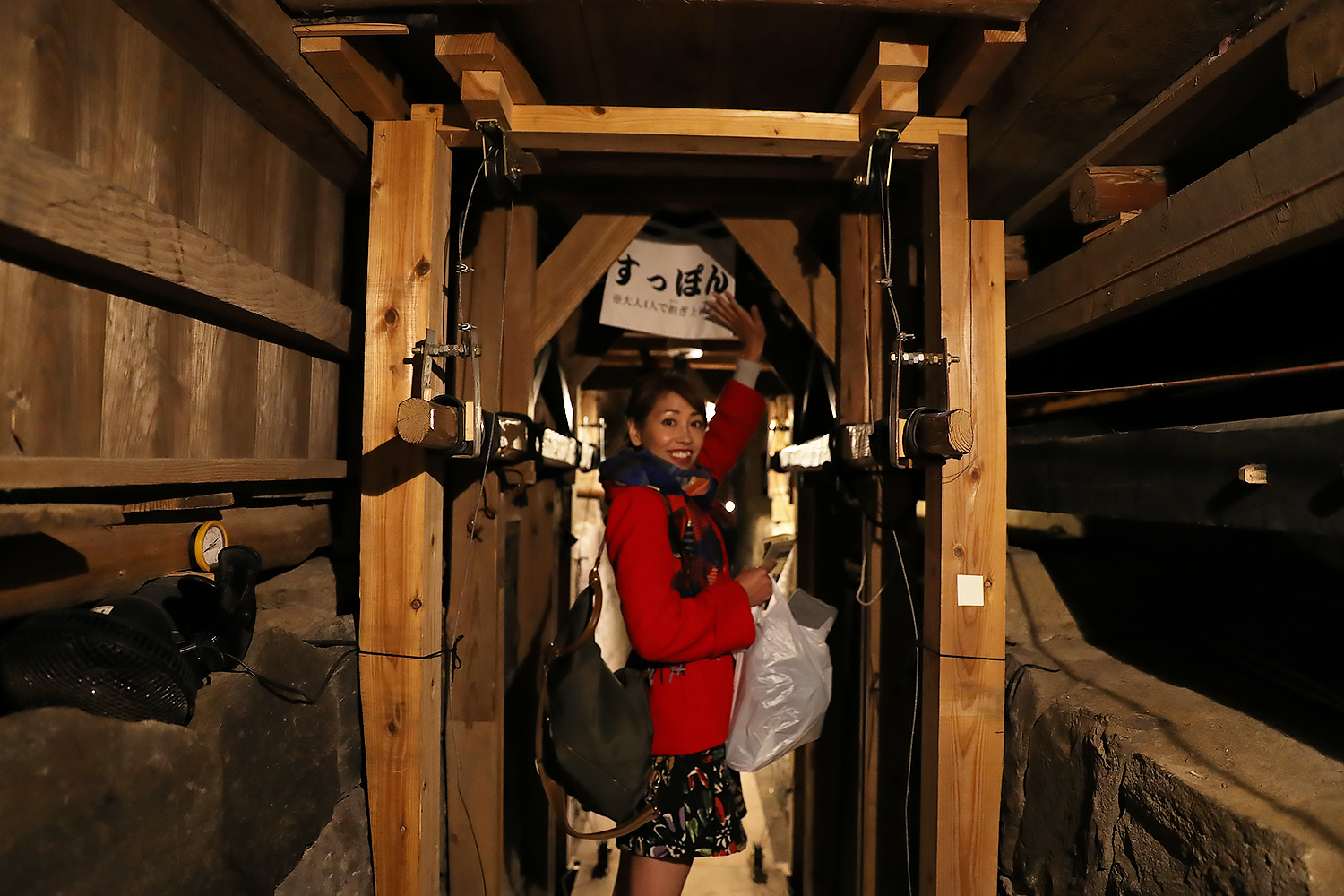
The right side of the stage is called "Supppon," a mikoshi-like platform located 3 to 7 from the stage in the hanamichi area, which moves up and down, and from which ninja and yokai in the play appear. This suppon is lifted by the power of only one person! Incidentally, the same device is also used in a stage set-up called "seri.
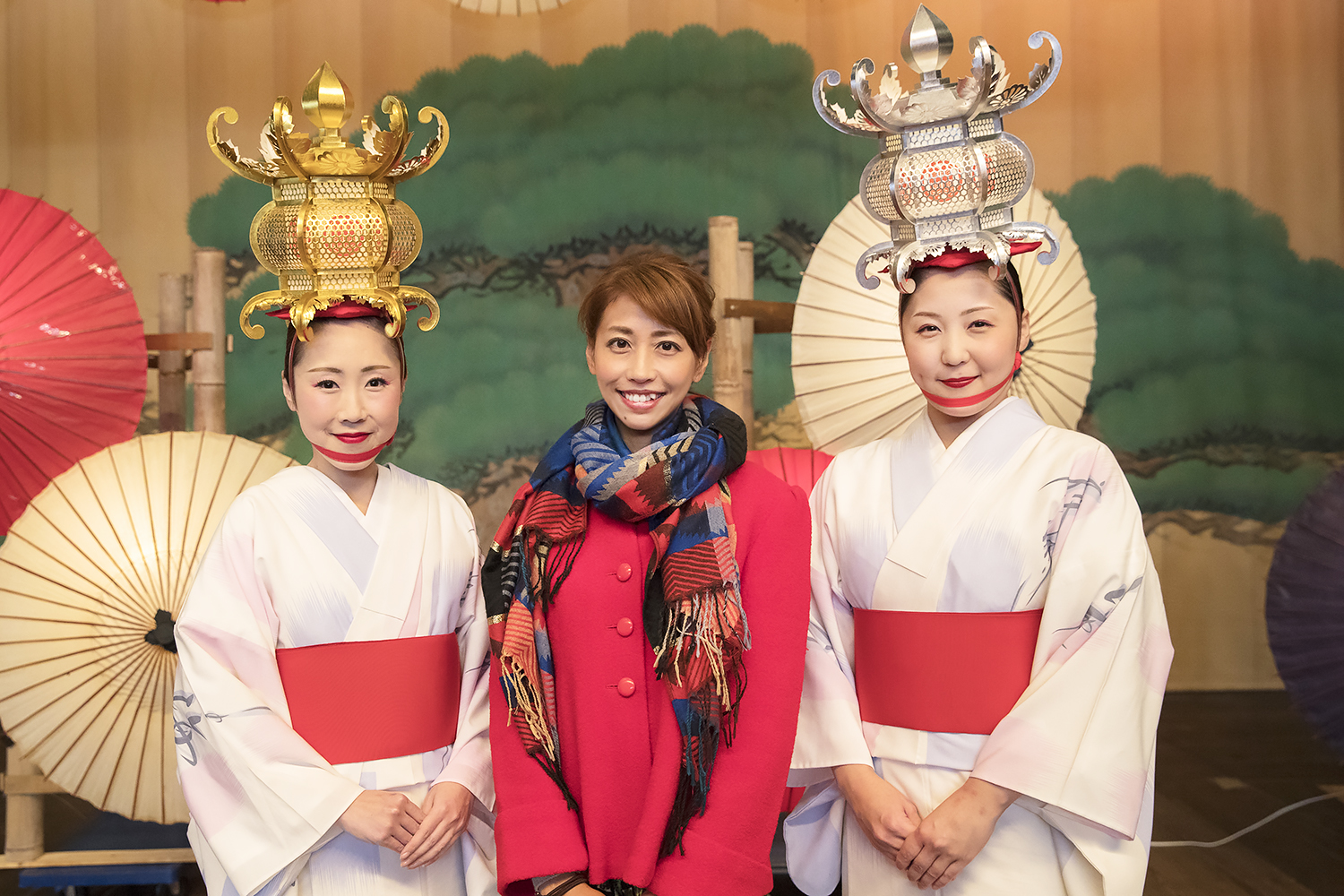
After the performance, they will take time for a commemorative photo!
the Yachiyo Theater
Address: 1499 Yamaga, Yamaga City, Kumamoto Prefecture
Phone: 0968-44-4004
Business hours: 9:00-18:00
Closed: 2nd Wednesday of the month, Year-end and New Year holidays
Parking: Available
Admission: Adults 520 yen, Elementary/Junior high school students 260 yen
Please note that there may be times when the tour is not available, such as on Yachiyo-za performance days.
URL:http://www.yachiyoza.com/
Yamaga Lantern Folk Art Museum
The Yamaga Lantern Folk Art Museum is located a stone's throw from the Yachiyo-za Theater. In contrast to the Yachiyo-za, this impressive building with a modern and stately Romanesque exterior was built in 1925 as the Yamaga Branch of Yasuda Bank, and was later used as the Yamaga Branch of Higo Bank until 1973. The interior of the building was designated as a National Tangible Cultural Property in 2002 as a "valuable resource that conveys the architectural style of banks in the old days.
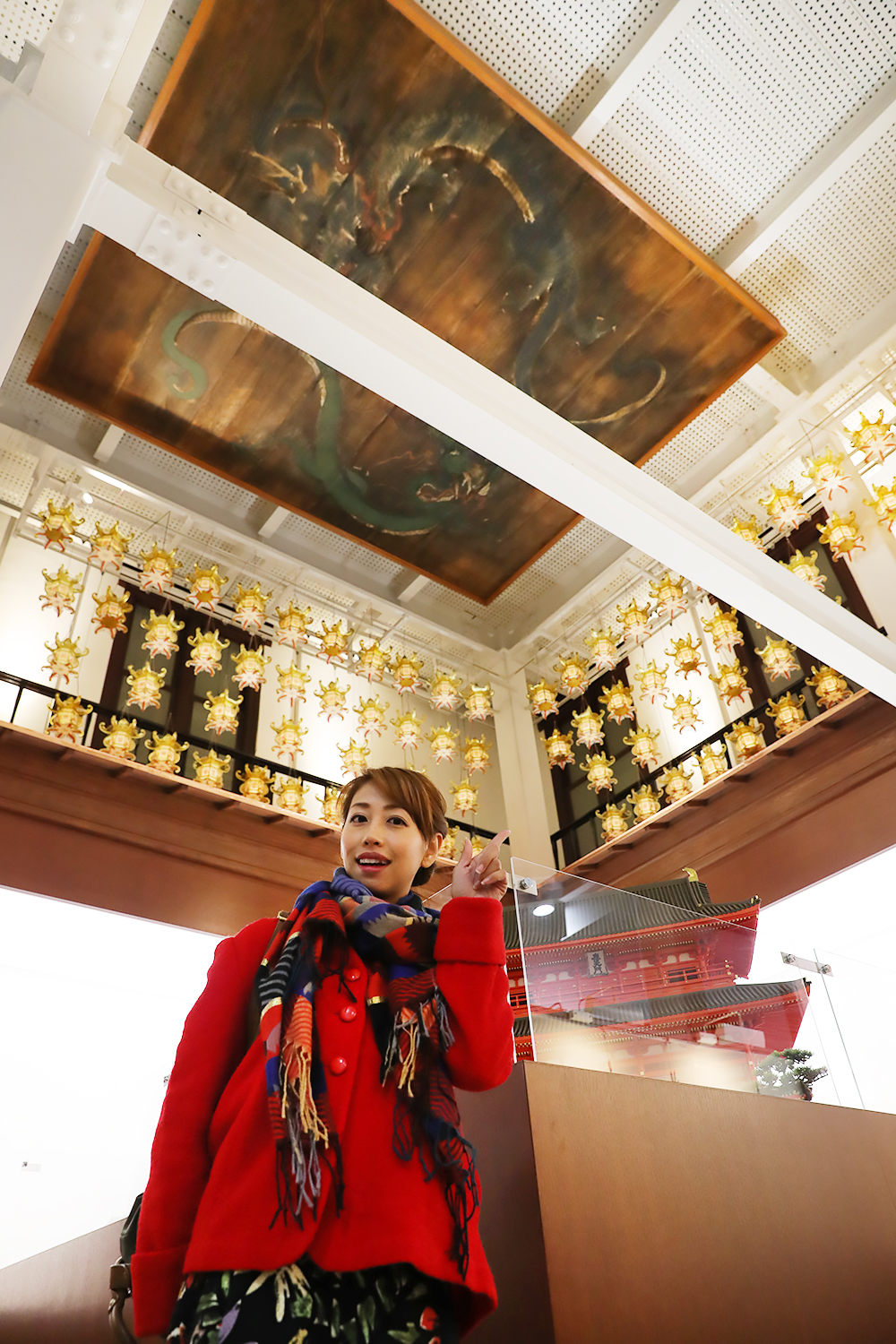
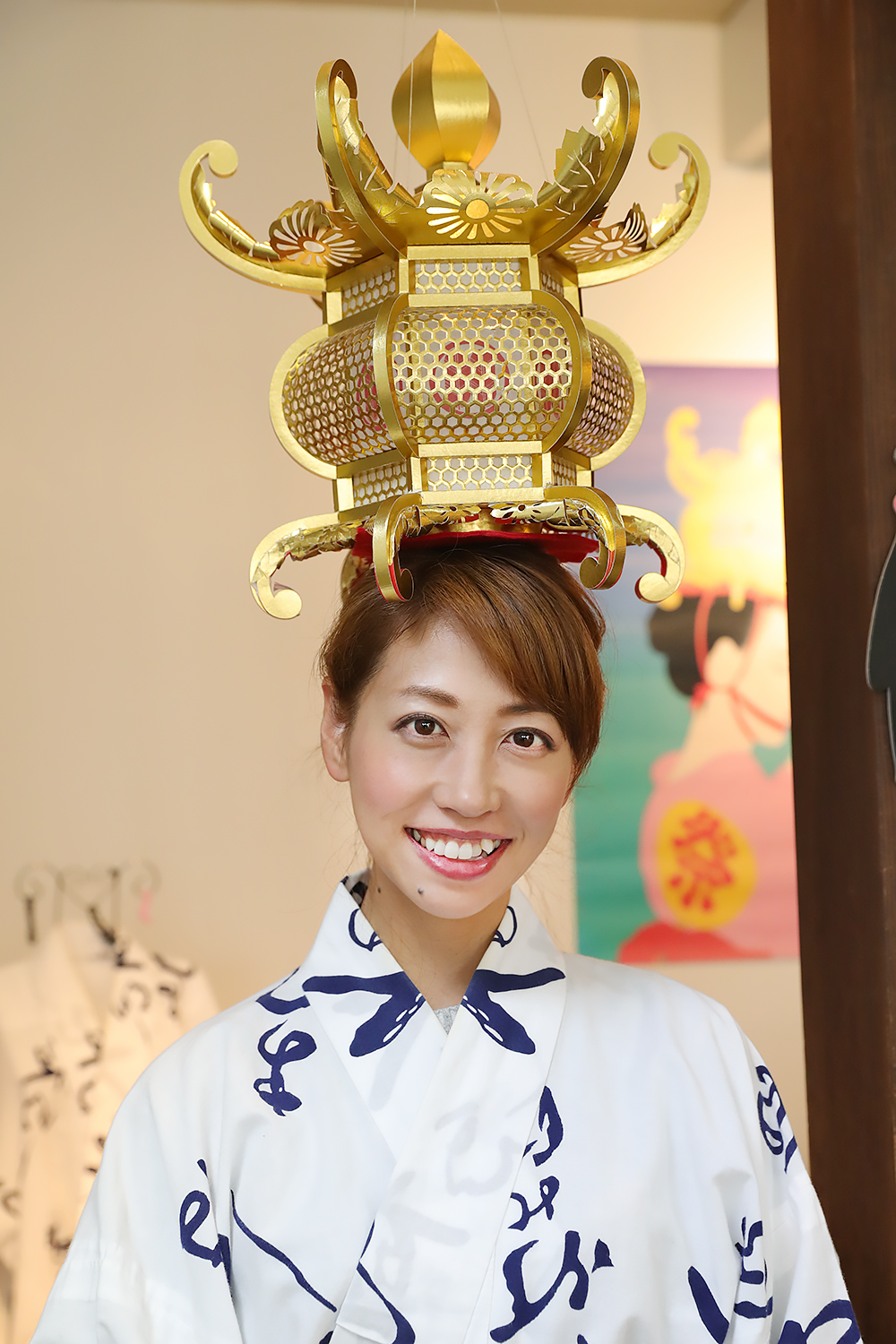
In the annex next door, visitors can actually try on the lanterns used in the Yamaga Lantern Dance and watch a "lantern maker" demonstrate the process of making the lanterns up close.
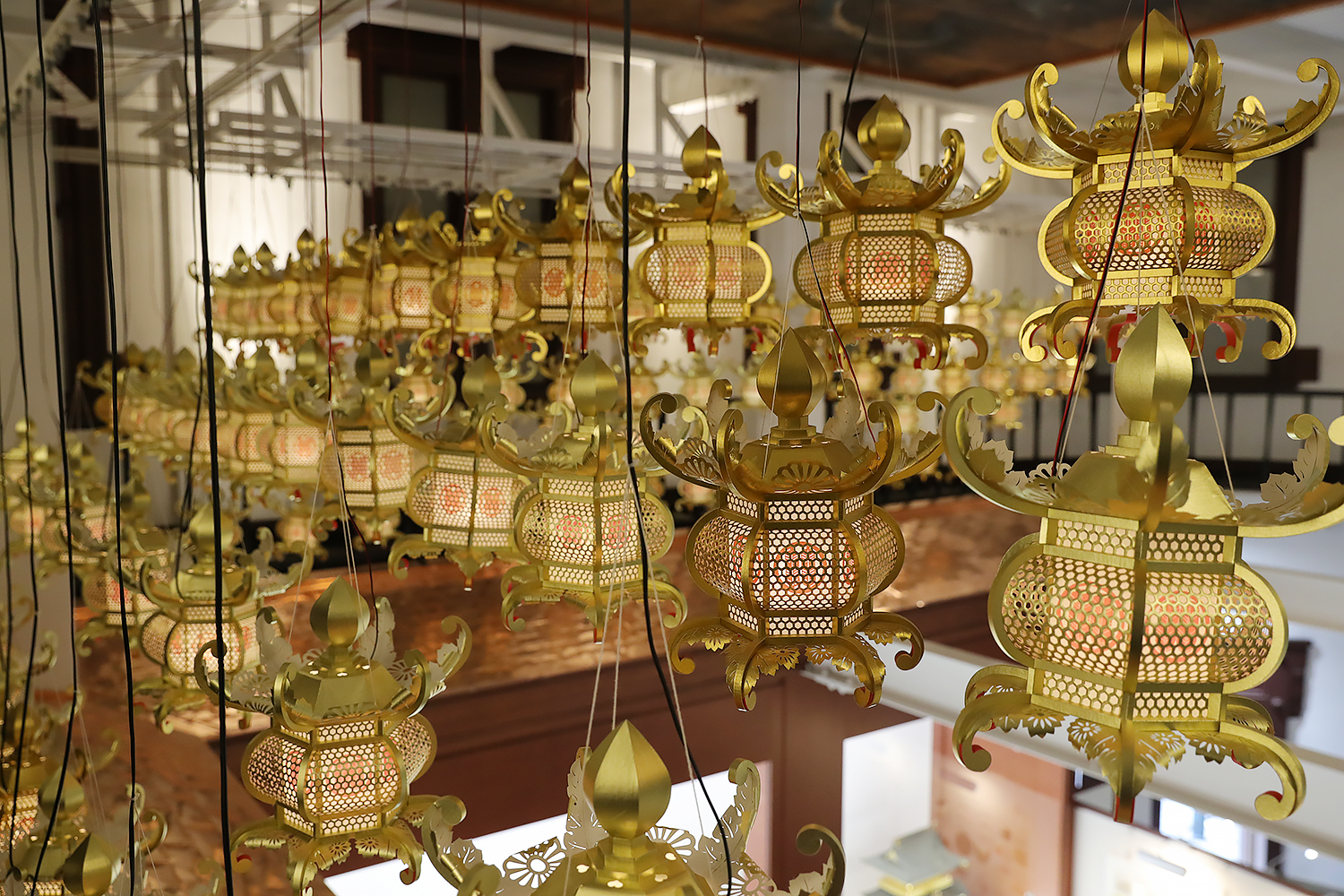
The history of "Yamaga Lanterns" is long, beginning with the golden lanterns of the Muromachi period (1333-1573), which were made for dedication to "Omiya Shrine" (see below for details) and passed down through the generations.
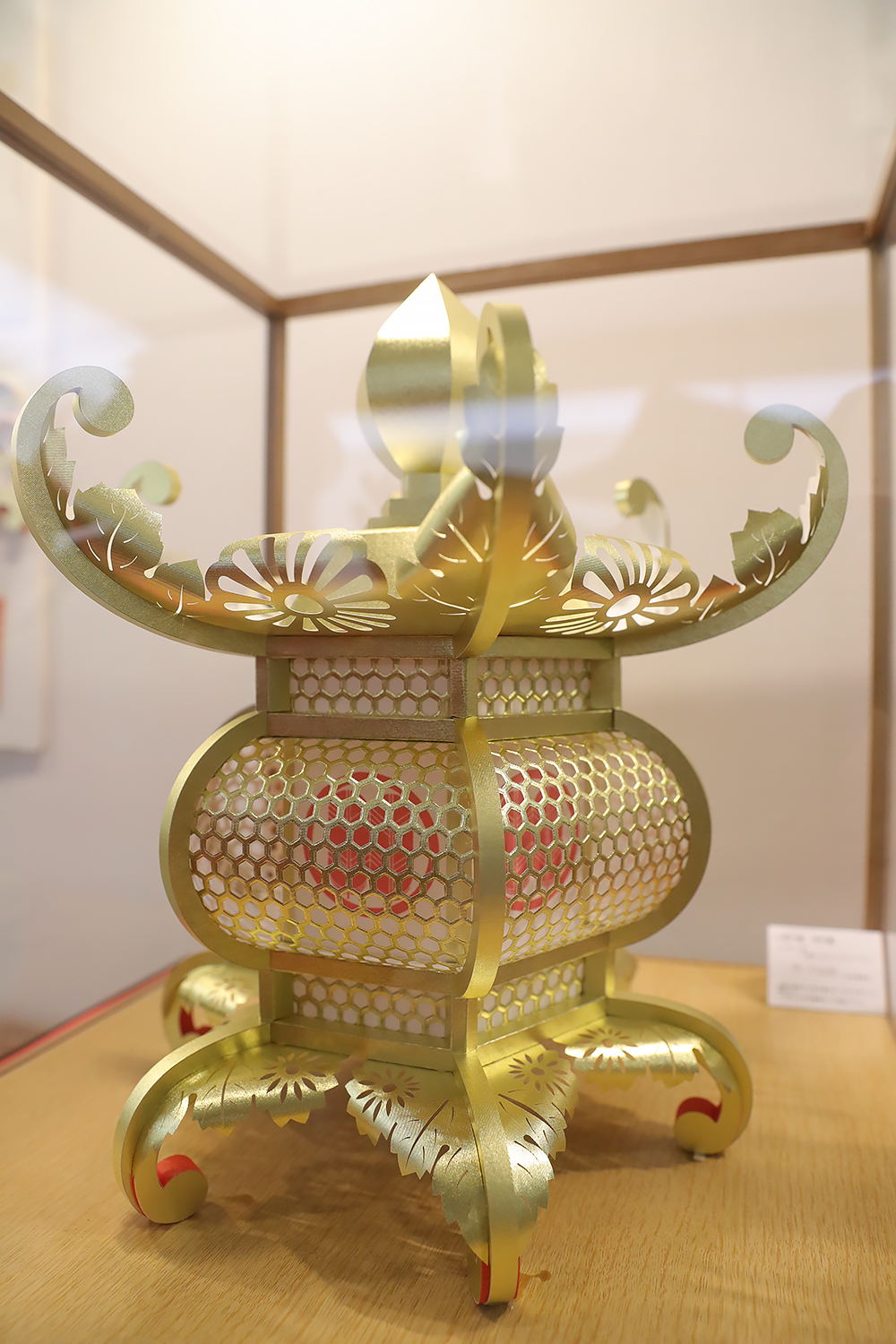
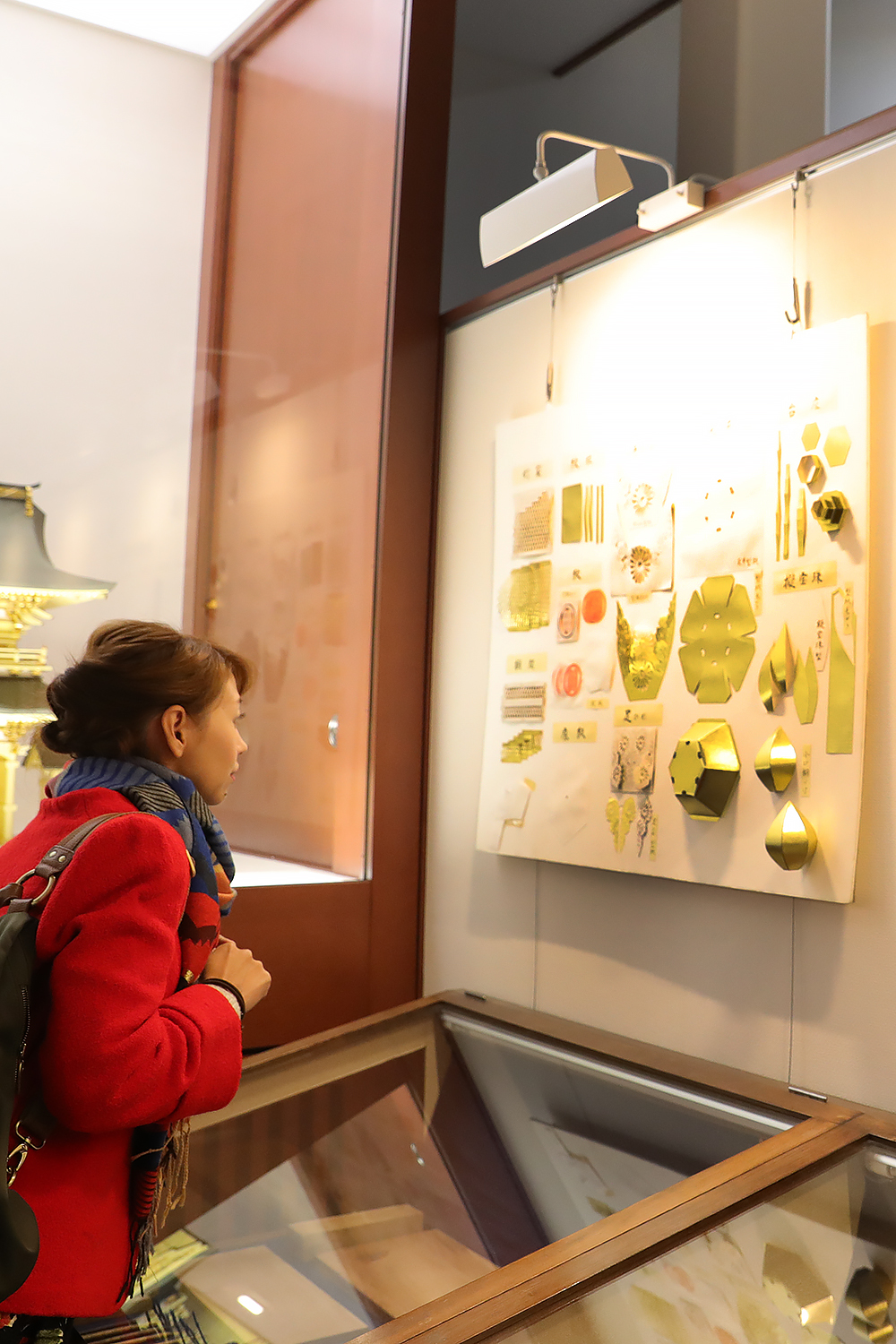
Yamaga Lanterns" are made only with "washi paper and glue," which are woven together in a harmony of beautiful curves. When you see the finished product painted in gold, as shown in the image above, you may think it is heavy to some extent, but when you actually hold it, you will realize again that it is made of paper because it is so light that you do not feel its weight at all. With this lightness, even a woman can dance with it on her head.
What? This is a lantern?"
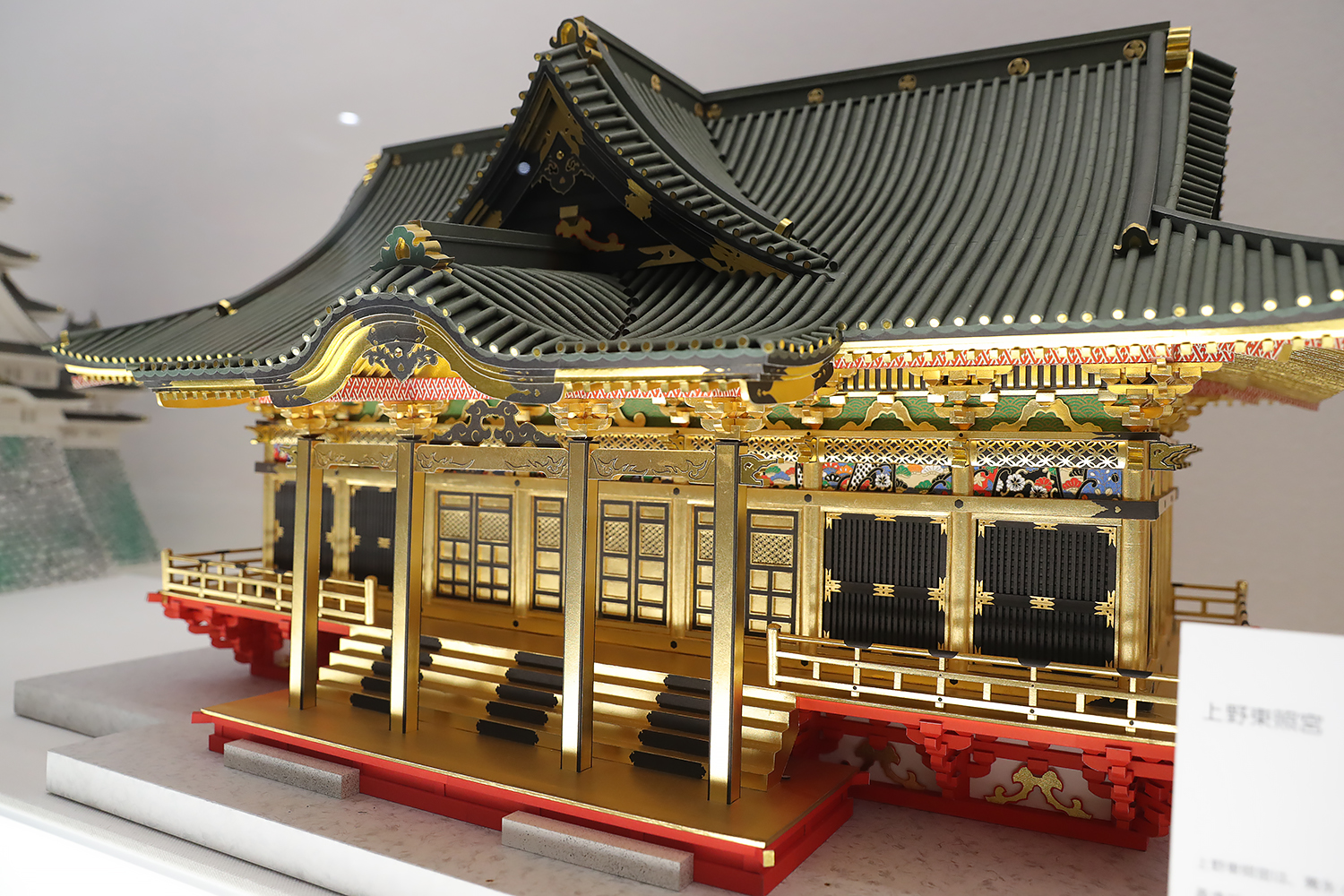
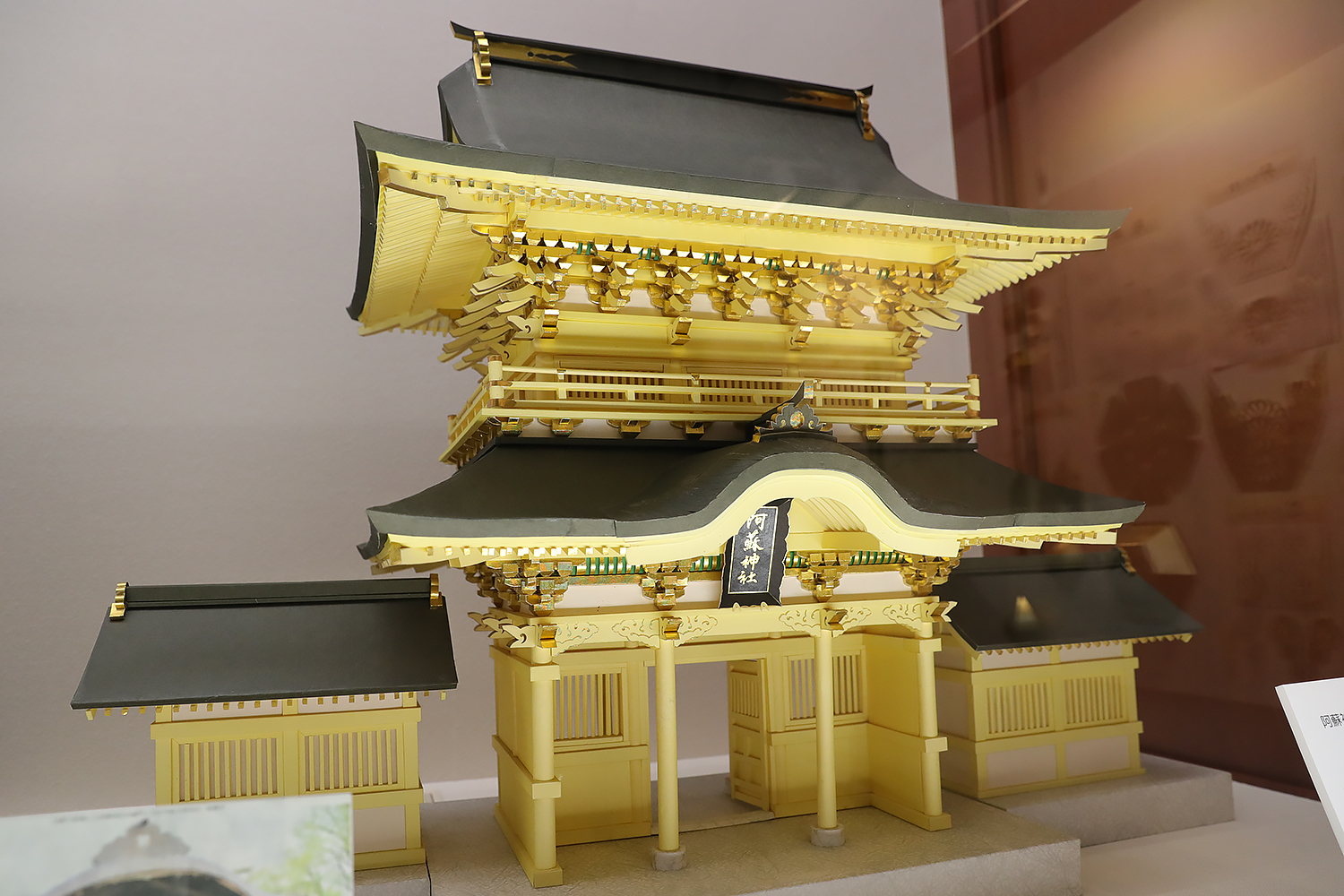
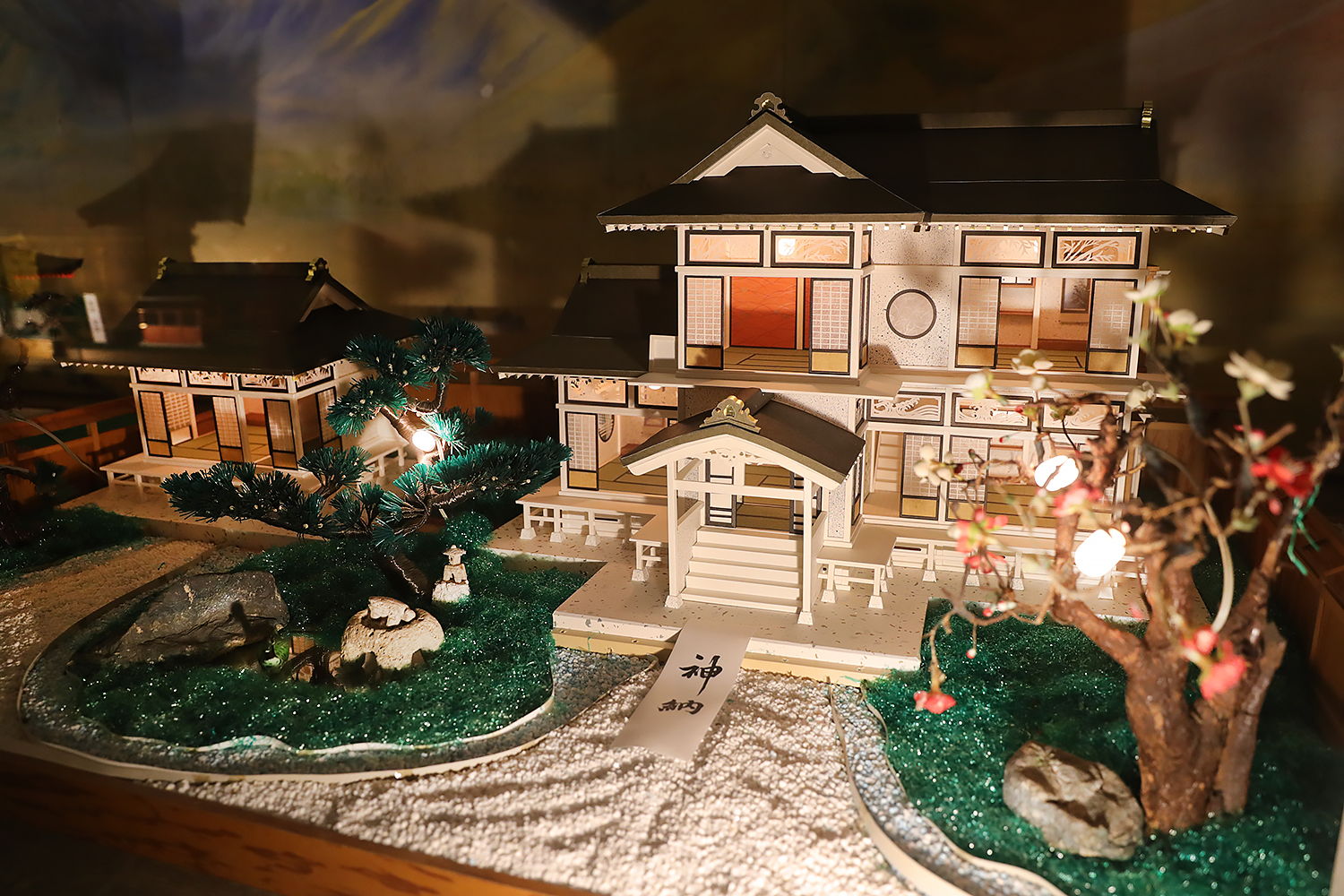
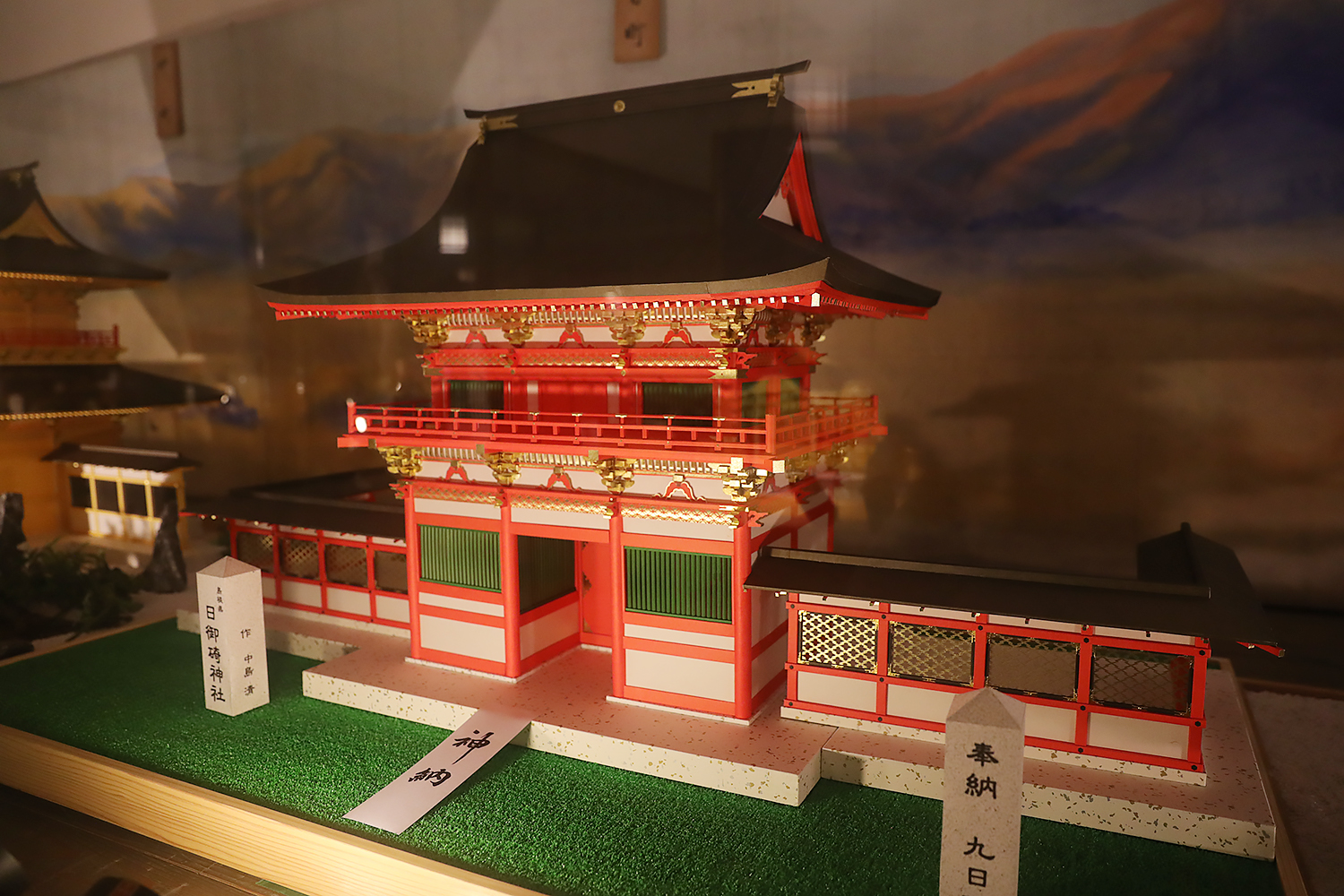
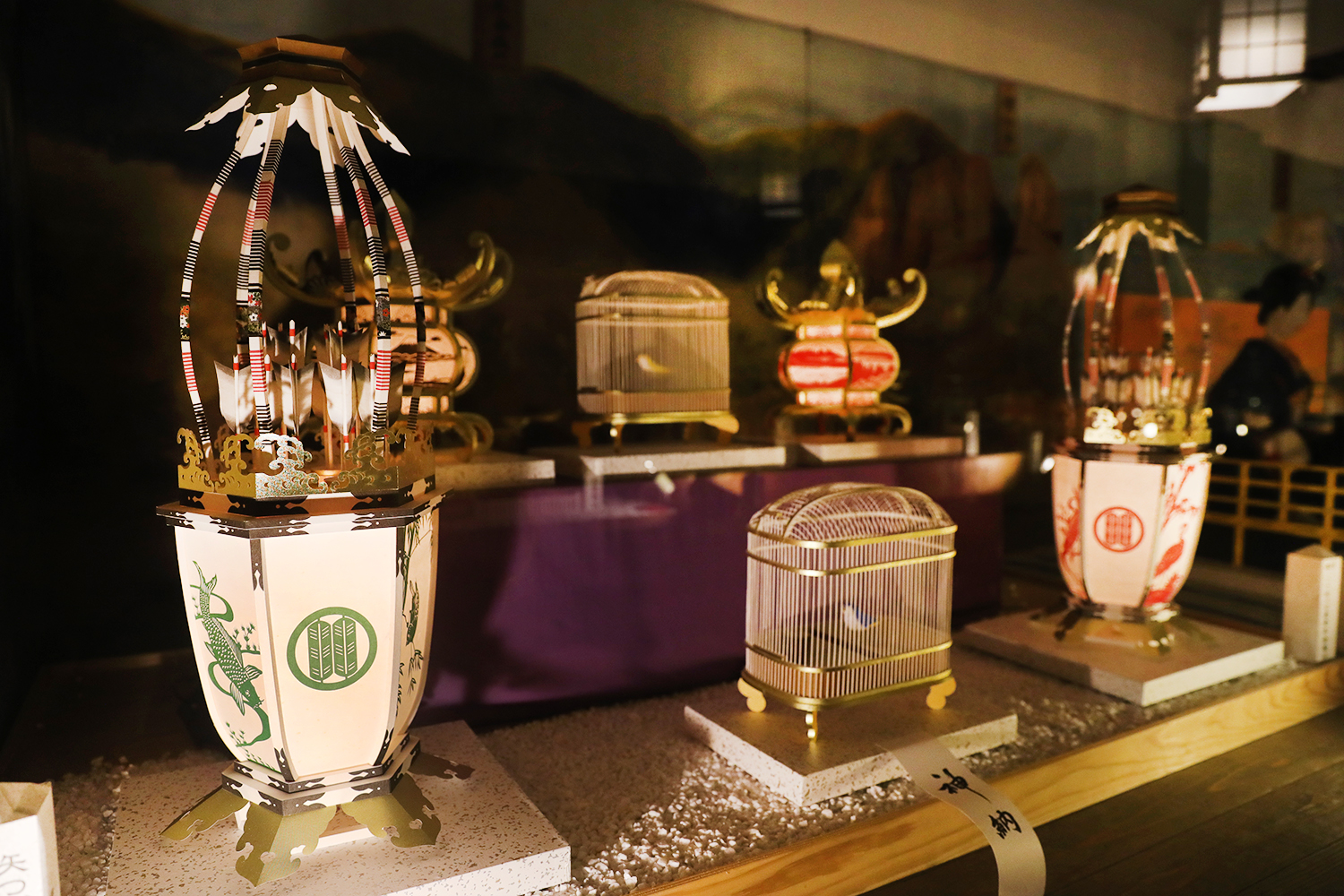
What? This is a lantern? Some of you may be thinking, "Is this a lantern?" But the work shown here (above image) is the quintessential "Yamaga Lantern" work. Of course, it has a mechanism that makes it glow when lit.
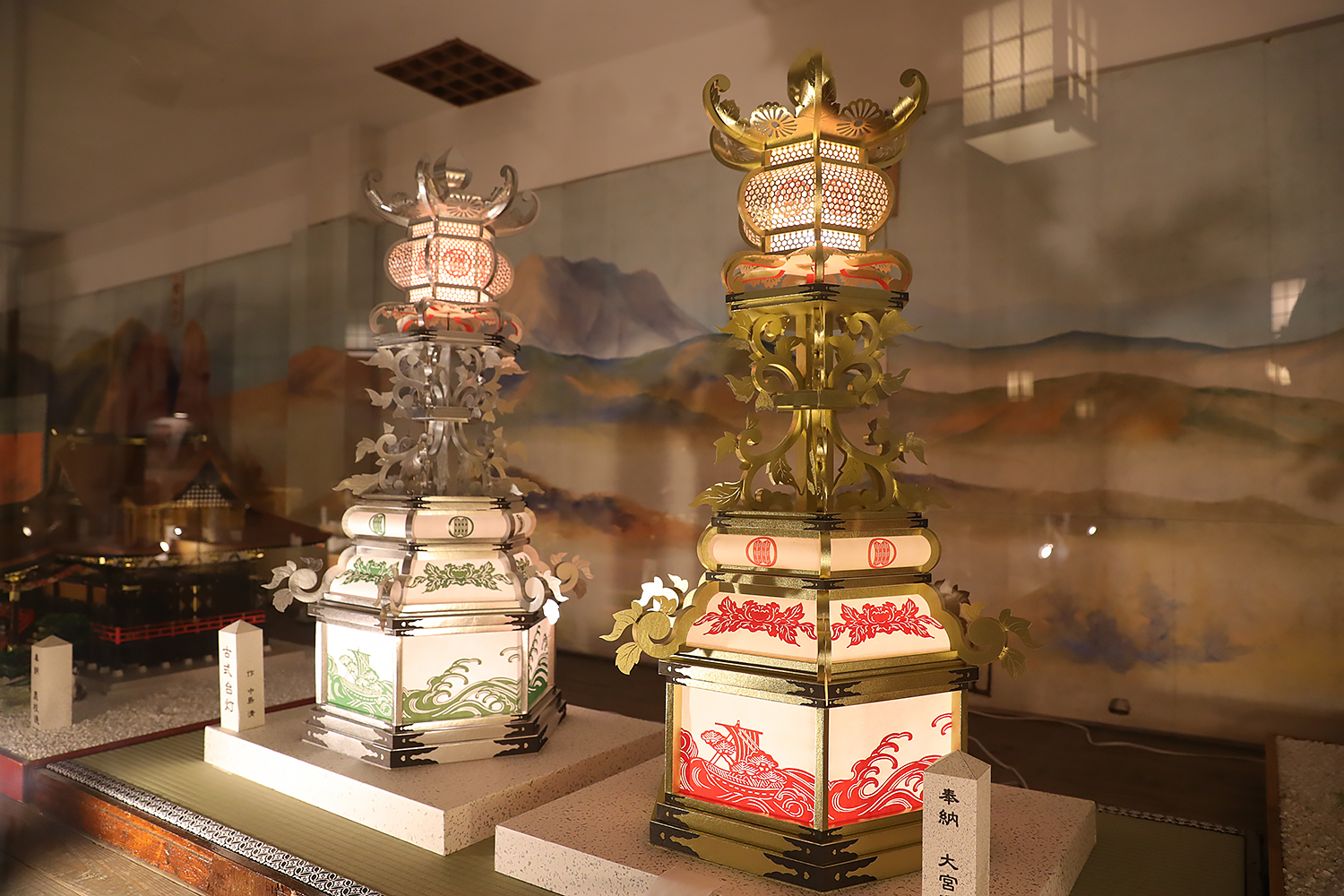
Generally, the word "lantern" conjures up images of decorative lighting fixtures such as stone lanterns and hanging lanterns, but the highly skilled Yamaga Toro (Yamaga lantern) has evolved and diversified over time in its long history since the Muromachi period (1333-1573), and gradually developed into artistic works such as temple, tatami room, and castle structures, as shown in the above image. The three-dimensional structure of the works of art is said to have evolved and diversified with the times over its long history since the Muromachi period. The three-dimensional structure of these works is made of parts and techniques that are designed to be hollow inside.
For this reason, it is also called "the ultimate in paper craftsmanship." Every year after the "Lantern Festival," a number of works are dedicated to the Omiya Shrine (see below), the birthplace of the lanterns, and the winning bidders are chosen by lottery.
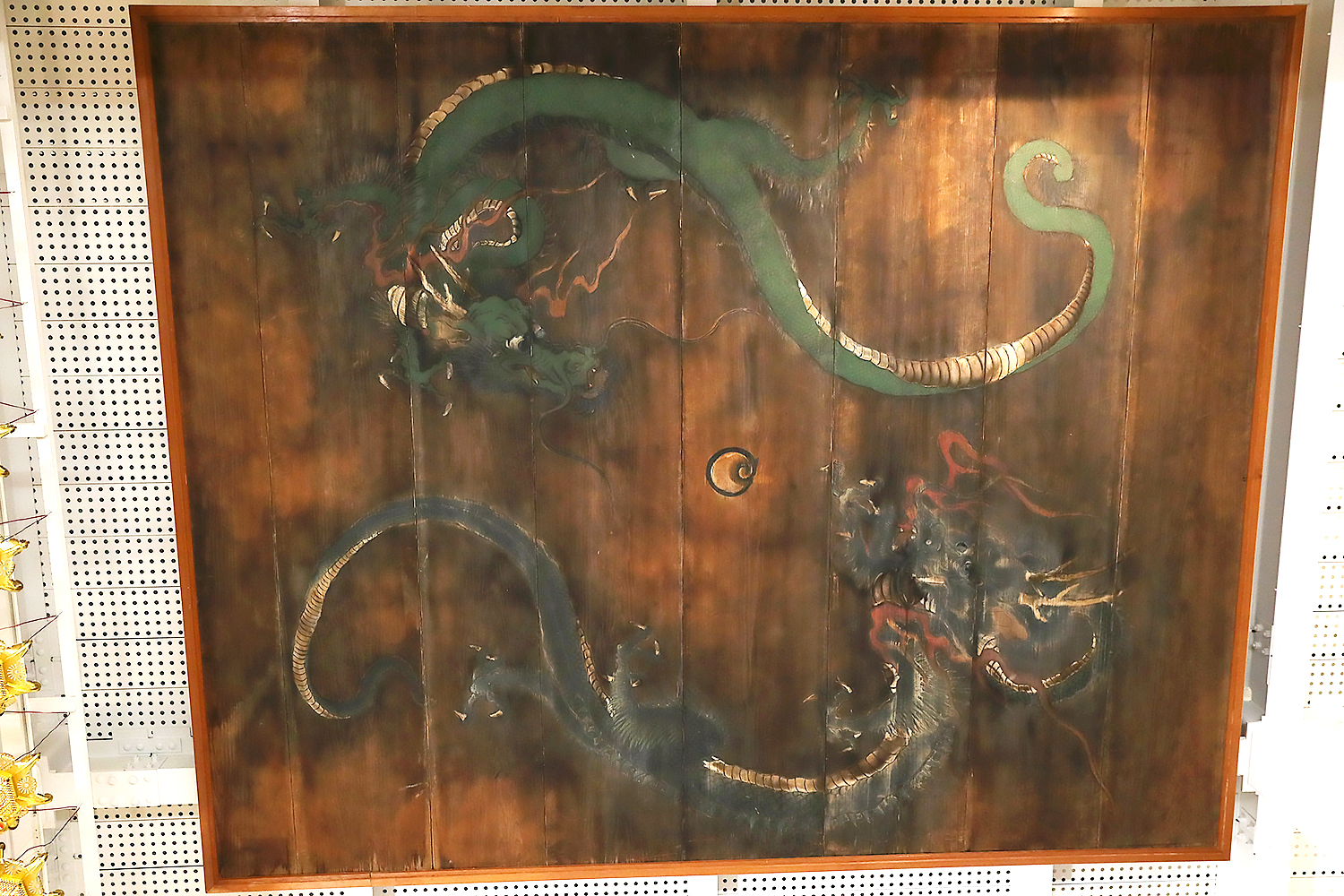
This is a picture of twin dragons painted in the Edo period. In the Edo period (1603-1867), the place where "Sakura-yu" is now located was a resting place of the Higo Hosokawa clan called "Yamaga Ochaya," and this painting was painted on the ceiling of the Gozenyu (bathhouse) for the exclusive use of the lord. In honor of the two dragons, it is also a popular place for wedding photography.
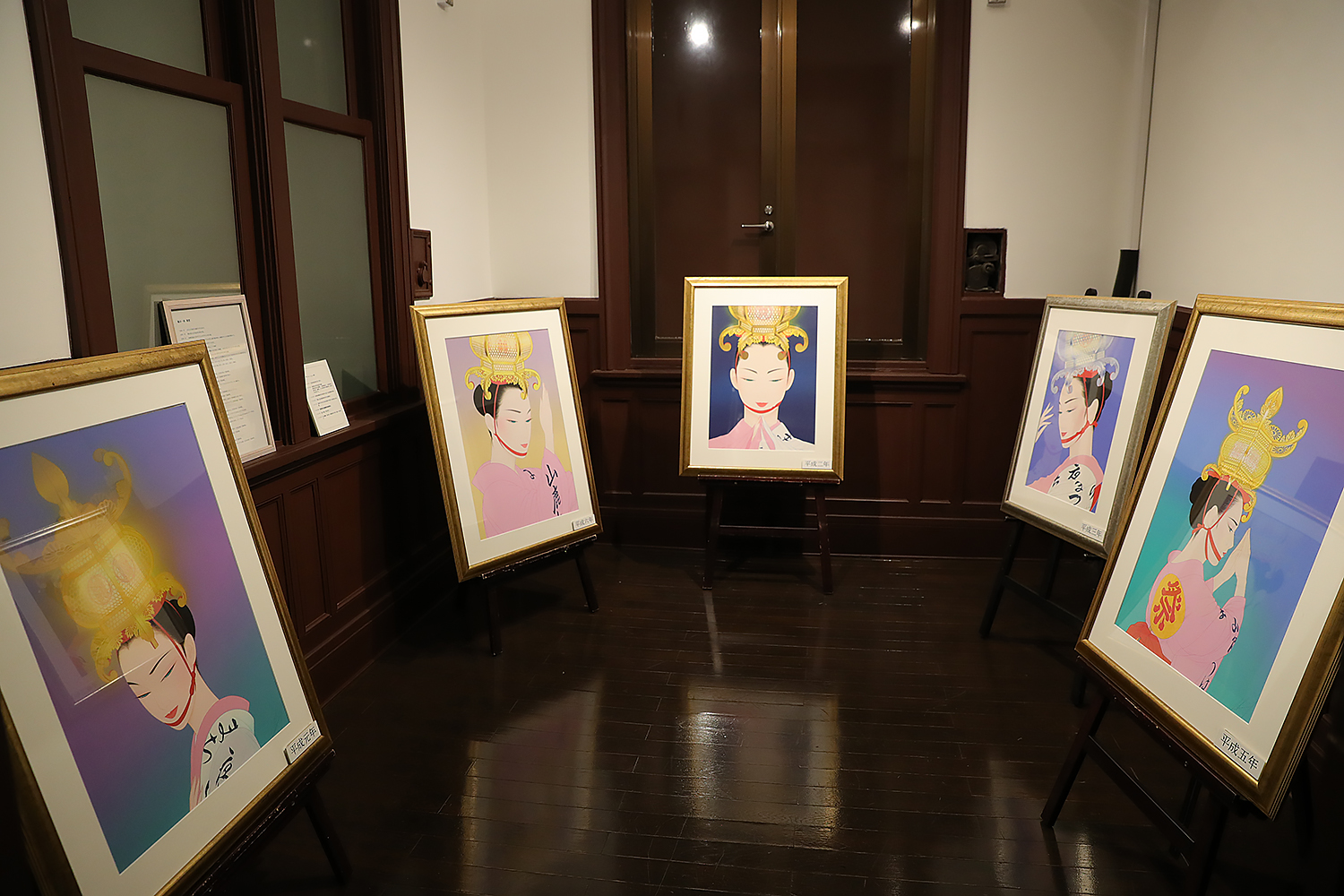
The exhibition view of original paintings donated by Ichiro Tsuruta, a graphic designer and beauty painter from Kumamoto Prefecture, who creates the posters for the Yamaga Lantern Festival every year.
(hotel) annexe (annex)
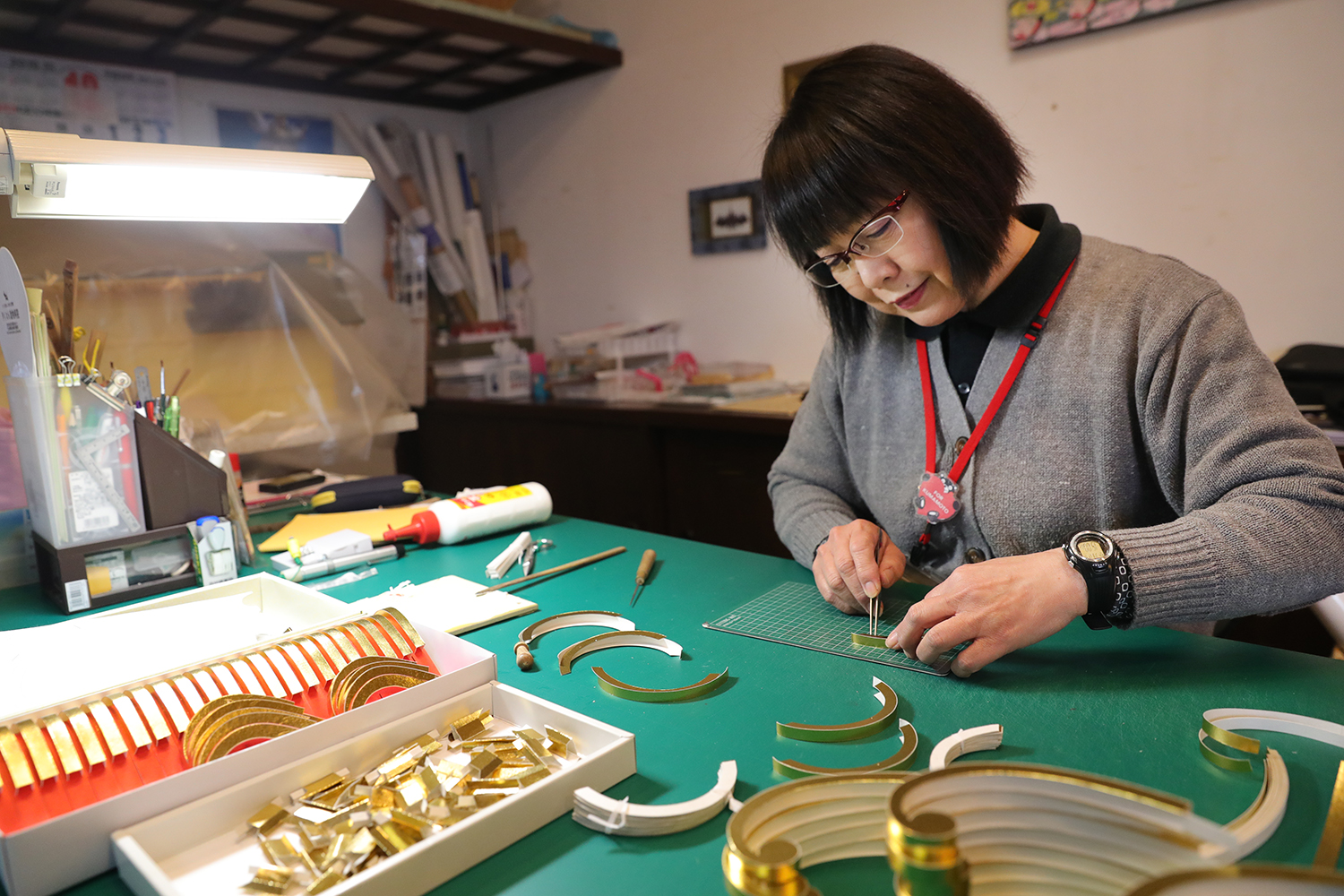
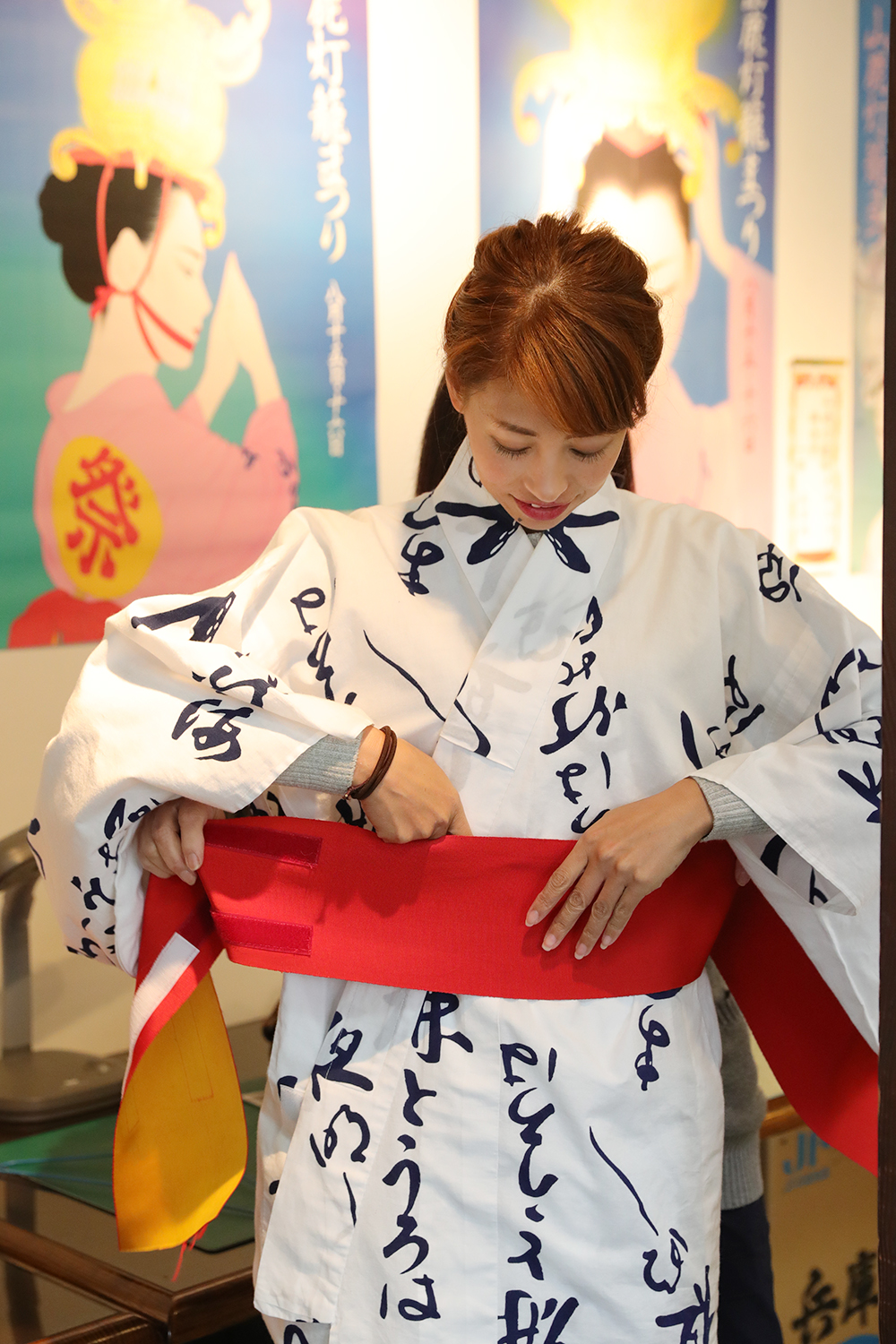
In the annex, visitors can see the lantern makers at work (upper image) up close. You can actually hold the parts in your hands and take commemorative photos (bottom image) wearing the lanterns and yukata (Japanese summer kimono) used in the "Yamaga Lantern Dance.
Yamaga Lantern Folk Art Museum
Address: 1606-2, Yamaga, Yamaga City, Kumamoto Prefecture
Phone: 0968-43-1152
Business hours: 9:00-18:00
Closed: December 29 - January 1
Admission: 210 yen for adults, 100 yen for elementary and junior high school students
Group discount available, common ticket with Yachiyo-za Theater
URL:http://yamaga.site/?page_id=1550
Omiya Shrine
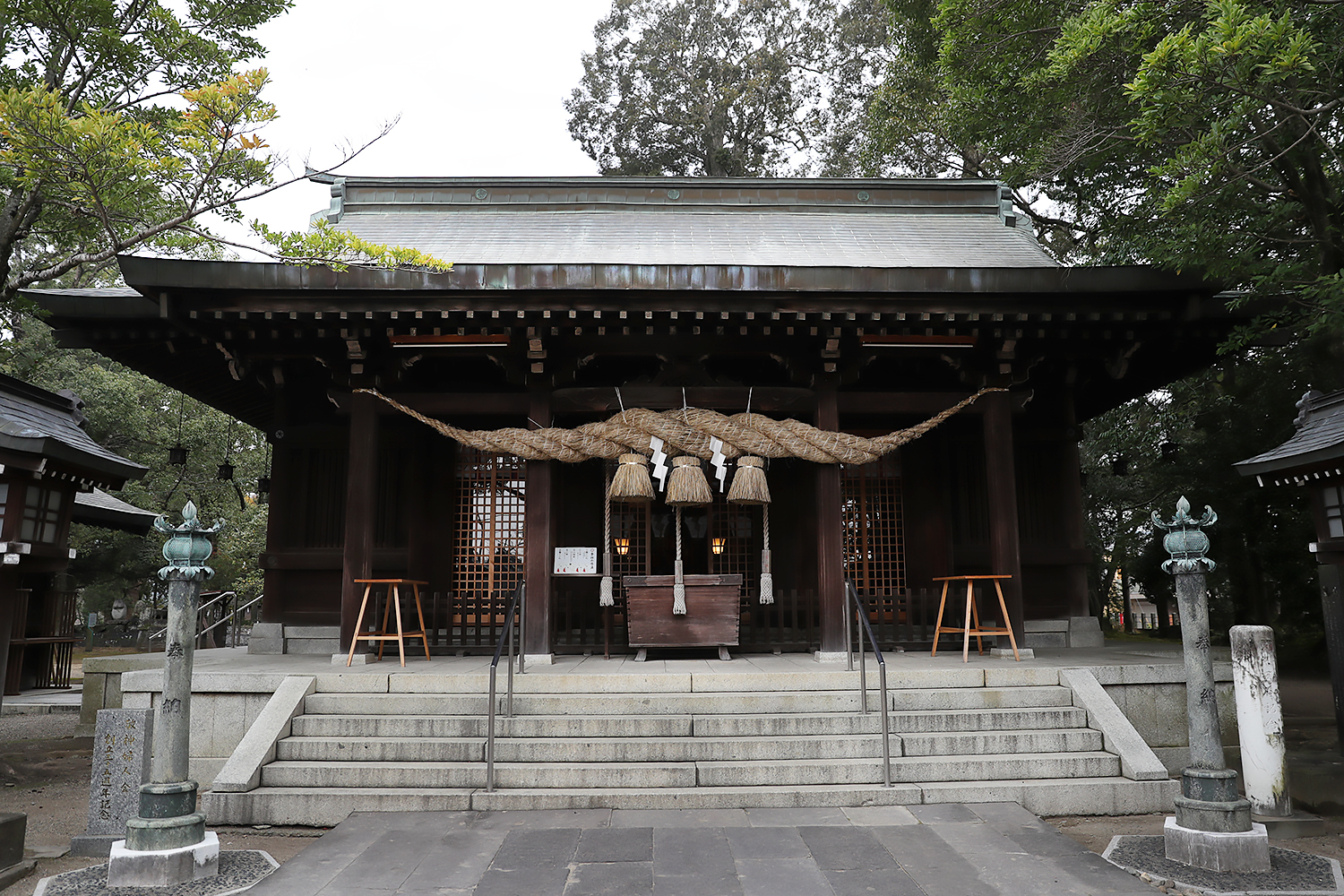
After leaving the Yamaga Lantern Folk Art Museum, it was a 15-minute walk to Omiya Shrine, where Yamaga Lanterns are dedicated.
◆About Omiya Shrine(Official Site(Excerpted from.)
Omiya Shrine, dedicated to the 12th Emperor Keiko, is located in Yamaga, a hot spring resort in the northern part of Kumamoto Prefecture, and has been revered since ancient times as a deity of the town's birthplace.
The annual festival held in August is called the Yamaga Toro Festival, and includes the traditional ritual "Agari Toro" that has continued for 600 years since the Muromachi Period, a torchlight procession, lantern dances, fireworks displays, and various other rituals and events, attracting many tourists every year.
The temple grounds are home to many attractions, including a lantern hall that preserves and displays all of the Yamaga lanterns dedicated during the "Agari-Toro" lantern festival, the largest number of stone monuments to Sarutahiko the Great, the god of Sarutahiko, in Kyushu, and a torii (a gateway) that leads to good health.
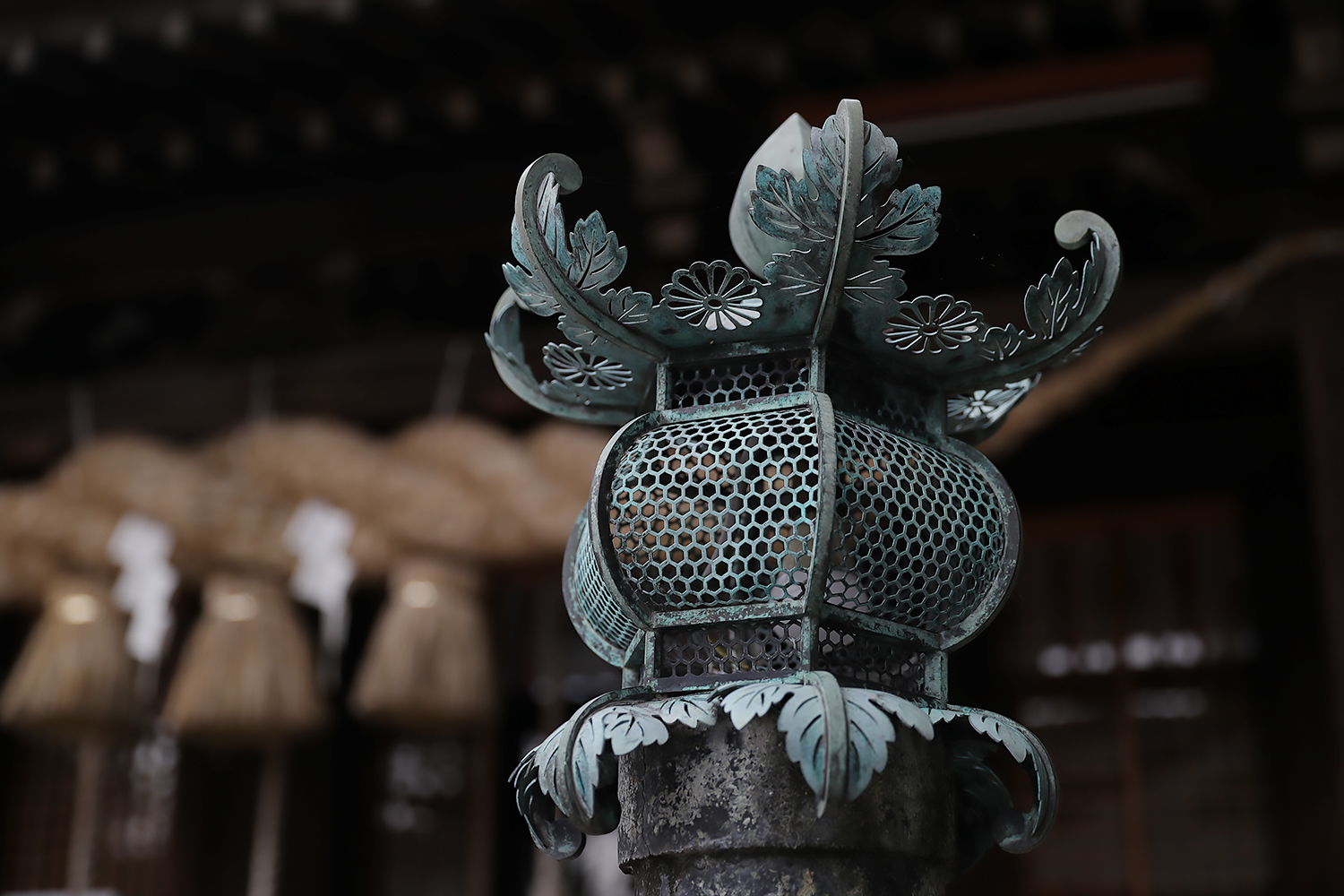
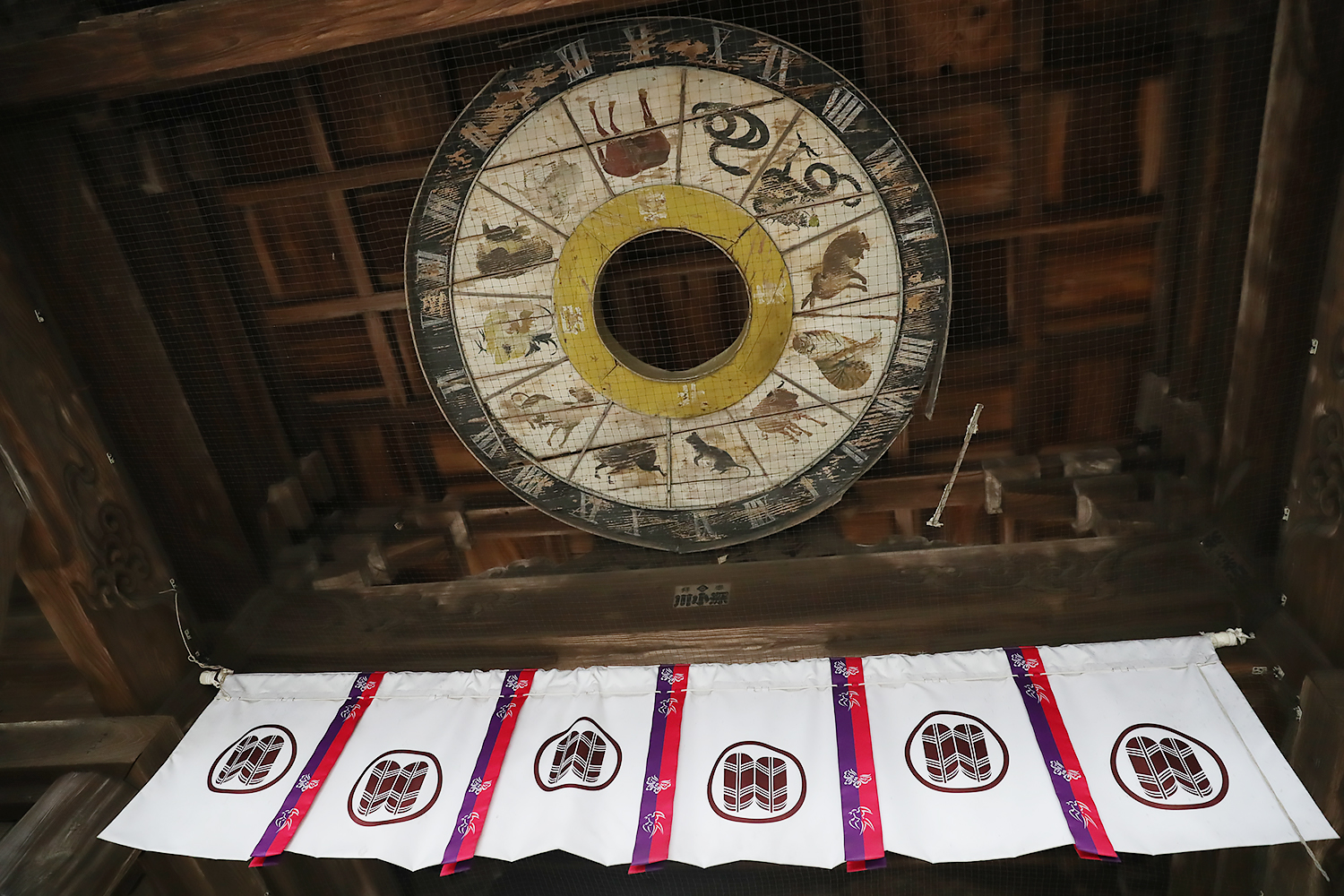
◆Origin of Yamaga Lanterns (Official Site(Excerpted from.)
The twelfth Emperor Keiko traveled up the Kikuchi River from downstream and arrived at the mouth of the fire in Yamaga (now known as Munakata). At that time, a thick fog covered the area and blocked their way. The villagers welcomed the Emperor and his party with torches and guided them to Sugiyama (the current site of the shrine).
The Emperor had a temporary palace built here, and it is said that the origin of the Yamaga Lanterns is the torchlight used to welcome and welcome the Emperor at that time.
According to the old Shikagun biography, about 600 years ago, in the Oei era of the Muromachi period (1333-1568), "the Kikuchi clan revised the rituals of the festival and made various lanterns to offer to the people.
In the Hoei Shotoku era of the Edo period (1603-1867), about 300 years ago, there is a record that "the craftsmanship of the lanterns has become better and better, and their fame is high in all directions.Gradually, more and more types of lanterns were made, and the elaborate ones we see today were produced.
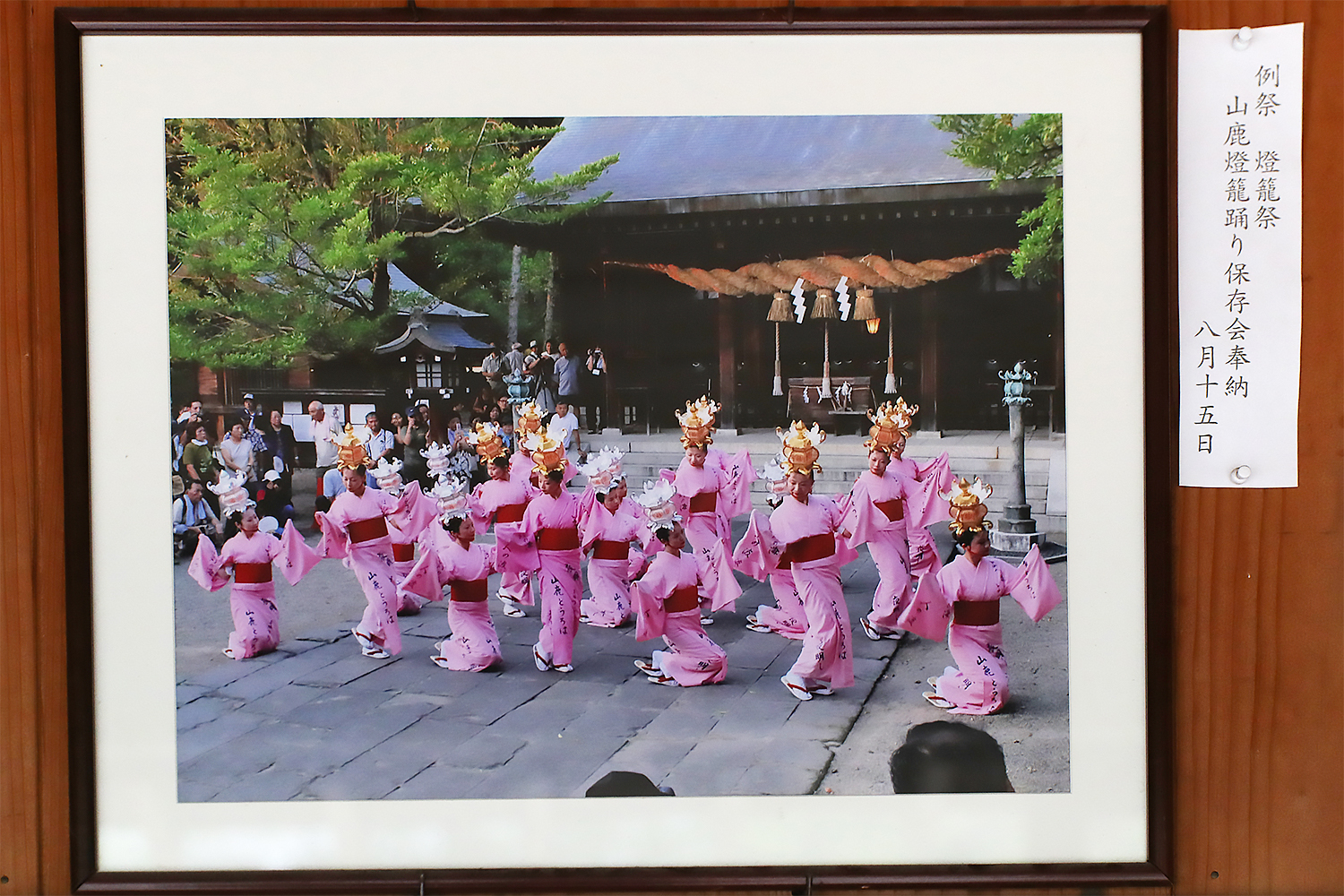
◆Origins of Lanterns and Festivals (Official Site(Excerpted from.)
It is a ritual that carries on a 600-year tradition that began in the Oei era of the Muromachi period (1333-1573), and conveys the origins of the festival to the present day.
The votive lanterns, created with the outstanding skills and devotion of the lantern makers, will be beautifully displayed on the dedication stand of the dedication group on August 15.
At midnight on the 16th, the votive lanterns are carried one after another to Omiya Shrine, with the townspeople shouting "hai touro, hai touro" in the background.
The first lantern is in the upper city led by the shamisen. The lanterns pass through the tower gate at 10:00 p.m.
The Yamaga Lanterns are offered in a ceremony before the shrine and safely dedicated, and then laid out in the shrine garden behind the main hall. The Yamaga Lanterns float in the shrine's forest, illuminated by lights. It is truly an ethereal world. The votive groups also hold a banquet in the same shrine garden.
At midnight, all the votive lanterns are placed in the lantern hall on the shrine grounds, called "Falling Lanterns," and the year's festival comes to an end.
Many people think of the Lantern Festival in terms of the Lantern Dance, but you cannot talk about the Lantern Festival without seeing the lanterns. Although it is a late-night ritual, please come and see it when you visit the festival.
garden lantern pavilion (of Heian Palace)
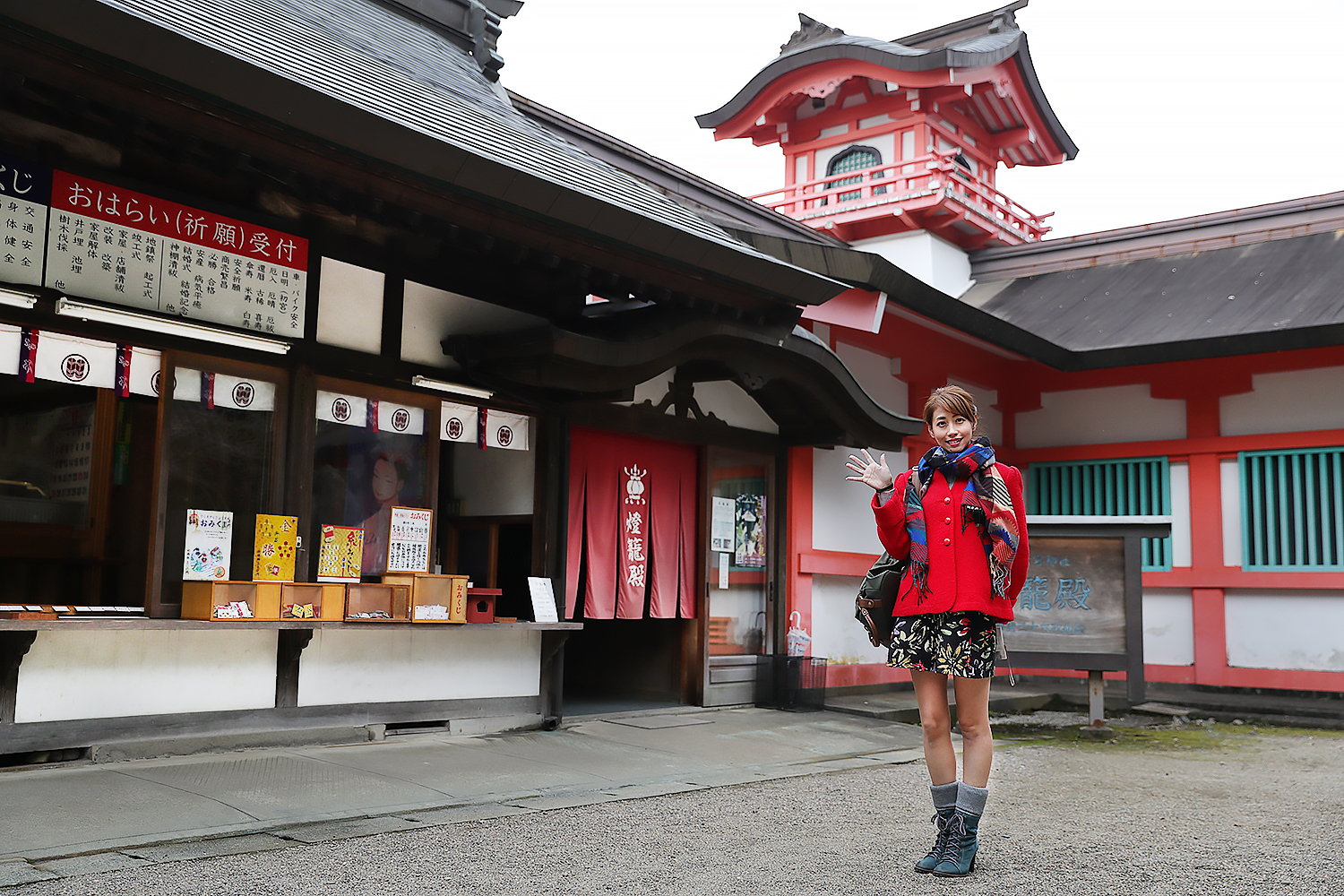
◆Torodono-den (Official Site(Excerpted from.)
In the Lantern Hall, all the Yamaga Lanterns dedicated during the "Agari-Toro" ritual, which tells the origin of the festival, are displayed at midnight of the main shrine's regular festival (Yamaga Lantern Festival on August 16), and a photo panel of the sacred treasure "Sanjurokasen Emafu" is also displayed.
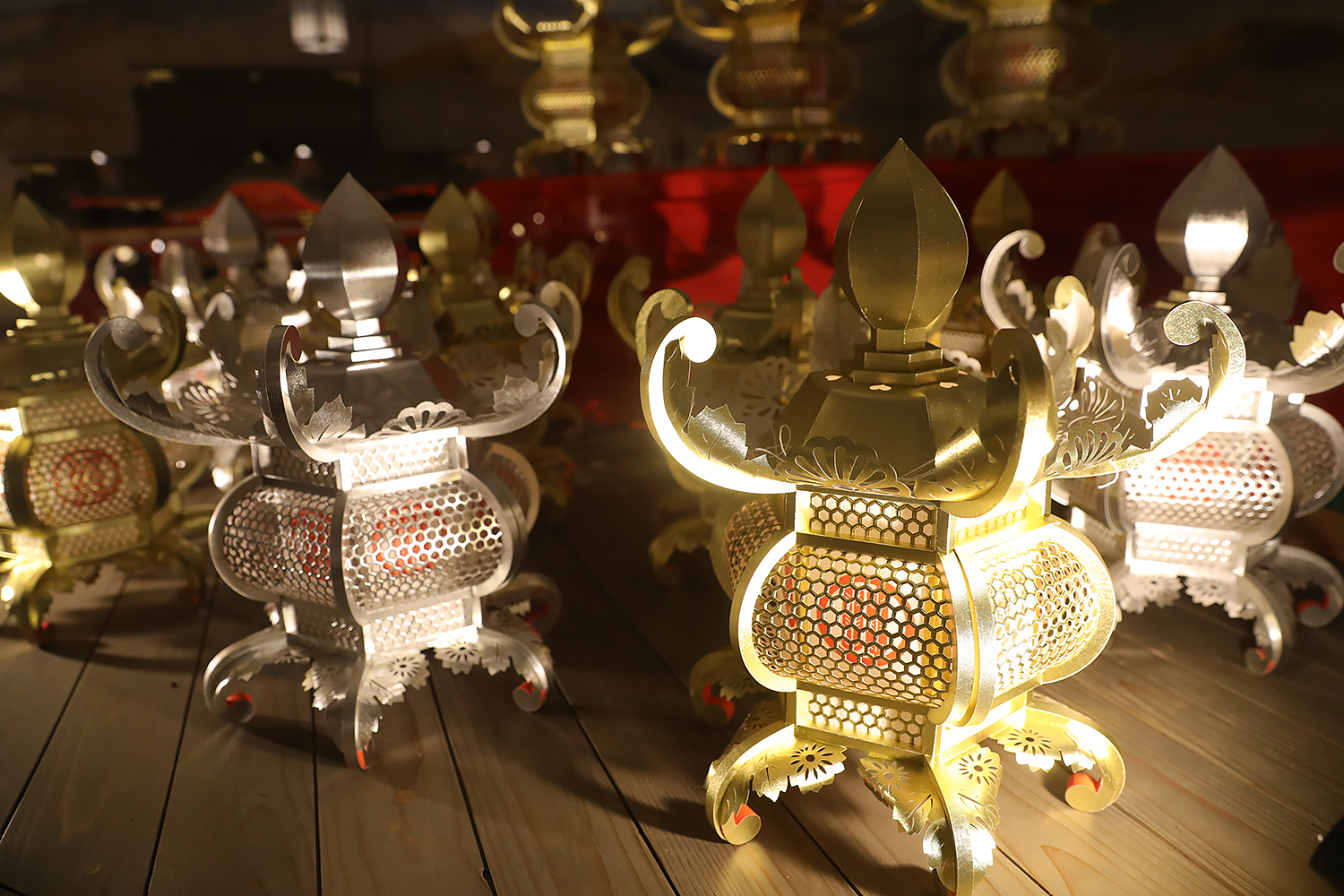
All of the Yamaga Lanterns on display are replaced each year at the festival, and the lanterns dedicated the previous year are given away by reservation (first-come, first-served basis).
◆Features of Yamaga Lanterns
For more information, click here.Yamaga Lanterns, official website of Omiya Shrinefor more information.
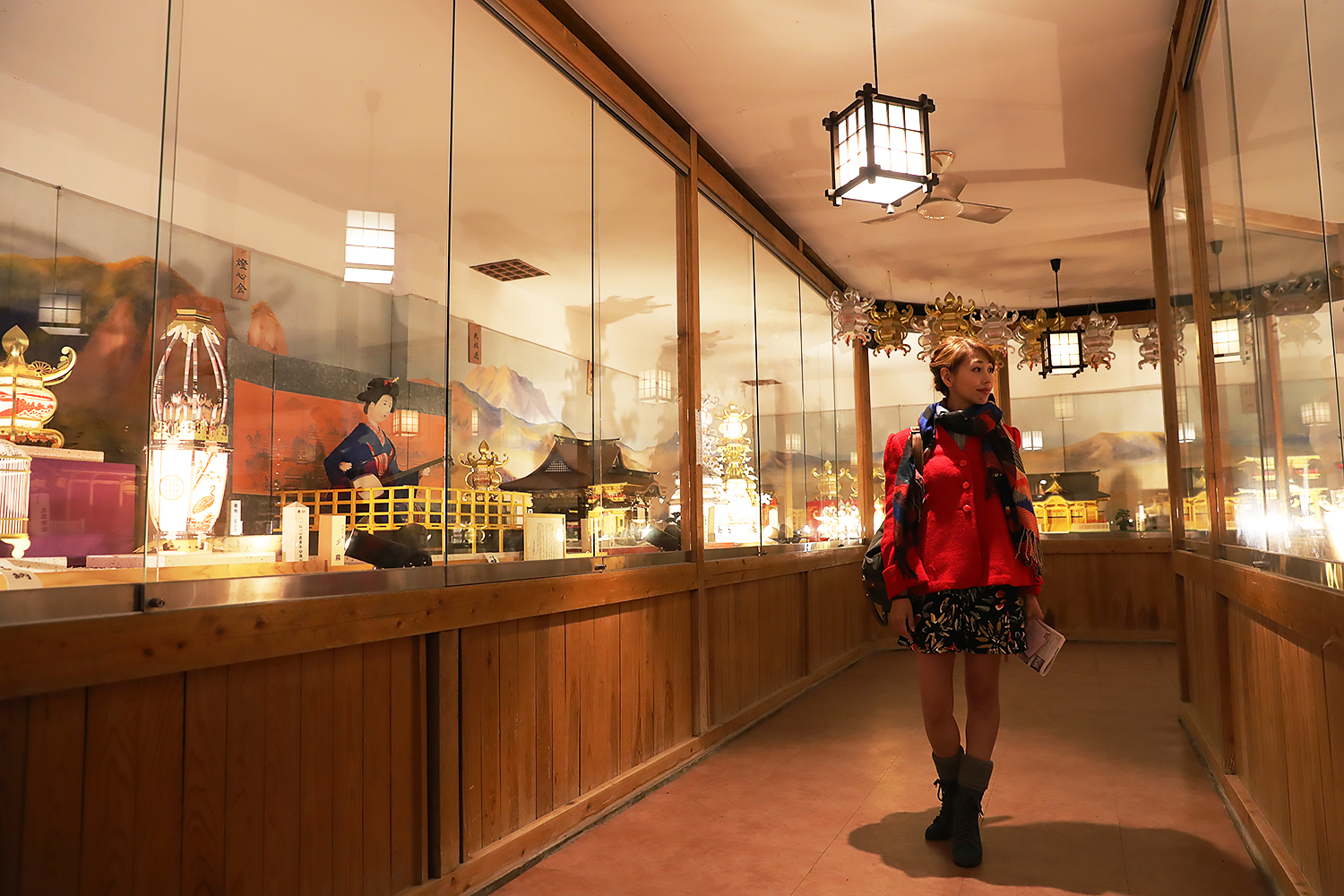
The "Omiya Shrine, Lantern Hall" is where you can see all the "Yamaga Lanterns" dedicated at the Yamaga Lantern Festival held annually on August 15 and 16. The lanterns currently on display are those dedicated at this year's festival. The lanterns are displayed in a glass case and are lit by lights. By the wayLanterns dedicated in previous years are sold to those who wish to receive them on a first-come, first-served basis. In addition to the sale of the lanterns, there is an application form for those who visit the Lantern Hall, and those who apply and are selected by lottery will receive a gold lantern free of charge.
Furthermore, on the day of the festival on August 15 and 16, a "lantern omikuji" will be set up, and some of the "winning" omikuji will be a rare and elaborate omikuji, in which the winner will win the previous year's lantern.
The culture of lanterns, which originated from Omiya Shrine, has deeply penetrated the area as a symbol of the region, and seems to have become an admired sightseeing spot for visitors.
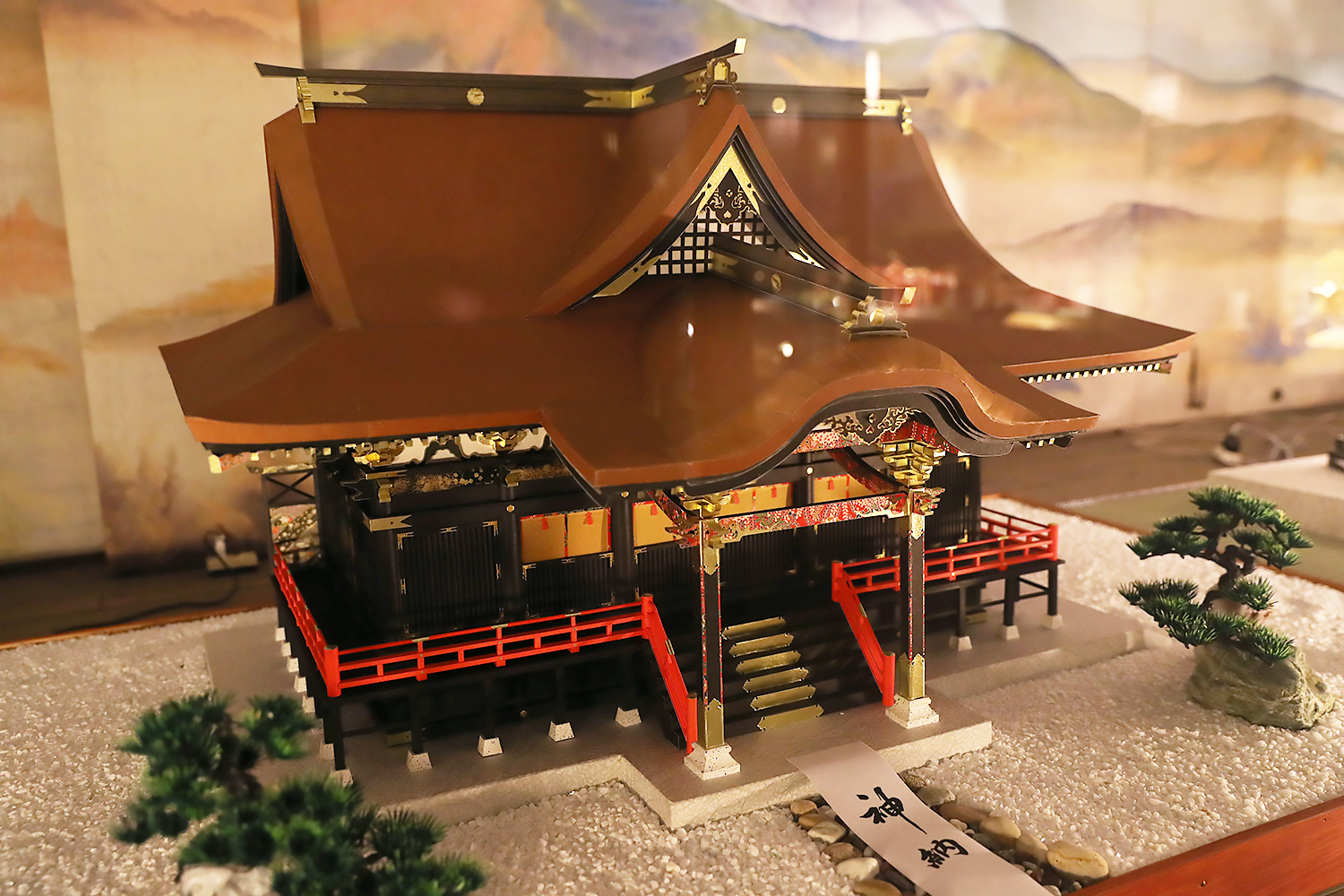
Omiya Shrine
Address: 196 Yamaga, Yamaga City, Kumamoto Prefecture
Phone: 0968-44-1257
URL:http://www.geocities.jp/oomiya_j/
METRO CAFE
Address: 1392 Yamaga, Yamaga City, Kumamoto Prefecture (inside the former sake brewery Ten聽母屋)
Phone: 0968-43-0874
Business hours: [Monday, Thursday, Sunday] 11:30-18:00 / [Friday, Saturday] 11:30-22:00
Lunch time 11:30-14:00
Closed: Tuesday and Wednesday
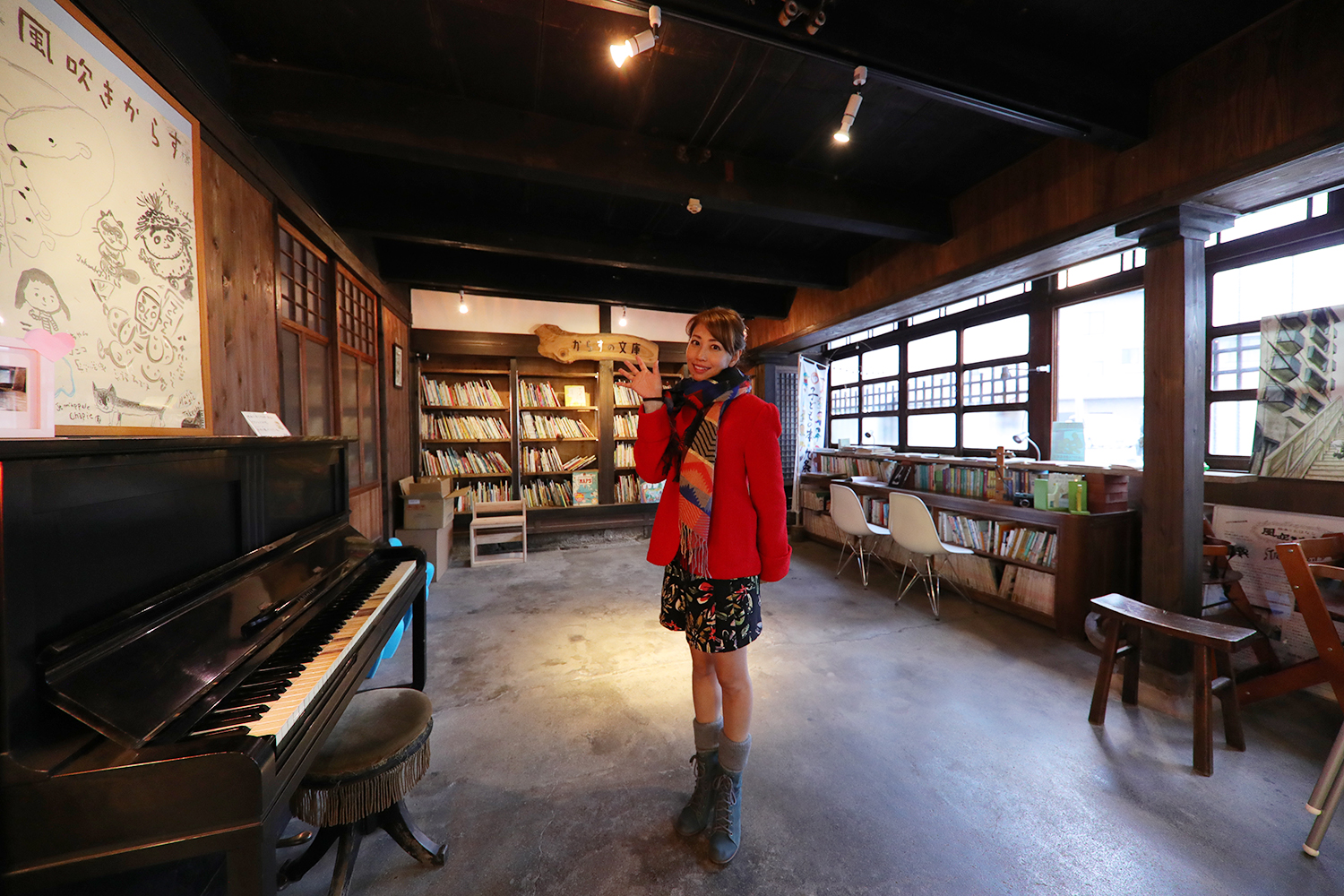
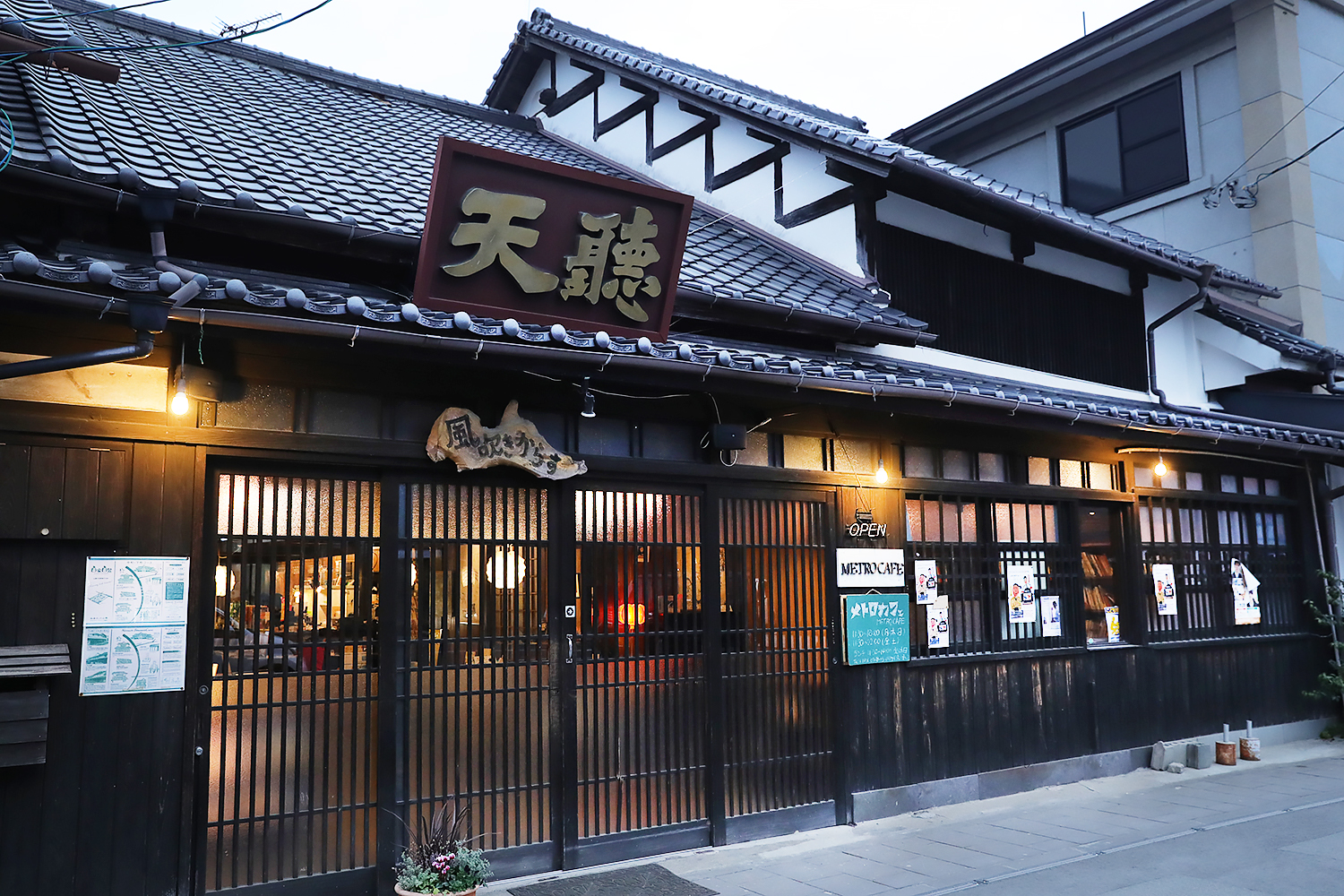
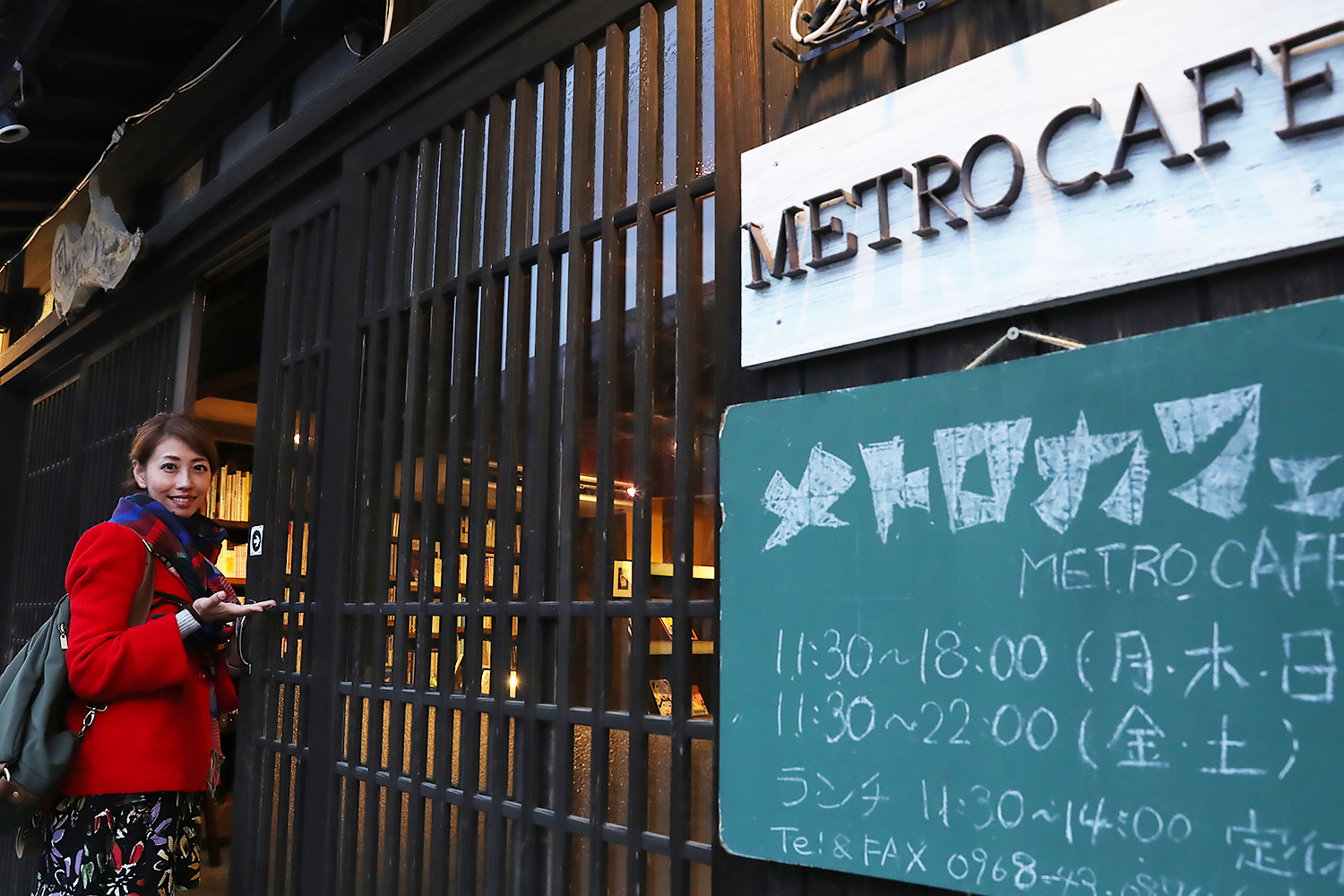
METRO CAFE" is located on a street right next to the free parking lot on Buzen Kaido. The former Tencho warehouse, a sake brewery, has been used for library activities, picture book readings, workshops for children, and other activities for the past 17 years, and about 4 years ago, the main building was renovated to house a cafe.
Retro-modern storefront in a renovated "main house" of a Tenchou warehouse
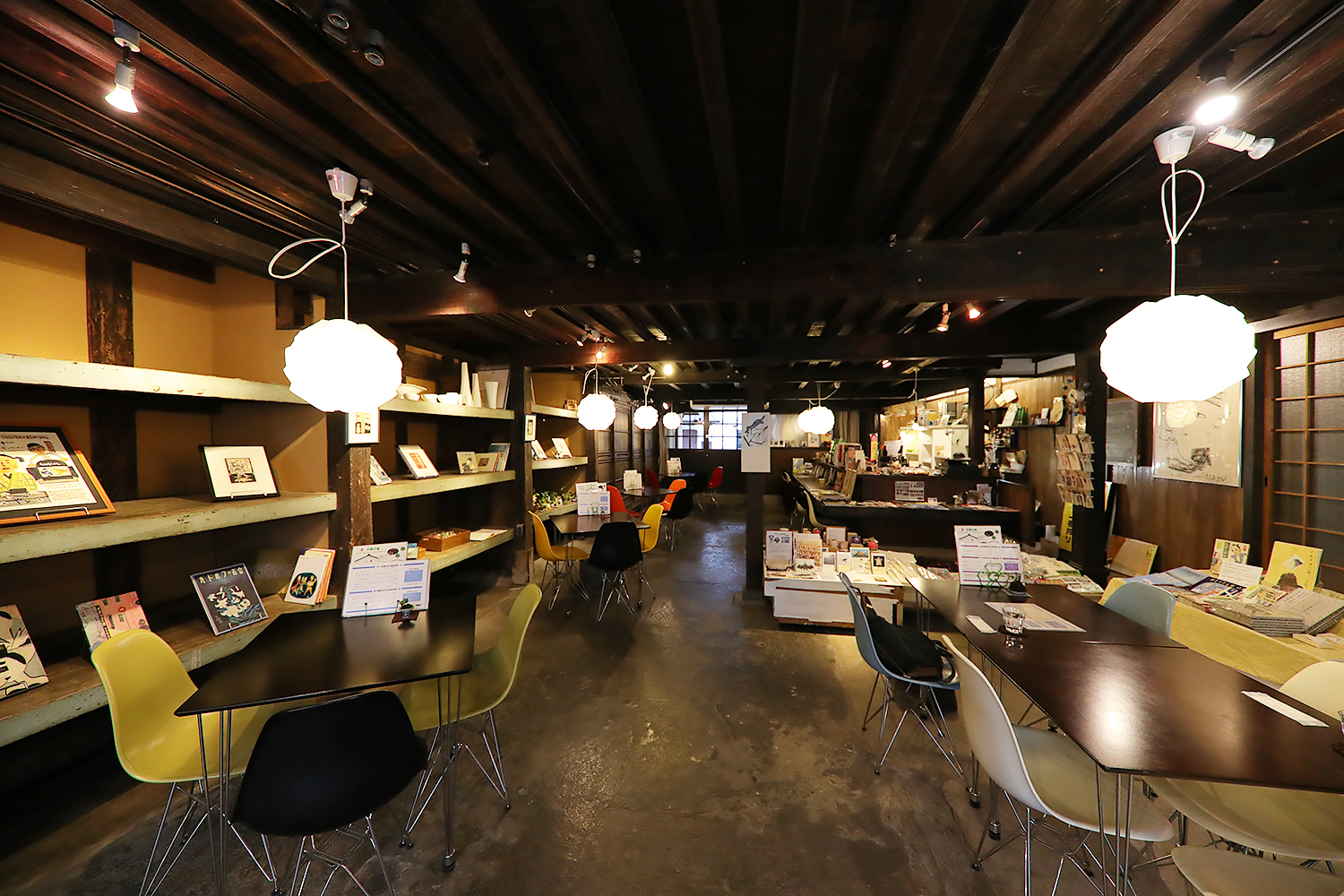
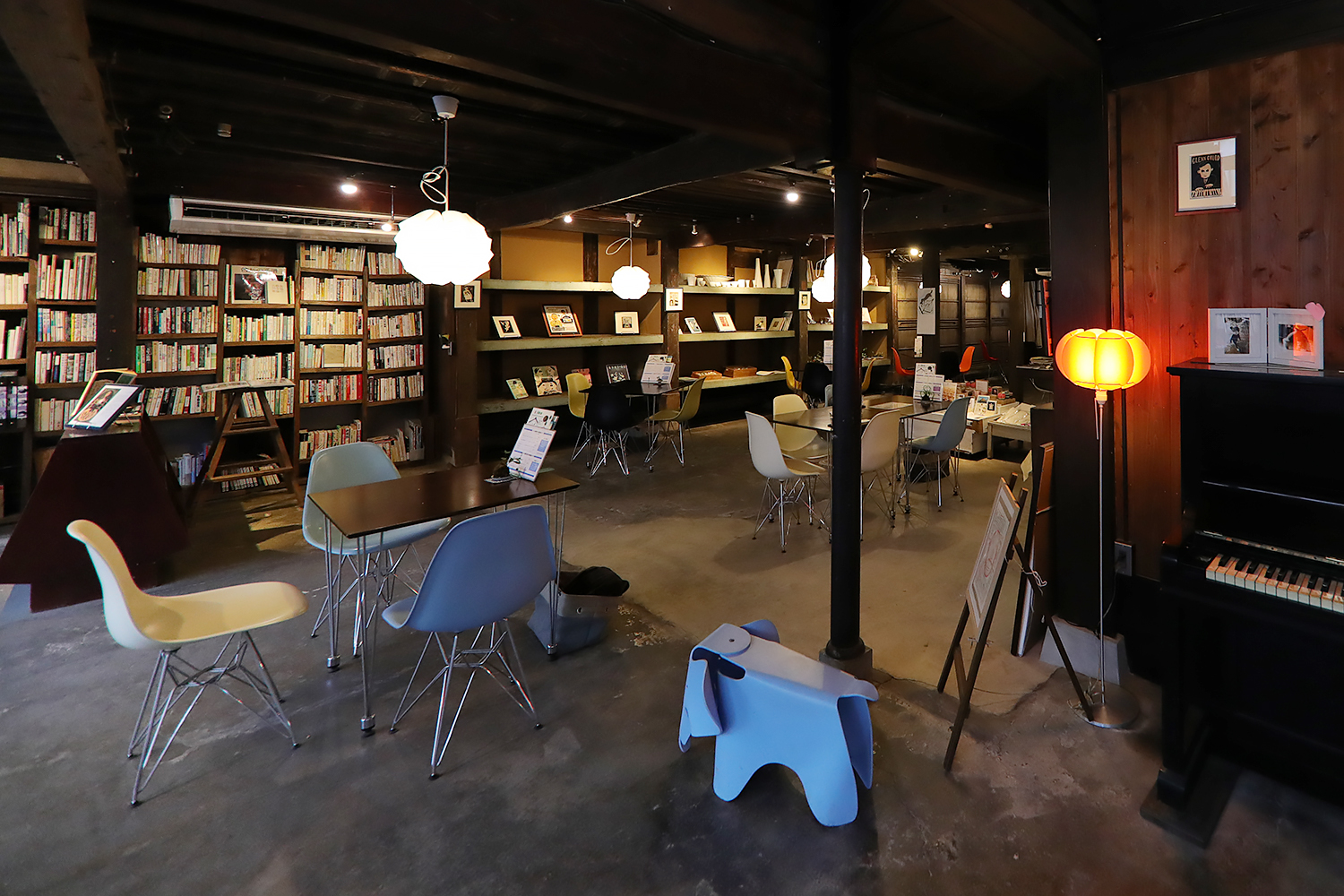
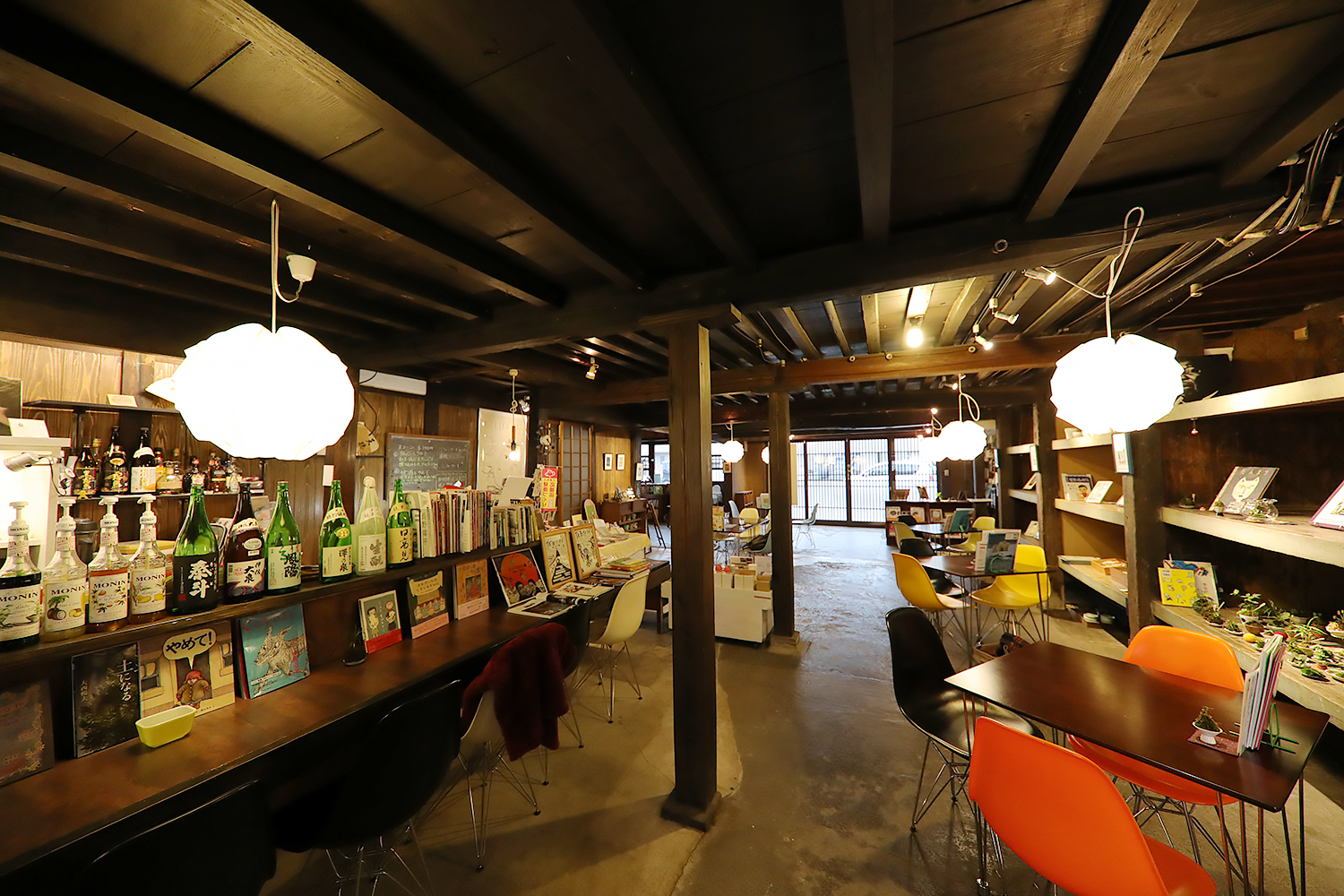
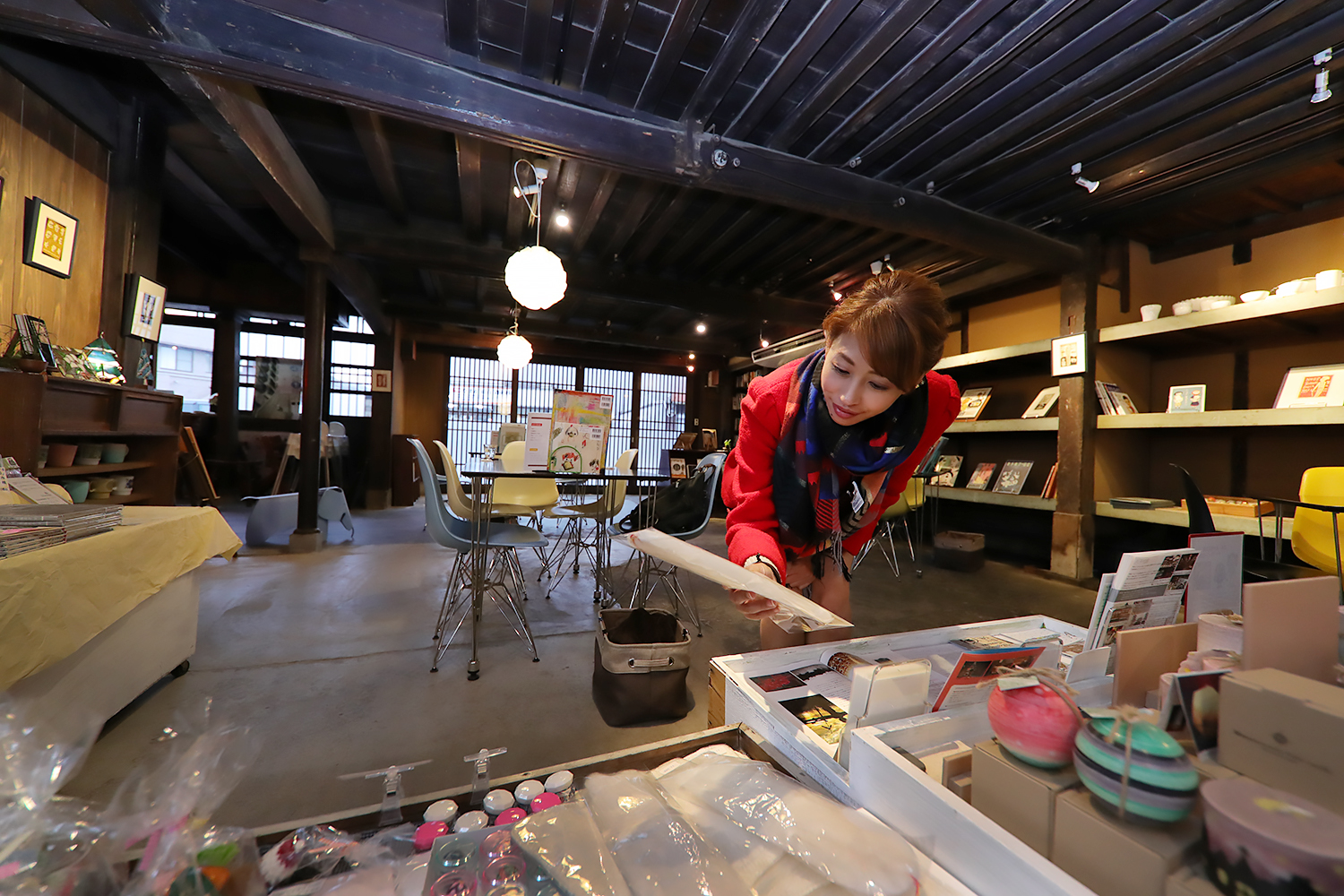
Upon entering the store, I was surprised to find that it was much larger than I had imagined. A vast number of books in bookshelves that soar to the ceiling, colorful table sets, a wide variety of bottles lined up on a long counter, and antique sundries displayed along the walls decorate the spacious interior.
Book "Karasu no bunko
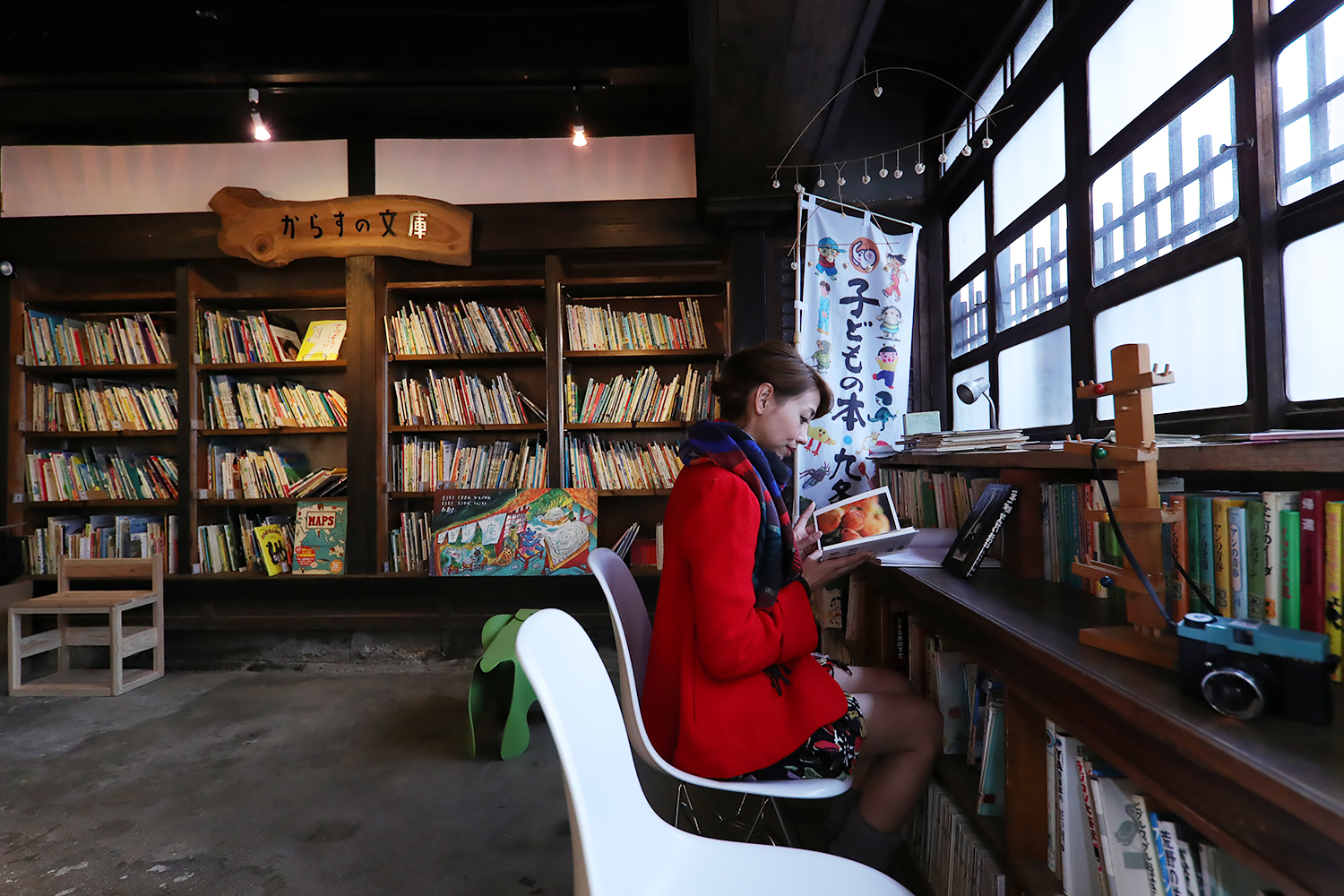
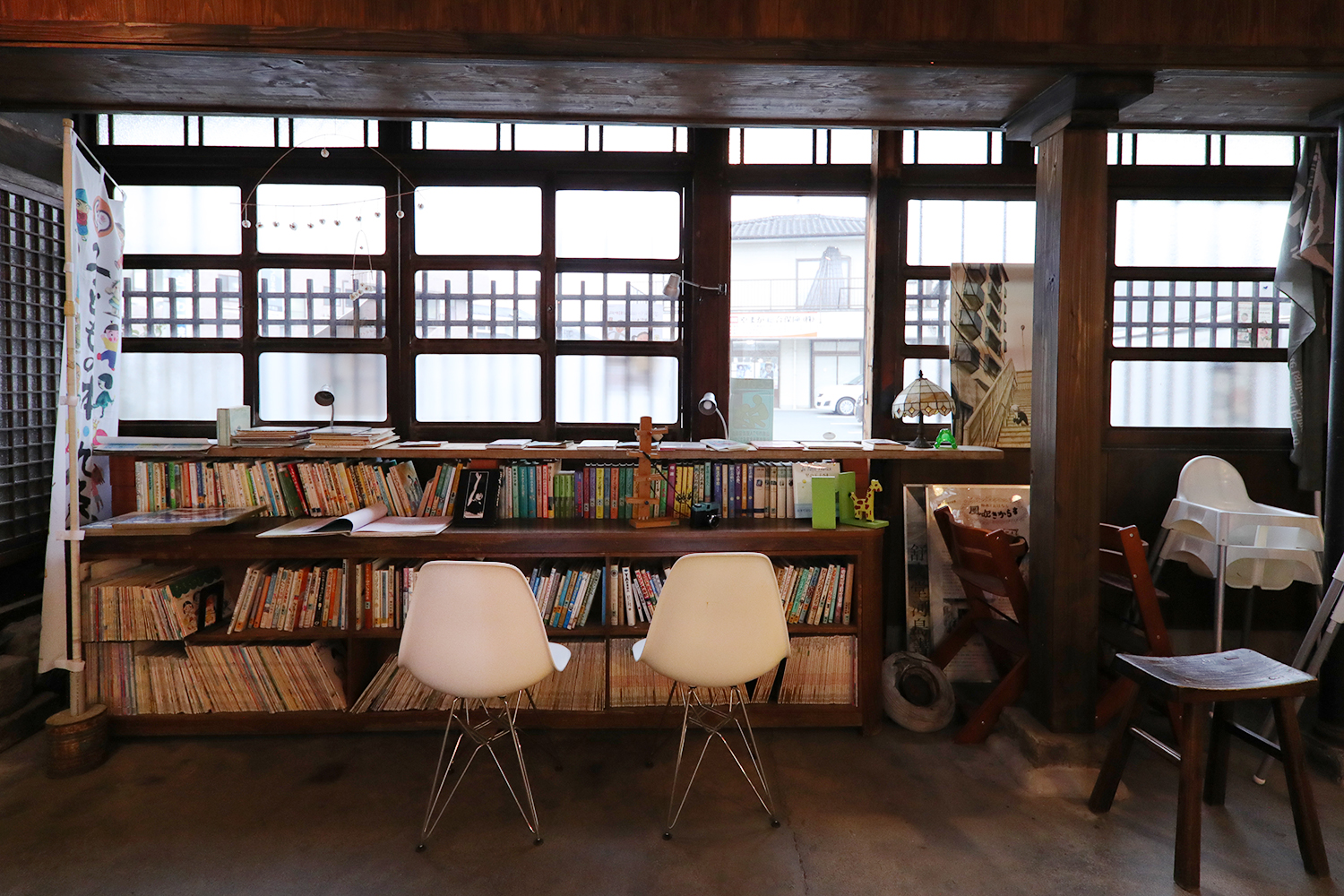
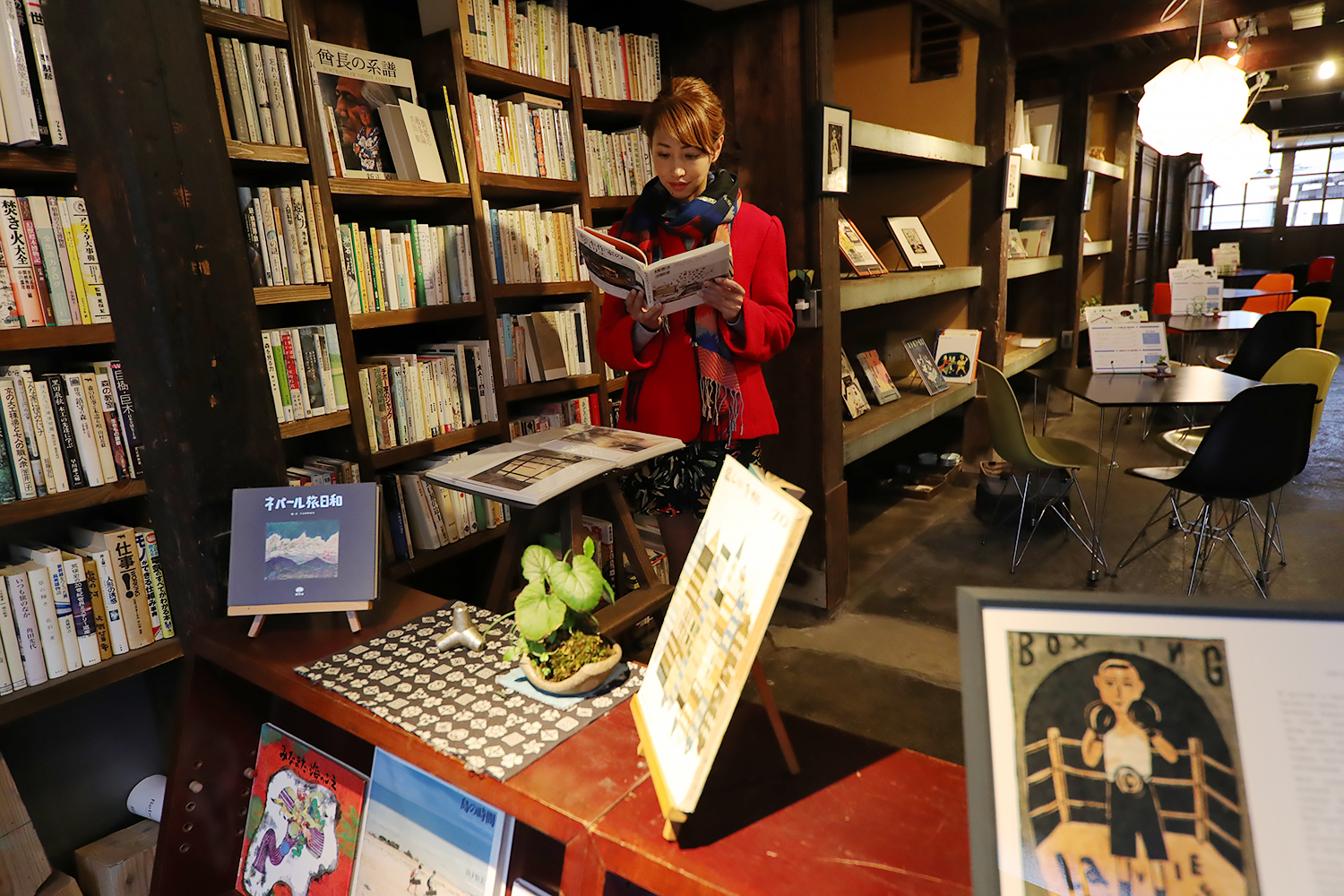
Karasu no Bunko, the owner's original library, has a large number of books ranging from picture books for small children to books for adults. It is a place where many people relax with a book and a cup of coffee in one hand, or enjoy picture books with their parents and children. You can also read to your children or borrow books from the library.
Activities at the Old Sake Brewery
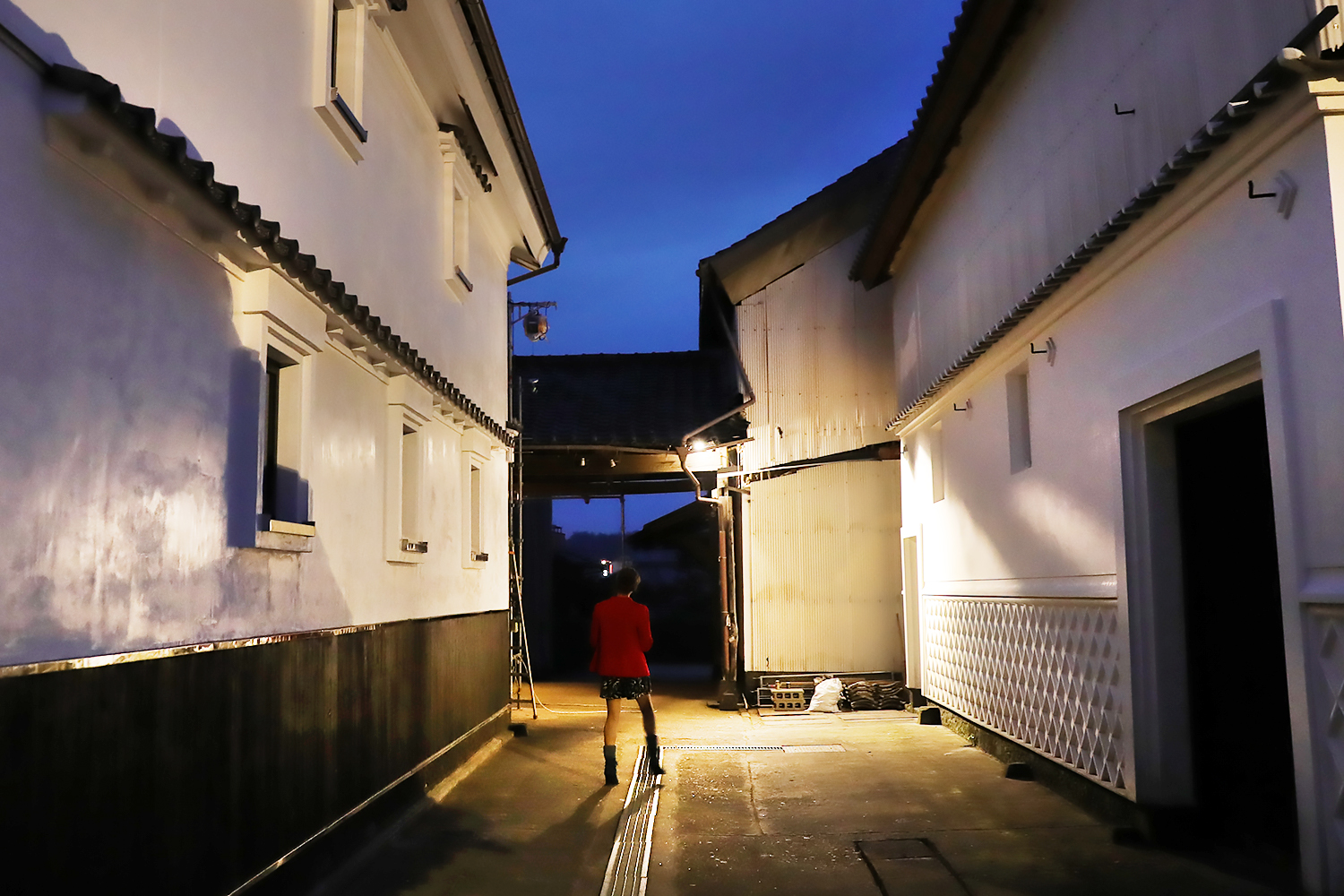
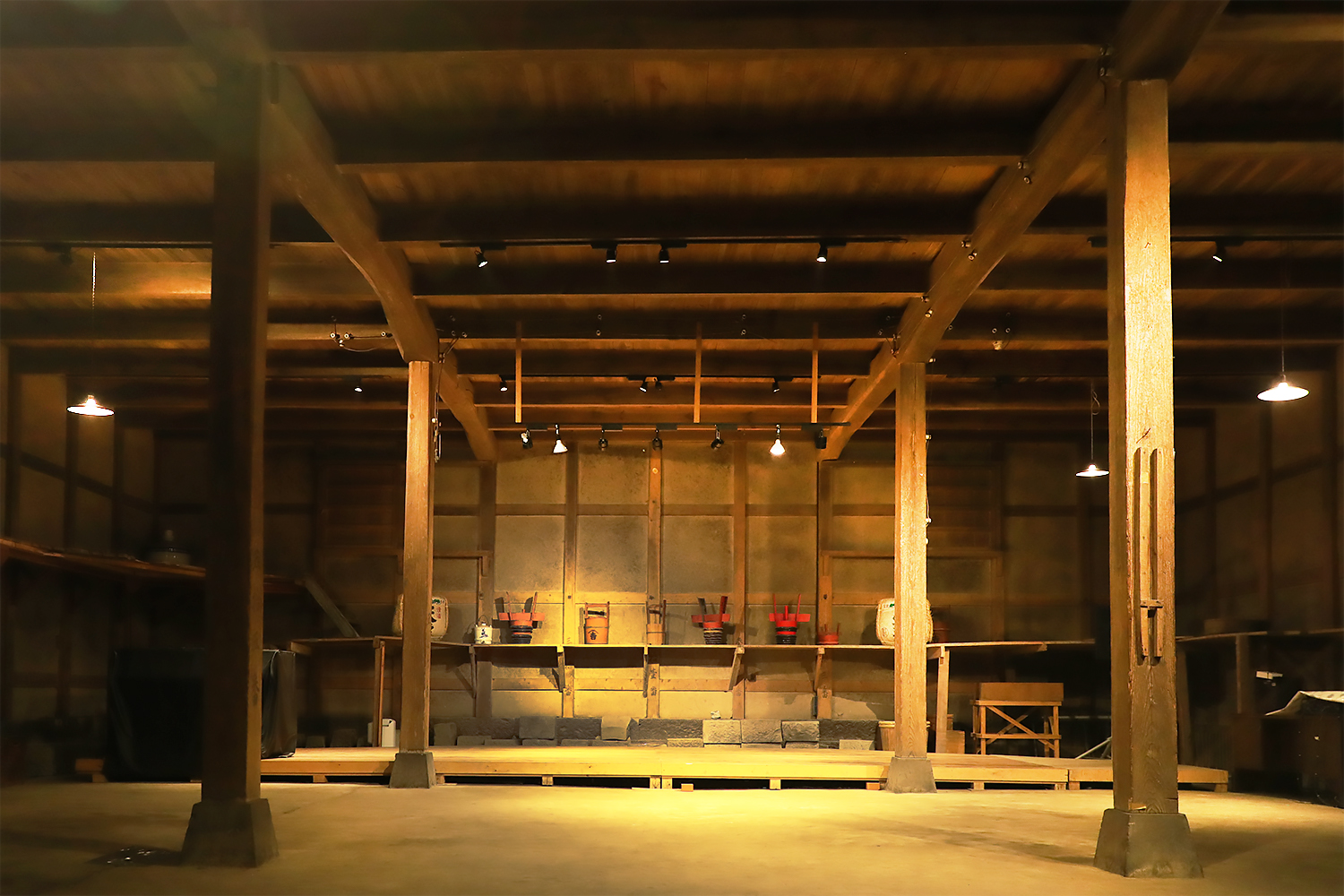
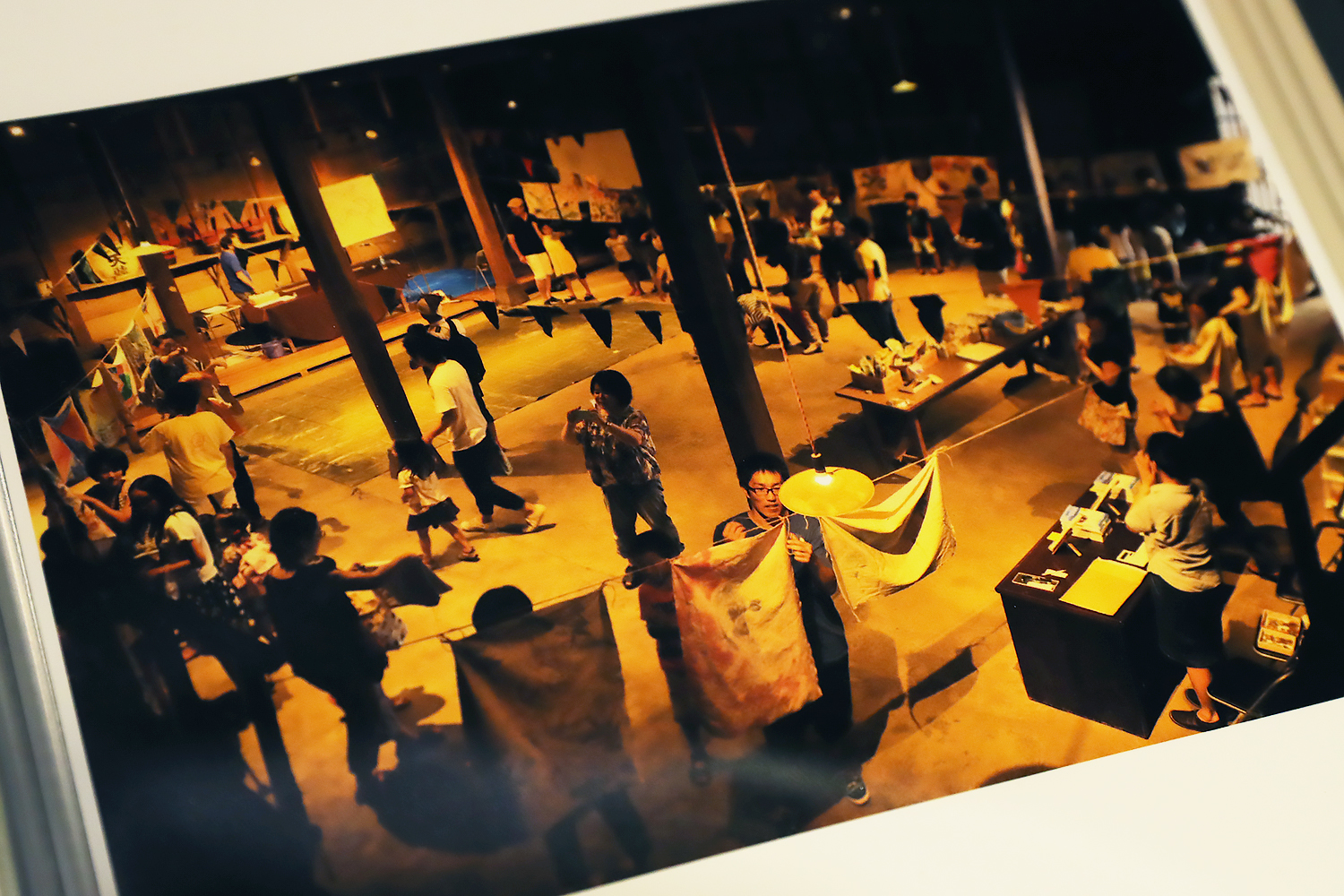
Behind the café, across the courtyard, are five warehouses, among which the large warehouse used for brewing is a free space where workshops for children and markets are held.
sundries
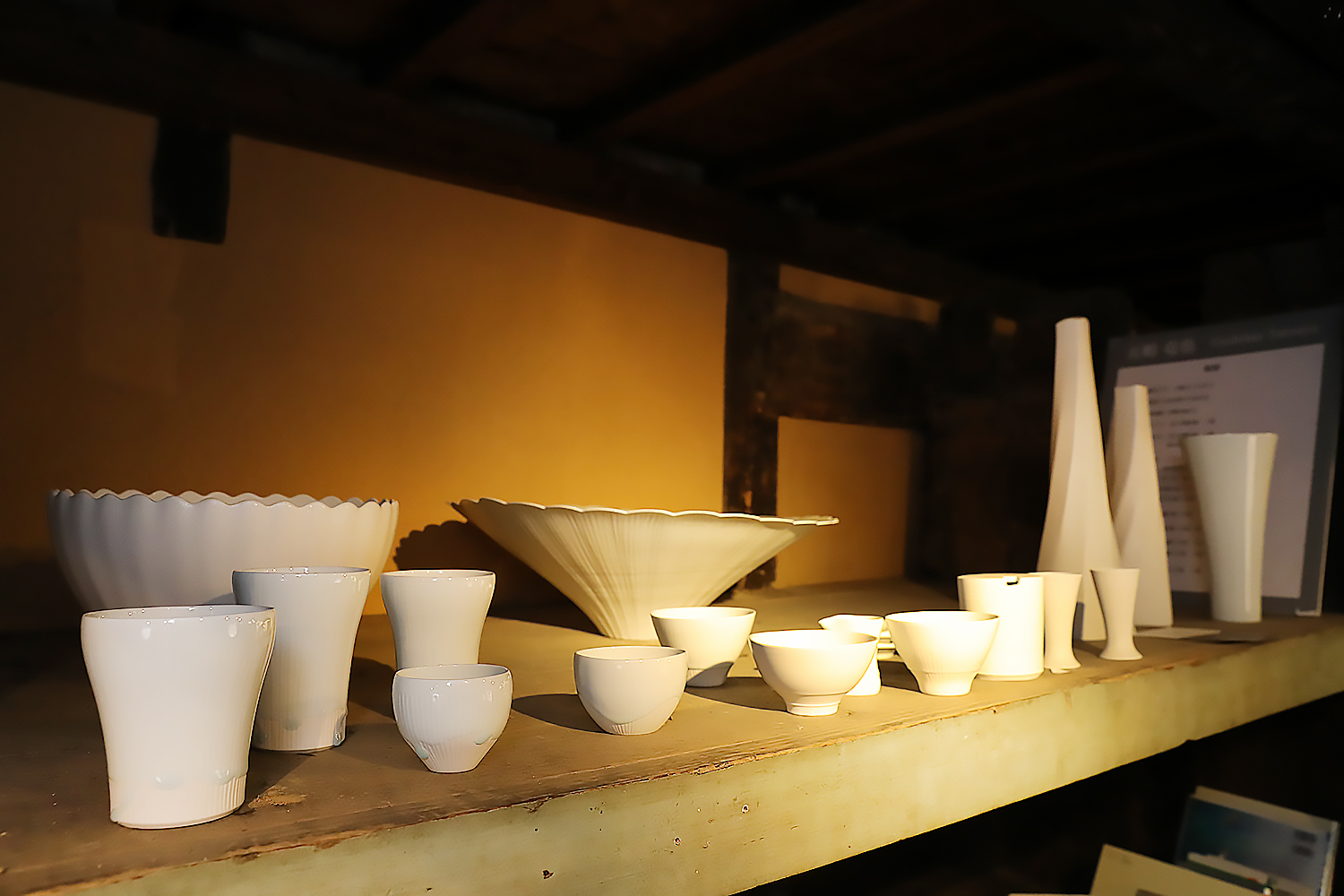
Works by artists living in Yamaga are exhibited and sold. One of the most eye-catching pieces was "Yamaga Silk" (above image). It is a natural silk carefully produced from silkworms grown in Yamaga, and is currently being developed to produce more of this silk. The day may soon come when Yamaga silk attracts not only Japan but also the world!
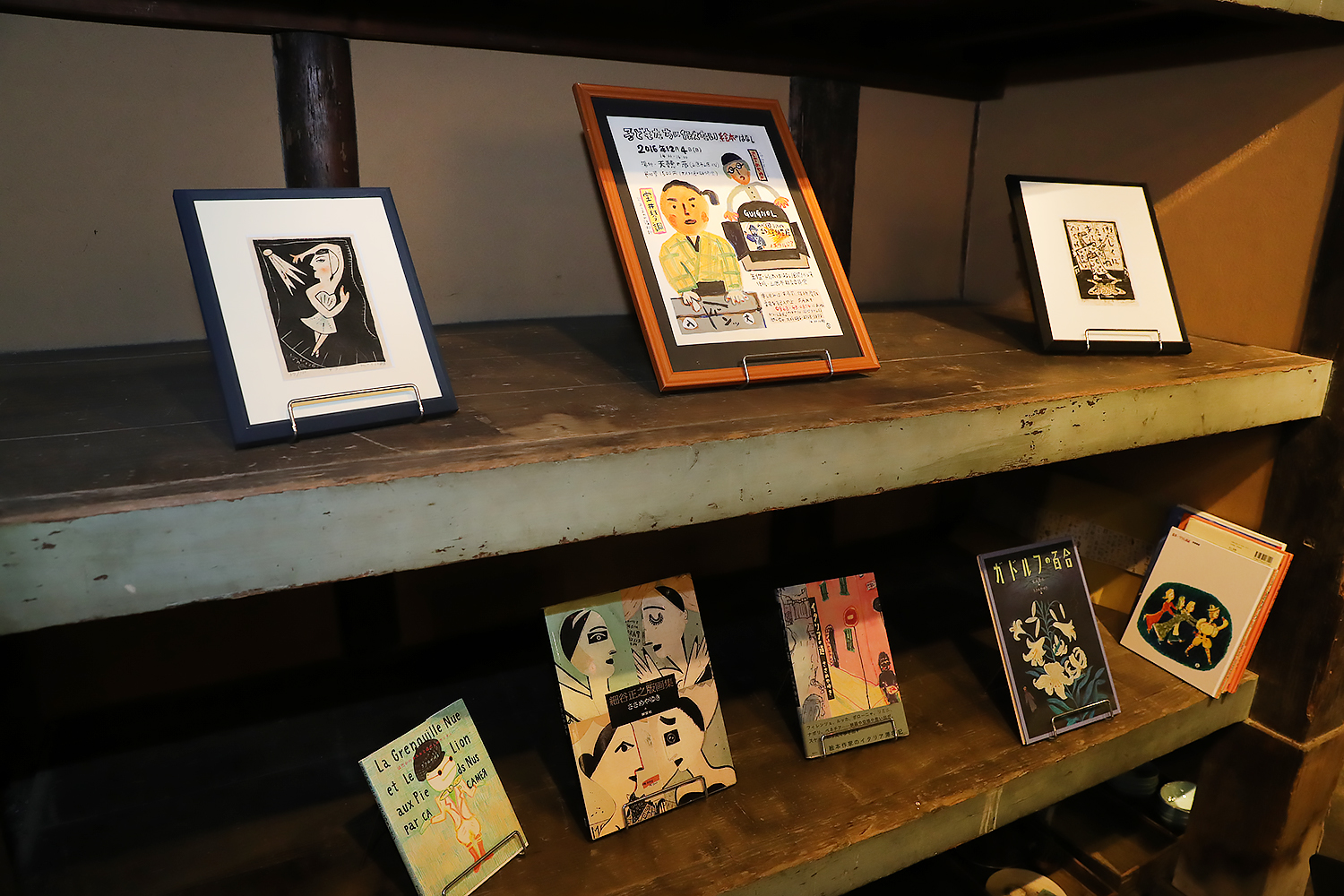
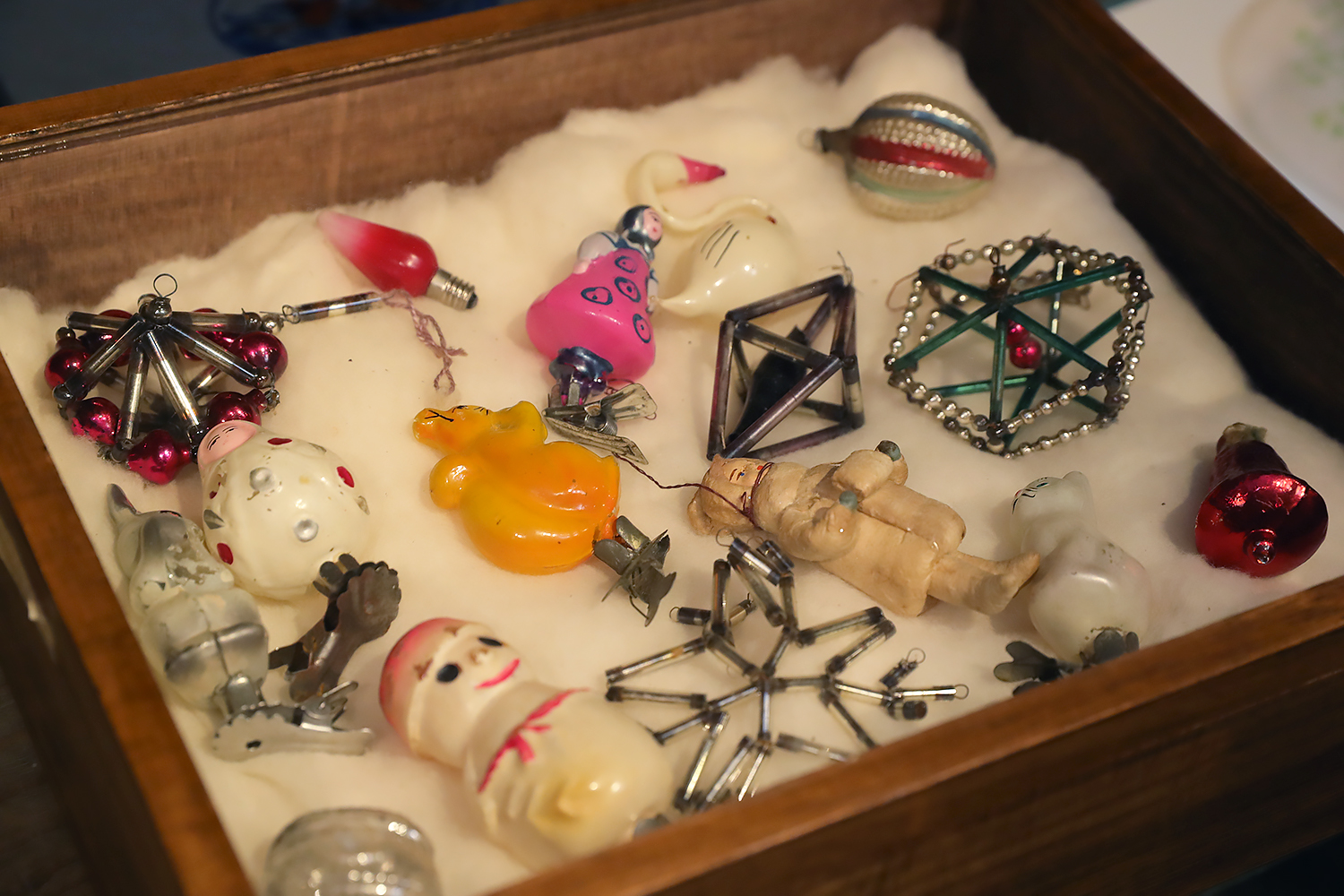
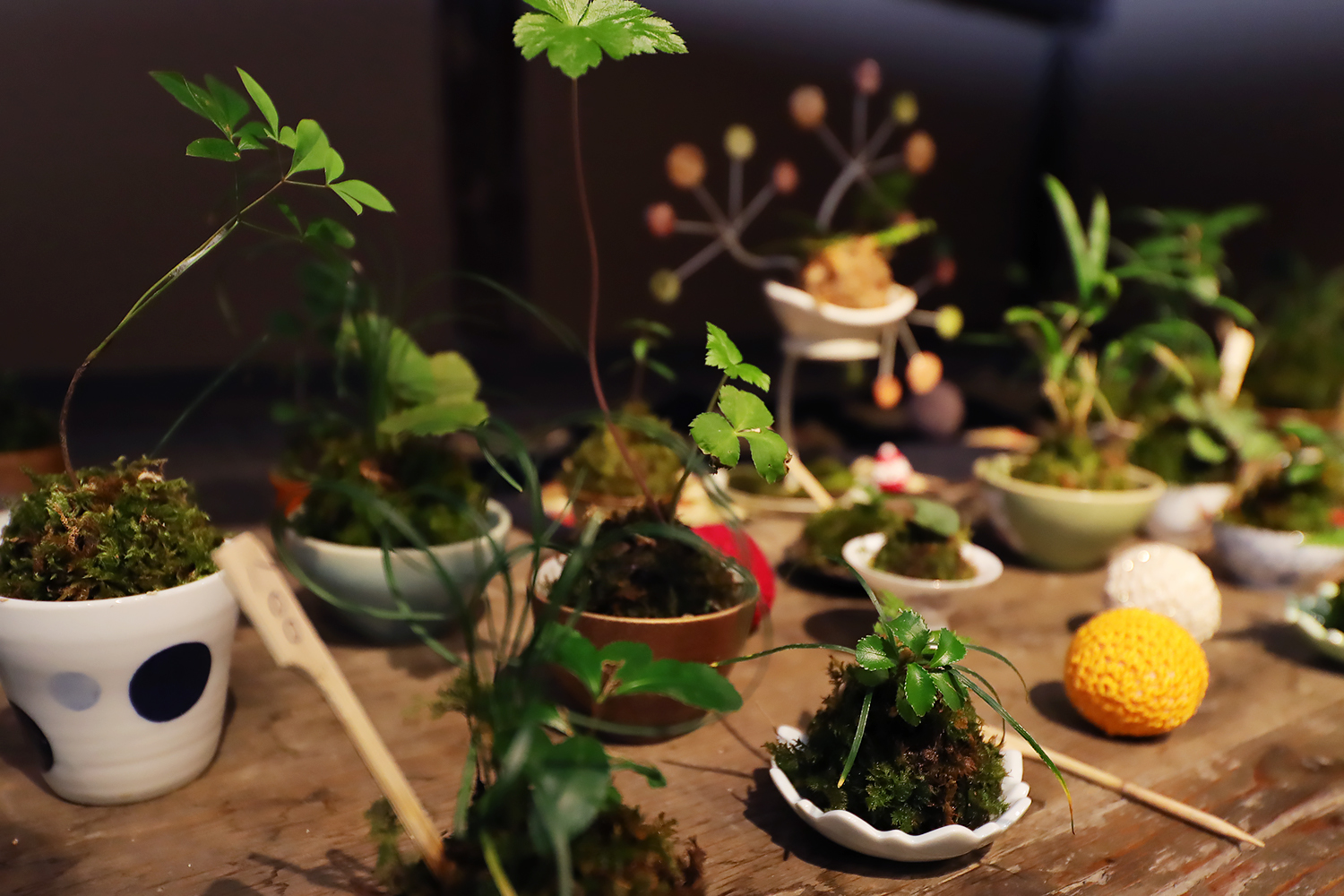
The corner exhibited antique goods owned by a picture book author, local tableware, and original paintings for sale. The atmosphere of the picture books and the books themselves combined to create a unique space.
Recommended Lunch Menu
Loco moco] 1,000 yen (drink and dessert set)


Loco moco is a healthy dish that uses a variety of fresh local vegetables. The rich eggs, which are carefully fed, melt in the mouth and add even more depth to the flavor. The burg also contains plenty of vegetables and is accented with the texture of chopped lotus root.
Beef curry] 1,000 yen (salad, drink and dessert set)
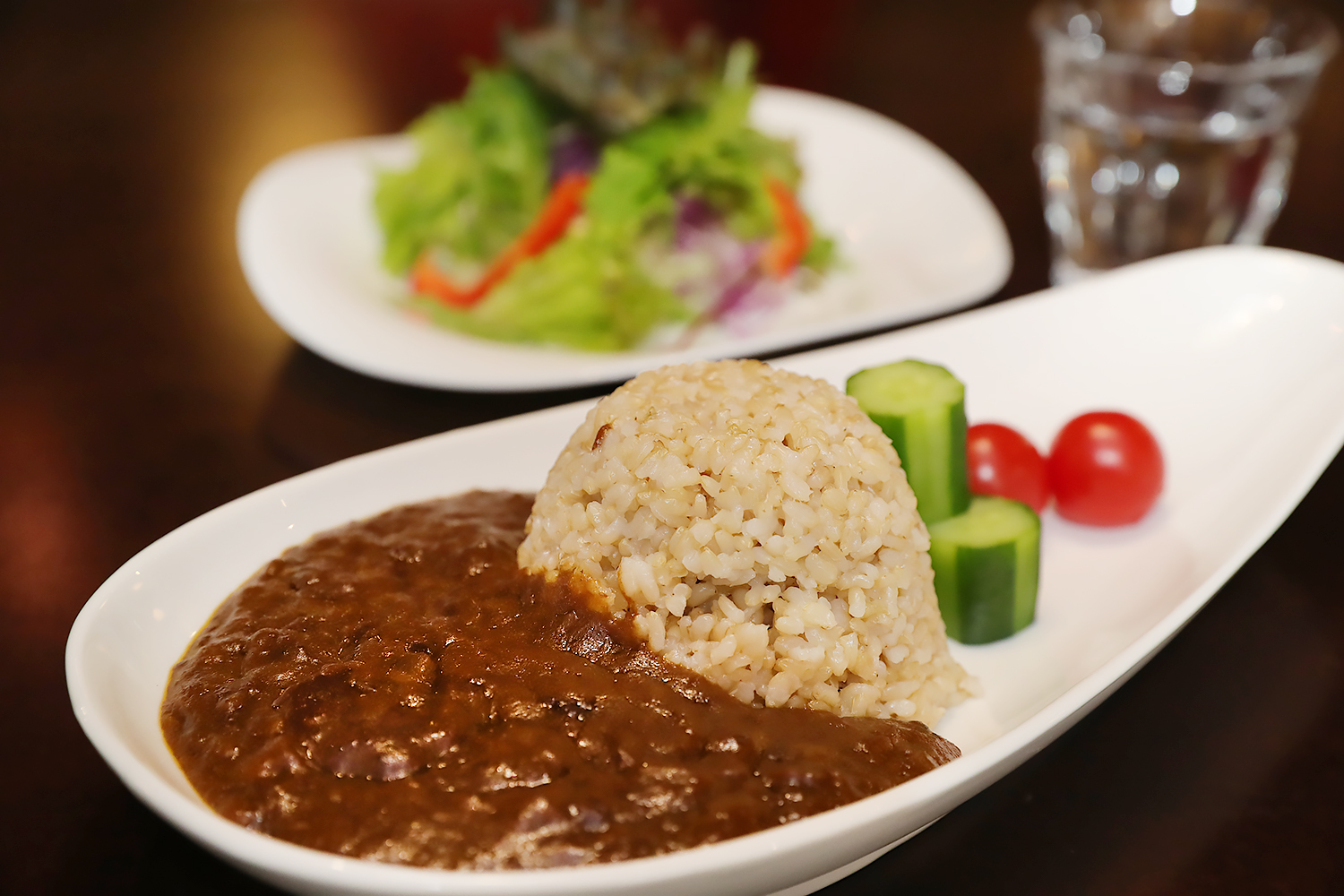

This luxurious curry is infused with Kumamoto beef tendon and locally grown vegetables. The ingredients are cooked for such a long time that they melt into the roux. It has a slight sweetness with a tangy spice. The rice used in both the loco moco and curry is sprouted brown rice. The menu is full of dishes that will revitalize your body from the core after a tiring day of strolling.
Incidentally, the cucumbers served with the curry were lightly seasoned with salted koji from "Kiya Honten," a local rice koji specialty store that has been in business since the Edo period. The aroma of koji and the sweetness of the cucumbers wafted softly in my mouth, a new taste for me.
Organic coffee] 400 yen

The theme of the café's menu is "organic" and "healthful," and the ingredients for the drinks and desserts are carefully selected. Incidentally, the coffee cups and saucers are American antique tableware.
Owner's commitment

The owner, Eriko Otsubo, has been running a bunko activity in the main building for the past 17 years. She continues to enrich and nurture people's hearts and minds through books, such as by sharing the wonder of books as a member of a local picture book reading group and by opening a bunko with books she has collected steadily in cooperation with the community.
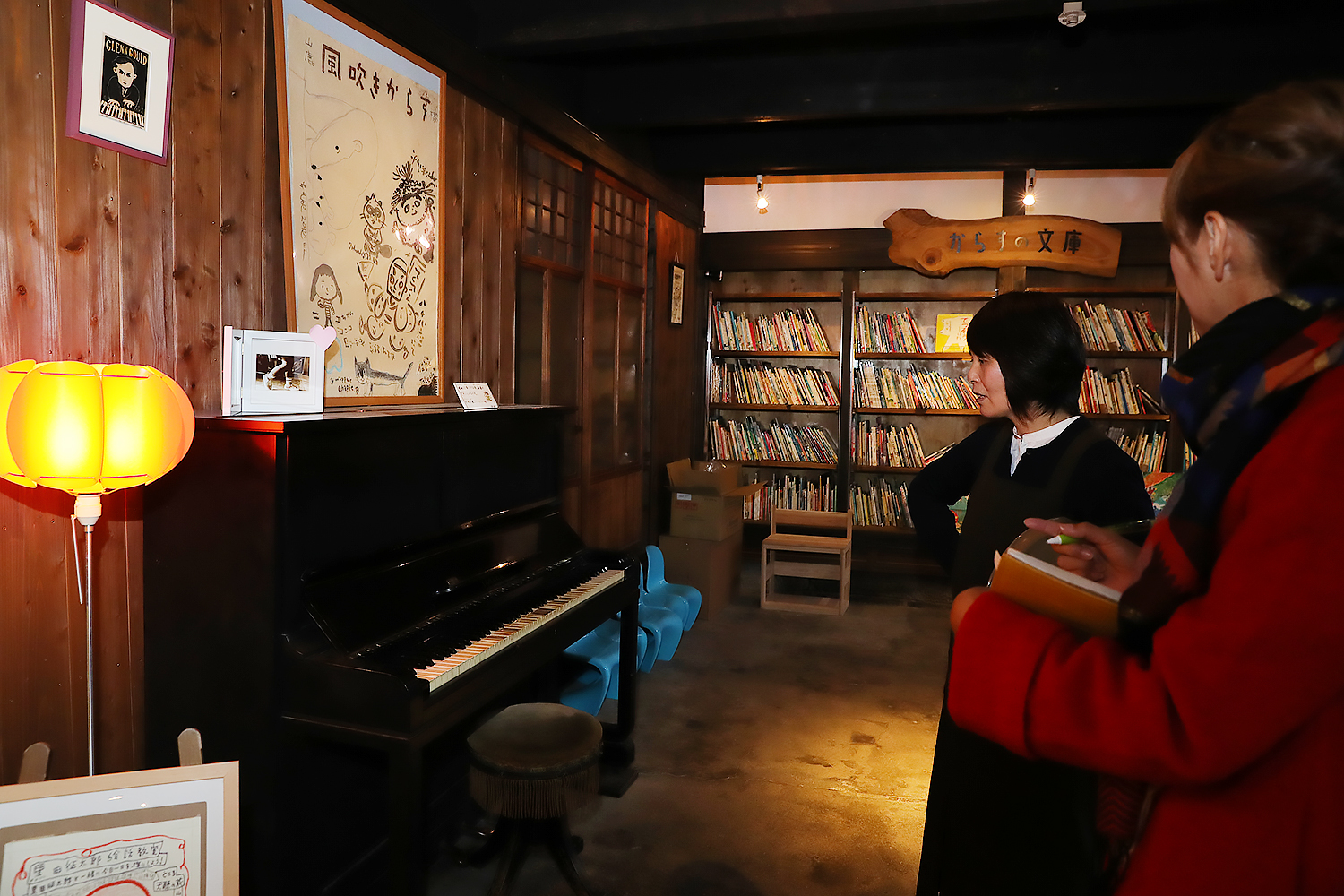
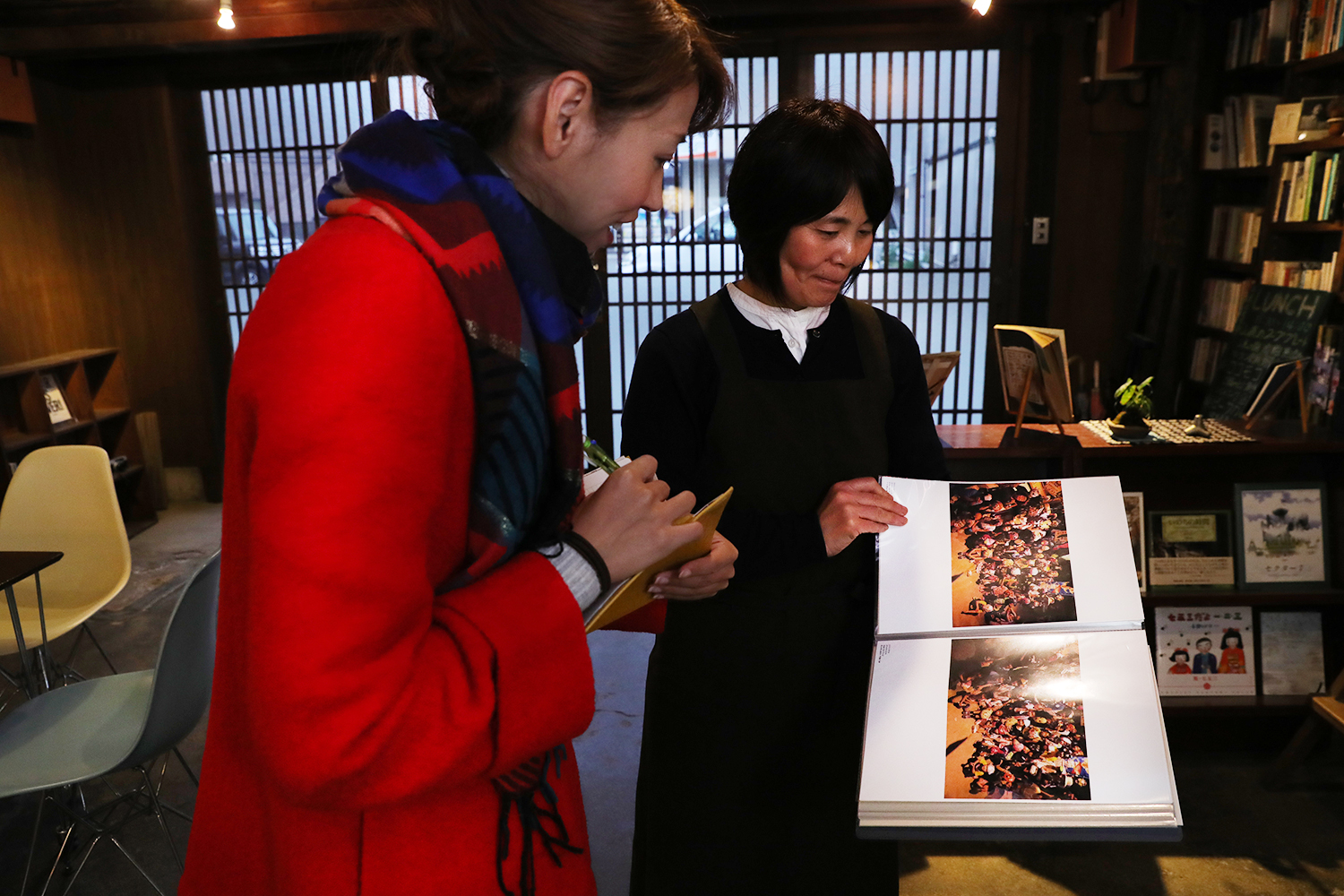
Mr. Otsubo says, "I hope to bring smiles to the faces of as many people as possible by bringing them into contact with not only books, but also with spaces and objects from the good old days. He also holds regular exhibitions of artists' works in the storehouse behind the store, and invites lecturers to hold workshops on craftsmanship.

After the walk
The spirit of the Yamaga people who strive to preserve local history and culture!
Although it was a rushed tour, we were able to experience various aspects of Yamaga's culture over the course of the day. What impressed me the most during the walk was the efforts and activities of the local people to preserve and maintain the atmosphere and streetscape recognized as a "historical and romantic town.
Many merchant houses along the Buzen Highway, which was used by the shogunate during the Edo and Taisho periods, developed around hot springs, and a mere stroll along the road will give you a hint that the Edo and Taisho periods were truly the golden age of the city.
The town is moving in diverse directions with the flow of the times and is changing its appearance. The people of Yamaga have taken the time to revive the town by creating places where traditions and culture can be handed down, reviving the Sakurayu (former hot spring) and the Yachiyoza Theater, and taking other steps to change the course of the town over time.
Access
Yamaga Onsen Tourist Association
Address: 510-2 Chuodori, Yamaga City, Kumamoto Prefecture
Phone: 0968-43-2952
Business hours: 9:00-17:00
Parking: Available
URL:http://www.y-kankoukyoukai.com/
the Yachiyo Theater
Address: 1499 Yamaga, Yamaga City, Kumamoto Prefecture
Phone: 0968-44-4004
Business hours: 9:00-18:00
Closed: 2nd Wednesday of the month, Year-end and New Year holidays
Parking: Available
Admission: Adults 520 yen, Elementary/Junior high school students 260 yen
URL:http://www.yachiyoza.com/
Wide-area map
510-2 Chuodori, Yamaga, Kumamoto 861-0516, Japan
1499, Yamaga, Yamaga, Kumamoto 861-0501, Japan
Vicinity Map
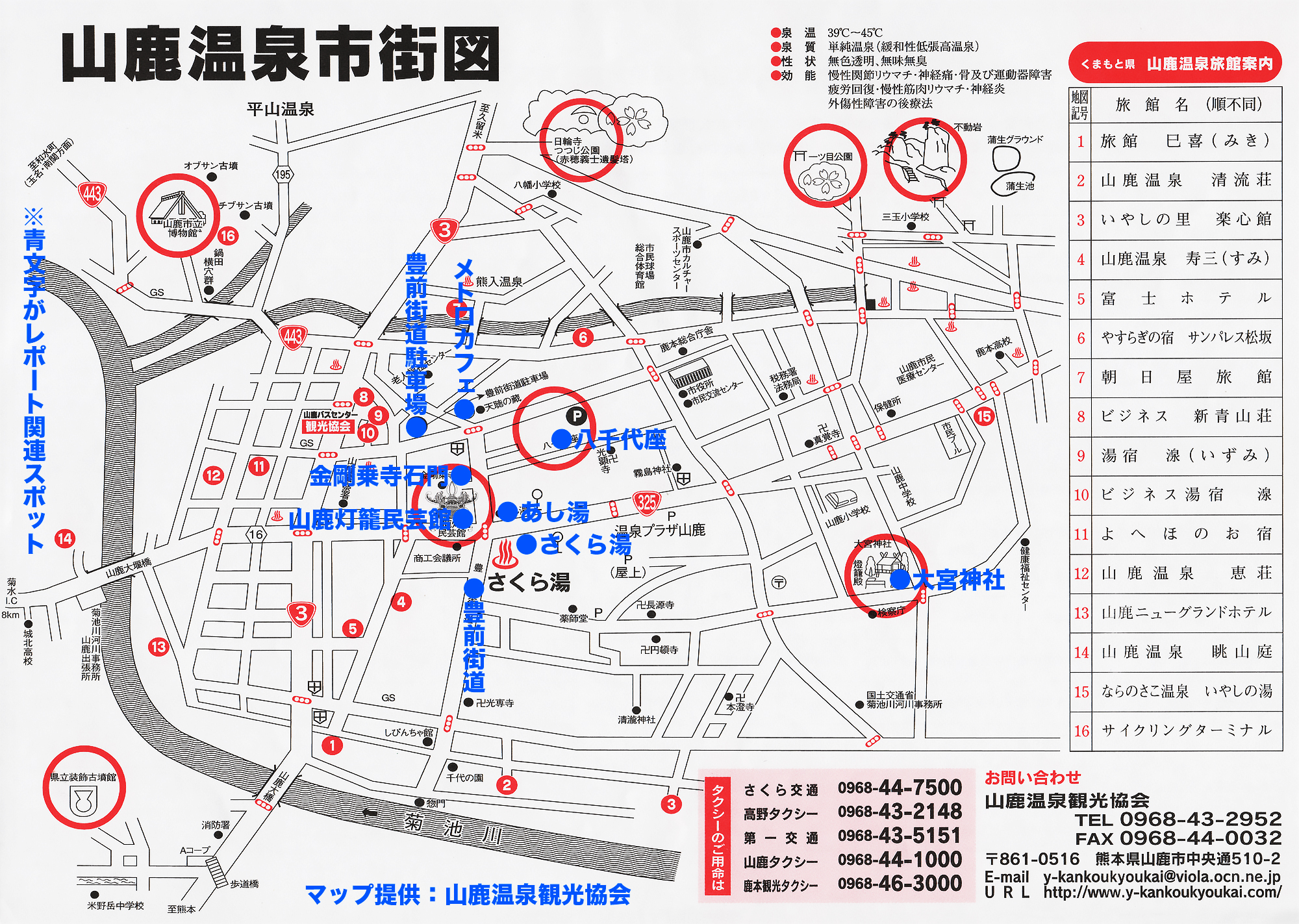
This map was provided by the Yamaga Onsen Tourist Association. Please use this map for walking around the town, making reservations at onsen ryokan (hot spring inns), and inquiring about public transportation.
Interview and editorial staff
Model Report: Nozomi Nakamoto
Photography and production: VOKE Ltd.