


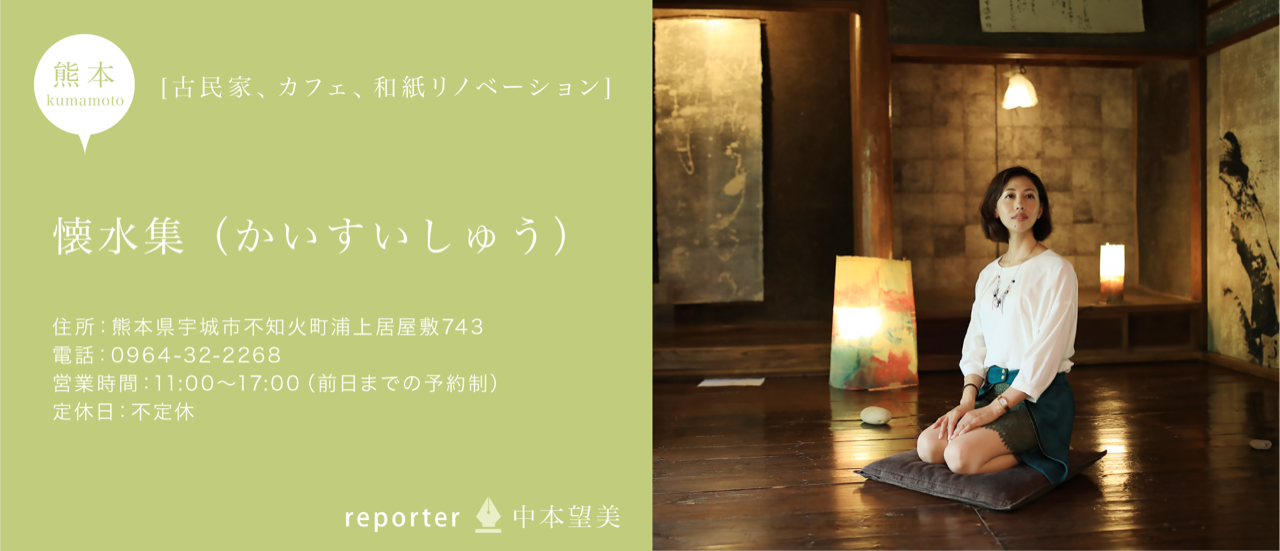

A 100-year-old old private house was restored by human hands and the power of washi paper,
Renovated into a facility where visitors can feel the preciousness of history and culture, as well as the power of nature and people, through all five senses.
Kaisuishu, an inn and café with a creative space woven with Japanese paper.
Programming in LogicA beautiful space spun by nature, old houses, and Japanese paper
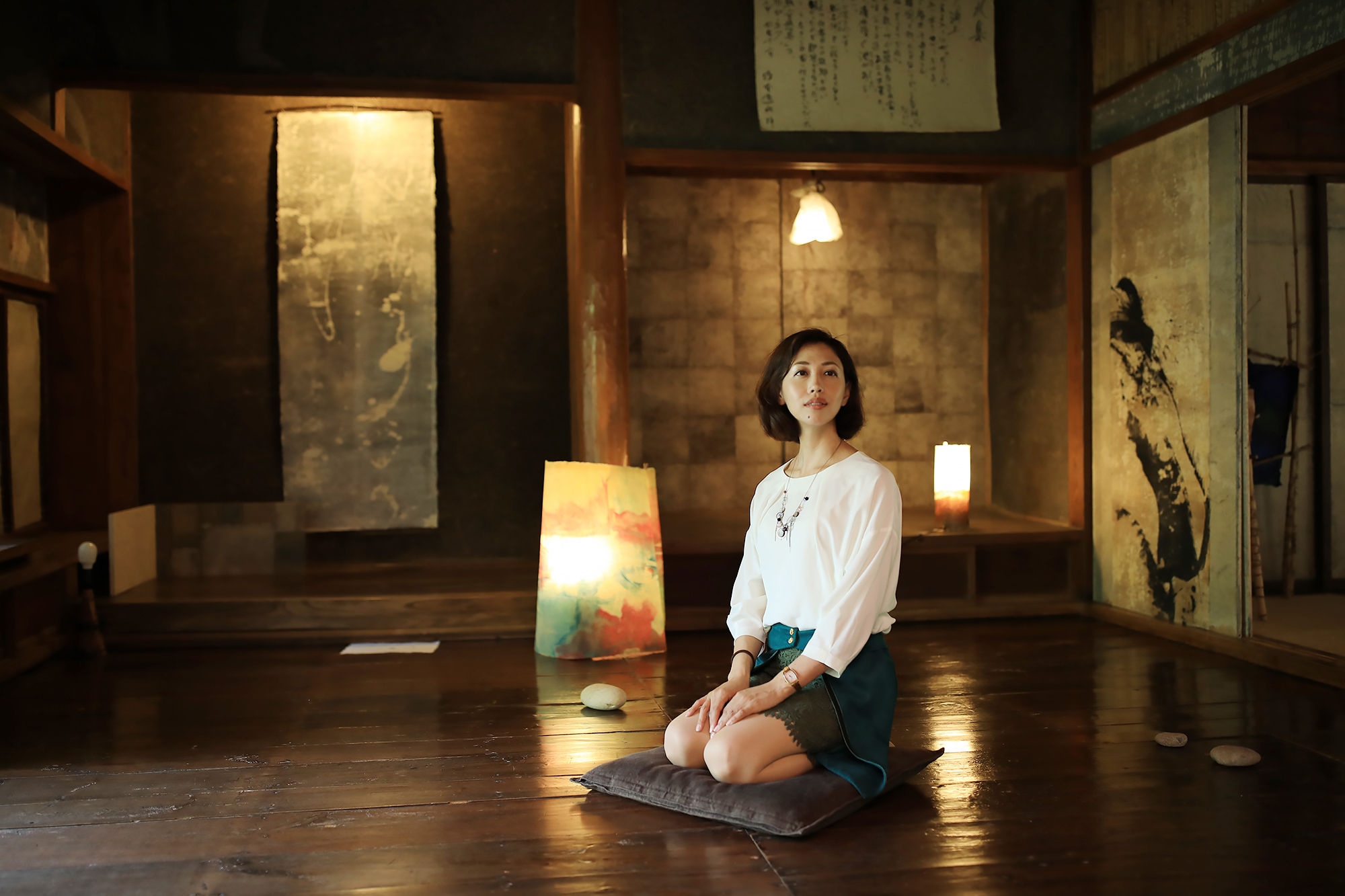
Kaisuishu runs an inn and cafe in a rural village in Ugi City, Kumamoto Prefecture. The owner, Chiyumi Fukumoto, has been renovating a 100-year-old house for the past 17 years. The work continues to this day without a break.
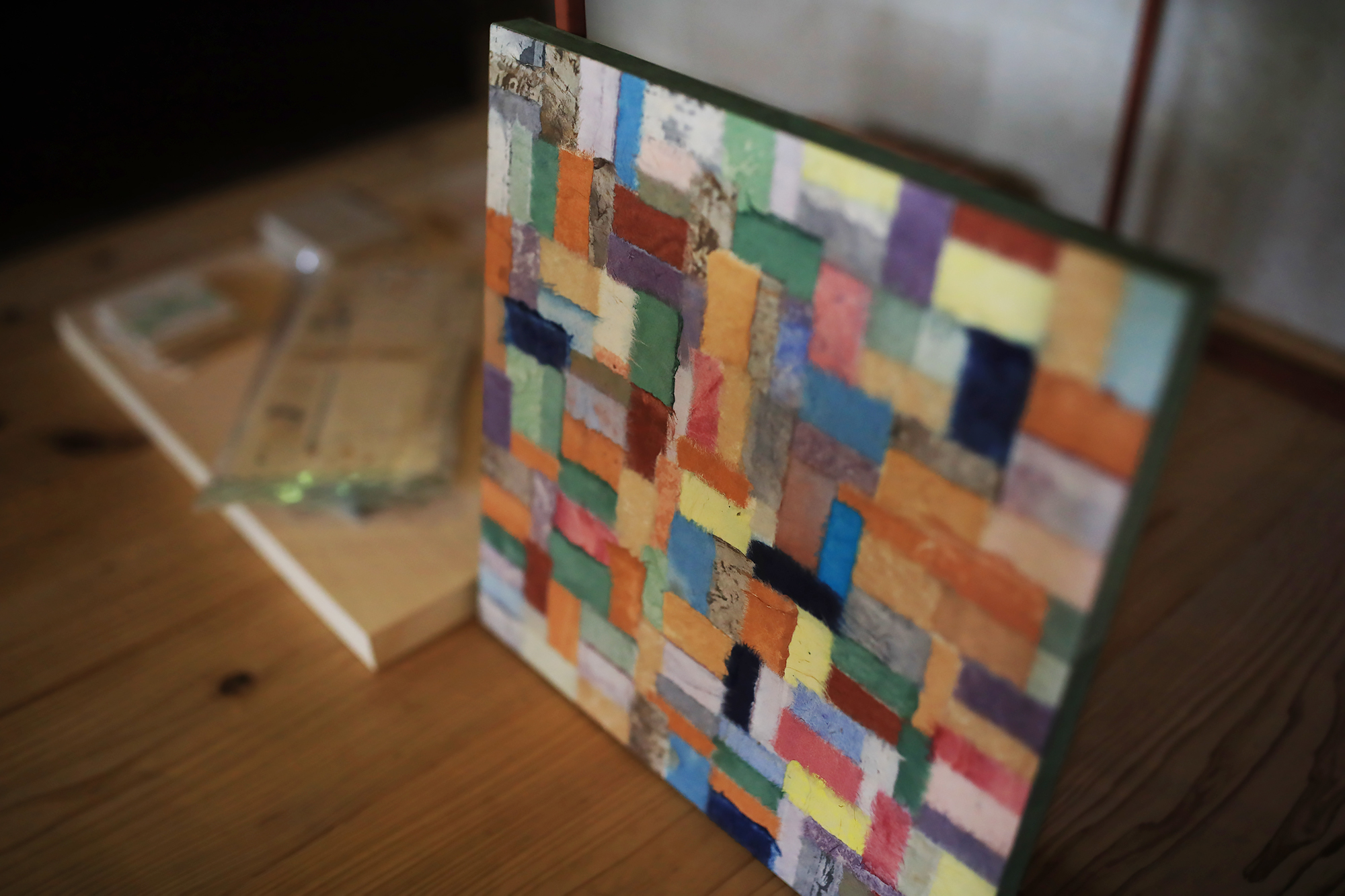
Washi paper works by Naoaki Sakamoto, a washi paper artist that Chiyumi first encountered more than 20 years ago and was attracted to, are used on the walls, tables, ceilings, interior decorations, and miscellaneous small items, creating a soft and inviting space. In addition, the "Doma" space is furnished with a table set for dining, and the Japanese-style room used as an inn is equipped with a zataku (Japanese low table) so that guests can enjoy meals with small children without anxiety.
Also scattered throughout the garden are tasteful new buildings and furniture that Chiyumi and her daughter Yuka, who co-owns the business with Chiyumi, built together from the ground up using scrap wood, and these buildings function as a cafe, esthetic salon, and private rooms run by Yuka.
We have covered the matching of Japanese paper with old houses, lunch using abundant natural blessings, and the activities of Kaisuishui-shu, so please take a look at them with beautiful images.
Report: Nozomi Nakamoto]
The owner, Chiyumi, says she envisioned a life of living in an old private house in harmony with nature. She moved here from Kumamoto City about 17 years ago, attracted by the abundance of water in the area and the strength of the old minka, which had survived for nearly a century. When he first moved to the area, the house was in a state of disrepair with no signs of life, but as he looked at the spring in the backyard, the waterway flowing into the garden, and the greenery in the spacious grounds, he was excited to see how wonderful the house would become.
In the original plan, he envisioned a "hobby and relaxation pavilion" where he could renovate at his own pace in a space utilizing his favorite Japanese paper and spend time relaxing over a cup of tea with his good friends, but as his friends gathered, they began to ask, "Why not make it possible to have meals? As friends began to gather, they began to receive comments such as, "Why don't you make it a place where people can eat? Then, eight years ago, when his daughter Yuka returned to her hometown, he started serving lunch, mainly rice balls made from rice cooked in a kamado, and later added the function of a guest house.
▲Daughter, Yuka Fukumoto. She is also an esthetic salon and Washi remodeling craftsman.
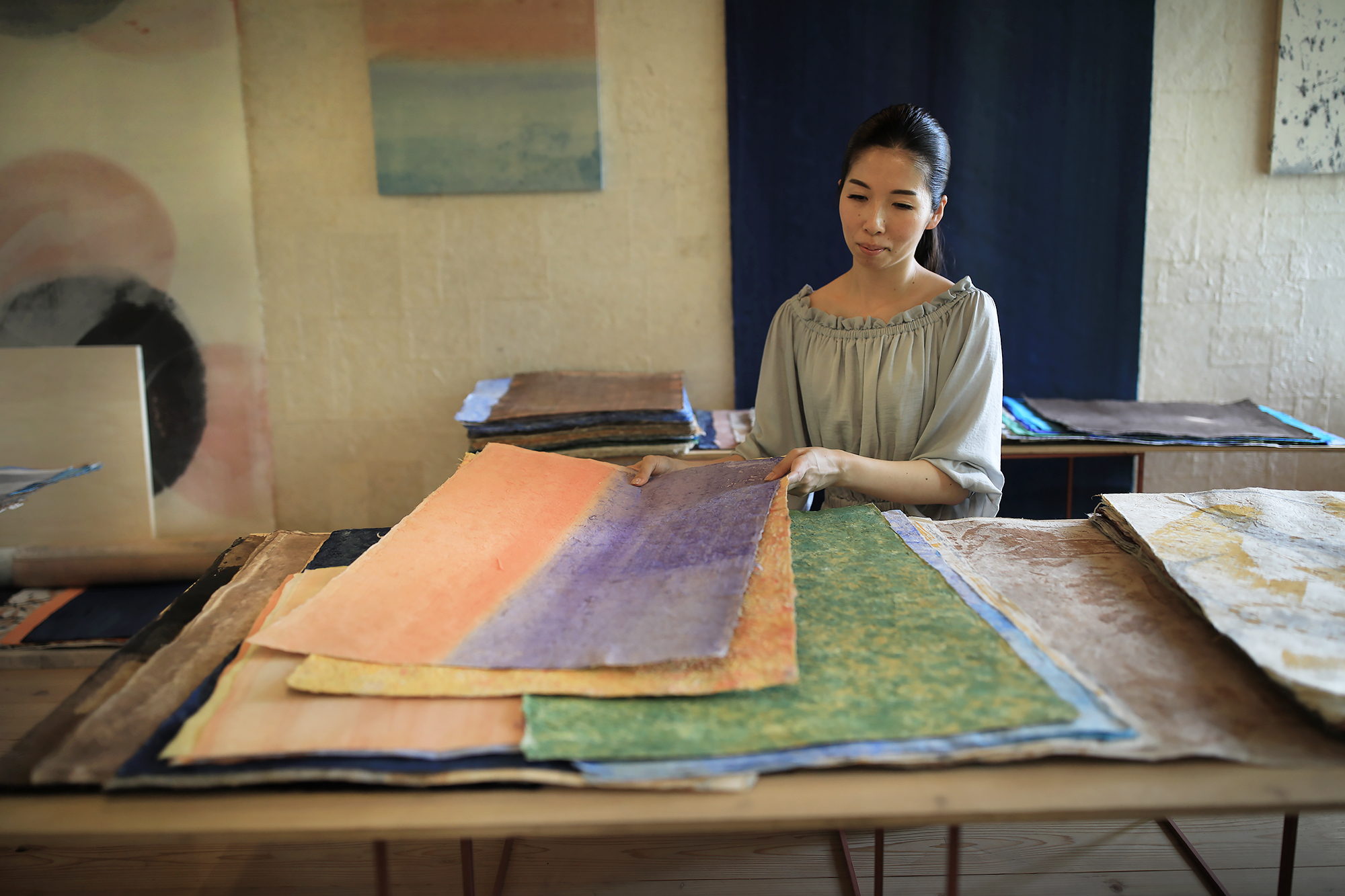
In the café, located in a separate part of the main building, washi paper sales, renovation consultation, and production consultation will be offered. Each piece of washi, dyed in unique colors, has a different expression and adds color to one's life, and if it is torn or damaged, it can be pasted over again to keep it alive for hundreds of years.
Store LocationsExterior and garden view
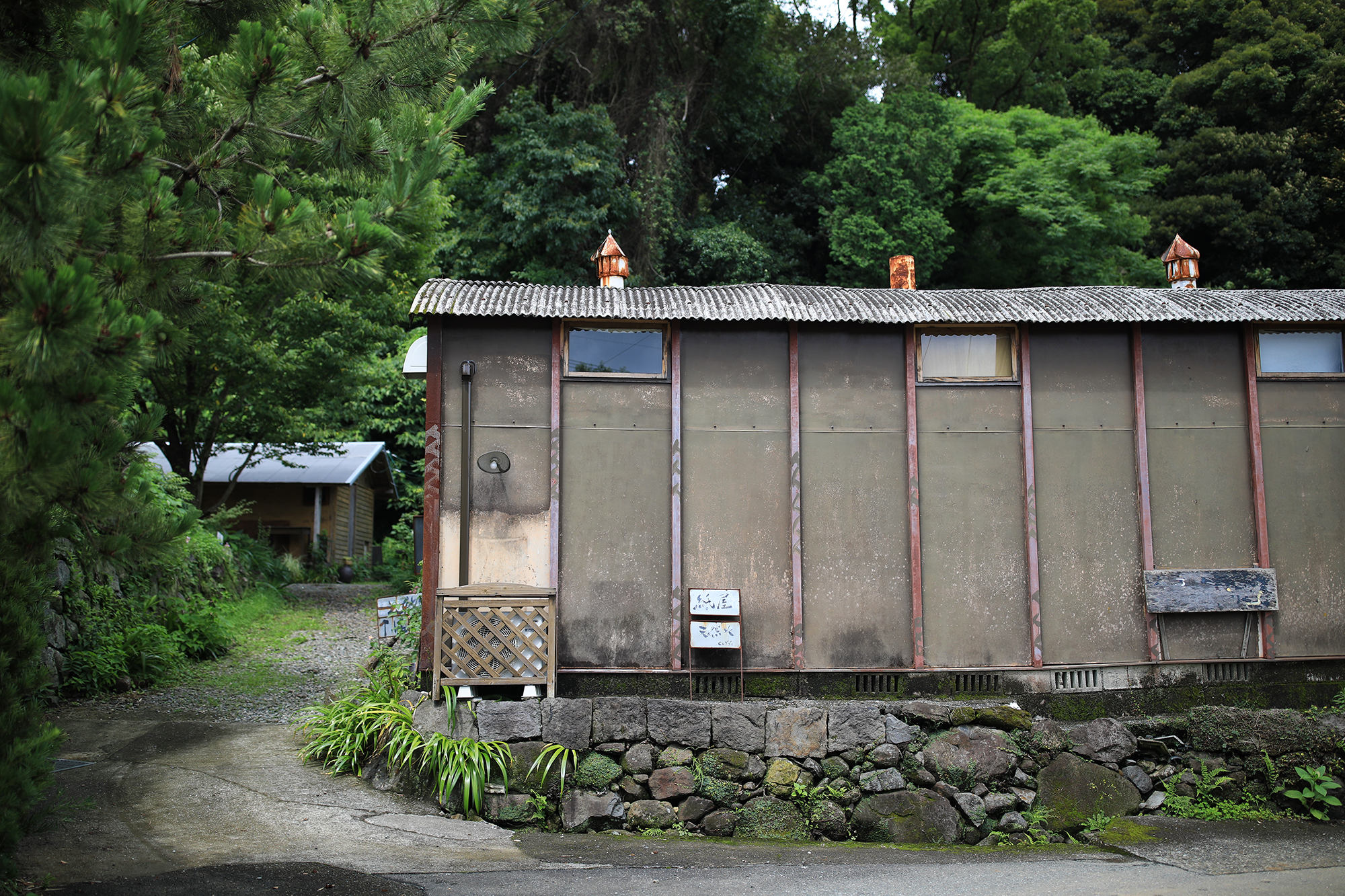
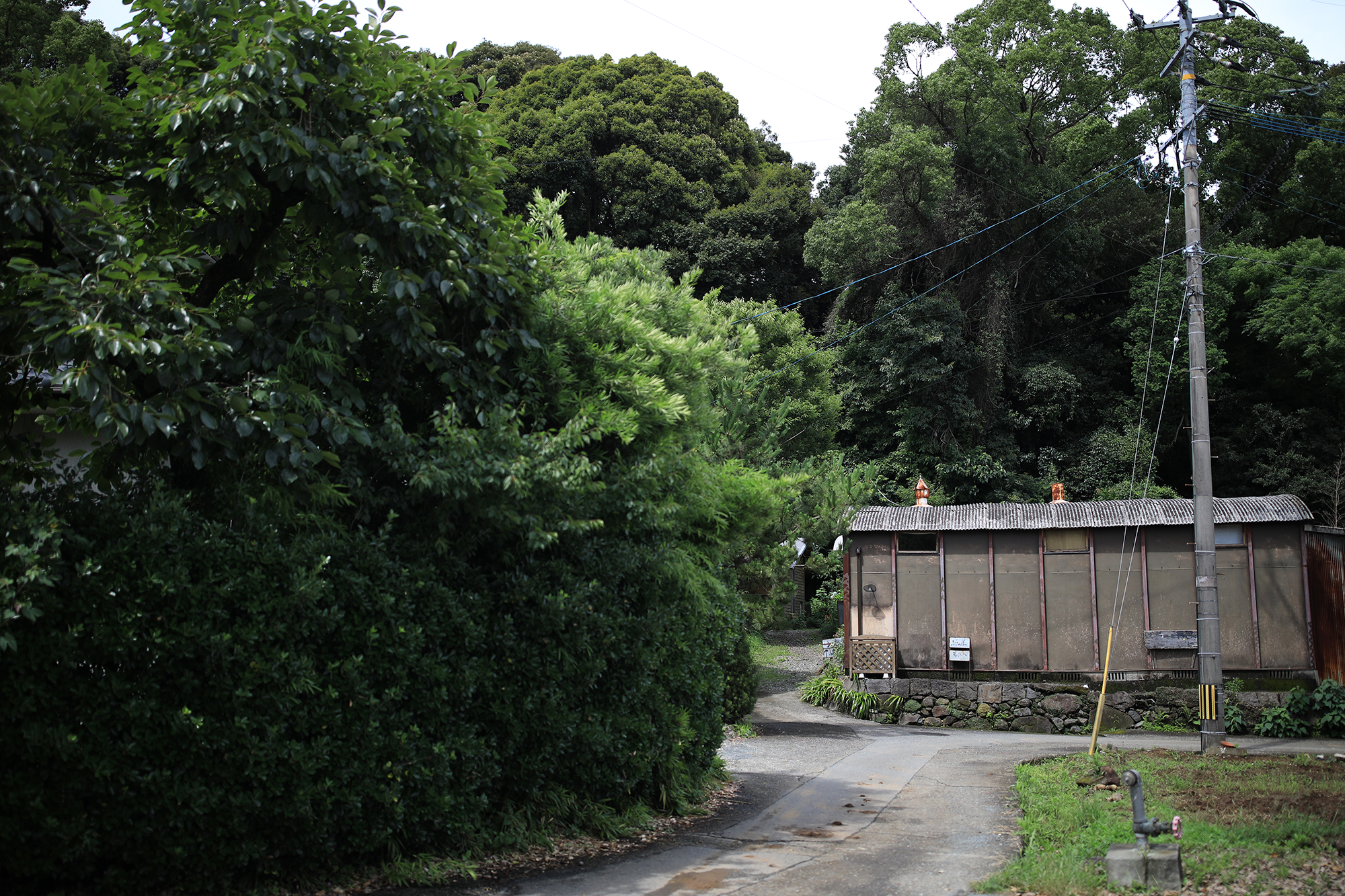
Passing through the countryside, there is a small handmade sign on the wall of the building at the end of the path at the end of the street.
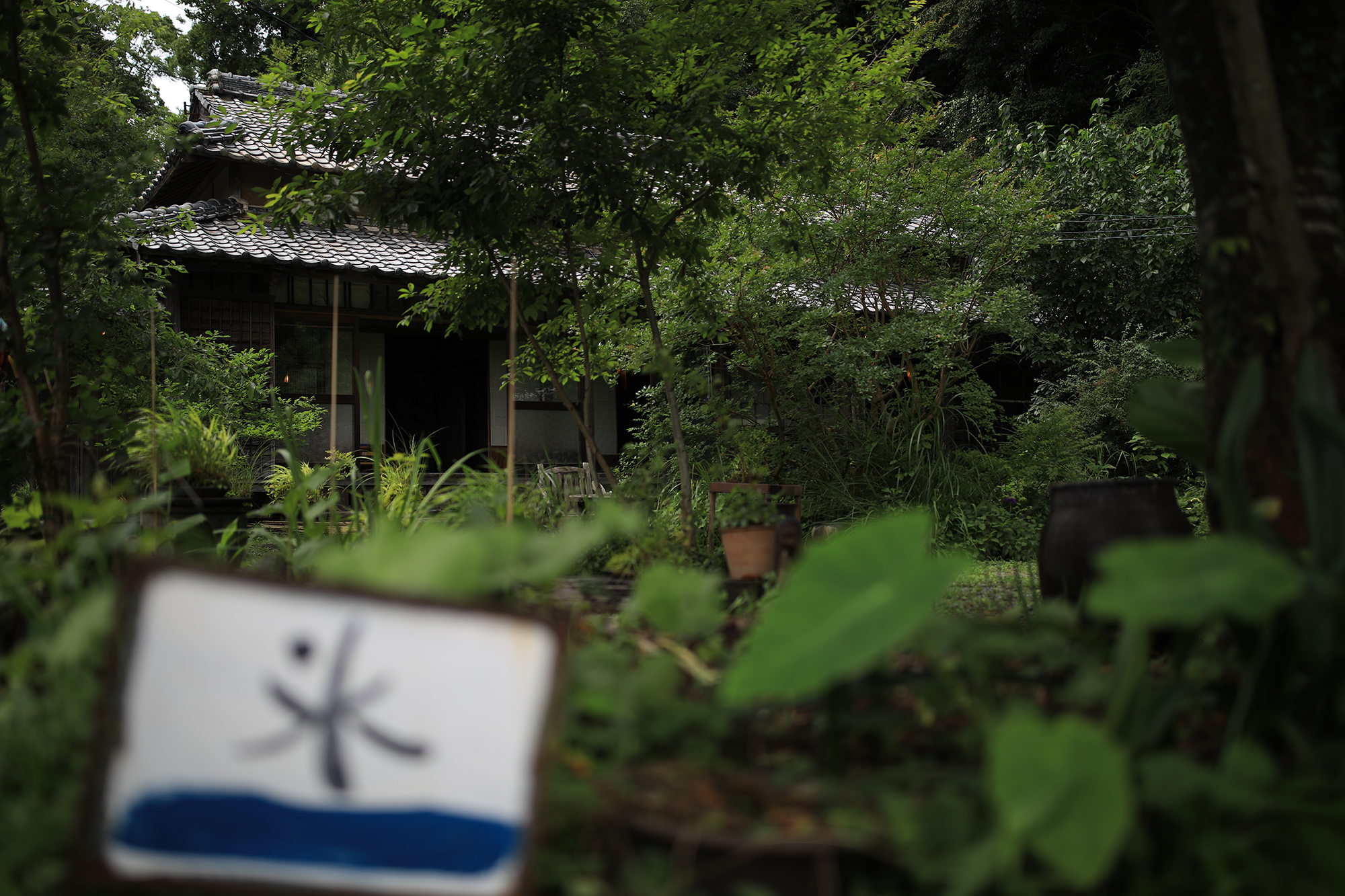
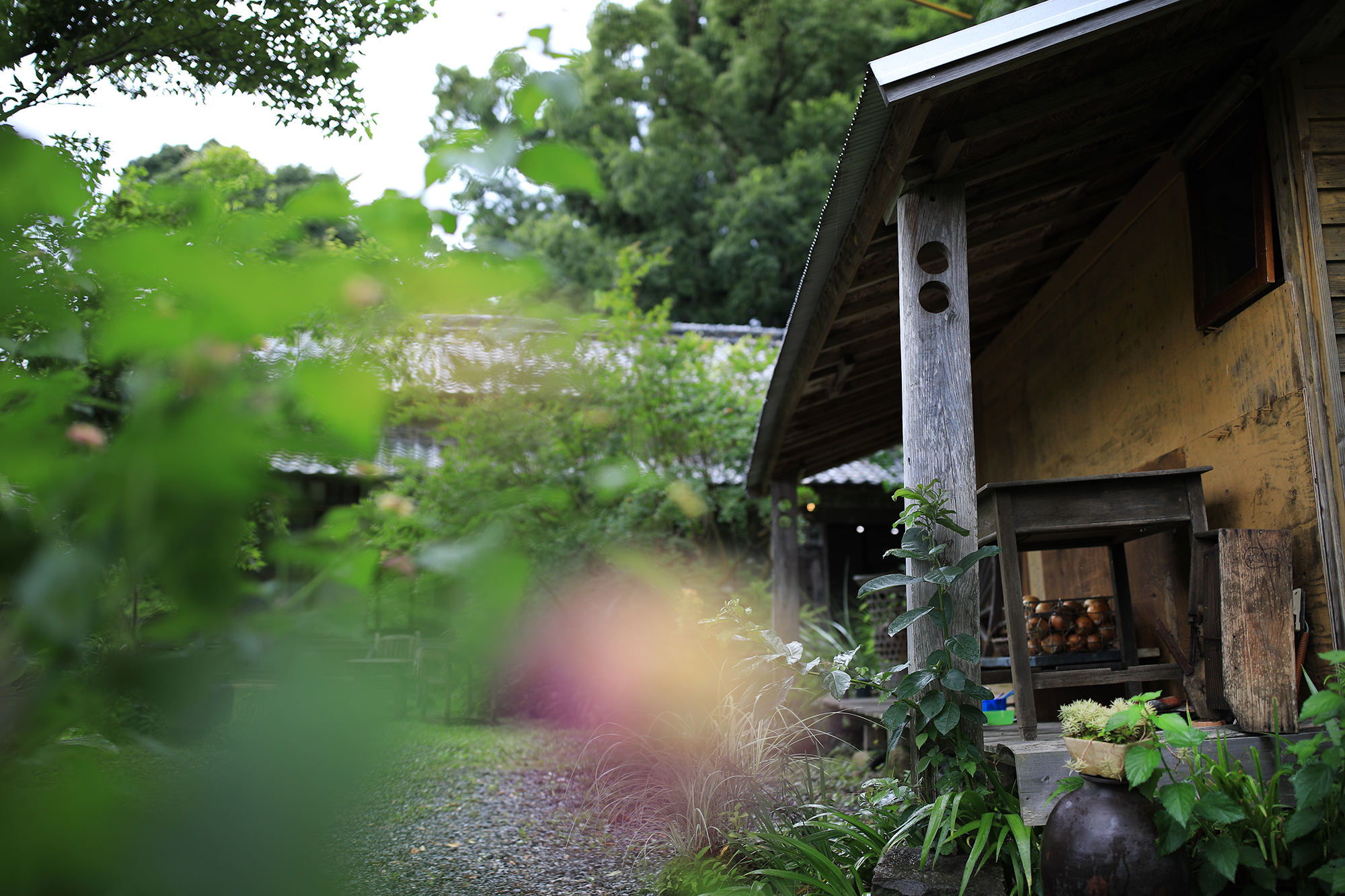
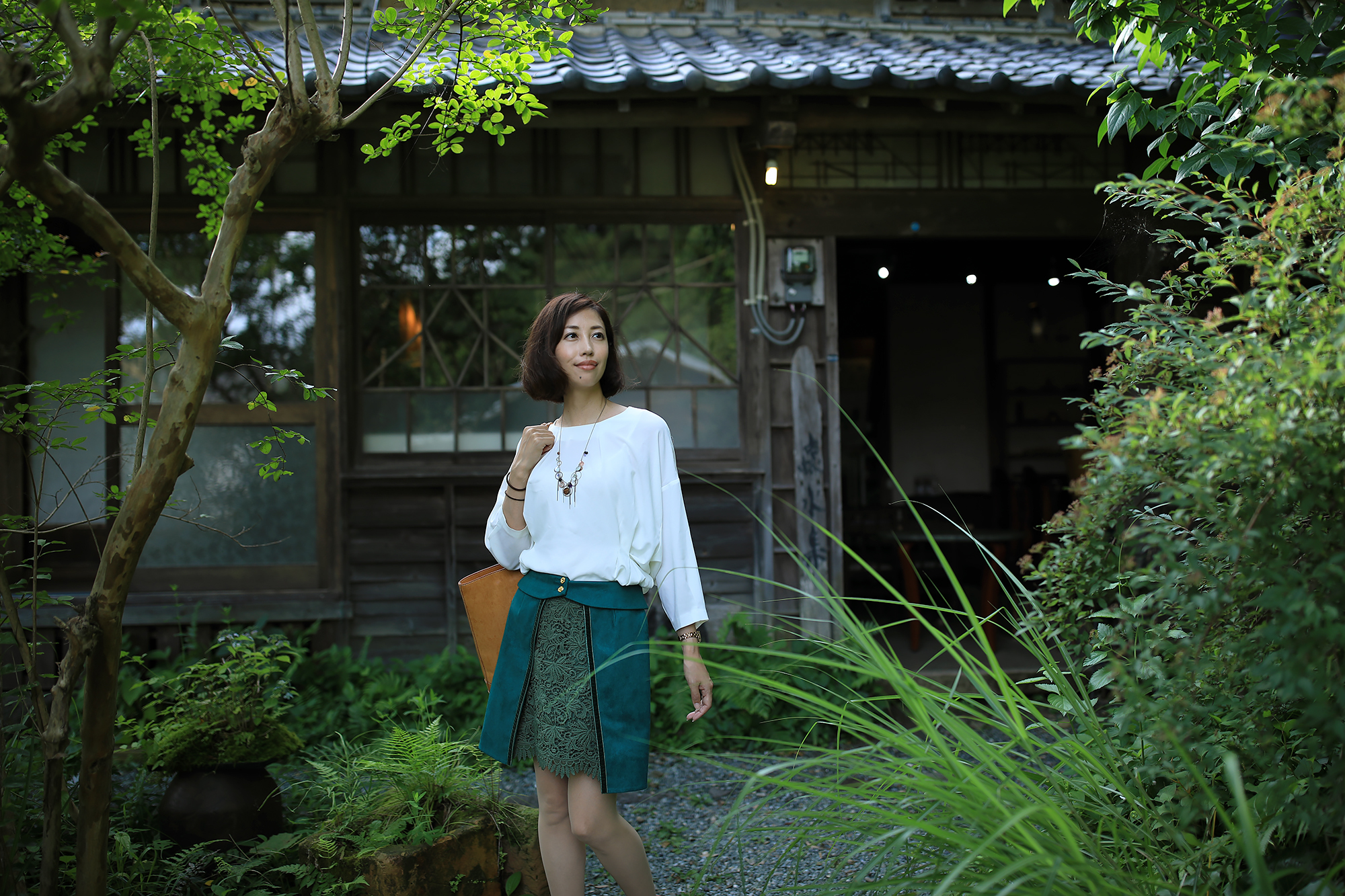
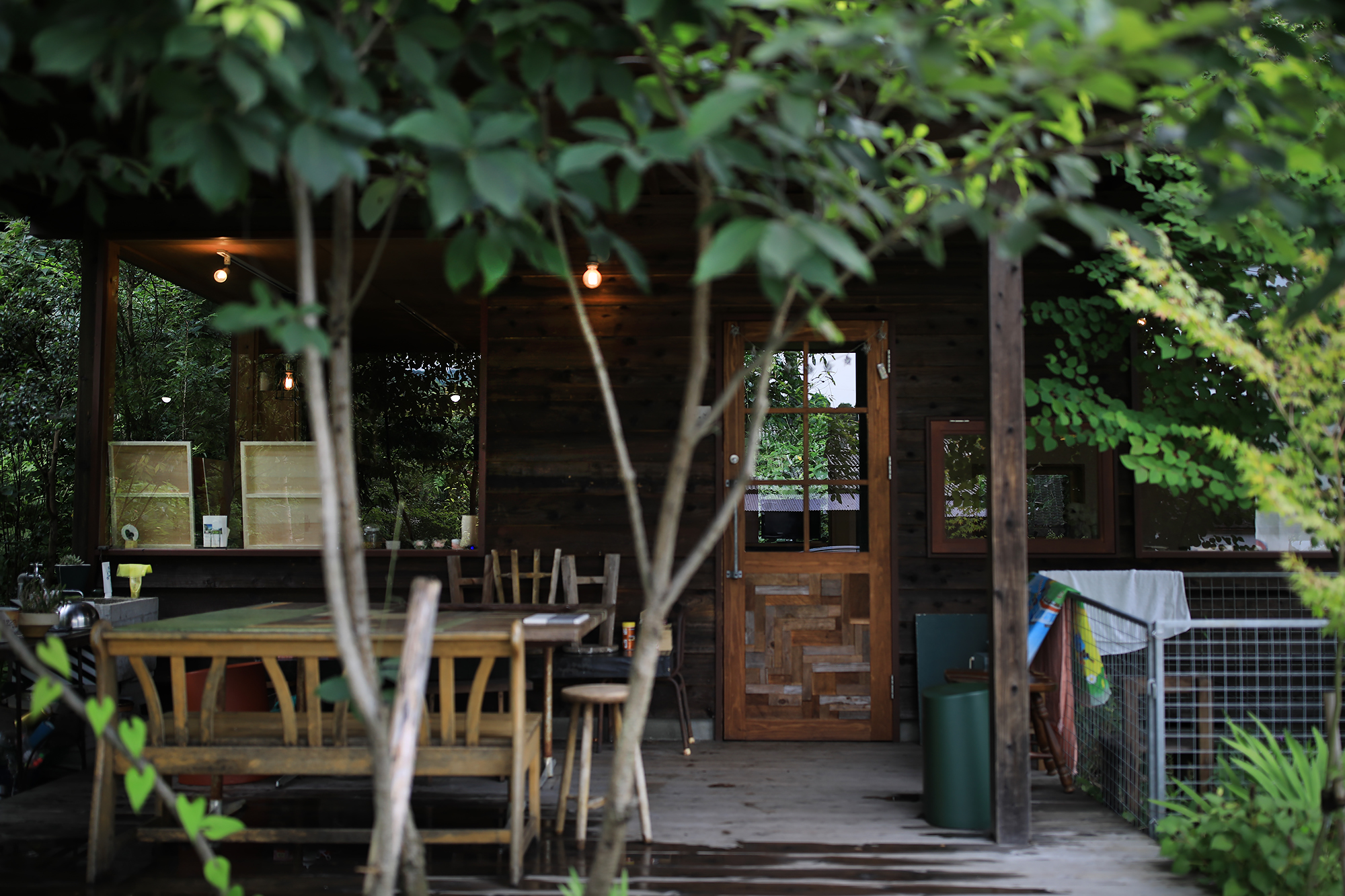
Walking back along the gravel path beside the building, you will find a spacious garden with a small hut and a spring-fed path, and at the far end of the garden is an old-fashioned Japanese house that makes you feel nostalgic. Lamplight softly leaks from the entrance, gently welcoming visitors.
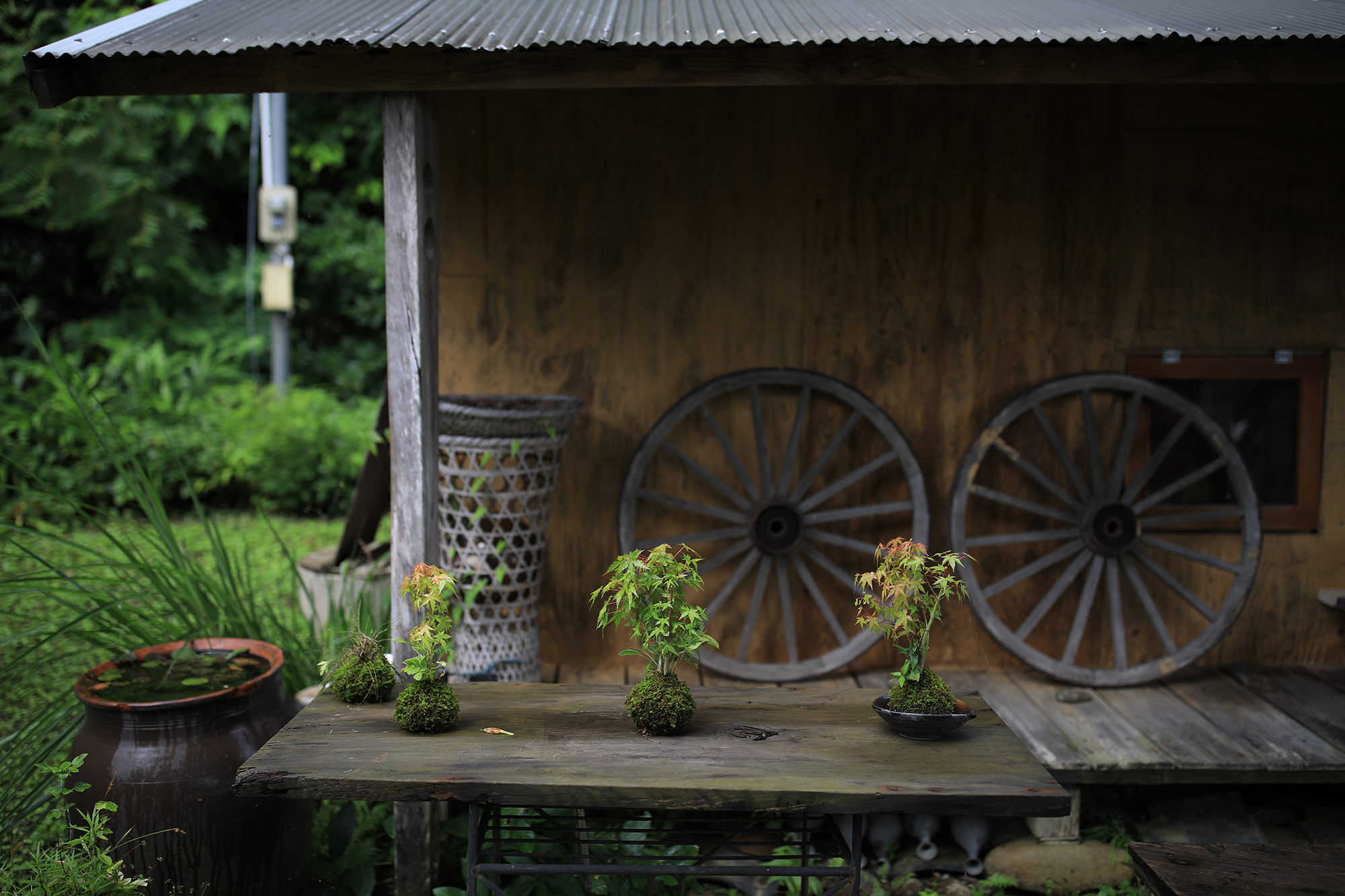
This private house was built from the foundation up by the owners themselves using scrap wood. The house is adorned with lovely objects such as wheels and moss.
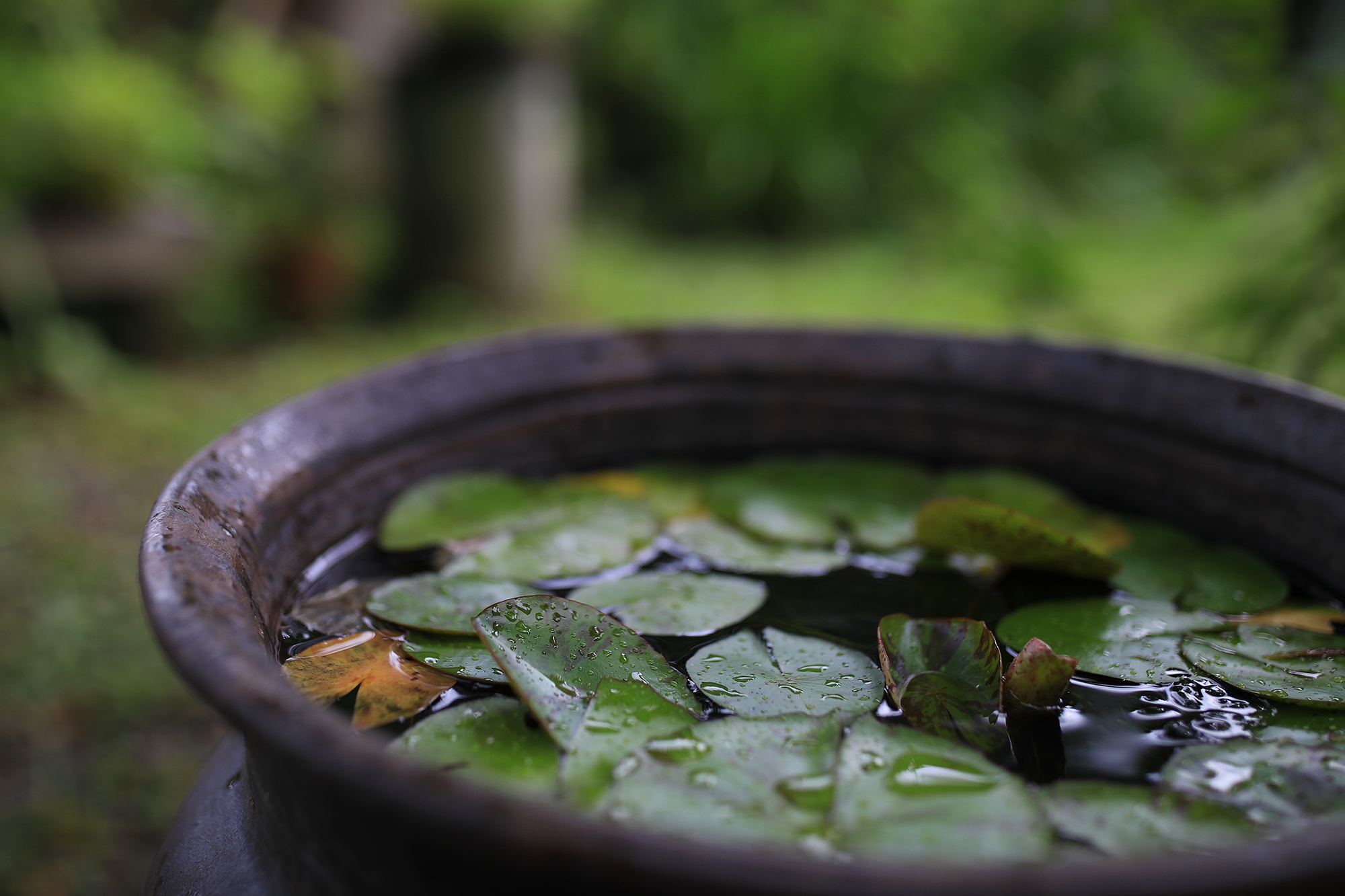
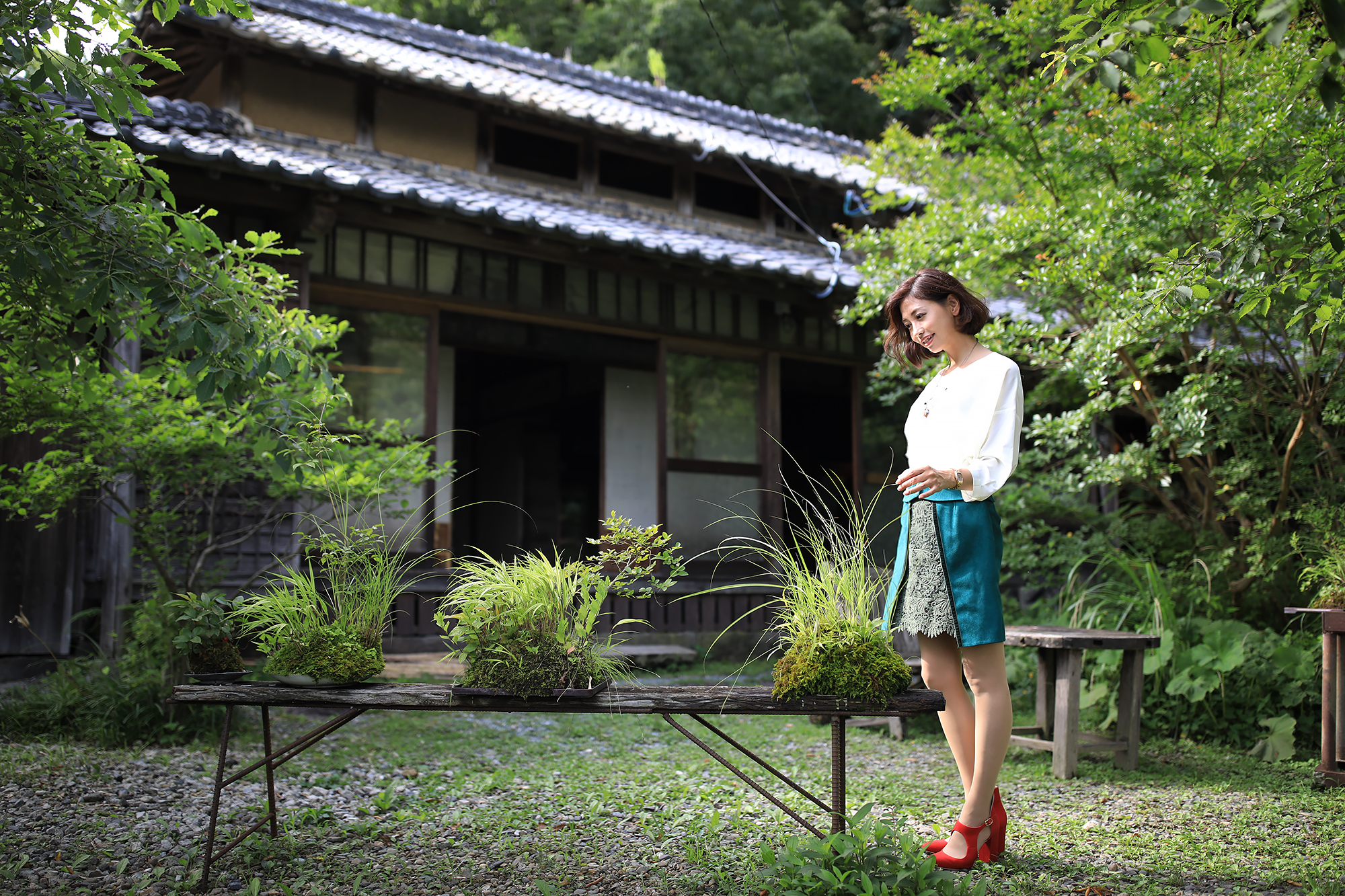
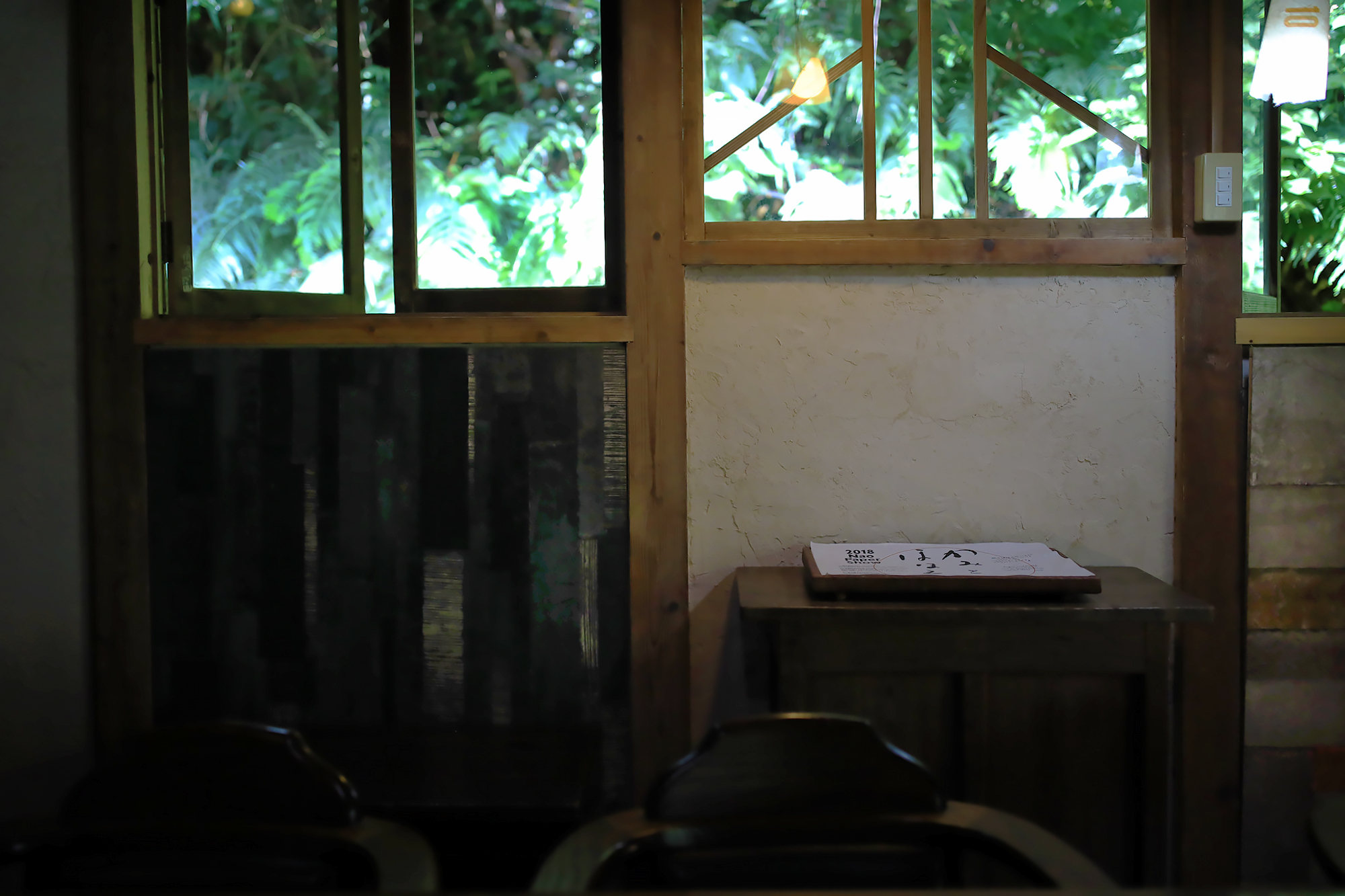
The store building, which serves as the main building, is said to be about 100 years old, but the windows, ceilings, and pillars are all very much alive, and one can feel the atmosphere and strength of the building that has slowly grown over the years. The garden can be viewed from the café space and Japanese-style rooms. The view outside, cut off by the window frames, is mysterious, as if holding up a beautiful image.
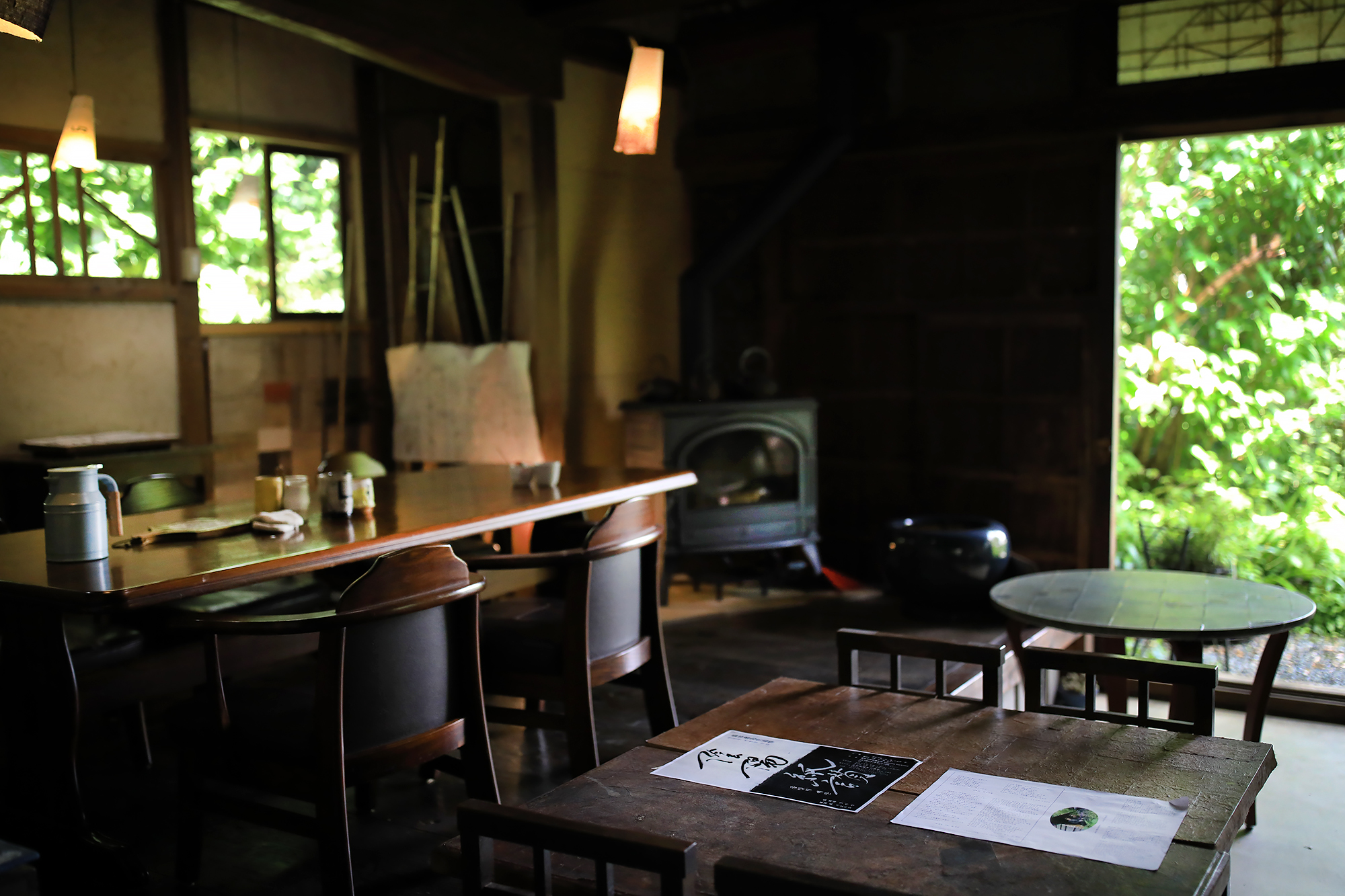
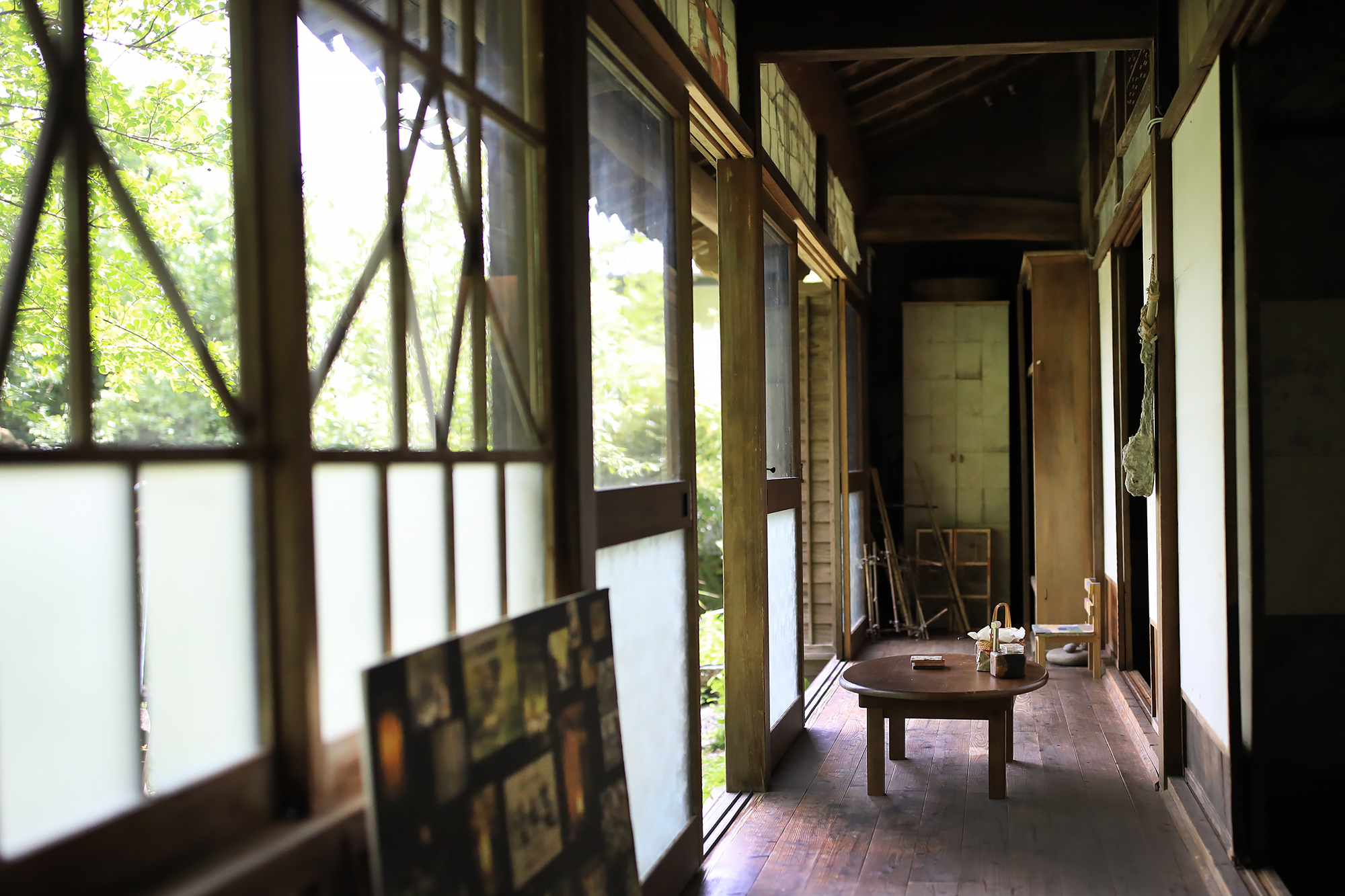
Newly built houses have the charm of beauty and convenience, but nothing can replace the shape that history has spun out of them. Houses that have been lived in with people for a long time and old things that have naturally decayed, I feel affection for them, saying, ”You have done your best. Chiyumi says.
I am deeply moved by the fact that this house has been gently cared for and breathed life into with Chiyumi's love, and it is because of this that it has been reborn as a wonderful space.
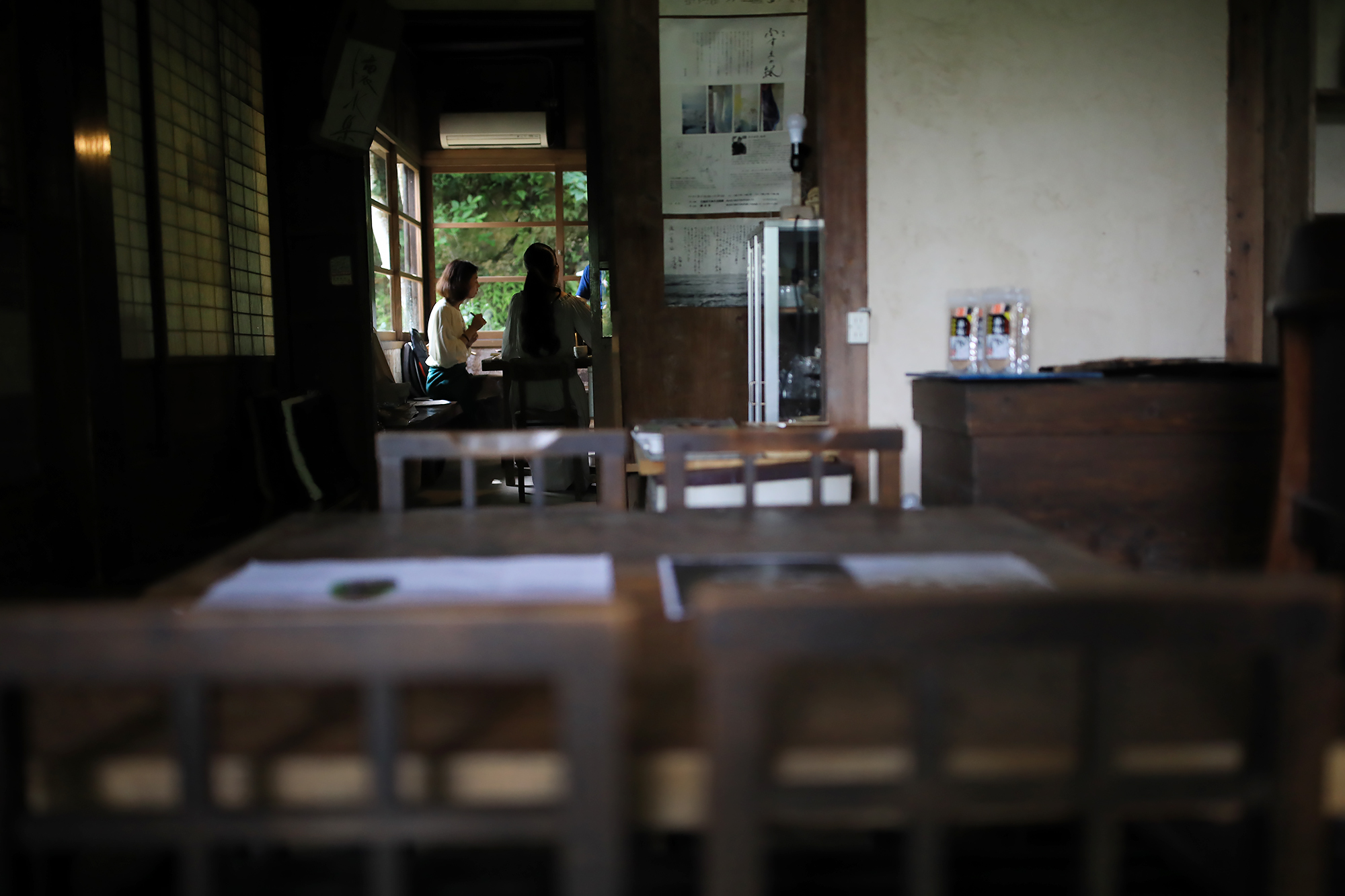
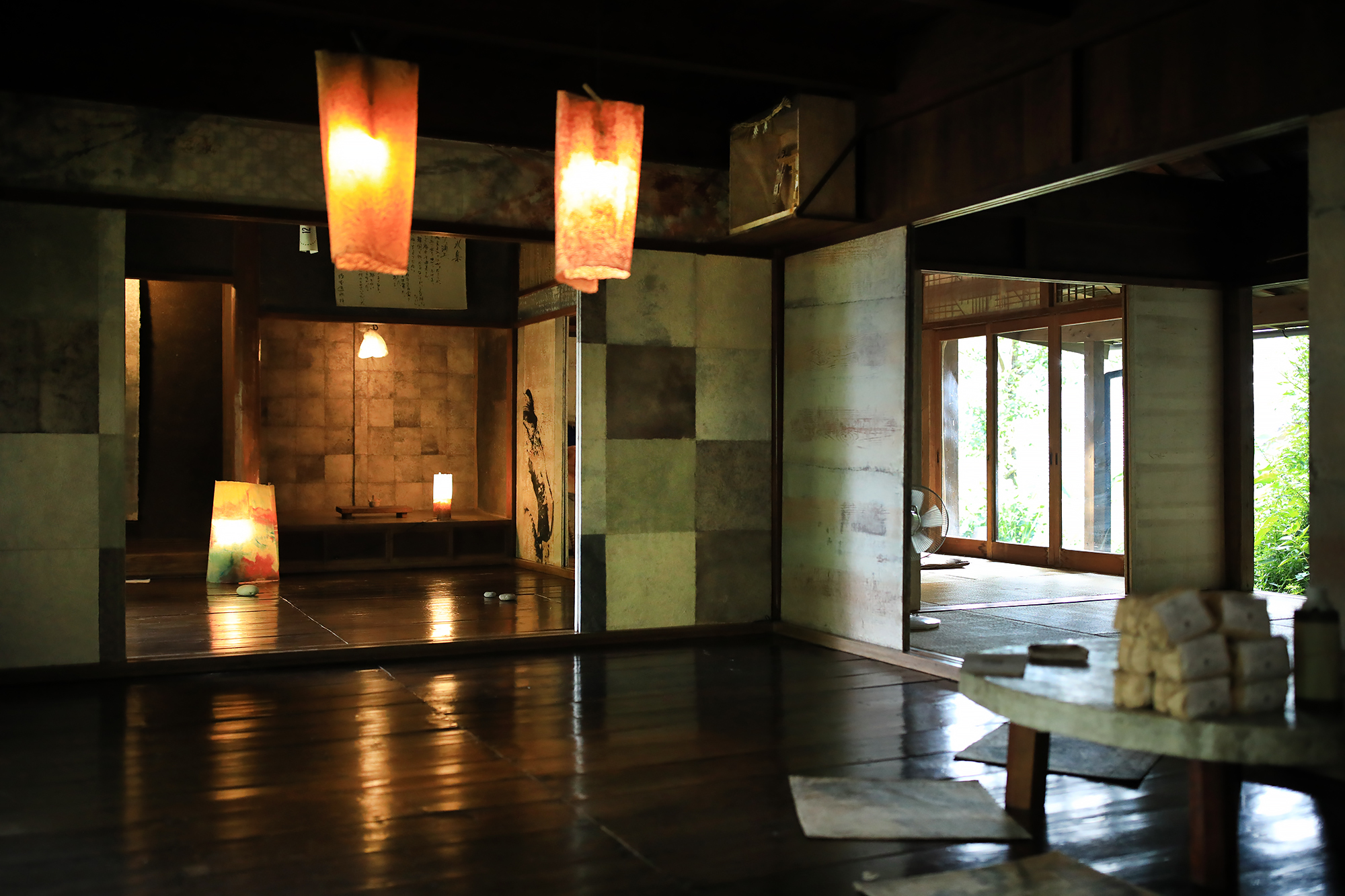
The space used as an inn is also enveloped in a unique atmosphere, with Japanese paper on the bran, tables, and lamps. Attracted by this emotional atmosphere, the inn is also used for wedding photography, parties, and other events, as well as for concerts and exhibitions.
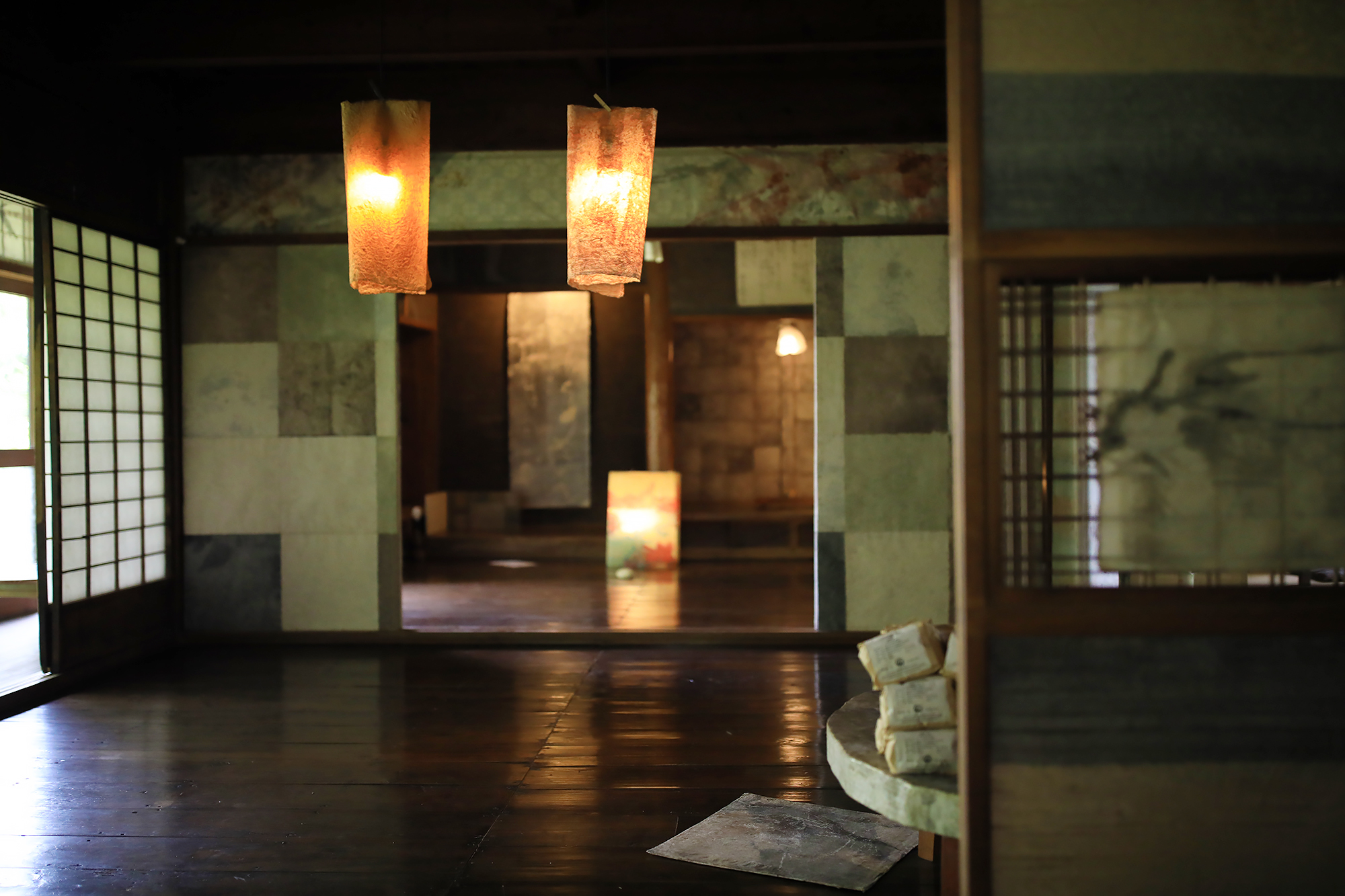
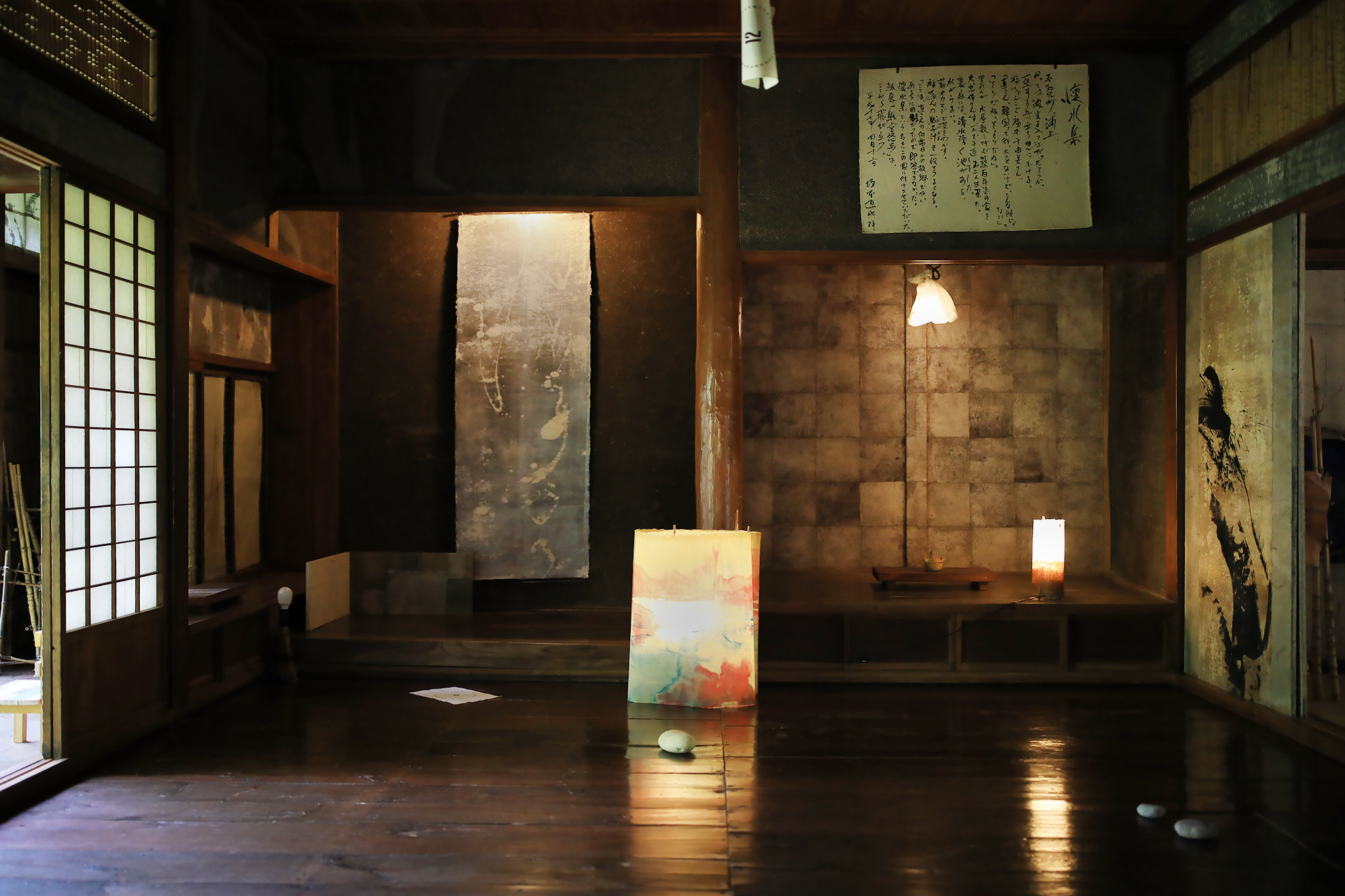
The dynamic Japanese paper hanging scrolls and the black ink writing on the fusuma draw the eye.
Above the tokonoma (alcove alcove) is the origin of "Kaisuishu," named after the image of the abundance of overflowing water, the form of nature as it is, and the people who gather there.
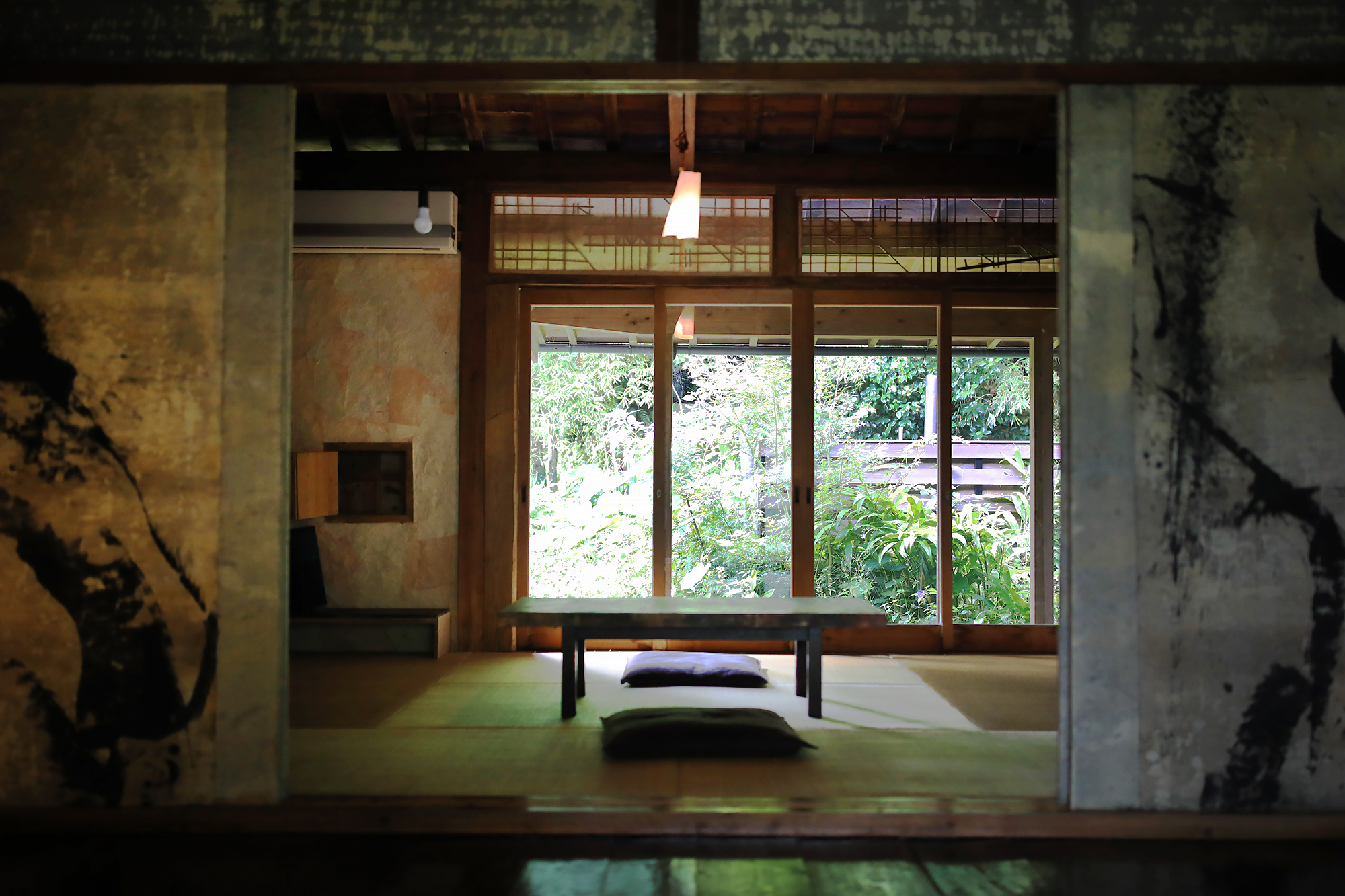
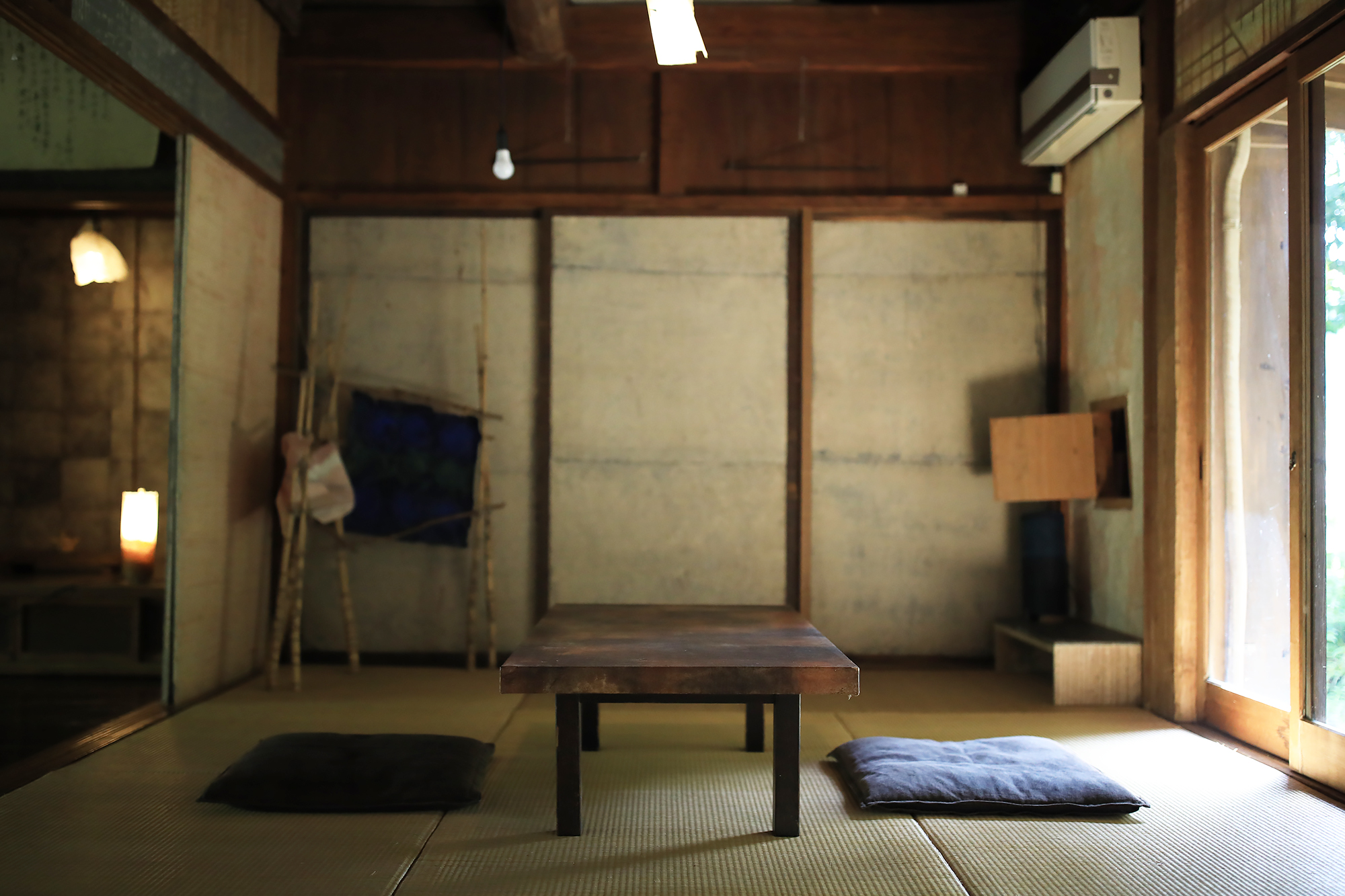
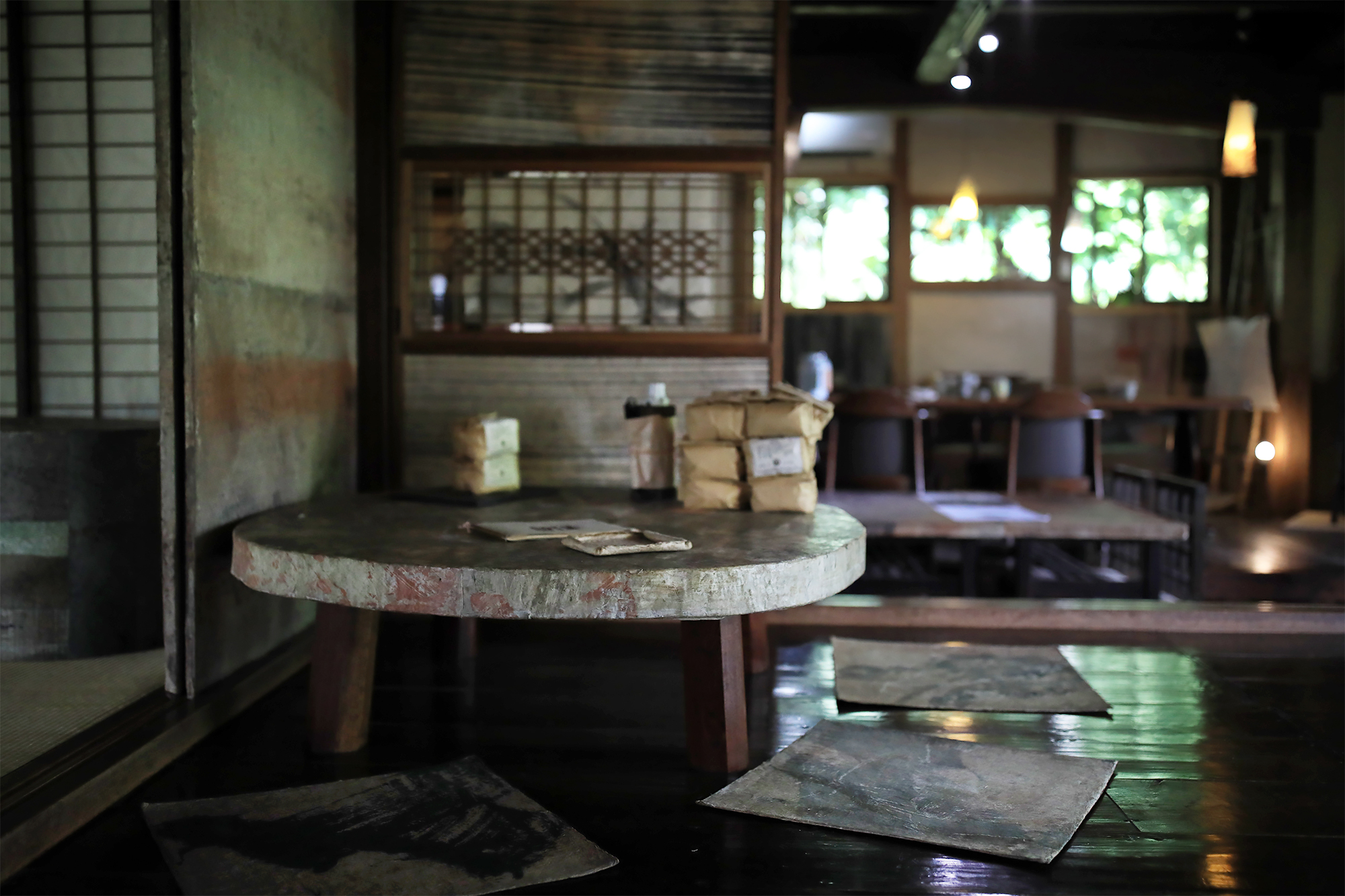
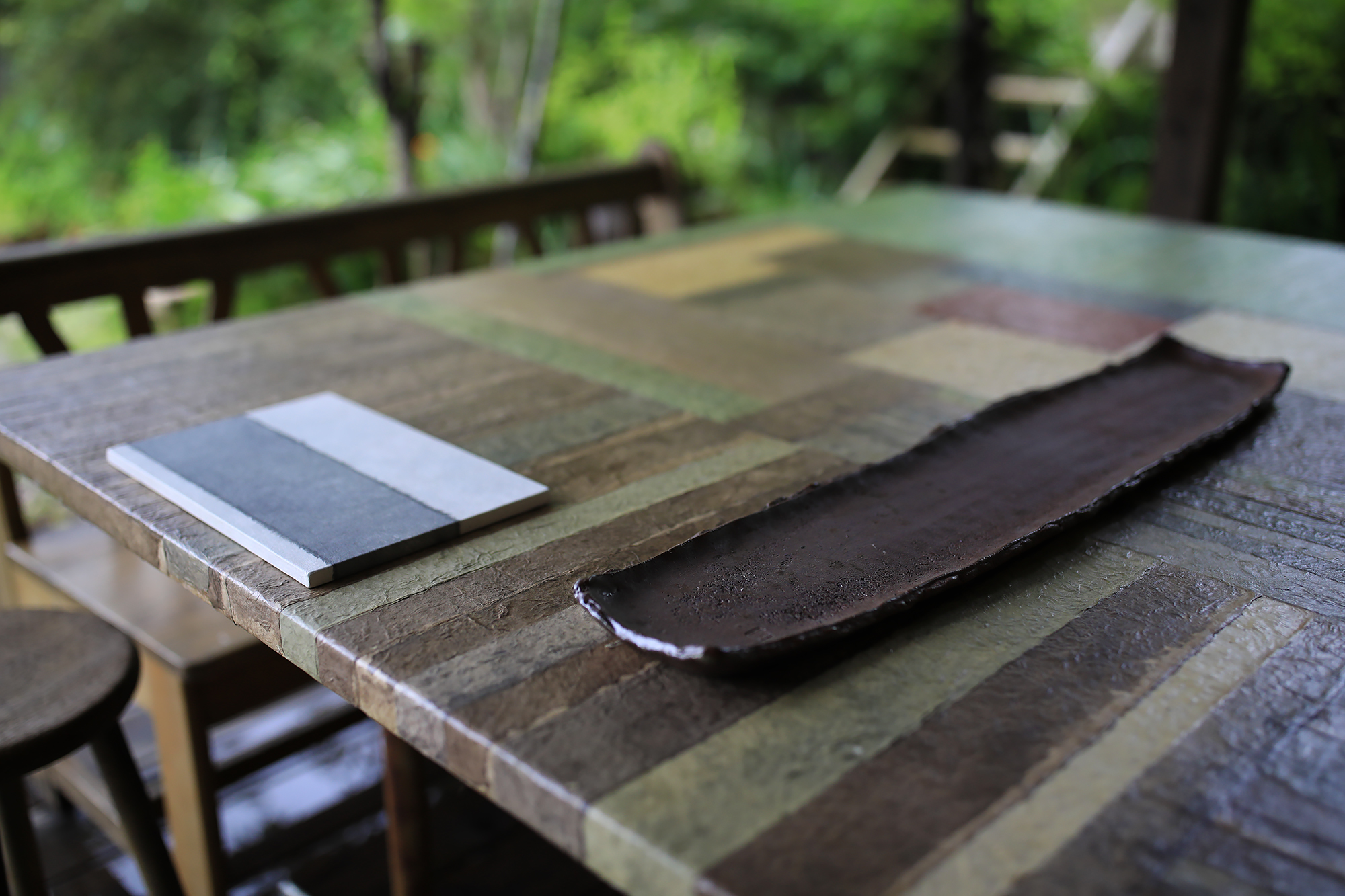
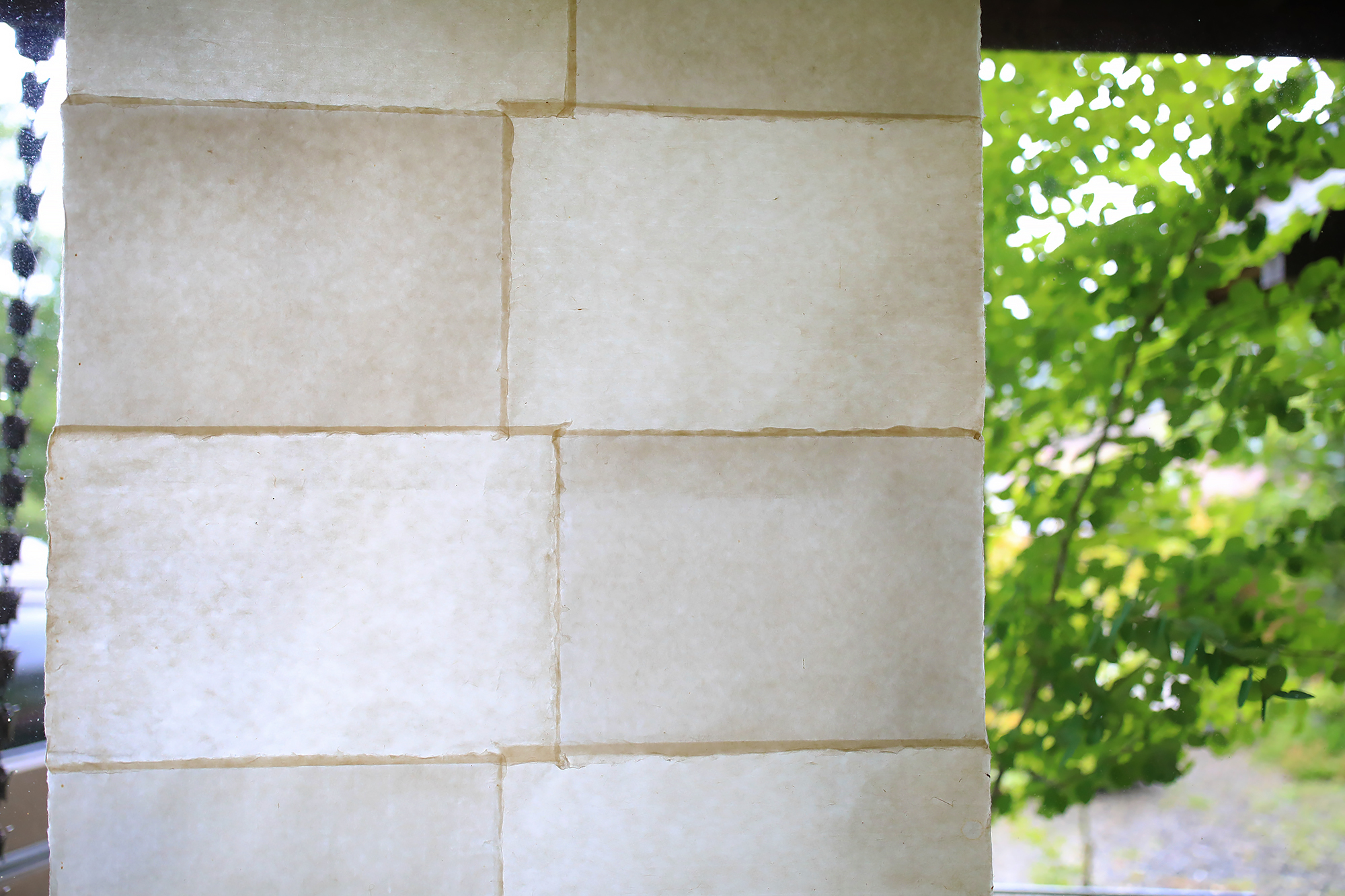
The round table, repaired with many layers of washi paper, looks like stone or lead with the combination of the color of washi and the used texture. On the table was a washi notebook with messages from visitors who stayed overnight or had lunch.
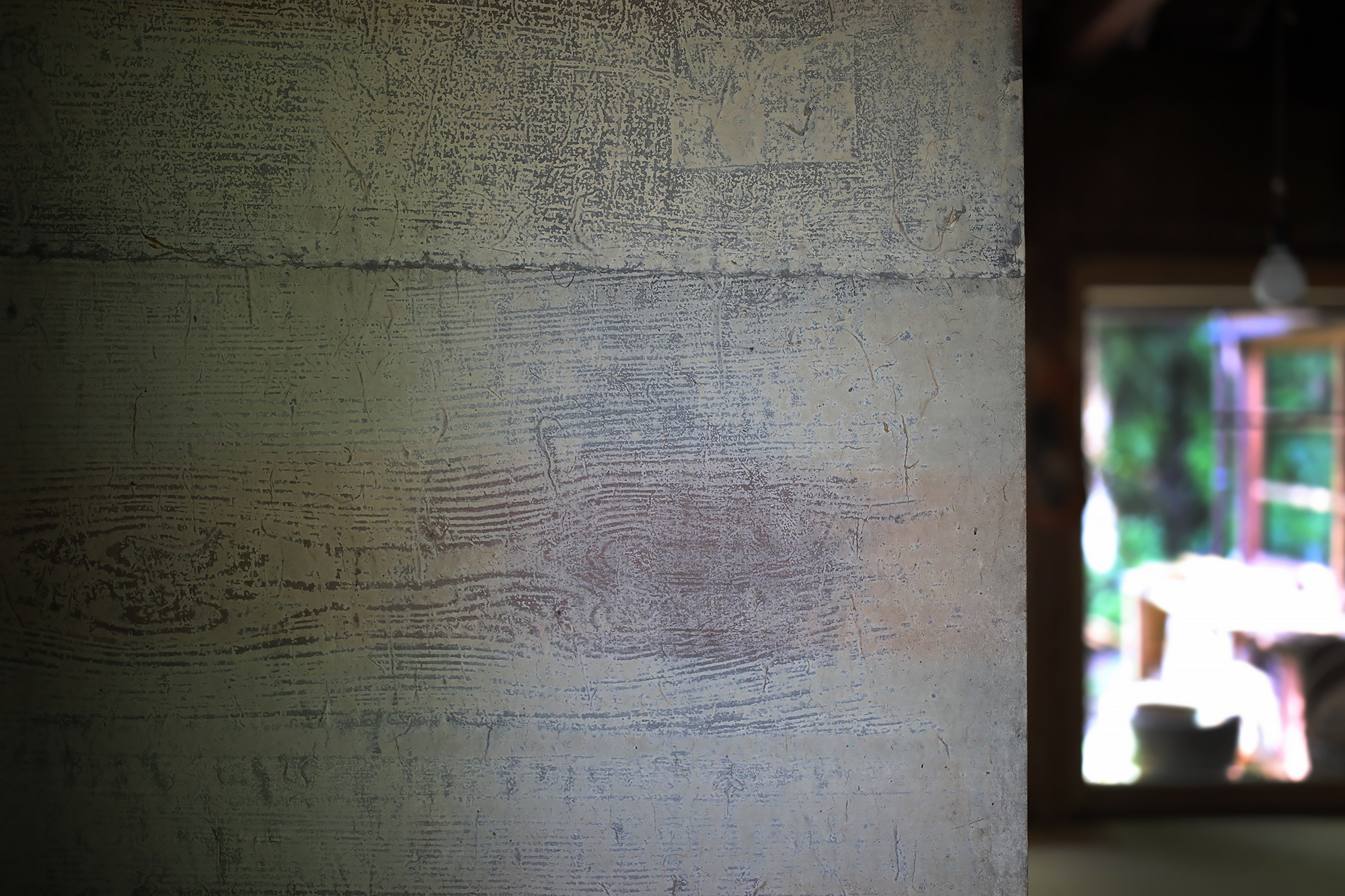
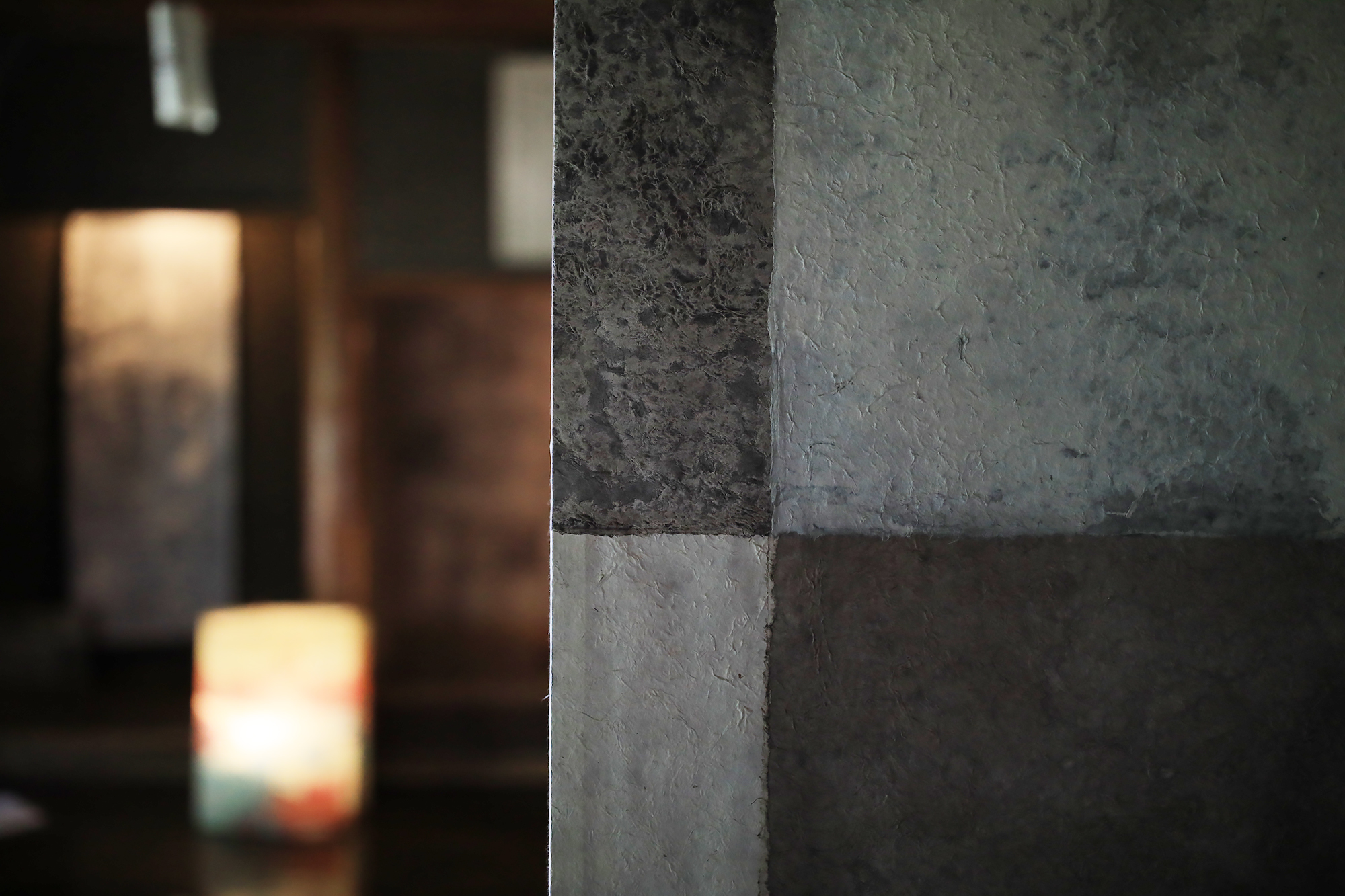
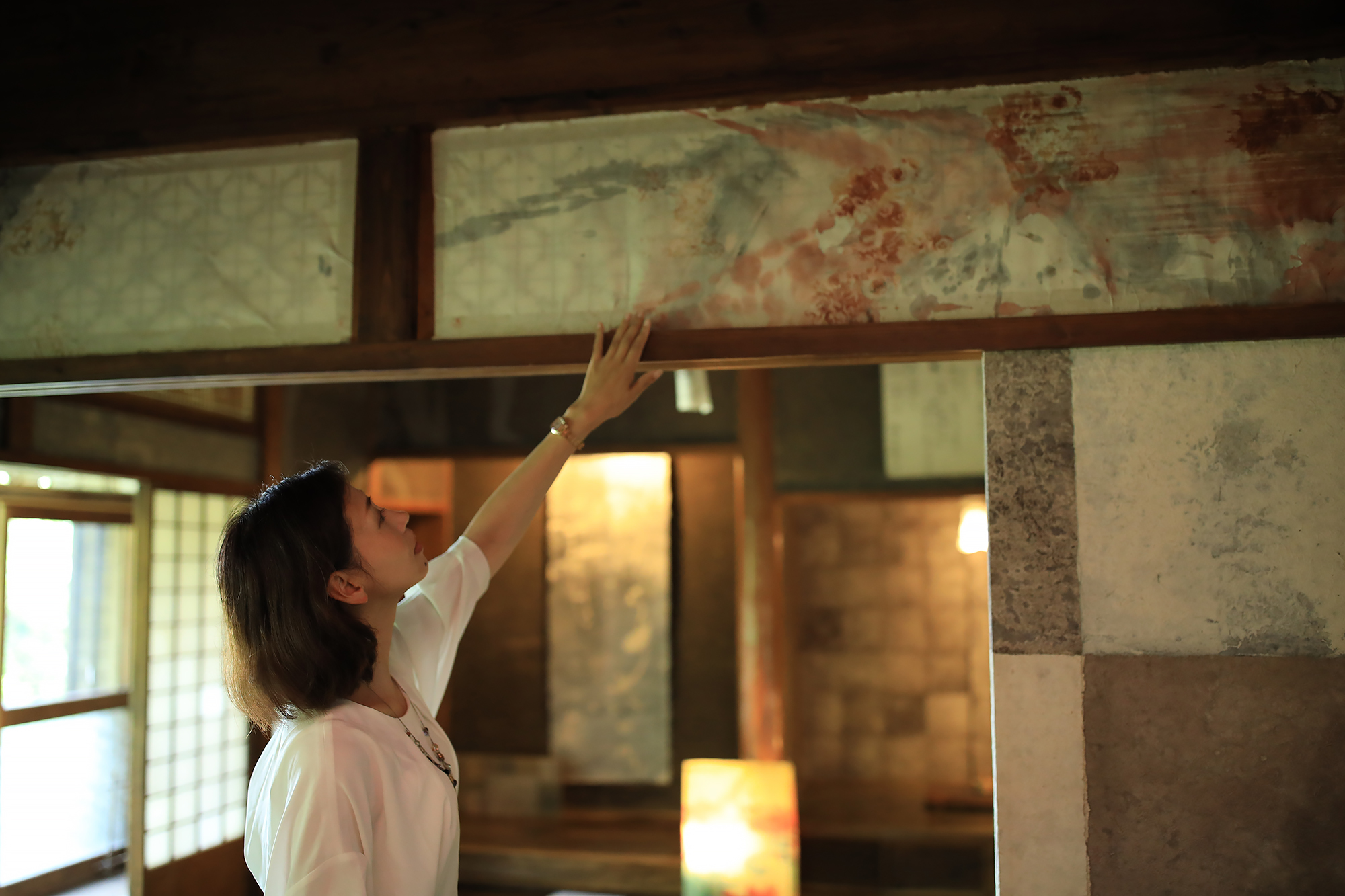
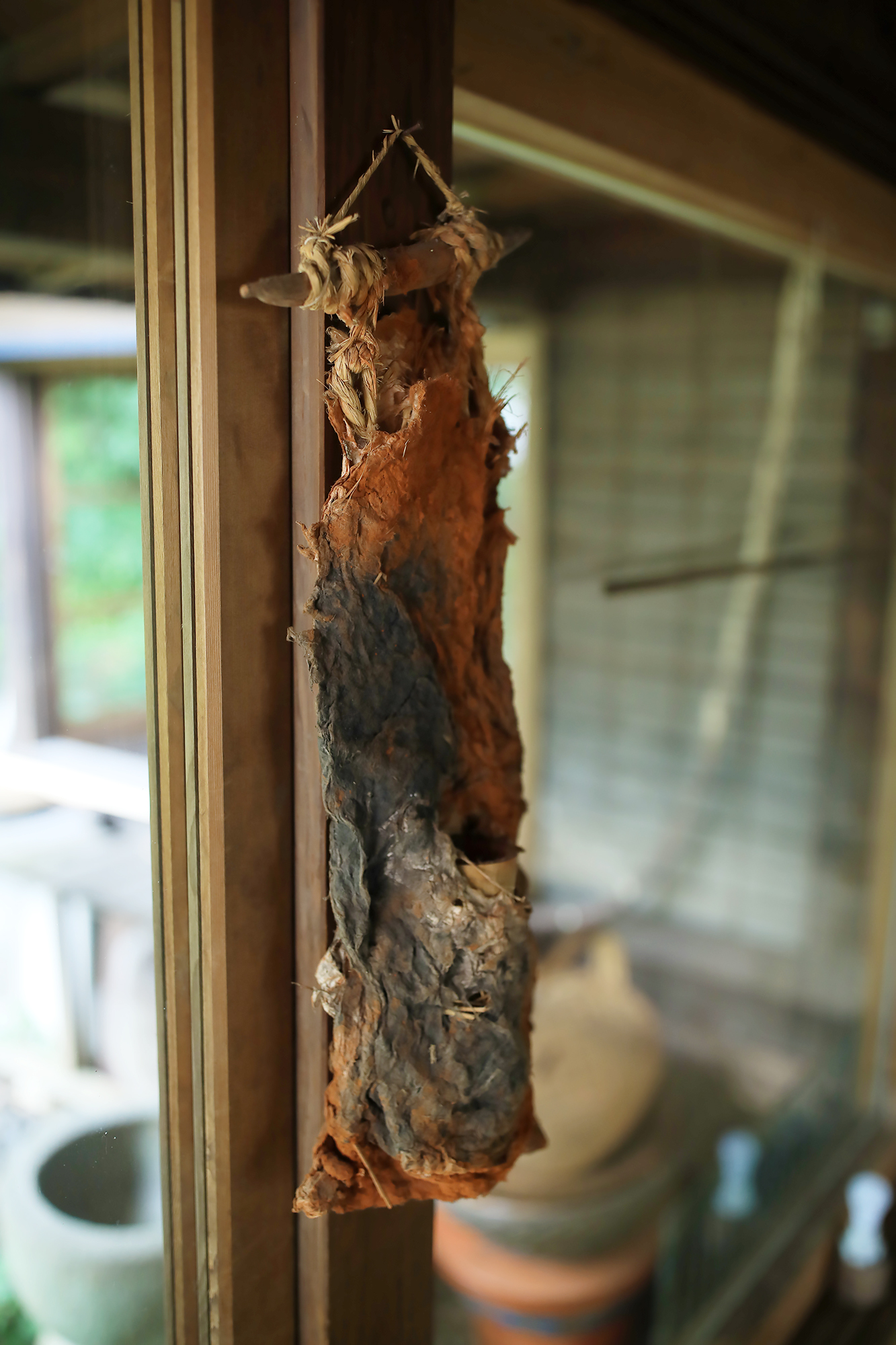
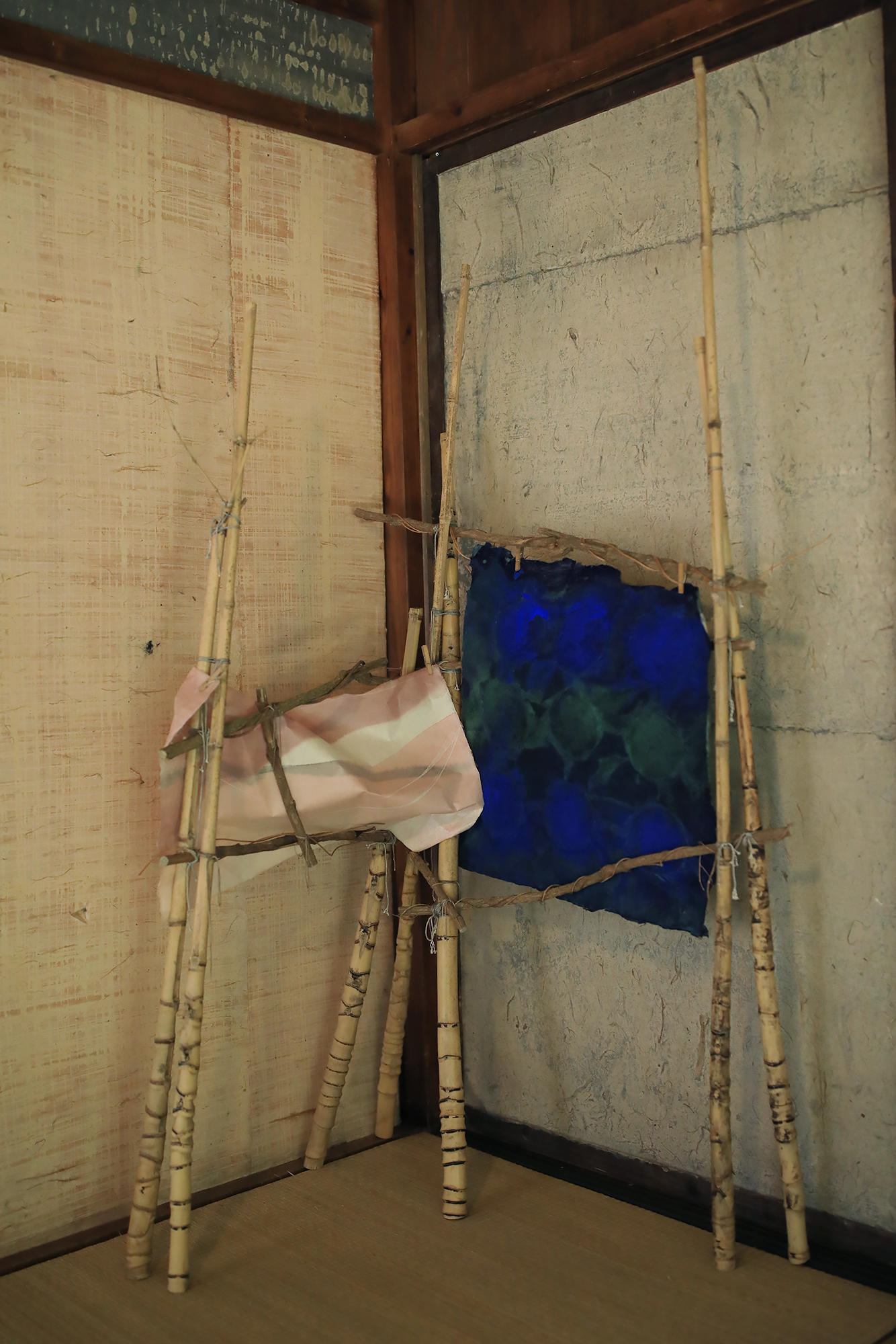
When I see things, I want to put washi on everything. As Chiyumi says, "Washi can be applied to anything, the atmosphere can be changed, and it can be modified many times." Looking around carefully, one can see that not only large parts, but also small accessories, miscellaneous goods, and the transoms are decorated with detailed designs and washi.
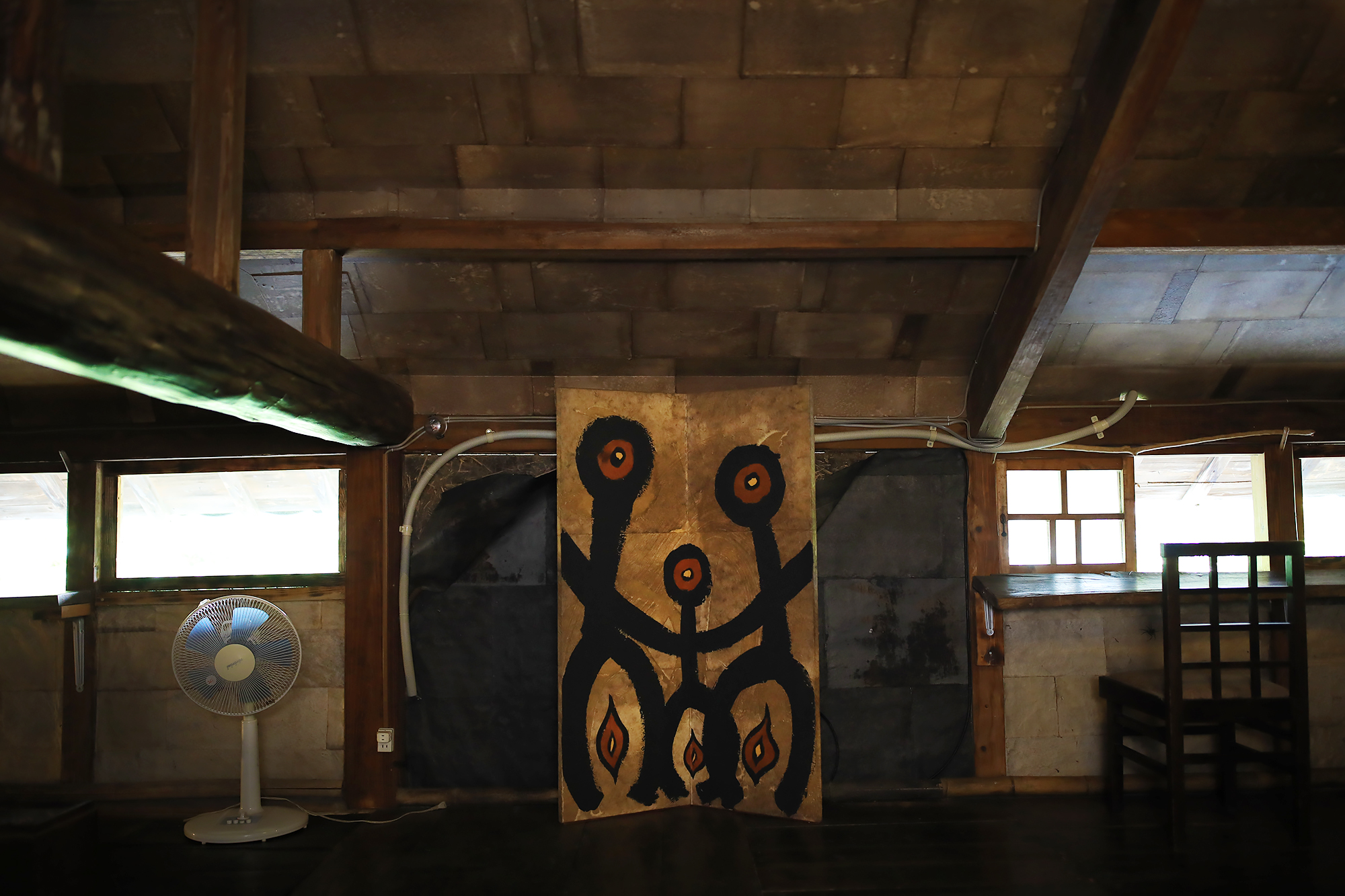
Second floor of the main house
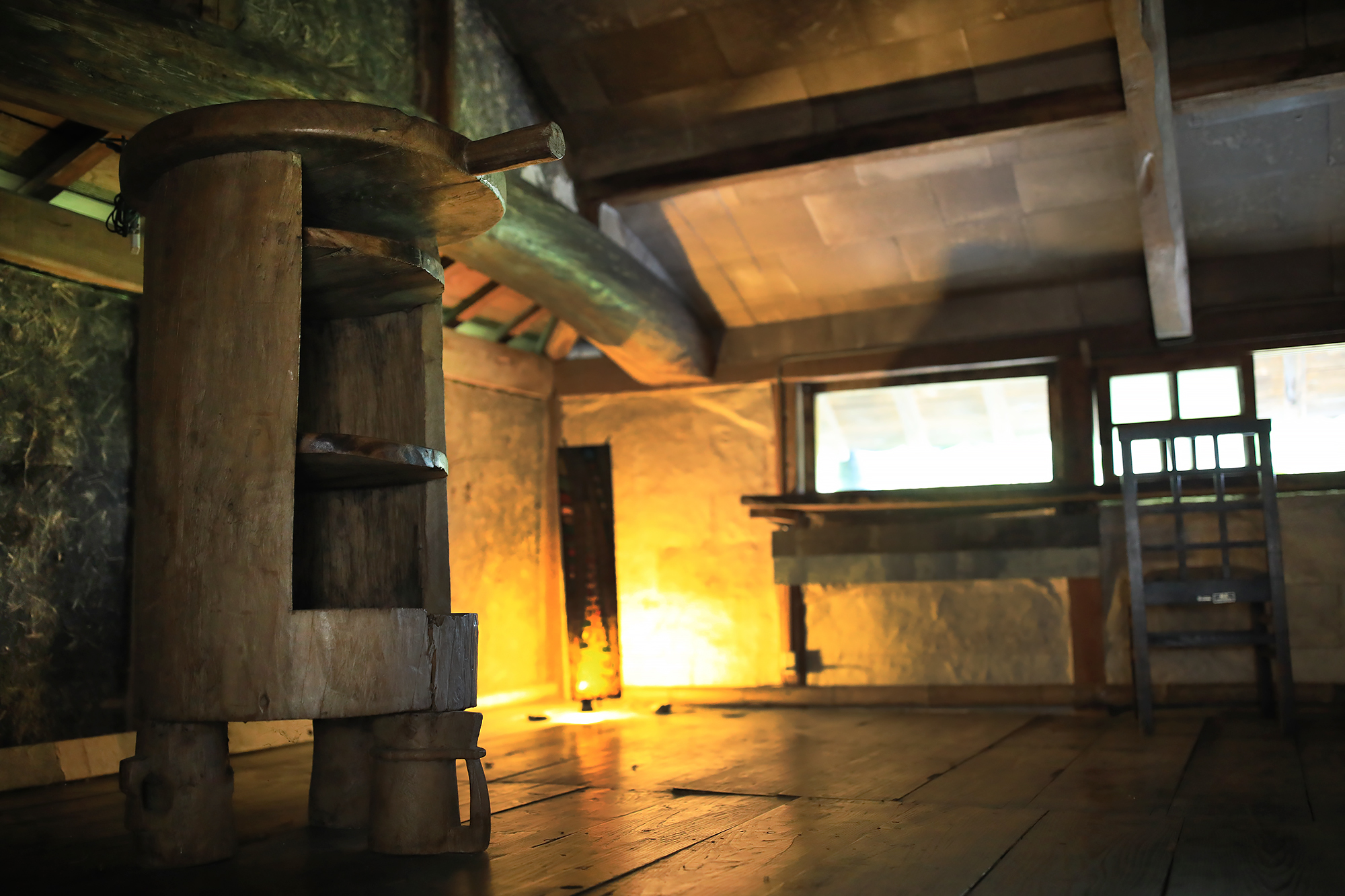
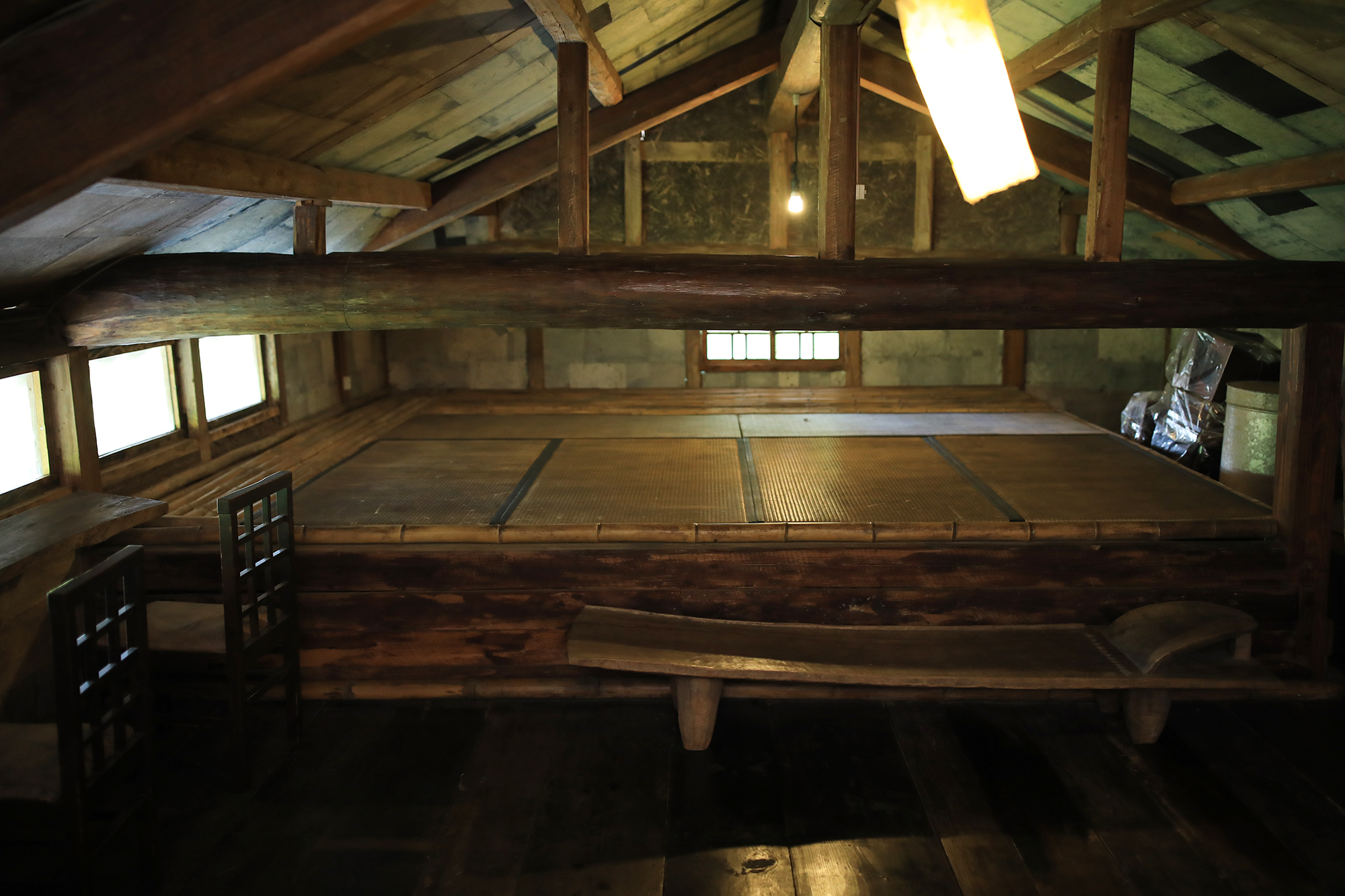
Normally, guests do not often go up there, but familiar customers and friends who know the place well sometimes relax upstairs.
The muscular beams of the ceiling and the dynamic, large roof spread out at eye level, overwhelming the viewer.
Goemon Bath" used by guests
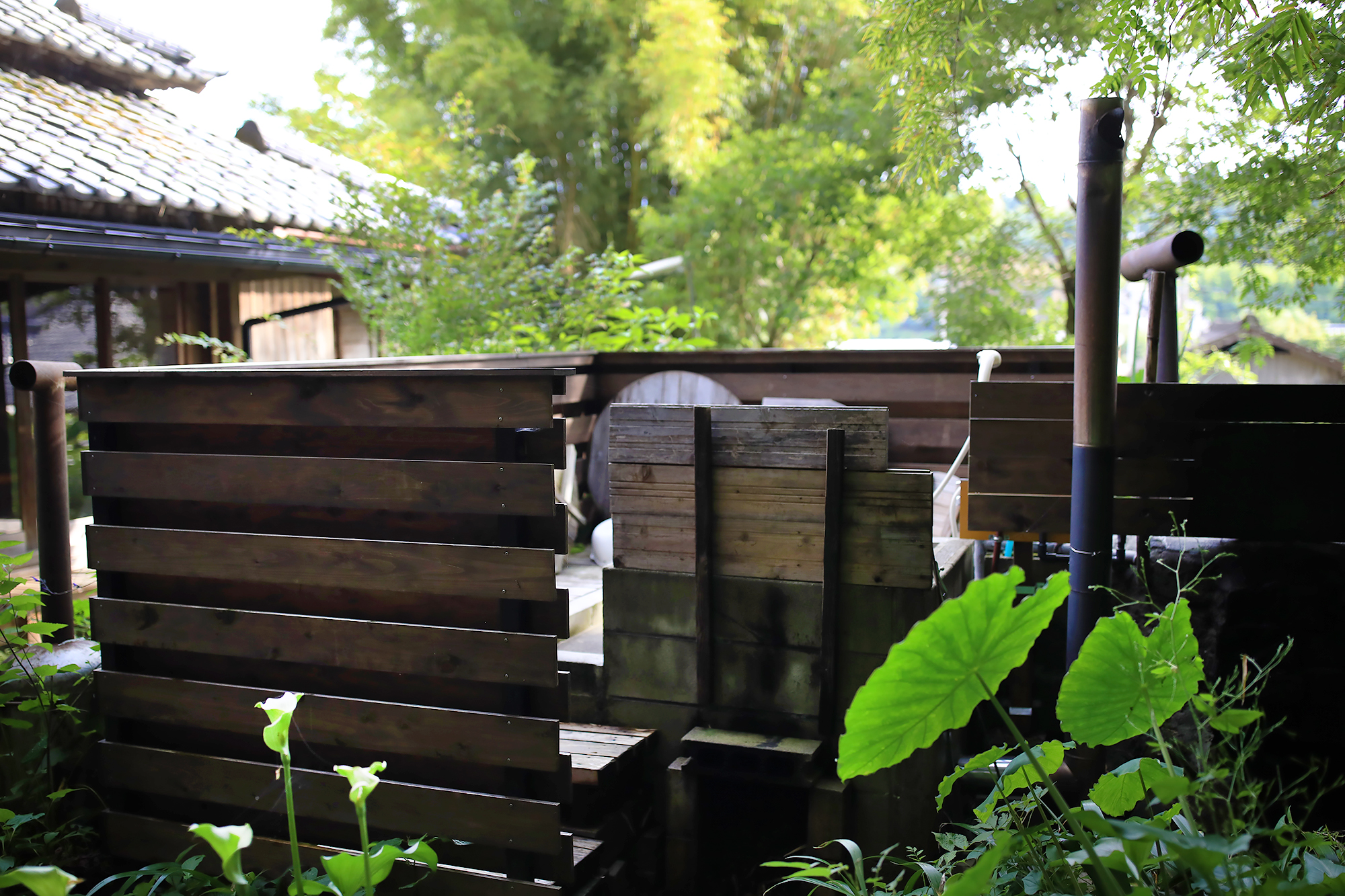
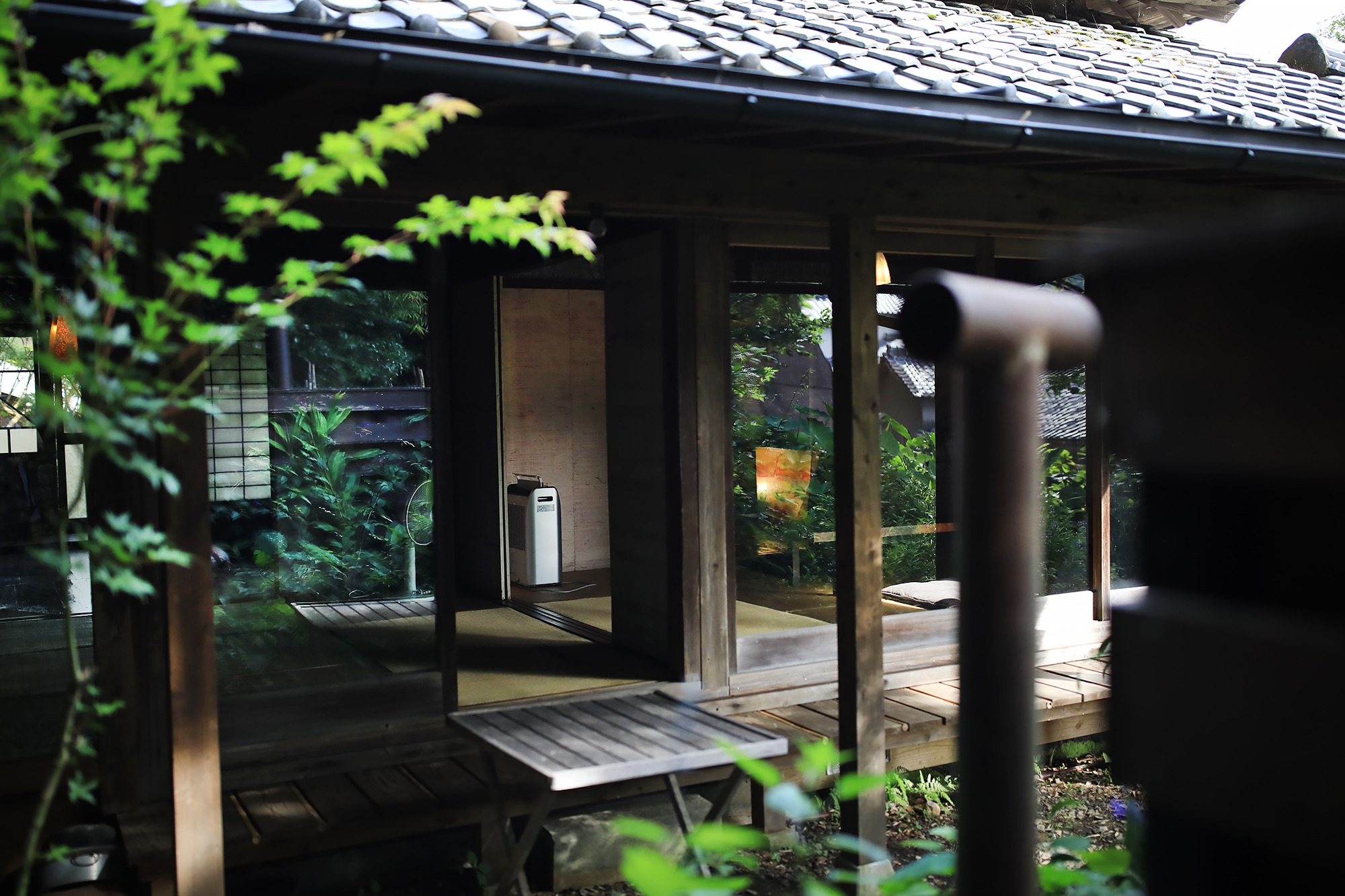
Although rarely seen these days, "goemon-buro" baths were commonplace in Japanese houses in the past. This retro look and the analog method of boiling water with wood for the first time are very popular with guests. For those who are not comfortable bathing outdoors, they can take them to a large hot spring facility or product center located 7 to 8 minutes away by car.
Cooking Introductioneel lunch
Mainly natural eels nurtured by abundant water and homemade additive-free vegetables.
We serve a variety of country cuisine with our own special dishes.
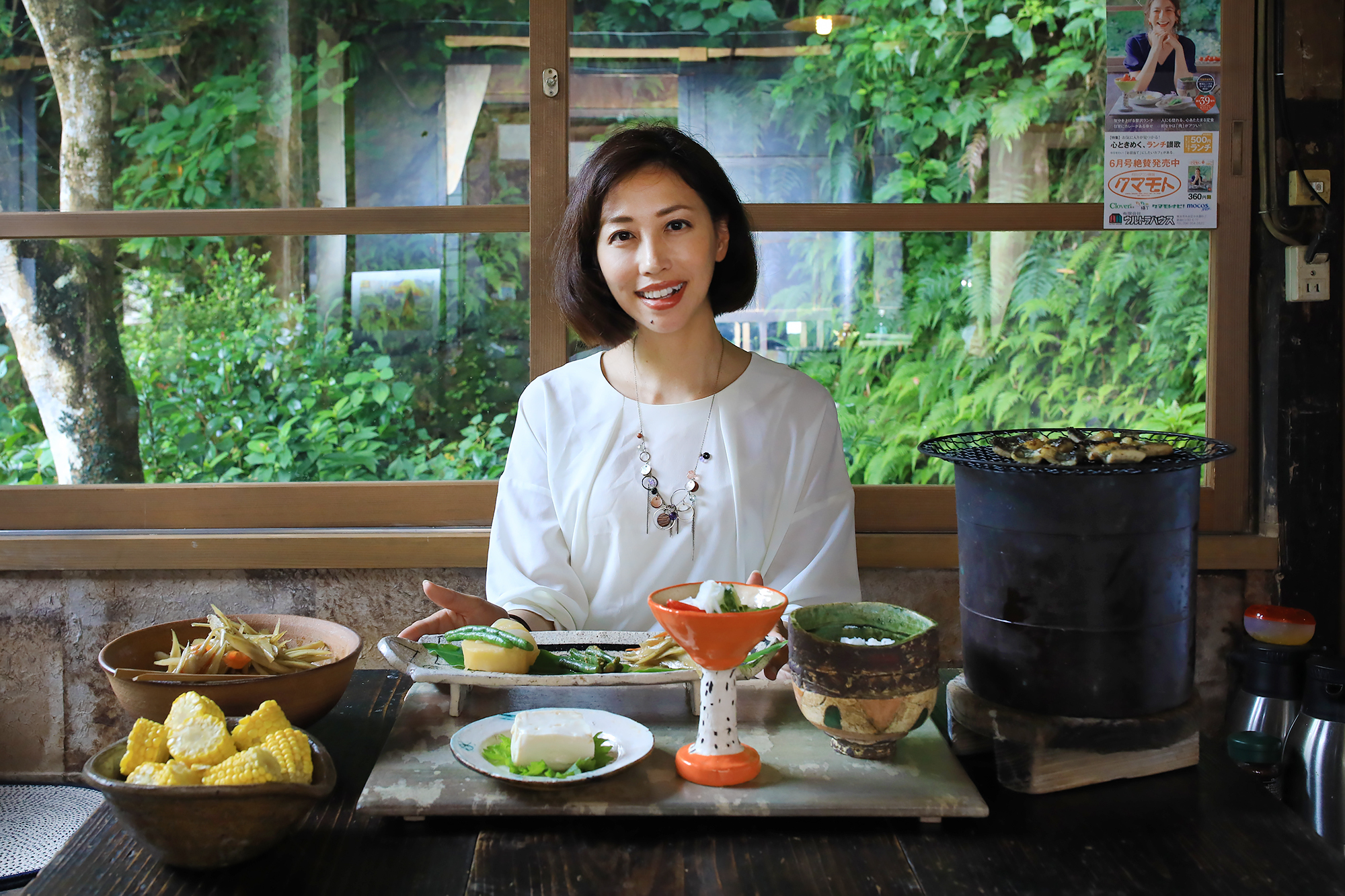
Natural eel lunch 3,780 yen (included)
Reservations required by the day before. Seasonal only due to the eel fishing season.
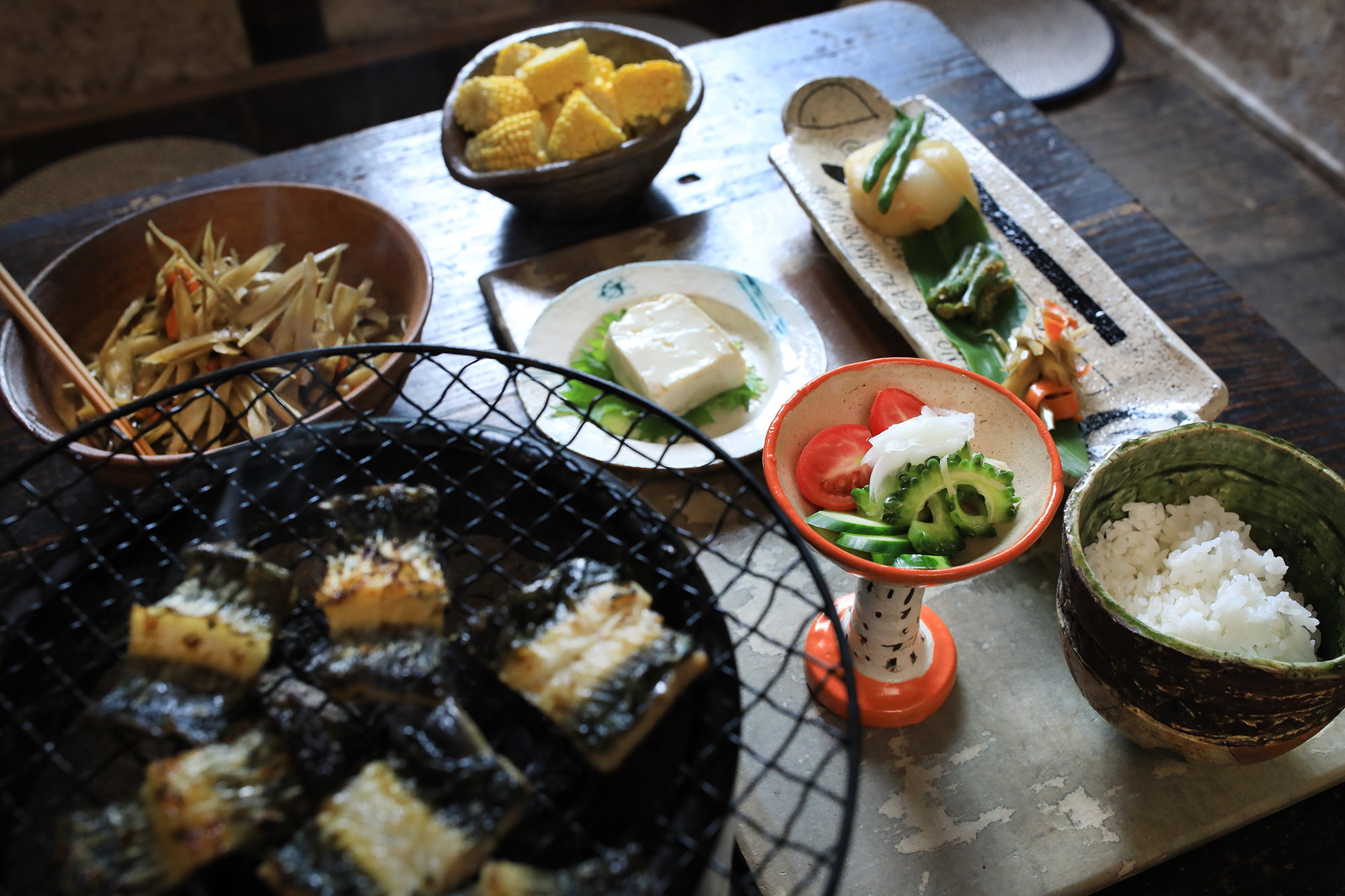
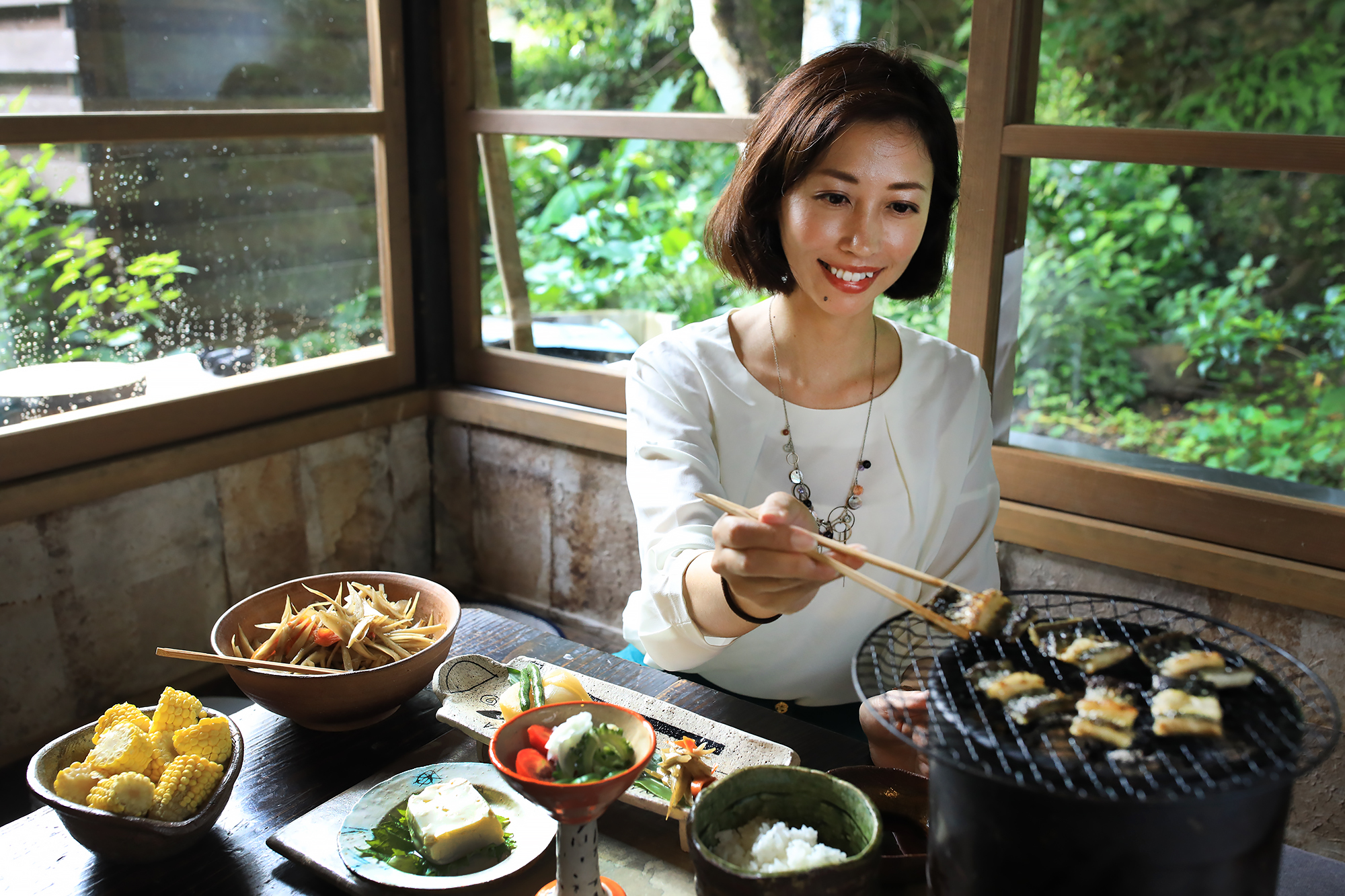
This healthy lunch set features natural eel roasted over a charcoal fire in a shichirin, and plenty of freshly picked home-grown vegetables. On this day, it was marinated home-grown vegetables, kinpira gobo (burdock root), green beans with sesame paste, local handmade tofu, and stewed potatoes grown in the fields of Amakusa.
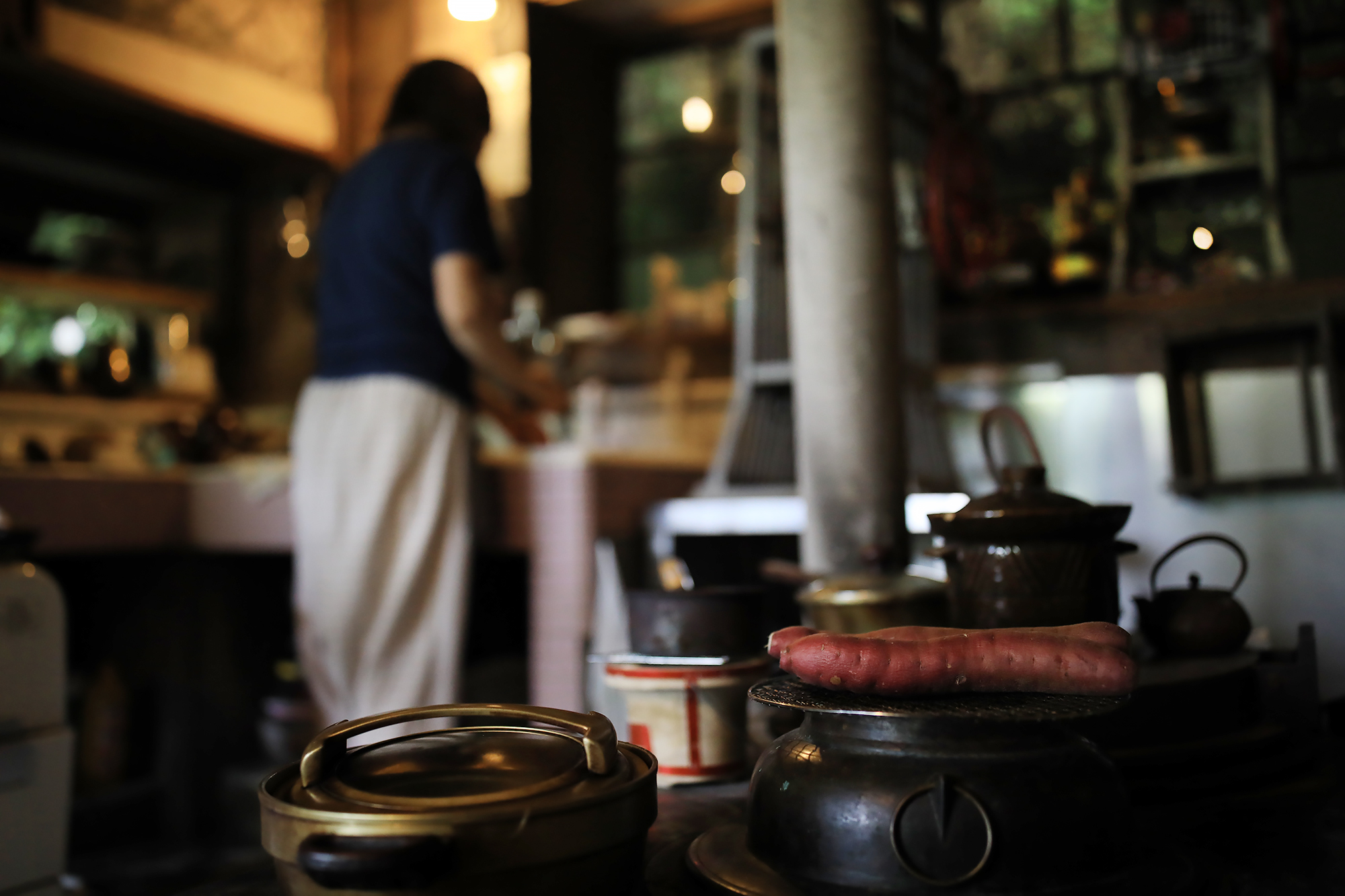
The old-fashioned kamado is alive and well, and food is being prepared throughout the kitchen. The furniture, cooking utensils, and water features of the good old days are sturdy and still fully functional.
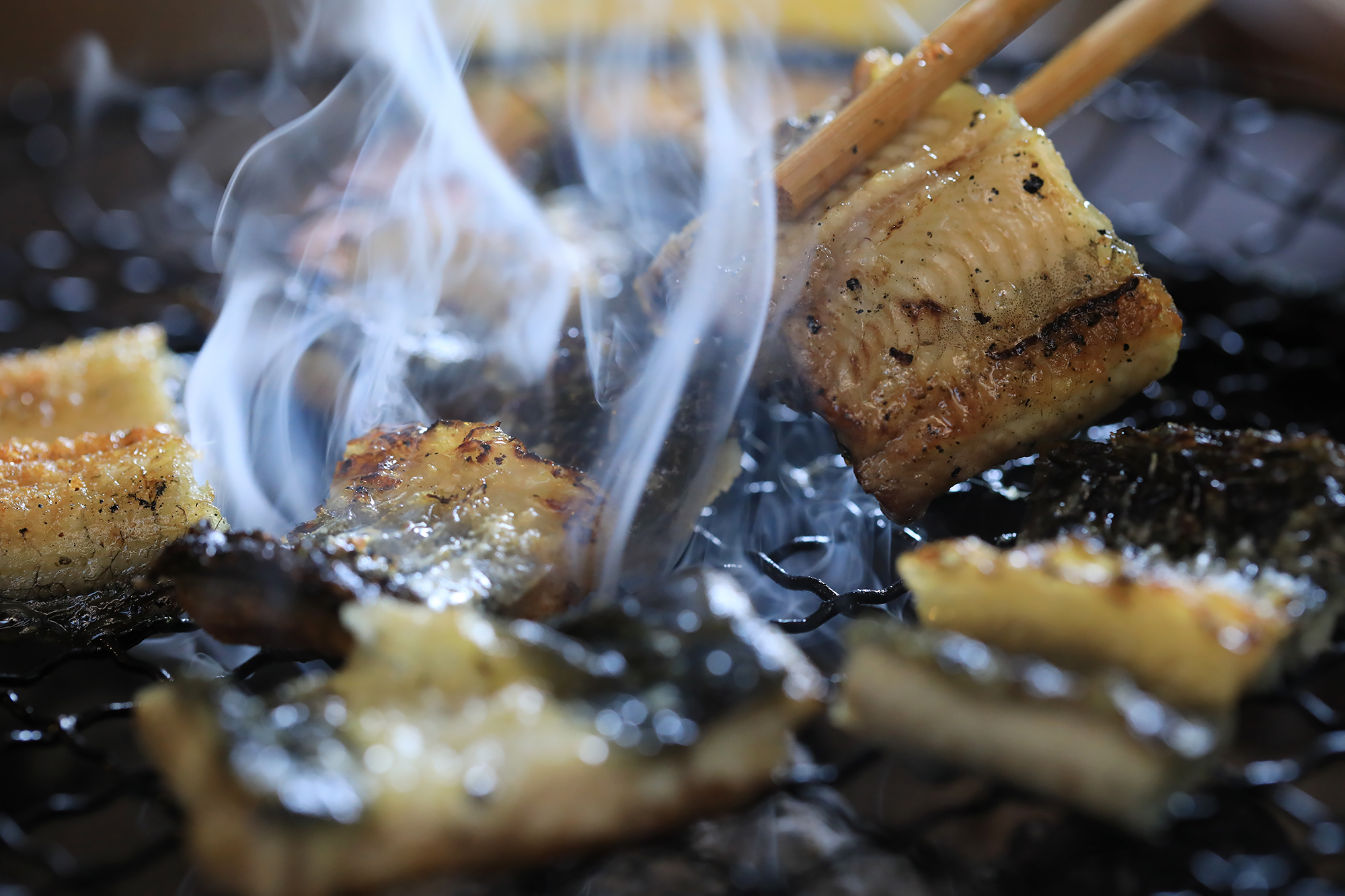
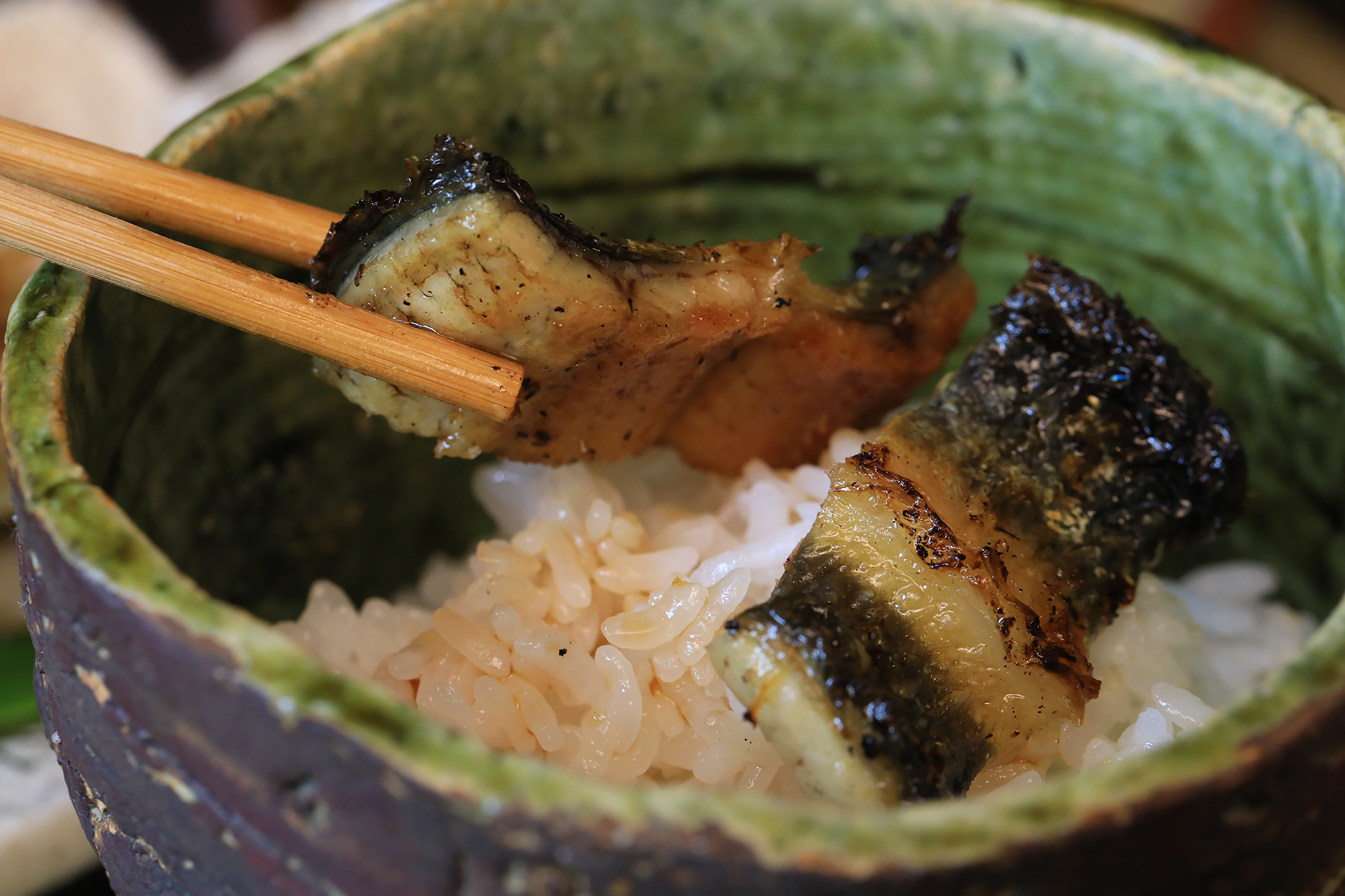
The natural eel grown in the abundant and clean water of this region has no distinctive odor, and has just the right amount of fat without being sticky or cloying. The rice is cooked in a kamado (a wooden oven), with a slight aroma of wood burning, and the sweetness and stickiness of the rice are enhanced. You can dip the eel in the accompanying sauce and eat it as it is, or serve it over rice in an eel bowl, a luxurious treat to savor the taste of the ingredients.
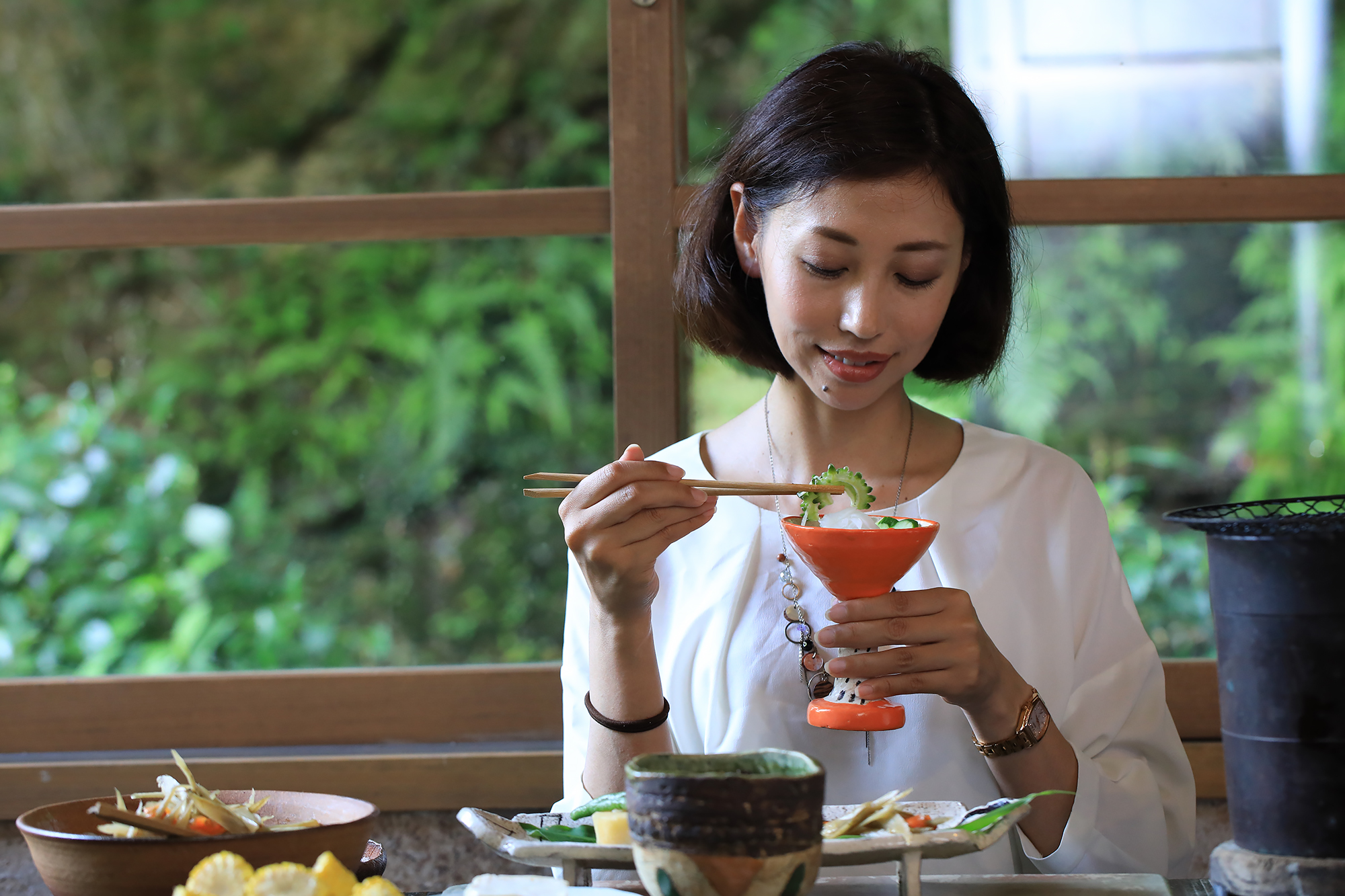
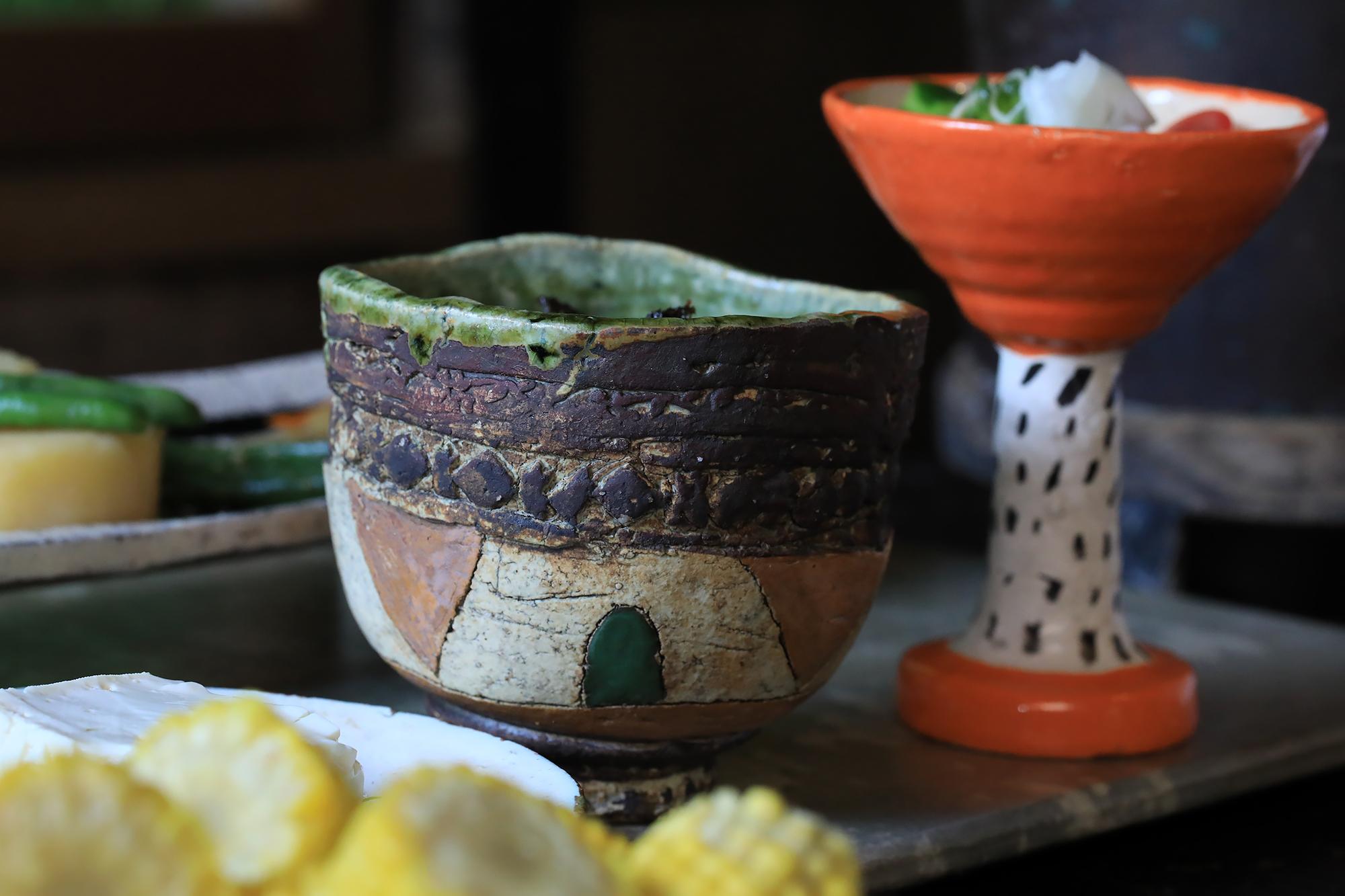
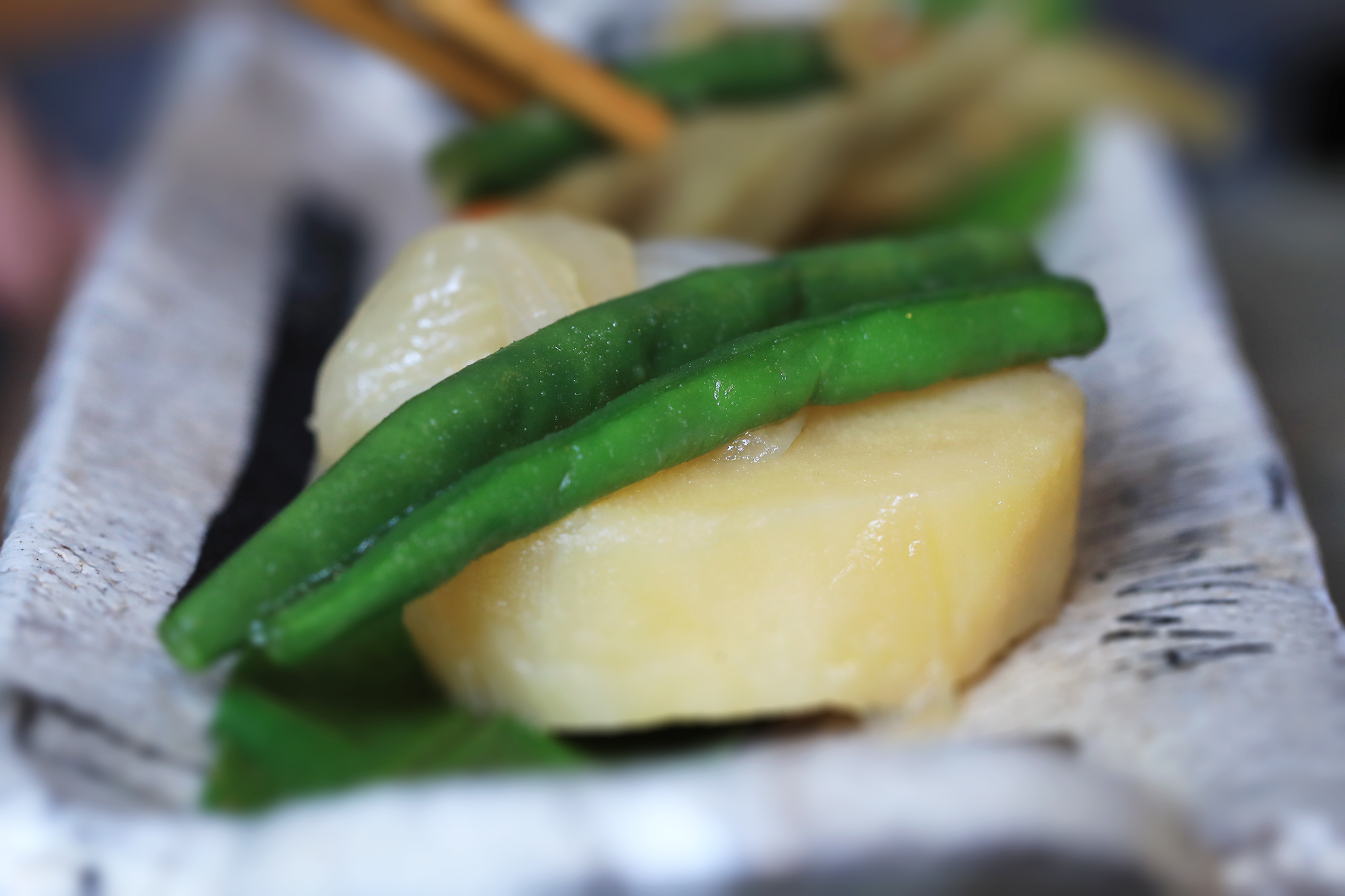
Chiyumi has been collecting Seto pottery with unique colors and forms. The dishes are decorated with a more gorgeous coloring.
Cafe and washi storeFood and goods made from natural ingredients
It is the only newly built building on the grounds of Kaisuishu, and houses a café serving coffee, handmade drinks, and organic sweets made from natural ingredients, as well as a store space selling washi paper and providing consultation on interior design, remodeling, and other services. Like the main building, the walls, pillars, and interior of the store are decorated with washi, but unlike the stately atmosphere of the main building, the brightly colored washi gives the store a casual and gentle atmosphere.
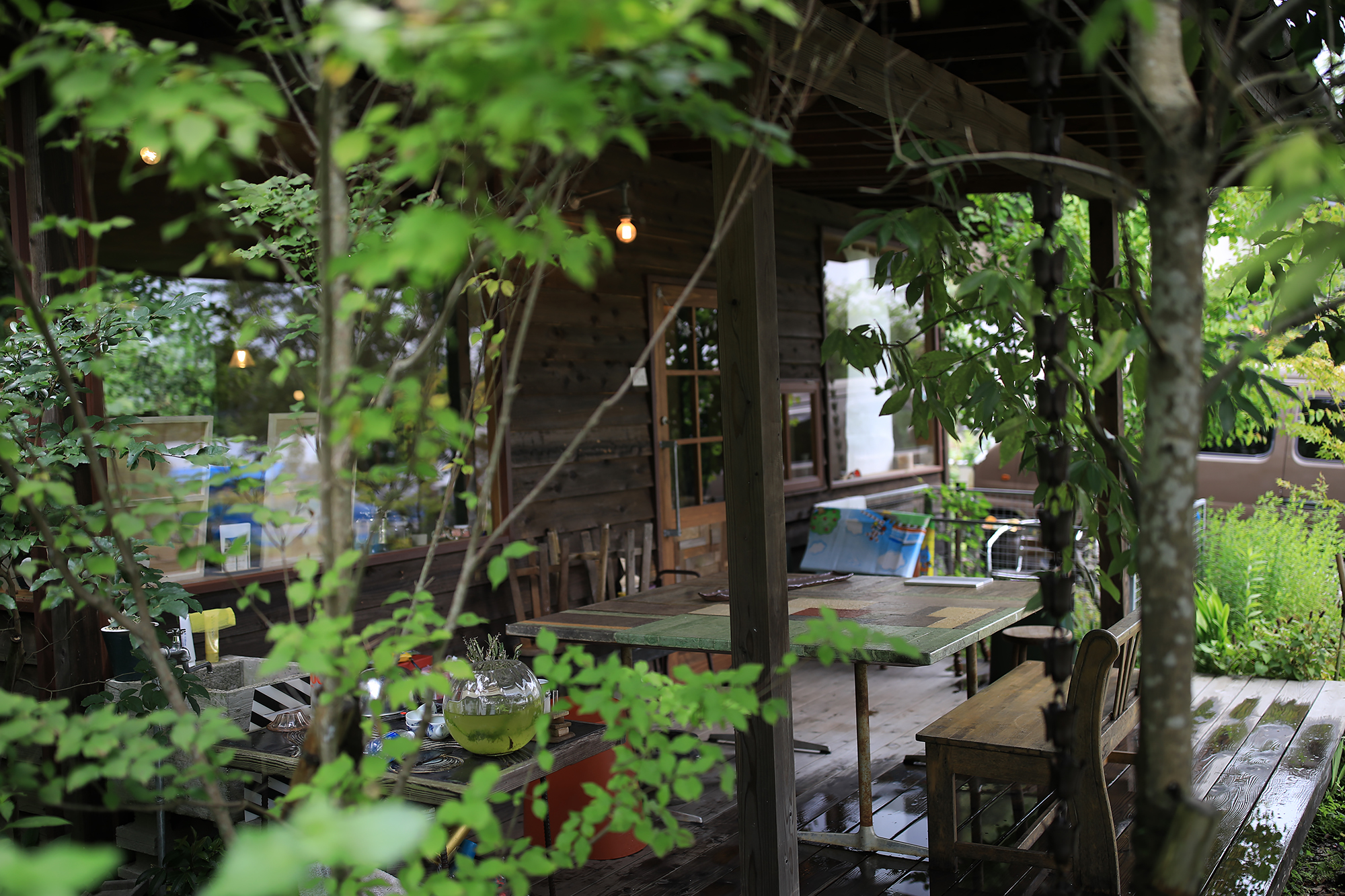
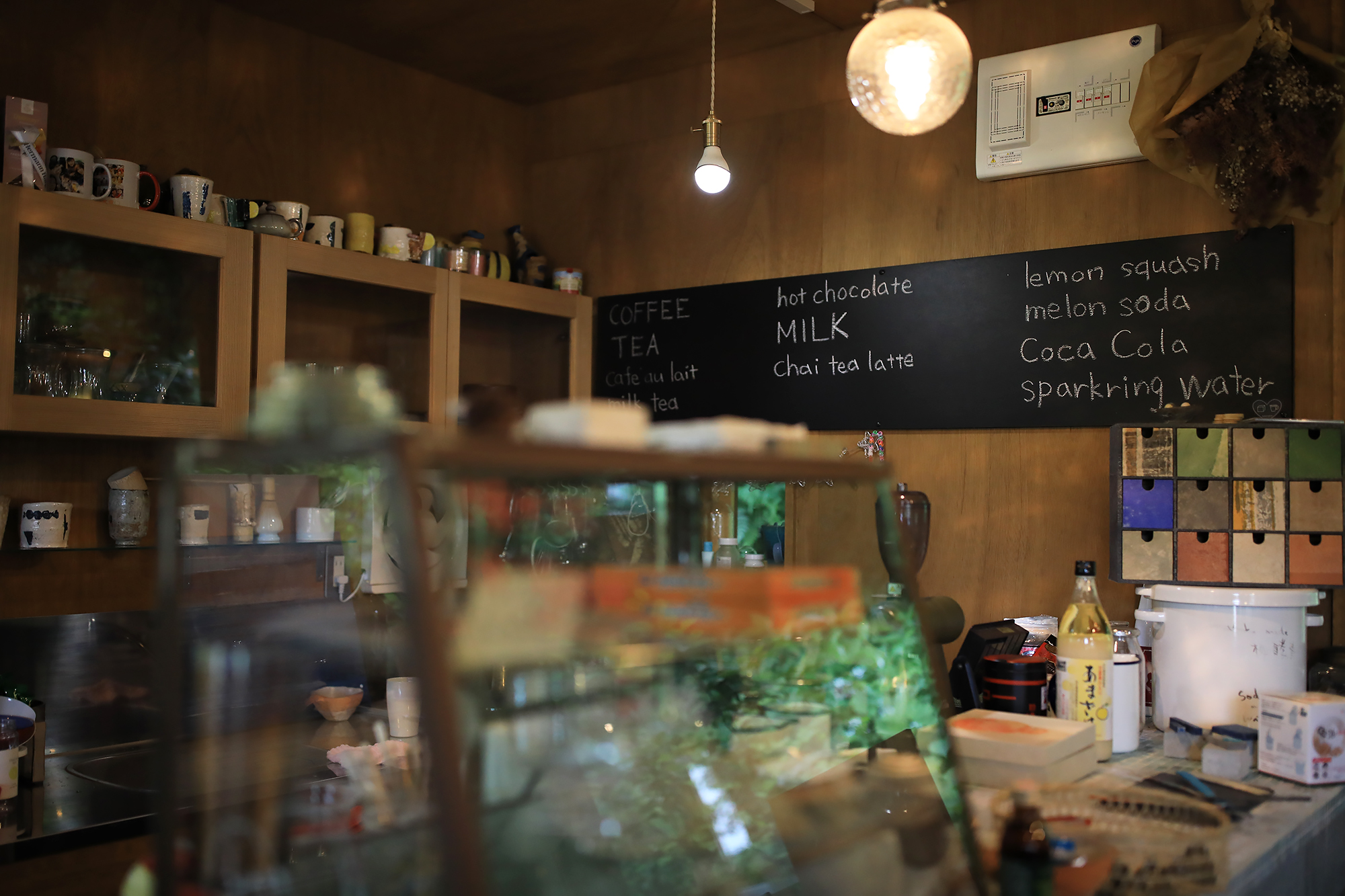
This store is mainly run by his daughter, Yuka. They are particular about the organic nature and freshness of their coffee, and order it from green beans from a roaster. Other handmade drink ingredients and water are also carefully selected.
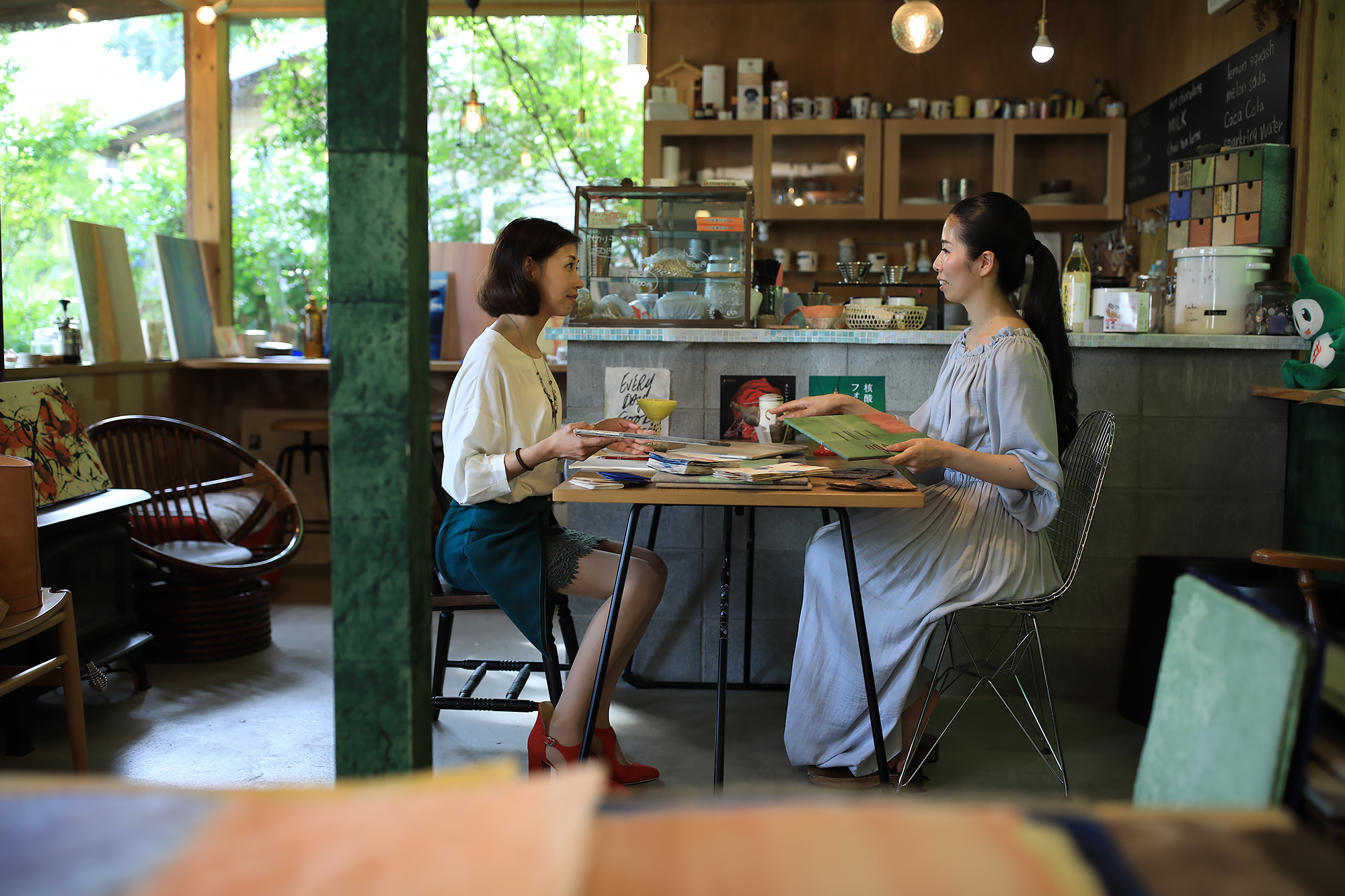
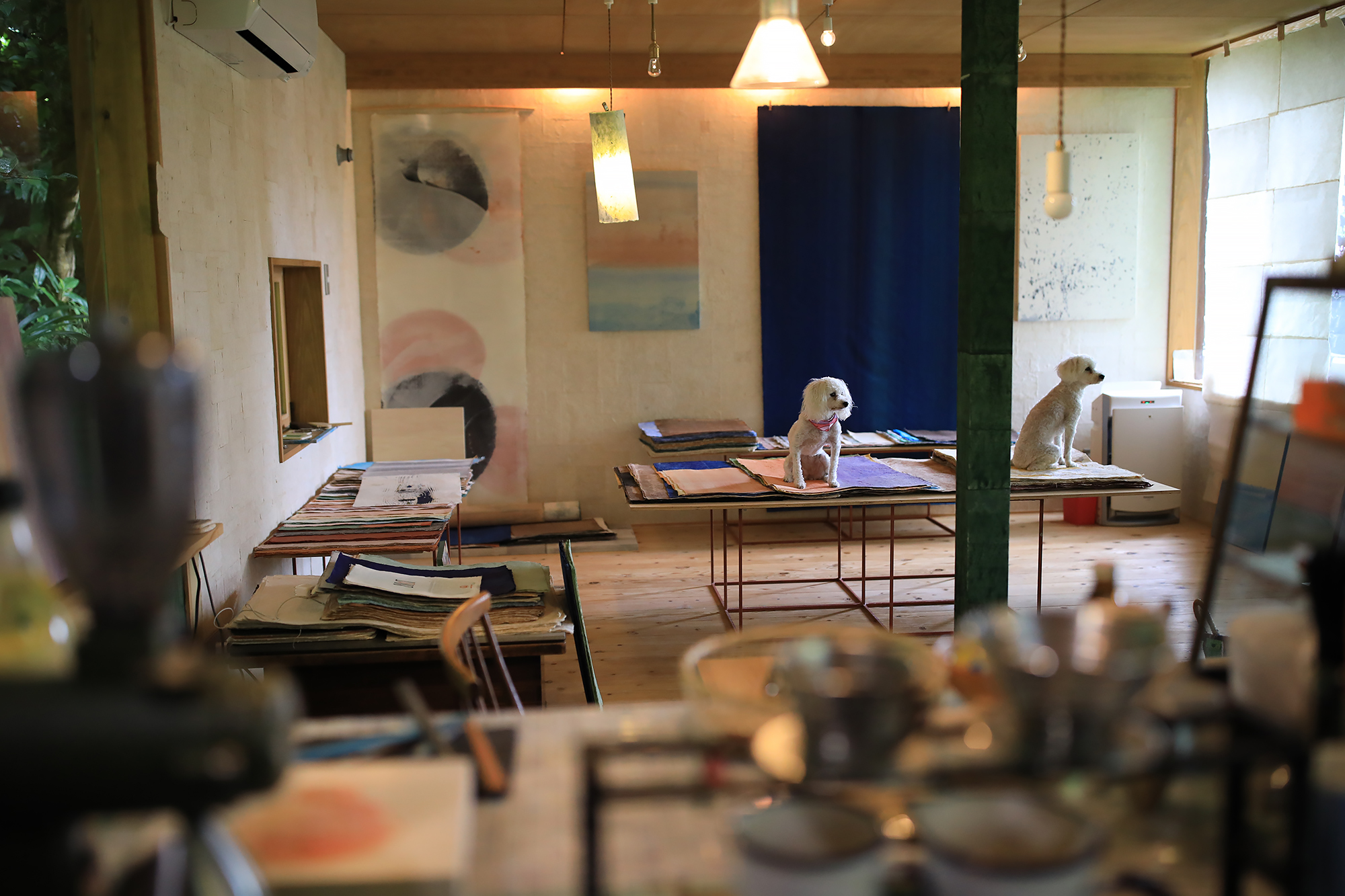
Washi sales and exhibition space
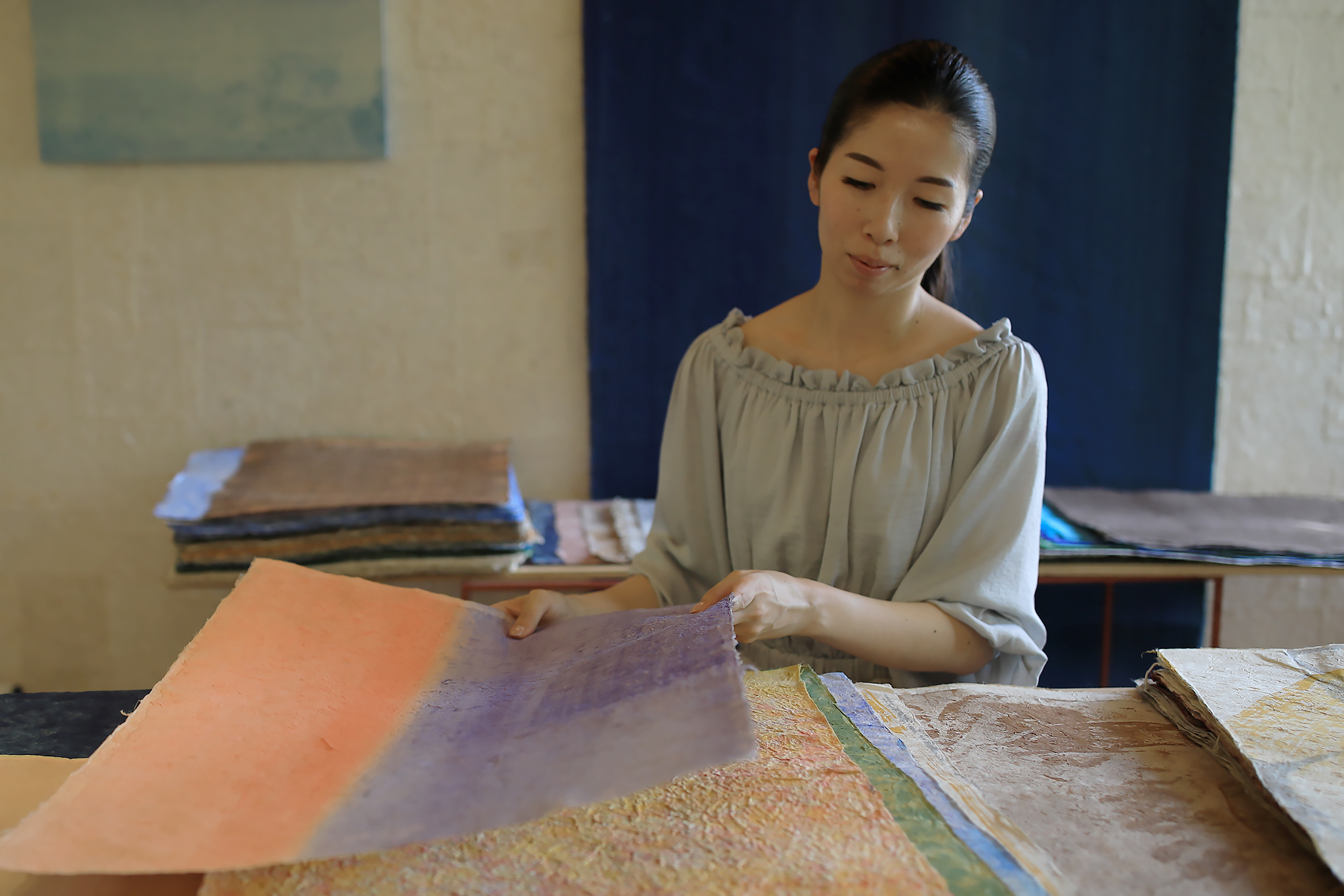
Next to the café space, washi artist Naoaki Sakamoto, who color designs handmade washi from Japan and around the world, sells not only large-size washi paper, postcards and bags made from washi, but also sundries made from washi, interior design, and renovation consultation services.
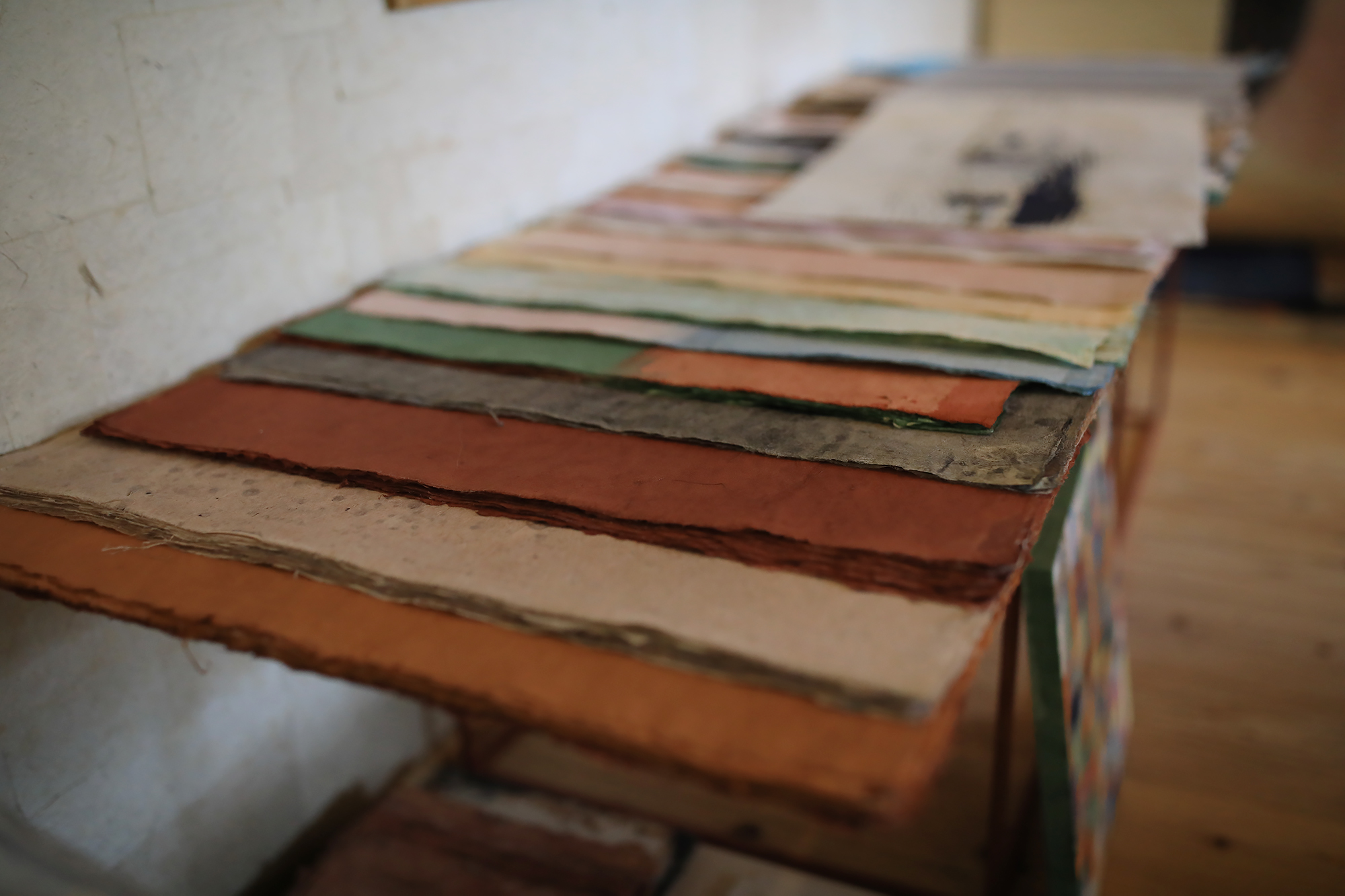
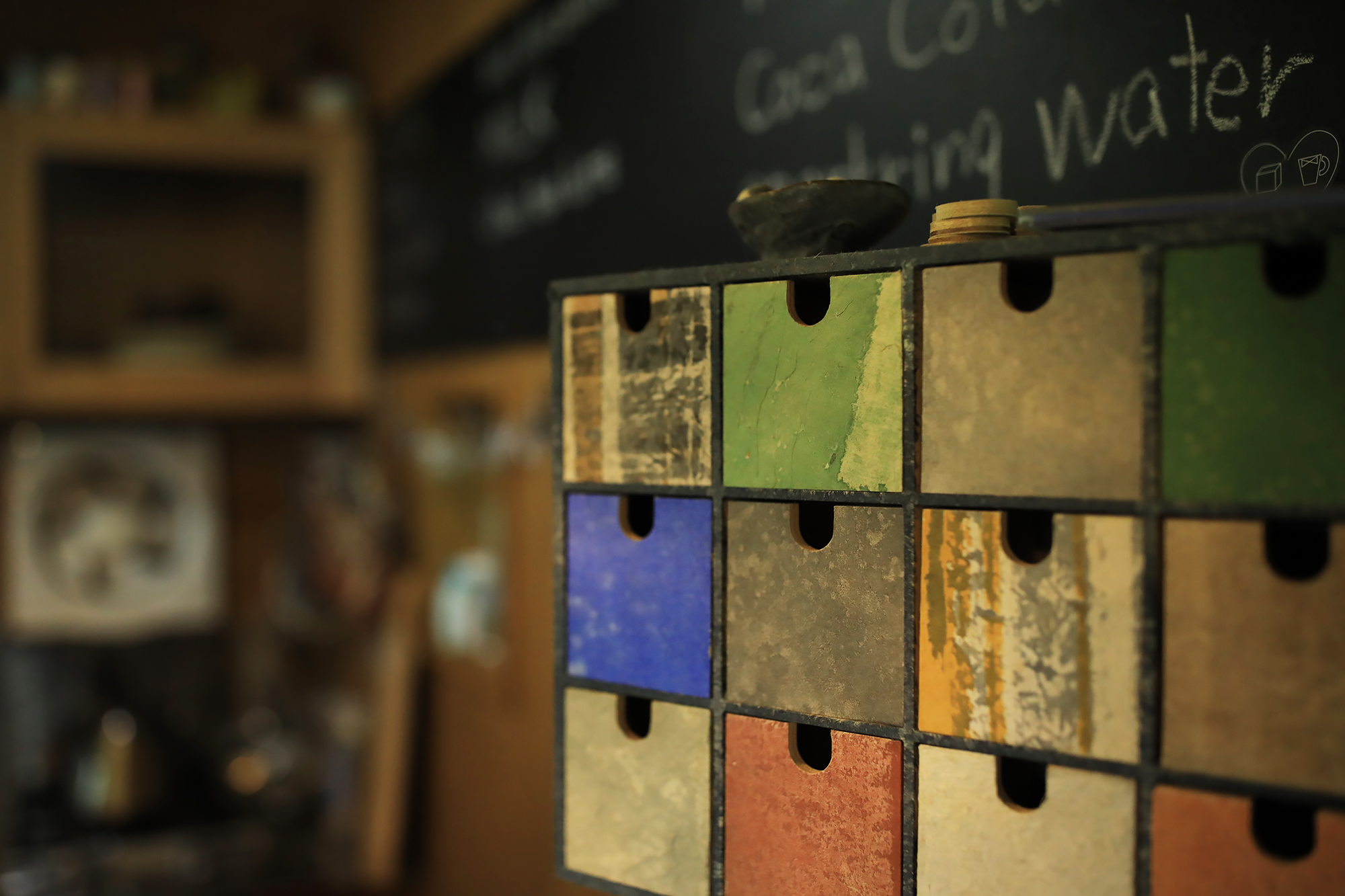
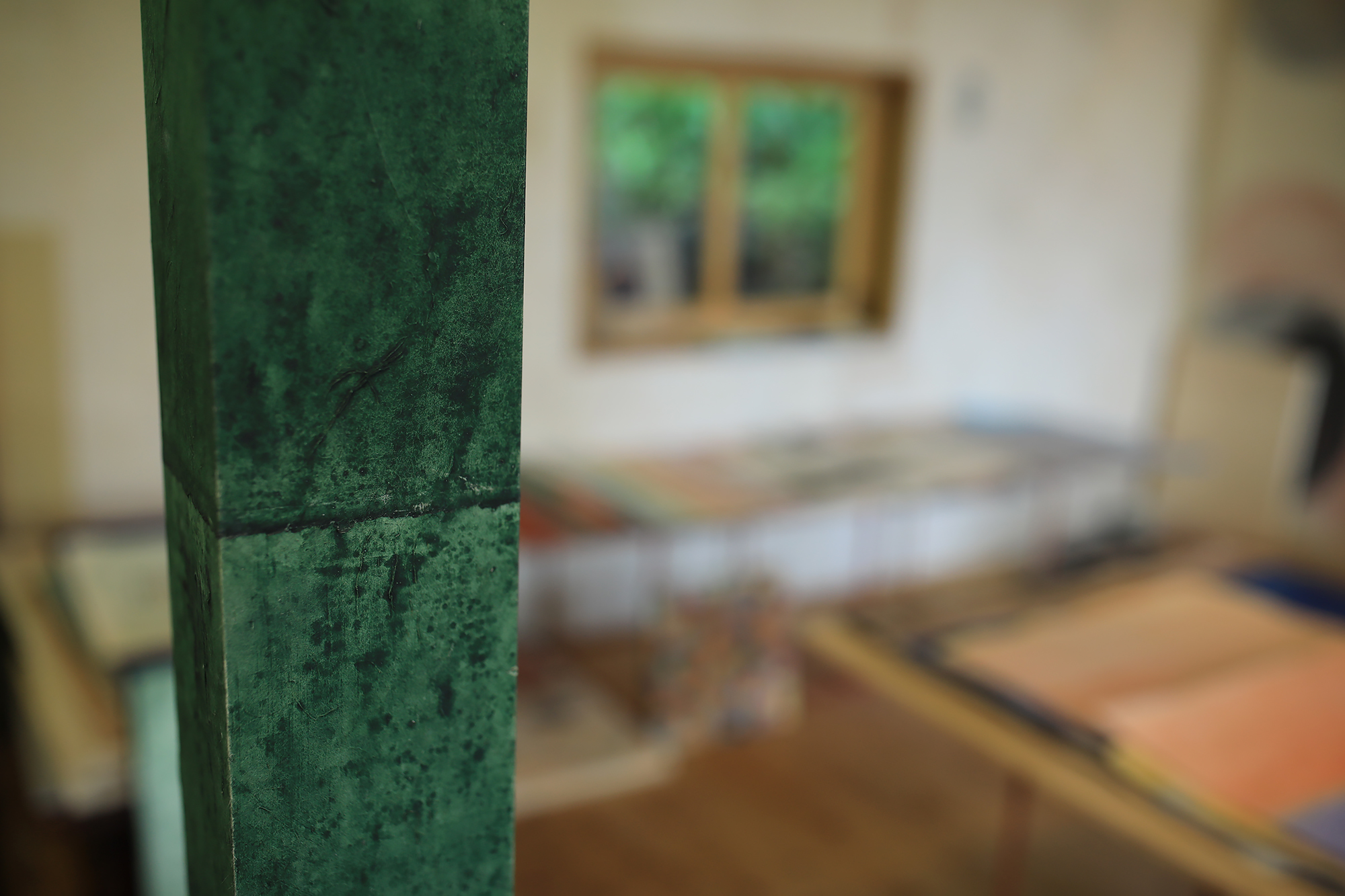
▲ Simply by attaching washi paper dyed a bright, deep green to the pillars of the houses, they are transformed into the beauty of stone pillars.
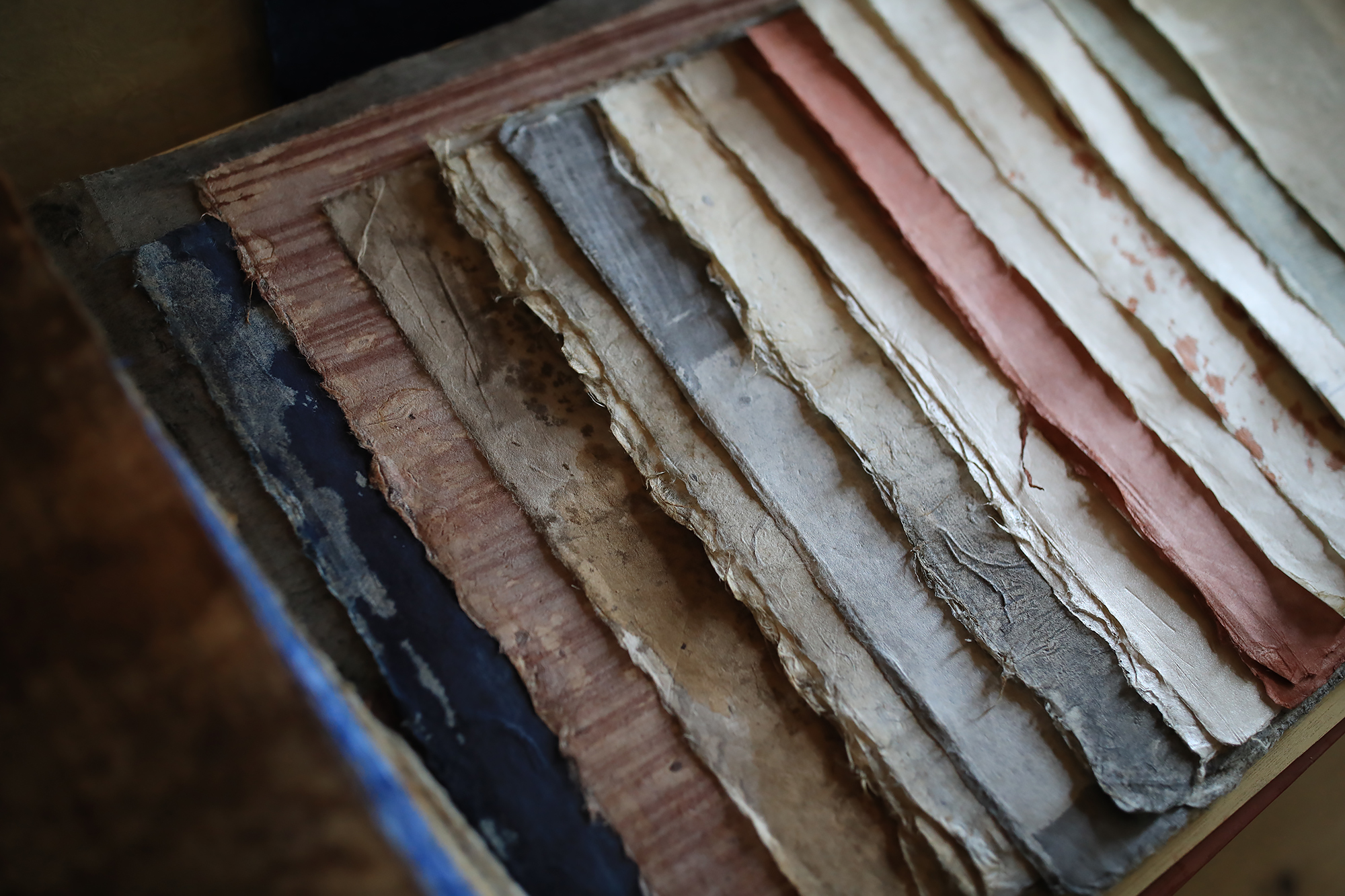
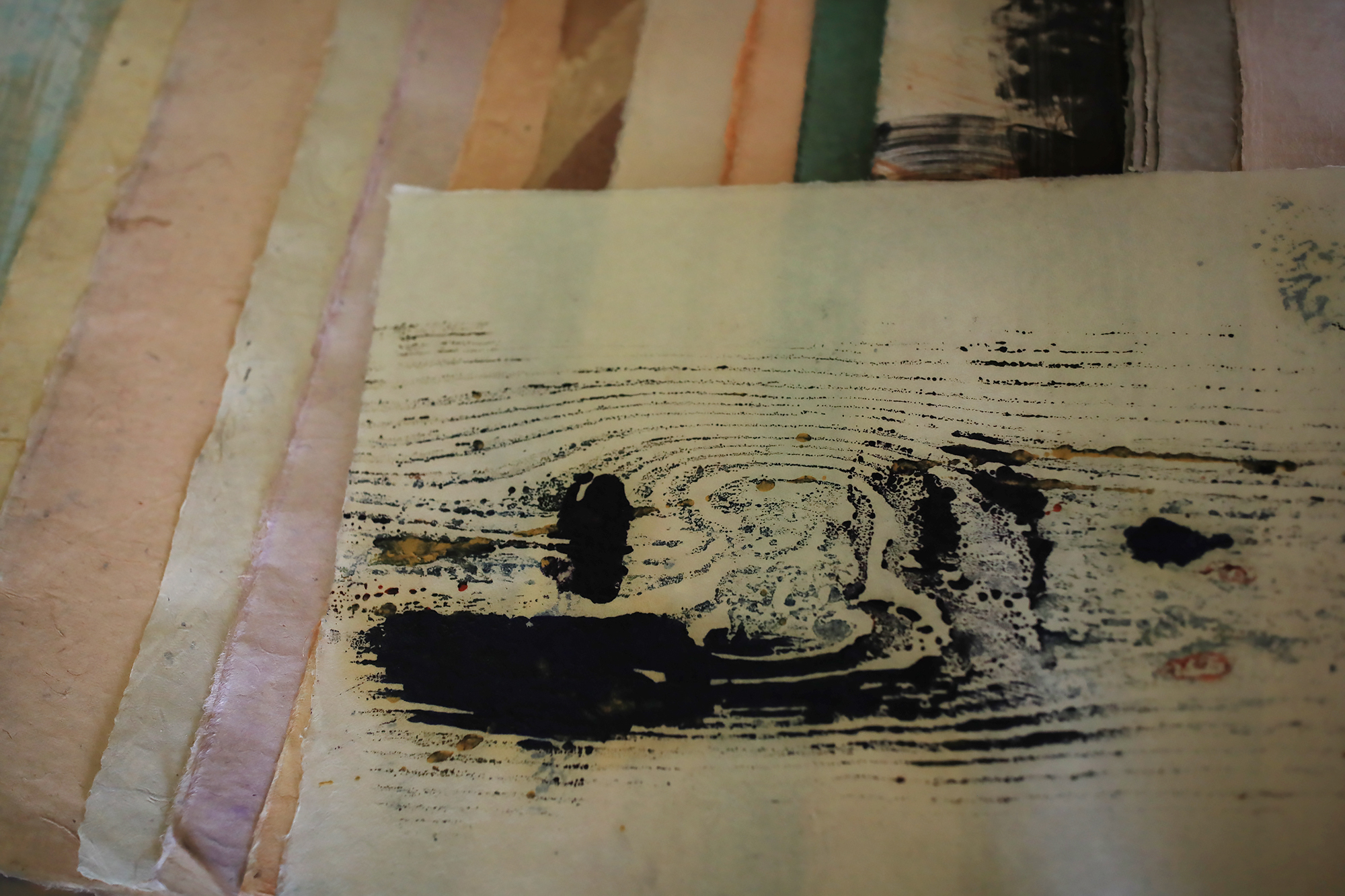
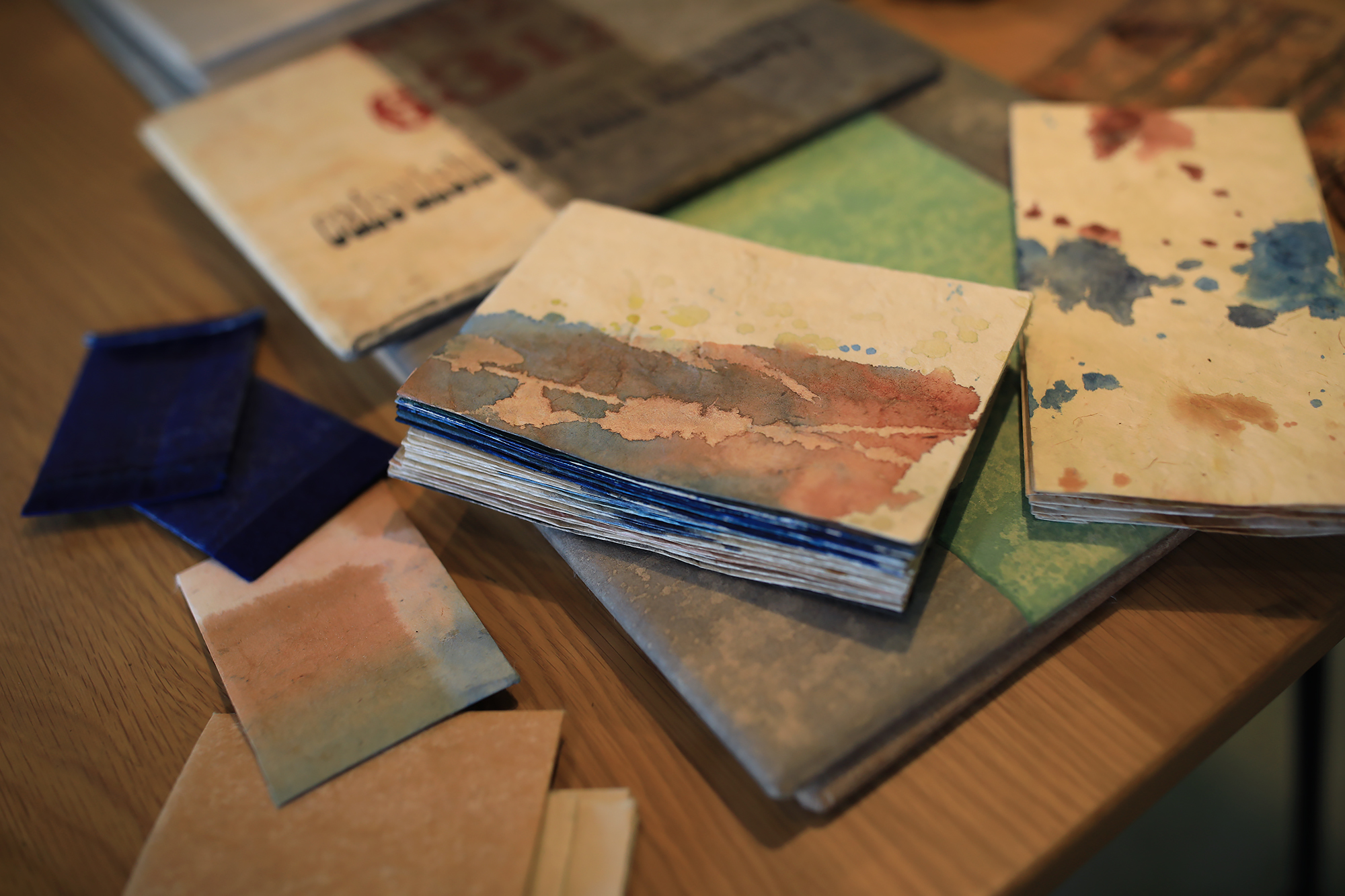
Because it is handmade Japanese paper, each piece has a different expression, pattern, and fiber texture, and no two are exactly alike. Just by wrapping a sheet of washi around like a lampshade and fastening it with a pin, the atmosphere of a room can be completely changed, so it is recommended as a gift or for a quick makeover.
interview (i.e. television, newspaper, etc.)Chiyumi Fukumoto (mother) and Yuka (daughter)
By conveying the natural power of handmade washi,
Daily life naturally changes into something enjoyable, and one feels more relaxed.
We want to increase the number of places where people can feel such small happiness.
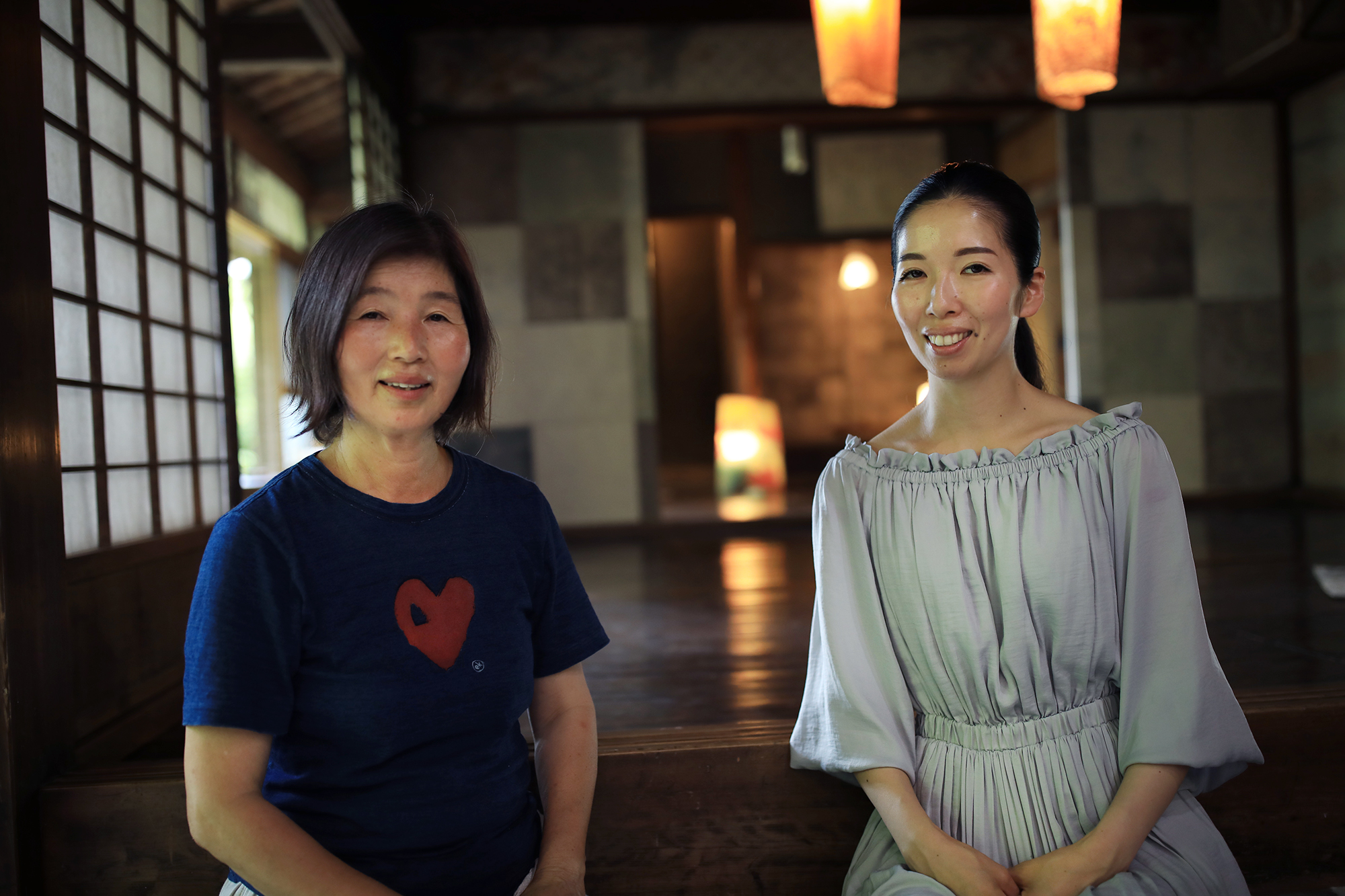
Q: How did you get started with Kaisuishu?
Chiyumi: "I was a very normal family living in Kumamoto City, but I had always wanted to live in an old private house as a second life plan. When I found this place, I bought it with great anticipation and embarked on my dream of restoring an old private house by myself, which I think is the beginning of this kaisei-shu. At the time, it was intended to be a "hobby house" that brought together all of my hobbies. ...... (laughs). (Laughs.) It is wonderful how people make connections with each other. Thanks to the many people I've gotten involved with, I've been able to operate this kind of store. I am very grateful."
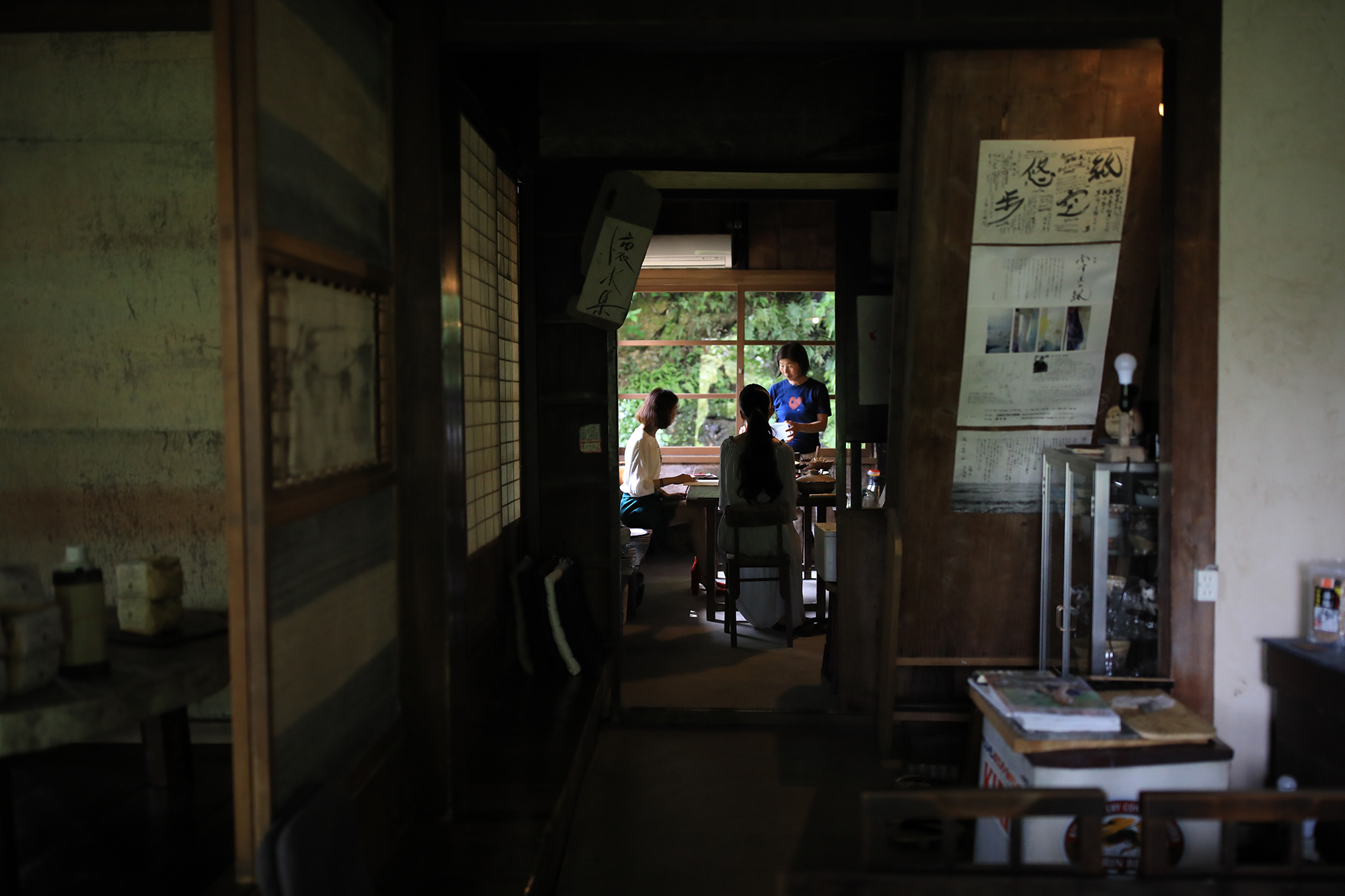
Q: Was it difficult to renovate this old house by yourselves?
Chiyumi: "Houses built in the olden days are very functional, and there are many places that are fitted in such a way that they can be repaired by the owner. If there was a leak, we could replace the boards, and the wooden floorboards could be removed in parts so we could put washi paper on them. The earthen floors and kitchens were sturdy and could be used as they were if we took care of them. The earthen floors and kitchens are sturdy and could be used as they are if they were cared for. They are made to last for hundreds of years if they are cared for more than modern houses. However, things inevitably happen that are beyond our control, such as earth and sand flowing in behind us after the Kumamoto flood a few years ago, or changes in the amount of spring water due to deformation of the waterways caused by the earthquake. Nevertheless, local people and friends rushed to help us, removing earth and sand, cleaning up, re-coating cement, and many others, and we are still able to operate like this today. I truly feel that there is no more important treasure than relationships with people."
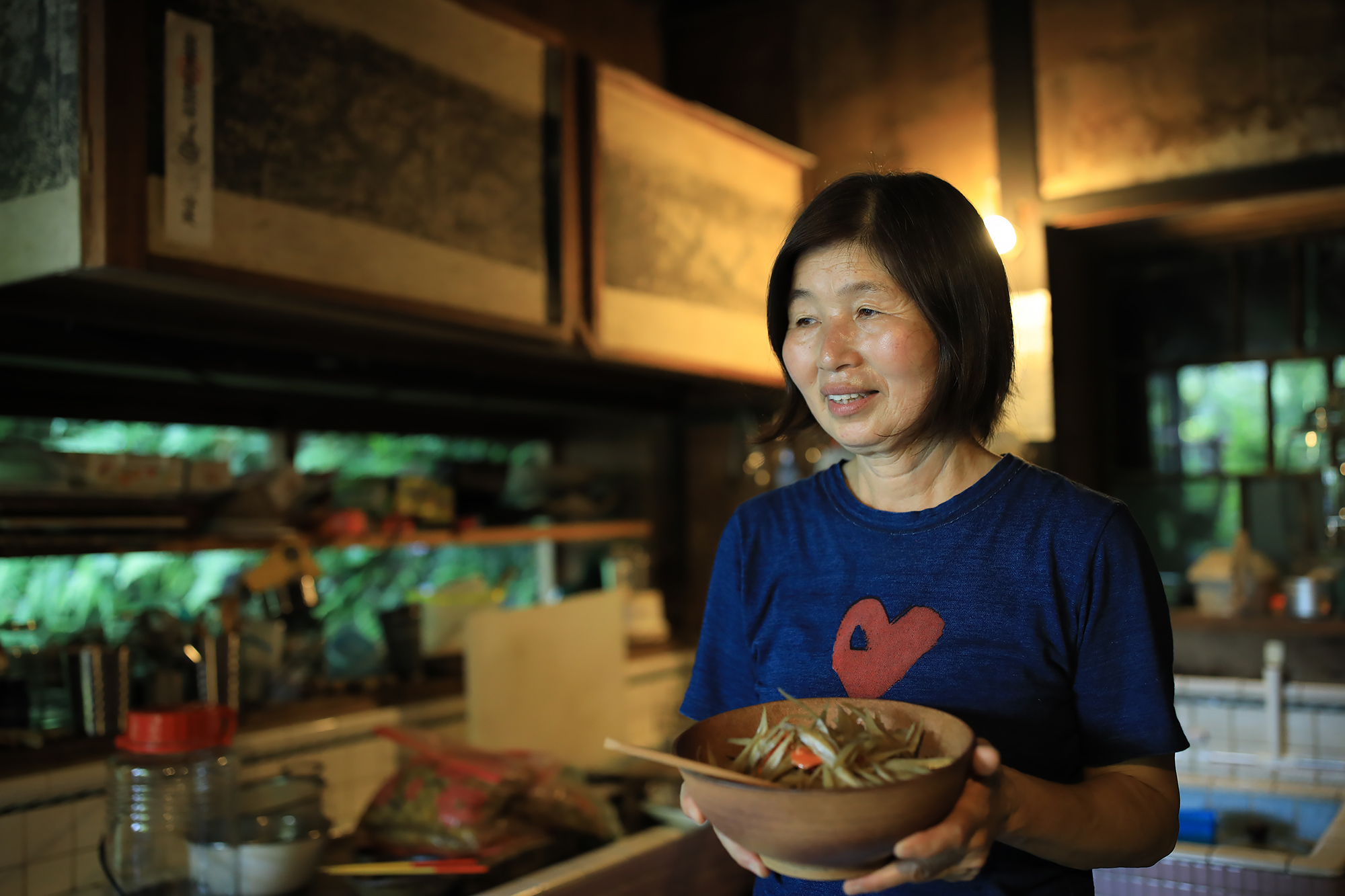
Q: I understand that the vegetables used in your cooking are also handmade.
Chiyumi: "Yes. Of course we grow our own potatoes, but we also receive gifts from our neighbors. Today's potatoes were picked in a field near the house of an old Japanese house on the remote island of Yushima in Amakusa, which has also been restored and remodeled with washi paper. Freshly picked vegetables have a flavor all their own, so if you cook them without overworking them, they turn out very delicious.
Q: When did you first encounter washi?
Chiyumi: "It must have been over 20 years ago. I happened to meet Naoaki Sakamoto, a washi artist, and was captivated by the beauty and magnificence of handmade washi. Every Japanese home has fusuma (sliding doors), shoji screens, and other furniture made of washi, and I remember how excited I was at the thought of how wonderful my home would be if I could change the paper to this beautiful handmade washi. At first, I pasted them on the fusuma and walls of my home and enjoyed the space woven by the washi myself. Later, when my daughter (Arika) returned to her hometown, I took on the challenge of running a lunch and an inn, which I had received many requests for, and now not only do I have customers visiting me by word of mouth, but I also receive more requests for washi renovation nationwide, and people I happen to meet at washi-related events come from Tokyo I am amazed at the connections that washi has brought about.
Q: The addition of Arika (your daughter) to the Kaisuishu has been a big leap forward.
Chiyumi: "That's right. I have full confidence in them, especially when it comes to Washi paper remodeling. I don't think my daughter had any specialized studies to become an artist, but she seems to have a good sense of art, and she has even received invitations from overseas artists because of her sense of art. I myself am fond of pottery and natural textures, and I have always been conscious of using high-quality pottery for tableware in my home, arranging interior and miscellaneous goods displays, and living with "good things" on a daily basis. I am amazed at the ideas they come up with that even I don't understand.
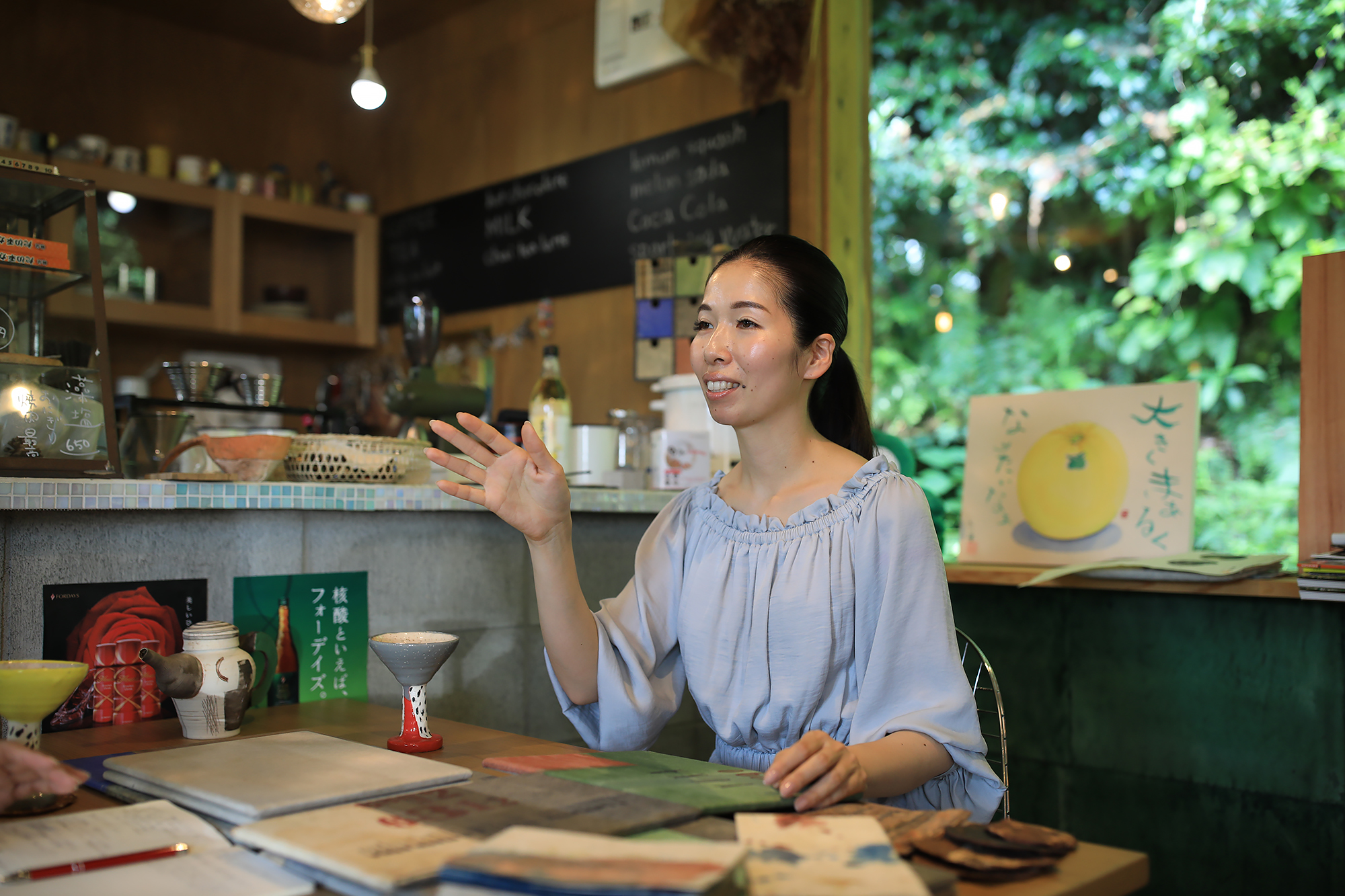
Q: Are the two of you remodeling the washi together?
Arika: "I am the main person who actually designs and constructs. If there is a request from a client, I have a meeting with my mother and design it. We use edible glue for the renovation, which is safe to put in the mouth. Another great feature is that even if it tears, it can be repaired immediately, making it safe for families with children."
Q: What kind of activities were you originally involved in, Arika?
Arika: "I used to work as an artist making silver and leather goods by hand. Since I started running the Kaizui-shu store, I have concentrated on handmade washi, and in addition to designing and remodeling construction, I also hold workshops for making trays and accessories, and am commissioned to make wedding favours and other items."
Q: I seem to misjudge the amount of washi when installing large spaces such as ceilings and walls. ......
You may imagine that it is simply pasted together, but each piece of washi has a different expression, so it is possible to create various designs, such as pasting along the surface or alternating the surfaces to create a mosaic pattern. That is why we calculate the amount of washi in detail when deciding on the budget and design after carefully listening to the customer's wishes."
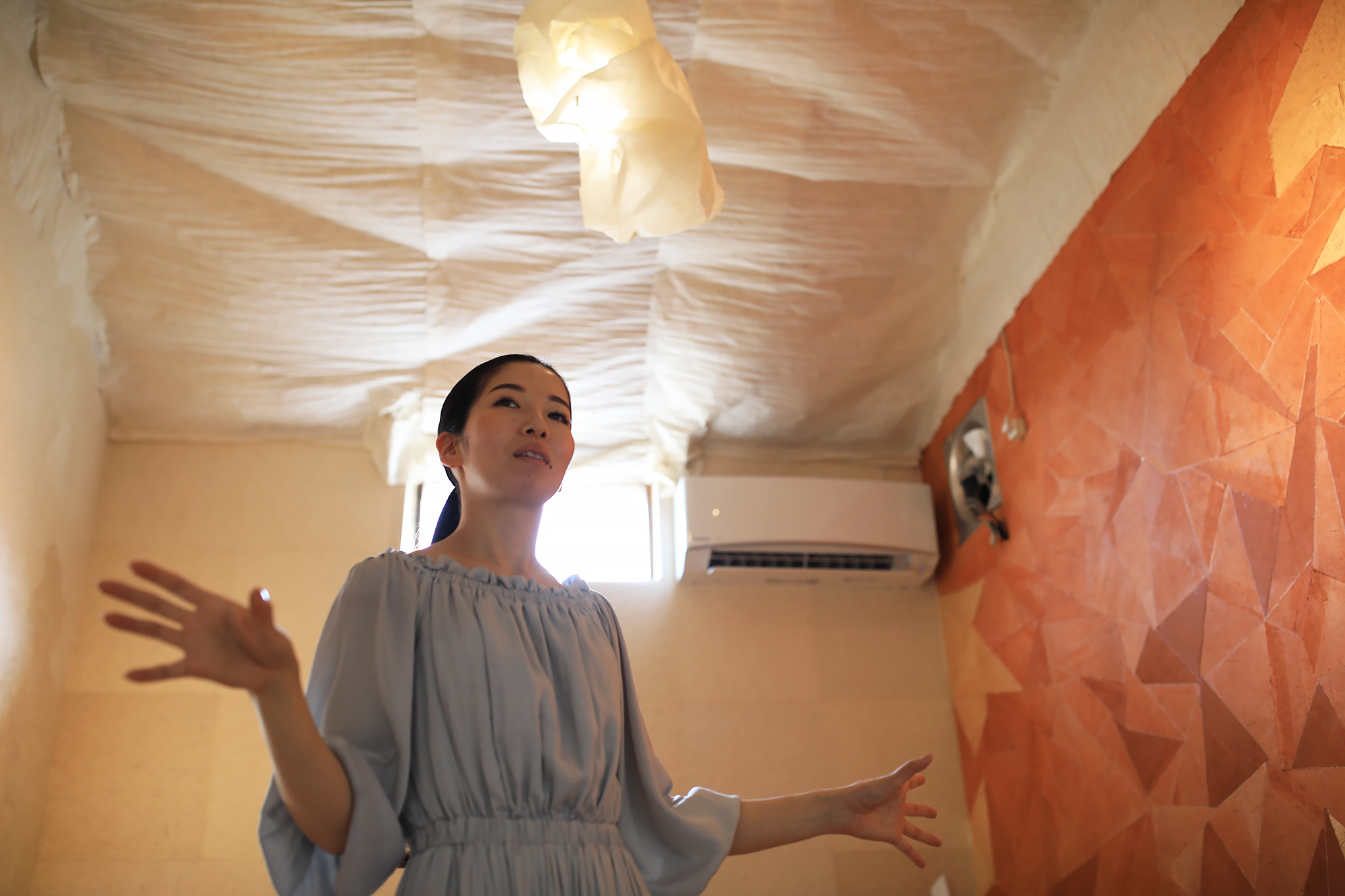
Q: What is your outlook for the future?
Arika: "Currently, it is a lunch, inn, cafe, and washi, but we are currently planning to renovate one of the houses on the property and turn it into an esthetic room (see image above). I designed the wallpaper myself for this one as well, and have been steadily renovating it, but we have finally progressed to this point. By incorporating Japanese paper into the space, the air breathes and creates a very relaxing and extraordinary atmosphere. I would like to expand my activities so that more and more people can enjoy the benefits of washi, in addition to relaxing and forgetting about time in this kaisei-shu."
Q: Thank you for your time.
epilogueAfter the interview
Ms. Chiyumi, the representative of the company, said that spending her daily life in her favorite space gives her a sense of relaxation, and that the happiest thing in life is to lead a fulfilling life. She is not just running the store to make money, but she hopes to increase the number of people who are filled with happiness by "proposing and offering good products in a better form.
We will continue to focus on Kaisuishu, which is slowly evolving while taking on new challenges.
AccessApproximately 20 minutes by car from Matsuhashi Interchange
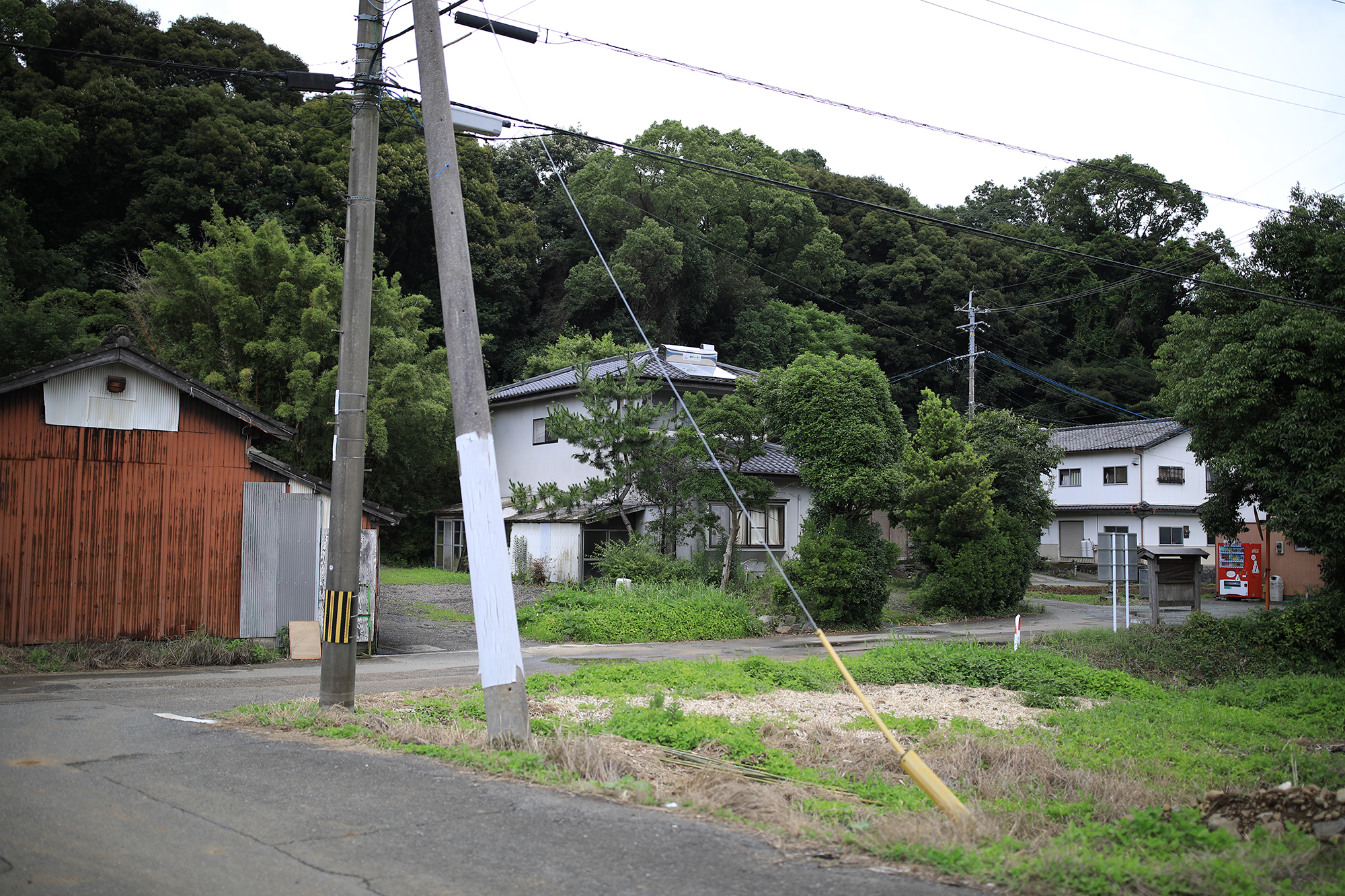
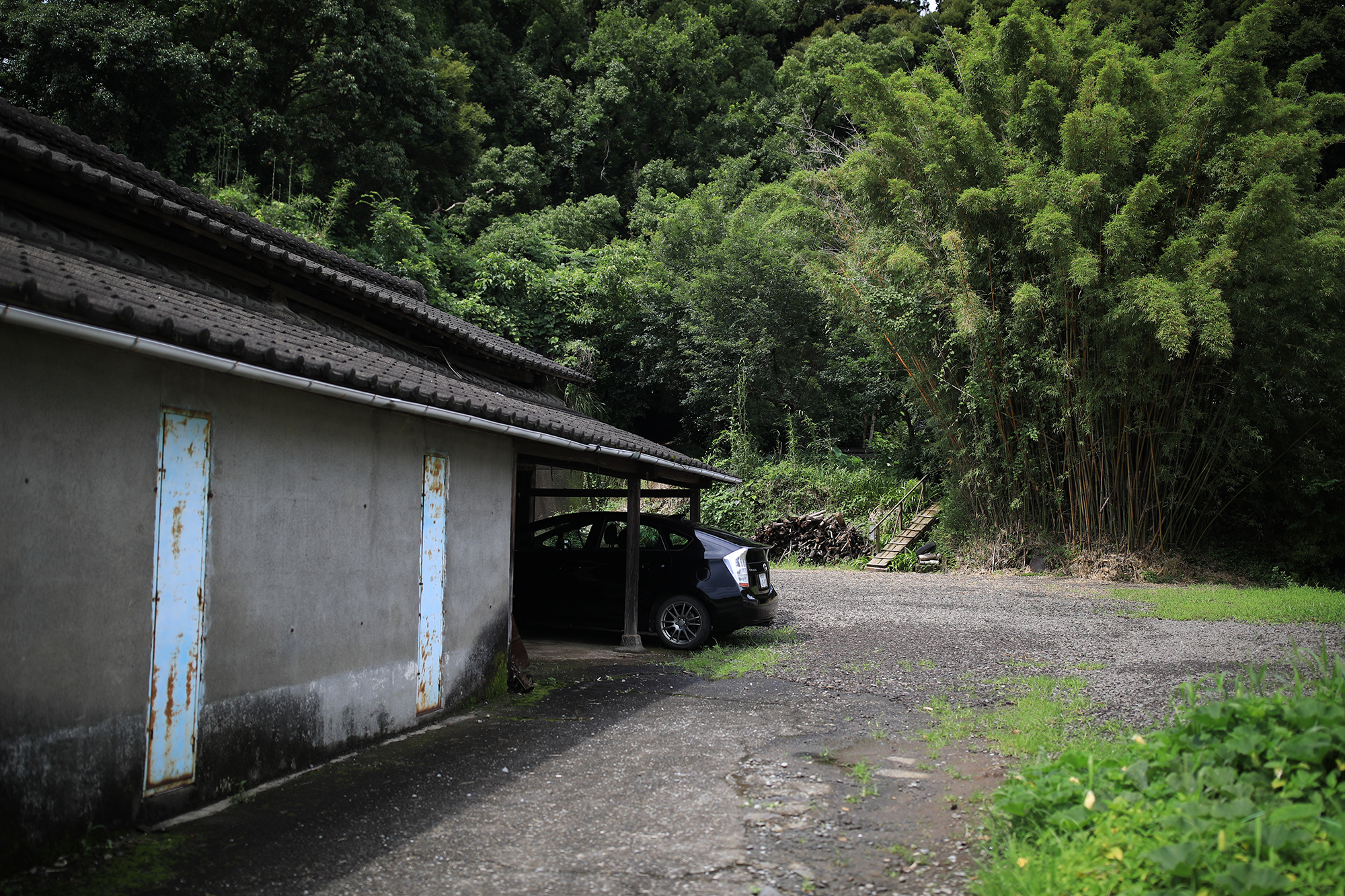
It is about a 20-minute drive from the Matsuhashi Interchange and about a 10-minute drive from JR Matsuhashi Station. There is a handmade signboard at the entrance of the village, which is located at the end of a rural landscape.
Kaisuishu
Address: 743 Uragami Iyashiki, Shiranui Town, Ugi City, Kumamoto Prefecture
Phone: 0964-32-2268
Business hours: 11:00-17:00
Lunch time: 11:30 - 14:30 (reservation required by the day before)
Separate consultation if you wish to hold an event
Closed: No regular holidays
MAP
Interview and editorial staff
Model, Report, Editing: Nozomi Nakamoto
Photography and production: VOKE Ltd.