


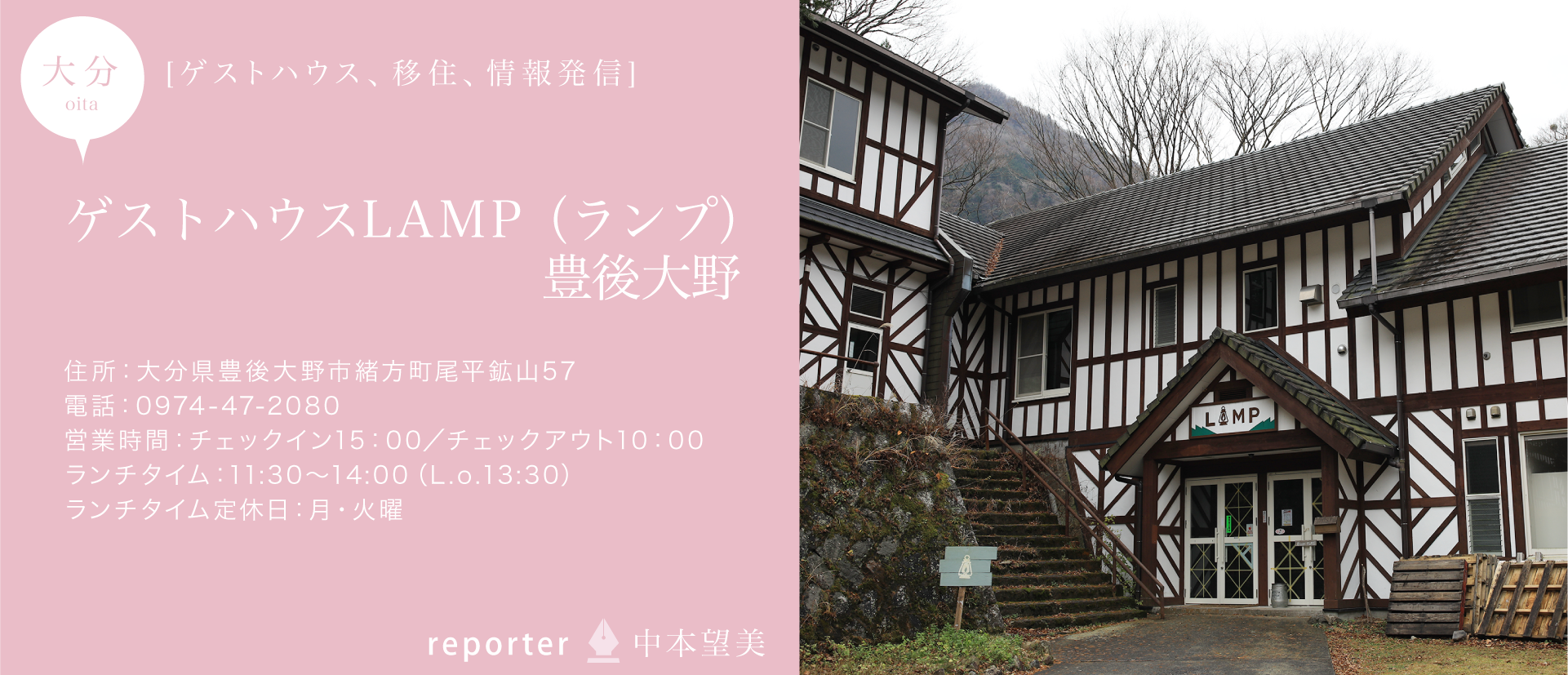

Guesthouse LAMP Bungo Ono is a repurposed abandoned school located quietly at the foot of Mt. Sobo.
We have refined the extraordinary space created by exotic architecture and magnificent nature,
We aim to revitalize the region by making full use of IT.
Programming in LogicA space that seems to have come straight out of a picture book
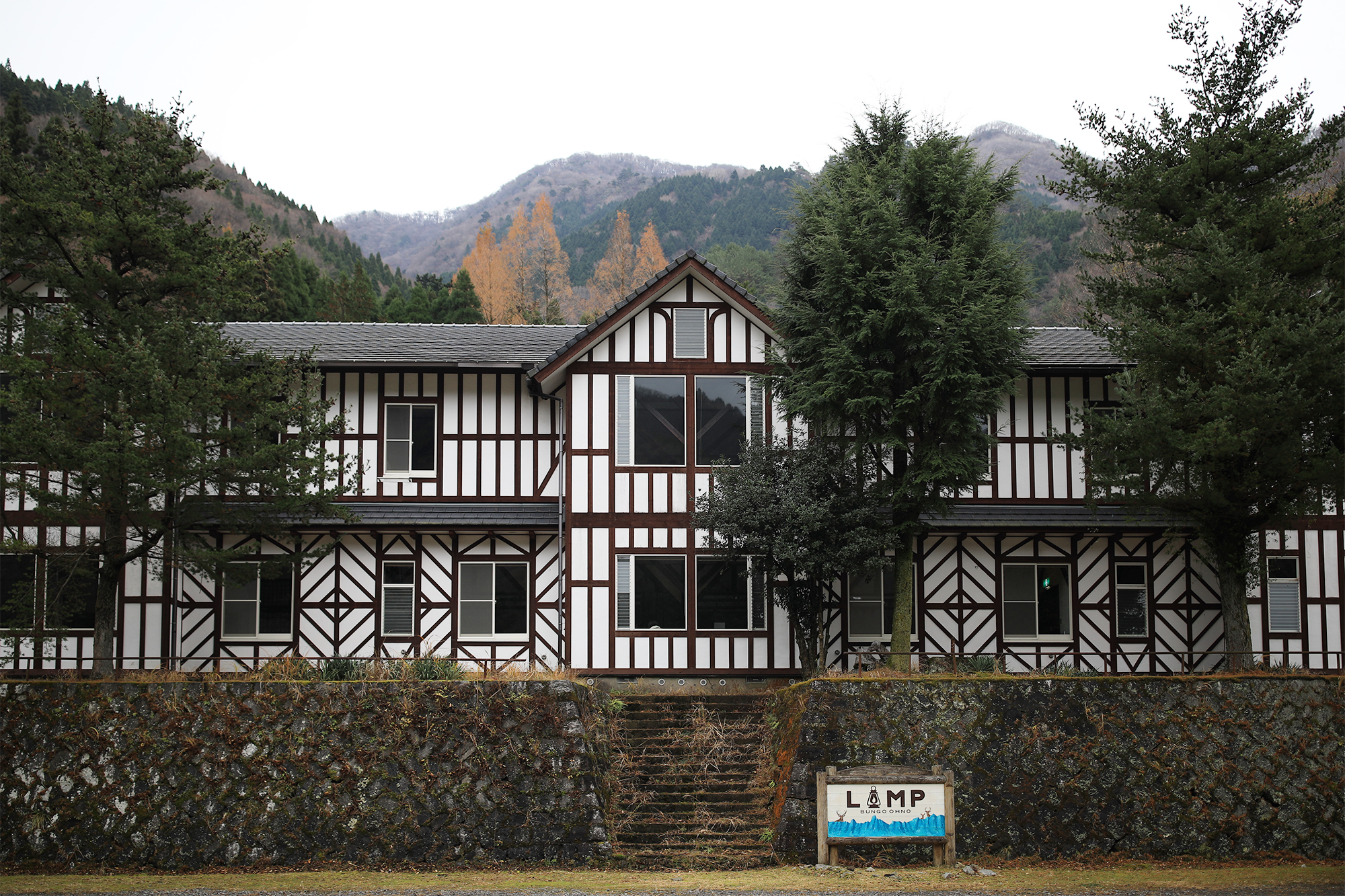
Guesthouse LAMP Bungo-Ono opened on August 6, 2017, reusing a former school building. Reminiscent of the traditional German architectural style of "timber-framed houses," the guesthouse offers a magnificent view of the Sobo-Kamui Quasi-National Park, creating a space that makes you feel as if you're in the mountains of Europe. The building, originally Obira Elementary School, closed in 1969, has been reborn by future generations, serving as a campground and accommodation for climbers heading to Mount Sobo. After several changes in management, the facility ceased operations in 2013. Following the site's registration as the Sobo-Kamui-Okuzure UNESCO Ecopark, Tokyo-based web development company LIG Inc. has joined the project as part of a regional revitalization initiative. Ken Takahashi and his family moved from Tokyo to serve as manager, and the facility has begun to weave a new chapter in its history, welcoming local revitalization volunteers as staff.
Incidentally, the purpose of a UNESCO Ecopark is to achieve harmony between the conservation of ecosystems and sustainable utilization, and it places emphasis not only on protection and conservation but also on the coexistence of nature and human society. For this reason, Guesthouse LAMP Bungo-Ono does not just aim to attract guests, but also conducts daily experiments and practices in line with the definition of a UNESCO Ecopark, and also makes efforts to disseminate information about Bungo-Ono City via the internet. Free Wi-Fi is installed throughout the building, so it seems to be steadily attracting more and more businessmen who want to get away from the hustle and bustle of the city and work in the great outdoors.
In this report, we explore the charm of Guesthouse LAMP Bungo Ono, located at the foot of Mt. Sobo, and hear about the activities and struggles of the young people who use cutting-edge IT technology, which is the complete opposite of the atmosphere of the space, as well as their future business vision.
Report: Nozomi Nakamoto]
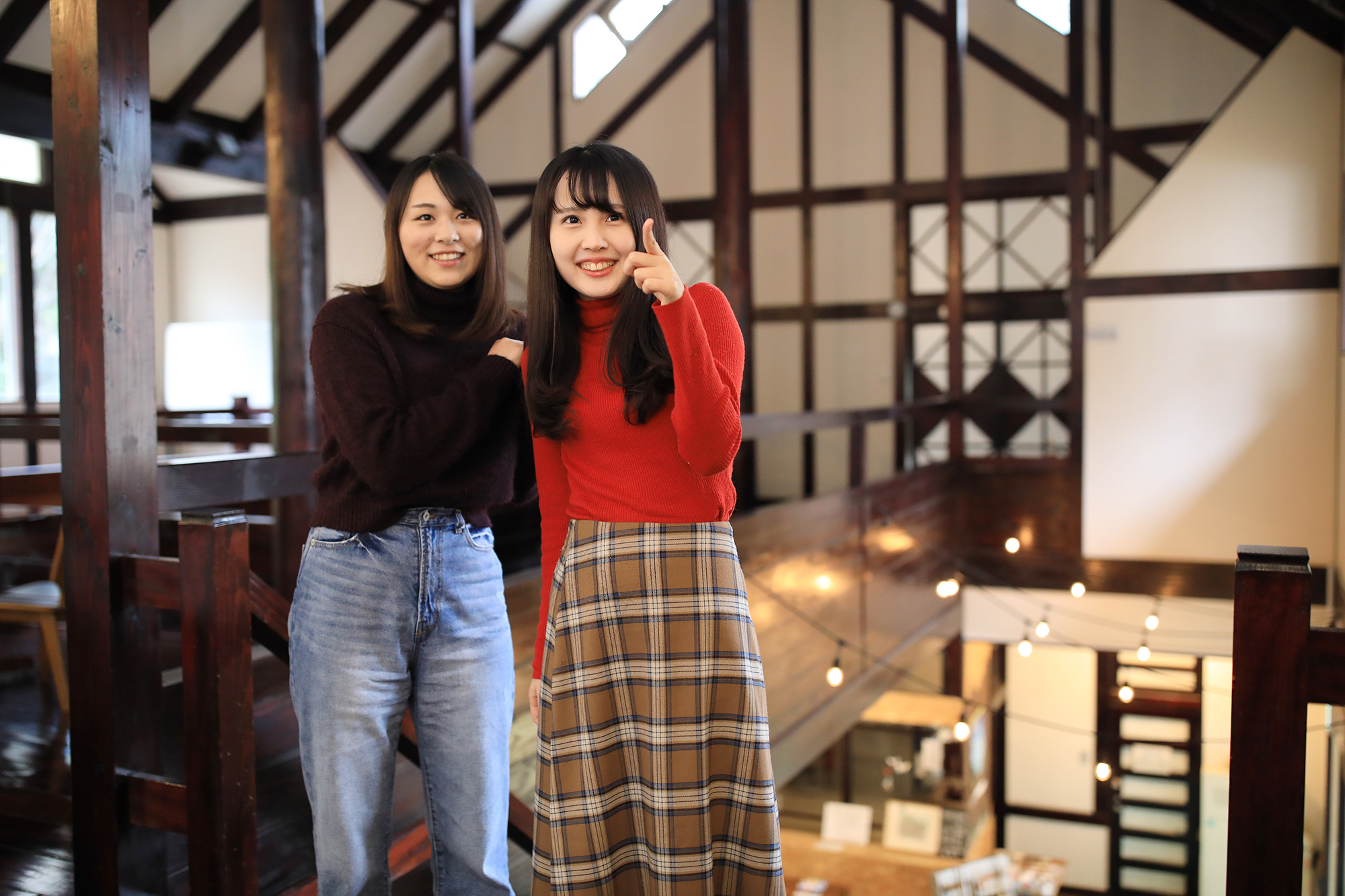
Manager Ken Takahashi's main duties in Tokyo were web editing, writing, and editing. When he was selected to be the manager of Guesthouse LAMP Bungo Ono as part of his regional revitalization work, he took over from his previous department until early April 2018, and upon completing his duties, he moved to Bungo Ono City with his family. Between the time the previous organization closed and the opening of Guesthouse LAMP Bungo Ono, the facility had been left uncleaned and unmaintained. Manager Takahashi worked hard himself, and with the help of his family, he steadily improved the garden, parking lot, and facility, and handcrafted the furniture and interior to match the concept of LAMP.
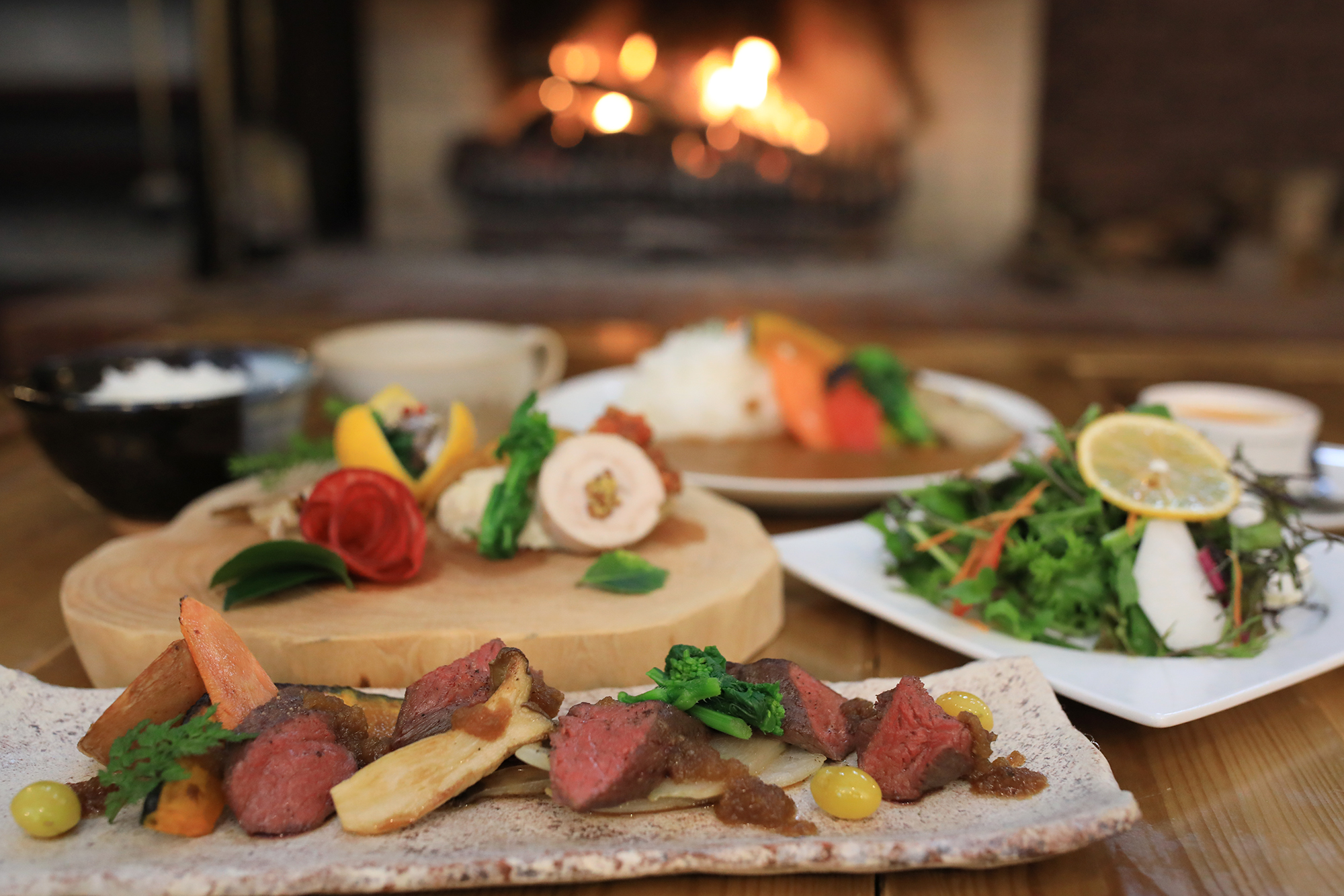
▲A dinner course featuring wild game dishes from the nearby mountains and plenty of home-grown, pesticide-free vegetables.
When the hotel first opened, it mainly offered accommodation plans only, but in February 2018, Chef Ryo Hirooka was hired and the restaurant began serving breakfast, dinner, and other meals in March. At lunchtime, the restaurant serves curry made with original spices as a "curry stand." For dinner, they offer creative dishes using world-renowned wild game dishes, as well as organic vegetables and rice grown in their own garden and seasonal mountain vegetables.
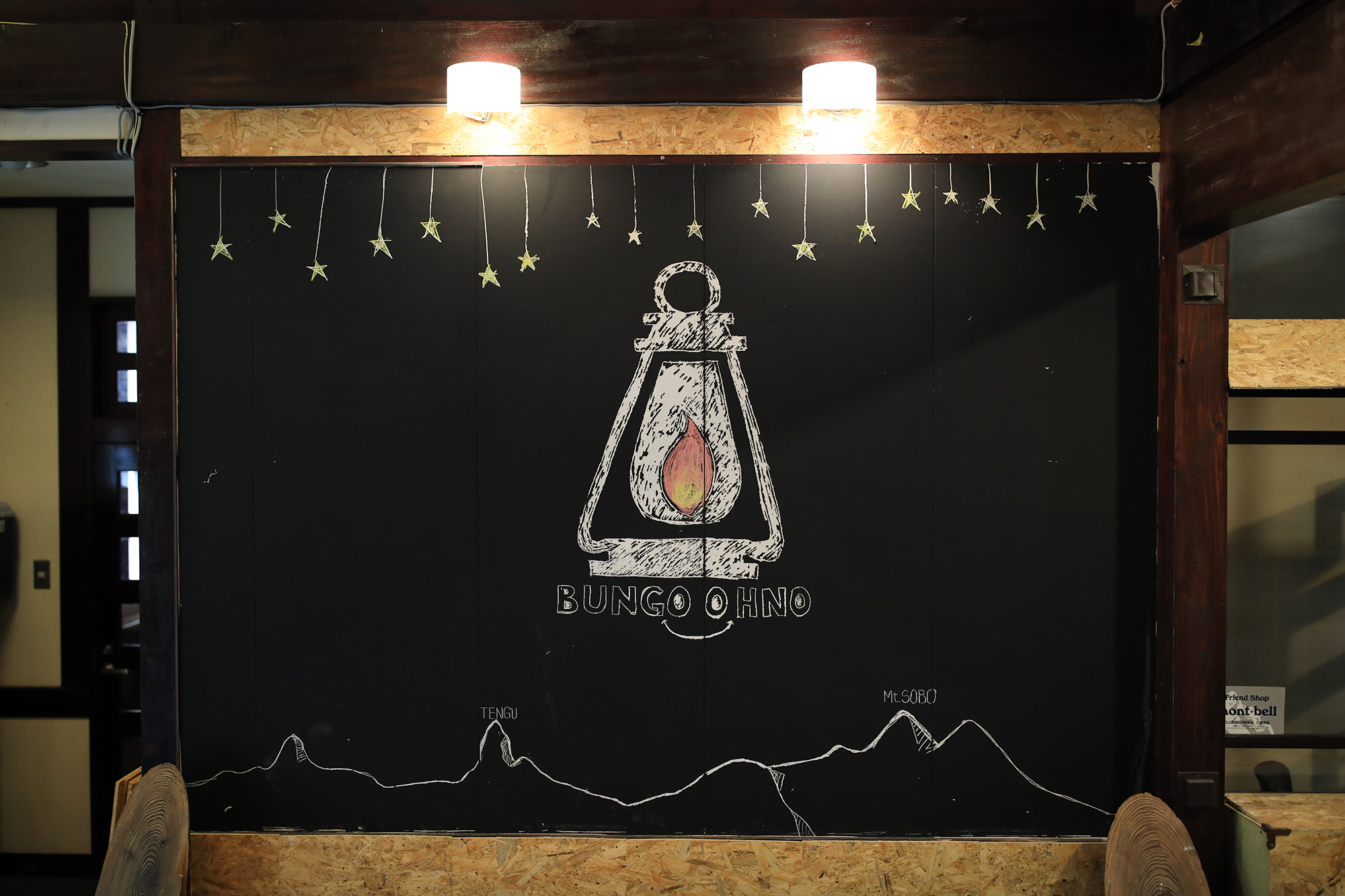
Originally a Japanese cuisine chef, Chef Hirooka has created numerous recipes and dishes that match the restaurant's European-style exterior and interior. The restaurant also offers a wide selection of drinks, including local sake, organic wine, and homemade sours, and some groups use the restaurant for parties and live events. On the day of our visit, they were building a screen on the restaurant wall, and they plan to organize film screenings and live streaming events.
About Obira Mine
In the Obira district in the southern part of Ogata-cho, Bungo-Ono City, the remains of Obira Mine facilities, such as an ore dressing plant, remain. The Oka Domain began full-scale mining of tin and other minerals at Obira Mine in exchange for Edo land rent. At its peak in the 1940s, the mine employed 3,000 people and was bustling with movie theaters and shops. However, the mine closed in 1954.
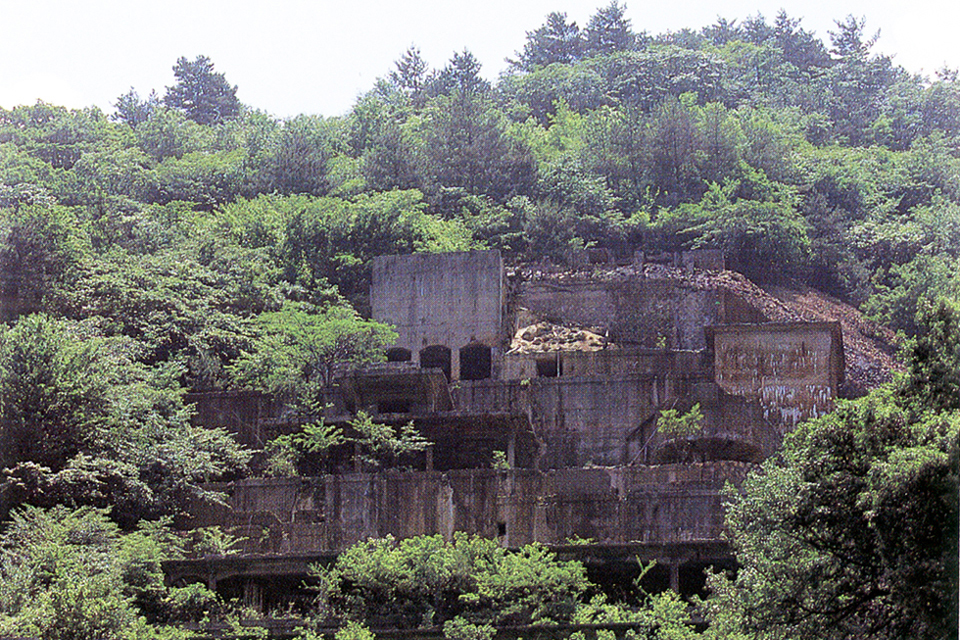
▲Information and images provided by Oita Prefecture
Facility Introduction 1Exterior view
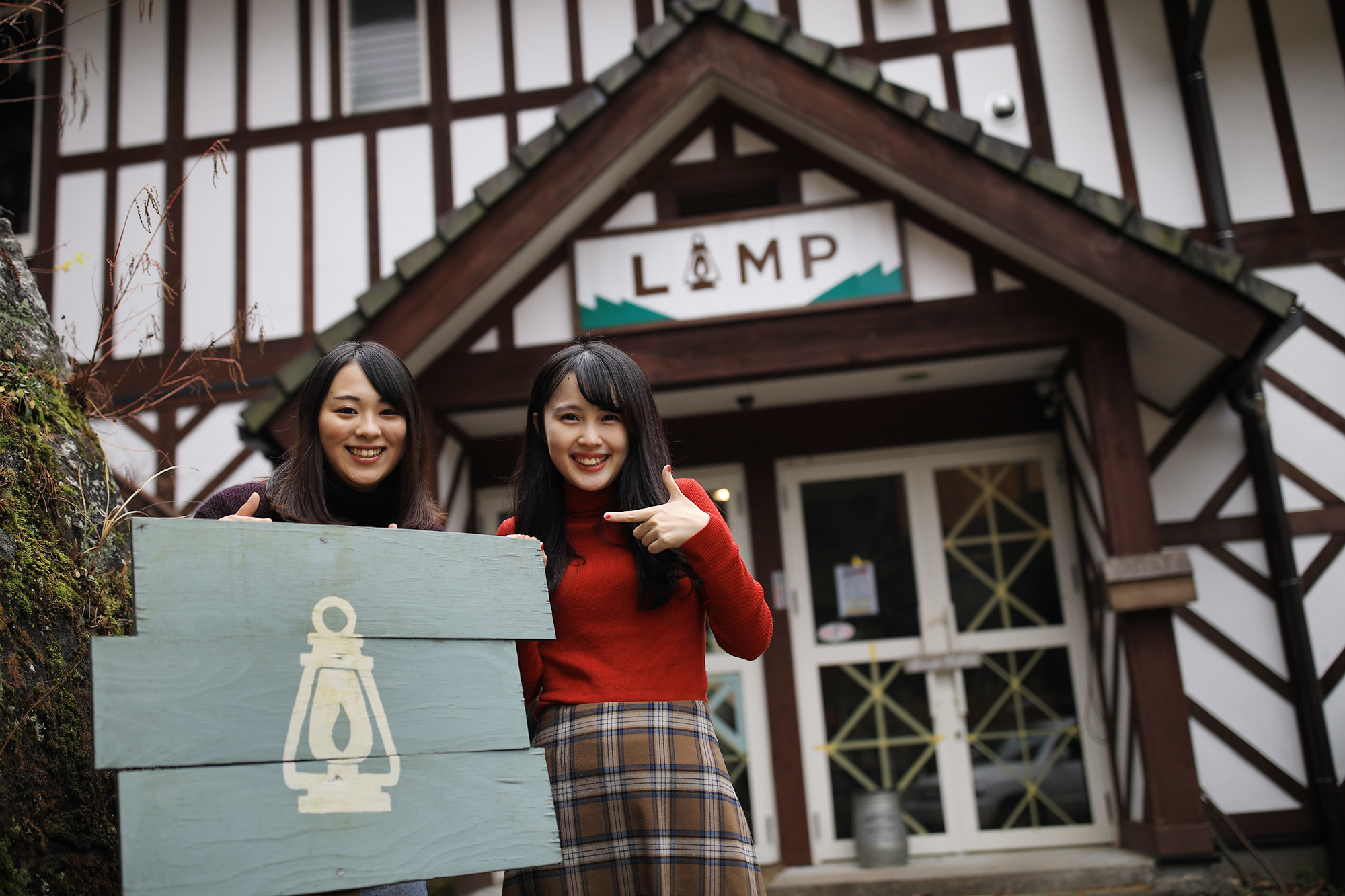
▲A cute sign handmade by staff with retro colors.
Obira Mine, the name of the guesthouse's location, was a place where many workers and their families gathered from the Edo period until the mine closed in 1954, and in its heyday it was a bustling settlement lined with houses and shops. The children who lived in the settlement attended Obira Elementary School, but the population declined with the mine's closure and the school was closed in 1969. The impressive two-story wooden school building remained intact even after the school closed.
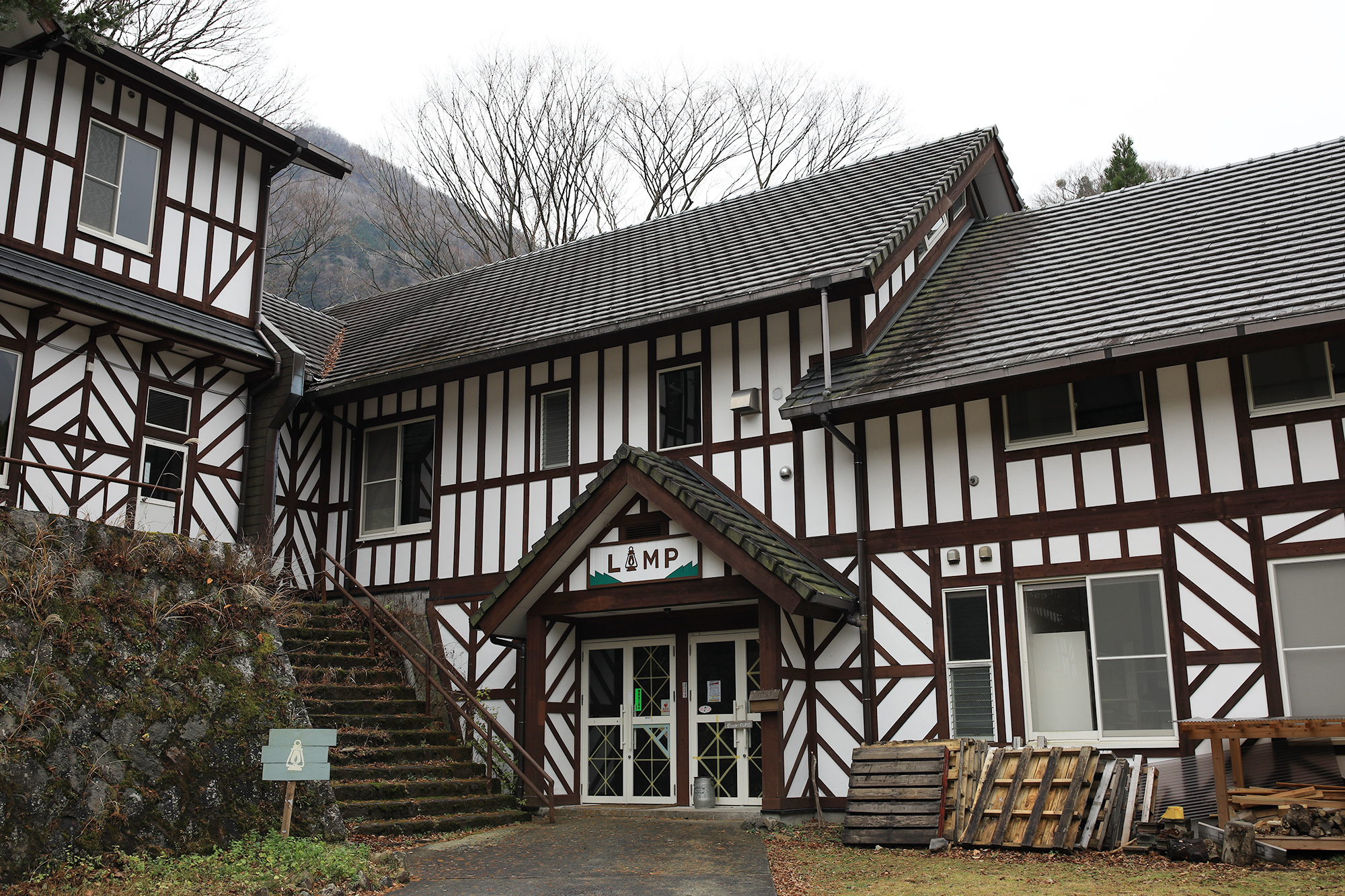
▲The entrance to the guesthouse. The separate building separated by a staircase has been renovated into a single building, surrounded by an exterior wall.
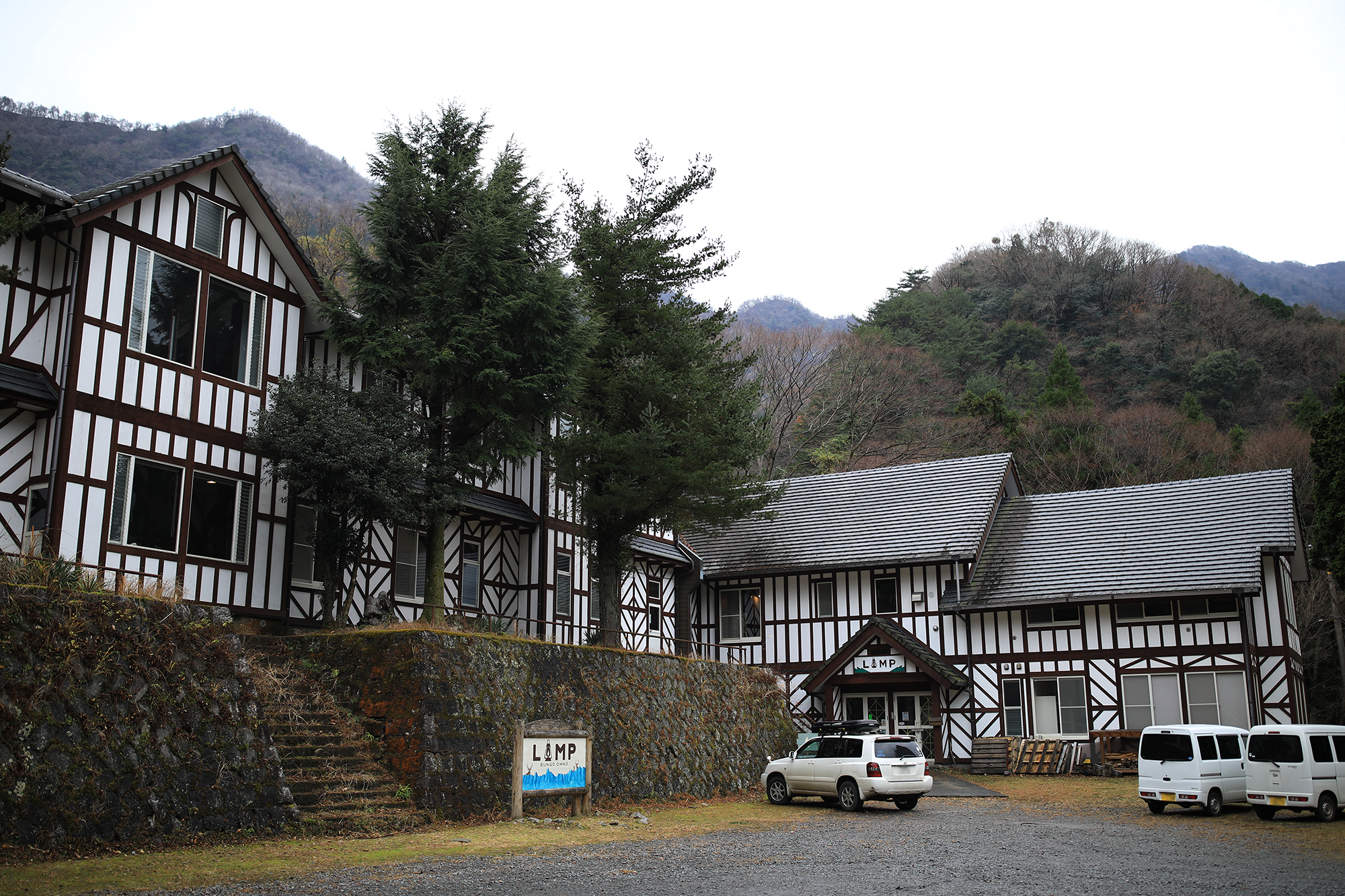
The former school grounds are now used as a parking lot and campground. When the school opened, it had a large student population and was a large elementary school for the time, so local festivals and other events were apparently held in the school grounds.
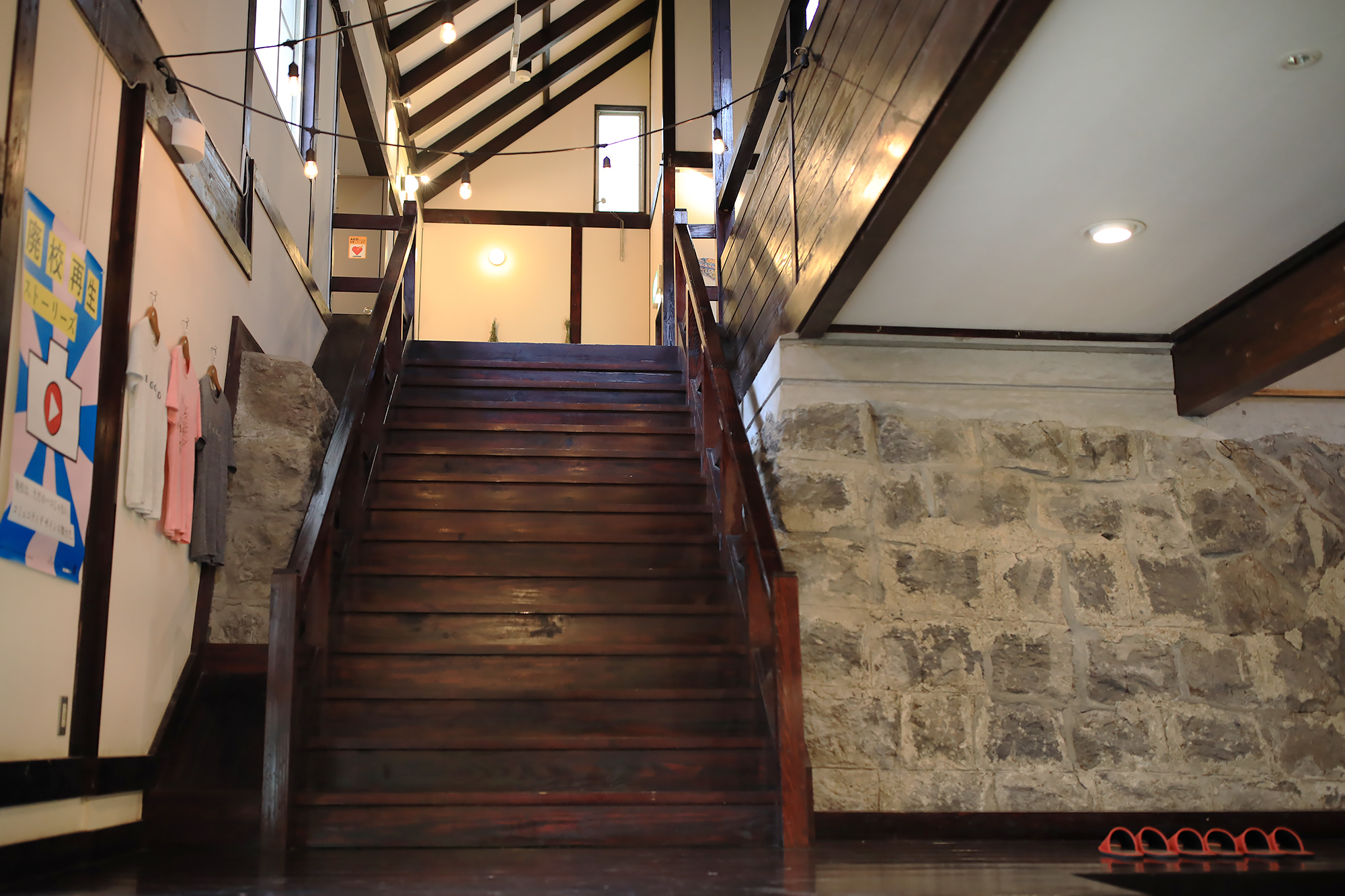
▲The original exterior wall remains intact around the entrance stairs.
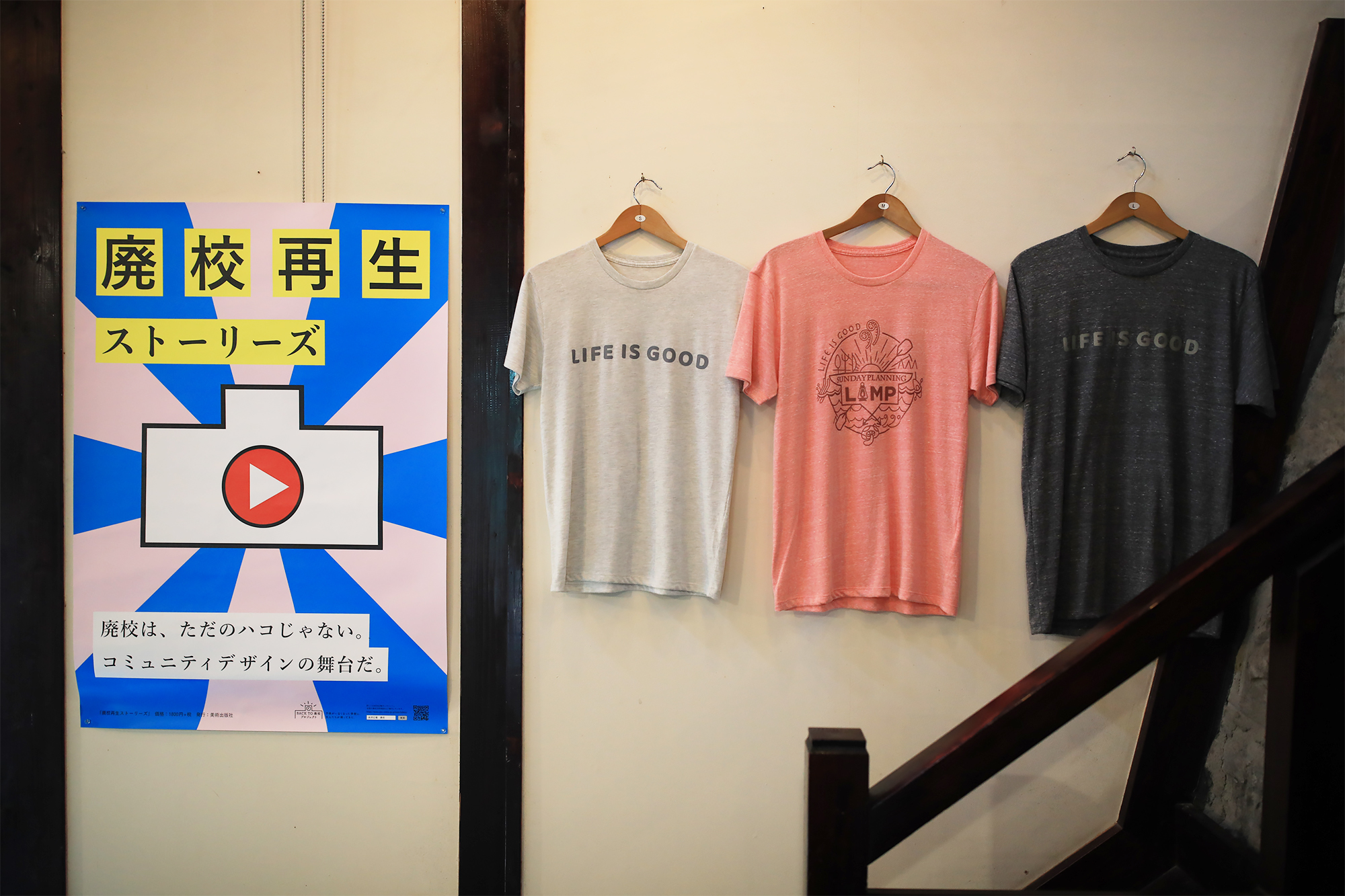
▲ T-shirts based on the concept of "LIFE IS GOOD" by "LIG Inc." and original T-shirts from the guesthouse are also on sale.
Facility Introduction 2Shared Space
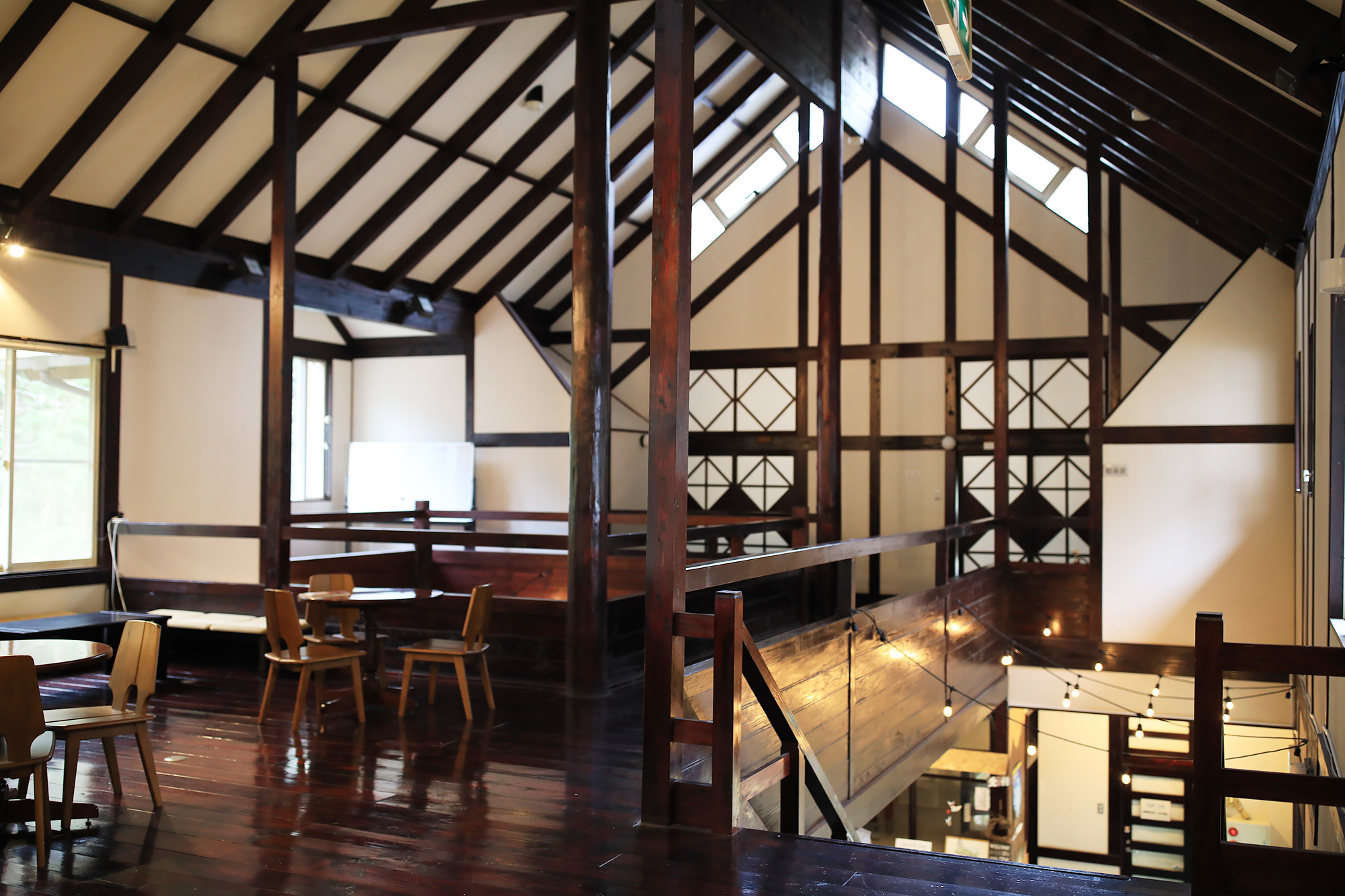
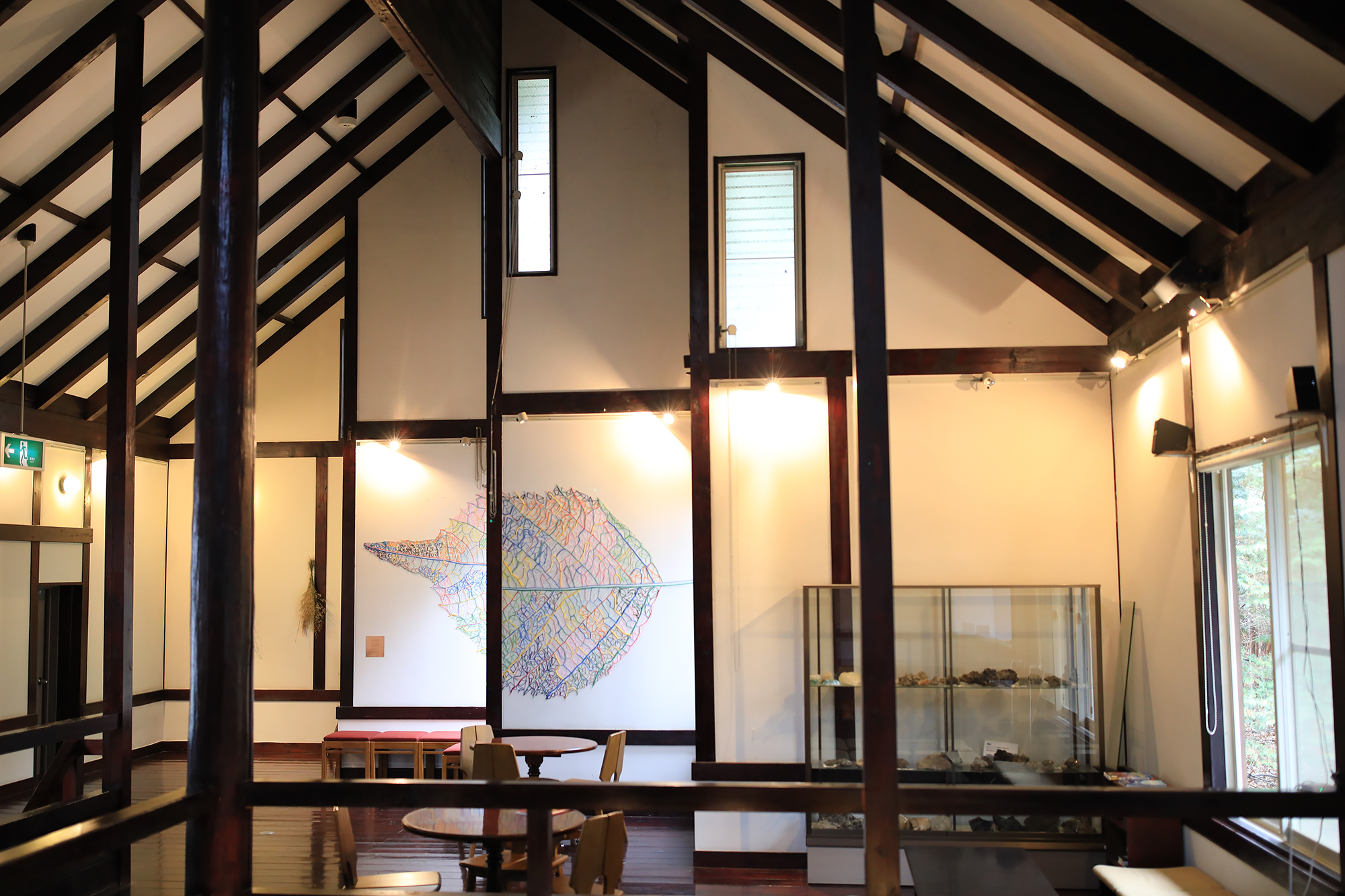
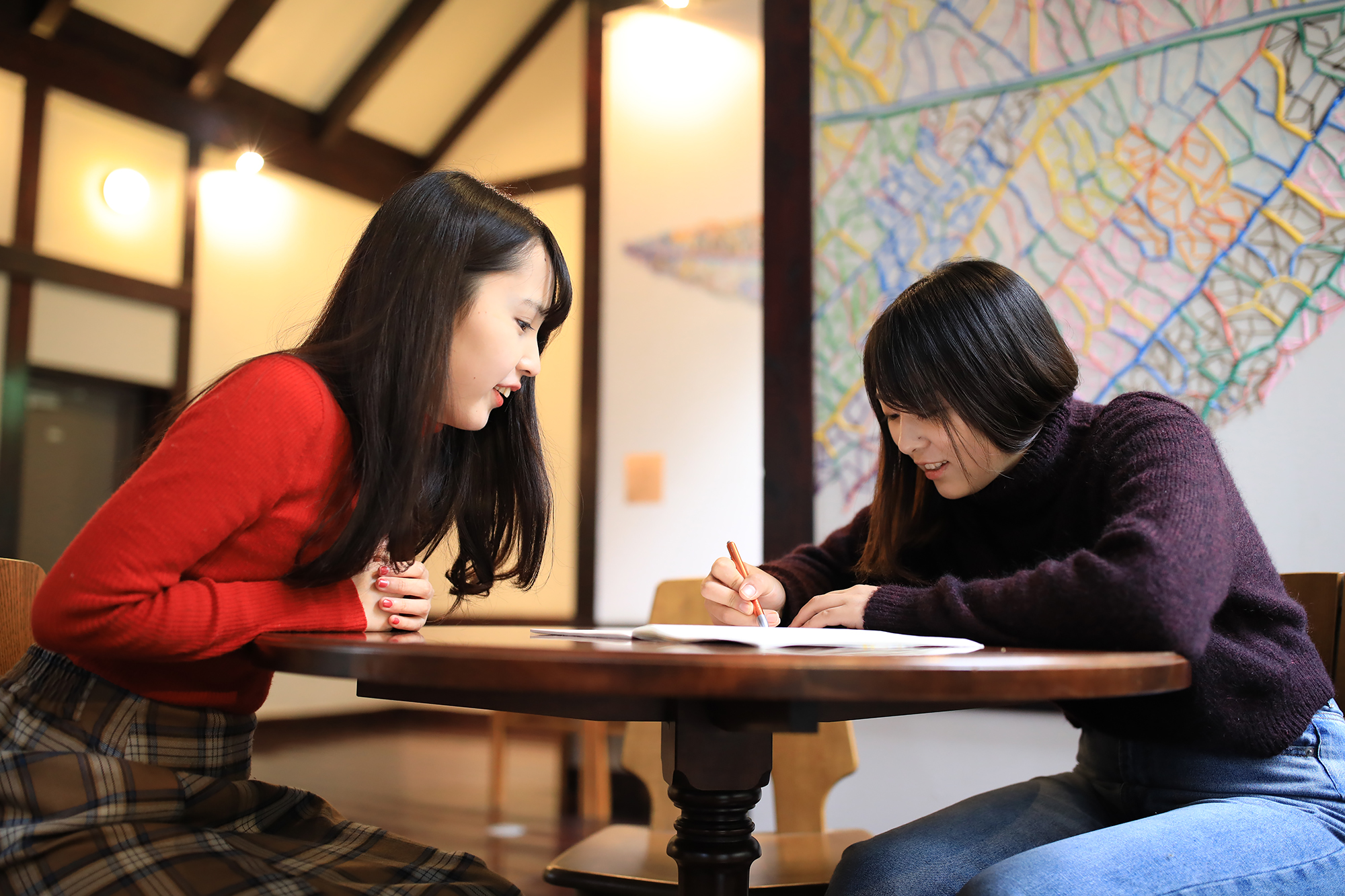
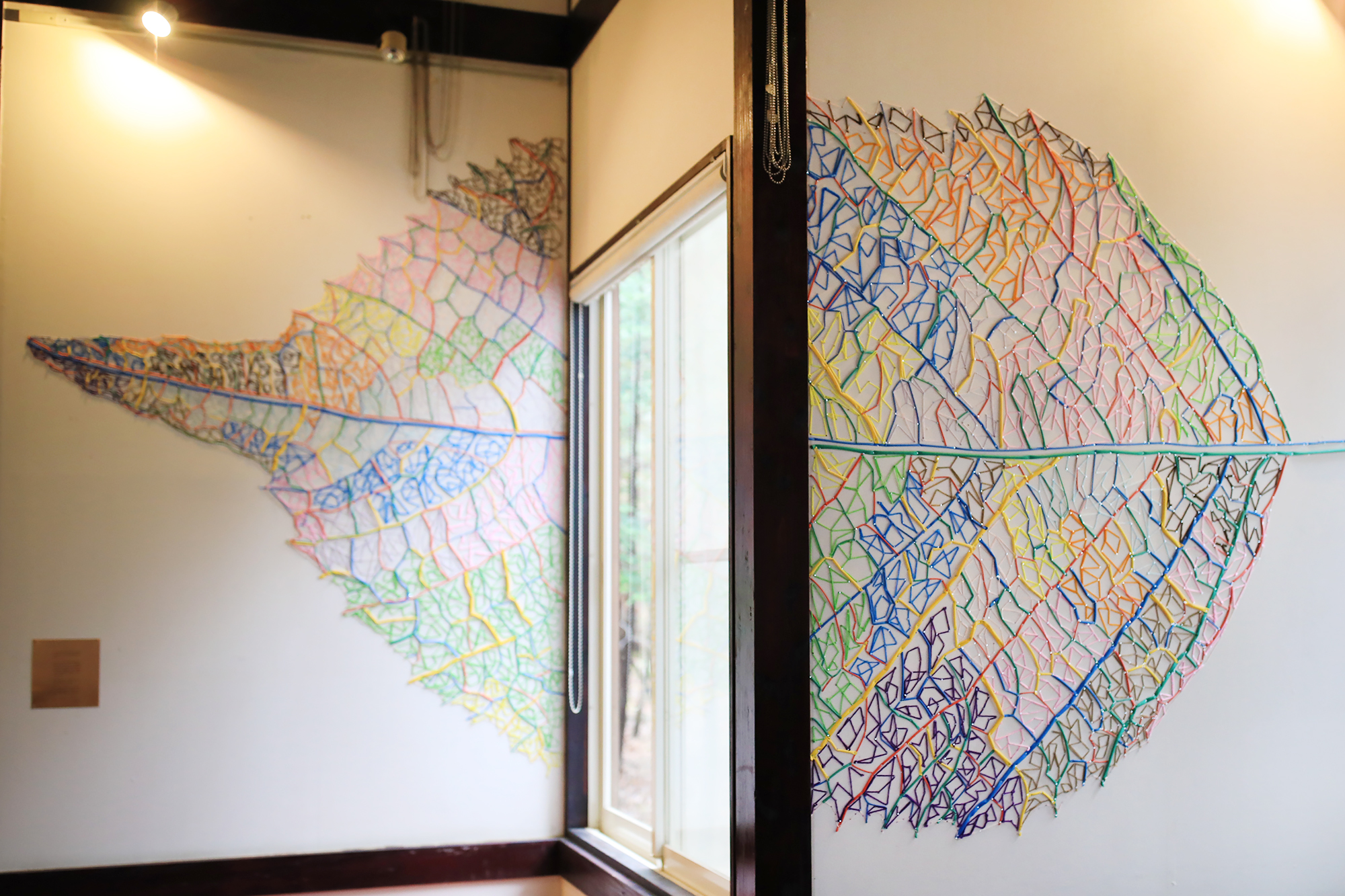
Climbing the stairs from the entrance leads to the first floor of the main building, where there is a free space where you can read a book, chat, or just relax. There are guest rooms on either side of the restaurant, and the walls are decorated with designs and artwork that make full use of wood.
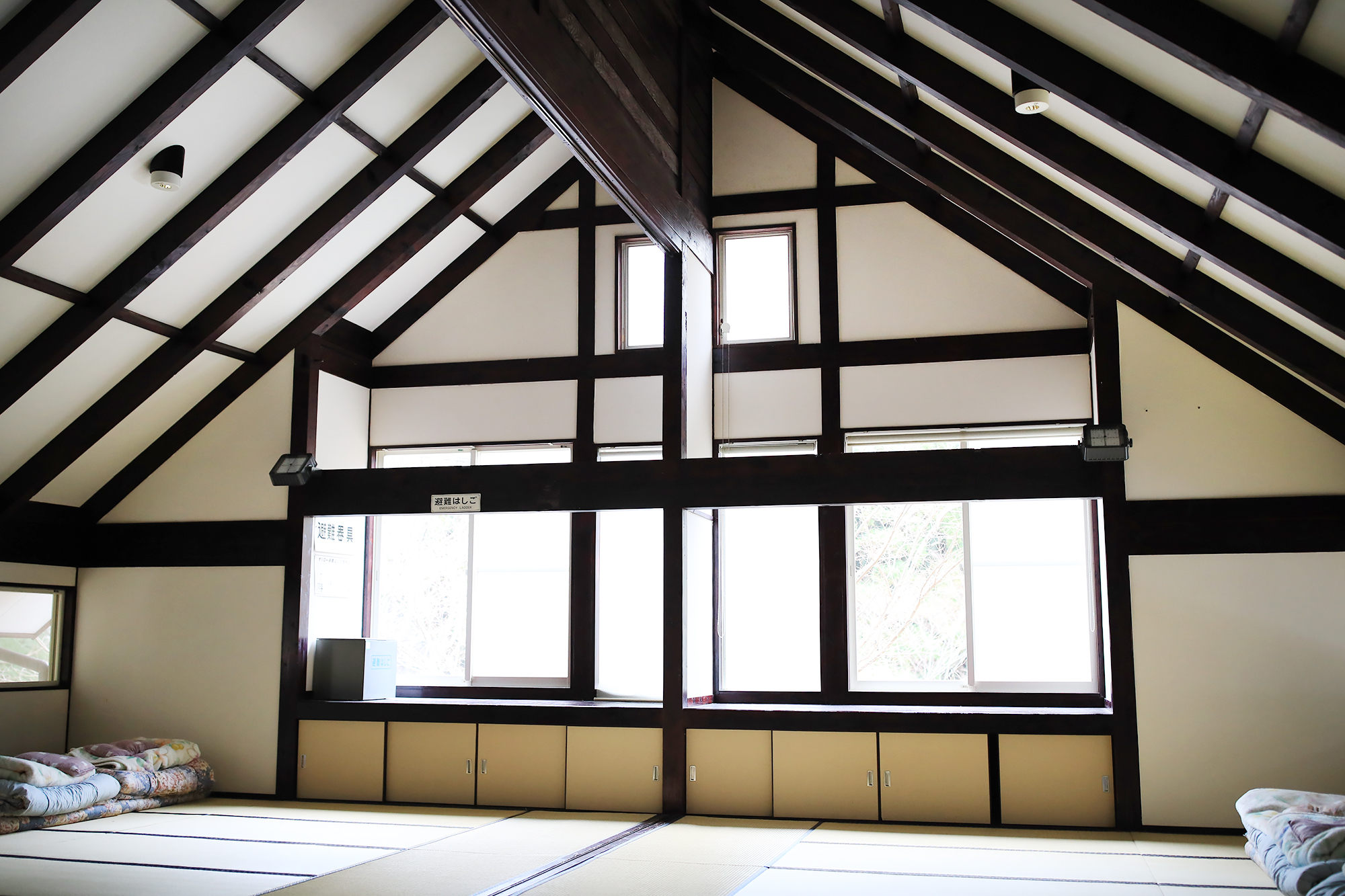
The guest rooms include a mixed dormitory, a private dormitory, and large rooms, and can accommodate up to 70 people. After Mt. Sobo opens for the season, the hotel is bustling with mountain climbing enthusiasts, and in the summer, many people come to camp to enjoy firefly watching and trekking. In the off-season, the hotel can also be rented for parties, company training sessions, and group stays. Manager Takahashi himself is skilled at event management, and the hotel also hosts company events.
Facility Introduction 3Guest Room
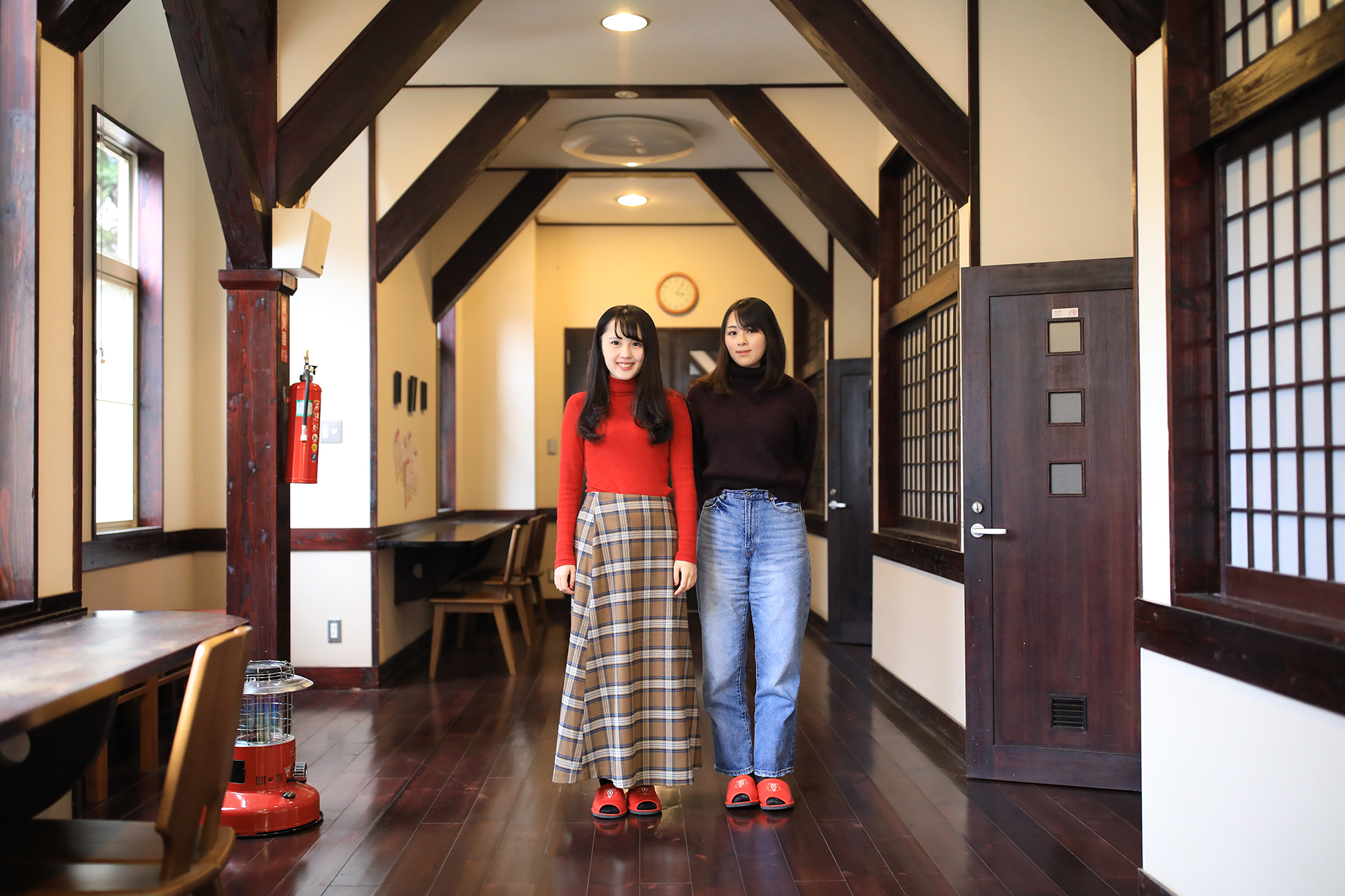
The former classrooms have been refurbished to become guest rooms, each furnished with furniture. The original, sturdy pillars have been preserved, and the long, shiny corridors still retain the atmosphere of the building when it was still a school.
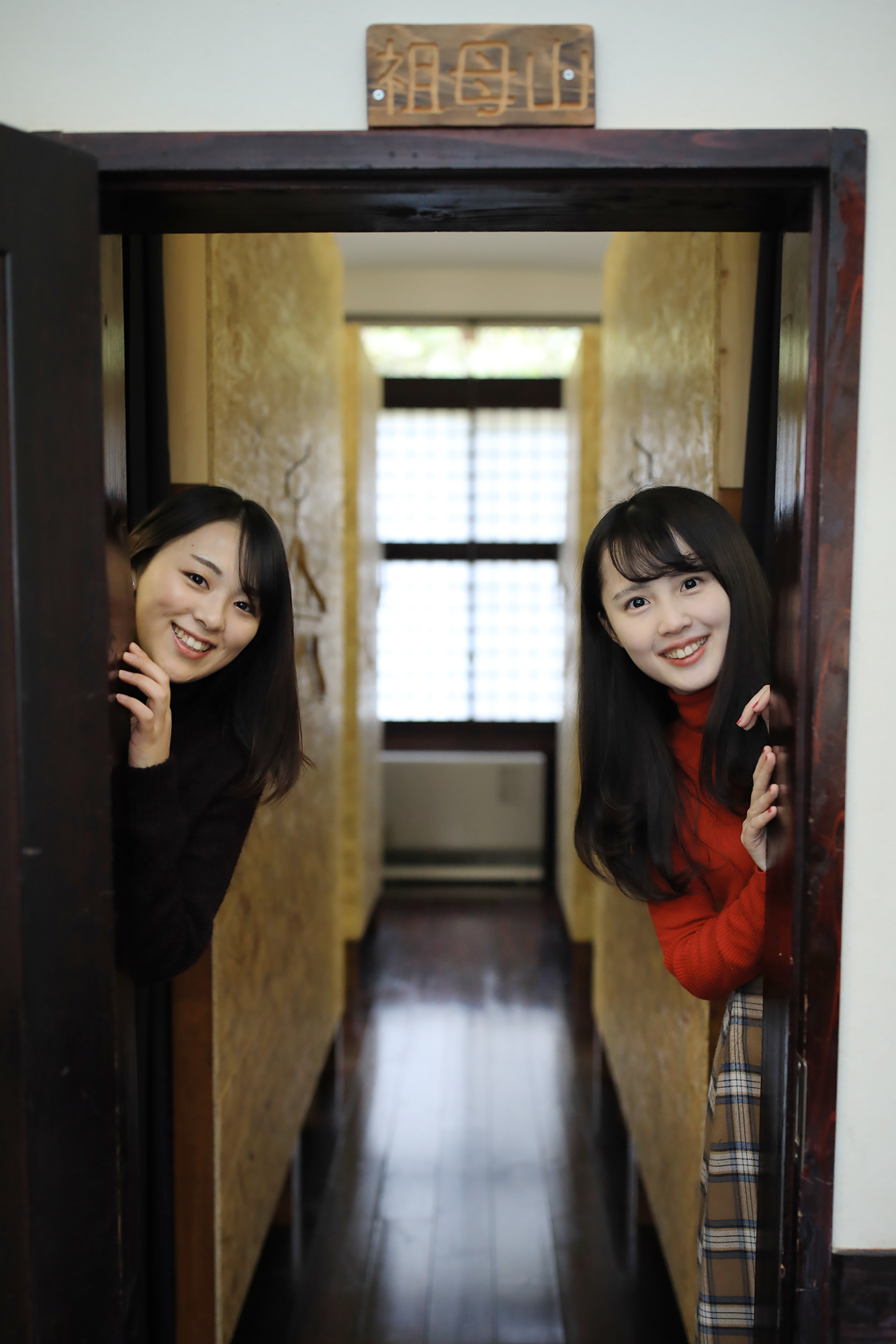
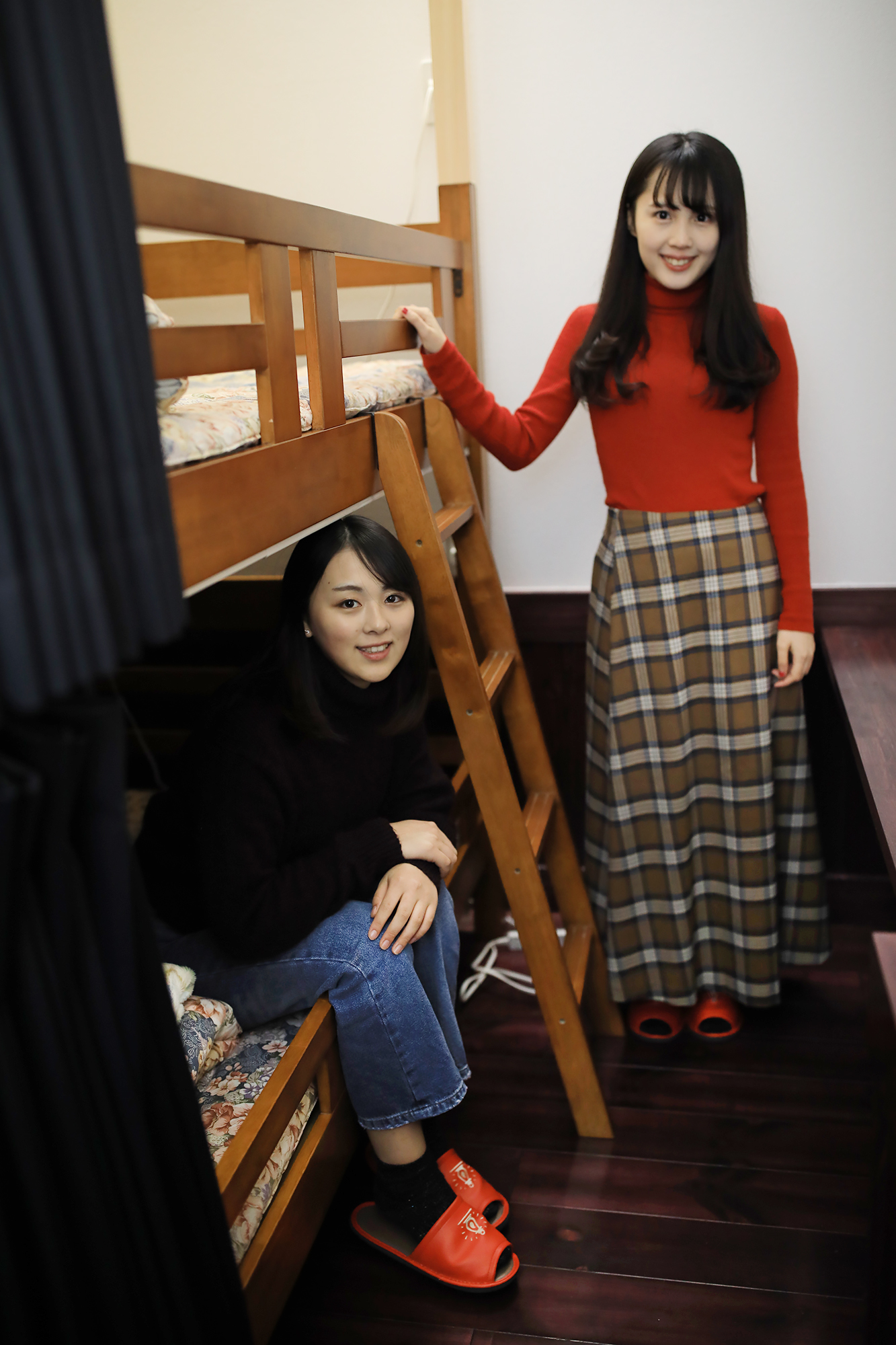
▲A dormitory with bunk beds.
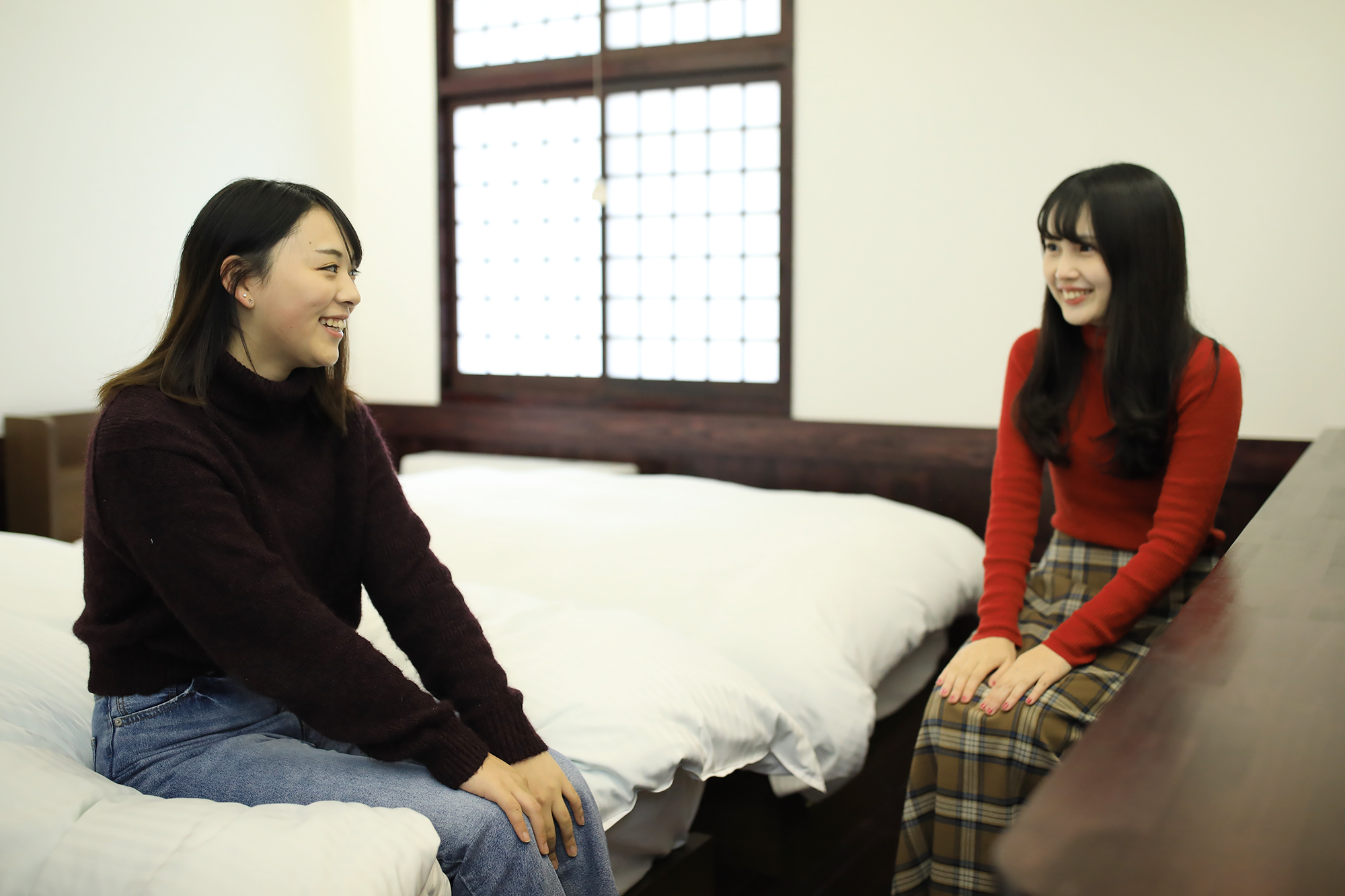
▲ Private rooms for twin and triple rooms. Even those who are not comfortable staying in dormitories can stay here with peace of mind.
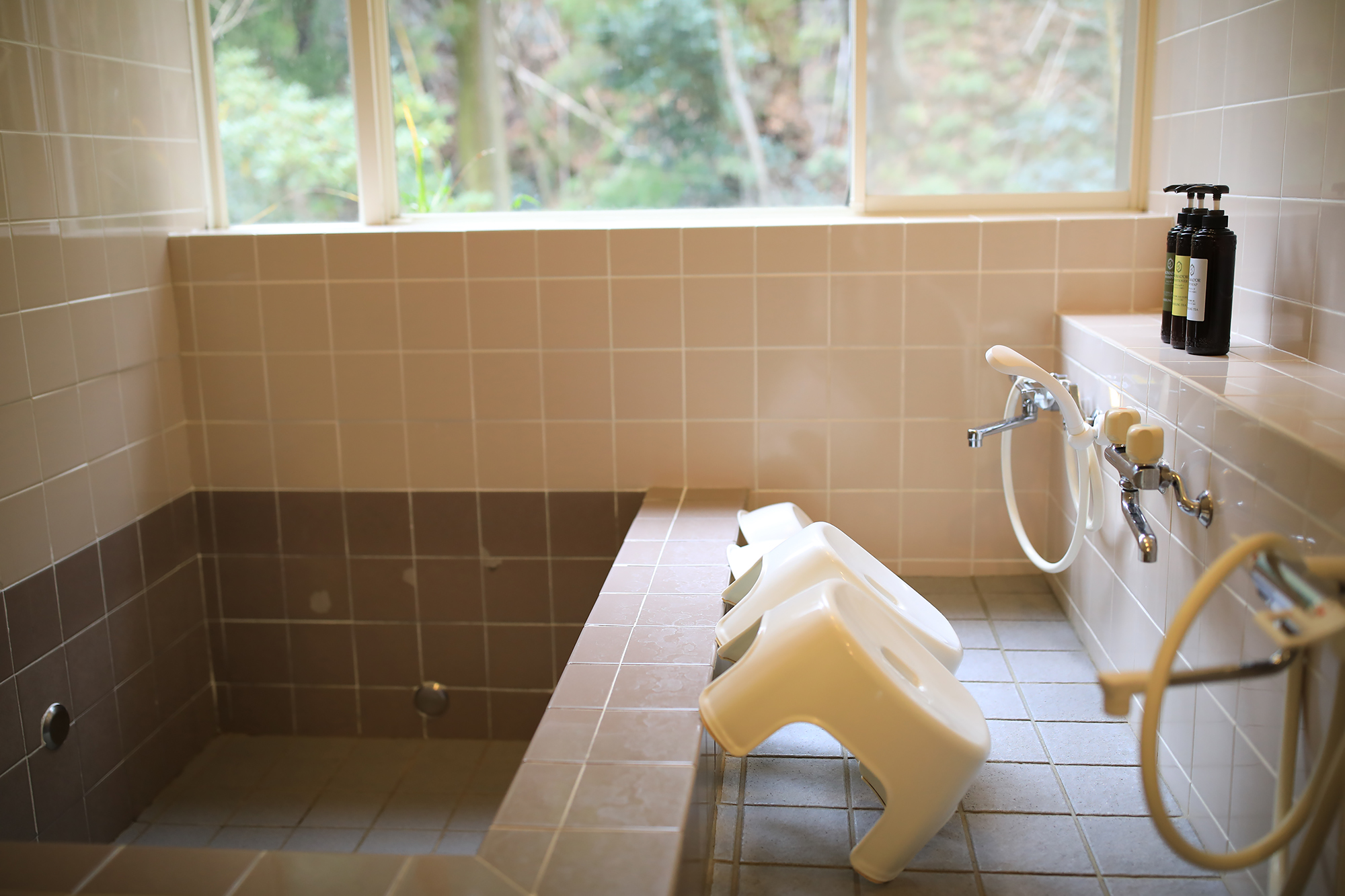
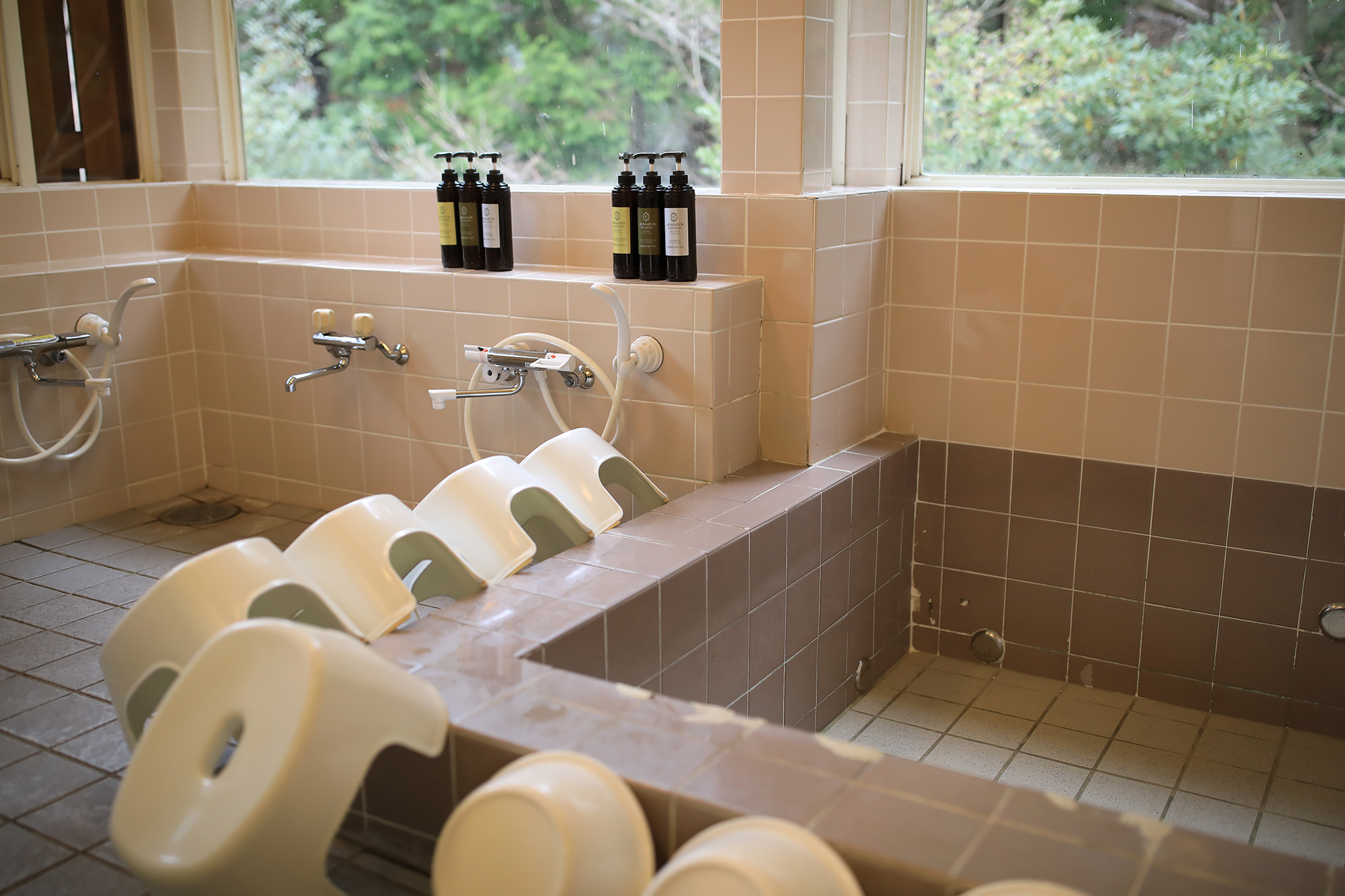
▲The public baths are spacious and separated for men and women, and are fully equipped with shampoo, conditioner, and body soap. Even if you are not a guest, you can use them for a fee (600 yen).
Mixed dormitory: 3,500 yen
Women's dormitory 3,800 yen
Large room (10 to 20 people) from 2,800 yen
[Free service]
Free Wi-Fi
Shared bath (separate for men and women) / Shared washroom / Hair dryer / Shampoo / Conditioner / Body soap / Slippers
[Paid service]
Toothbrush 100 yen / Rental towel 100 yen / Rental bath towel 200 yen / Laundry from 800 yen / Shower use only 500 yen / Bathroom use 600 yen
Facility introduction 4restaurant (esp. Western-style)
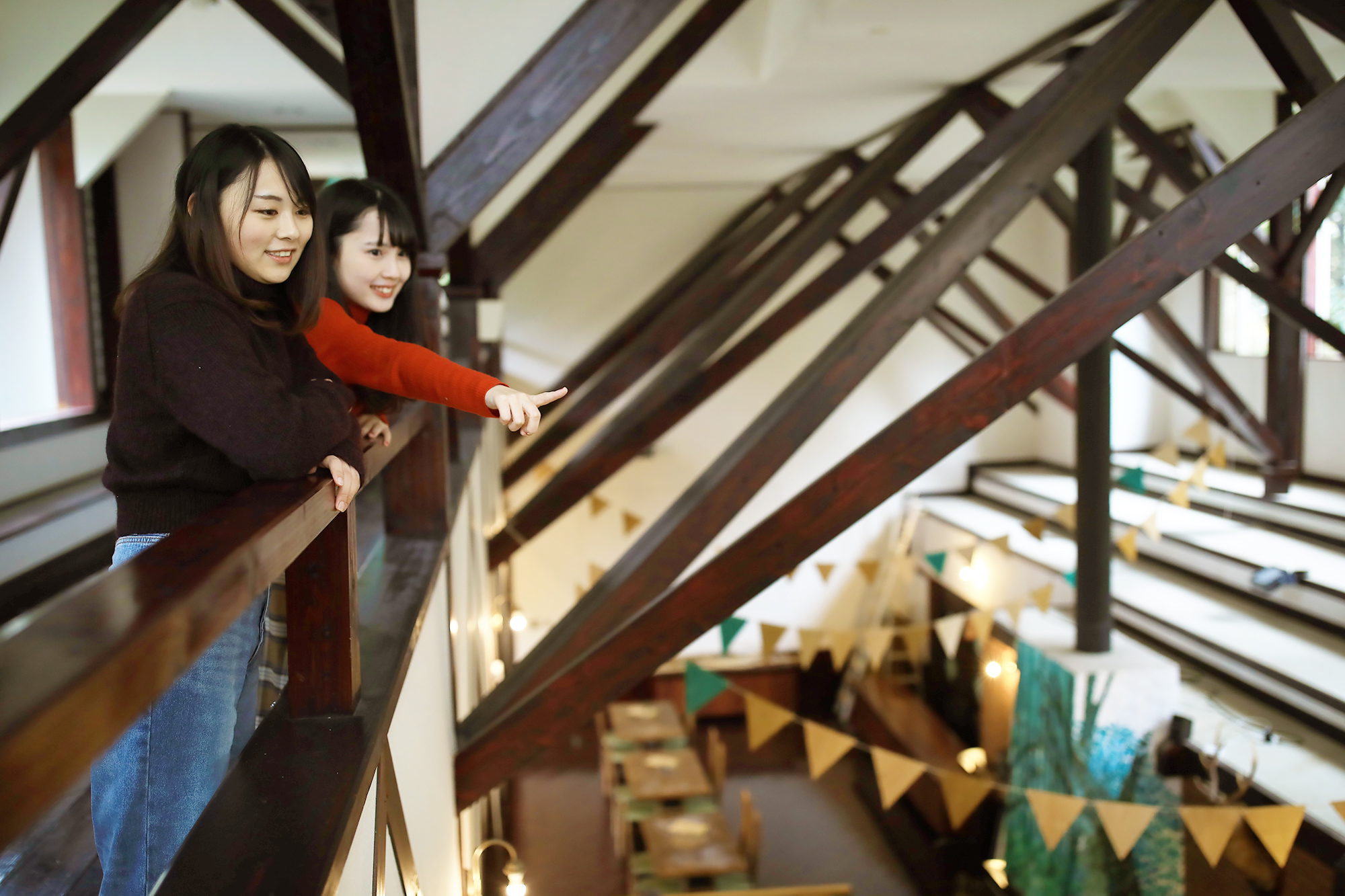
Handmade garlands are displayed throughout the restaurant, creating a sense of excitement and playfulness.
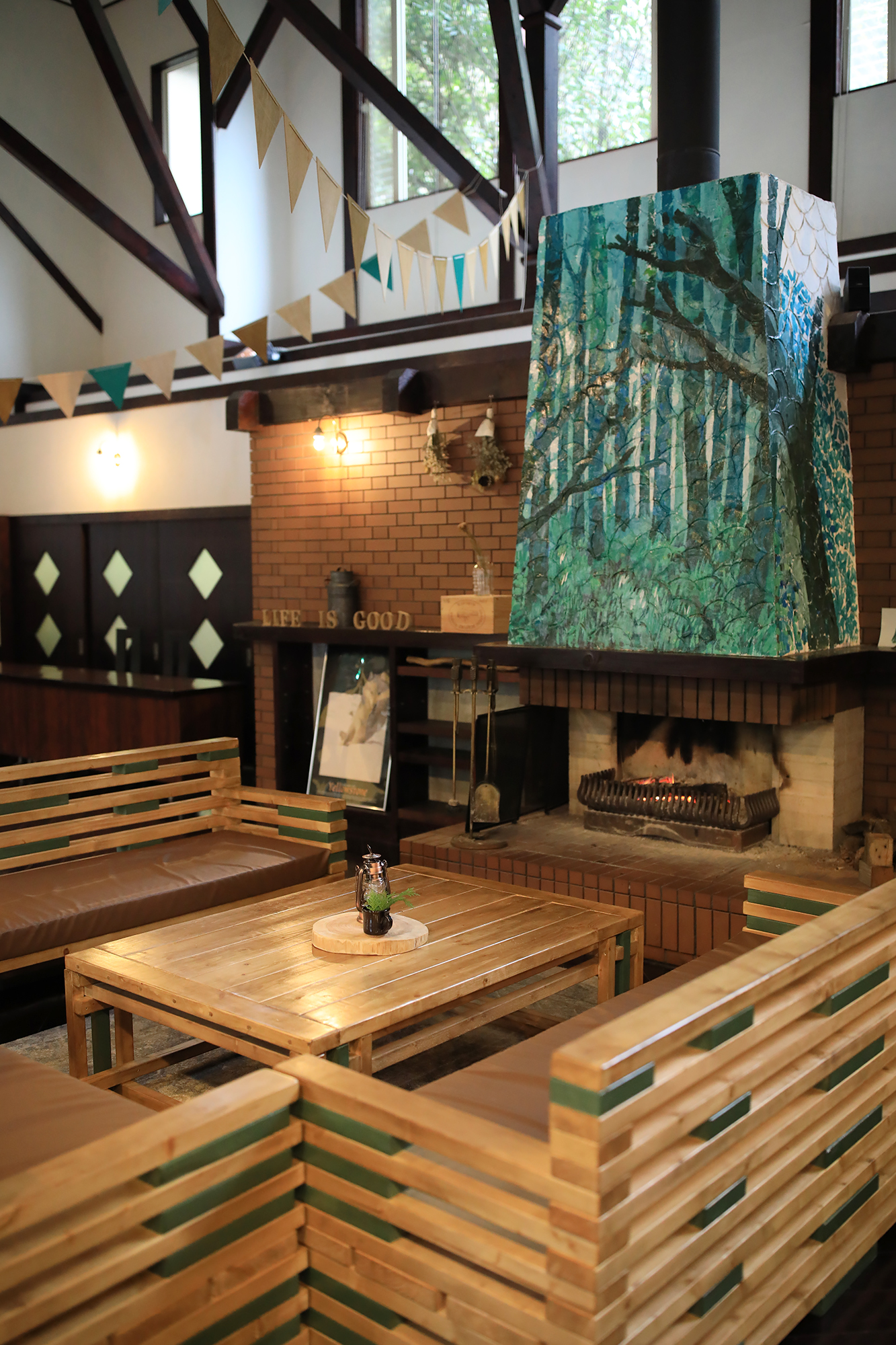
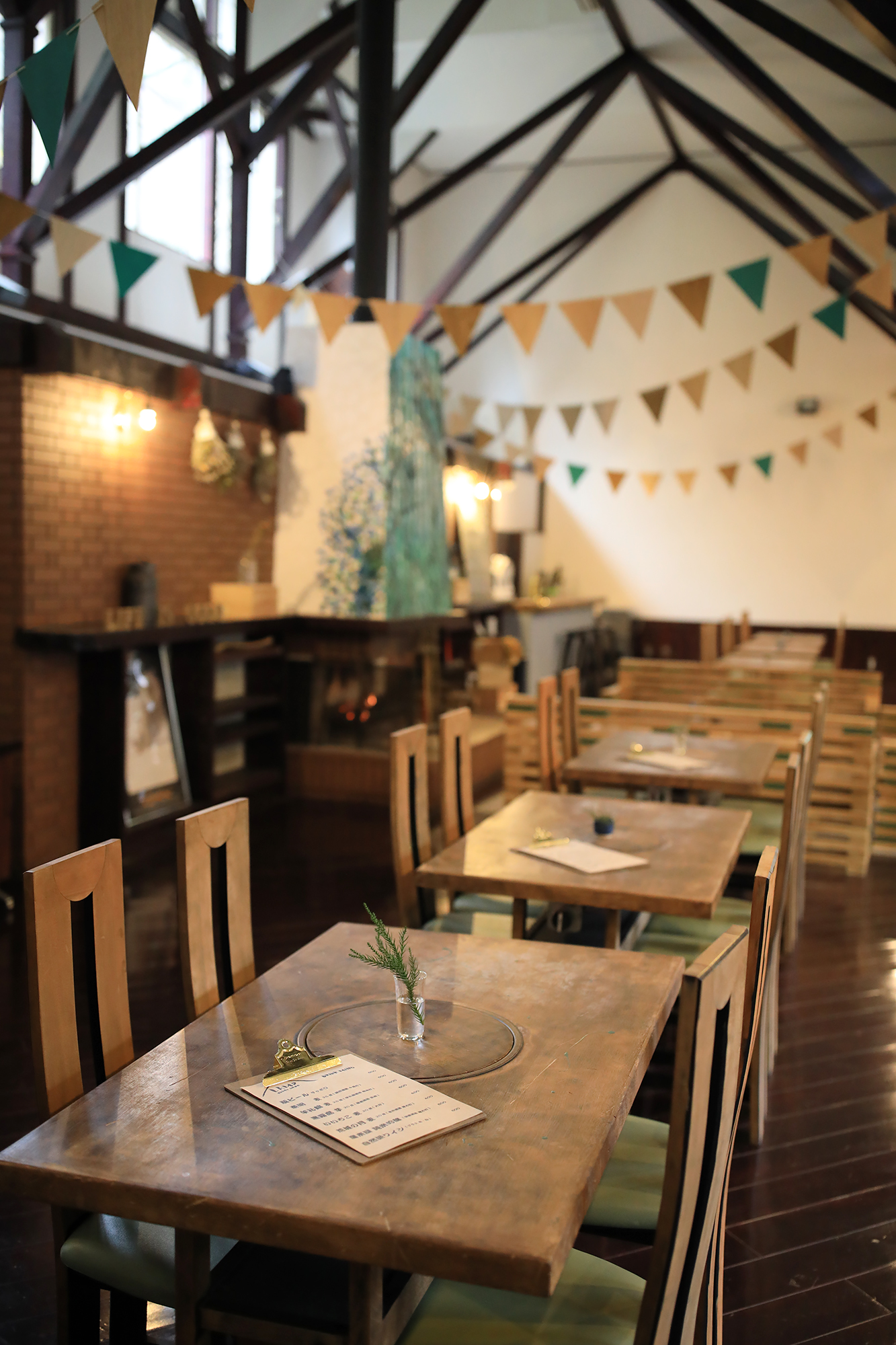
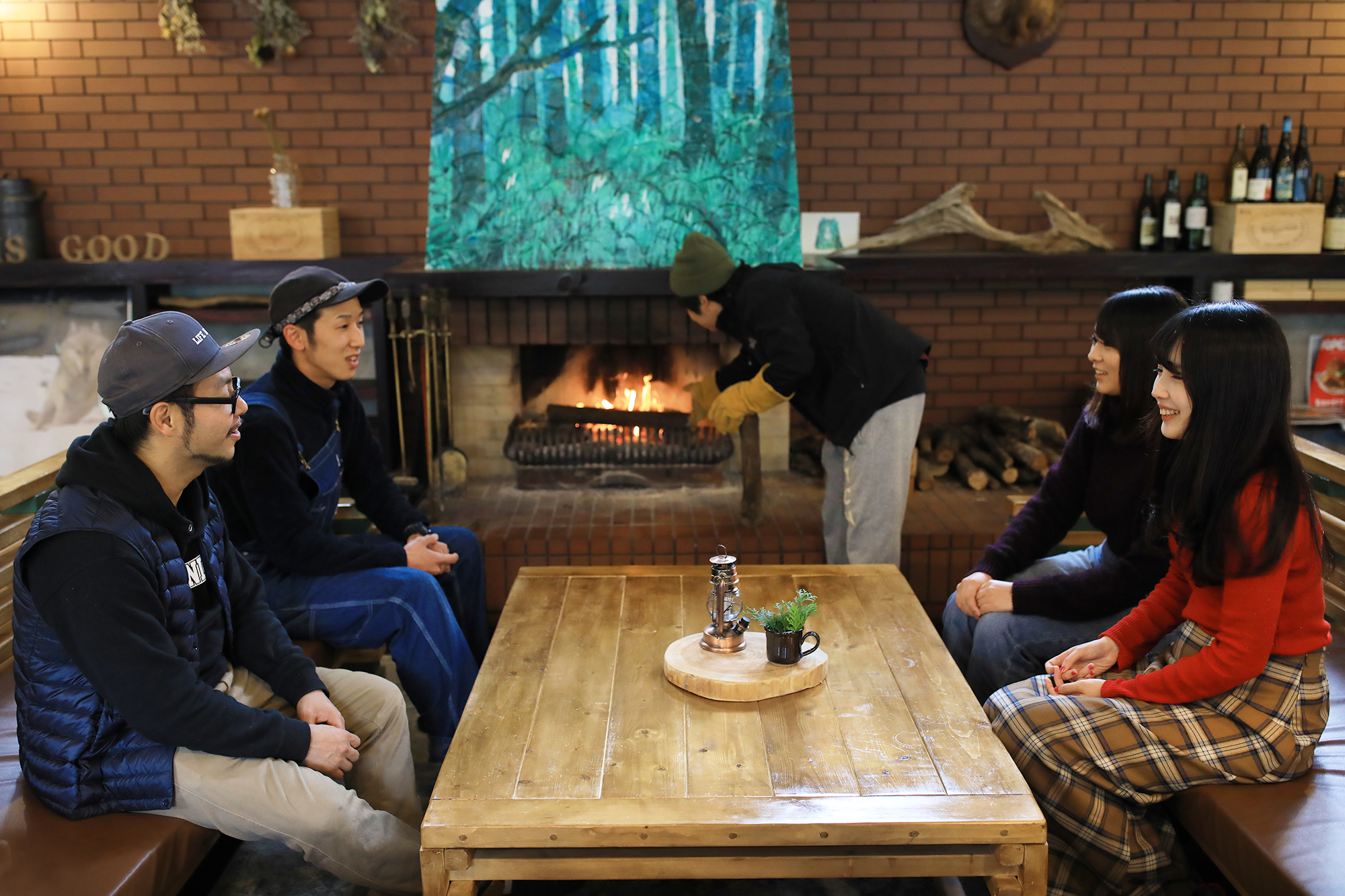
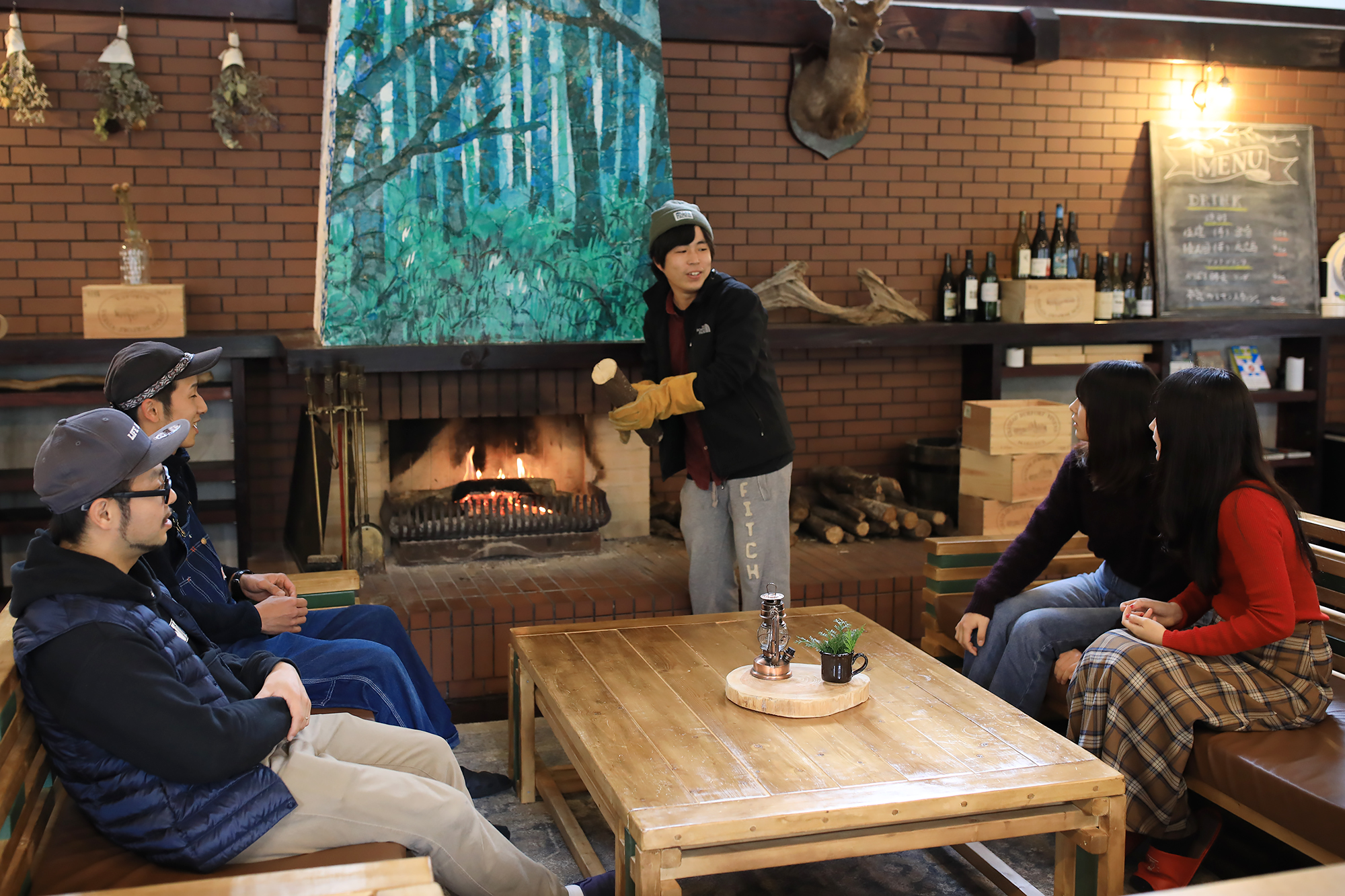
The impressive sofa set that stands firmly in the center of the room was all handmade by the staff! They were all self-taught, designing and building furniture based on their own ideas. The table set originally had a black top, but was remade to match their preferred texture and color.
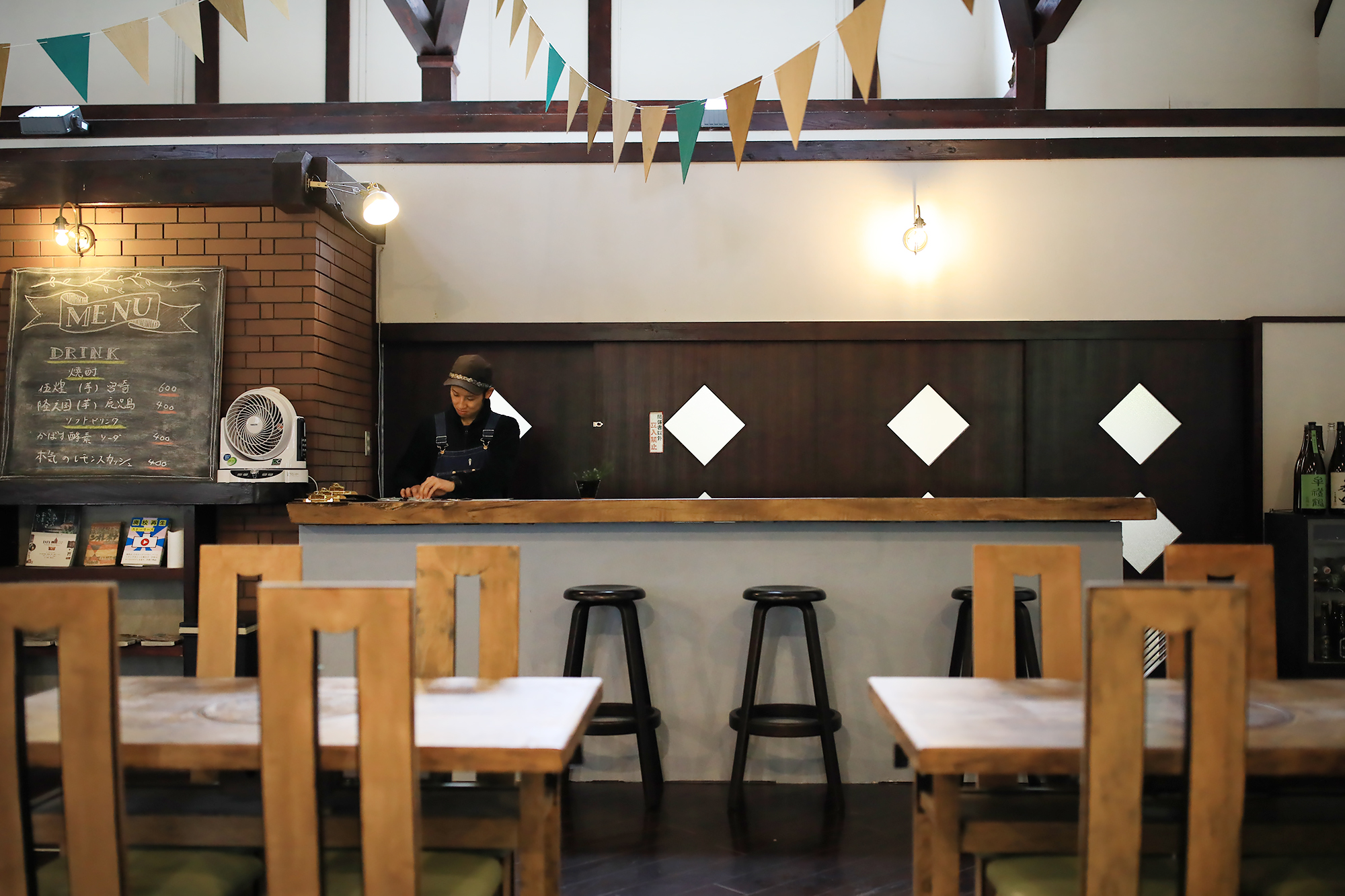
The counter kitchen was also built by the staff. Outside of business hours, it serves as a space for staff to share information, a place for the chef to think up recipes, and is apparently a favorite space for the staff themselves.
Cooking IntroductionCreative dishes made by our staff using ingredients
Chef Hirooka's skills are on full display as he says, "I only serve food that is handmade."
Our staff cultivates the fields and uses ingredients that are carefully grown without pesticides.
Carefully crafted creative cuisine.
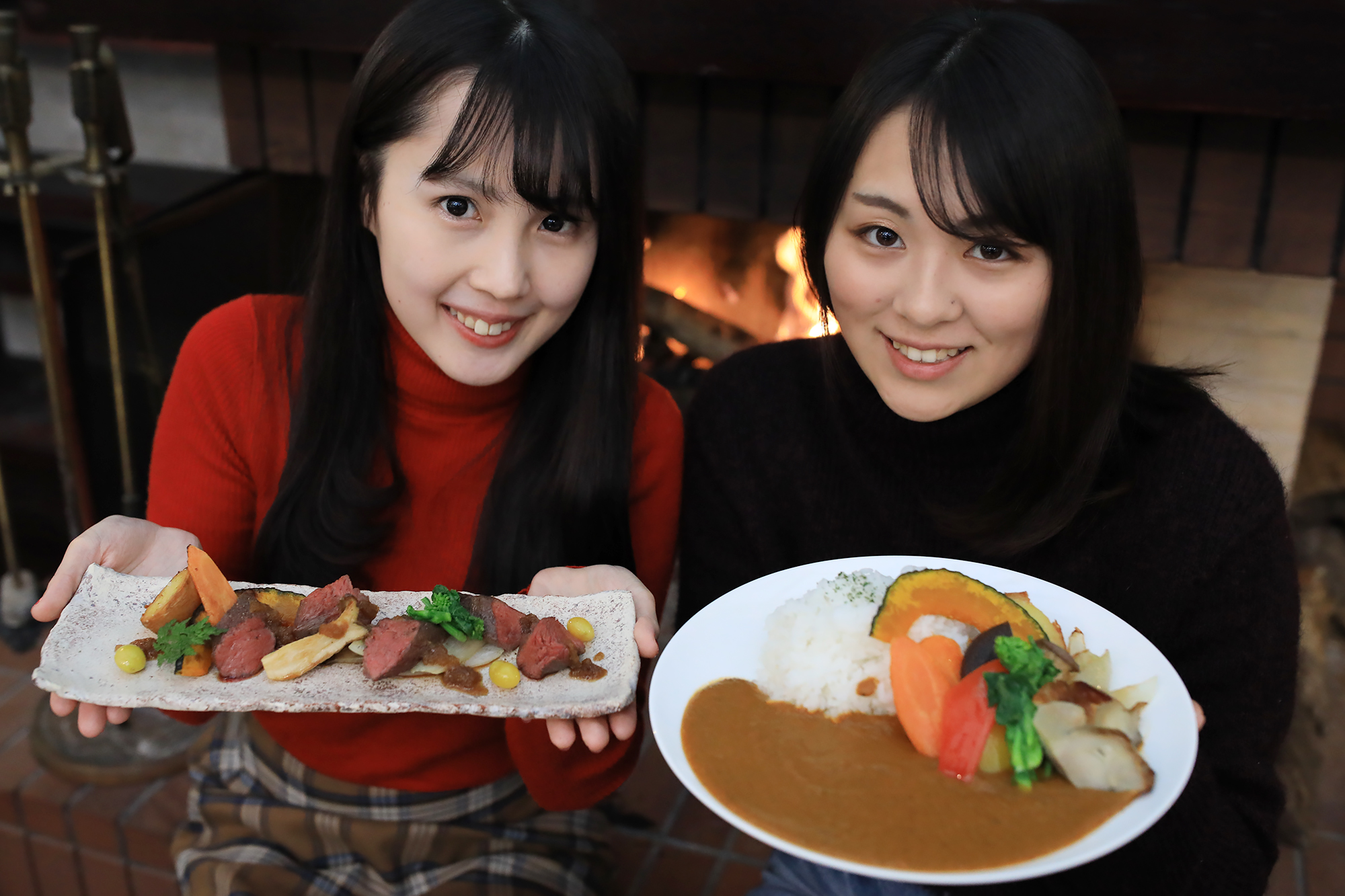
Dinner course 2,000 yen (tax included)
*Reservations must be made at least one day in advance. Reservations for meals only are also possible.
The chef in charge of cooking is Chef Hirooka Ryo, a former Japanese cuisine chef. While training at famous hotels and Japanese restaurants, he developed a strong desire to have a restaurant where people could eat the rice and vegetables he grew himself, so he moved to Bungo-Ono City with his family and started farming. He grows vegetables without pesticides, using the power of the earth, and he painstakingly grows high-quality rice, using the traditional hanging method to bring out the sweetness.
Chef Hirooka's cuisine is a creative blend of Japanese and Western cuisine, incorporating the delicate flavors and design of Japanese cuisine while remaining conscious of the atmosphere of "LAMP." The chef's original dishes, which make generous use of game, home-grown rice, vegetables, and wild plants, allow you to feel the bounty of Mt. Sobo just by looking at them.
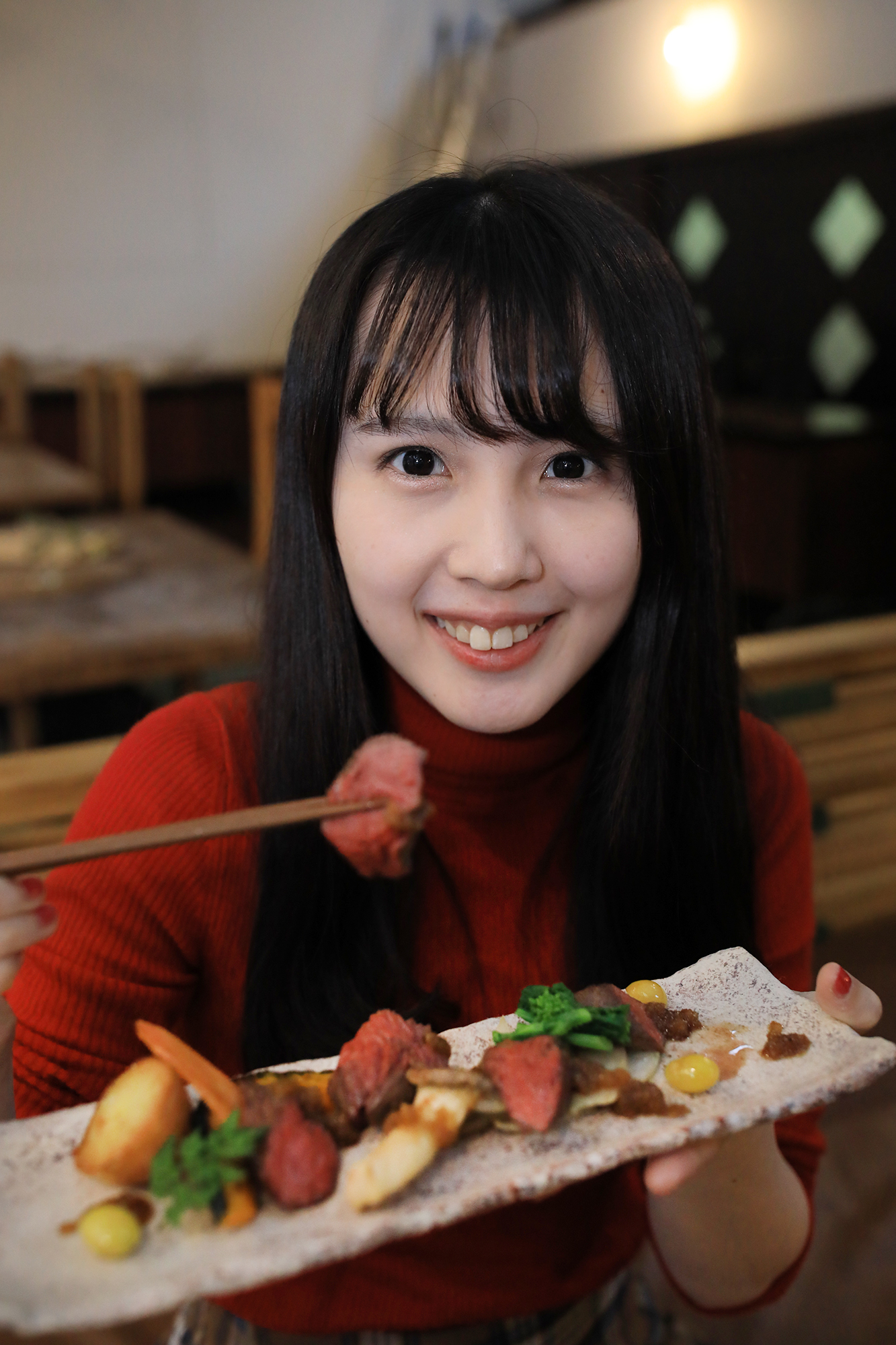
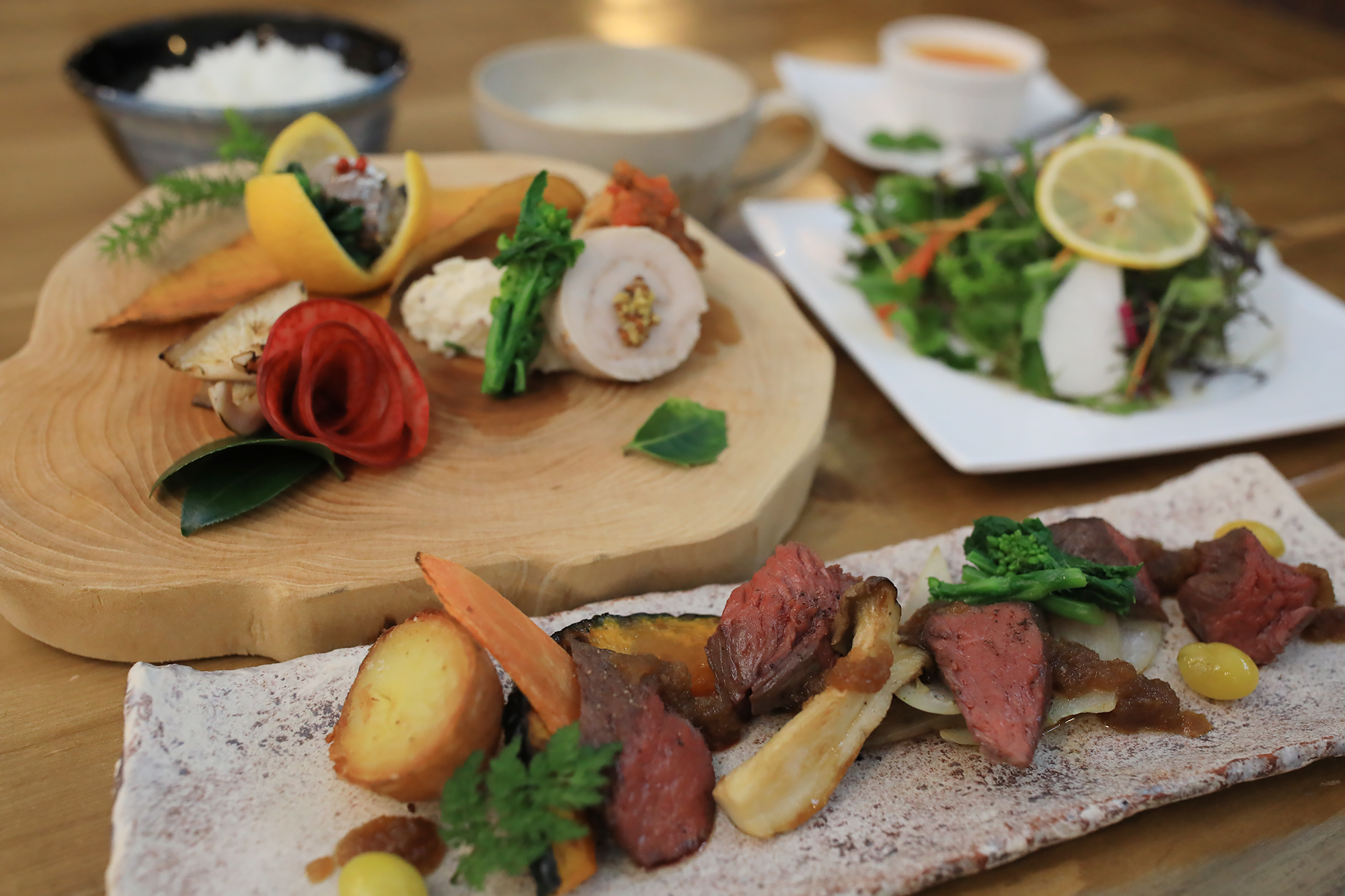
The main course was roast venison, garnished with wild vegetables and mushrooms and dressed with a homemade onion dressing. The venison had a soft texture and the umami of the meat was directly palpable. The taste of wild game changes dramatically depending on the hunting technique, bleeding, and butchering method, and the restaurant directly procures fresh, high-quality game meat without the typical game smell from skilled hunters in Bungo-Ono.
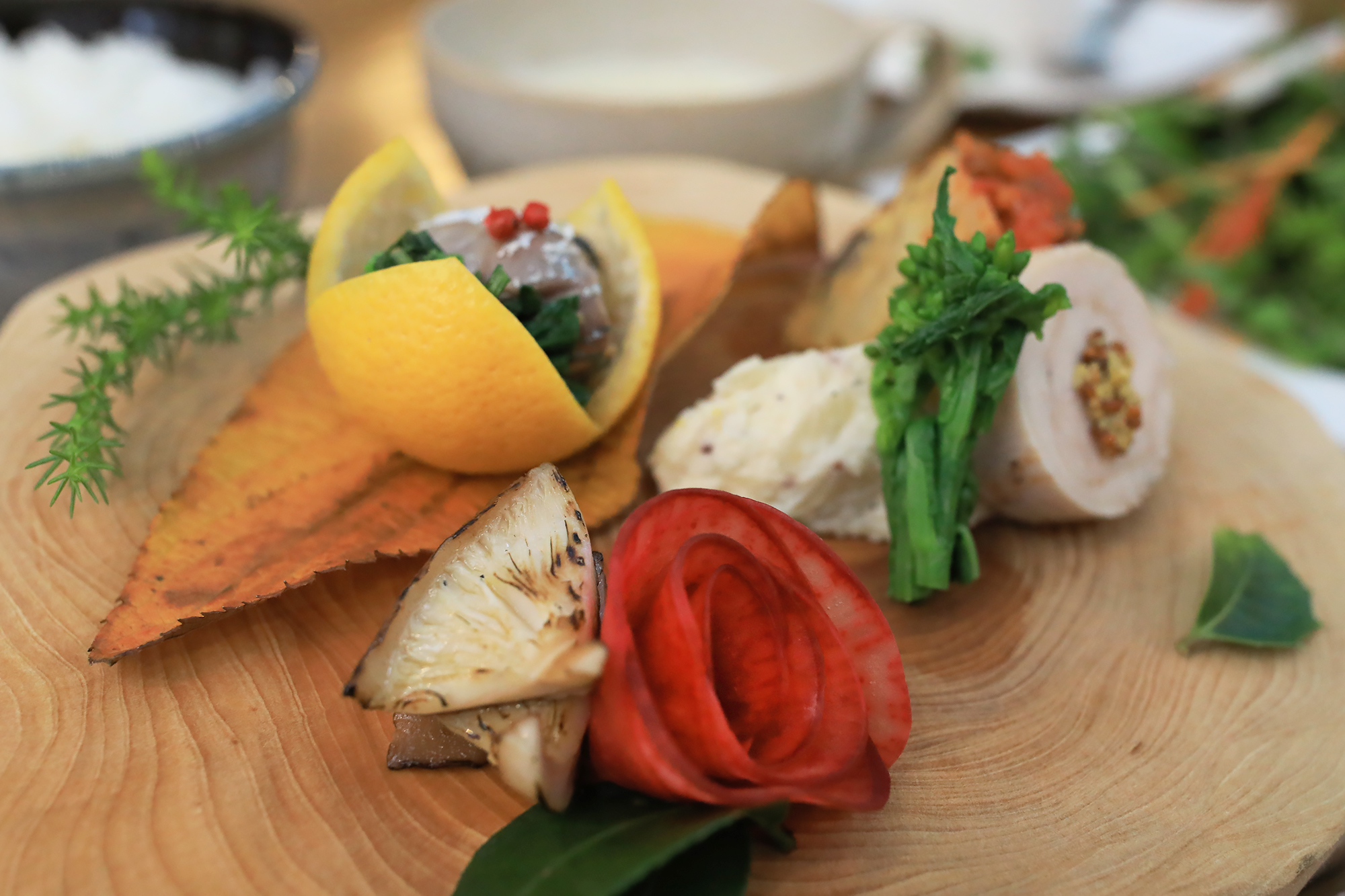
An assortment of appetizers made use of the techniques he developed during his time as a Japanese cuisine chef. On this day, the dishes included pickled red oyster radish shaped like a camellia, potato salad, chicken ham, horse mackerel imitation cooked in a kabosu casserole, and a Spanish omelette. Each dish was carefully prepared with a gentle and delicate flavor, reflecting the season, in-season ingredients, and handmade craftsmanship. Incidentally, the wooden dishes were handmade by the chef using wood harvested in the area.
Open only for lunch "Curry Stand"
*Closed on Mondays and Tuesdays
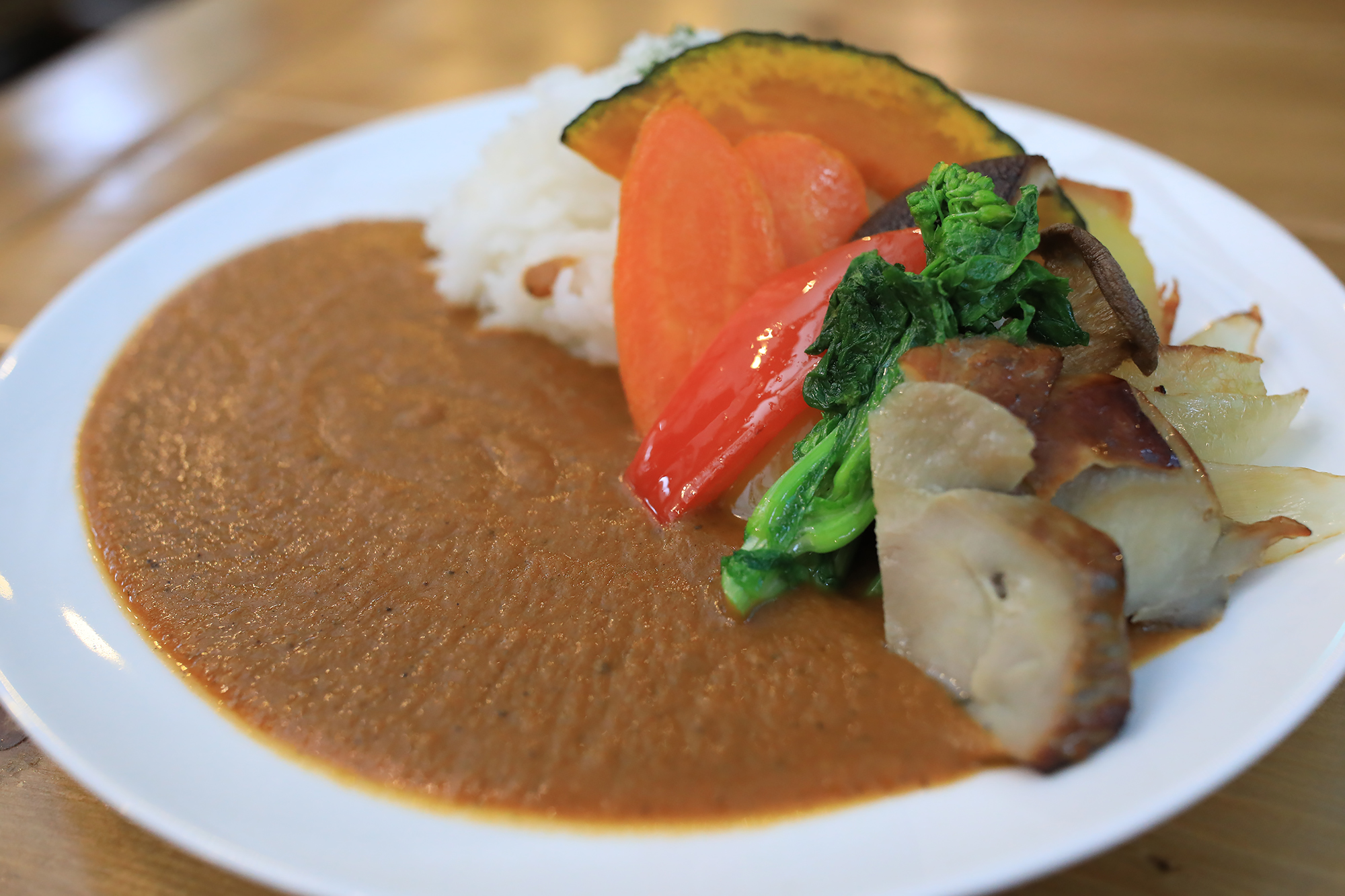
The curry sauce is made with an original blend of turmeric from Oita and several other spices. On the day of our visit, the dish was topped with home-grown rice and vegetables, as well as smoked mushrooms and chicken.
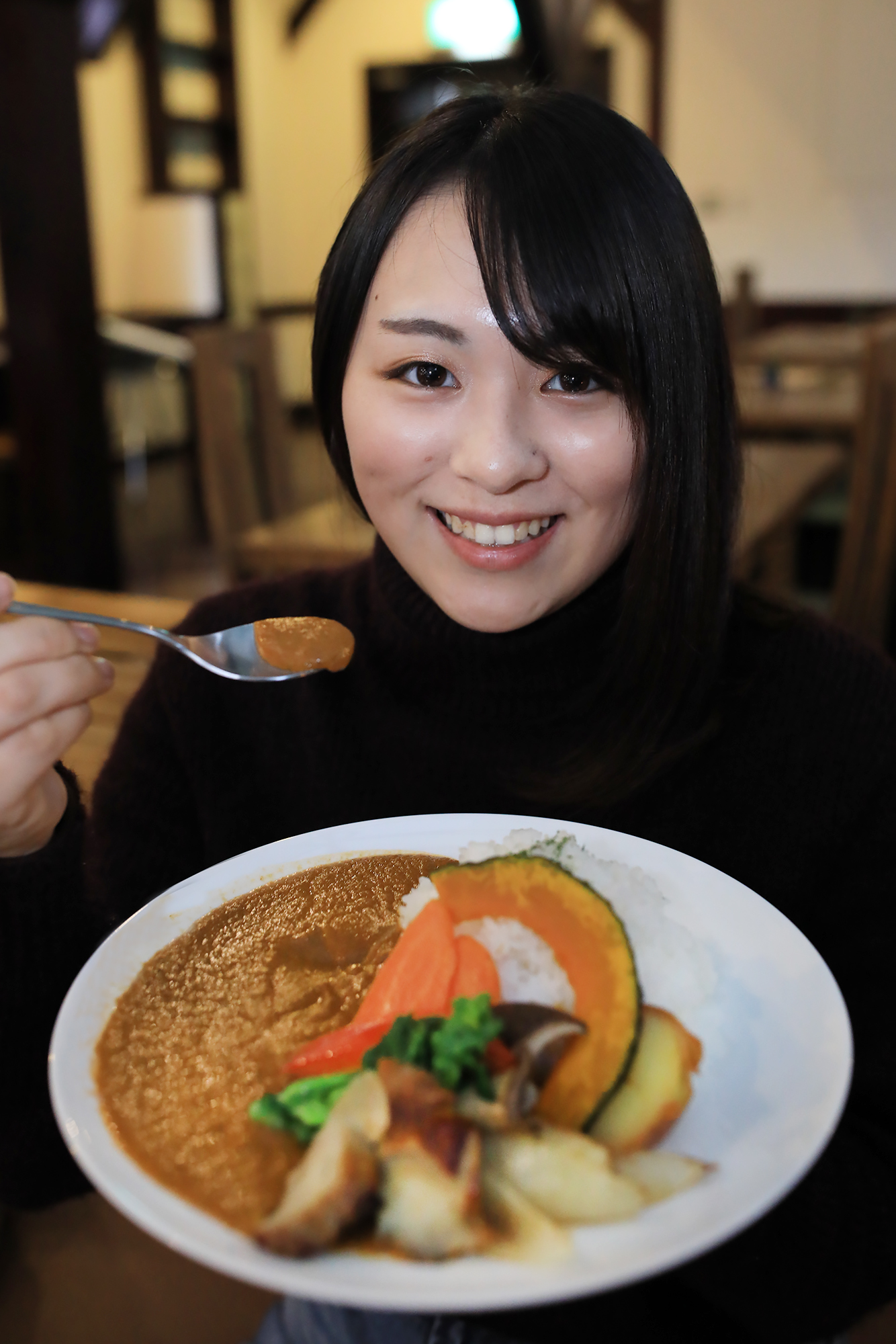
The curry sauce is light, but the aroma of spices is vibrant and it has a slightly spicy kick, making it satisfying to eat.
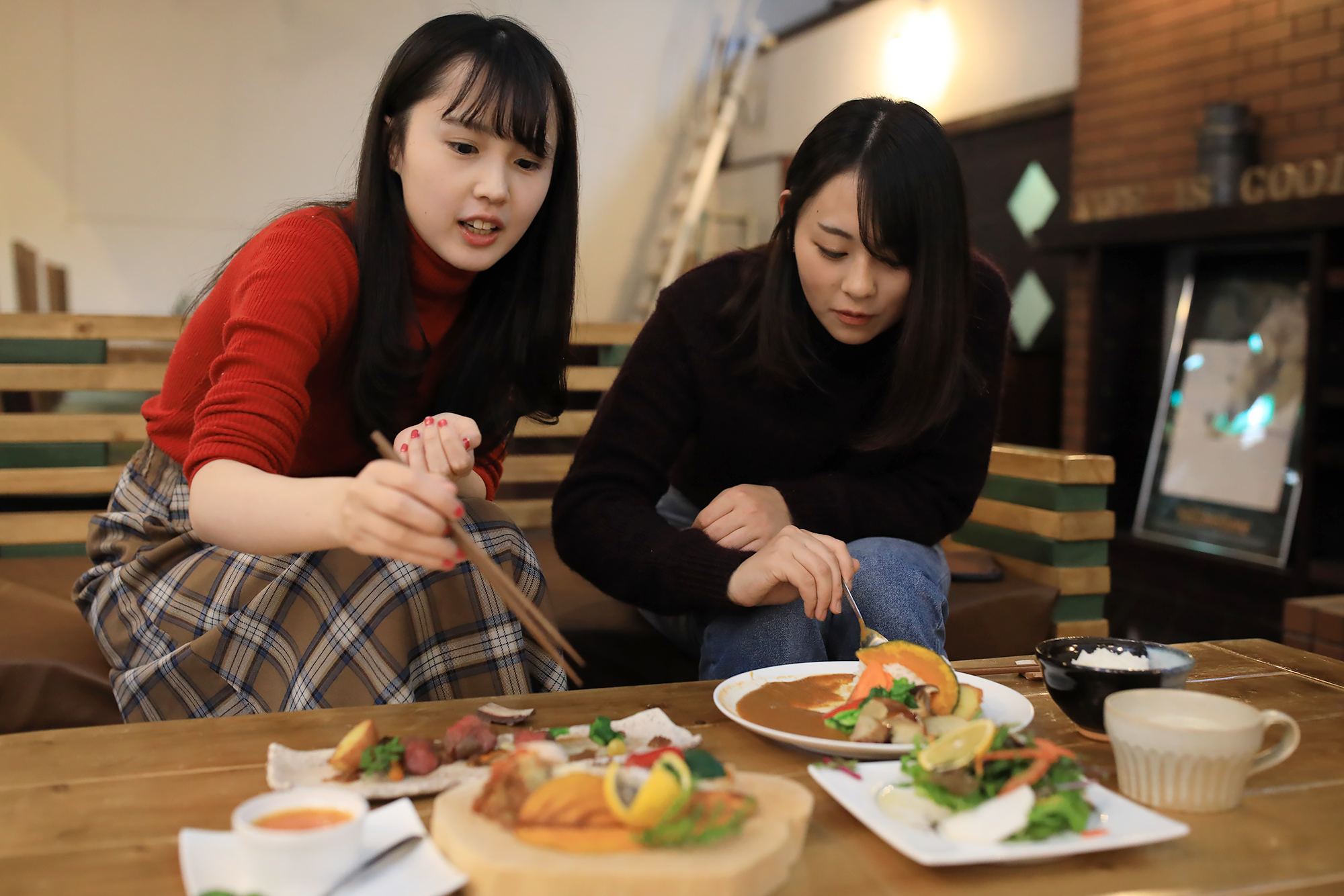
Chef Hirooka's comment:
"When I seriously considered cooking, I realized that it's not just the importance of handmade products and the quality of ingredients, but also the importance of how the ingredients were grown and their background. That's why I want to grow whatever I can myself and be able to serve it with confidence. Manager Takahashi agrees with my values and works hard with me on the farm. It takes a lot of effort and work to prepare the food, but my motto is 'If it's not handmade, there's no point in serving it,' and I want to continue exploring dishes that are unique to this place. We also have a wide selection of homemade drinks and other items available. You can make a reservation just for a meal, so please come and try something new."
interview (i.e. television, newspaper, etc.)Manager Ken Takahashi
We operate a guesthouse surrounded by magnificent nature and are a web editor.
By promoting our lifestyle with the theme of "enjoying life,"
We hope to increase the number of people who become interested in this area and visit, leading to its revitalization.
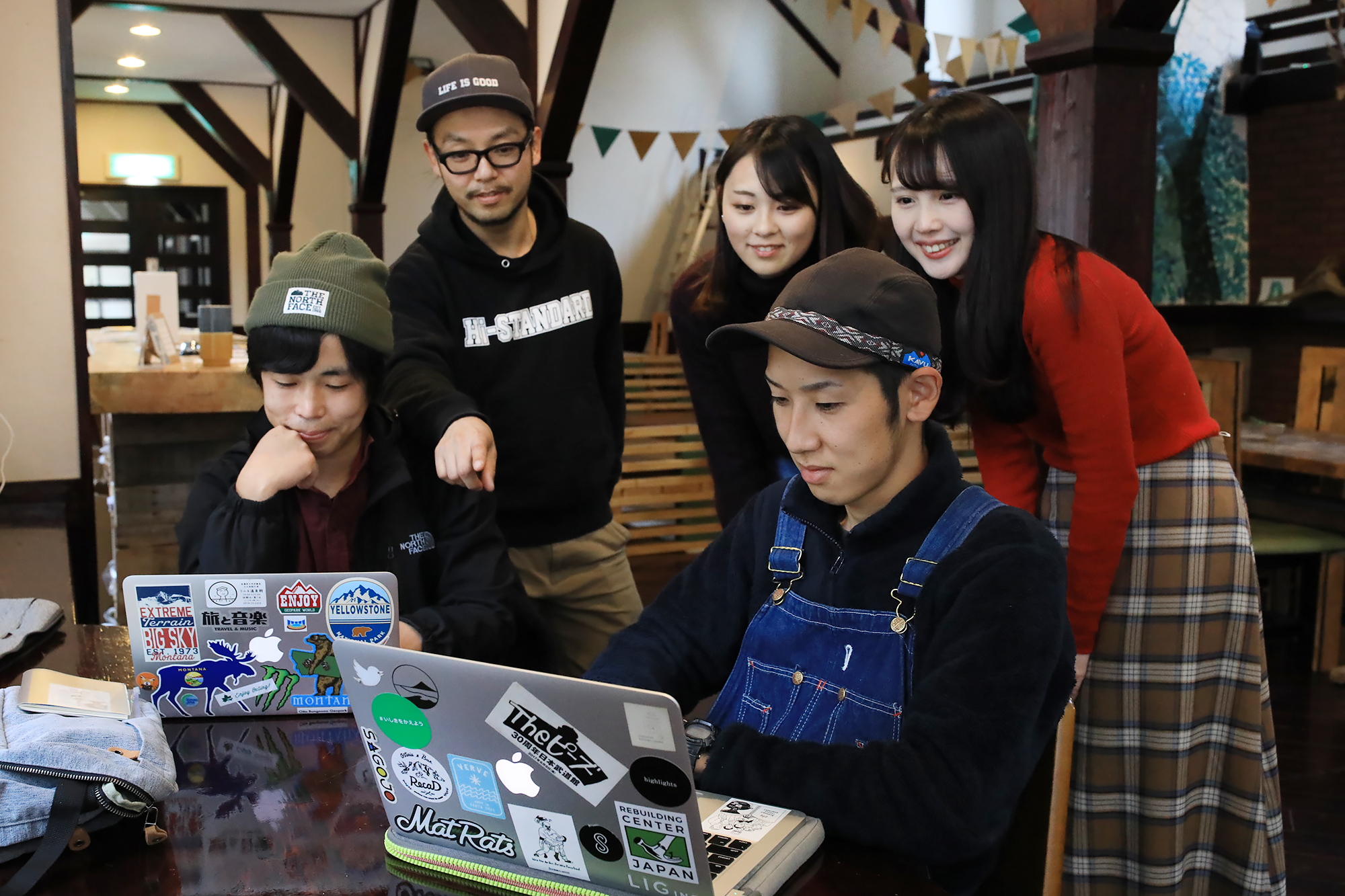
▲ Manager and editor Ken Takahashi (center)
Staff member (regional revitalization volunteer) Michael Satoshi (bottom left)
Chef Ryo Hirooka (bottom right)
Q: What inspired you to start Guesthouse LAMP Bungo Ono?
"The certification of the Sobo-Katamu-Okuzure UNESCO Ecopark led to a connection between the people of Oita Prefecture, who are working to revitalize the foot of Mt. Sobo, and LIG Co., Ltd., which is working to revitalize local areas. Our company first established Guesthouse LAMP Nojiriko in Nagano Prefecture, and has been involved not only in accommodation but also in activities to revitalize the local area. Based on this track record, we have been entrusted with the operation of Guesthouse LAMP Bungo-Ono as our second facility."
Q: What made you decide to move to Bungo-Ono City?
"For many years, I worked in the city as an editor for editorial production companies, web production companies, and app development companies, but I also loved spending time relaxing in nature, so I had always wanted to live in the countryside. Then, at just the right time, an idea came up to run a guesthouse deep in the mountains of Oita Prefecture. I was attracted by the possibility of being able to provide a working style and space that everyone would say is great, just like our company's 'great office business,' and my family agreed, so I was excited to move."
Q: When did you move here?
"It was April 2017. I moved out at the same time as the handover from my previous department, which took place from the end of March to April. I then immediately began cleaning the facility. It hadn't been touched by anyone for a while, so it was pretty dirty and deteriorated. I was the only staff member at the time, so I worked hard on repairs. I created and decorated the interior to match the atmosphere of LAMP, and painted it. We opened on August 6, 2017, and started out as just an accommodation facility. Now, we have local revitalization support team staff and chefs coming to stay, and I think LAMP has become a place that is unique to this area."
Q: How do you feel now that you've been living here for a while?
"Businesses develop at a rapid pace in urban areas, and I felt confident that I was keeping up with it. Our company policy is to make proposals to society by sharing our values and coming up with innovative ideas for both work and personal life. I was also interested in living in nature, so I had an idea of what it would be like from information I found on the internet. However, even with all the information and cutting-edge tools, when I was left alone in the middle of the mountains, with nothing, I had no way to source food, no knowledge of how to coexist with nature, and no energy. I was made to realize that I had no ability to survive. I was moved by the elderly people who tilled the fields, grew crops, and made the most of them. Now I work hard in the fields with my staff, and I recently obtained a hunter's license, so I hope to be able to source wild game myself."
Q: How would you like to run Guesthouse LAMP Bungo Ono in the future?
"Because it's a guesthouse with such a large site and facilities, I think it can be used in a variety of ways. I would like to enhance its functions as a guesthouse, such as by improving the camping space and offering accommodation packages that include hiking Mt. Sobo. Furthermore, I have a track record of independently handling everything from planning to booking the cast and running events, such as inviting artists to hold live events and inviting various creators to hold workshop events. I would like to use this know-how to propose and accept events including concerts, film screenings, and parties of all sizes, and at the same time, I would like to create Guesthouse LAMP Bungo Ono with the help of many people, and be a central figure in revitalizing the region by connecting people, towns, and cultures."
Q: Please tell us if you are taking any specific steps to revitalize the region.
"First, we established the Bungo Ono Relationship Association, which has been working to reverse the current problems and find benefits, and is promoting the unique charms of this area online. We have also welcomed local revitalization supporters to our staff, teaching them editing and information dissemination skills so that they will be able to stand on their own two feet no matter where they go in the future. In addition to posting the latest information about Guesthouse LAMP Bungo Ono on social media, we also publish stories of people who have experienced a chemical reaction when their culture blended with that of the area, with the aim of encouraging people who identify with our lifestyle to move or move to the area and settle there, thereby building a new culture. We also believe that online media will connect neighboring areas, and that the resulting media will attract attention and create new jobs. We hope that our presence, which brings us a completely different culture, will spark regional revitalization amidst the traditional lifestyles and cultures of those who have lived in harmony with nature."
Q: Thank you for your time.
epilogueAfter the interview
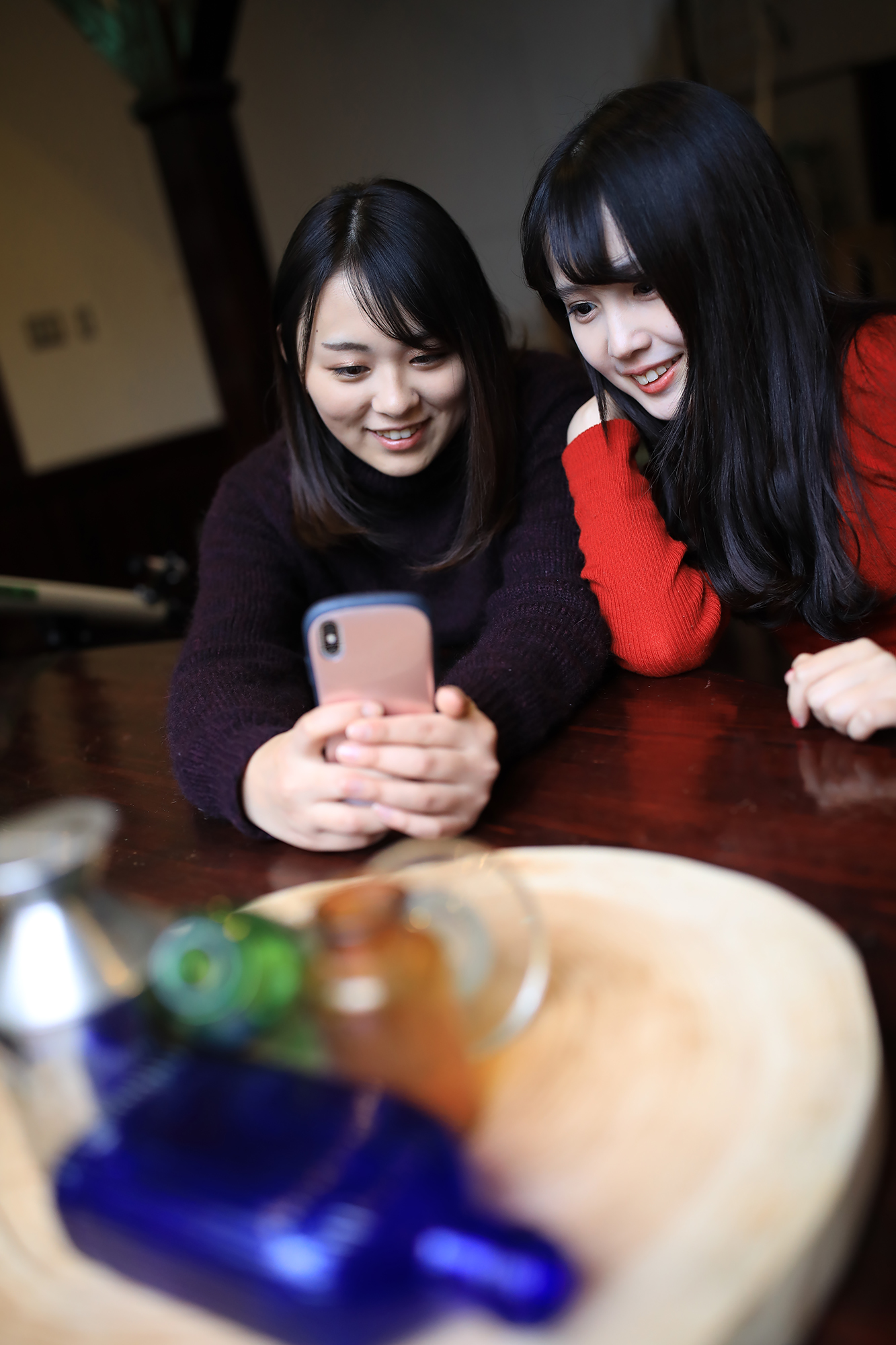
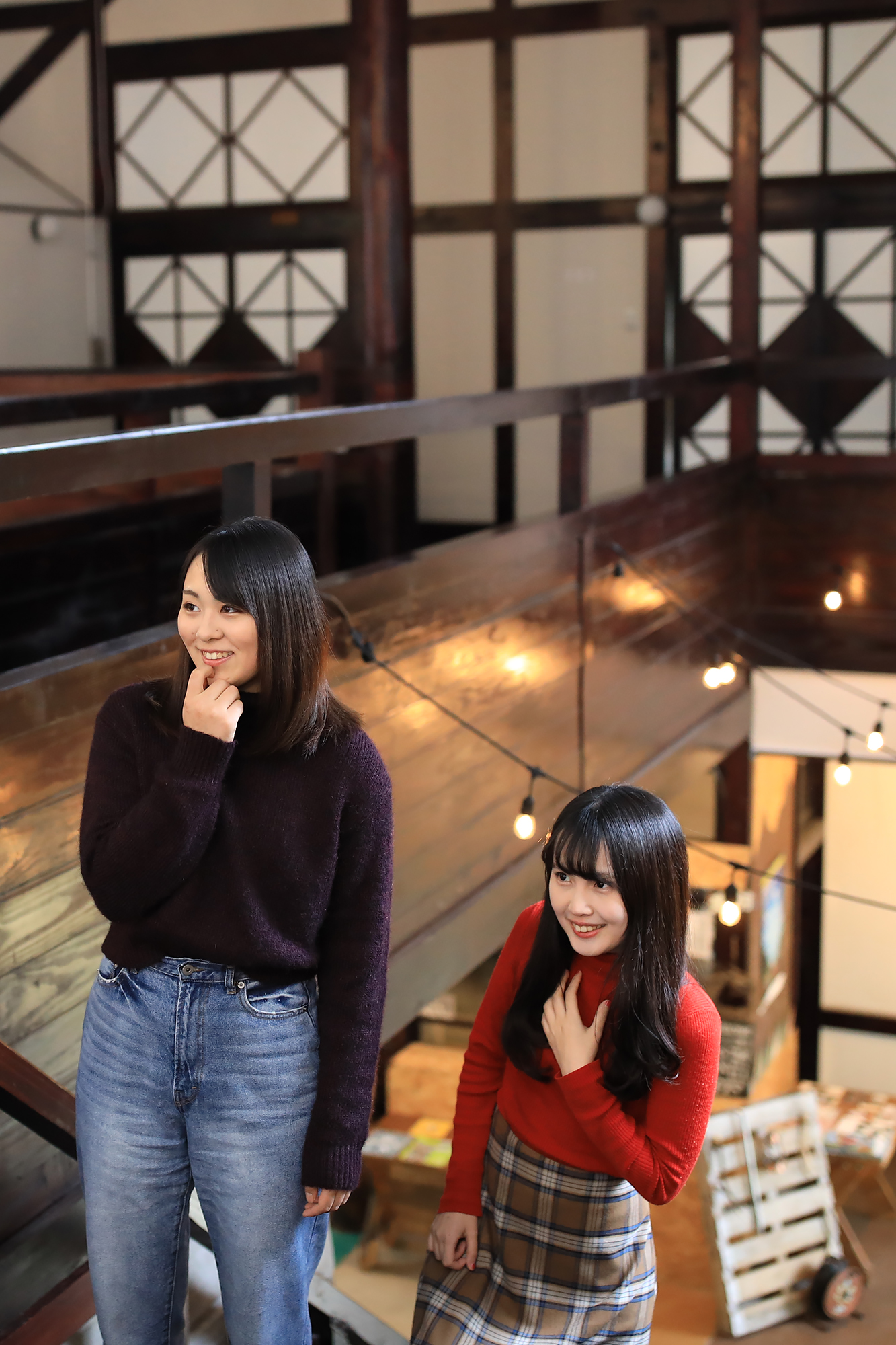
Representative and General Manager Ken Takahashi says he enjoys his lifestyle and steadily expands his connections with people who share a similar worldview by publishing articles that are written from the multifaceted perspective and unique worldview he has cultivated in the city center. He also said that based on the track record he has gained as an editor by personally visiting places and conducting numerous interviews, he wants to aim even higher in his writing career.
We would like to keep an eye on the future transformation of Guesthouse LAMP Bungo Ono and the creation of new culture.
AccessApproximately 30 minutes by car from Harajiri Falls
It is about a 30-minute drive from Harajiri Falls in Bungo-Ono City along Prefectural Route 7. It is located very close to the Obira trailhead and there is a sign at the entrance.
Guesthouse LAMP Bungo Ono
Address: 57 Obira Mine, Ogata-cho, Bungo-Ono City, Oita Prefecture
Phone: 0974-47-2080
Business hours: Check-in 15:00 - Check-out 10:00
(Reception closes at 9:00 PM, lights out at 11:00 PM)
Lunch time: 11:30-14:00 (Last orders 13:30)
Lunchtime closed: Mondays and Tuesdays
*Other irregular holidays due to farm work and maintenance. Please inquire in advance.
*If you wish to hold an event, please contact us separately.
MAP
57 Obira Mine, Ogata-cho, Bungo-Ono City, Oita Prefecture
Interview and editorial staff
Models: Risako Sano and Tomoka Sato
Reporting and Editing: Nozomi Nakamoto
Photography and production: VOKE Ltd.