


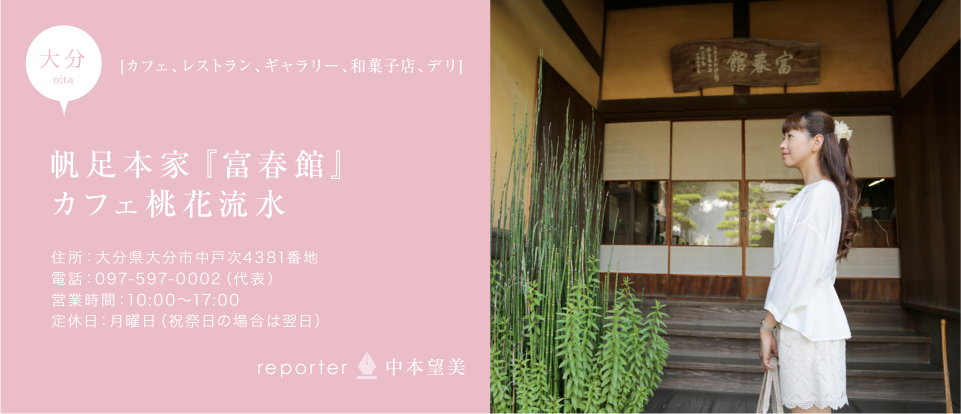

The concept is based on nature, handiwork, and the wisdom of our ancestors,
Adding color to clothing, food, and shelter, the starting points of life.
The Hozoku Honke Fushunkan is filled with a variety of items.
A modern Japanese space that blends old and new cultures,
The company operates five stores: a café, restaurant, gallery, Japanese confectionery, and deli!
Renovation of a "sake brewery" that has been in existence since the end of the Edo period.
In this gourmet report, we introduce "Hozoku Honke 'Fushunkan' Cafe Momohanaryusui" located in Hetsugi Honmachi, a retro space where historical buildings quietly stand side by side as if time has stood still in this area, even though it is located just east of the busy National Route 10 that passes through Oita City, Oita Prefecture. The area is a retro space with quiet historical buildings.
Toji Honmachi, where "Tomishunkan" is located, is a town where the historical townscape from the late Edo period to prewar prosperity still remains, and the traditional culture unique to the area is still alive. Fushunkan" is based on the concept of "the original way of life and culture," and in "clothing, food, and shelter," which support the basis of our lives, we focus on life, organics, fermentation, maturation, ecology, and food safety and security, and provide fresh local ingredients as well as artwork using "natural materials (wood, bamboo, grass, soil, silk, linen, cotton, stone, etc.). The restaurant has five outlets: a café, restaurant, gallery, Japanese sweets store, and deli, and exhibits and sells works created by the handiwork of artists active in various parts of Japan.
The brewery is now designated as a Tangible Cultural Property of Oita City, and the main house of the Hozoku family was built in 1863 (Keio 1st year) and has high historical value.
The Hosoku family was also known for welcoming many writers and artists, including Tanomura Takeda, a famous nanga (Chinese-style painting) artist.
Today, the "artistic retro space" that can only be experienced in Toji Honmachi is attracting attention and has become a new tourist attraction, combining the richness of the historical architecture with the fantastic world of the fusion of works by the literary figures who were active at the time and contemporary artists.
Fushunkan" by the Hozoku Honke family has a vast site in the town of Totsugi-cho, which is steeped in history and culture.
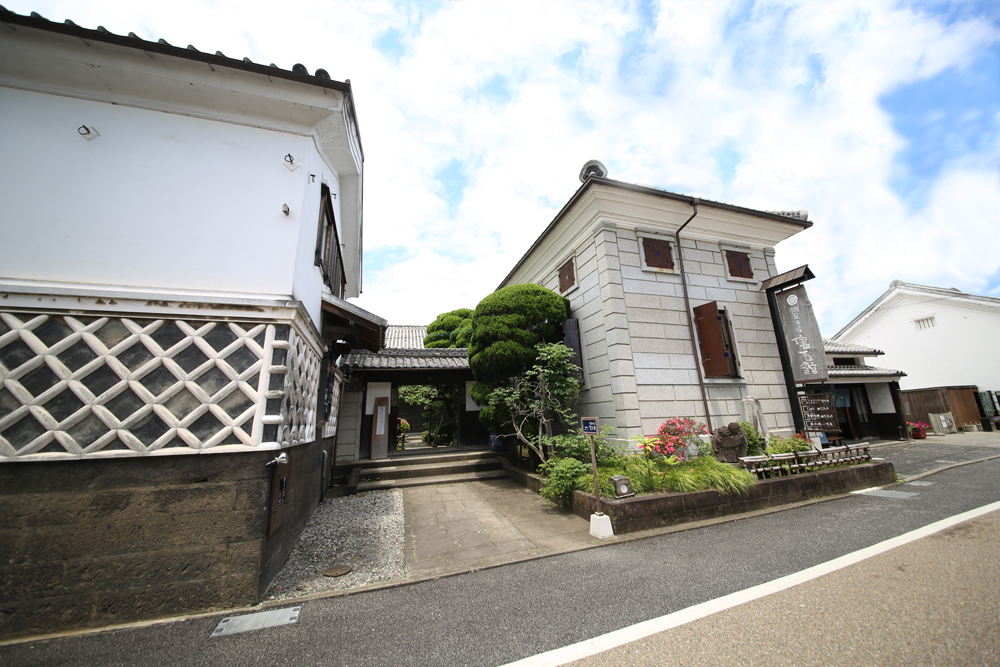
Walking through the streets of the town, you will feel as if you have stepped back in time and seen a row of historical buildings. This area has long been a center of water transportation using the Ono River, with boats carrying many people and goods passing through the area.
From the Edo period (1603-1868) to the Meiji period (1868-1912), in addition to marine transportation along the Ono River, the Hyuga Kaido Road (present-day National Route 10) developed as a means of transporting goods and people to and from work, and the town was full of vitality. Toji Honmachi still retains the atmosphere of those days.
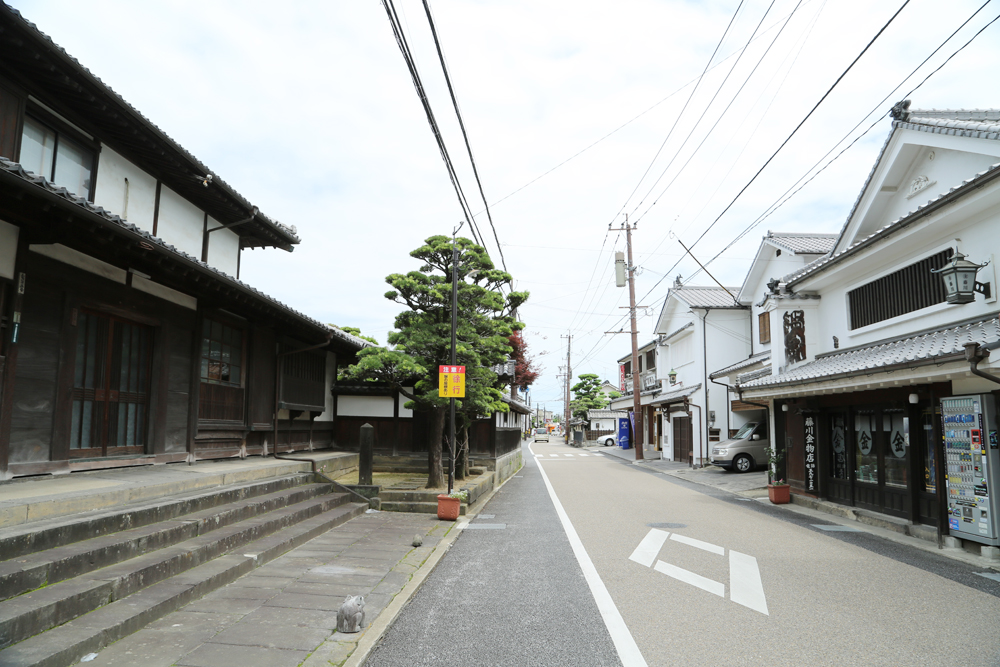
Among them, the Hosoku family, the former headman of Totsugu, has preserved many buildings constructed between the end of the Edo period and the Meiji period in their original form, including a large, conspicuous gate, a vast Japanese garden that extends to the back of the house, and a Western-style building that is full of historical romance.
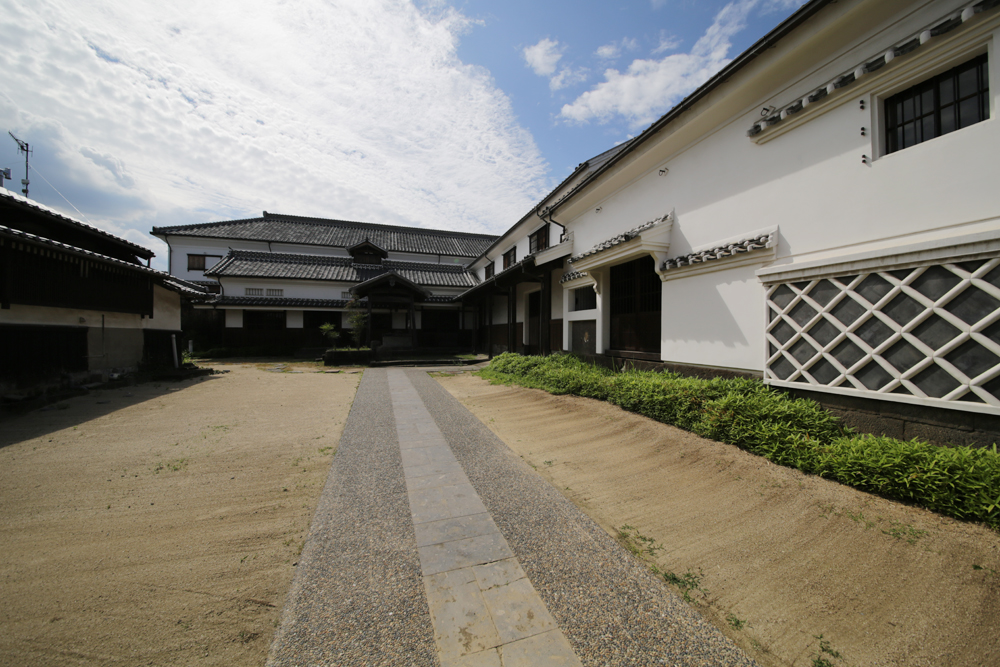
A large sake brewery built between the end of the Edo period and the Meiji period was donated to Oita City in 1995. It was designated as a "Tangible Cultural Property of Oita City" in 1999, and is used as a place to learn about local culture.
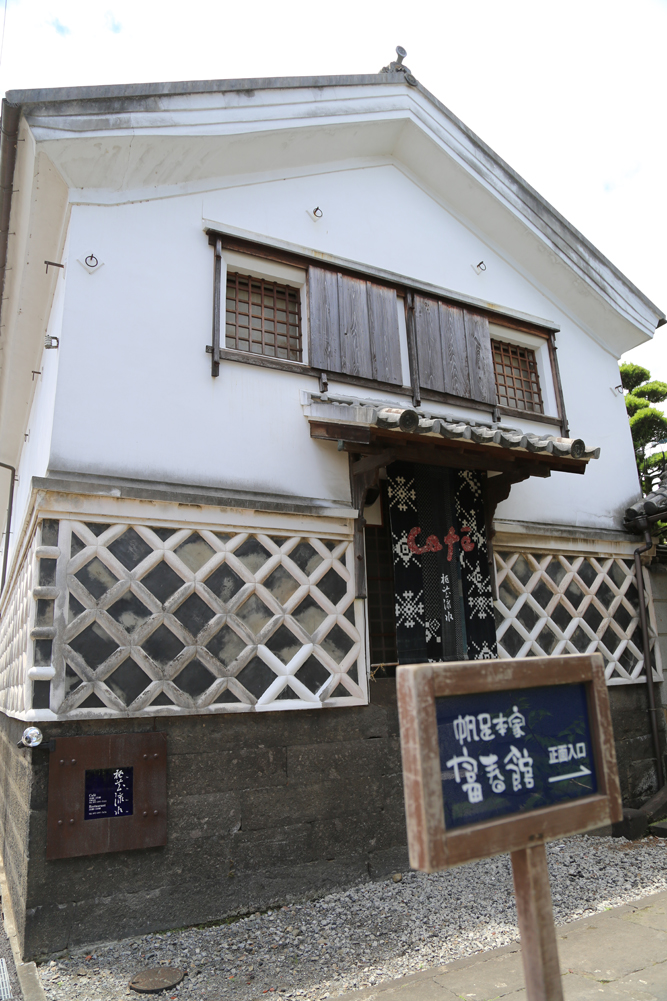
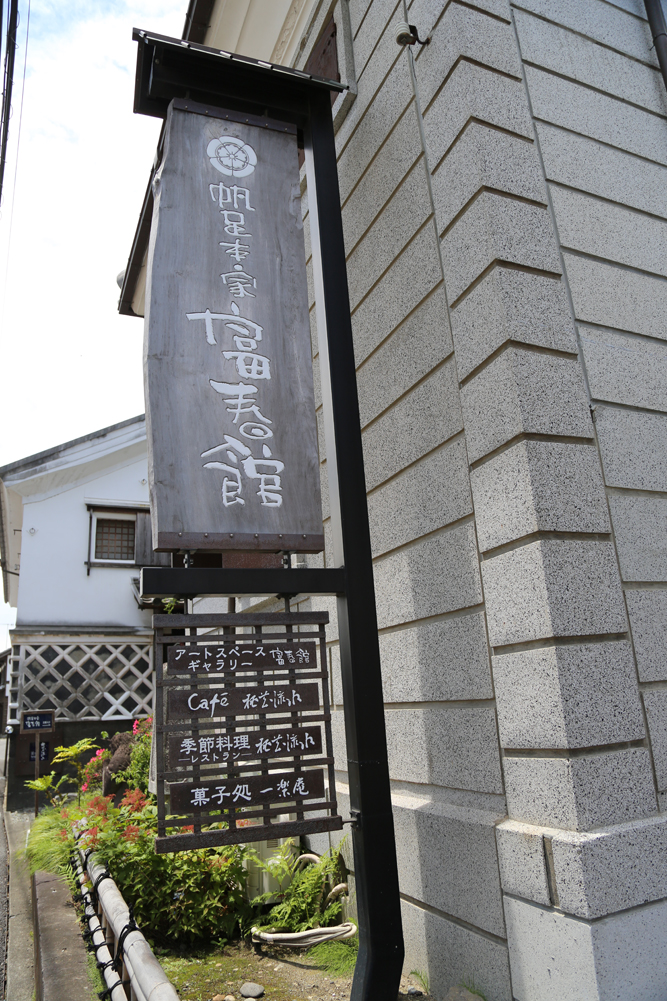
Incidentally, "Fushunkan" is the name of the museum. Tomishun" is the name of a famous sake brewed by the Hozoku family and was named by the Confucian scholar Rai Sanyo, one of the literati scholars who were supported by the Hozoku family.
Scenery of the site☆.
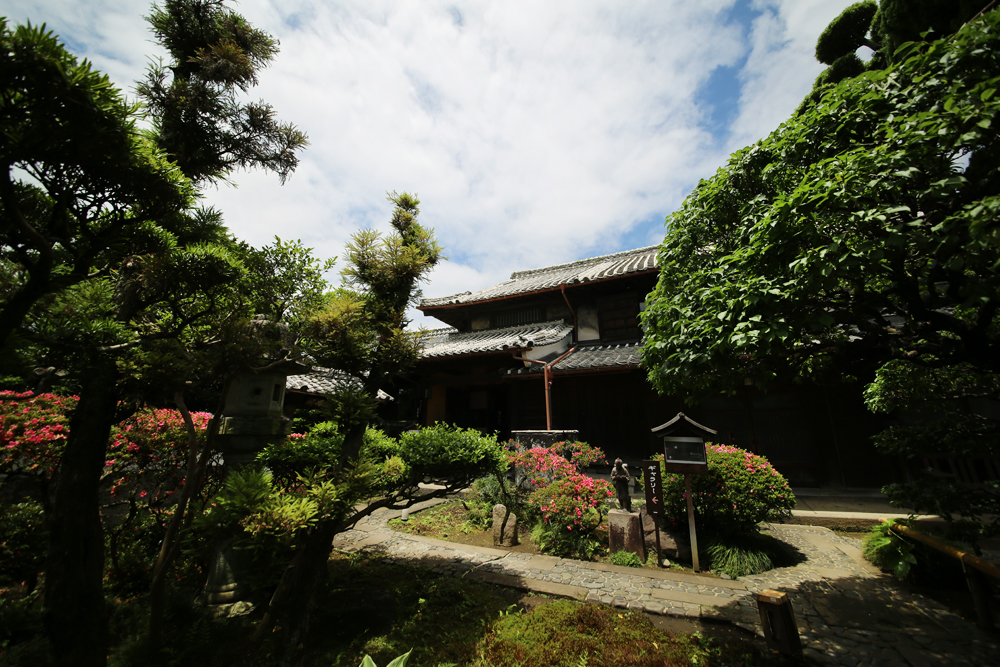
Upon passing through the gate, visitors will find a large, carefully maintained Japanese garden, and various buildings on the grounds, including Japanese-style houses, storehouses, and Western-style houses, each with its own unique character.
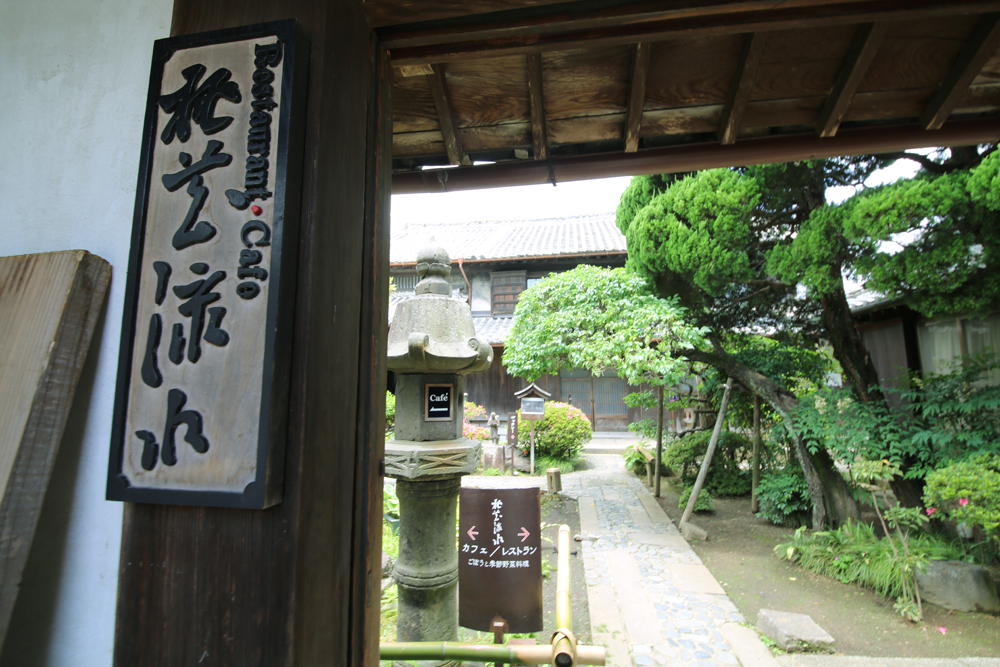
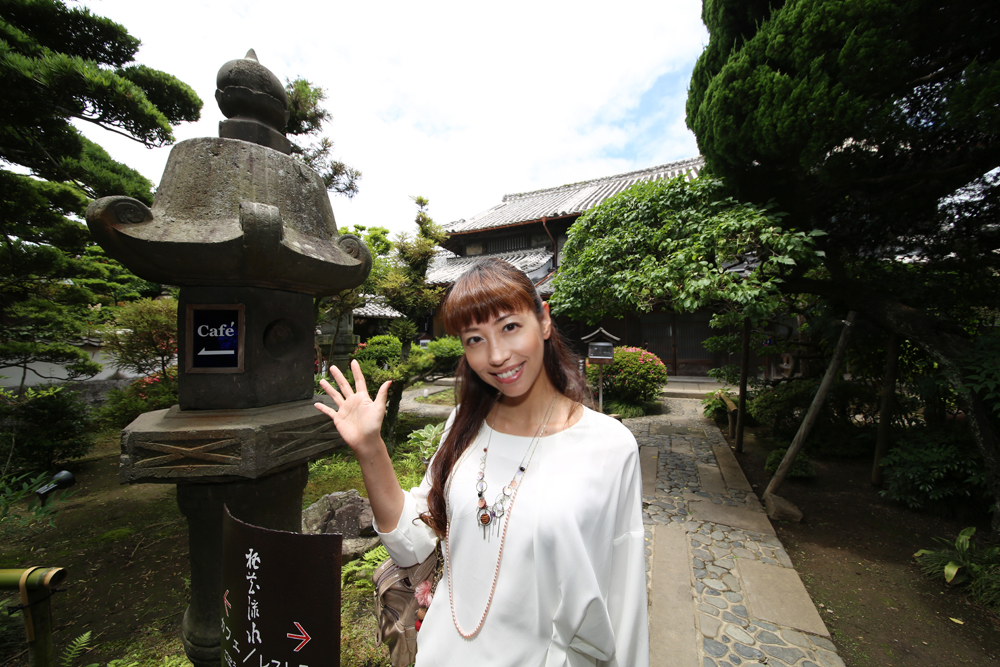
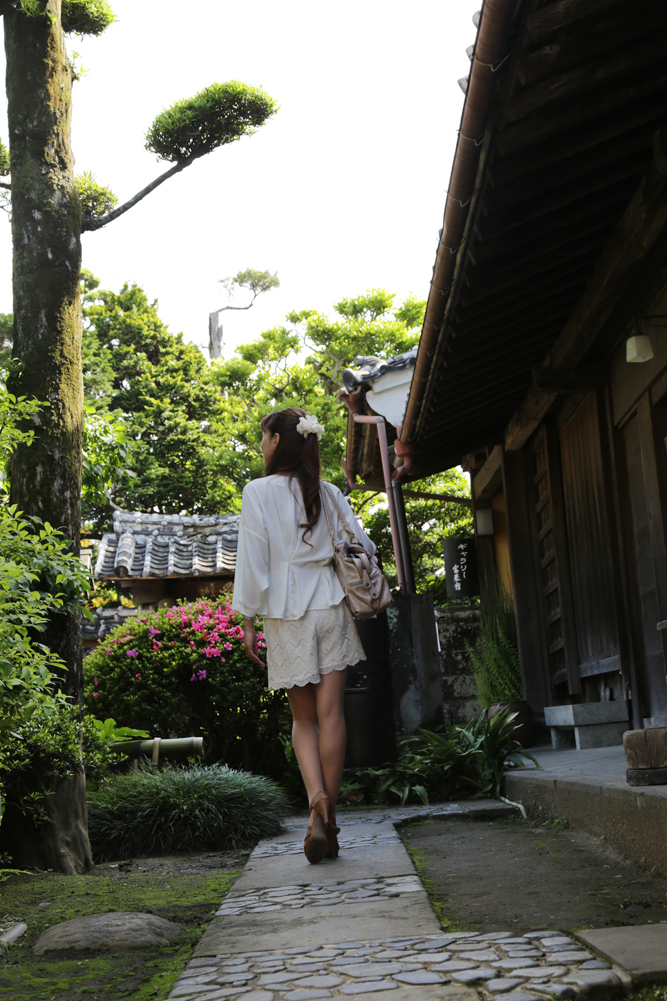
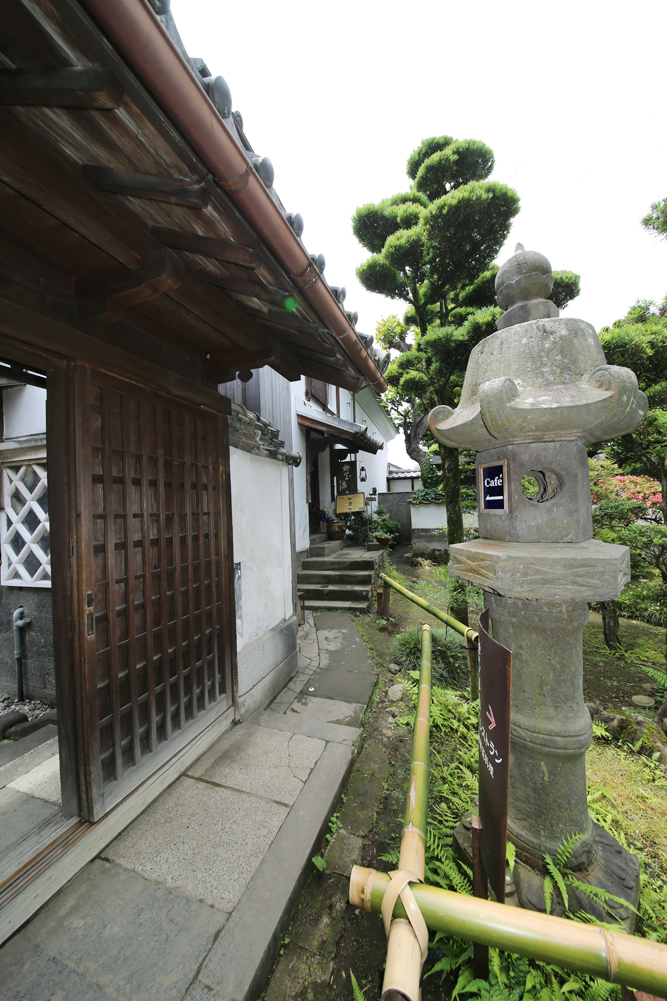
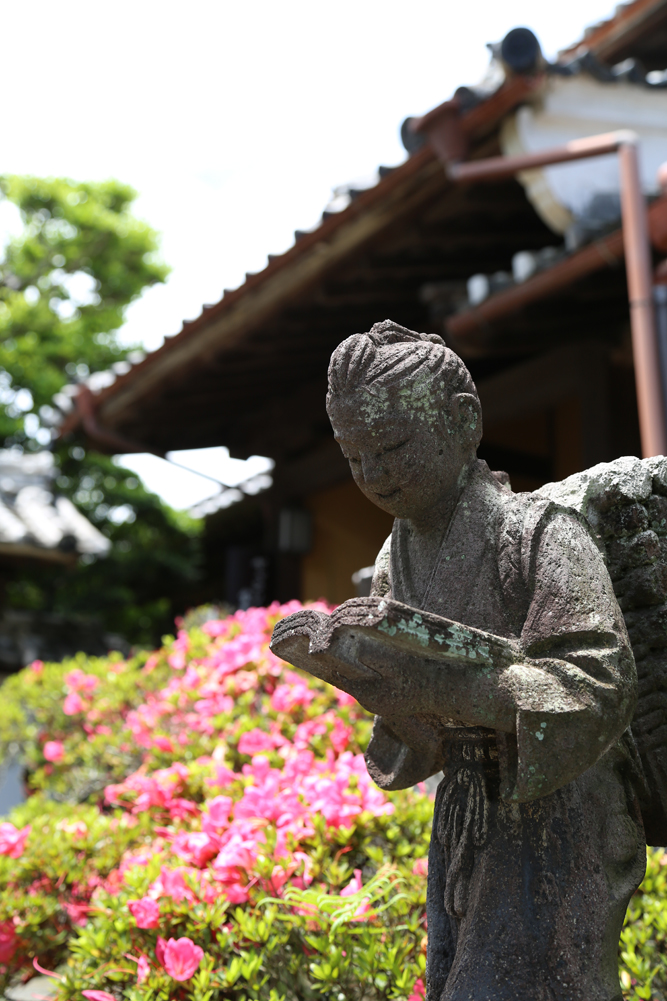
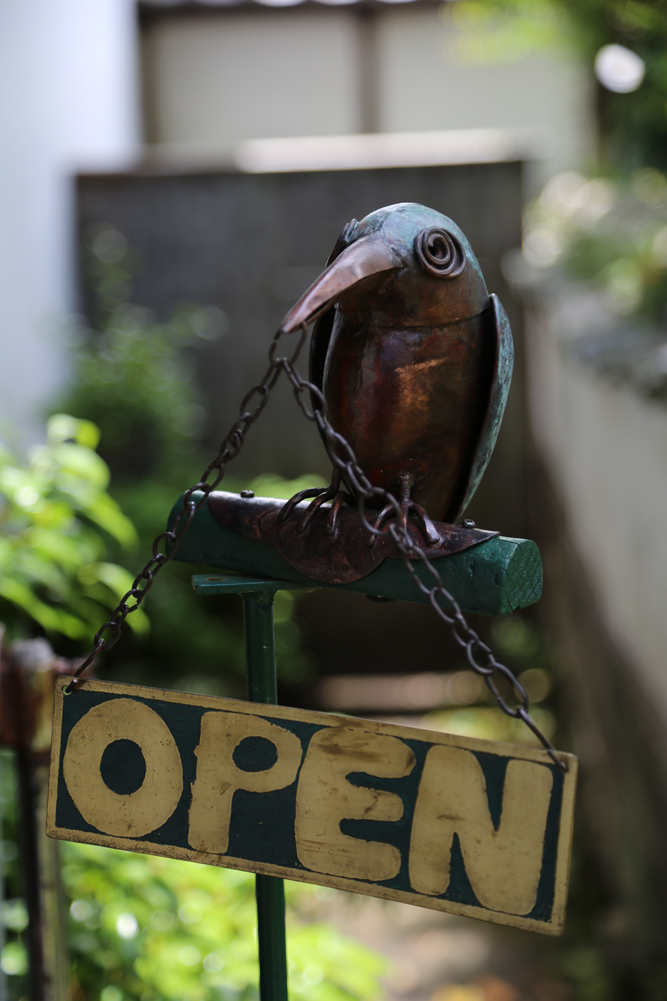
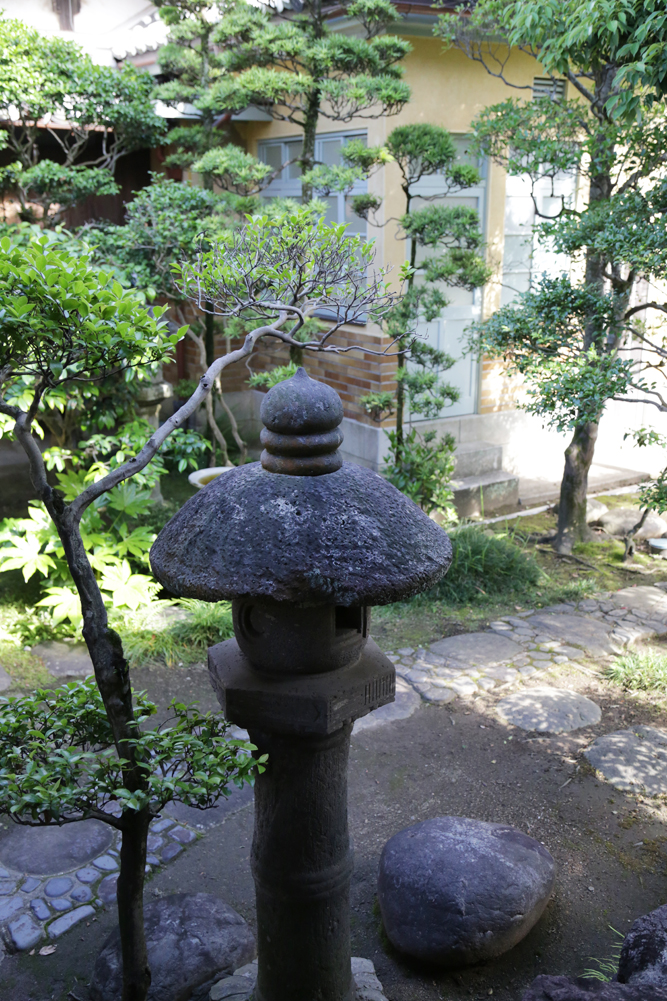
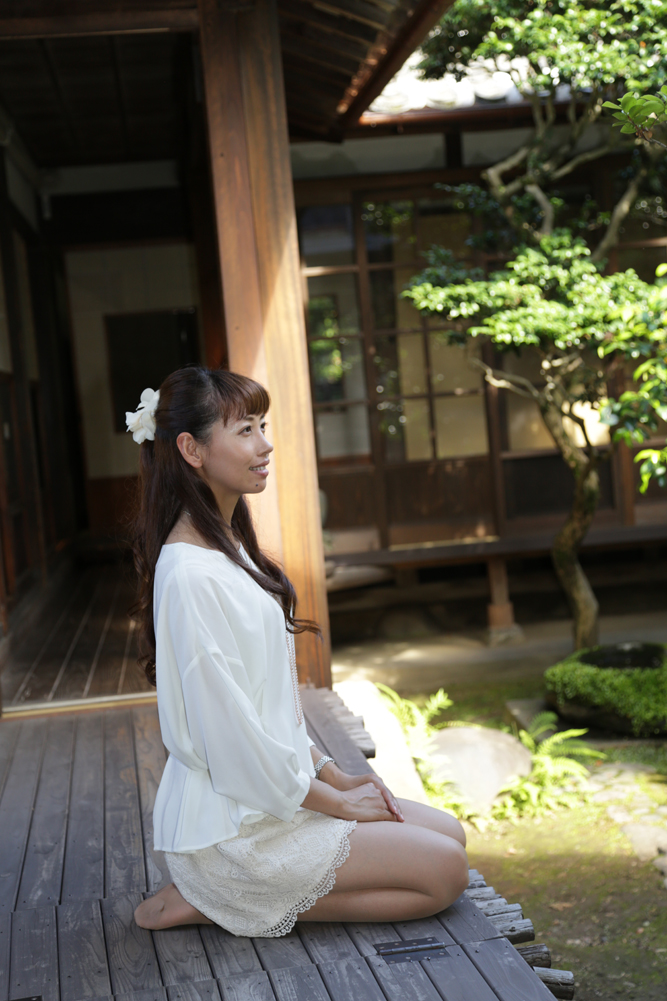
At every possible point on the grounds, visitors can slowly experience the Japanese sense of beauty and historical romance that we are rarely aware of in our modern daily lives.
Cafe "Momohana Ryusui
Enjoy a variety of dishes and sweets created with traditional Japanese techniques in a tasteful restaurant that has been repaired from a Meiji-era warehouse.
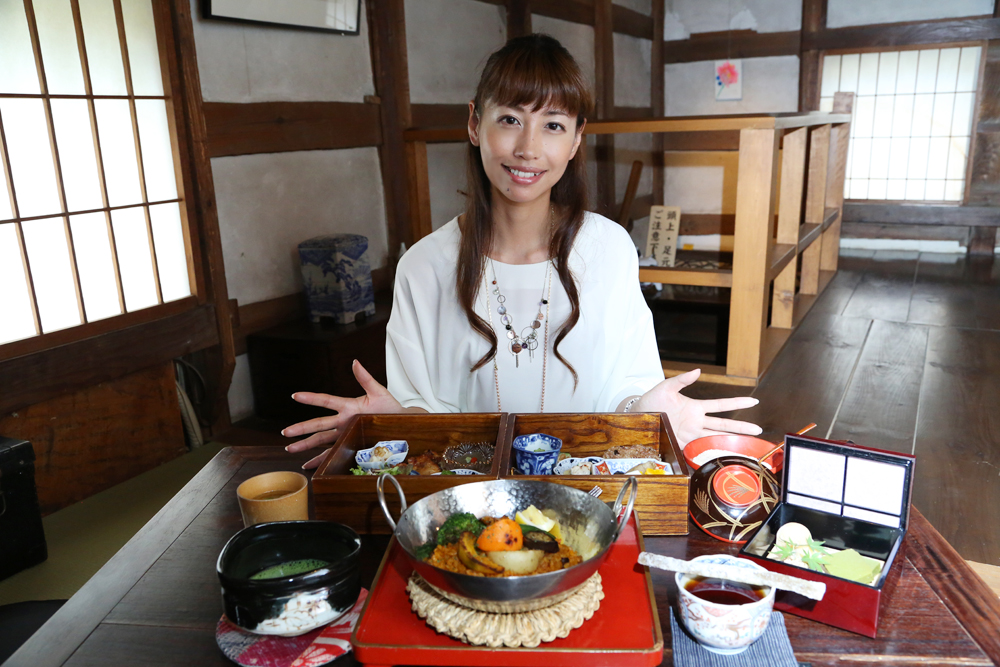
Among the five cafes, restaurants, galleries, Japanese sweets stores, and delis operated by Hozoku Honke "Fushunkan," we introduce "Momoka Ryusui," a café that is particularly popular among a wide range of age groups, including women, men's groups, and the elderly.
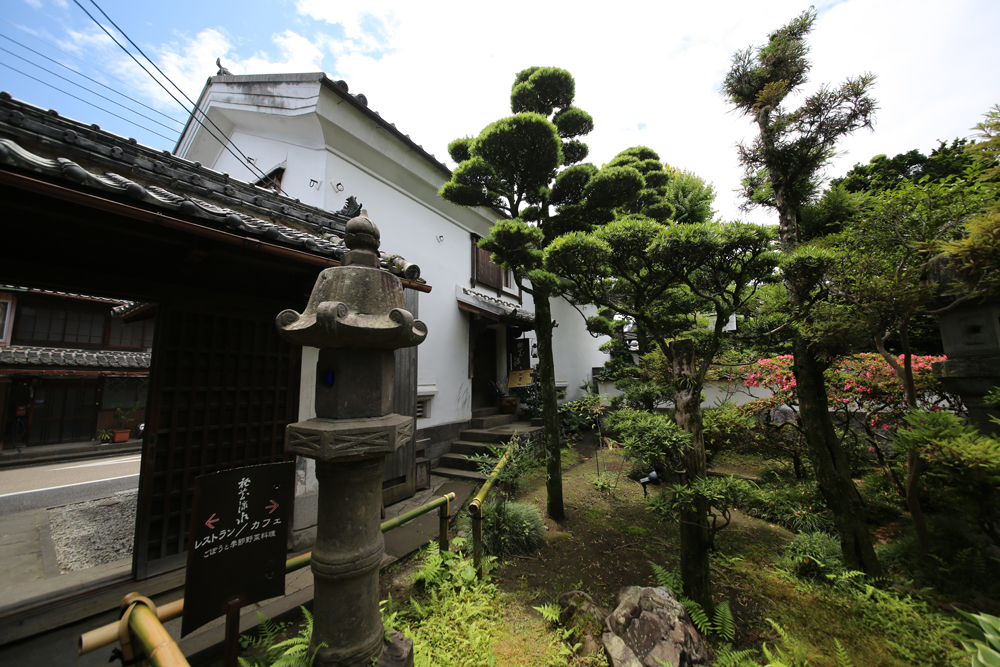
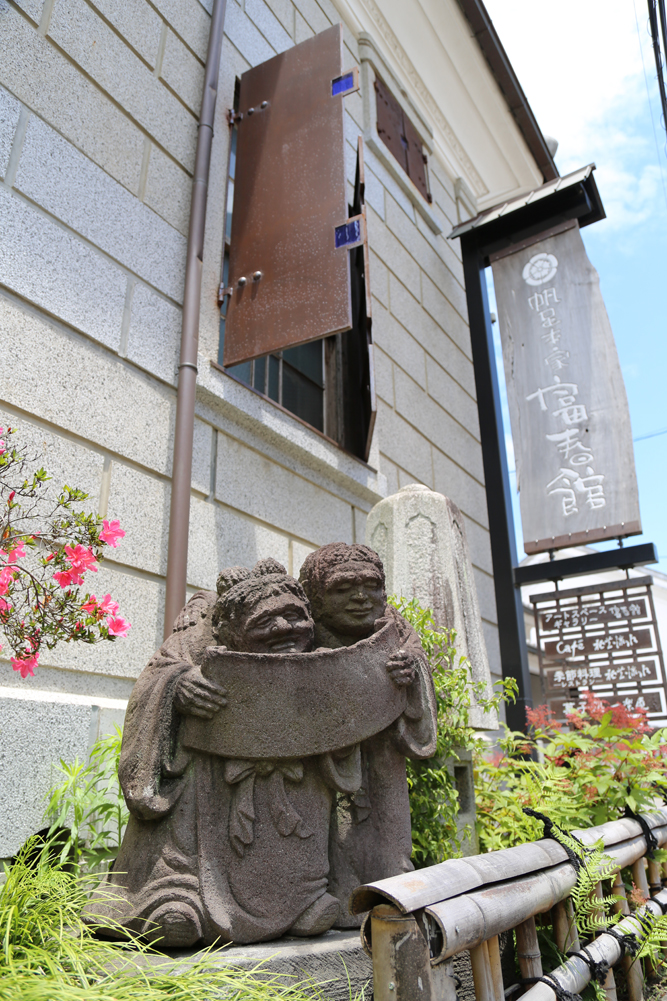
Exterior view of Cafe "Momohanaryusui" from the garden
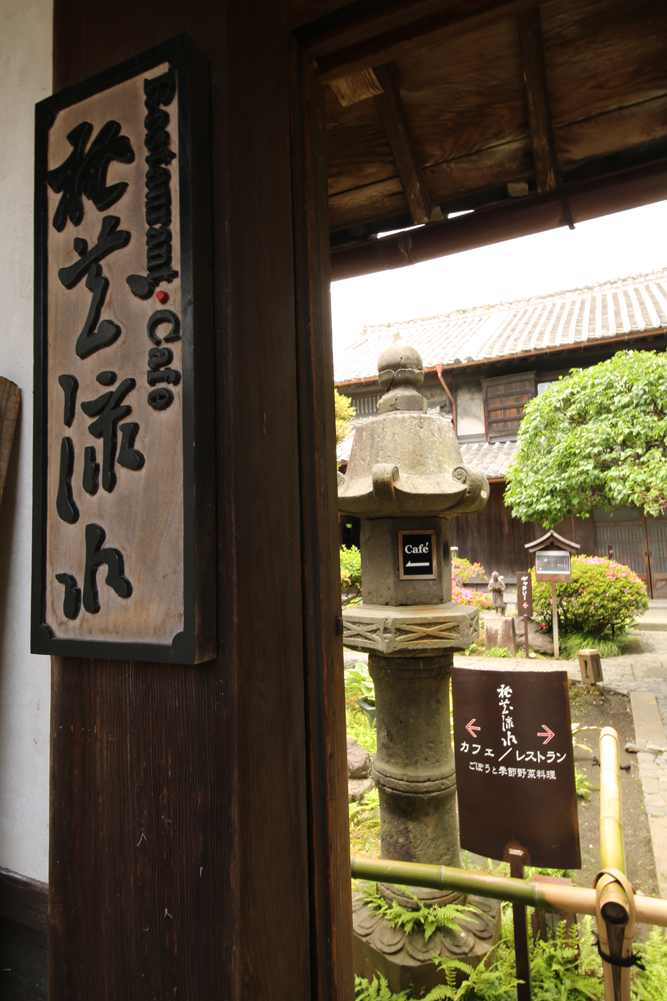
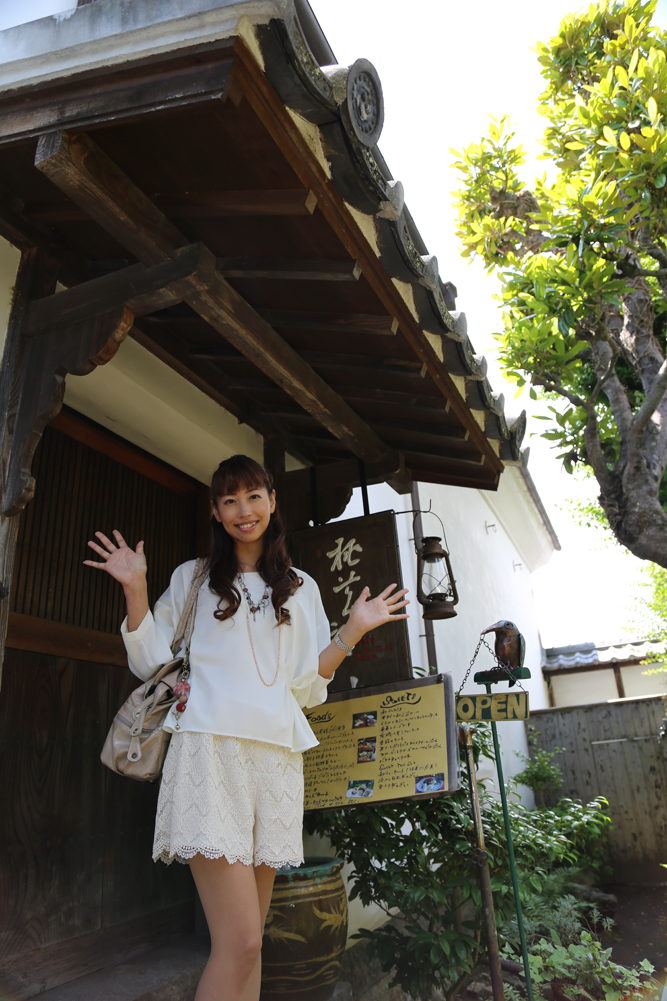
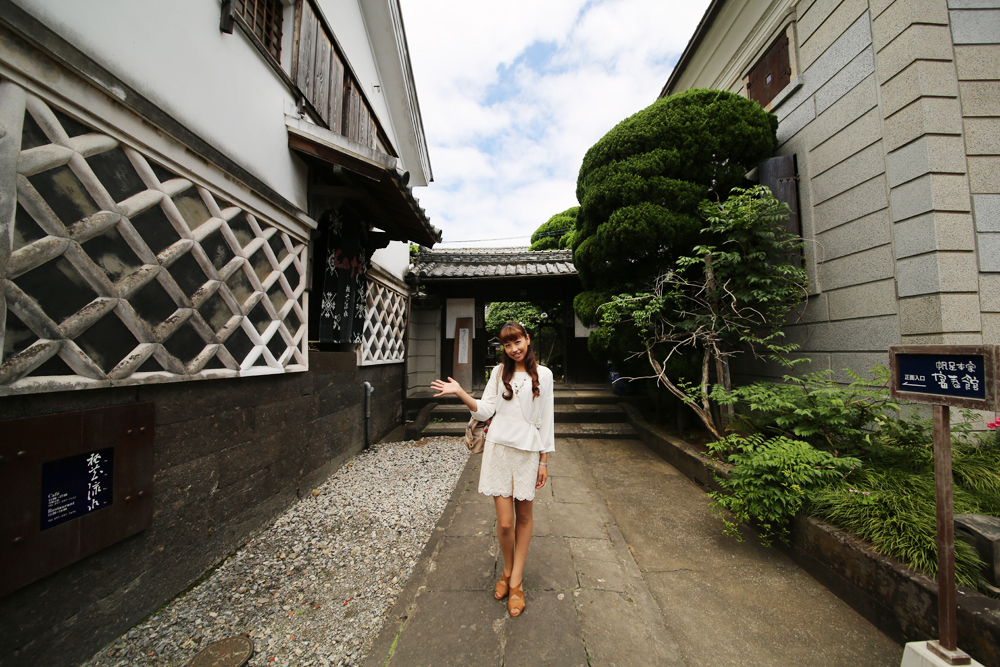
Entrance gate to the site (left) Entrance to the "Momohanaryusui" cafe (right)
The name "Momohanaryusui" was taken from the work of Tanomura Chikuden, a native of Bungo Taketa and a literati painter, representing his "ideal world.
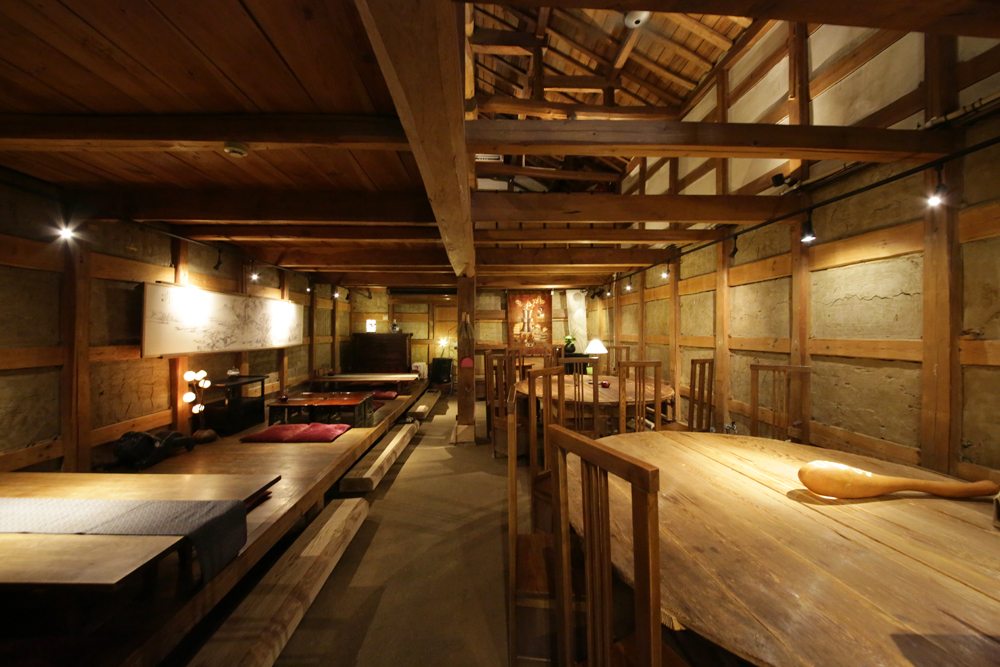
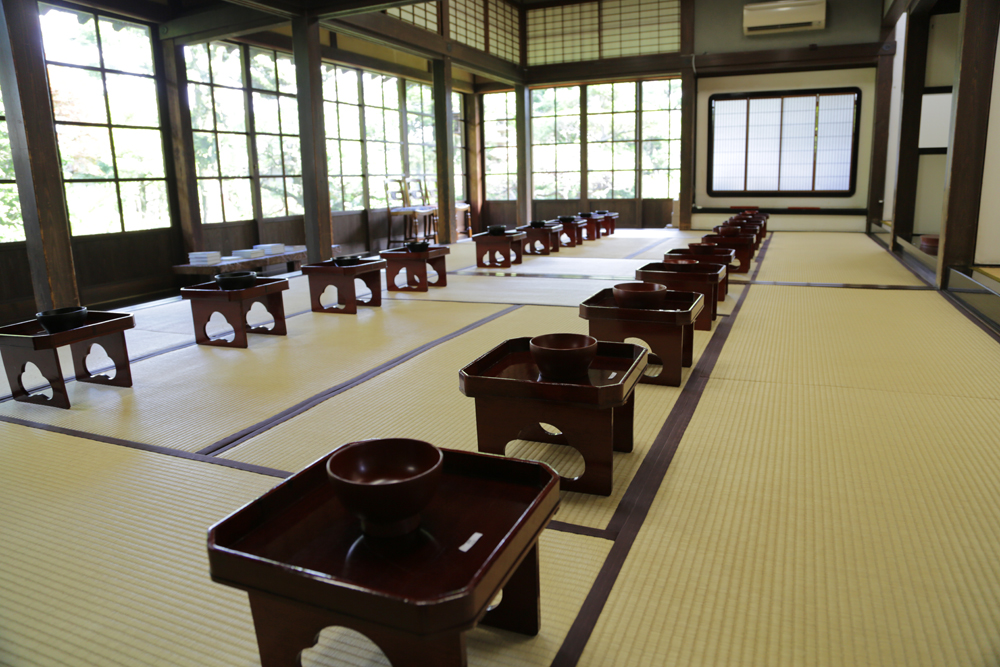
Momoka Ryusui" was renovated from a building used as a "warehouse" in the Meiji era and reborn as a two-story modern café. The interior design and displays are all made from works by writers and artists of the Hozoku family, as well as artifacts handed down from generation to generation. The tables and other furniture are original pieces made from reused sake barrel lids and seiro (earthenware rice bowls).
First floor view]
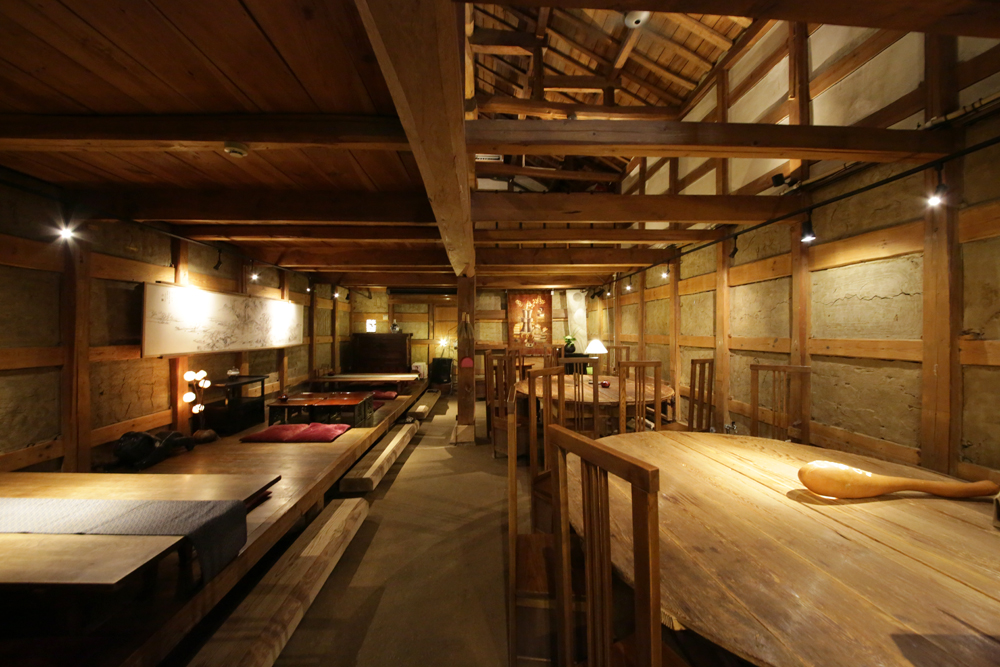
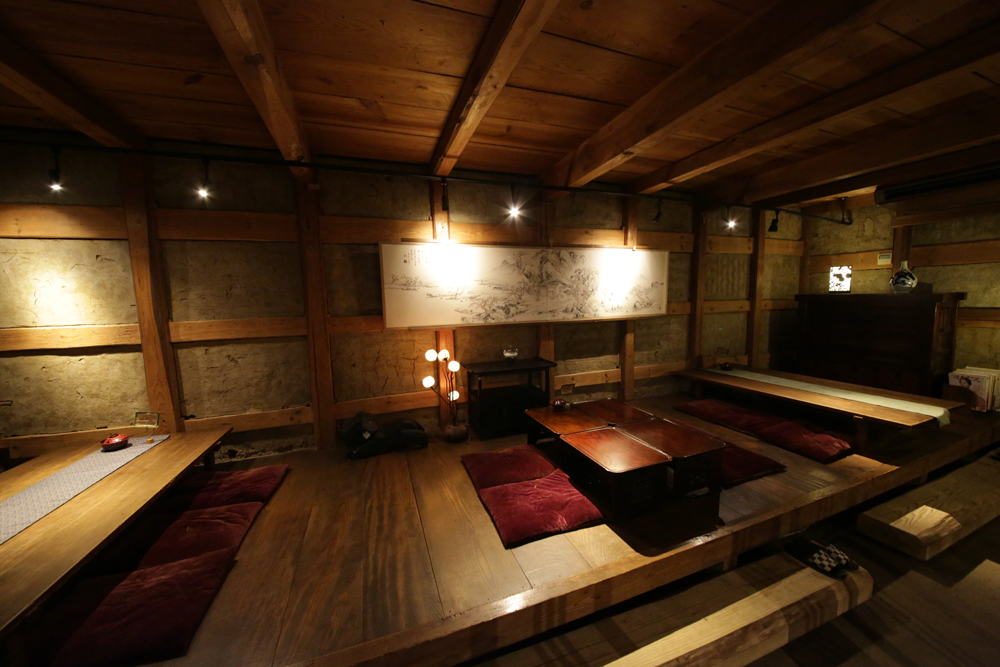
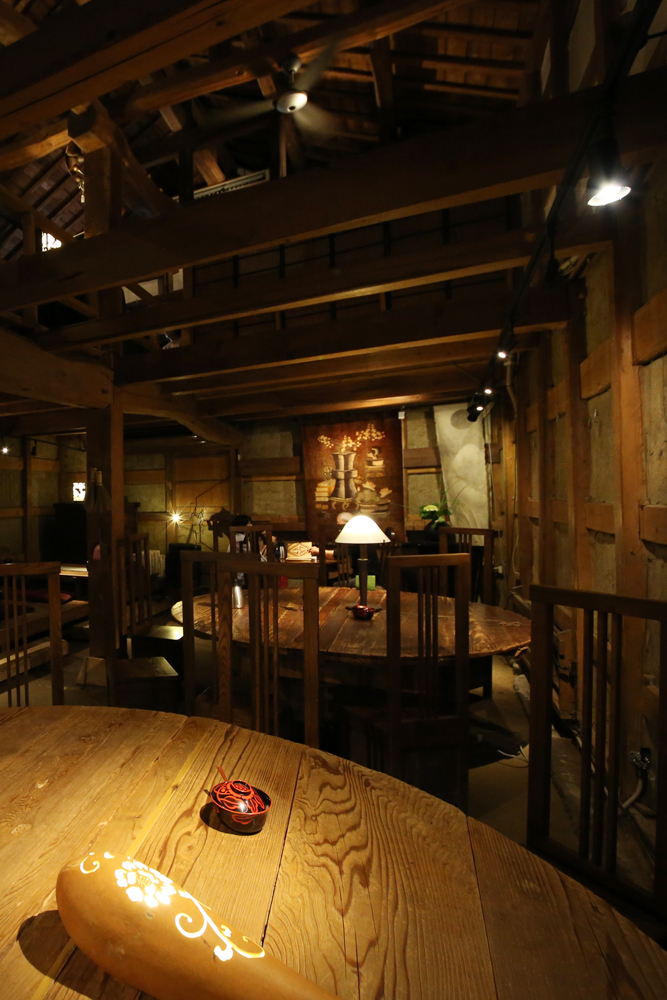
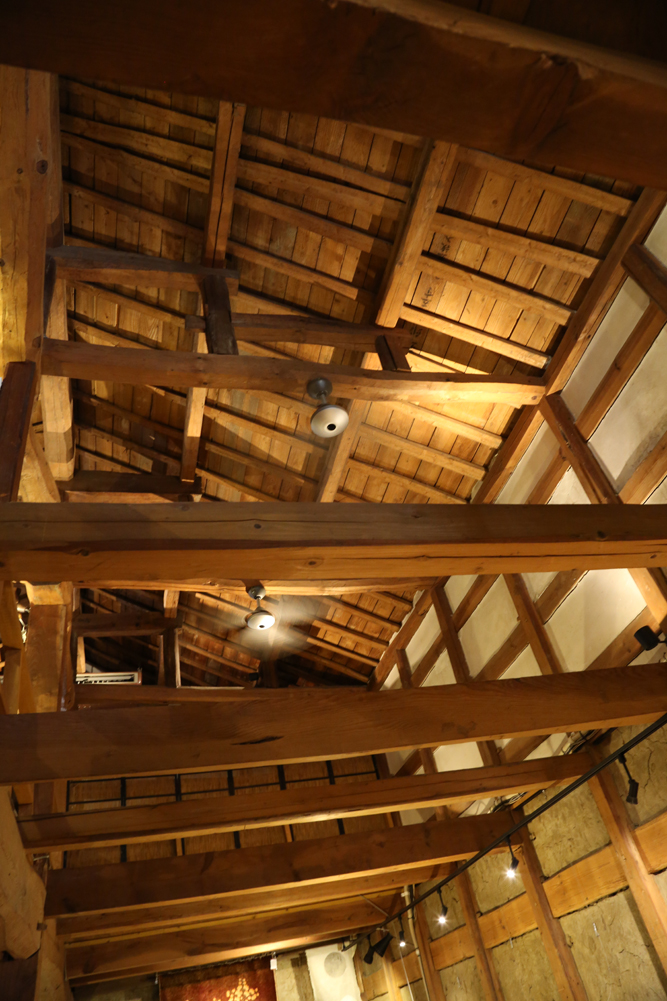
The building's design is based on the texture of the walls and the thick, strong beams of the ceiling, and the building's solid construction, which has not moved an inch in more than 100 years, shows the amazing construction techniques of the time.
Second floor view]
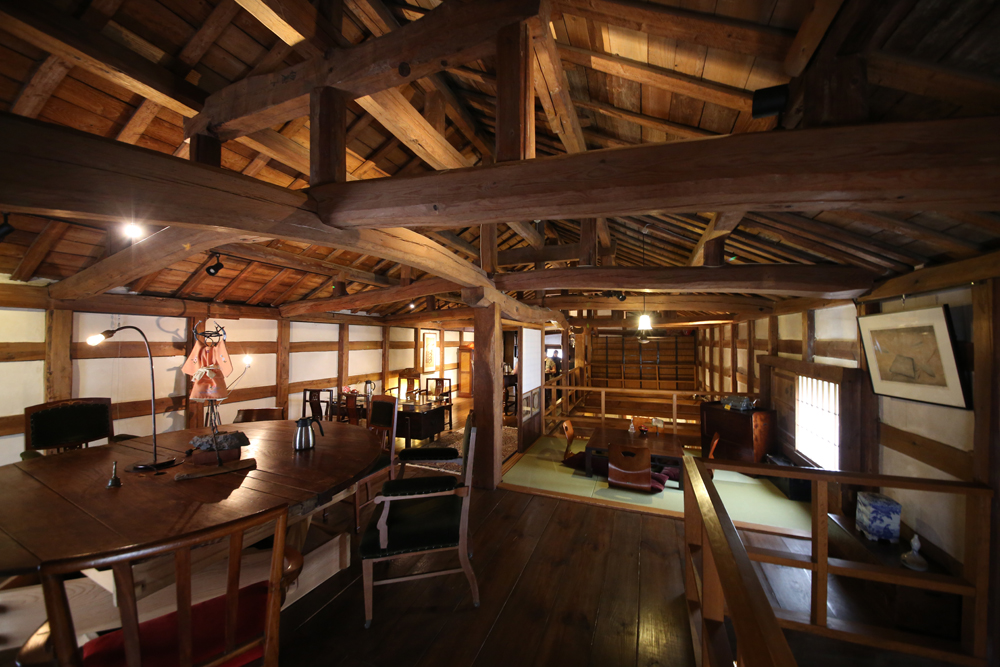
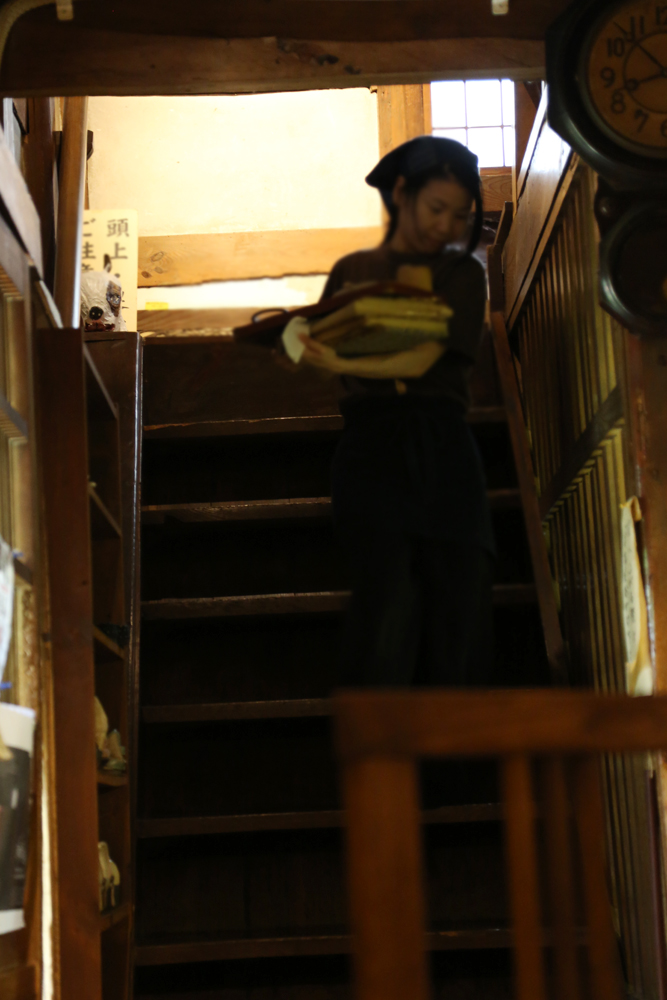
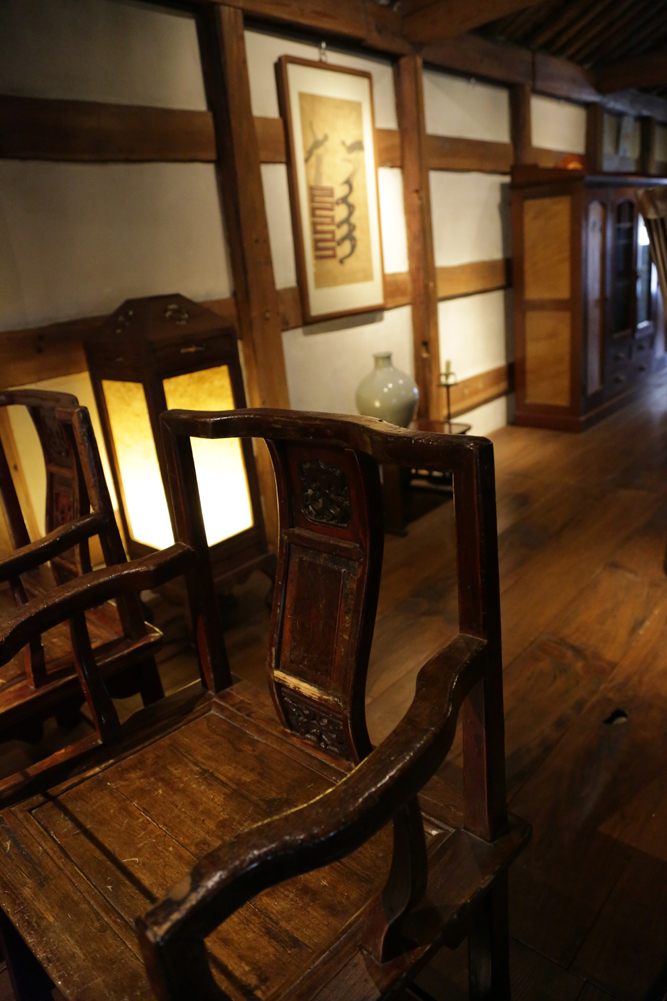
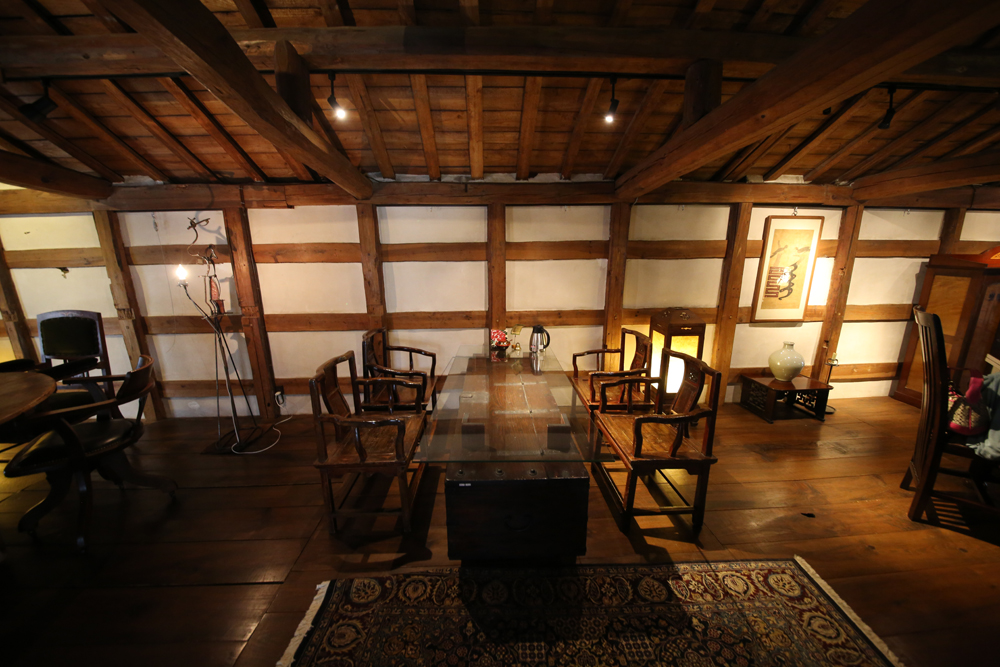

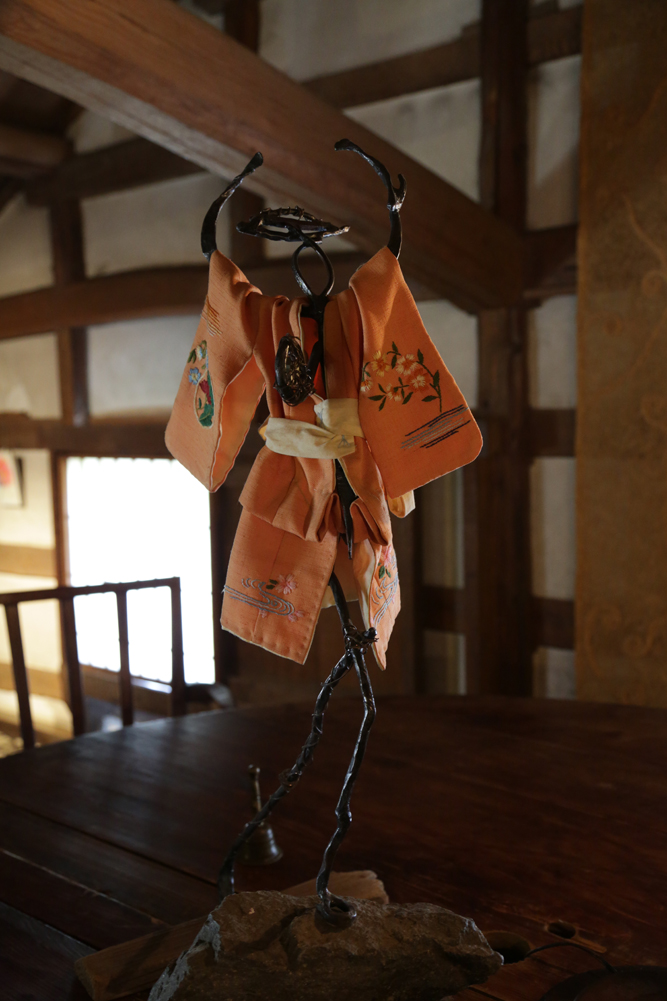
▲Some of the displayed goods and interior decorations are for sale! They are all valuable and of historical value, so if you are interested, please don't delay!
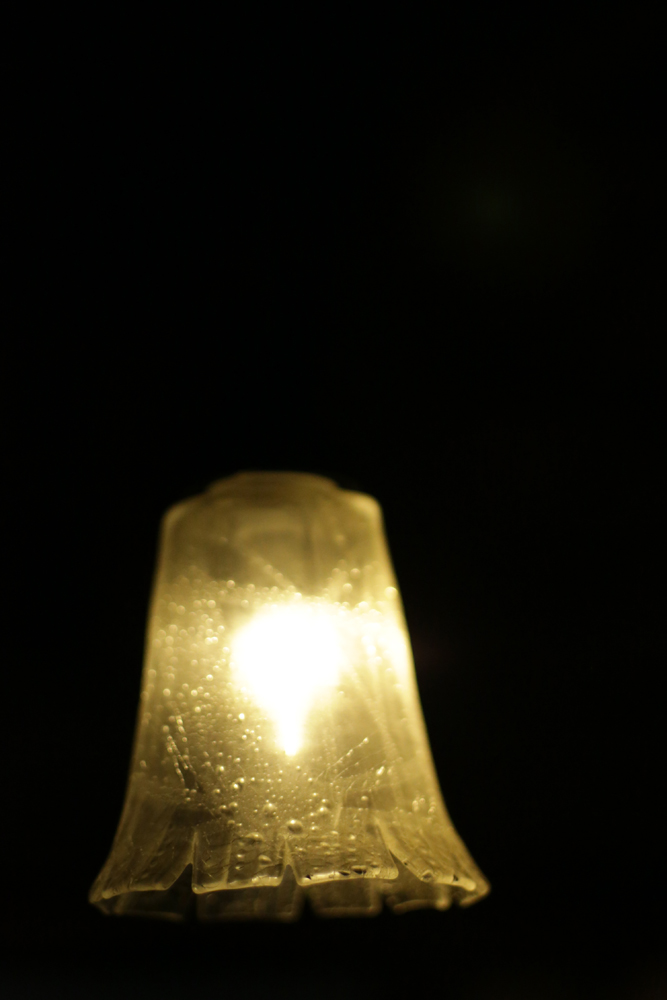
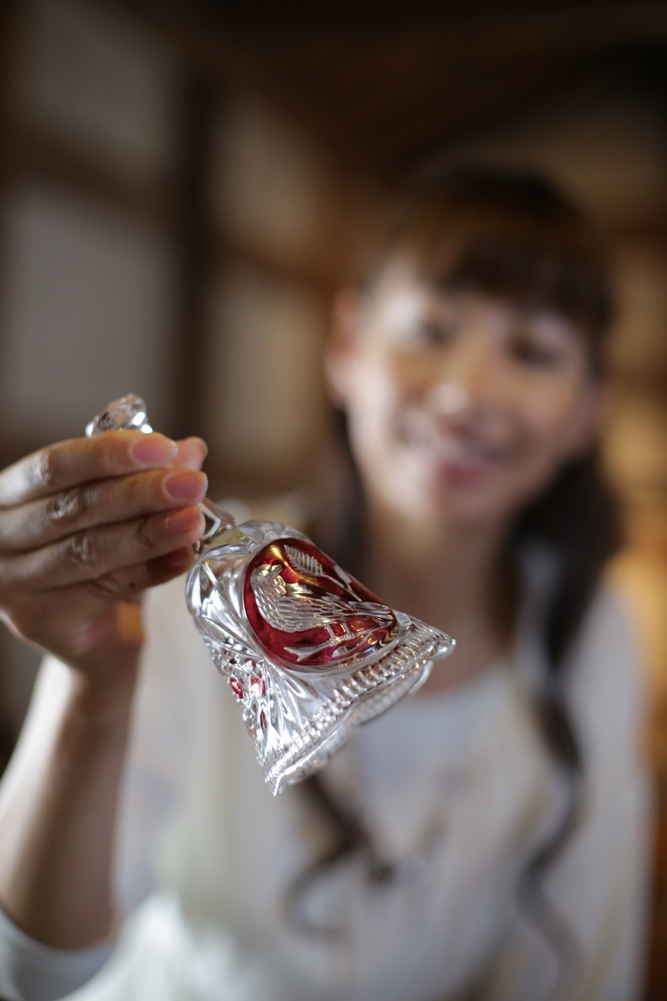
▲Beautiful glass doorbell for orders♪ (Right) The dainty appearance of the doorbell may attract you and make you ring the bell unintentionally at a time unrelated to the order.
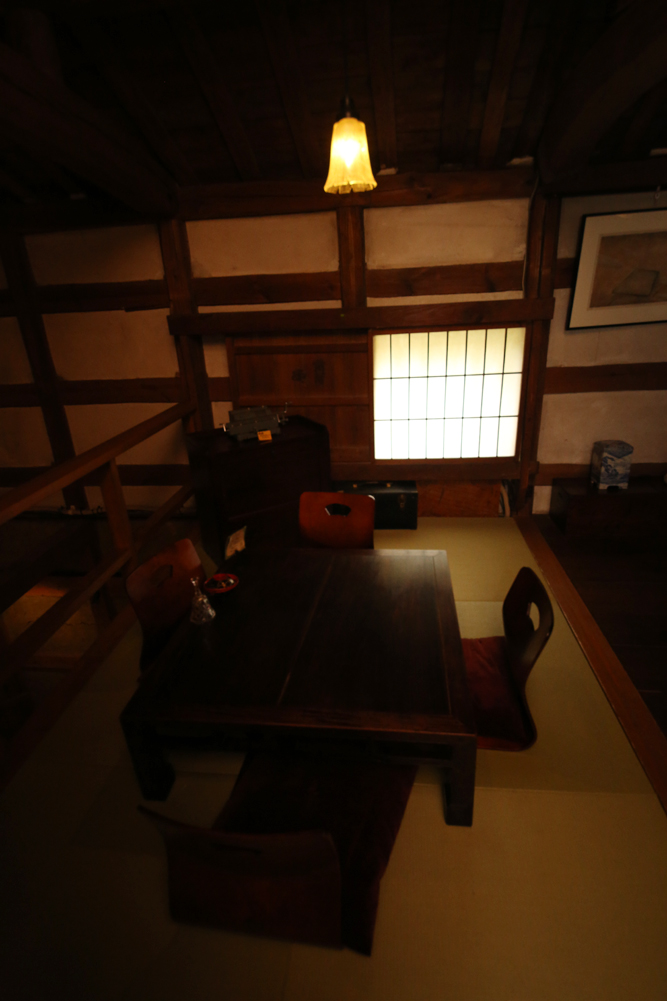
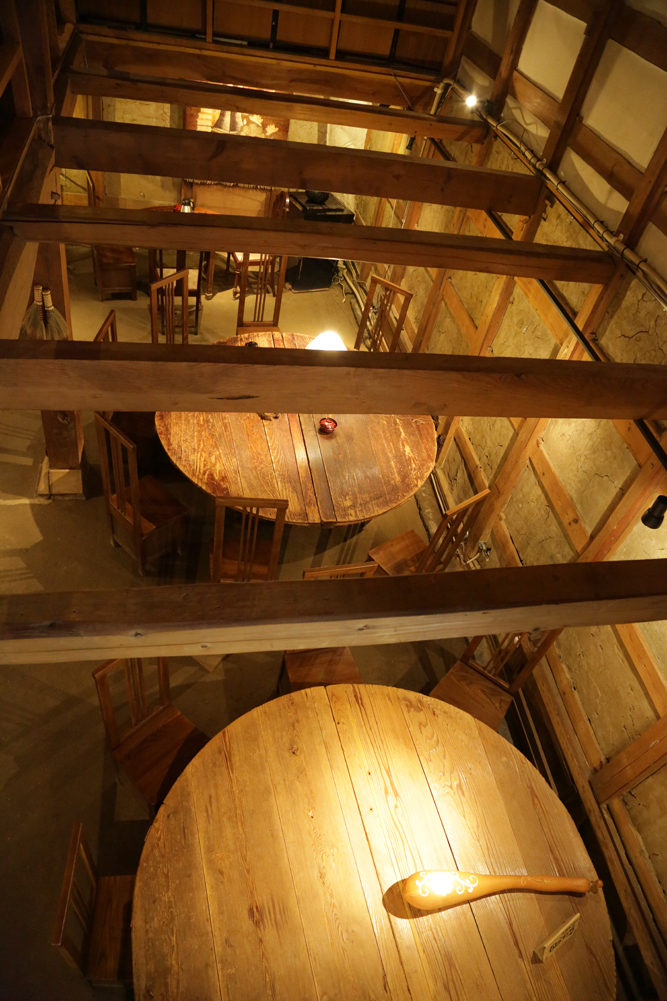
Not only the furniture, sundries, and interior design, but also the presence and rich Japanese culture unique to the effects of aging can be sensed from everywhere in the store, creating a warm atmosphere.
Cafe "Momohana Ryusui" Menu
The menu is composed mainly of burdocks, a specialty of Totsugi, and other vegetables grown locally using completely natural farming methods. We use ingredients that you eat every day, and each step of the cooking process is carefully prepared with the hope that you will experience the ”pleasure of taste” of deliciousness and the ”pleasure of body” of being healthy. We take our time and do not cut corners.
Energizing fermented burdock root bento 1,680 yen (with burdock coffee +210 yen)
(Can also be ordered at the adjacent "Restaurant Momohana Ryusui")
The energizing "fermented burdock root bento" is the cafe's most popular menu item! Due to its popularity, reservations are recommended!
Bento box lunches filled with healthful "fermentation" techniques and local specialty "Totsugi burdock root
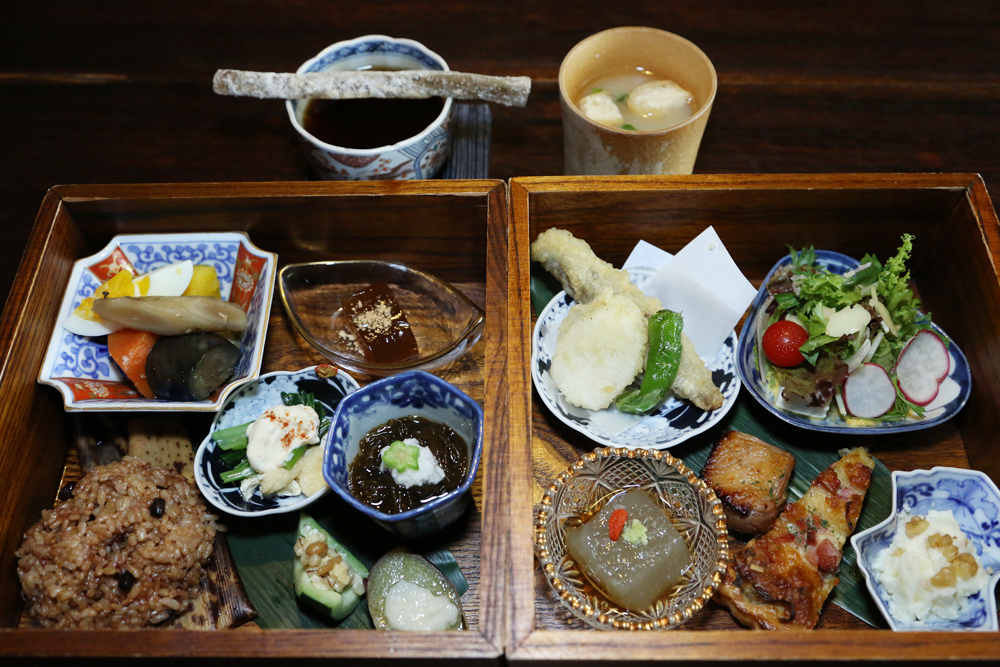
This luxurious and healthy bento lunch box is filled with a colorful assortment of dishes that take advantage of the special characteristics of Totsugi's specialty burdock root, known for its fragrance and high nutritional value, and dishes that make full use of the "fermentation" technique essential in the process of sake brewing.
Fermentation of ingredients makes them more nutritious due to the power of microorganisms, and also adds flavors not found in the original ingredients. Fermented foods, which are reborn as a different food, are said to be healthier for the body, with antioxidant and intestinal regulation effects. They are said to be more healthful to the body when fermented than when eaten in their original ingredients.
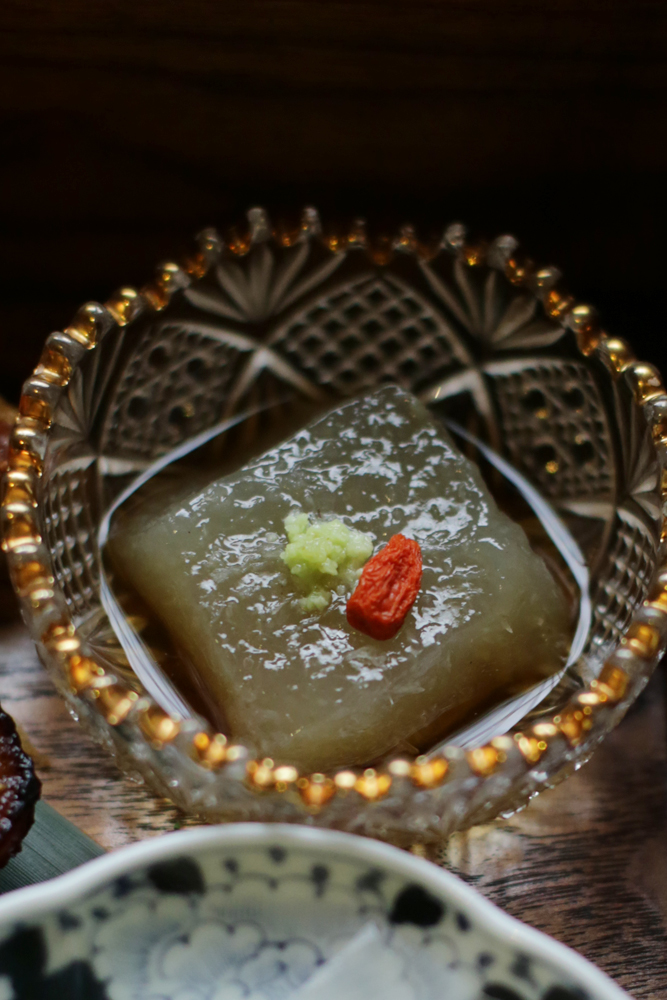
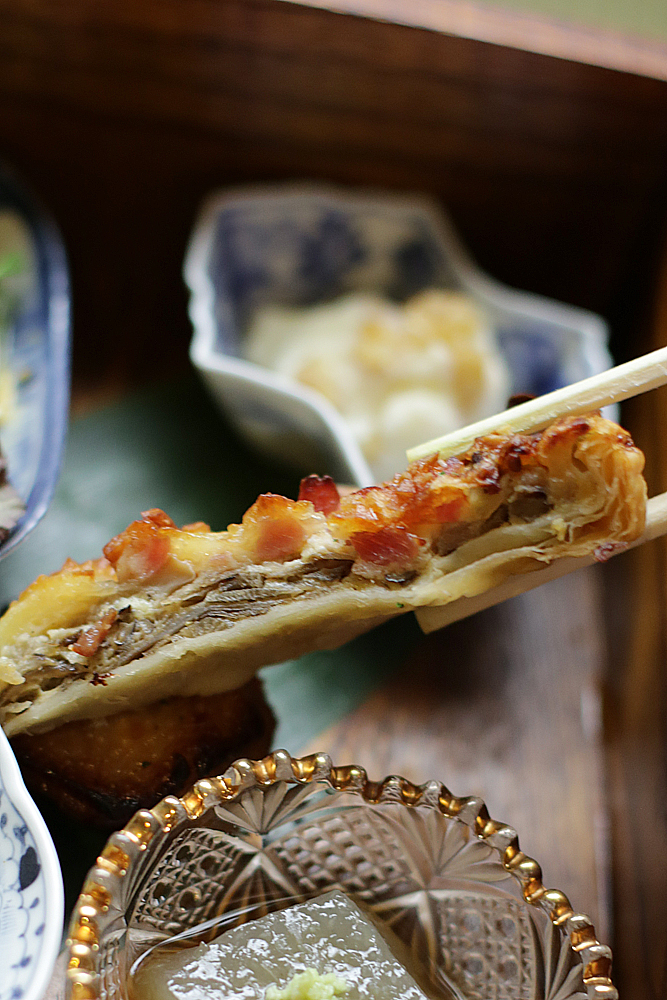
▲Toji burdock root tofu (left) Gobo quiche (right)
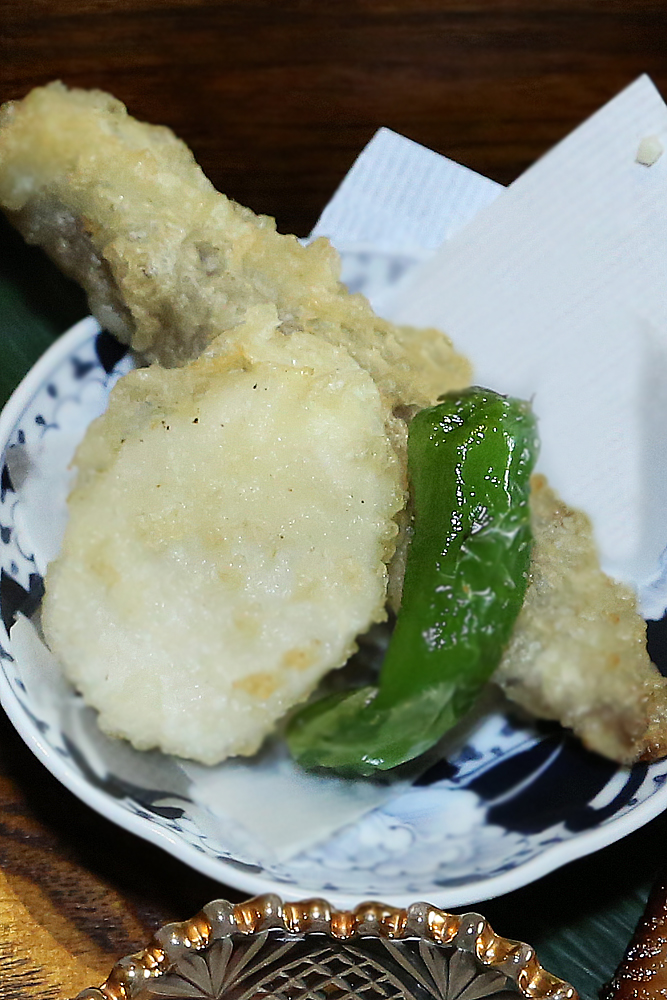
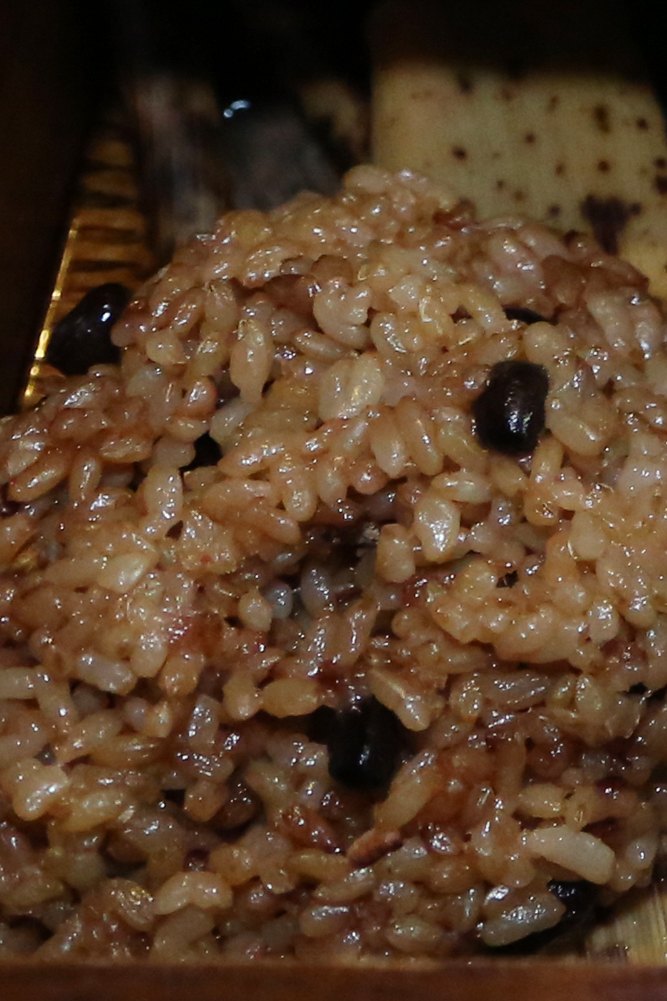
▲Toji burdock root deep-fried in a single layer and seasonal tempura (left) Fermented brown rice (right)
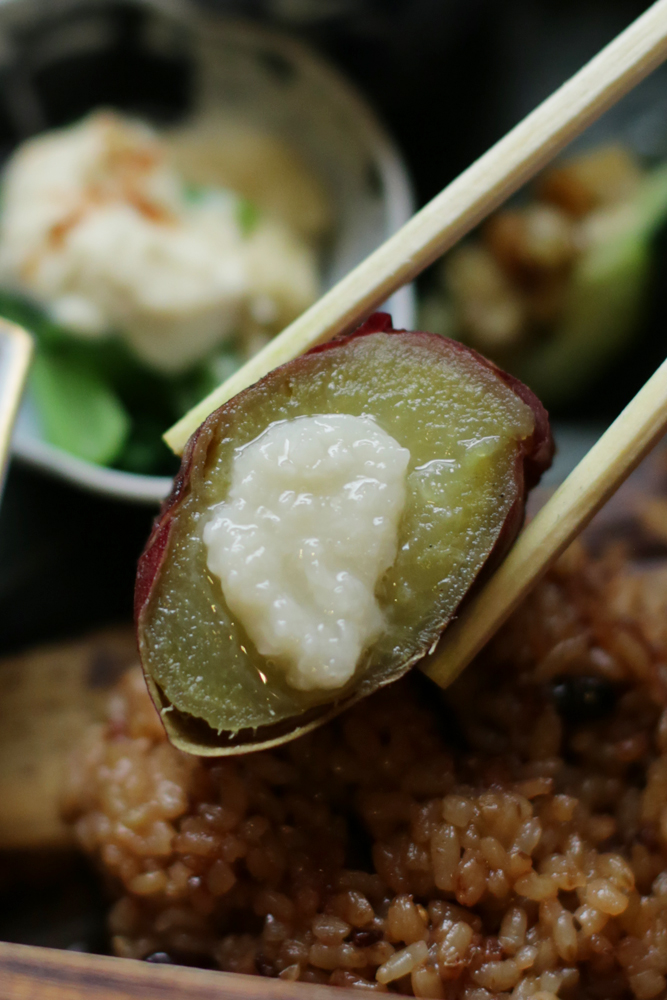
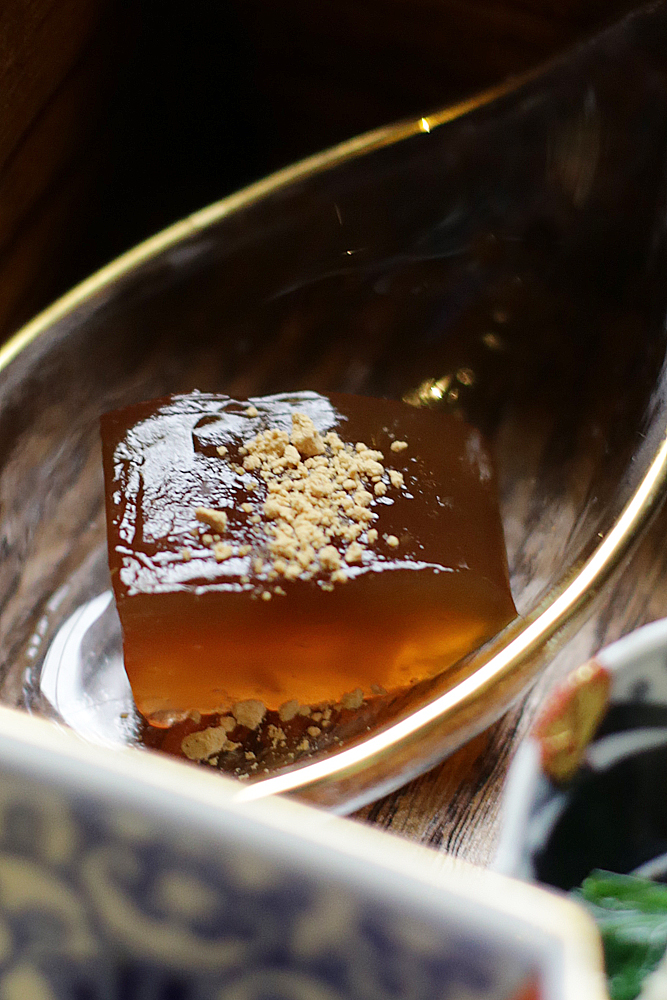
Ano sweet potato with homemade sweet malted rice (left), brick rice cake (right)
Click here for a detailed description☆.
Tofu with burdock root
Tofu made with grated gobo (burdock root) and lotus root powder kneaded with dashi. The aroma of burdock root softly spreads in your mouth.
Free range eggs marinated in salted malted rice for 7 days
High-protein, rich eggs are aged with malted rice for a long time. The flavor is further enhanced.
Tofu paste with seasonal vegetables
Seasonal vegetables dressed with white sauce cooked over a fire with just a hint of soup stock. Homemade sweet malt, made by fermenting glutinous rice and black rice for 30 hours, is added to the dressing, and its gentle sweetness enhances the vegetables.
Organic Vegetables, Tofu and Hemp Seed Salad
Root vegetables cooked in bouillon and fresh seasonal salad. The homemade burdock root dressing makes it even healthier. (The dressing is available at LIFE & DELI. See below)
Organic Potato Mascarpone Salad
Creamy salad with organic potatoes and mascarpone cheese kneaded together. It would go well with bread and other toppings!
Chikuzen stew with sweet malted rice
One of the ingredients is handmade konnyaku from Shibata Tofu Shop, a long-established local tofu store, and sweet malt is added to make it soft and moist. (Konnyaku can be purchased at LIFE & DELI. See below)
Ano sweet potato with homemade sweet malted rice
The sweetness and aroma of the home-made sweet malt intertwine with the high sugar content of Anno sweet potatoes, making this dish feel like a dessert. The sweetness of the sweet malt is said to be the original sweetness of the rice used to make it.
Quiche with burdock root
Homemade quiche with burdock, onions, Emmentaler cheese, cream, shimeji mushrooms, bacon and natural salt. (Available at LIFE & DELI. (Available at LIFE & DELI, see below)
Chicken grilled with sansho (Japanese pepper)
The chicken is slow-roasted to remove excess fat, and the crispy skin has the flavor of the meat locked in.
Seasonal tempura with fried burdock root
A long, well-seasoned single burdock root and assorted seasonal vegetable tempura.
Fermented brown rice
Brown rice and azuki beans cooked and fermented for several days. It is said to tone the intestines and detoxify the body.
Tofu marinated in miso
Tofu aged in miso. It has a mild, cheese-like flavor.
Miso soup with the aroma of malted rice
We use Kumamoto "Himiko" pigeon barley miso made from high quality koji. (Miso can be purchased at LIFE & DELI. See below)
Rengonmochi
Original Japanese confectionery made with a blend of high-quality sweeteners such as wasanbon sugar and kneaded with lotus starch. (Available at Ichirakuan. See below)
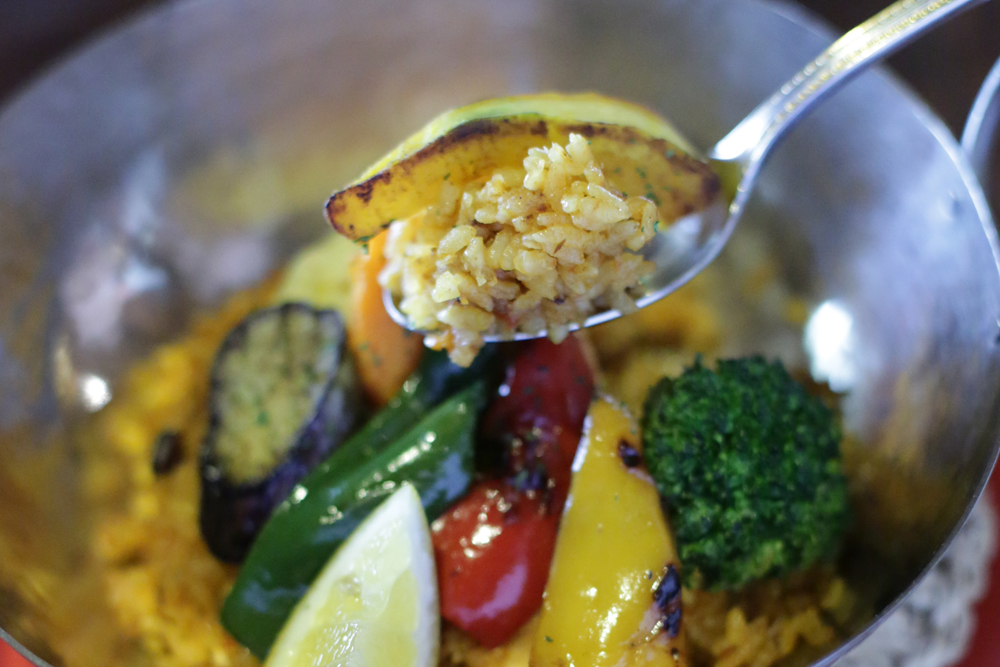
Tomato-based paella "Momohana Ryusui" style: 1,260 yen
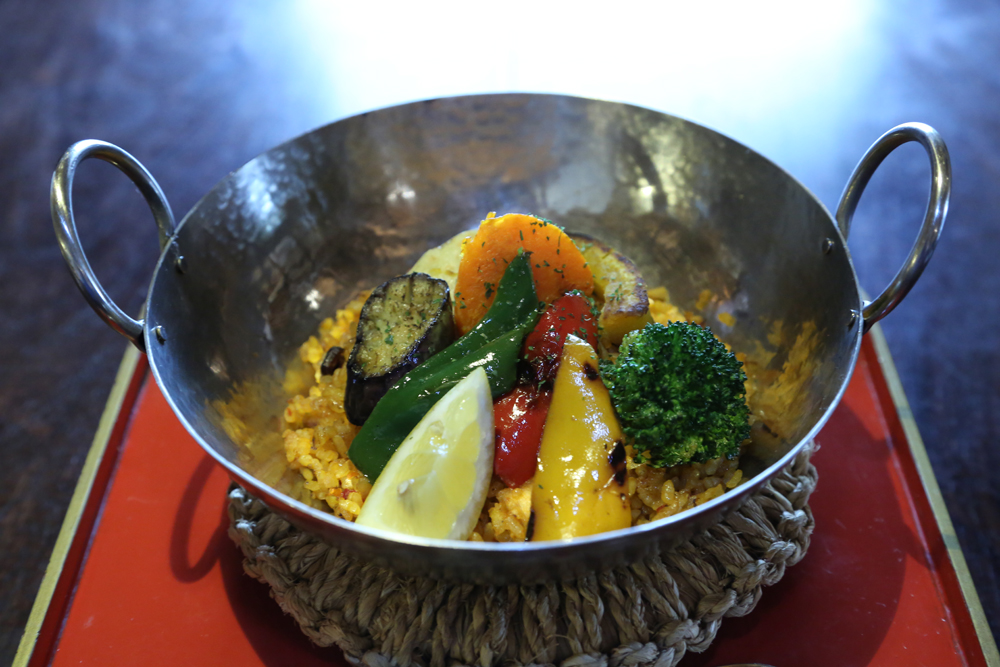
Rice is sauteed and cooked in free-range duck bouillon and original tomato sauce, and all the flavor is packed into the rice. Seasonal vegetables are added as toppings for an even healthier experience.
Burdock coffee 420 yen
(Toji with burdock root sticks)
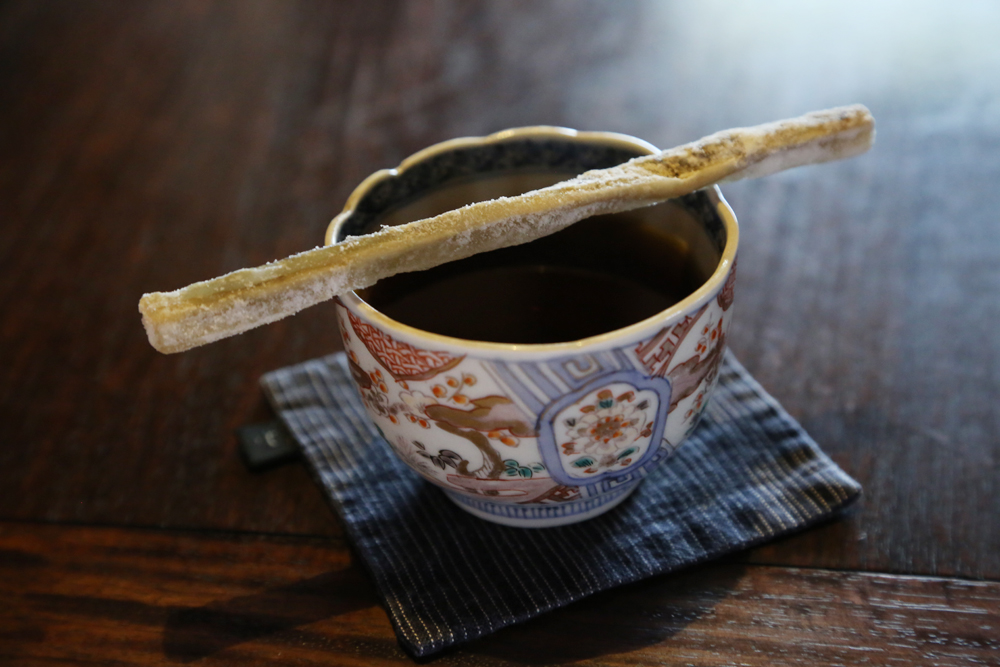
This coffee is made by roasting burdocks, a specialty of Totsugi. The coffee is served with a stick of burdock root also grown in Totsugi and boiled in honey, which is not only served as an accompaniment to the coffee, but is also stirred into the coffee like a muddler. This is a Japanese-style coffee that cannot be tasted anywhere else. By the way, Totsugi burdock sticks are available at LIFE & DELI.
Japanese tea set (with sencha green tea) 578 yen
(Can be changed to matcha green tea for an additional 105 yen)
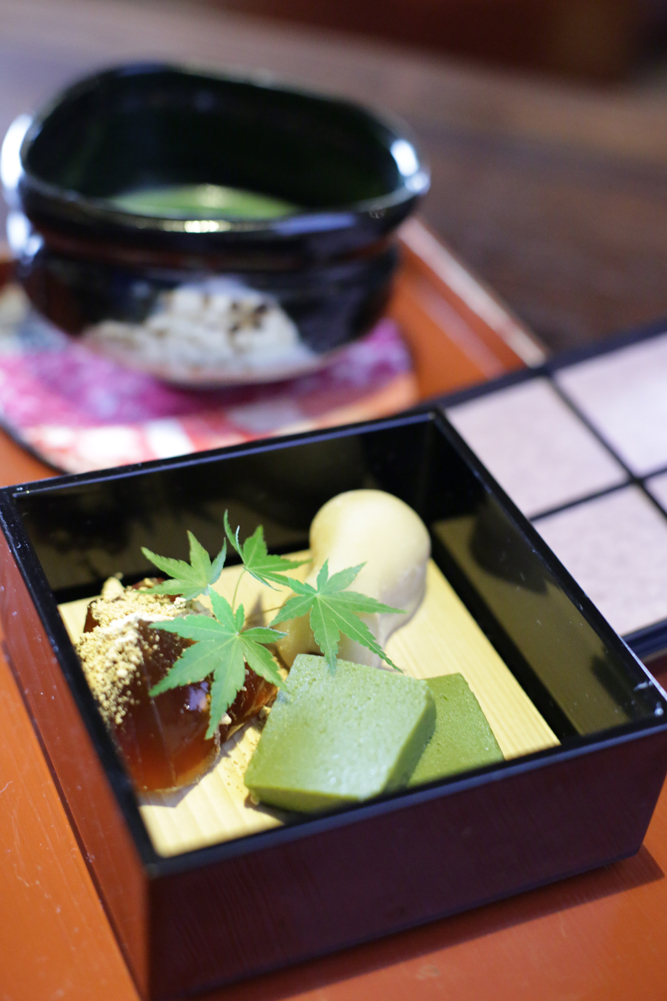
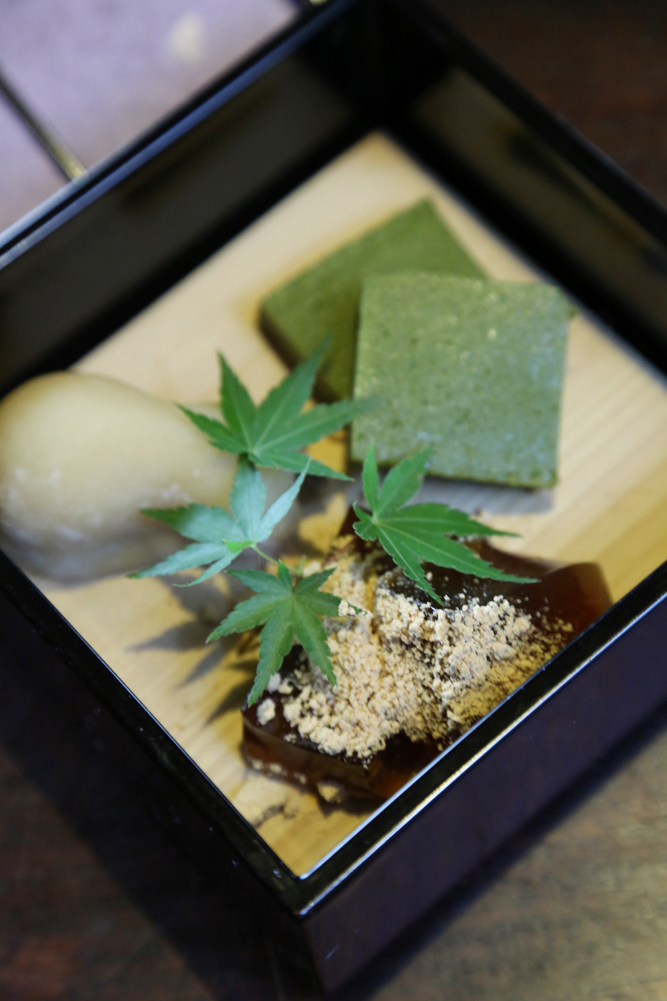
A luxurious set of three types of Japanese sweets specially made in Fushunkan! (Contents change depending on the season.)
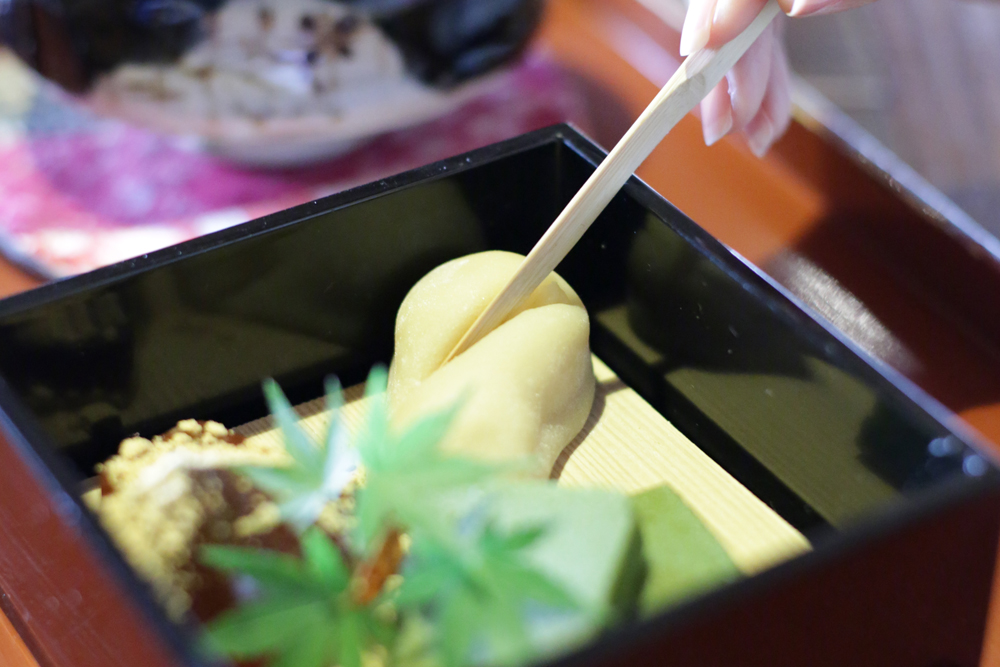
3 kinds of recommended Japanese sweets
White paste
Inside is a paste of koshi-an (sweet bean paste) with miso-flavored brown sugar. The peel of burdock root gives the appearance of a gourd's head. (Available at Ichirakuan confectionery. See below)
Rengonmochi (amber)
This amber-colored rice cake is made by kneading a luxurious blend of wasanbon (a type of glutinous rice flour), shiroshita sugar, and organic sugar with lotus seed starch. The amber-colored mochi is made by kneading a rich blend of wasanbon, shiroshita sugar, and organic sugar into a lotus starch paste. It is recommended to eat it cold. (Available at Ichirakuan, a confectionary shop. See below)
Uiro (Japanese sweet made with powdered green tea)
High quality matcha green tea from Ogurayama, Kyoto is used. The bitter taste of the matcha is well utilized and has a slight sweetness. (Available at Ichirakuan confectionery. See below)
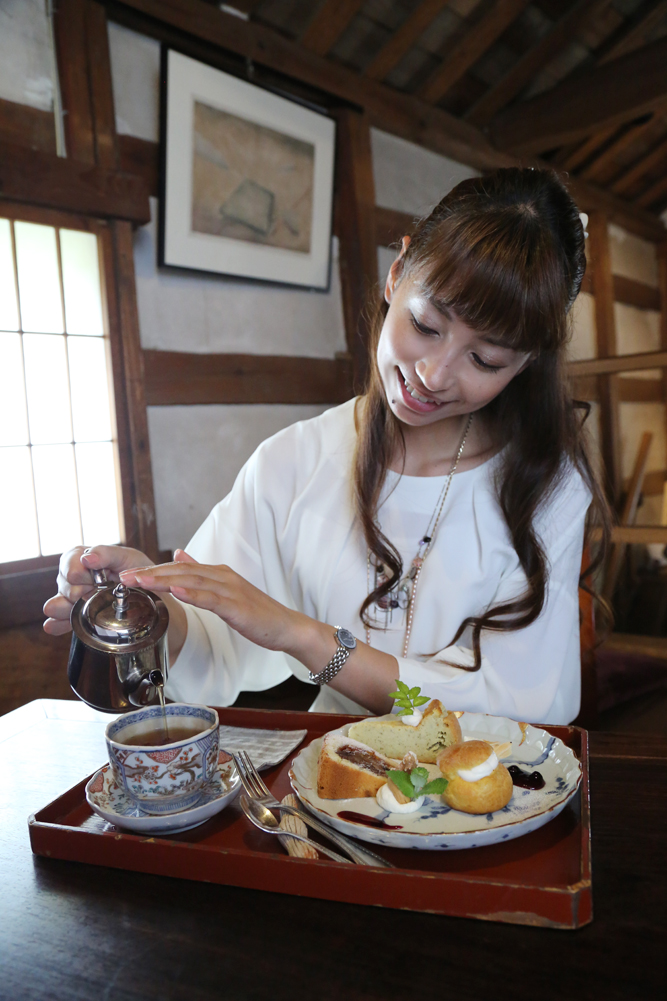
Sweet tea set 945 yen (with drink)
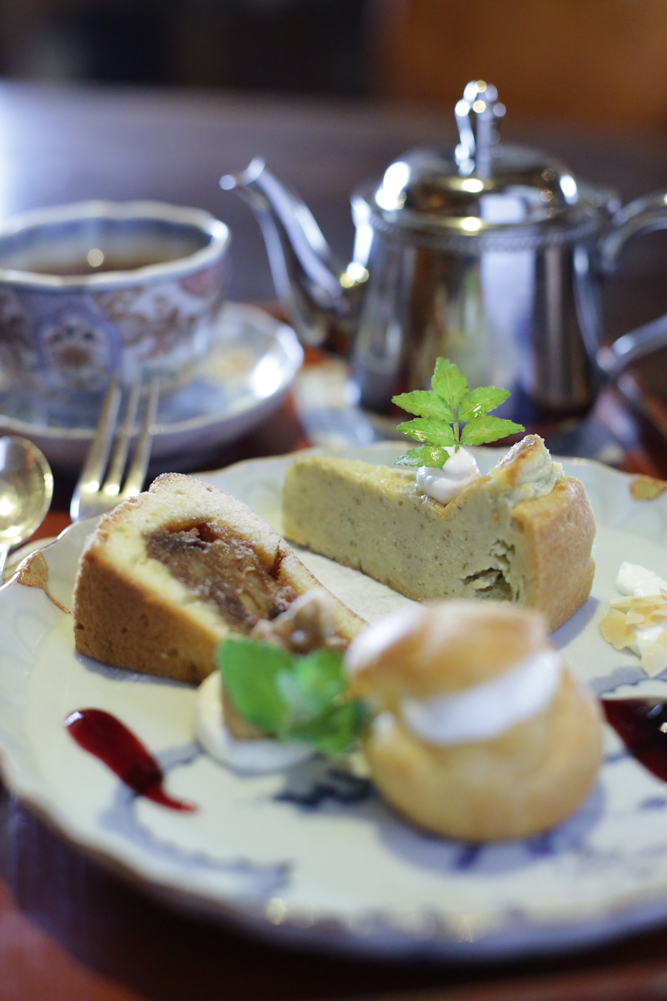
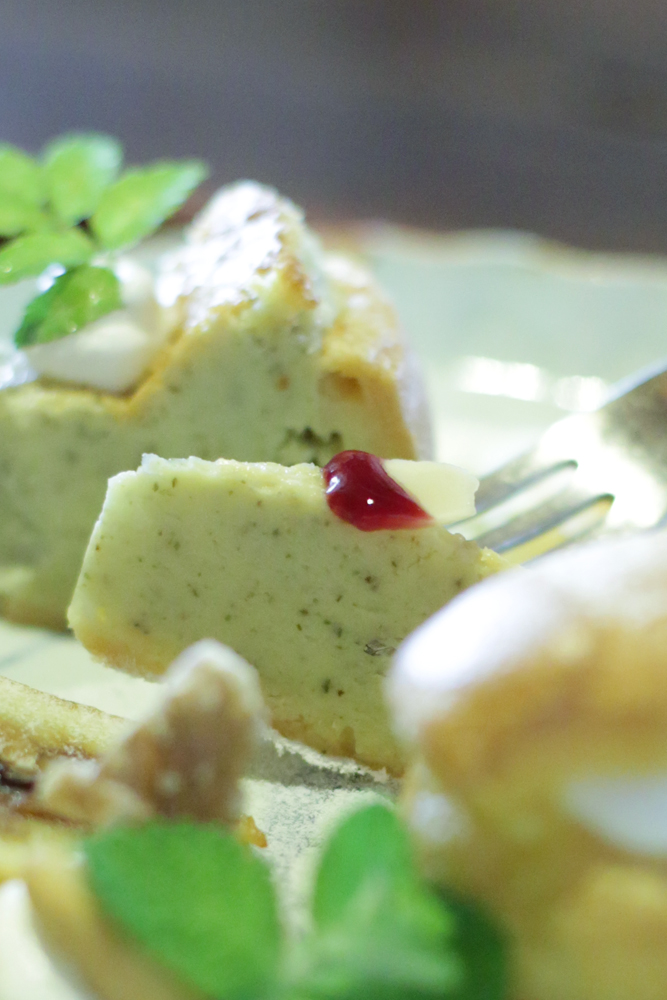
A sweet plate featuring a combination of walnut and cashew caramel cake, cheesecake, and more petit puffs, allowing you to enjoy a variety of flavors. (Ingredients change depending on the season.)
Recommended 3 kinds
Caramelized Walnut and Cashew Cake
Made with organic sugar, free-range hen-fed eggs, and pesticide-free flour. The rum-raisin aroma and rich caramel have quite an impact. (Available at LIFE & DELI. See below)
Cheesecake with tree buds (seasonal)
This time, the tree bud is "Leafy Prickly Ash". The fresh leafy pepper aroma slips through the rich cheesecake flavor. (Available at LIFE & DELI. (Available at LIFE & DELI, see below)
Petit Choux
Authentic cream puffs made entirely by hand from the choux, using carefully selected ingredients such as eggs and flour. The cream puffs are not too sweet and have an impressive light cream without being sticky.
Each sweet is different and unique in its own "Peach Blossom Runoff Style," so please enjoy each bite slowly.
In addition, the adjacent "Restaurant Momoka Ryusui" offers a Japanese course meal (limited to a certain number of people, reservation required) centering on seasonal vegetables and locally harvested burdock root. In this retro historical building, which was converted from a warehouse to a Western-style building in the Taisho era (1912-1926), a Japanese course meal is served, decorated mainly with vintage vessels handed down in the Hozoku Honke family.
It is recommended to enjoy the cuisine in a space that evokes a long history.
Restaurant "Momohana Ryusui" (reservation required, limited number of people)
Phone: 097-597-7676 (restaurant direct line)
Hours of operation: 11:30-15:00
Closed/Monday (or the following day if Monday is a national holiday)
LIFE&DELI Fushunkan
In addition to Fushunkan's original food products, the store also offers artisan products selected from all over Japan, as well as jams, cheeses, miso, and other products made by local producers and manufacturers who are particular about their production methods.
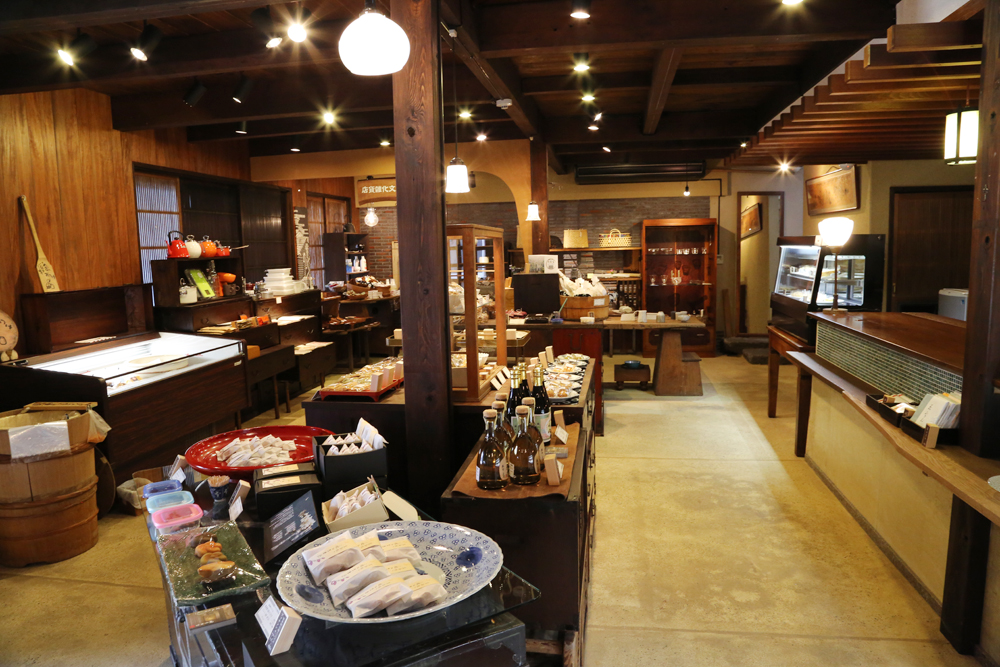
The store (across the street from Fushunkan), which was renovated from a former tenement building, just opened at the end of April 2013. In addition to handmade dressings, pastas, sauces, breads, and cakes made from local farmers' vegetables, including burdock root, a specialty of Totsu, which are served at the café and restaurant inside the building, the store also offers jams and cheese made by producers and manufacturers mainly from the Upper Ono River Basin, who are particular about their ingredients and production methods, with the hope of "letting people know the beauty of natural products and traditional handicrafts. The concept of the store is "healthy" and "seasonal," and the products include jams and cheeses made by producers and makers in the Upper Ono River Basin who are particular about their ingredients and production methods, as well as miso made using traditional methods. In addition, there is an abundance of artworks and sundries selected from all over Japan, such as carefully handcrafted shuro brooms and horsehair toothbrushes.
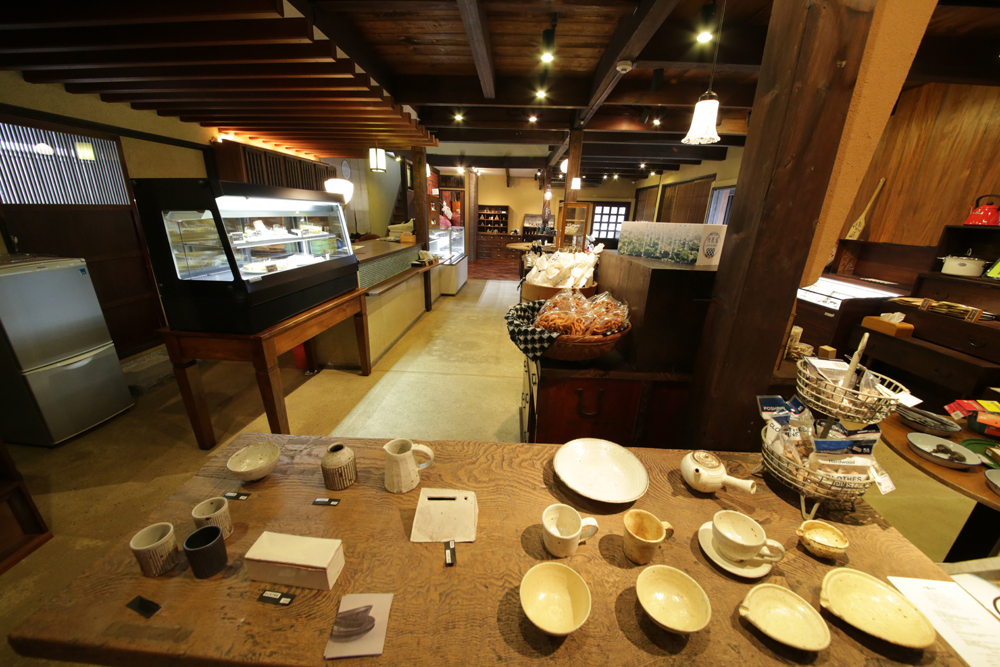
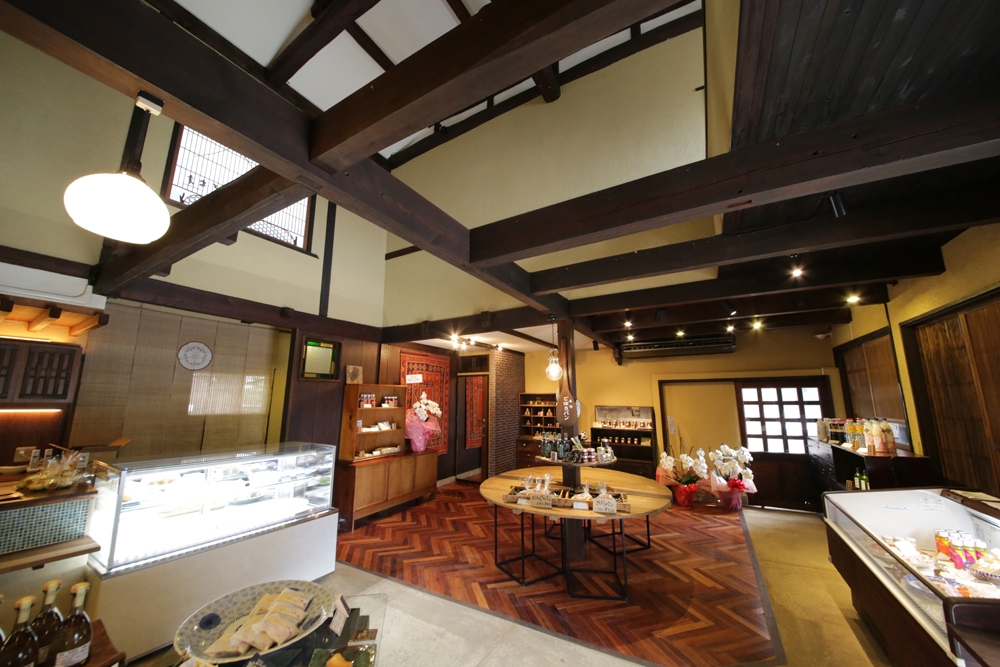
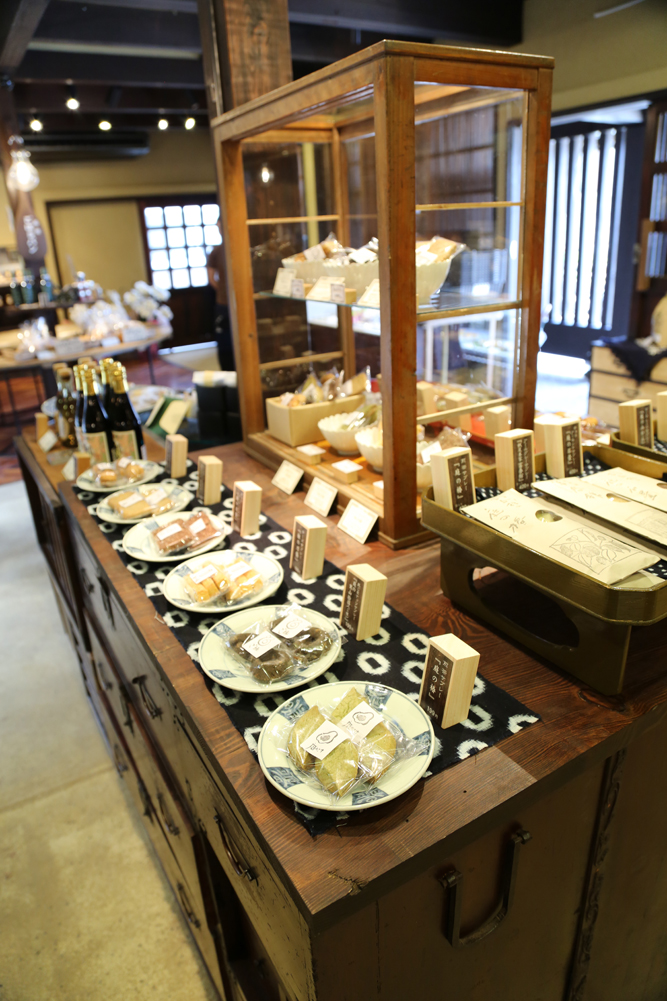
The display includes sake barrel lids from the sake brewery era, a molobuta used for storing malted rice, and vessels, chests, and nagahachi used in daily life, creating an appealing space that combines the atmosphere of the good old days with contemporary design.
Recommended pickups☆.
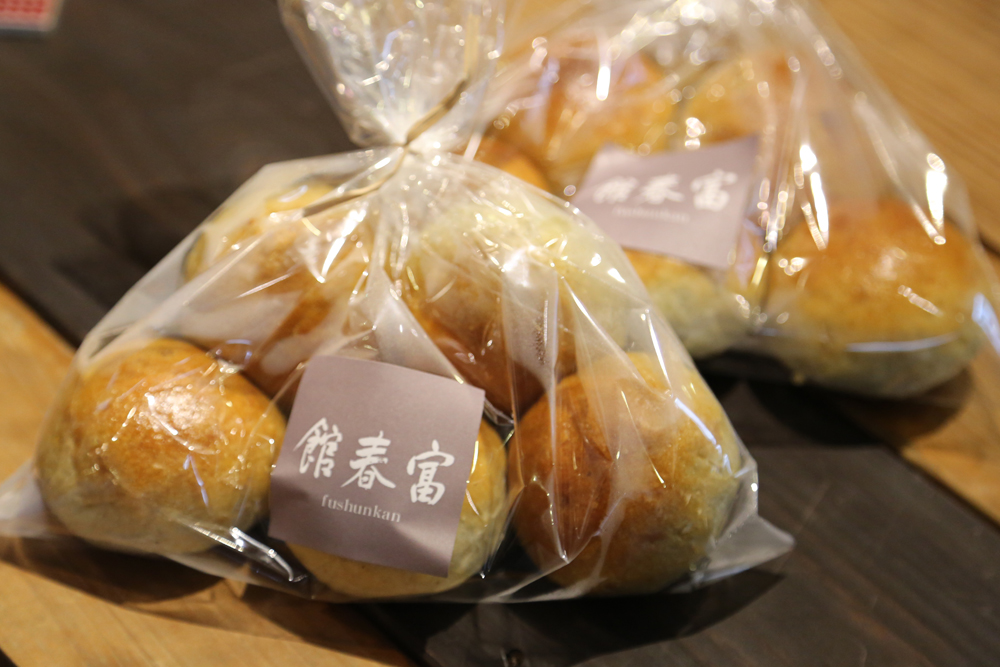
Totsugi burdock root buns, 5 pieces, 525 yen
The bread is handmade daily using plenty of brown rice yeast and rice flour, with burdock root grown in Totsugi as the base. The chewy and moist texture is so distinctive that it is almost addictive.
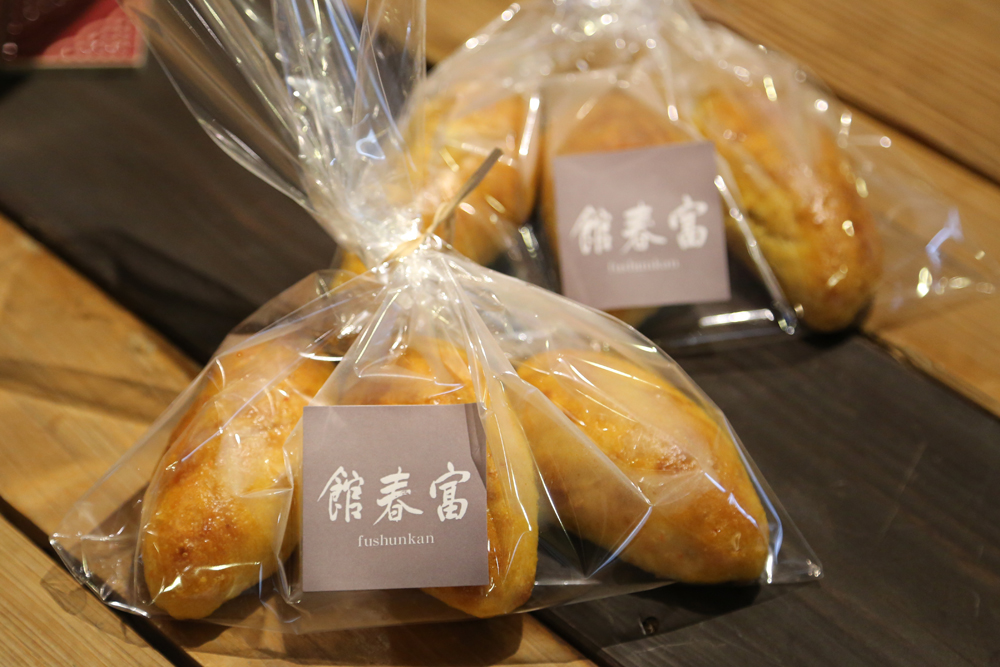
▲Organic carrot walnut bread, 3 pieces, 315 yen
Healthy bread rich in minerals and carotene, made with germ-free pesticide-free flour from Bungo-Ono Ujamaa Farm.
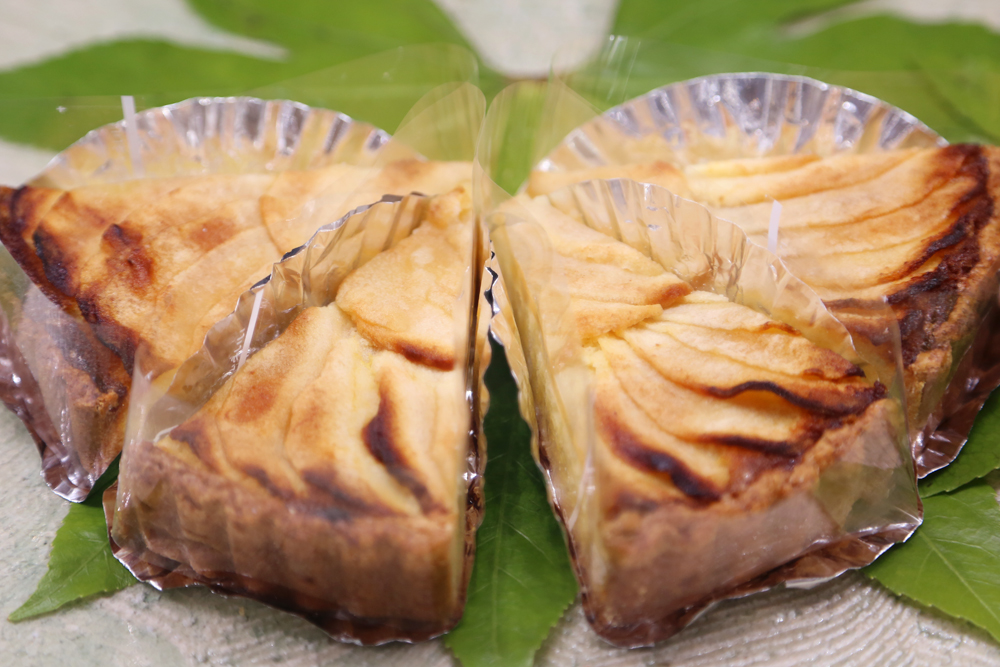
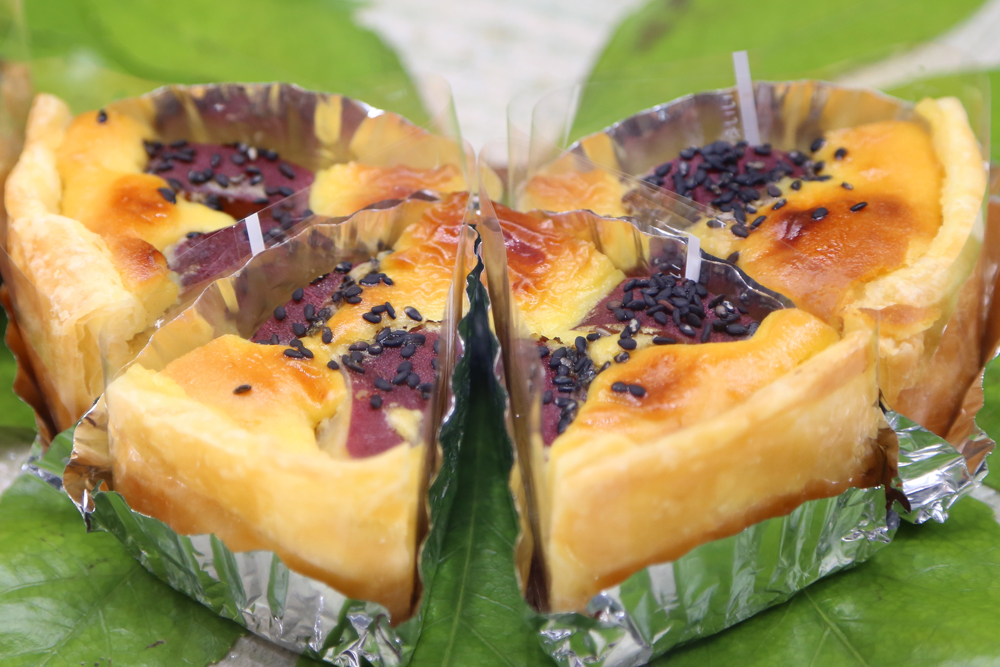
Apple tart: 315 yen (left) / Sweet potato and apple pie: 315 yen (right)
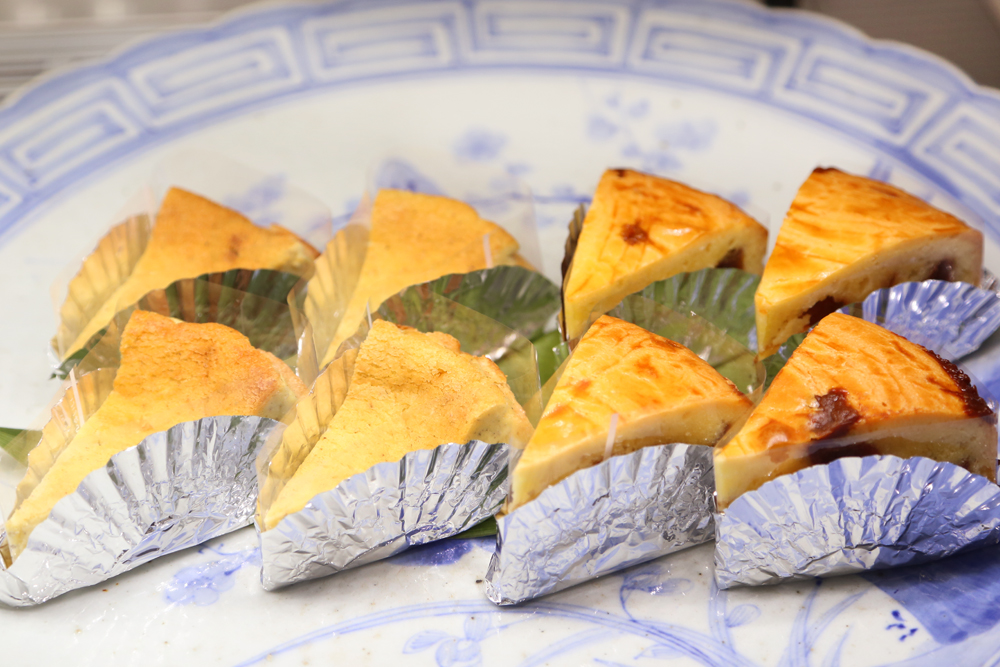
▲Cheese cake with tree buds: 315 yen (left half of image) / Caramel nut cake: 315 yen (right half of image)
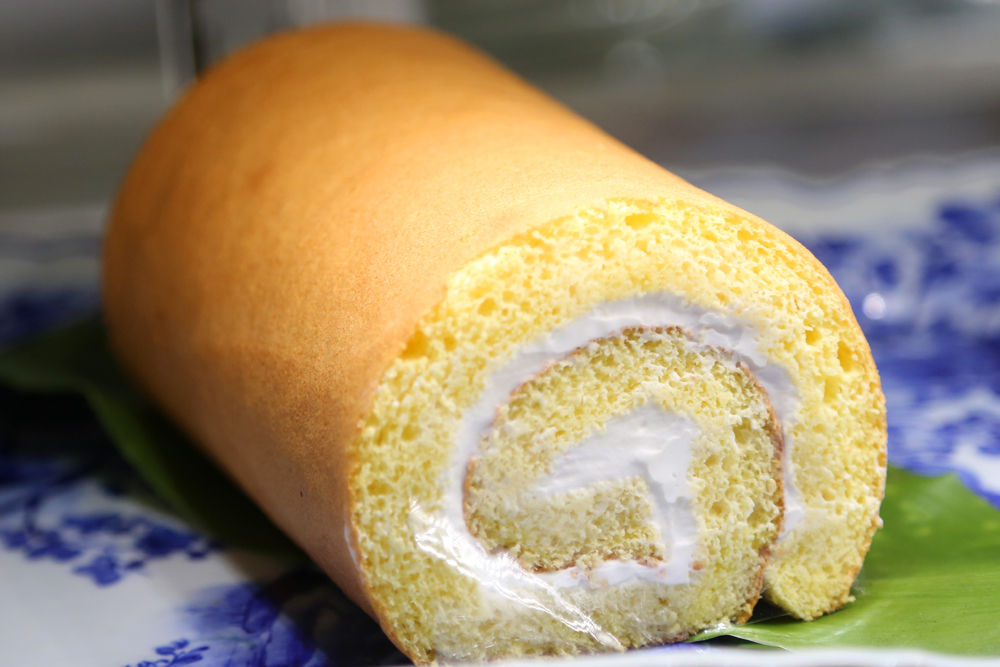
Roll cake: 1,365 yen per roll
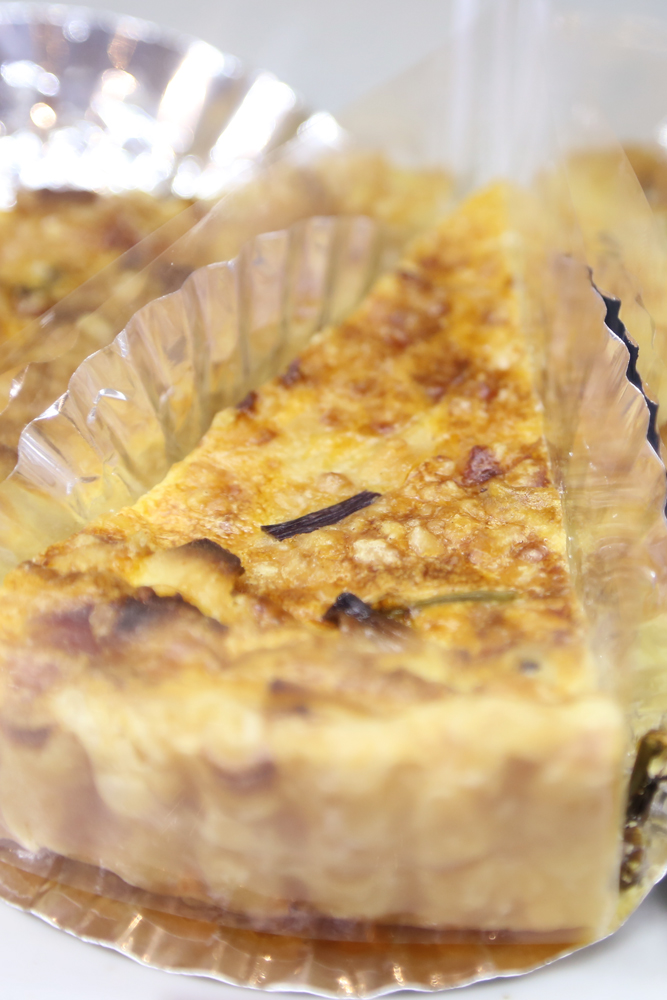
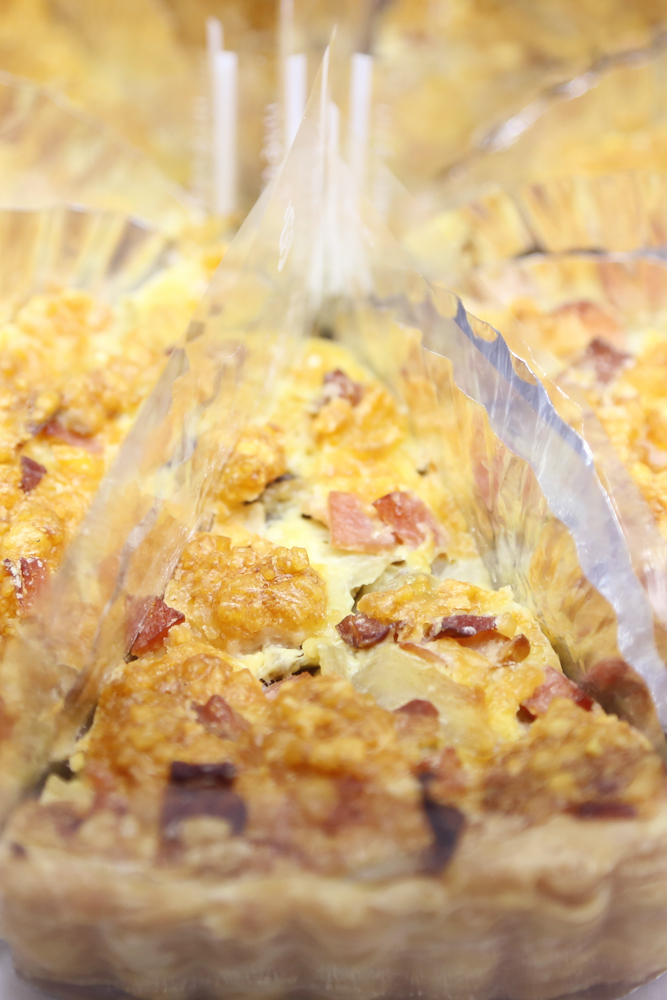
Bamboo shoot quiche (with bracken): 367 yen(Left) Burdock quiche, 367 yen (Right)
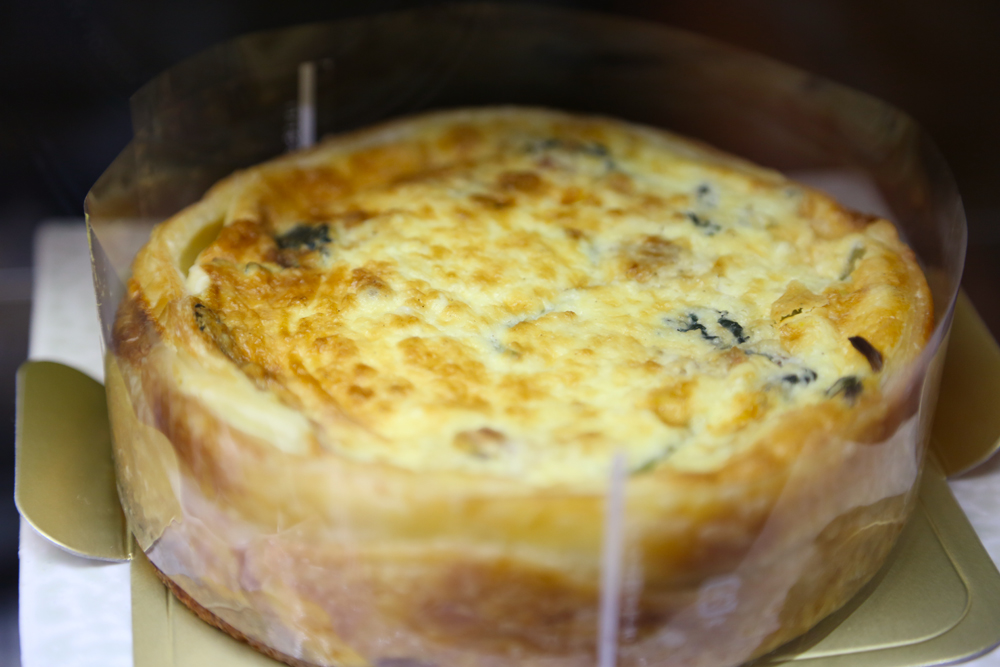
Bacon & Spinach Quiche - 1 whole 1,575 yen 1 cut - 315 yen
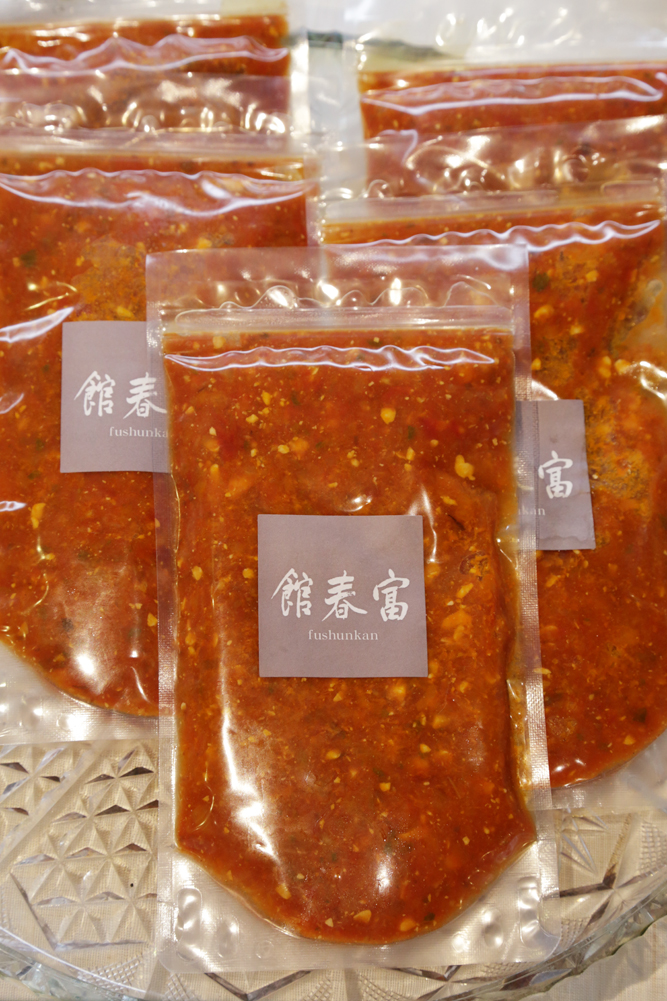
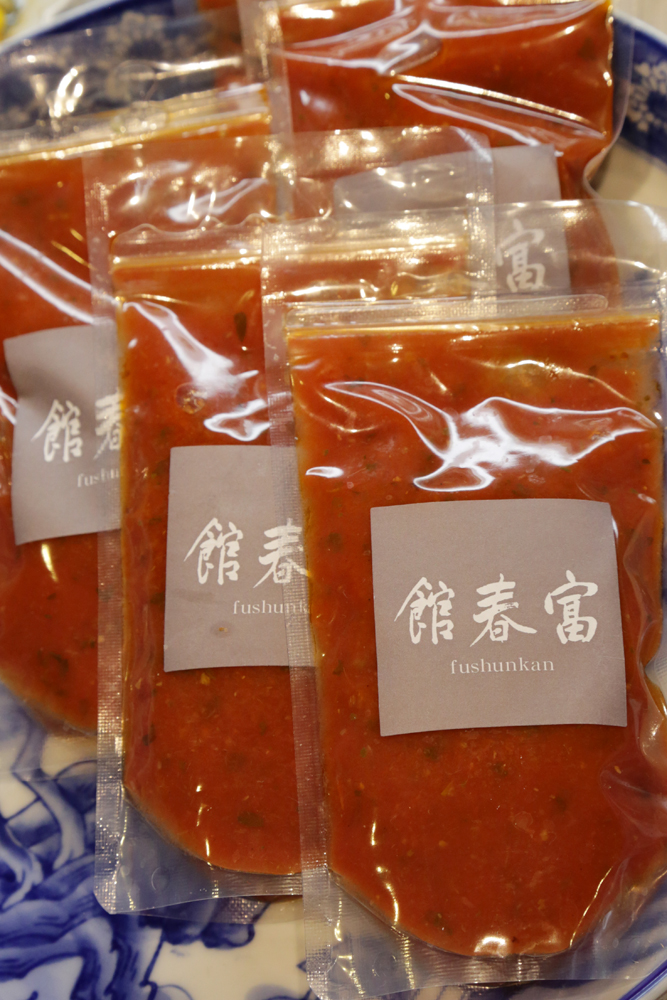
Original special tomato sauce 840 yen (right) / Original special pizza sauce 420 yen (left)
Left: Sauce with cashew nuts simmered for more than half a day. It matches with various dishes such as pasta, meat, fish, sautéed vegetables, etc.
RIGHT: Gently flavored sauce used on the cafe's pizzas. It is also recommended for pizza toast.
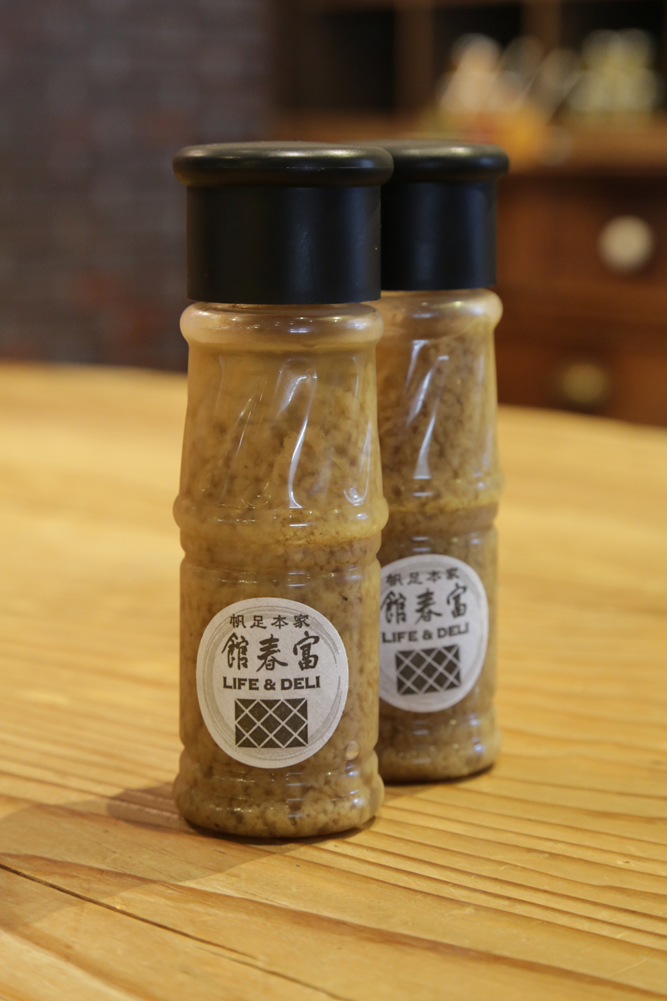
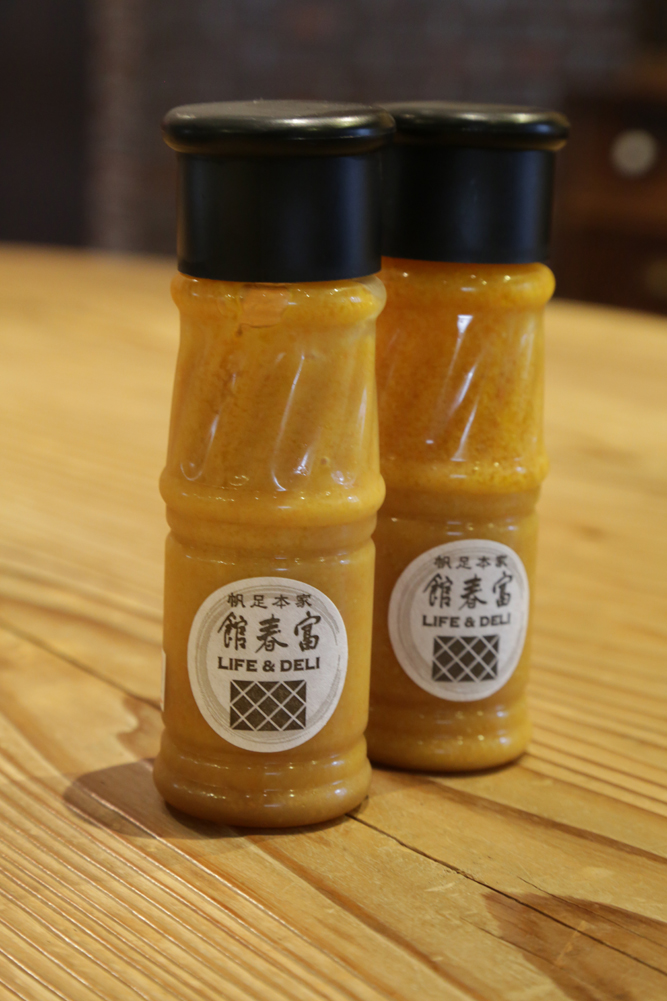
Specialty Totsugi Burdock Dressing 420 yen (left) / Totsugi Carrot Dressing 420 yen (right)
Left: Cafe "Momohana Ryusui's" original fiber-rich dressing. It is used on salads at the cafe.
Right: Cafe "Momohana Ryusui's" original carotene-rich, healthful dressing.
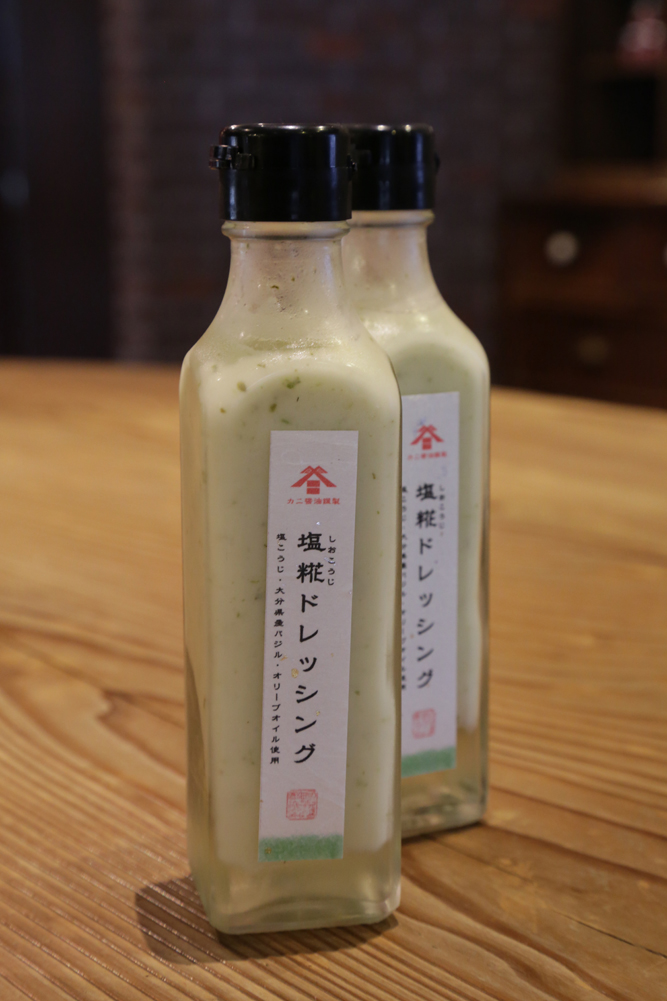
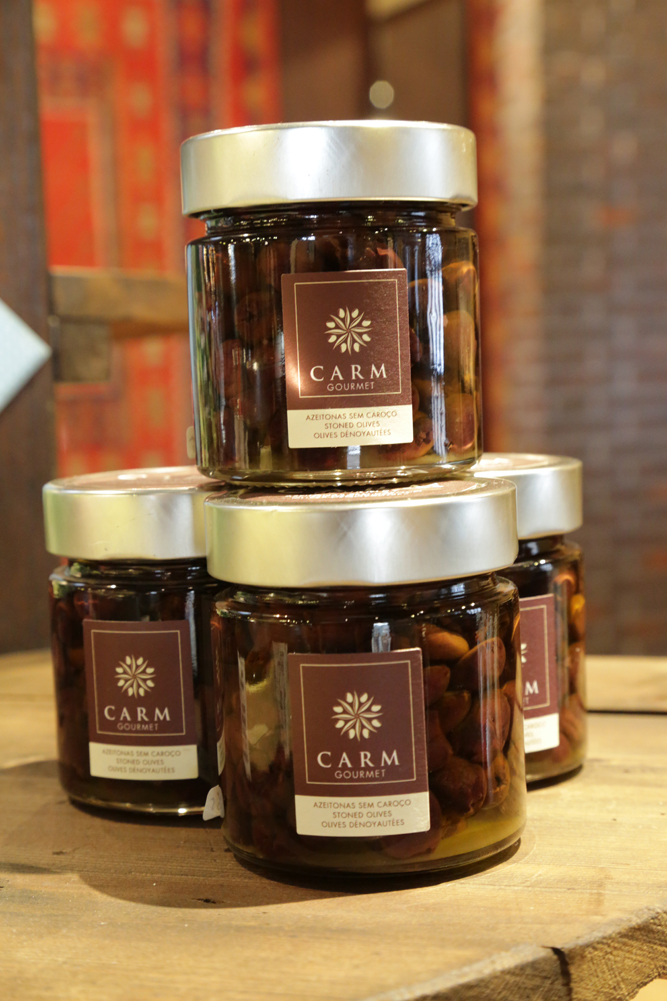
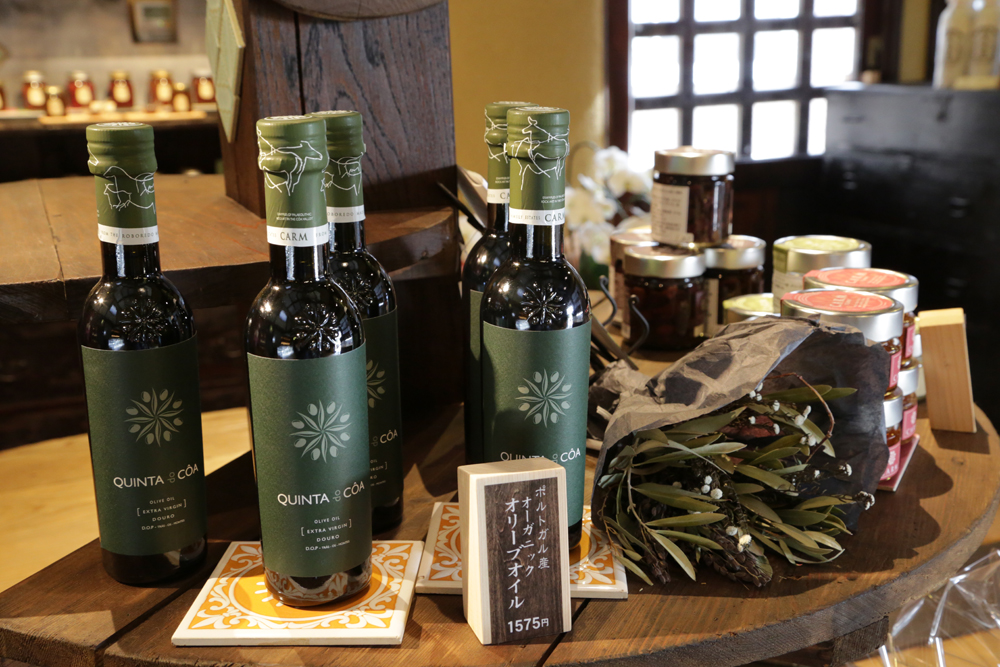
▲Crab soy sauce with salt and koji dressing 630 yen (left)/Marinated in organic olive oil from Portugal (right)
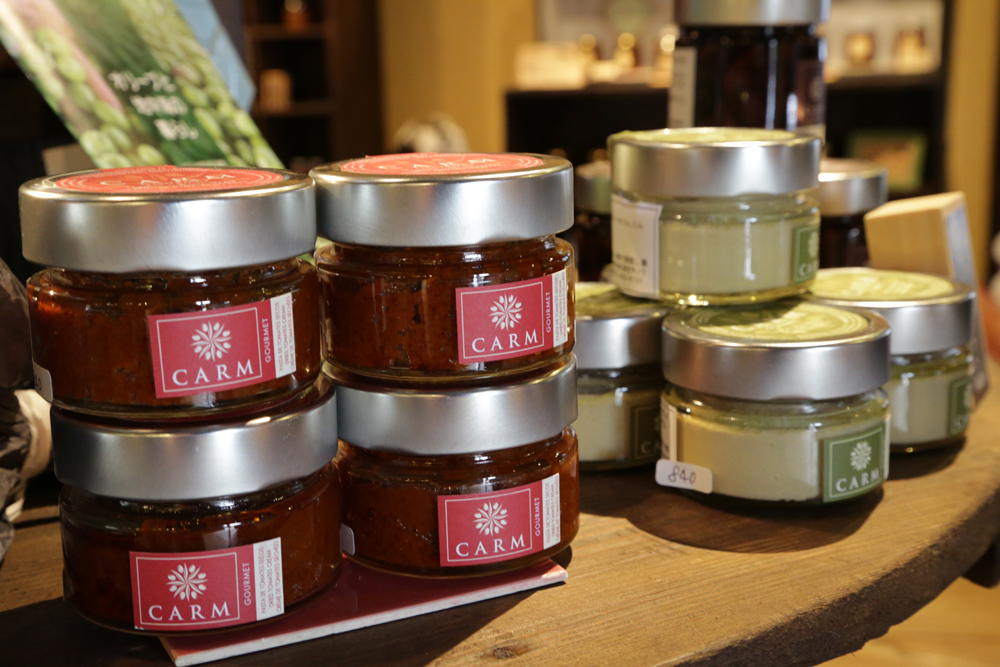
Organic dried tomato greens from Portugal 840 yen (front image) / Artichoke cream 840 yen (back image)
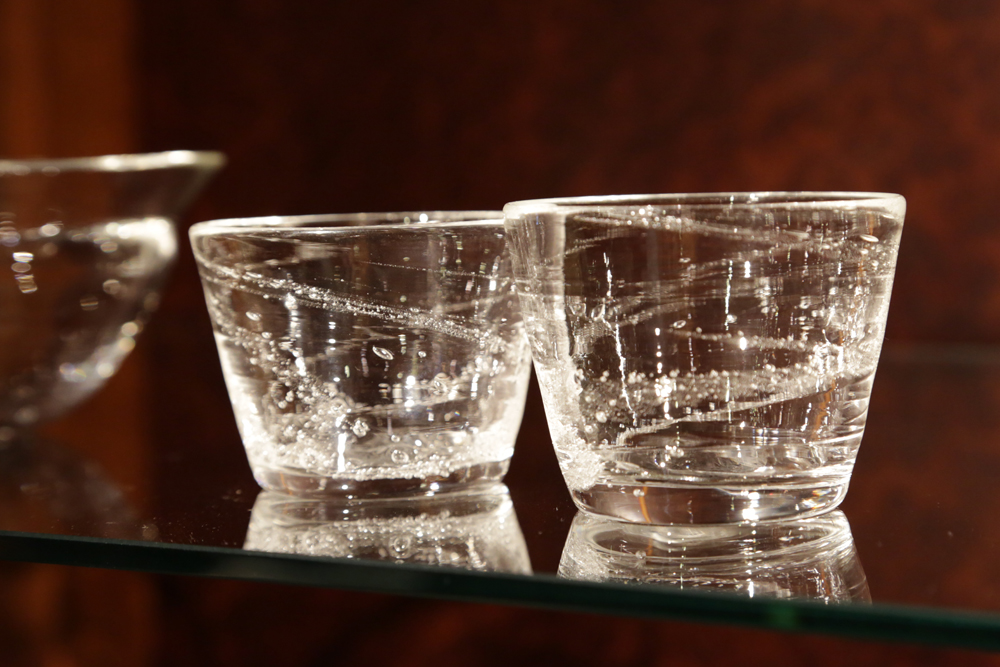
▲▲ flute blown glass
Each piece has its own individuality, which is expressed by the flute-blowing technique in which the original raw glass is wound around a pipe and blown from a crucible at a temperature of more than 1,000 degrees Celsius.
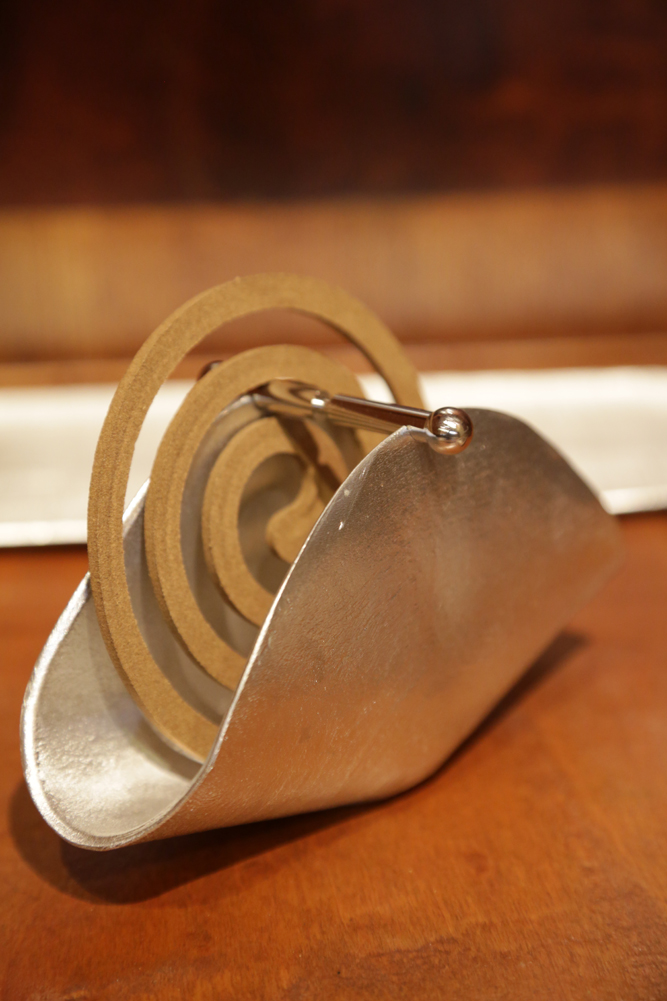
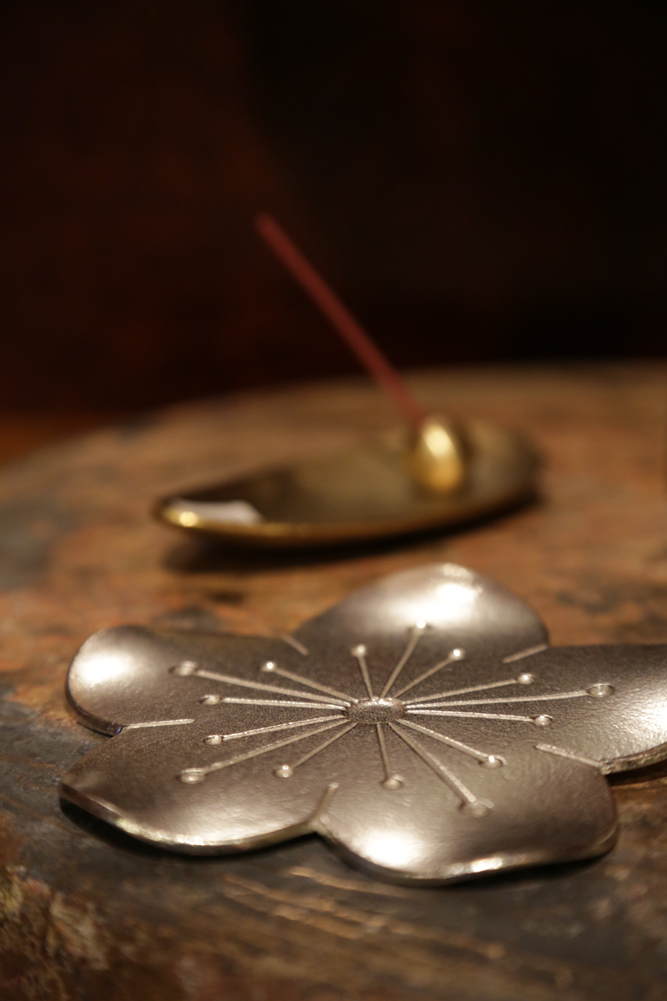
Tin works
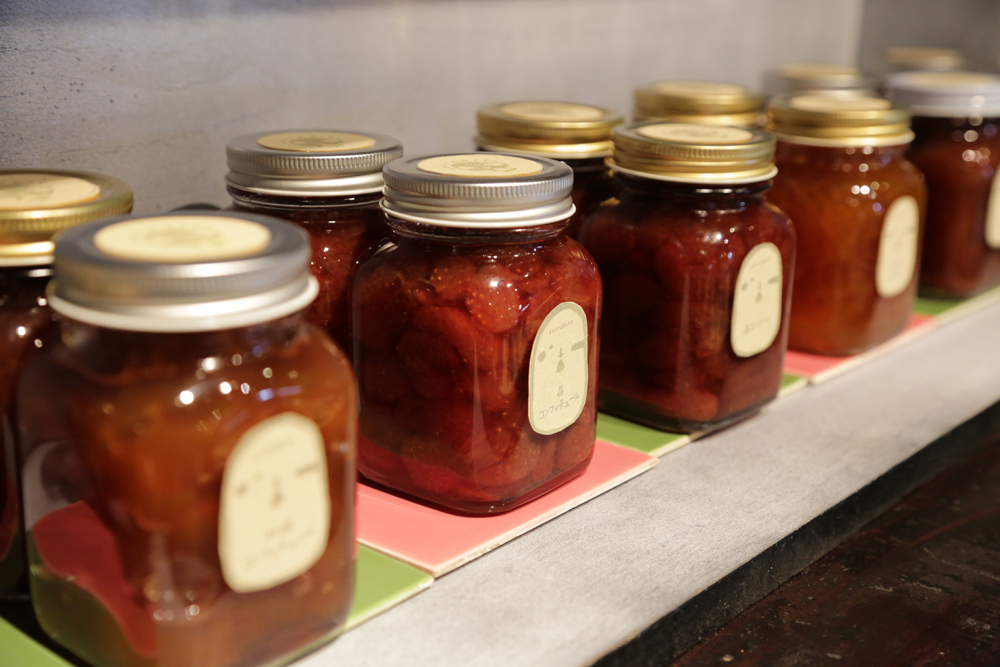
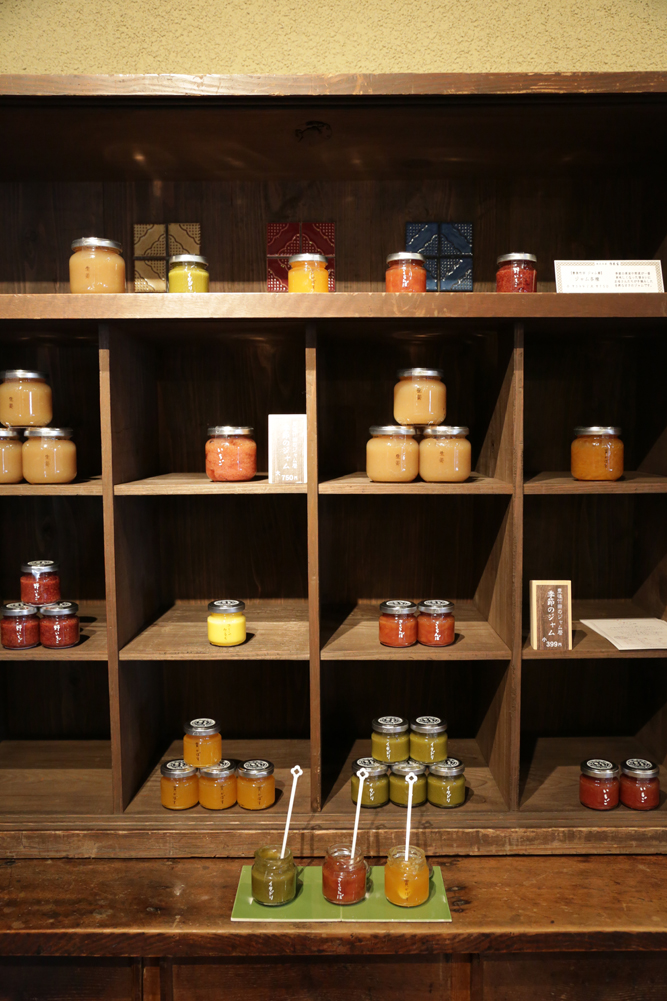
▲Ekujin handmade confiture
Low-pesticide strawberry confiture made from traditional open-air cultivation in Chitose, large 960 yen, small 680 yen
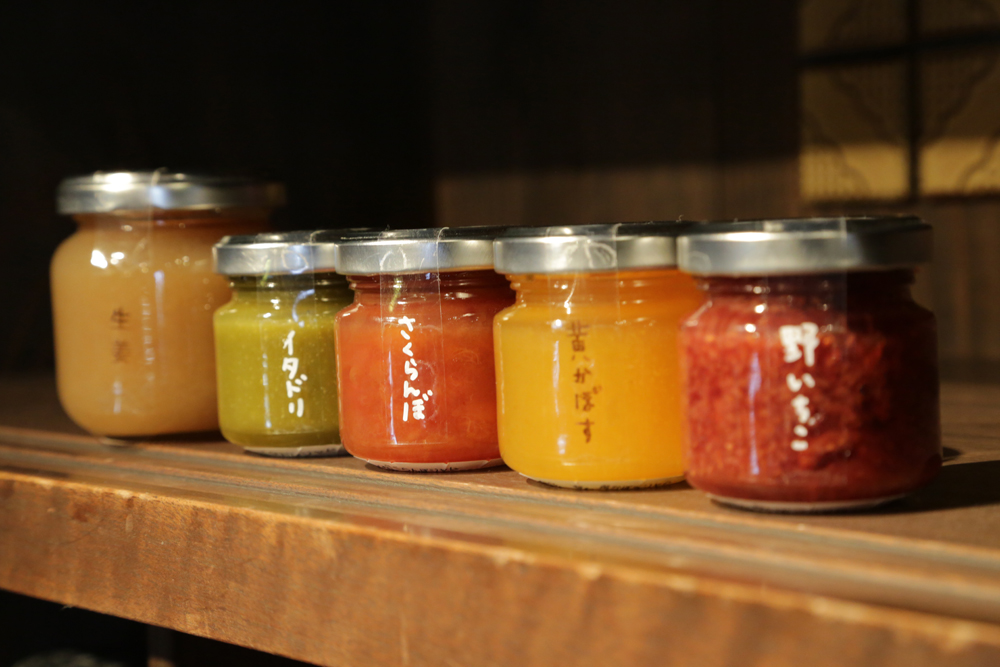
Bungo Takeda Jam calendar, small: 399 yen, large: 750 yen
The jam has a delightful natural sweetness and is made from seasonal fruits and vegetables handpicked by local mothers.
Just by adding a few of them to your daily life, you can dramatically improve the atmosphere of your room or dining table and the flavor of your food. You are sure to find your favorites among our wide variety of products!
Ichirakuan Confectionery
Expressing the passion of the Hozoku family's ancestors for sake brewing "through sweets.
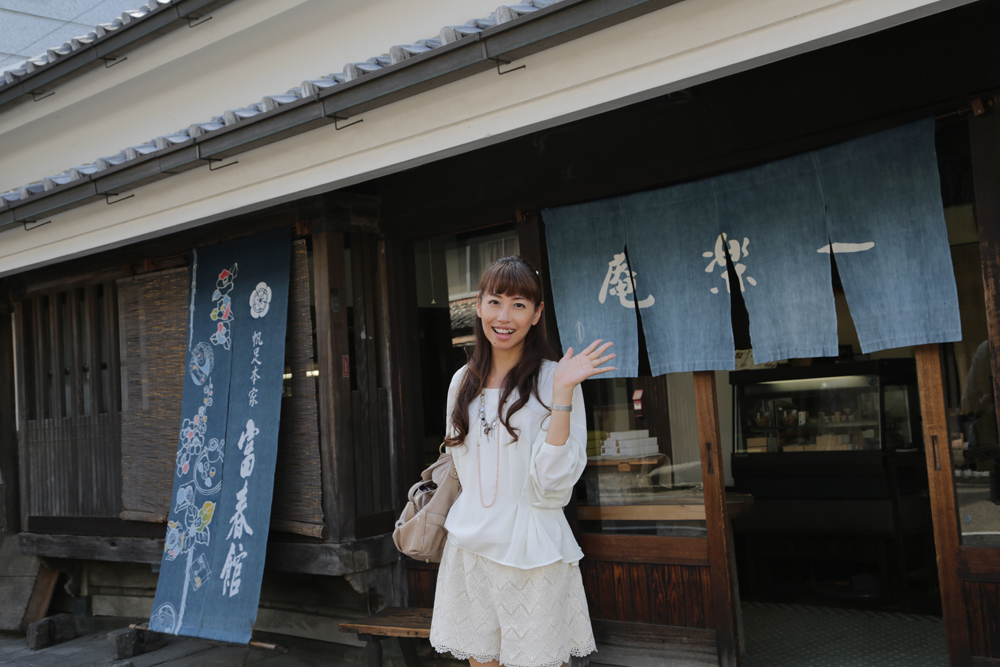
They "expressed in sweets" what the ancestors of the Hozoku family, who started in 1775, had in mind when they brewed sake. They use only ingredients that are gentle to the body for their homemade confections.
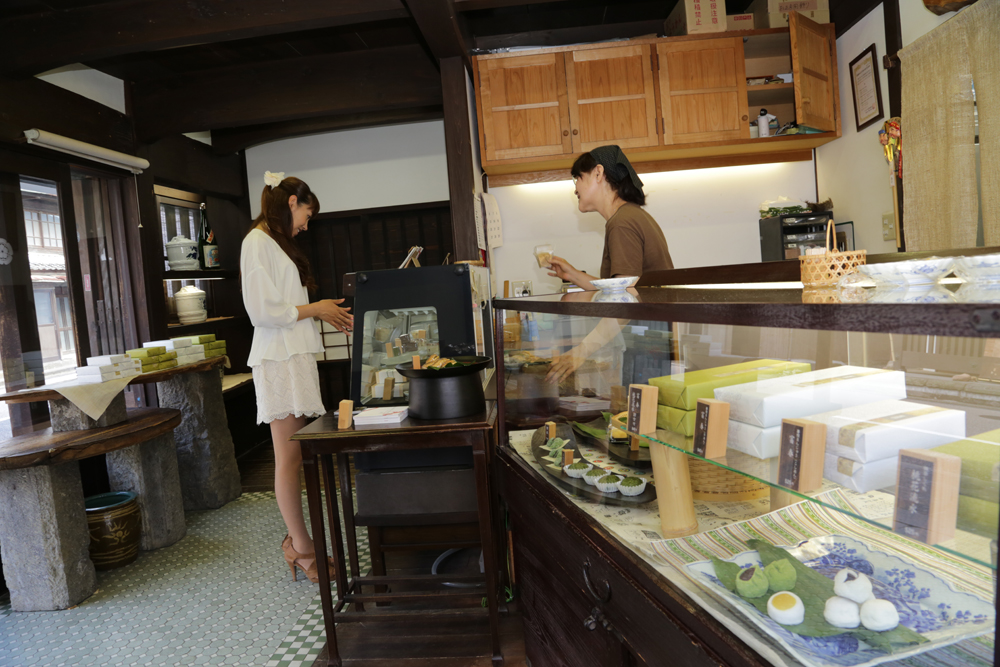
From the most popular "Renkon Mochi" (brick rice cakes) to seasonal sweets, the showcase in the store has a variety of expressions, and each piece shows the thoughtfulness and uniqueness of its creator.
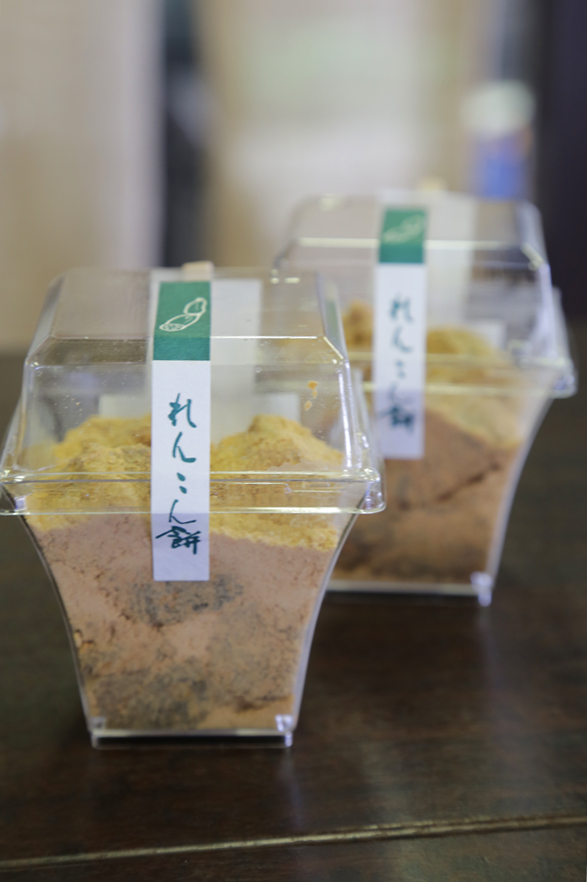
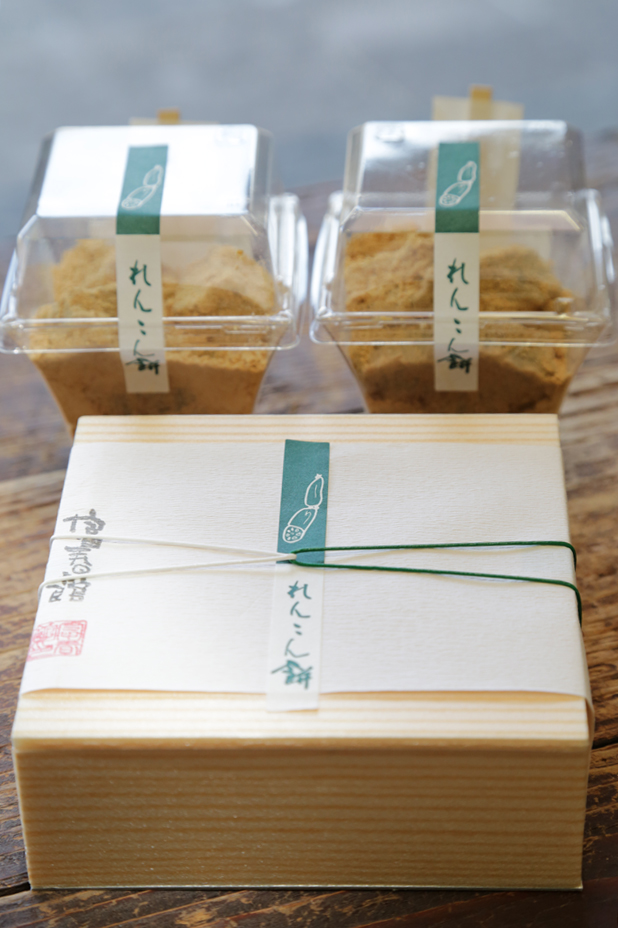
Renkon mochi (lotus root cake) 420 yen per cup/Renkon Mochi840 yen in a box
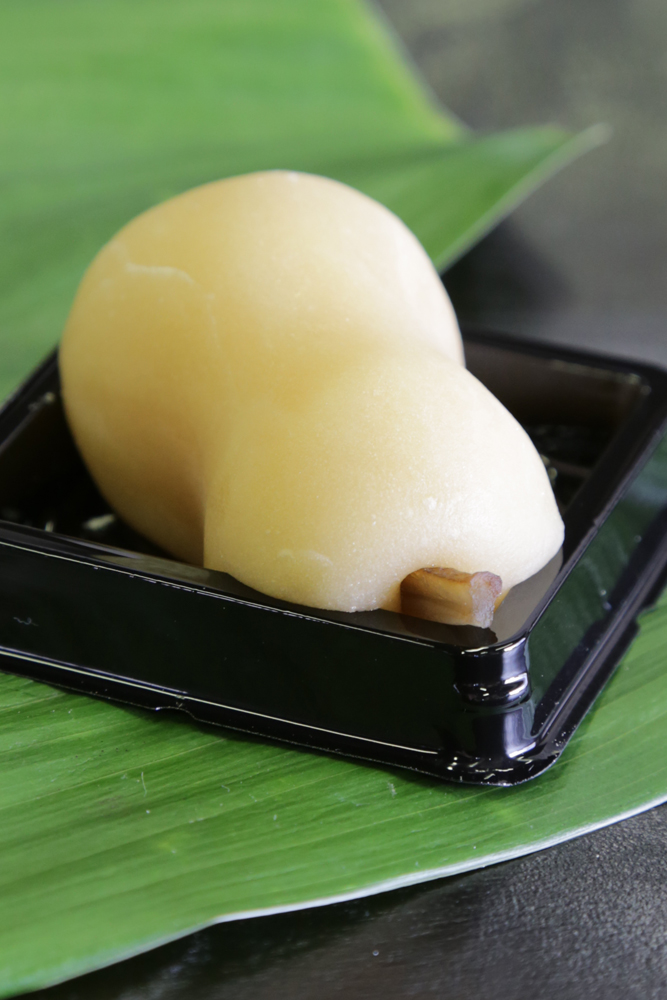
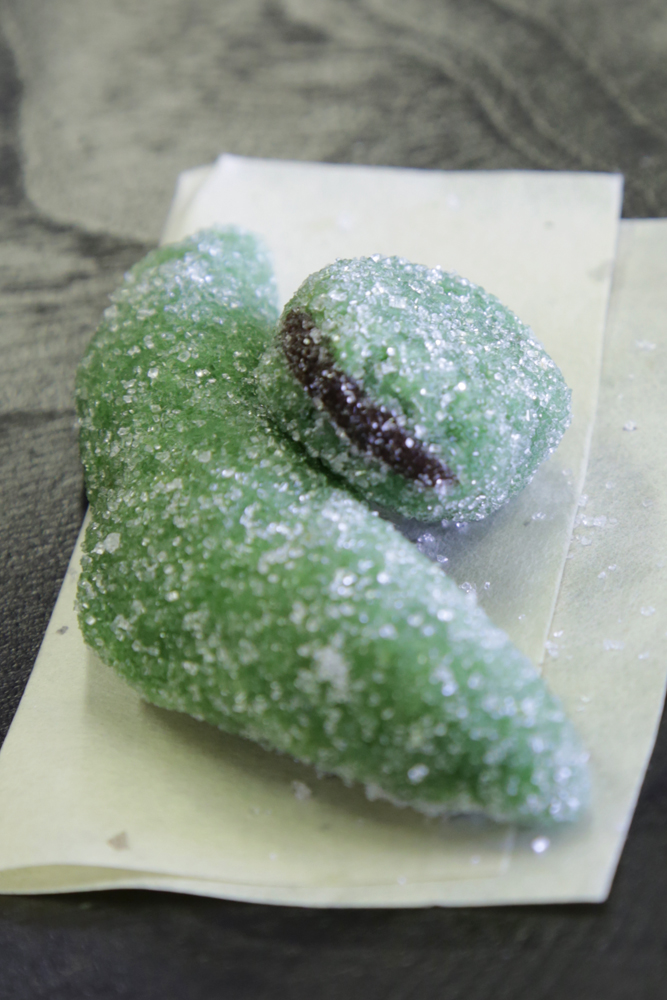
Hisago: 189 yen per piece (left) / fava beans: 158 yen (right)
Gallery Fushunkan
The concept is "something that can only be felt here," and the products are born from nature, handmade work, and peace of mind!
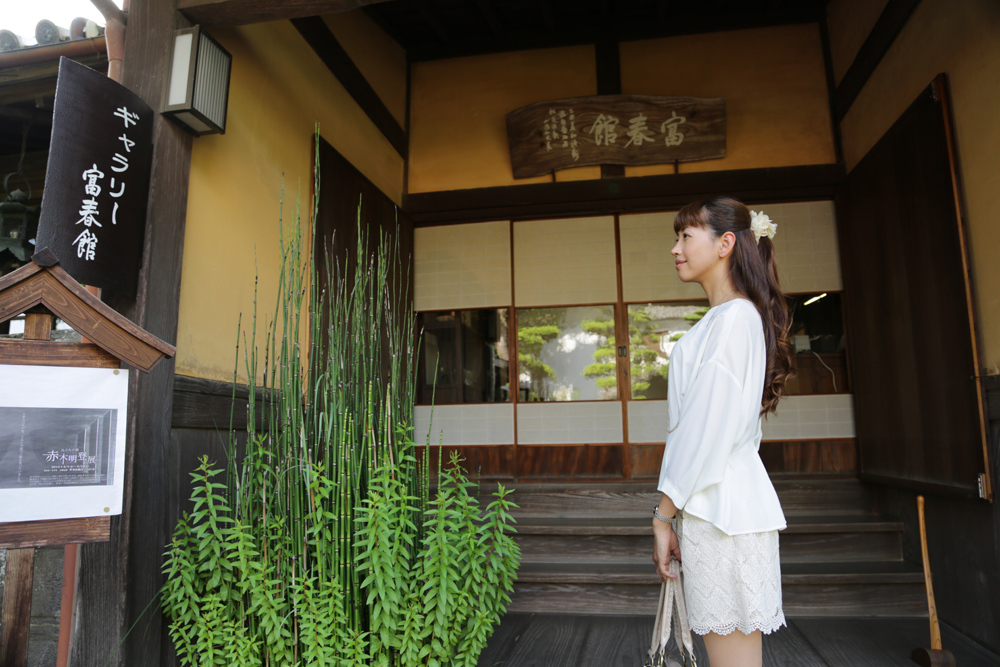
The gallery is home to a diverse range of cultural items unique to Fushunkan, including high-quality lifestyle goods selected with an eye not only to Japan but also to the world, ceramic works by prominent and young artists, and clothing made with the highest attention to dyed raw materials and weaving techniques.
The main building, which is deep enough to extend to the detached house, is always on display and for sale, so if you spend a lot of time looking around, you may not be able to fit it all in one day!
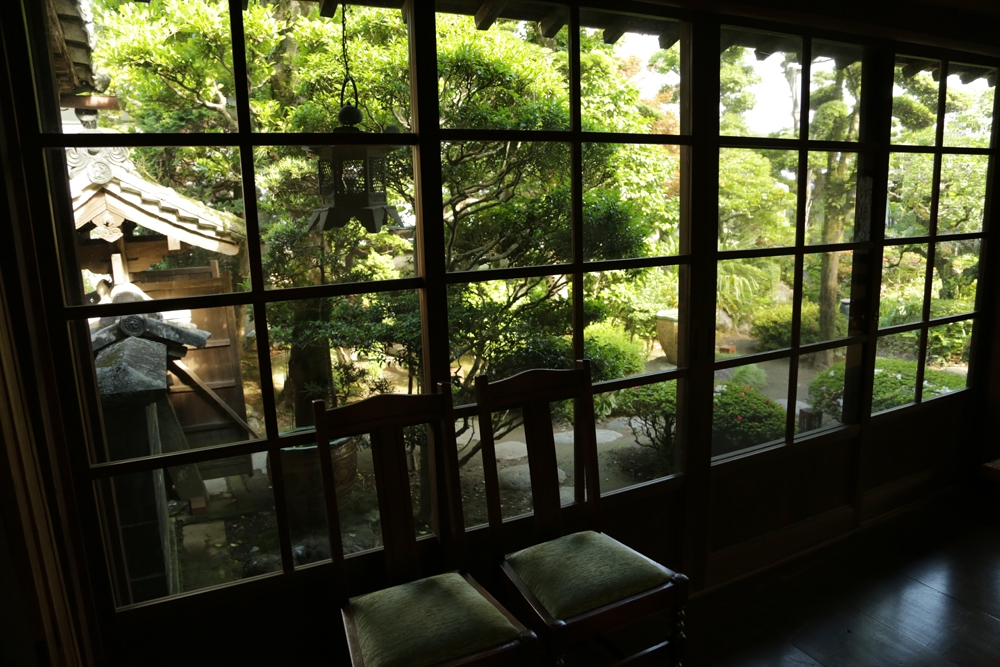
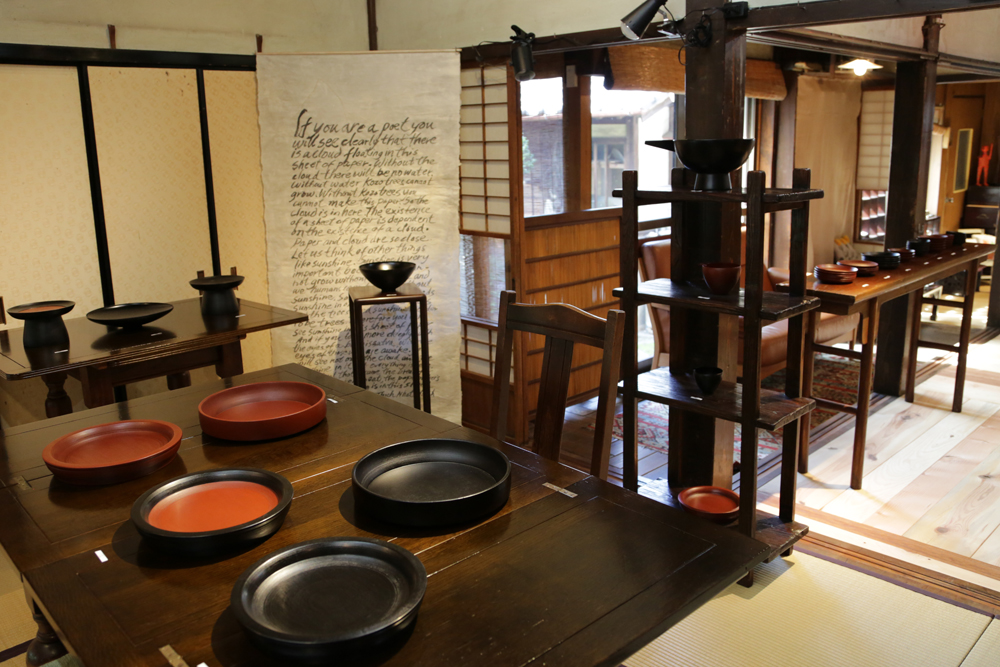
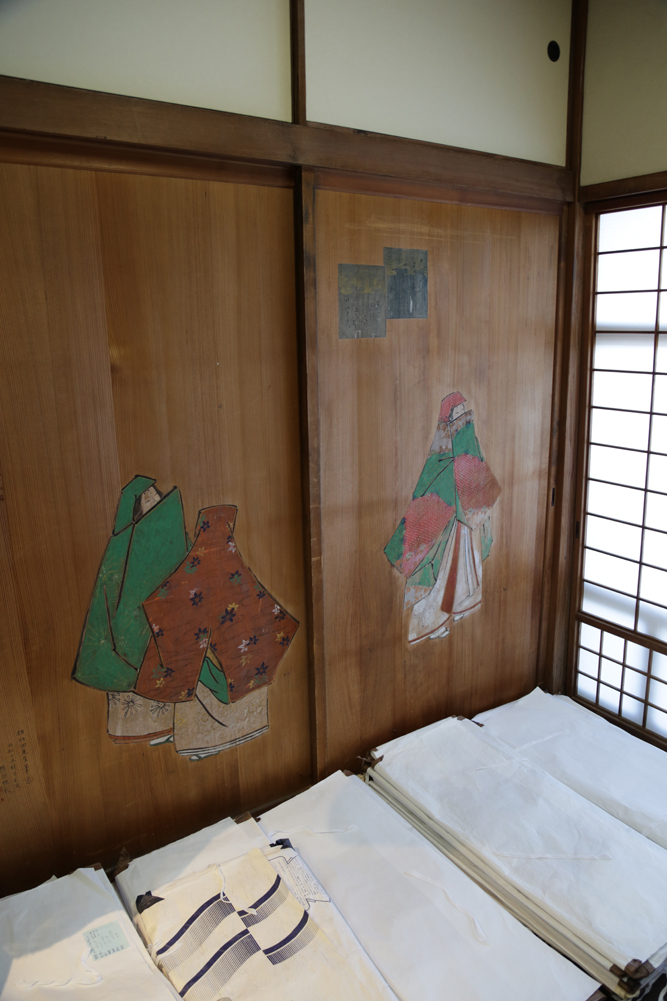
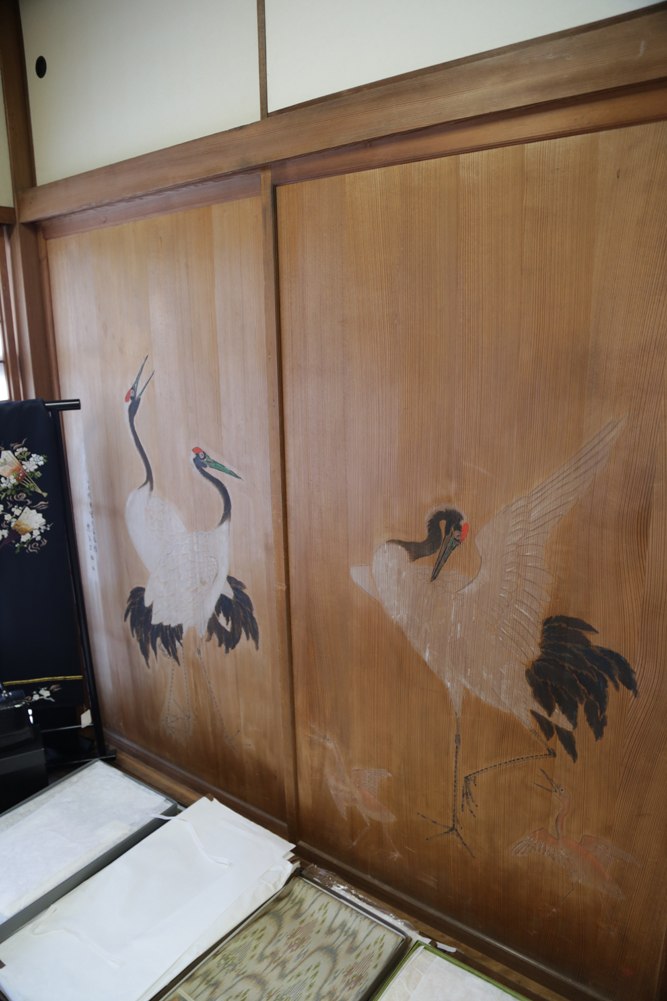
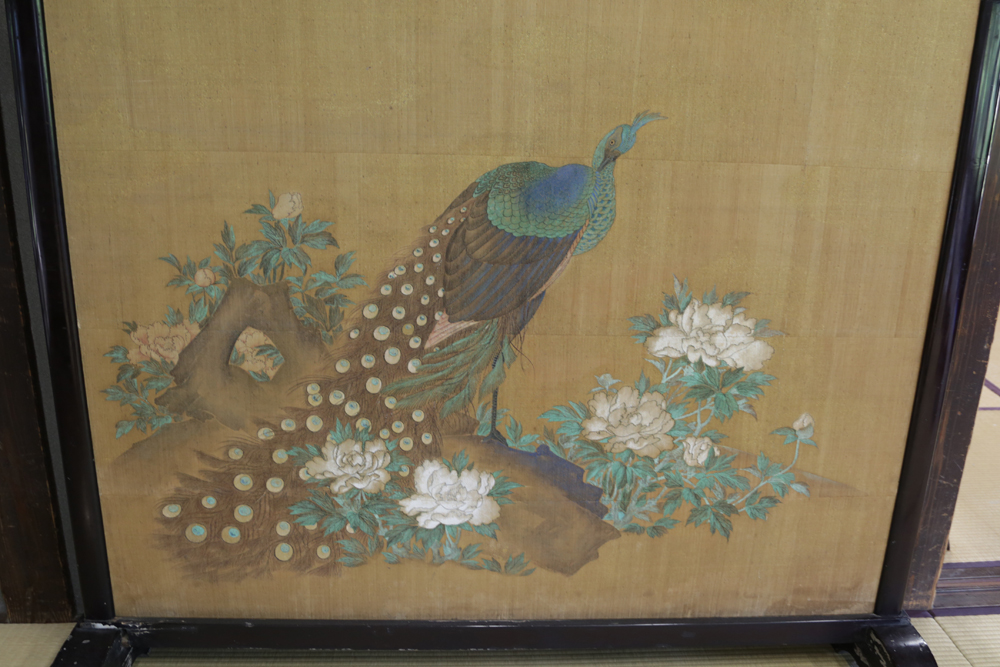
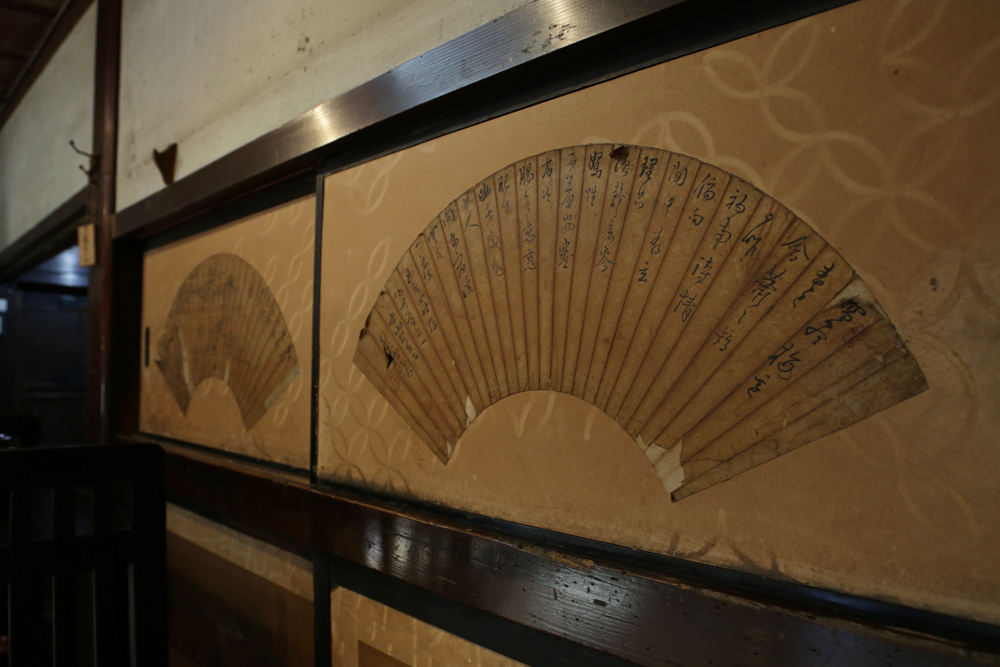
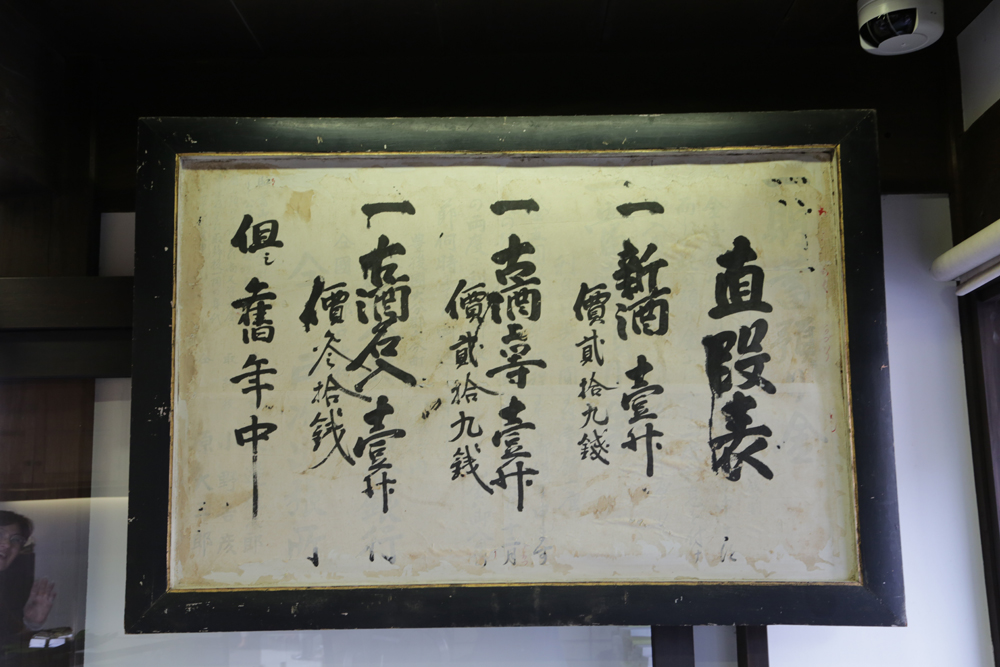
The cultural assets of the main house, which have been warmly preserved by the Hozoku family, are generously displayed.
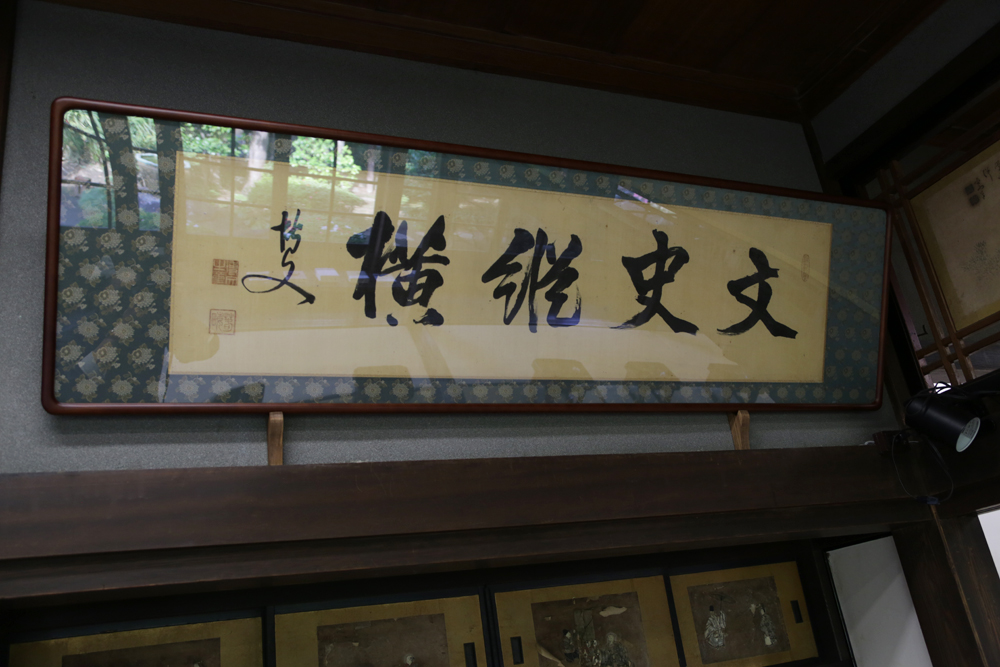
The flat plaque left by Hirobumi Ito when he visited here.
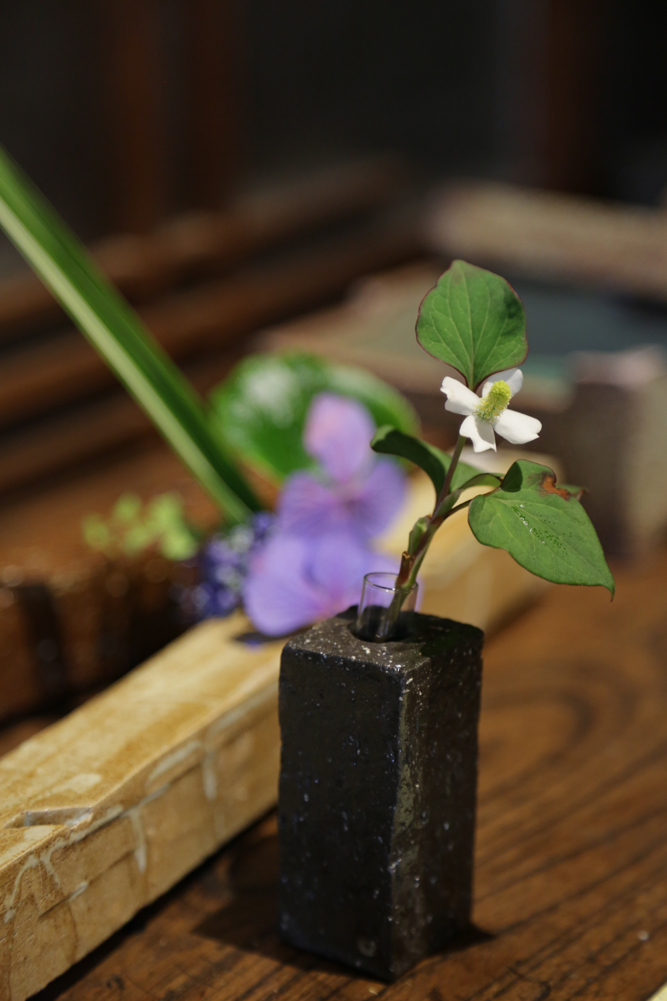
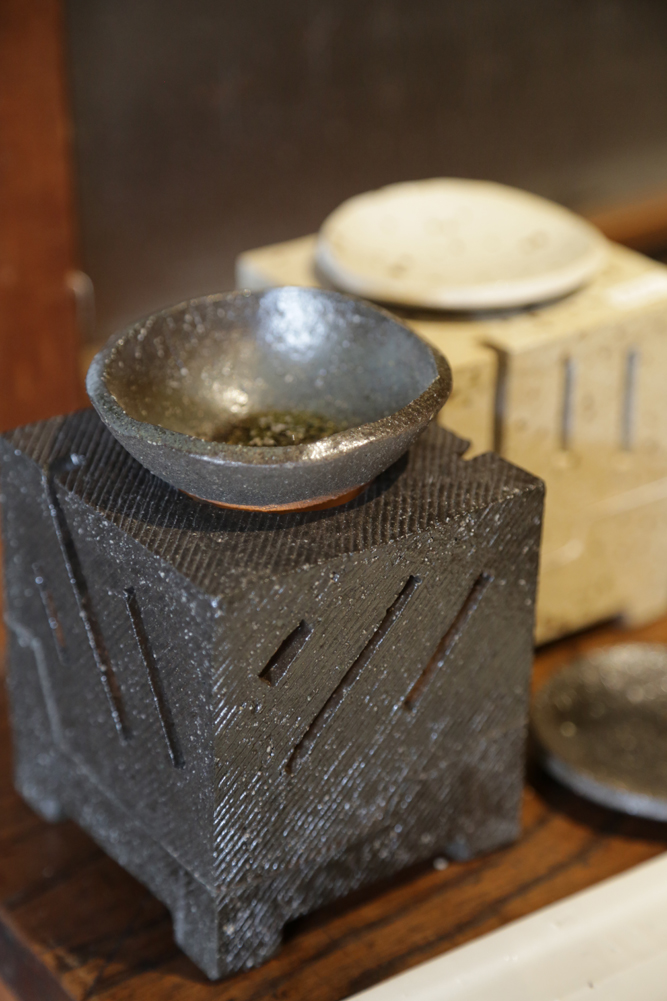
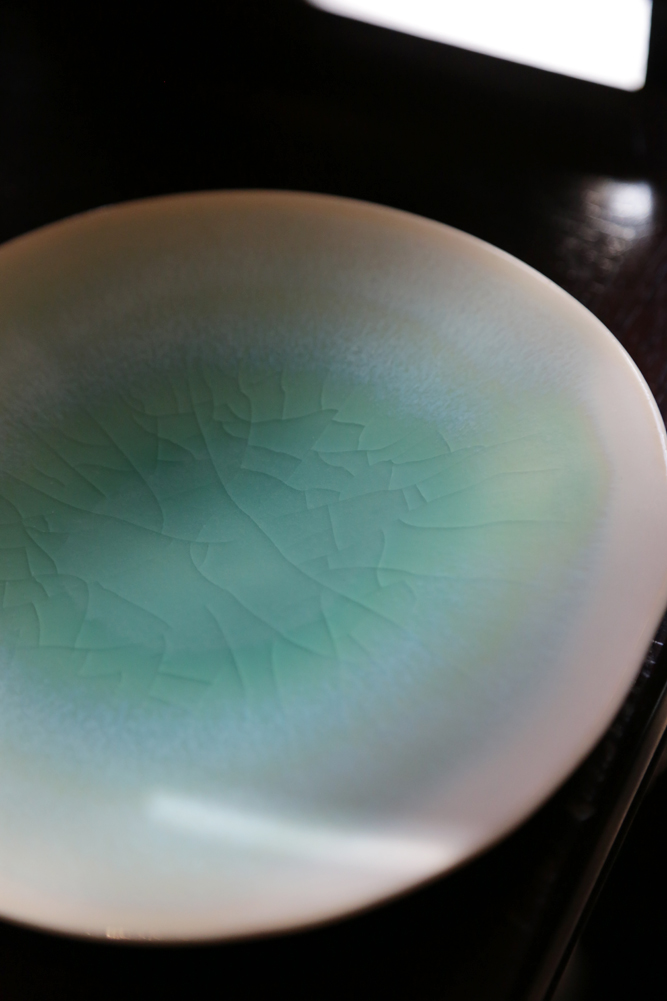
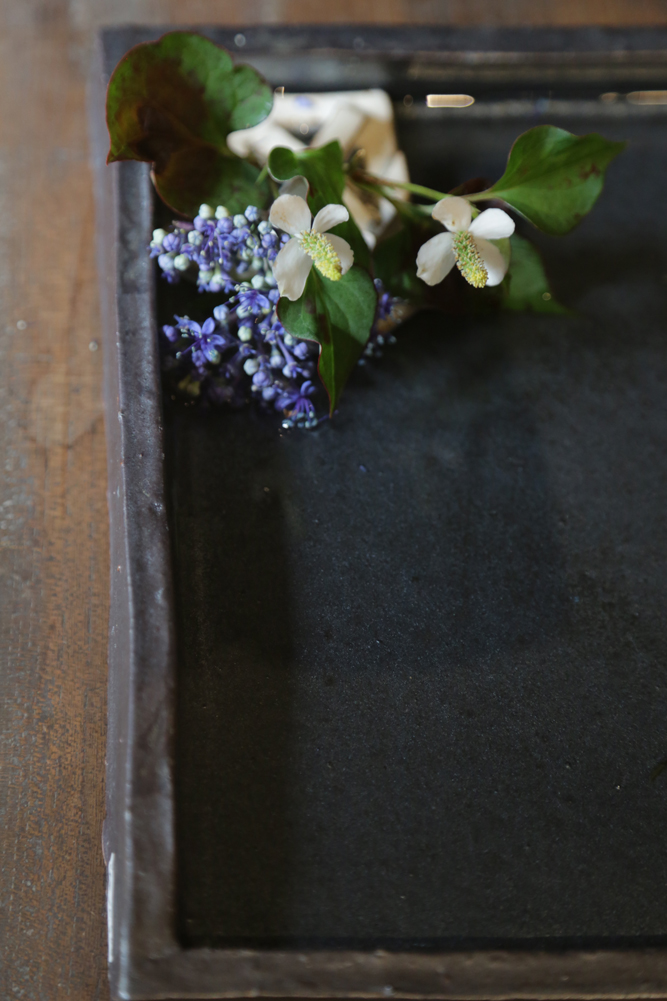
The exhibition was held on the day of the interview, and featured the works of Akito Akagi, a coloring artist.
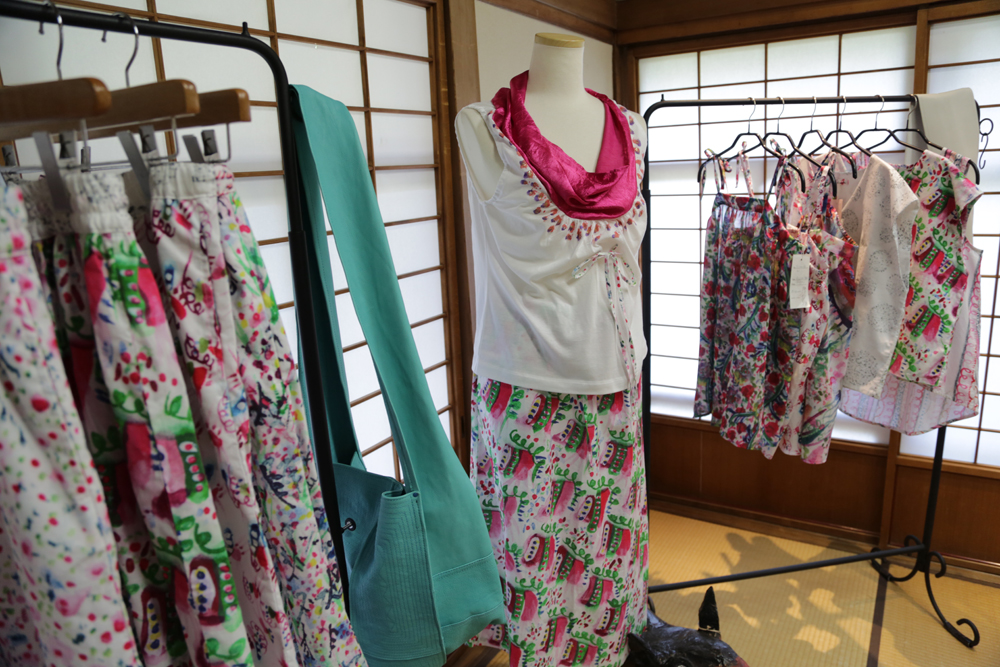
The work of Yoko Takeshita, known for her Yoko Takeshita knitwear brand.
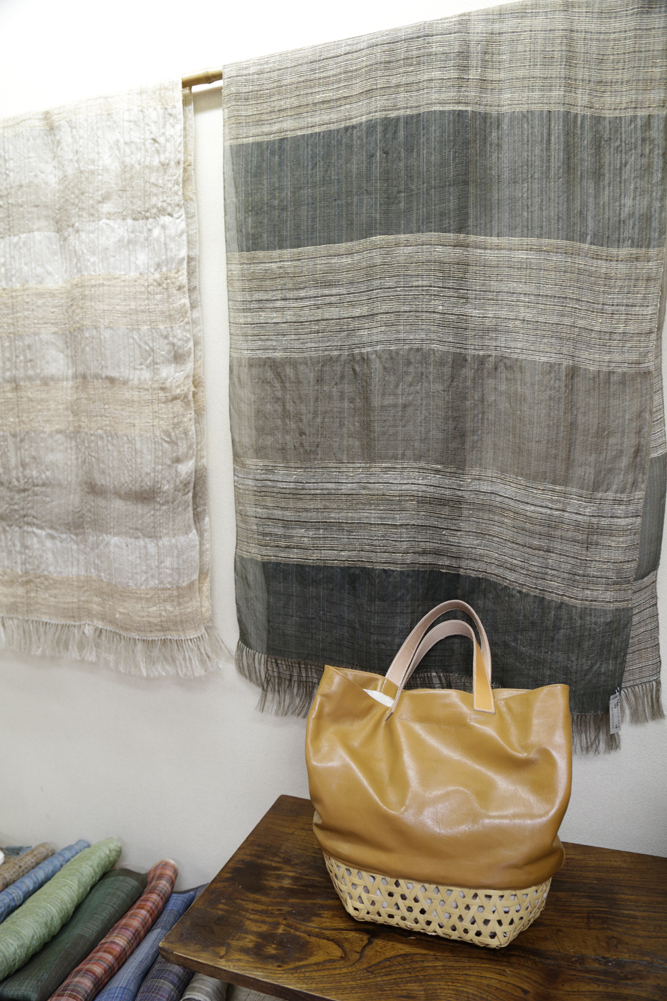
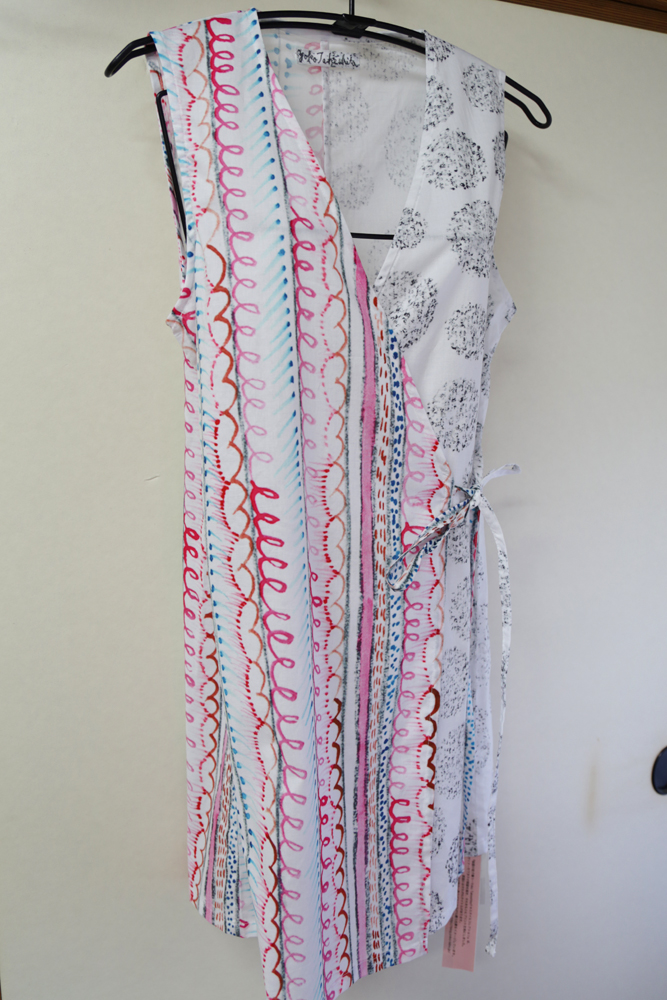
Name of artist (partial)
Yuko Hatazumiji [GRASS HOUSE] Quilted Bag, Blue Bamboo Dyed Cotton Shirt
Yoshiko Haraguchi [SIND] Persimmon-dyed robe
Setsuko Torii [AVRIL] Knitwear
Yoshino Takami Bamboo Bag
Pottery, Hirosuke Takako
Itsuo Takagi [Mukai Kiln].
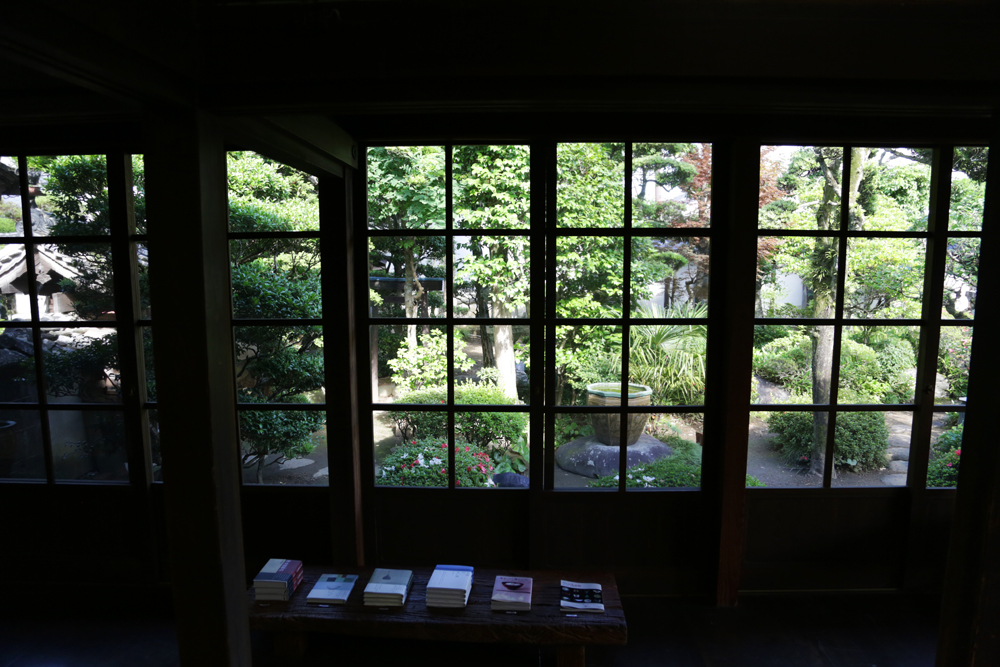
The more you look at, touch, and use our products, the more you will develop your own unique texture. Please take your time to find your favorite one and use it for a long time.
Interview with Megumi Hozoku, General Manager of Fushunkan
We would like to continue to carefully create a place where visitors can feel at home in a new sense of space where food, goods, and buildings are integrated, and where old spaces are fused with modern ones to create a "place of relaxation = an ideal home.
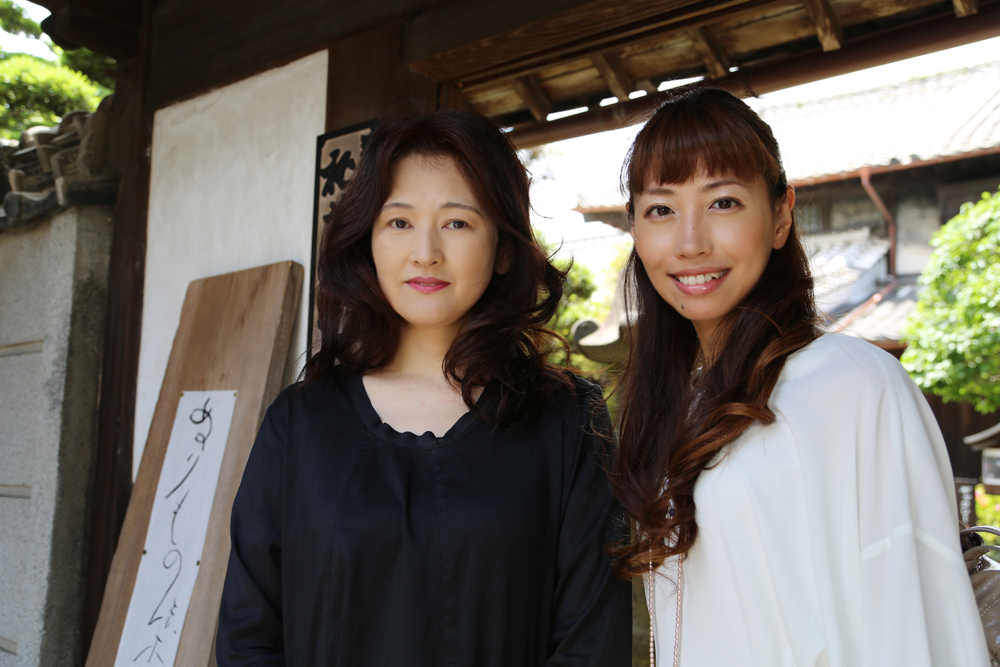
Megumi Hozoku (left)
Q: Please tell us about Hozoku Honke "Fushunkan".
The present head of the Hozoku family is the 15th generation. The house prospered as a sake brewery from the end of the Edo period until 1972. At that time, the family provided a place for many cultural figures to work and supported artists in various ways. The name of the house, "Fushun" means "fine sake" brewed by the Hozoku family, and the name was passed down by Sanyo Rai. Tanomura Takeda," who left many works that have become important cultural properties, also spent time at the house, and another artist, "Kyouu Hozoku," who was introduced to Takeda from this house, left his name as a nanga (Chinese-style painting) artist. It must have been a comfortable salon where artists who lived in their own world could come and go freely, and where those who enjoyed their art could mingle. Today, we have donated the many remaining works of art to various museums, including the Oita Municipal Museum of Art, in the hope that many people will see and enjoy them."
Q: What made you decide to develop a storefront on the Hozoku family property?
About 14 years ago, we received an offer from Oita City to preserve the property as a cultural asset. The site is about 2,000 tsubo (about 1,000 square meters) in size, and the size of the Hozoku brewery is said to be the largest in western Japan. In addition, there are buildings of high historical value such as the main building, warehouse, and Western-style house that have been in existence for over 150 years. If this were to happen, we would be able to have the buildings and grounds restored, and even though the Hozoku family has been in existence for generations, it would be difficult to repair the large grounds by ourselves, so we once considered doing so. However, if the house were to become a public cultural asset, this cultural work and building that has survived its long history would be maintained in good condition, but it would no longer be freely accessible or touchable. Therefore, we decided to keep the house and grounds as they were in the old days, and to preserve them as a "free salon" where many people could come and go as well as interact with each other, as in the old days when writers and artists interacted with each other.
Q: I'm sure you had a lot of work to do.
We started out by clearing out the main house and the warehouse (laughs). (laughs) We started by cleaning up and renovating and repairing as much as possible ourselves. We wanted to do something with the house and brewery, but we had no experience in business, so we first visited various old houses and preservation districts throughout Japan to learn how they were being utilized.
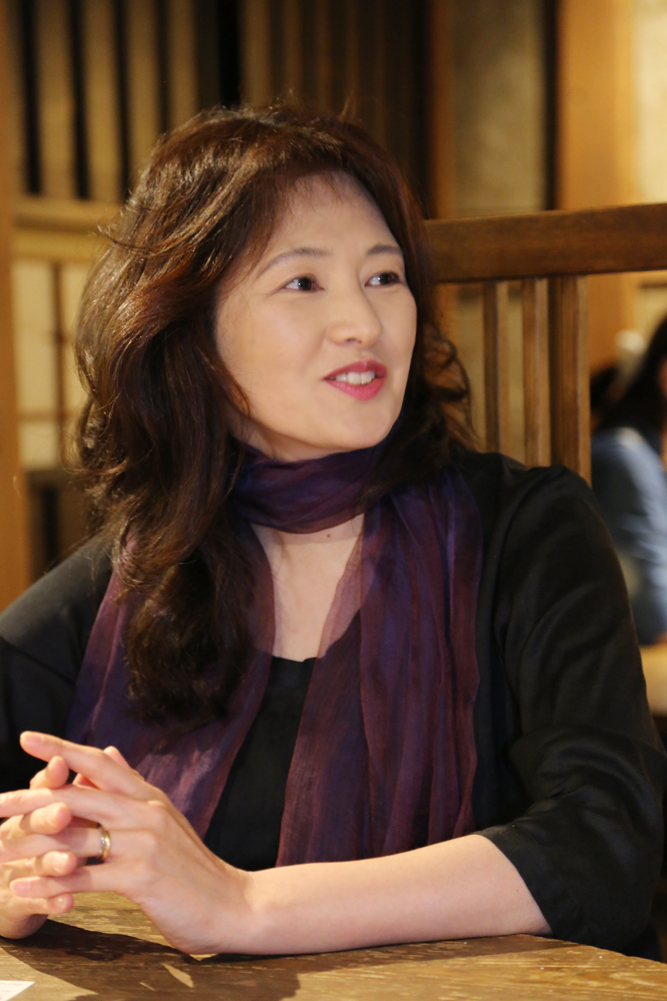
Q: Now that you have a total of five stores, what was the first project you did as a store?
Thirteen years ago, we invited an artist for a four-day exhibition and served matcha and coffee. The tables were handmade from sake barrel lids and seiro (earthenware rice strainer) that were left over from the cleanup, and I remember how happy I was to see the expressions of joy on the faces of the guests when they saw the table set. I am still busy creating a place where people can freely interact with each other, an extraordinary space, and a presentation unique to the Hozoku family, something that can only be felt here.
Q: What was your impression when you started a café you had no experience with?
The "café," as it was called, did not have a proper kitchen in the warehouse, so at first it was just a workbench with an overturned barrel and a pot, and simple drinks such as tea and coffee. However, drinks alone were not enough for a relaxing time, so we gradually prepared light sweets to go with the matcha and coffee. Everything was handmade, safe and of high quality. We were confident that our offerings were in line with the weight and value of the history of this warehouse and the site. I remember feeling the difficulty of running the business.
Q: It currently looks busy and full all day. ......
Yes, thanks to the support of our customers, we now receive customers from the time we open our doors, and our tables and meals are often filled with reservations. However, it has only been in the past two or three years that we have been able to see such a scene. In fact, we have had few customers for more than 10 years now, and the days have been lonely. However, if we were to change our style, there would be no point in continuing Fushunkan here. We are grateful to the customers who accepted our style and expanded our circle of customers, and to the staff who worked so hard to keep up with us. Gradually, we outgrew the café alone and opened a restaurant in a renovated Taisho era western-style building, opened a store selling sweets, food products, and seasonings that we serve in the café and restaurant, and introduced a system that allows us to ship products locally. We have also introduced a system that allows us to ship products regionally, and have gradually evolved to our current form in response to customer requests.
Q: What are your goals for the future?
We believe it is important to continue to carefully refine our own style so that we can continue to be a place where visitors can feel a new sense of space where the good old days and modern culture are woven together, and where they can relax and feel energized for the day ahead. I hope that the activities of Fushunkan will attract a variety of stores and activists to the Toji area, and that it will become lively again, as it was in the past.
Thank you for your time.
Access
Restaurant/Cafe "Momoka Ryusui
Ichirakuan Confectionery Shop
Gallery Fushunkan
LIFE & DELI "Fushunkan
Address: 4381, Nakatoji, Oita City, Oita Prefecture
Phone: 097-597-0002 (main)
Fax: 097-597-0029
Business hours: 10:00~17:00
Closed: Monday (or the following day if Monday is a national holiday)
URL:http://www.hoashi-honke.com/
guidance
At the "Nakamura Intersection" on National Route 10 in Oita City, turn right if you are heading toward central Oita City from the direction of Nobeoka City, Miyazaki Prefecture.
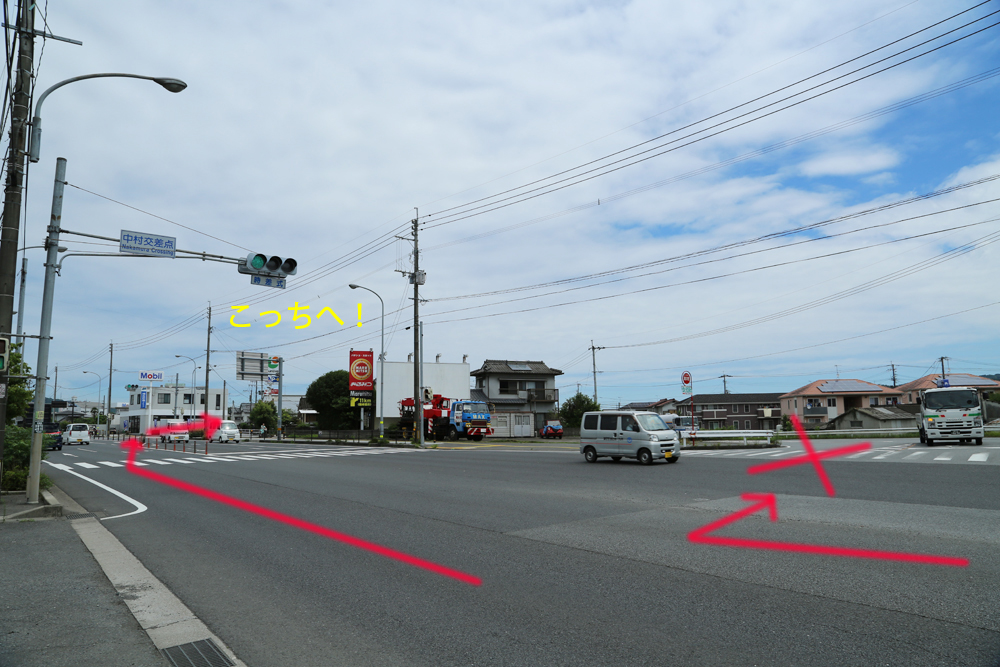
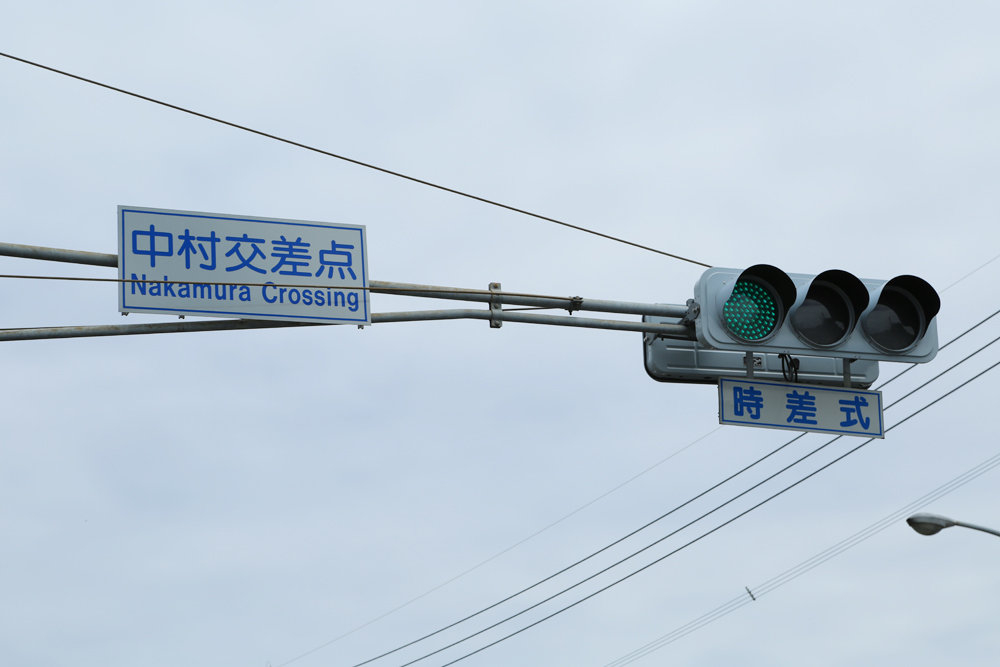
▲It is very easy to make a mistake because there is a large right turn (marked with a dismount in the image) before the intersection where you actually turn right. Please be careful! If you are coming from the center of Oita City, turn left at the signboard of the following gas station and supermarket.
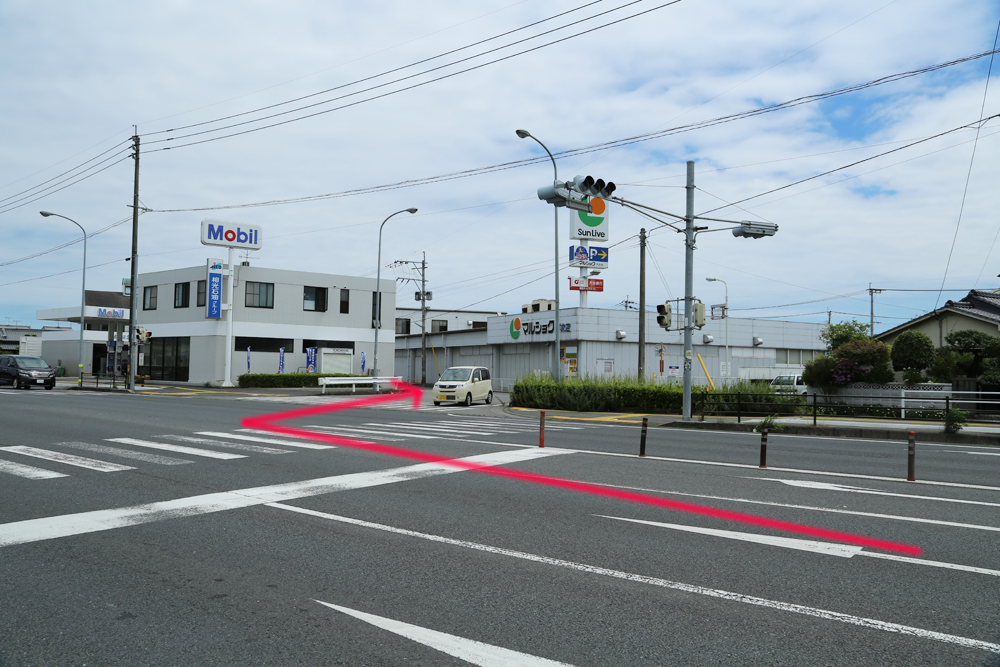
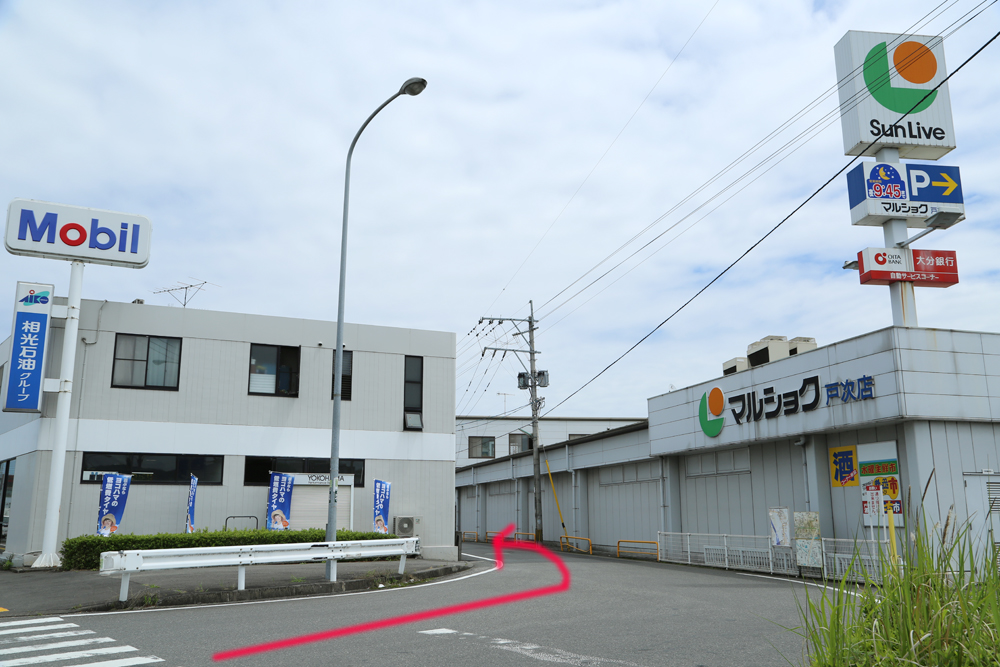
The ▲GS and supermarket signs are the landmarks!
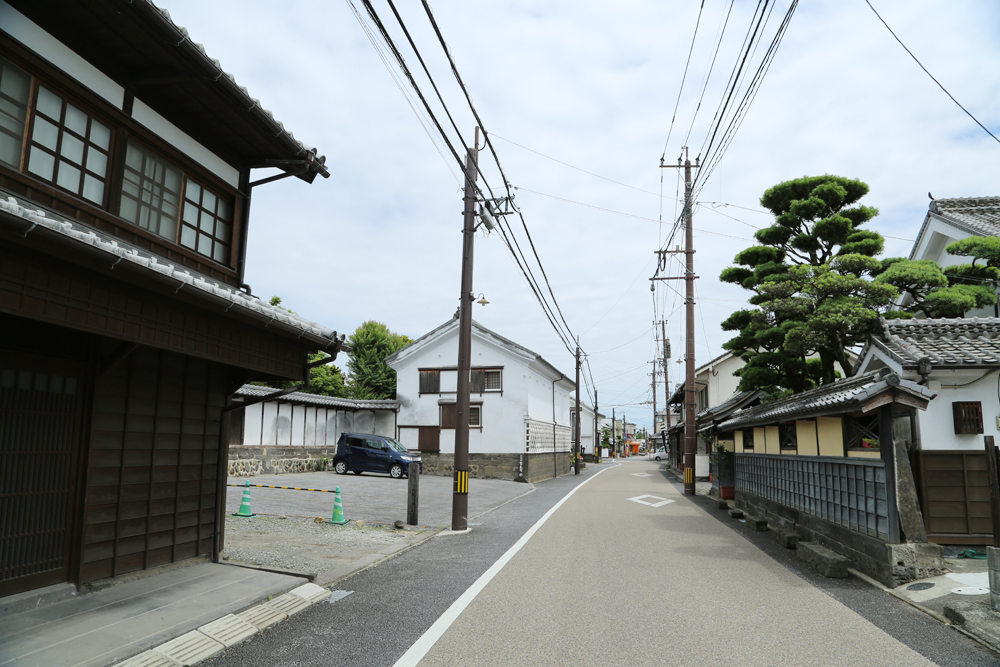
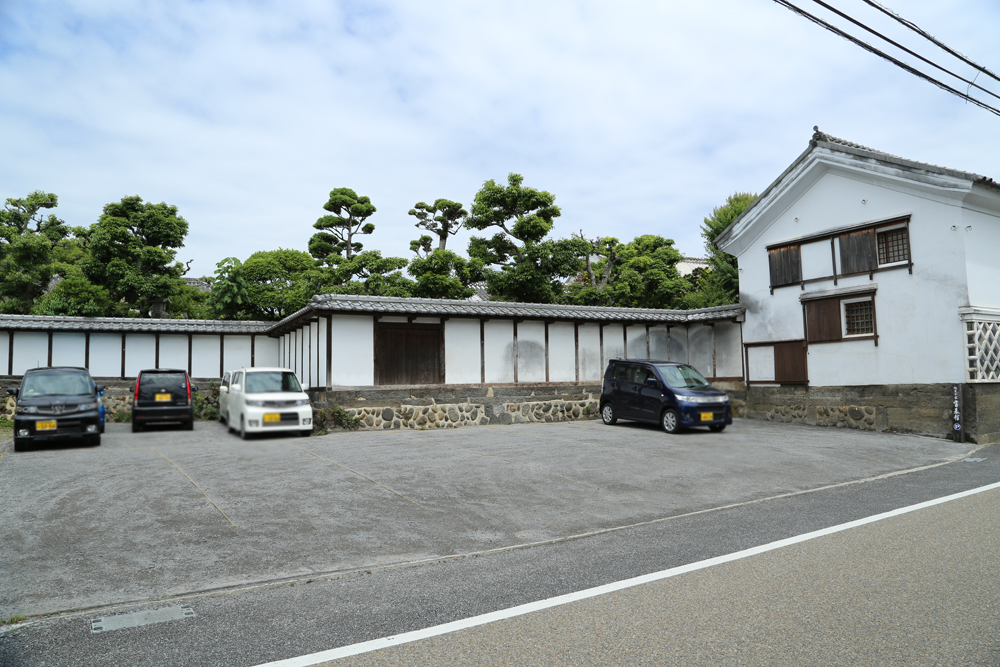
Follow the alley beside the supermarket for a while, and you will see a large parking lot and a sign for "Hozoku Honke Fushunkan" on your left.
MAP
4381, Nakatoji, Oita City, Oita Prefecture 879-7761, Japan
Interview and editorial staff
Model Report: Nozomi Nakamoto
Photography and production: VOKE Ltd.