


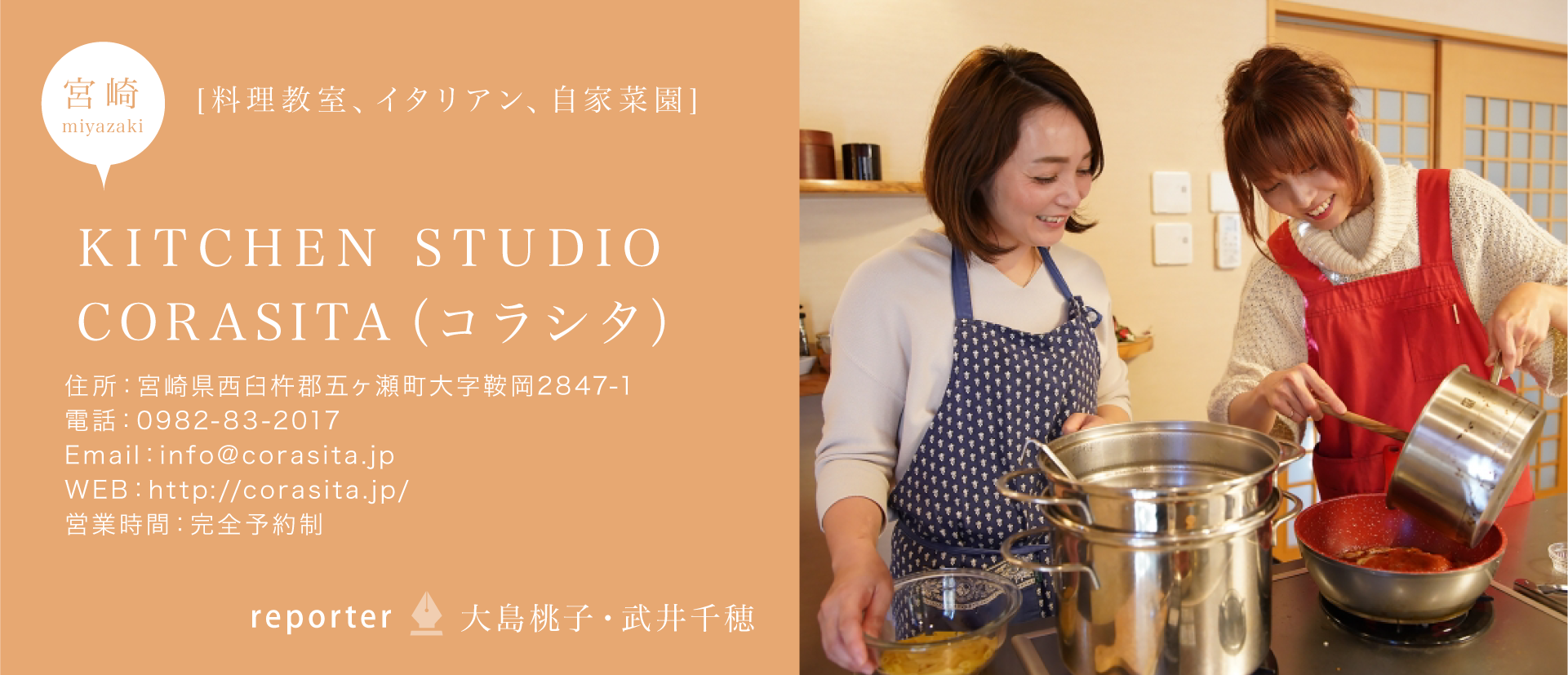

Run by the Italian Culinary Institute in the mountainous town of Gokase
Kitchen studio "CORASITA".
Using local and familiar ingredients, with a focus on tomatoes grown with care by the chef himself
Conveying techniques and ideas for creating a dining experience that is both "everyday" and "special."
Programming in Logic Kitchen Studio "CORASITA" in mountainous Gokase Town
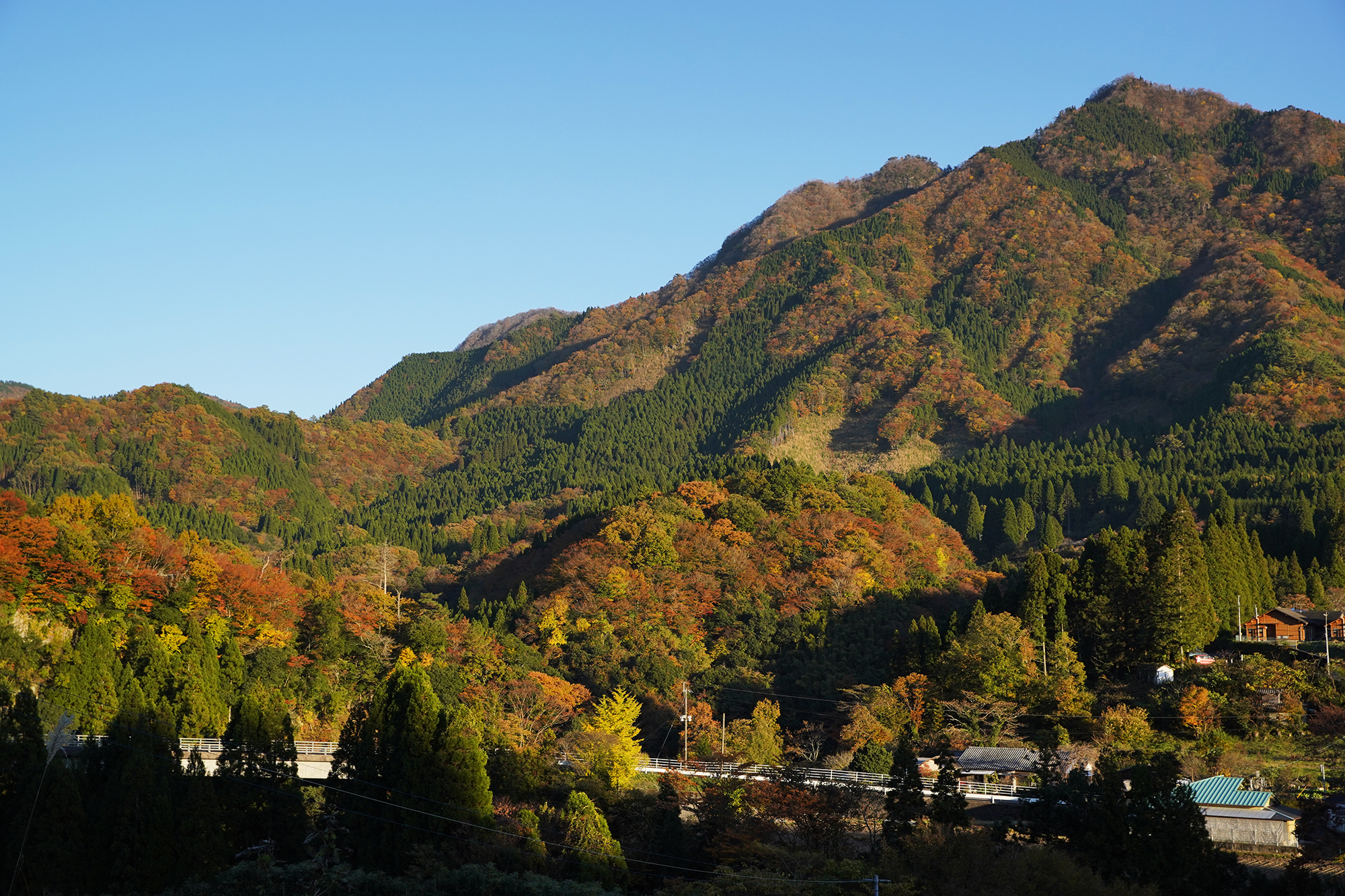
Gokase Town is located in the northern part of Miyazaki Prefecture, blessed with abundant water and greenery. Gionzan, located in an area called Kuraoka, which was uplifted 40.3 million years ago, is said to be the birthplace of Kyushu Island, and the surrounding area is subject to severe cold and heavy snowfall in winter, even in the southern part of Miyazaki.
At CORASITA, a kitchen studio located at the foot of Gionsan, the representative of CORASITA, Hiromi Fujiki, teaches the specialized techniques of Italian cooking using local and familiar ingredients, with San Marzano Riserva, a Mediterranean tomato grown by herself with great care, as the main ingredient, and also offers a cooking course called "Gionsan. The everyday table is overflowing with smiles and gentle delicacies! Through our classes, we propose and present a variety of such dishes.
Incidentally, "korashita" is a word in the Gokase dialect to welcome guests, saying, "Welcome to Gokase!
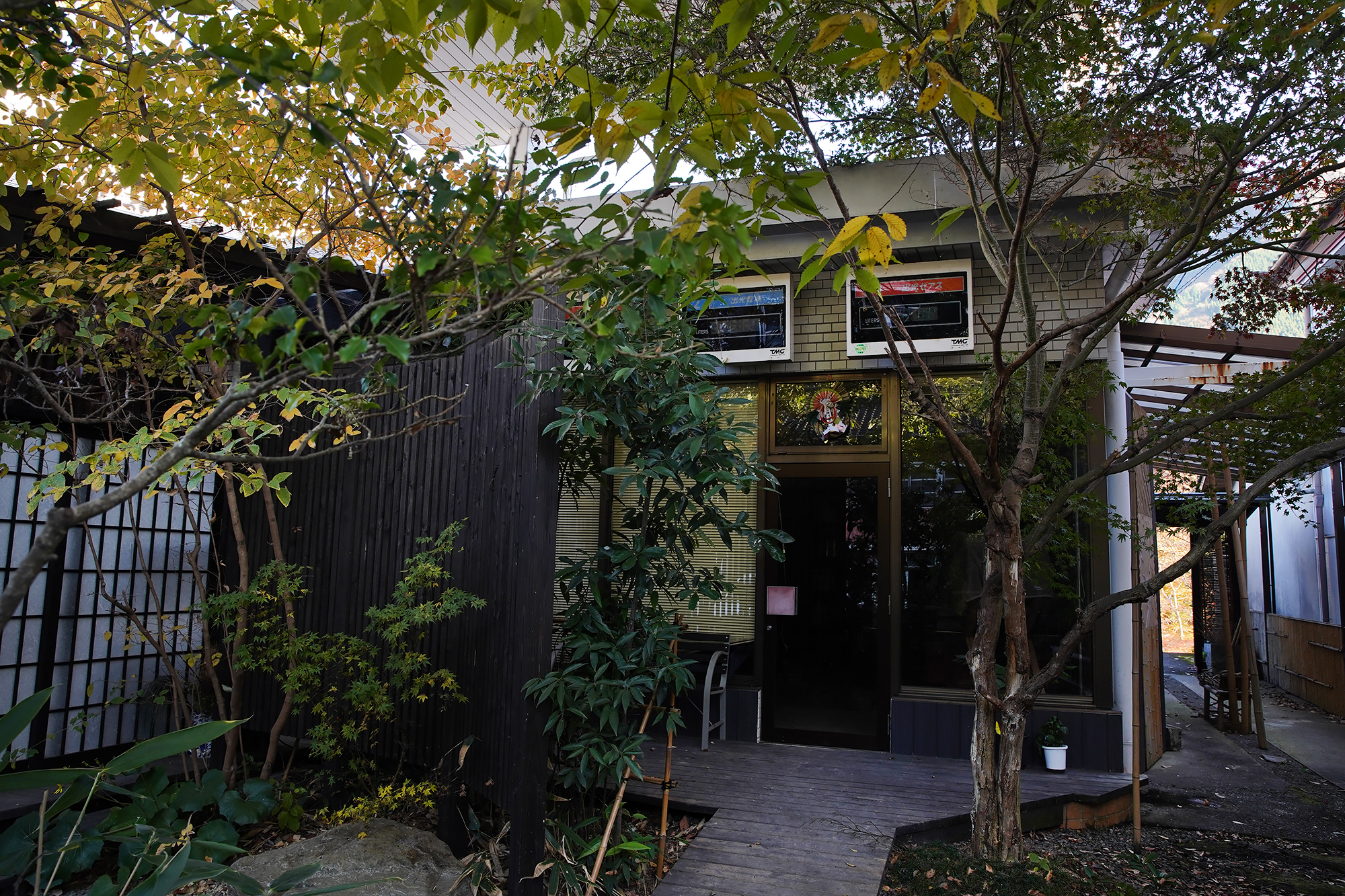
The representative, Ms. Hiromi Fujiki, is a food professional with qualifications such as Athlete Food Meister and Italian Culinary Specialist Level 1, and is committed not only to cooking classes but also to product development and sales channel expansion within and outside of the prefecture. The cooking class is held in several studios, including one in the gas station of her parents' home, a kitchen in a facility operated as an overnight guest house, and a kitchen in the adjacent main house, and she uses different studios depending on the number of participants.
To tell the truth, I was never very good at cooking. I wanted to cook better for my family, so I started taking cooking classes myself. At first, there was a lot I didn't understand, but as I went along, I began to enjoy cooking and at the same time, my desire to learn more grew stronger. Now I am in a position to become an instructor and run cooking classes, which is a strange feeling for me. The reason I decided to start this kitchen studio was because I had overcome my weakness for cooking and had come to enjoy it, and I thought that I would be able to help the people who participate in the classes. I thought that I would be able to relate to the participants' feelings because I had overcome my dislike of cooking and learned to enjoy it.
Fujiki said with a smile.
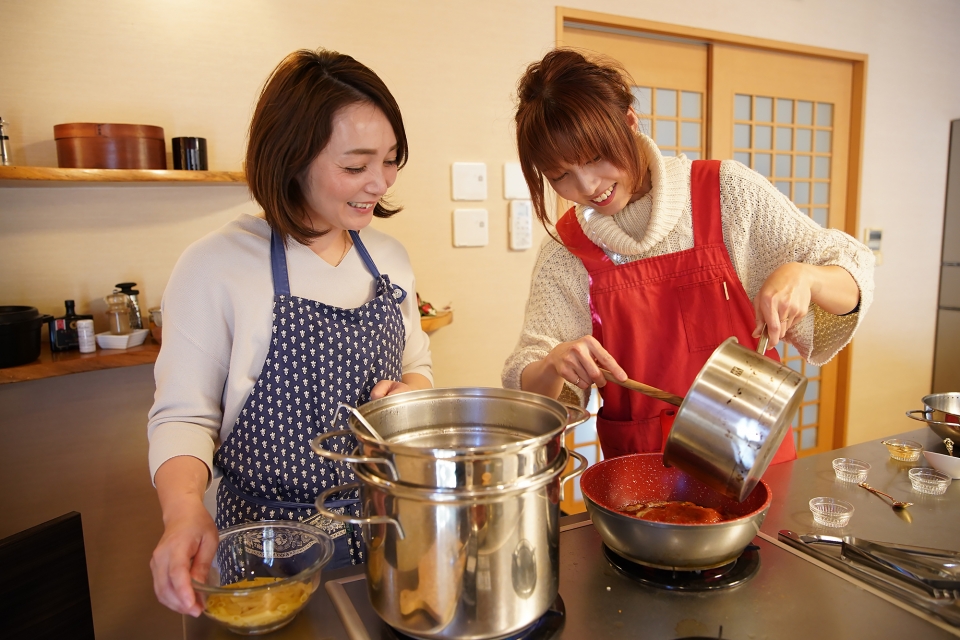
In this report, we will focus on the interview with Hiromi Fujiki, while our reporter Chiho Takei experienced the cooking class and learned how to make pasta with tomatoes grown in the company's vegetable garden.
interview (i.e. television, newspaper, etc.)Hiromi Fujiki, Representative of Kitchen Studio "CORASITA
Having learned about the charms of his hometown, he aspires to be a part of activities that are rooted in his hometown.
Cherish the relationships you have with the people you care about and do what you can to help,
Someday, I want my tomatoes and products born in Gokase to spread around the world.
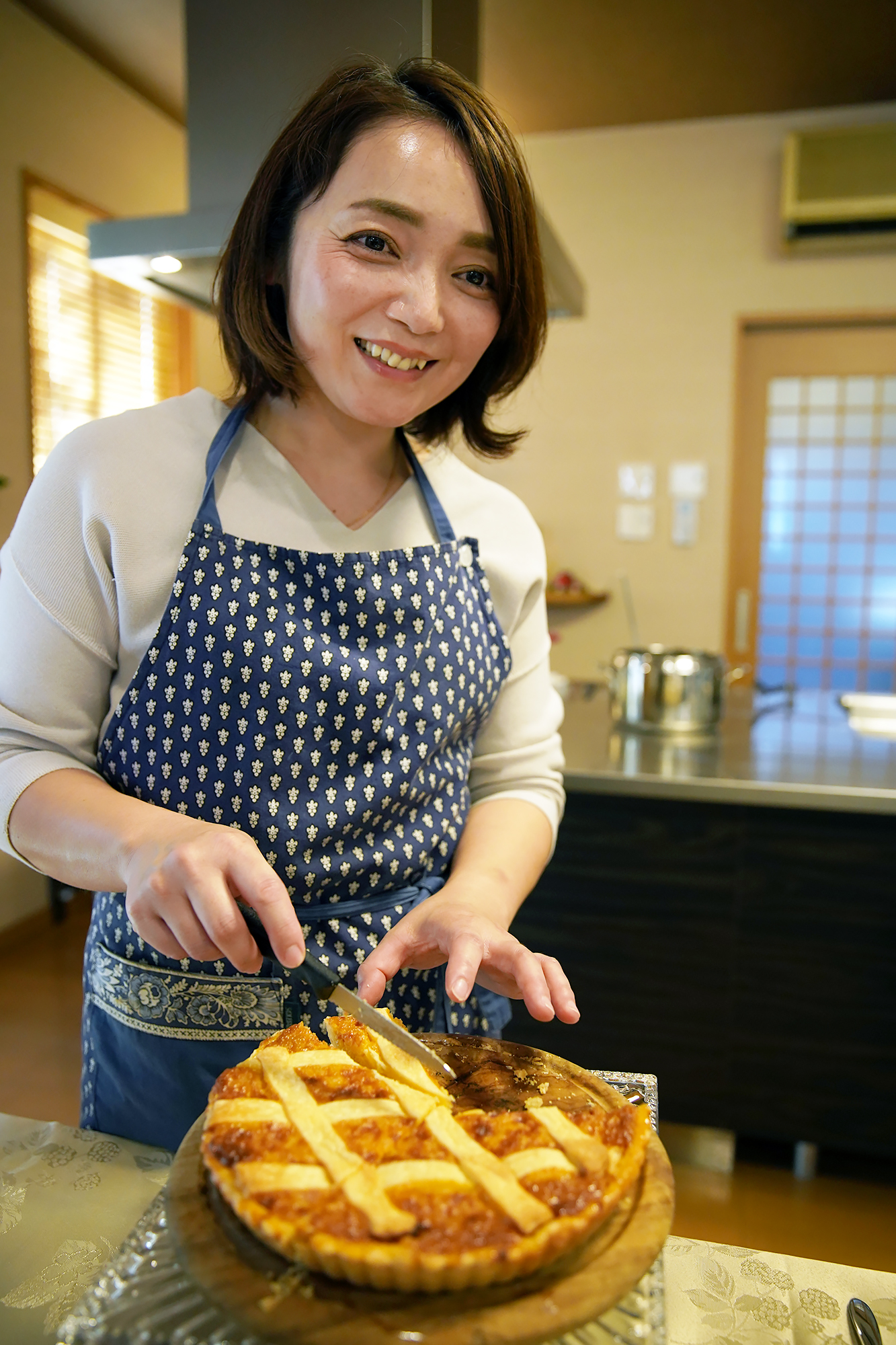
Pastiera Napoletana, a traditional Easter pastry eaten in Naples, Campania.
Q. What did you do before you opened your cooking school?
I was born and raised in Gokase Town, but when I was a student I wanted to get out of this town and learn about many different worlds, so I went to college outside of the prefecture. When it came time to start job hunting, my mother, who runs a farm and a gas station, called me out of the blue and told me that I would be graduating soon and that she had included me in the social insurance system as an employee of our oil company. ...... I was a bit puzzled, since the offer came to me without warning, but I was having a hard time finding a job, so I decided to return to Gokase with a light heart, thinking, ”If the procedures have already been completed, I might as well go back home. I returned to Gokase with a light heart. After returning to Gokase, I worked as a housewife while helping out in the family business.
Q. How did you open your studio, Ms. Fujiki, when you were a housewife?
I didn't realize until I became a housewife that I was a terrible cook (laughs). I was really disappointed with how well I was doing, so I started taking cooking classes. When I tried to replicate that technique in my home cooking and asked my family to try it, they would smile and say, ”It's delicious! They would smile and say, ”Delicious! Their smiles made me so happy that I began to enjoy learning to cook. Then, I not only attended various cooking classes but also challenged myself to obtain qualifications, and I was able to move up one rank after another in the genre of Italian cuisine that I liked, and eventually obtained the "Level 1 Italian Cooking Researcher of the Japan Association of Italian Cooking Schools". I also wanted to tell people that even people who are not good at cooking like me can make their families smile! I decided to open a cooking class to show people that even people like me who are not good at cooking can make their families smile! I was not so worried or hesitant about opening the school. Perhaps I inherited the decisiveness of my mother, who was so bold that she would decide at her own pace where I would go and call me (laugh). I started classes at the Kitchen Studio in 2014, so about five years ago."
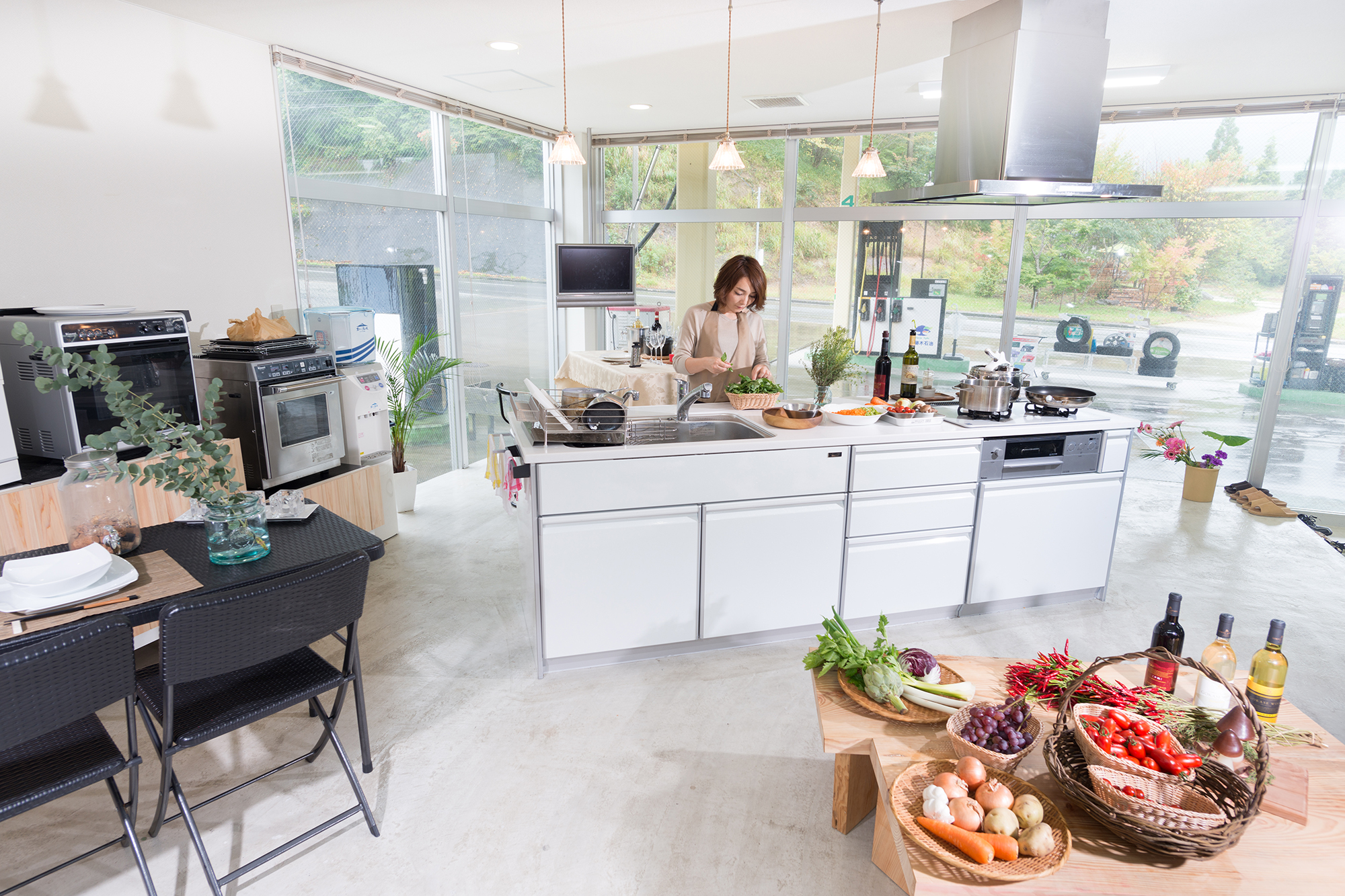
▲Kitchen studio located inside a gas station (image courtesy of CORASITA)
Q. What did you actually study in order to obtain the "Japan Association of Italian Cooking Schools, Italian Cooking Instructor Level 1"?
From the second level, I had to learn about wine and interview in Italian, which was very difficult. I had to read and understand recipes written in Italian and answer questions. Therefore, I had to leave my child to study on Saturdays, and sometimes my grandfather's funeral fell on the day of the Level 3 exam. ...... Thanks to the support of my grandparents, parents, and family, I was always able to successfully complete my Level 1 Italian Culinary Institute."
Q. What are the features of "CORASITA"?
CORASITA" means "Welcome to Gokase" in the Gokase dialect. It is a way of expressing our gratitude to those who have come all the way to Gokase Town, which is deep in the mountains. In the cooking class, I teach you how to cook at home using fresh local vegetables, tomatoes I grew, and other ingredients that are close to home. I try to understand the concerns and feelings of the students so that I can expand my repertoire according to the seasons and events, and make their dining table full of smiles. I pay attention to creating an at-home atmosphere in my classes, which I understand only because I used to be a poor cook. In addition to cooking classes, I have also started a private accommodation business. I hope that people will enjoy the unique space of "CORASITA" by combining the relaxing time spent in this great nature with the special time to experience the cooking class.
Q. What inspired you to grow tomatoes?
In 2002, my grandfather and father started growing mini-tomatoes, which are generally distributed for food use, in my parents' home, and I helped them. The first year, we were only able to grow 100 plants, but after trial and error, we were able to successfully grow 200 plants the second year, and this year we were able to grow 1,600 plants. This year, we have planted 1,600 trees. It seems that the climate of Gokase, with its cold temperature differences and plenty of water, was ideal for growing Italian tomatoes.
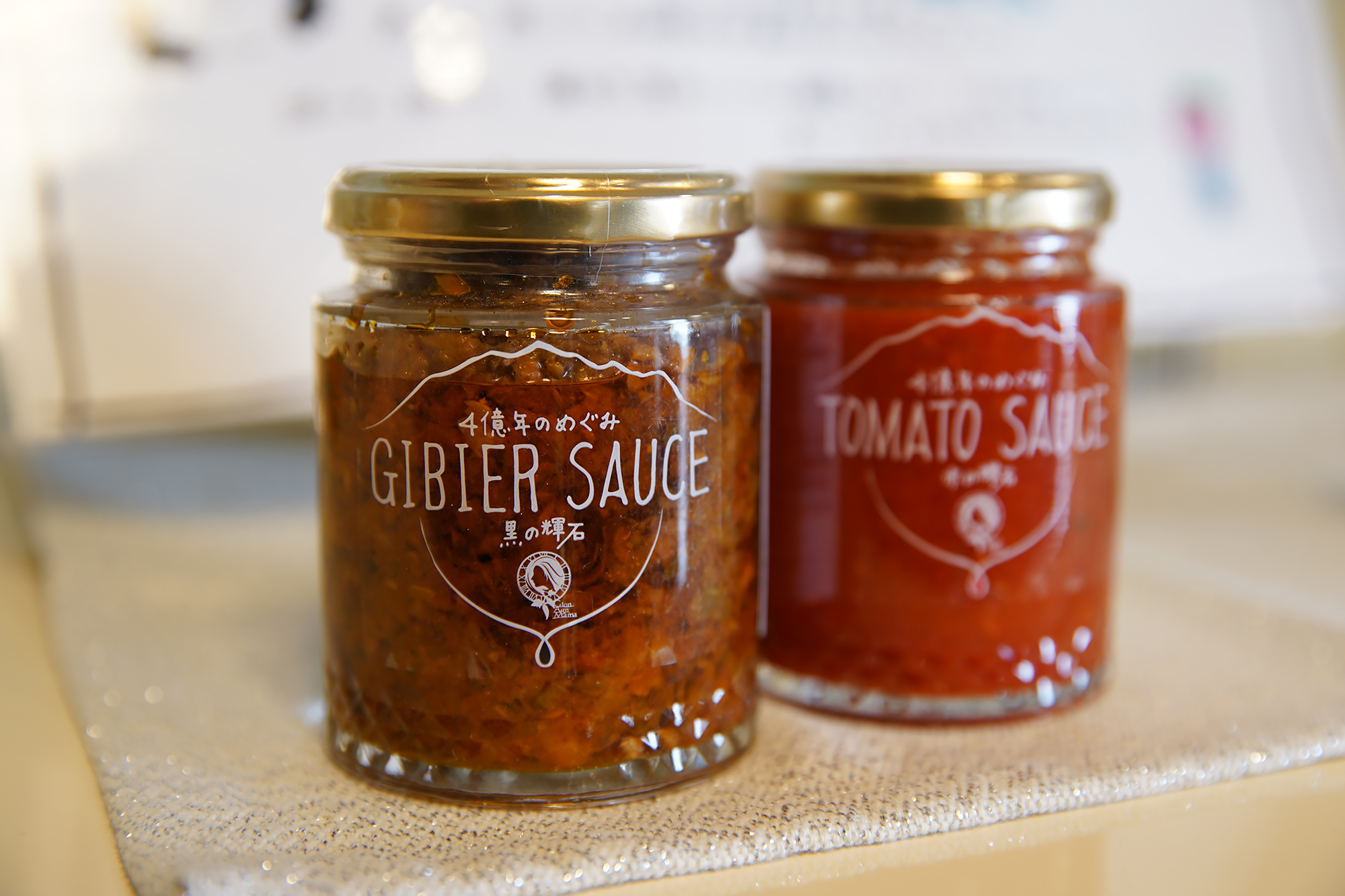
Q. How did you develop the "400 Million Year Old Megumi" sauce?
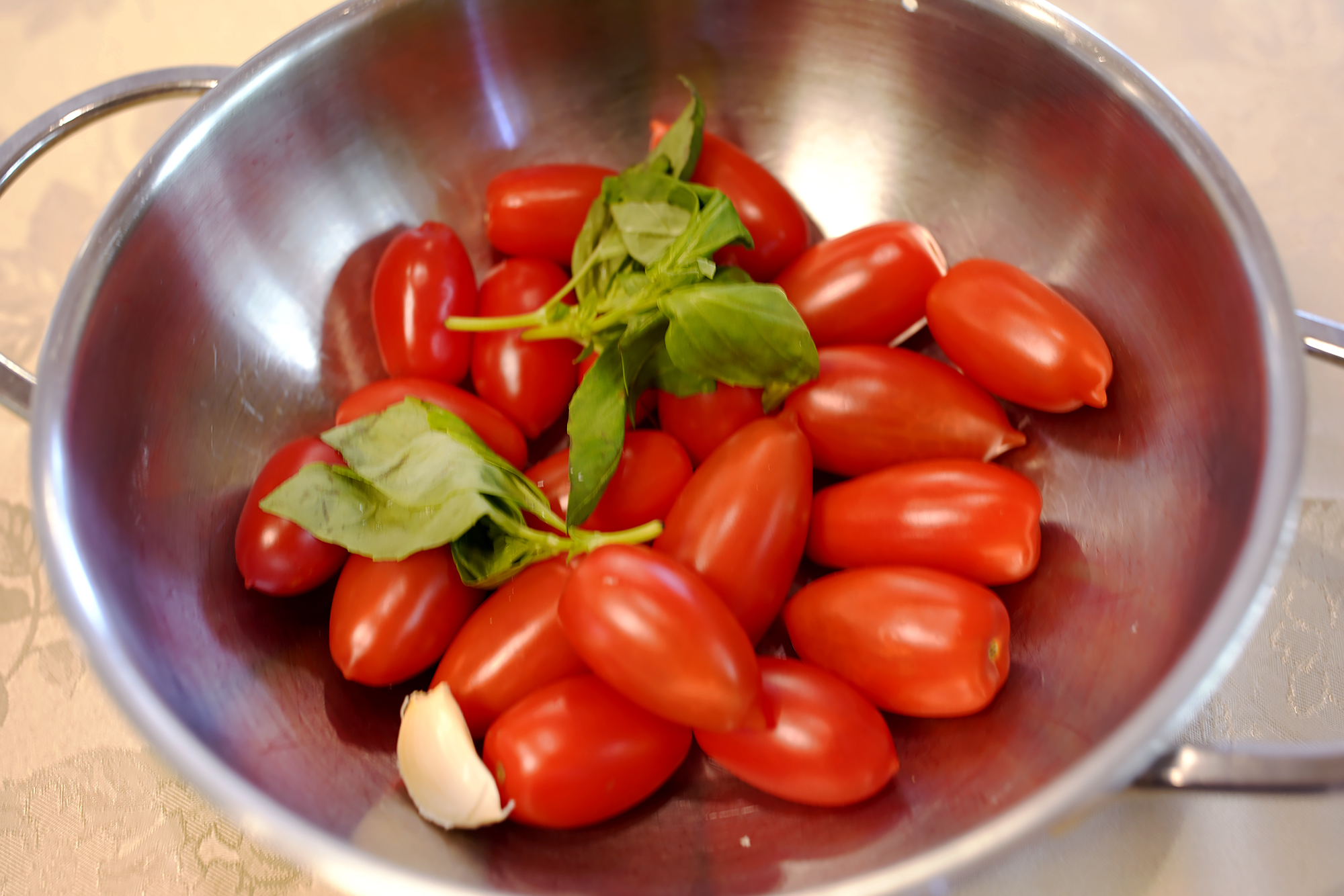
When I was growing mini-tomatoes, my mother decided that the out-of-spec tomatoes were too good to waste, so she started making tomato sauce. She then set up ”Gion Agri-Mama” in her kitchen studio and began commercializing tomato sauce in earnest. I started selling it locally and selling it myself to restaurants and other businesses, little by little. Later, after changing the variety of tomatoes, he began to search for ”how to make it tastier,” which led him to study Italian cuisine, where he was originally from. In Italy, they take what is picked in the summer and process it into sauces and store it so that it can be eaten all year round. Knowing this, we set out to 'store' and 'authentic sauces' ourselves. This variety has a rich and delicious flavor when heated, and its thick pulp and low juice content allows us to make deep sauces, which greatly enhances the flavor we can express in our cooking classes. We usually have a fixed season in May and harvest throughout August through October."
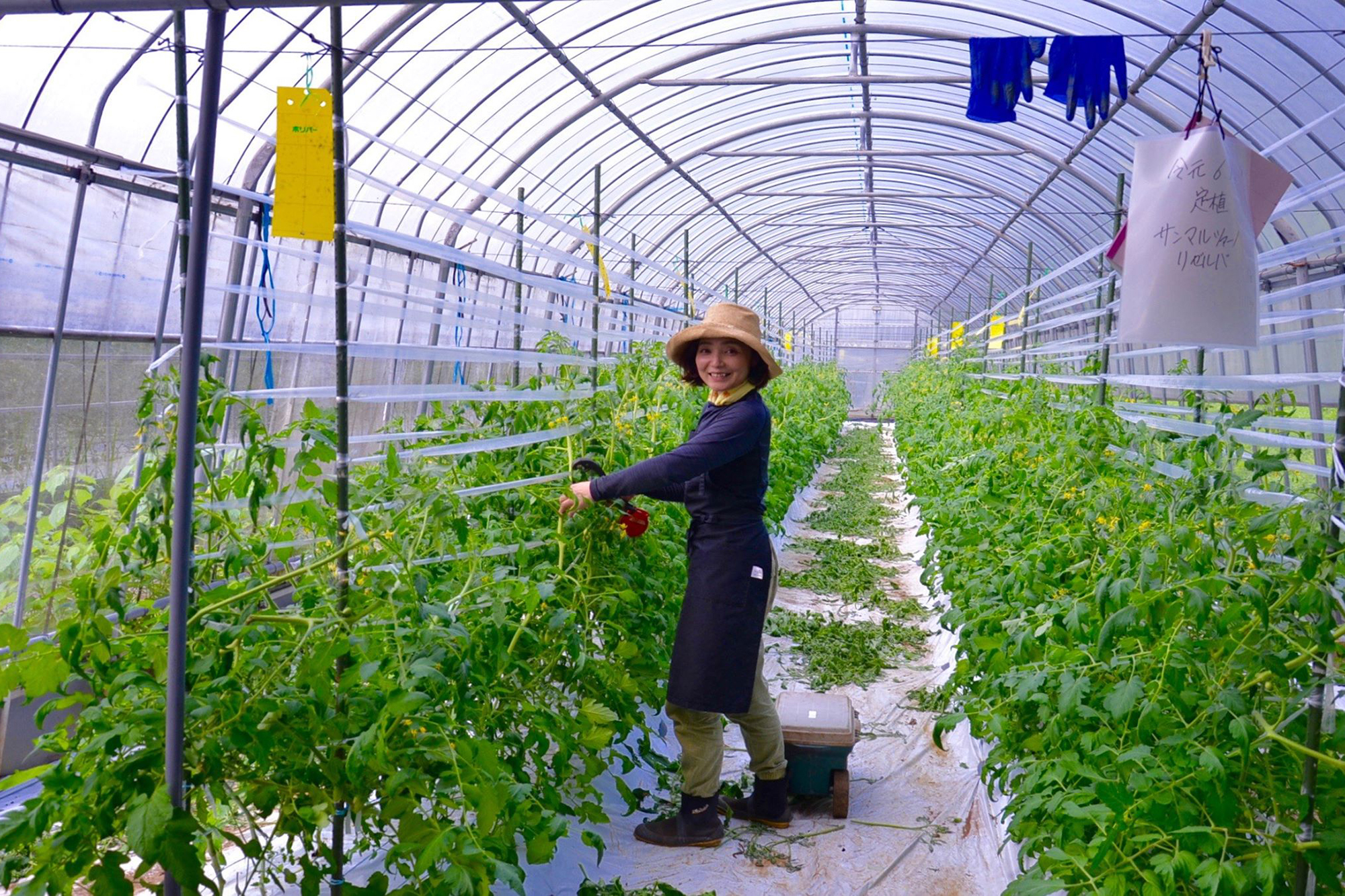
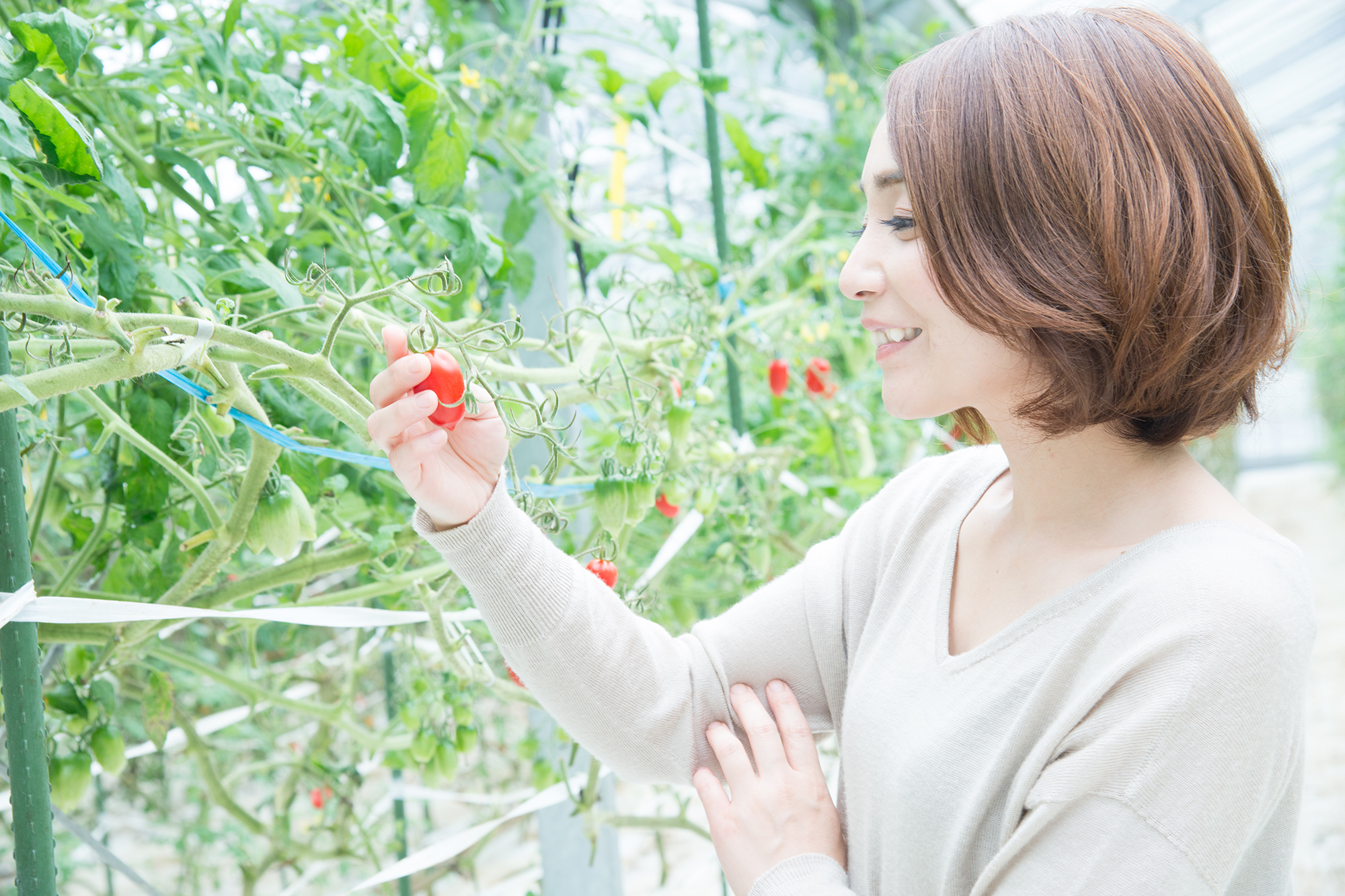
▲Tomato cultivation scene (both images courtesy of CORASITA)
Q. What is the origin of the product name "400 Million Year Megumi"?
One day I was talking with a friend about our hometowns, and while I was talking about Gokase, I mentioned that there is a spring called ”400 million year old drop Myokenjinsui” at the Myoken Shrine at the foot of Mt. Gion, which can be seen from the studio, is a mountain with a rich history that sometimes produces fossils dating back hundreds of millions of years, and the water from this spring has a history of 430 million years. When my friend heard this, he was surprised and said, "It's amazing that you were born and raised in such a place with such a deep history!" and I realized anew how deeply rooted in our lives the mountains and their sacred water were. I realized that the agriculture, culture, scenery, and relationships with the local people of Gokase, where I had lived since birth, were not something to be taken for granted, and that from other people's perspective, Gokase was a fascinating place with much more value than we had realized. We are grateful for the bounty of nature in Gokase, and we make this tomato sauce as an expression of our gratitude to the local people."
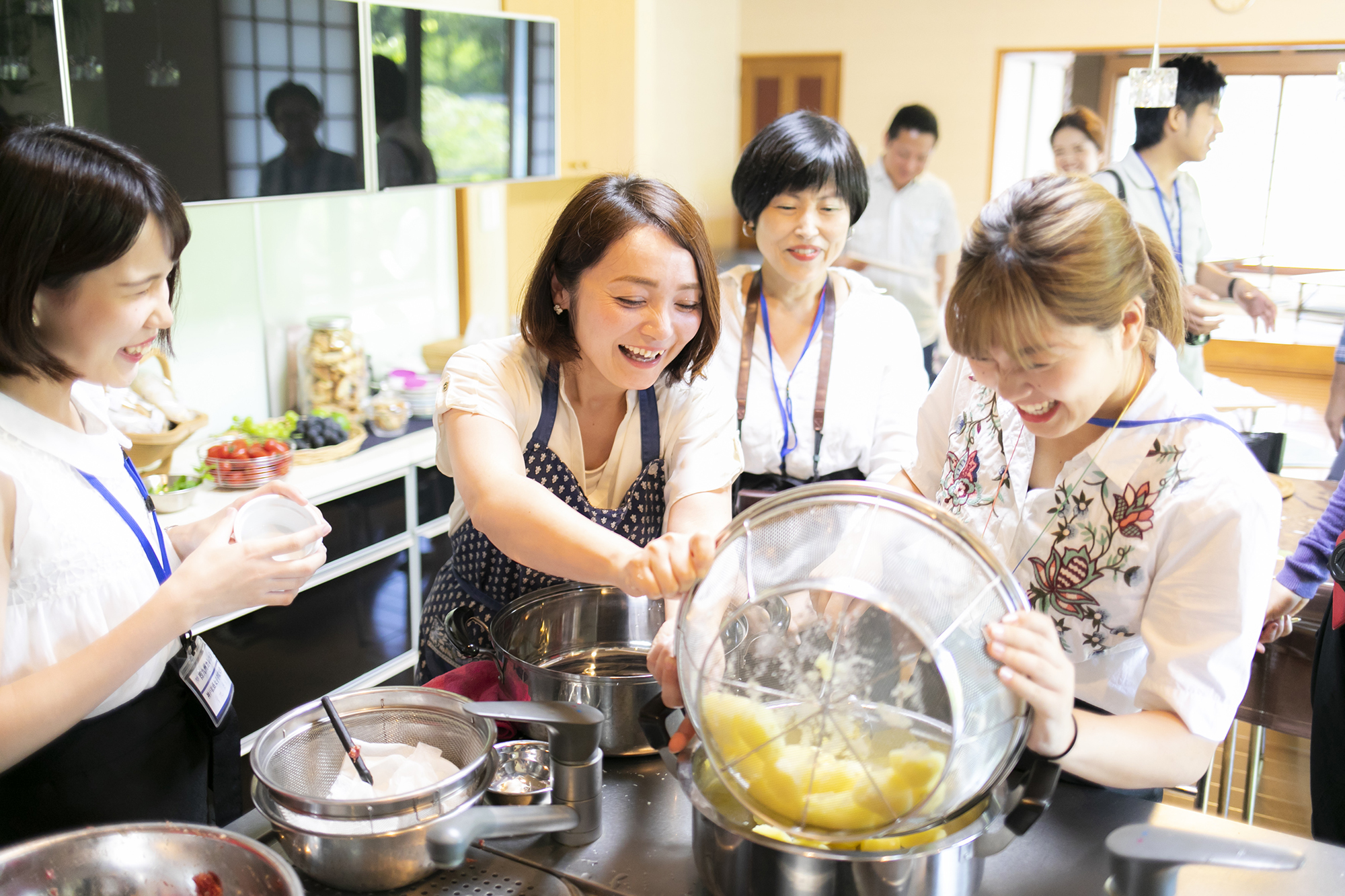
▲Activities of "Gion Agri-mama" (image courtesy of CORASITA)
Q. What is your vision for the future?
I would like to travel around the world with these tomatoes. The name of the studio, "CORASITA," also expresses my wish to connect the past, present, and future through the spirit of cooking and hospitality, and to refine them together to move forward into the future. My hope is that the tomatoes grown with the blessings of 400 million years of Gokase will spread along with this wonderful dialect of 'korasita' and the charm of Gokase.
Q. Thank you for your time.
Cooking Class ExperiencePasta with tomato sauce using fresh tomatoes
Experience: Reporter Chiho Takei
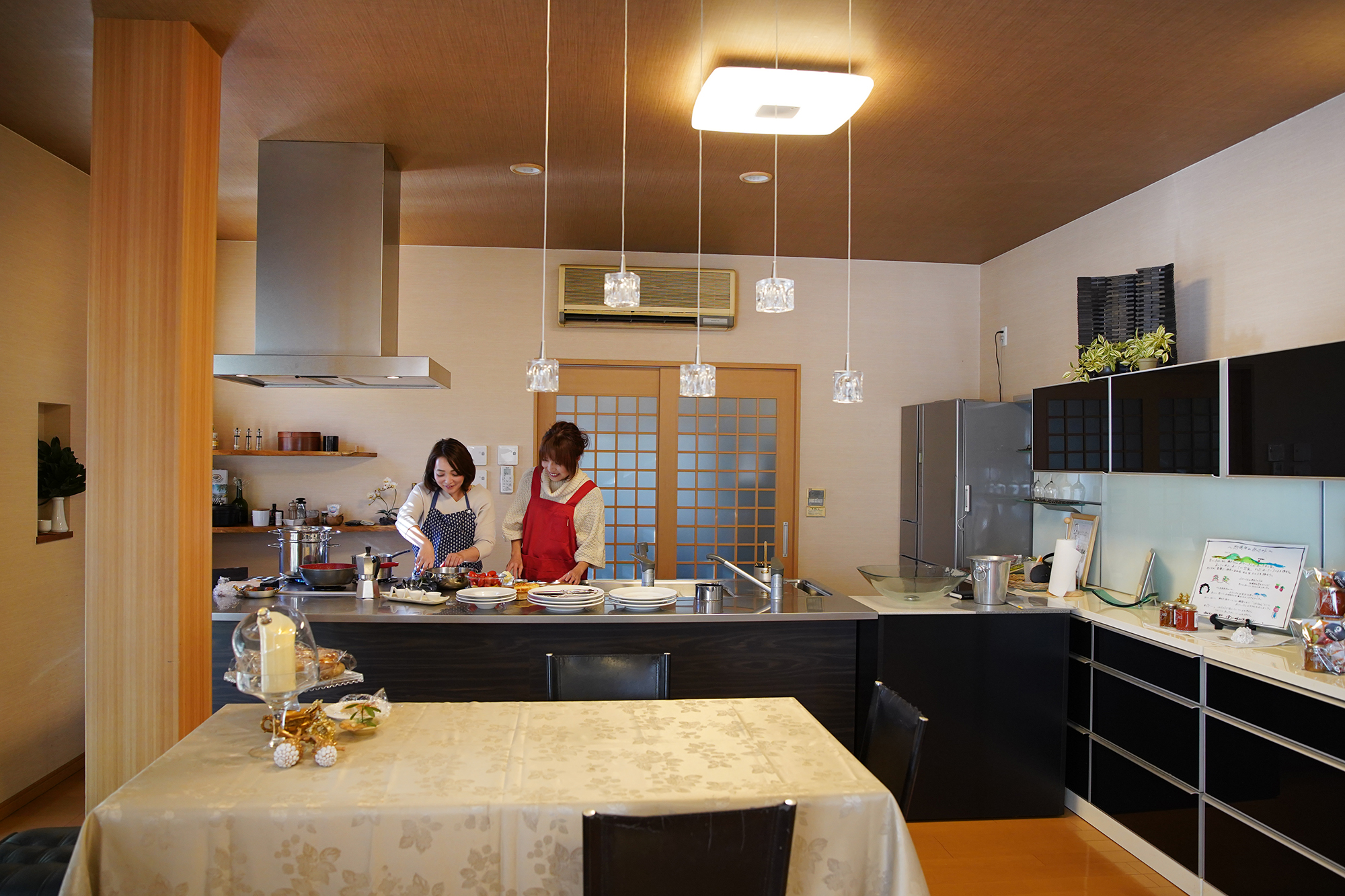
This time, he taught us in the kitchen of a private accommodation space. A female staff member who visited for the interview said, "What a functional and spacious kitchen! Just being in this place is exciting! The atmosphere was friendly and relaxed from the start. Here are some comments from Chiho Takei.
Ingredients used
Fresh tomatoes (in this case, San Marzano Riserva)
■Fresh basil
■ a clove of garlic
■Pancetta
■Olive Oil
■Salt and pepper
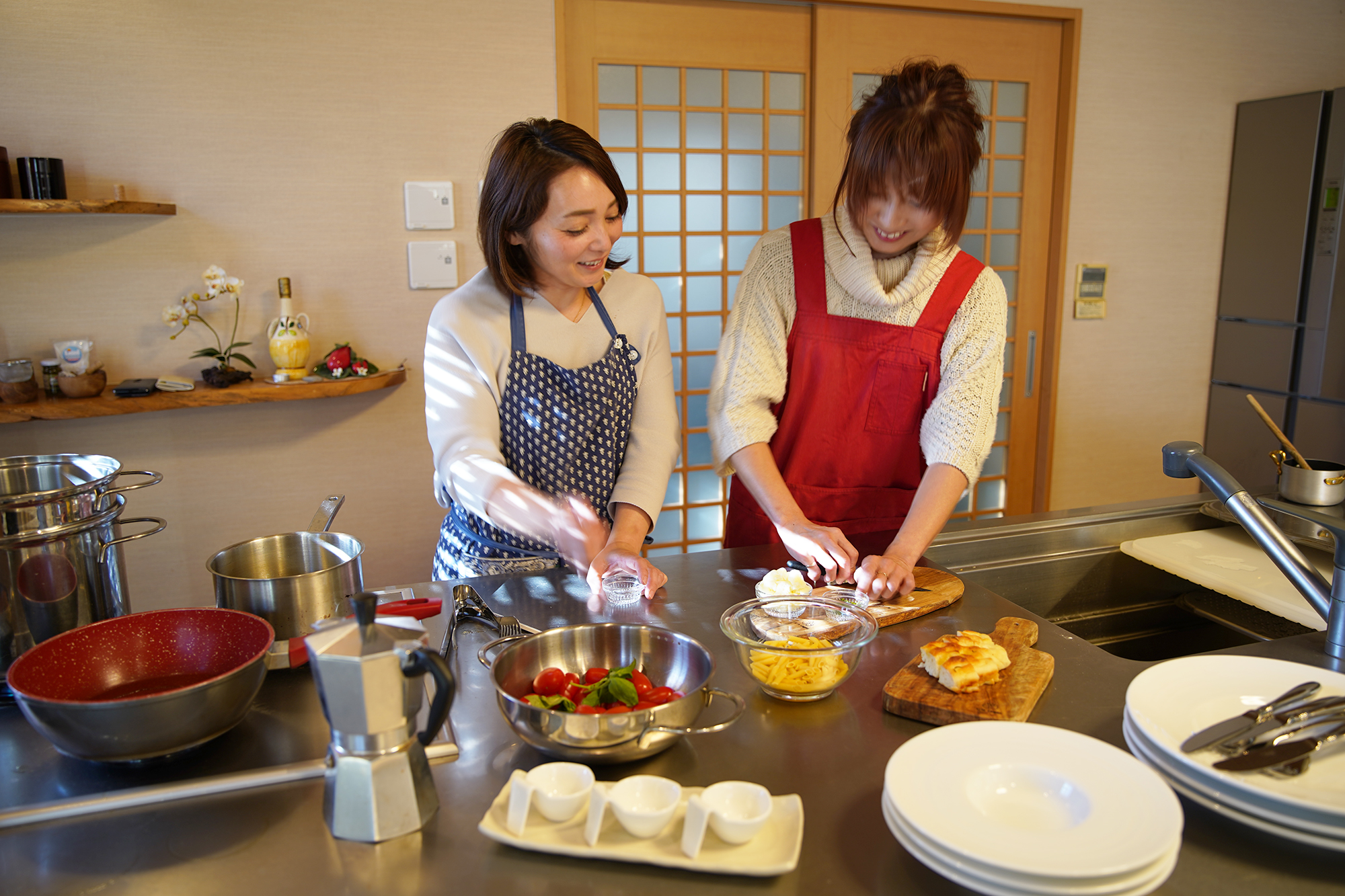
First, crush a clove of garlic and fry it in plenty of olive oil. We used extra virgin oil from central Italy. Cook slowly over medium-low heat until the garlic is slightly bubbly and golden brown. Then add the basil.
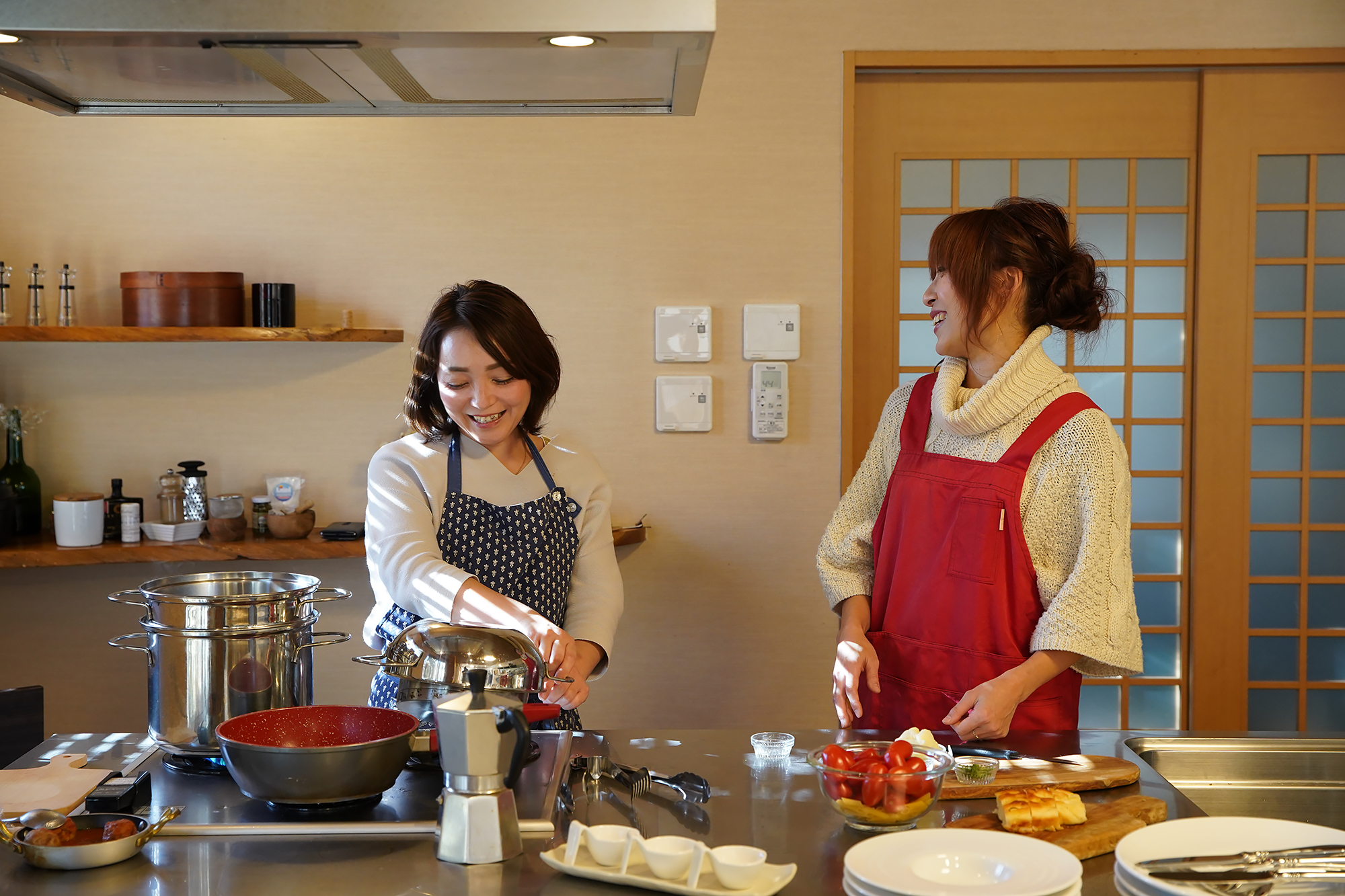
▲Mr. Fujiki: "The garlic is for aroma, so you can take it out later. The oil splashes quite a bit when the basil is added, so put a lid on it to guard against that!"
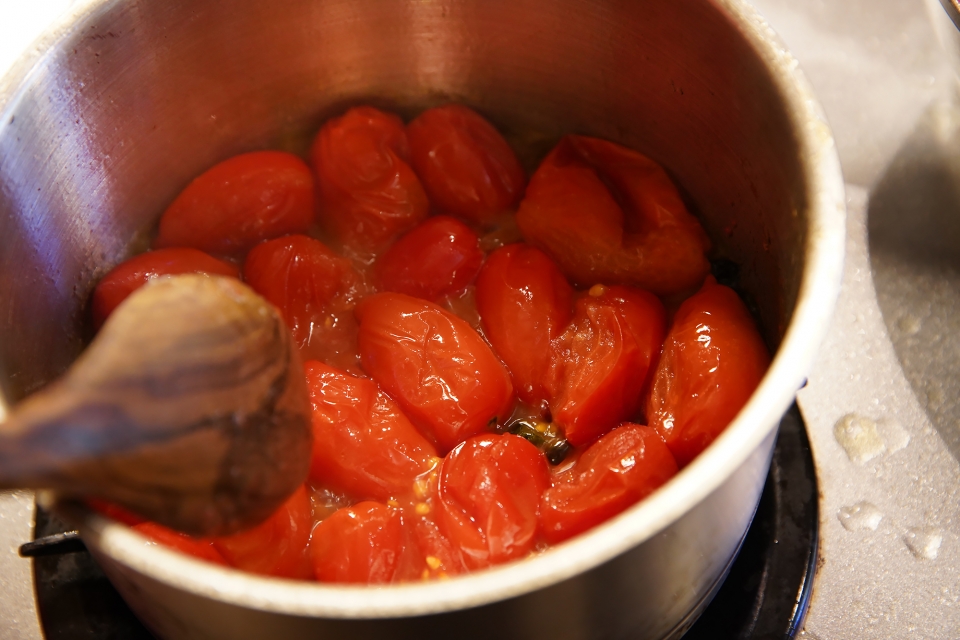
2. Add only the tomatoes to the pot and simmer over low heat for about 15 minutes.
Meanwhile, fry the pancetta in the oil that has just been aromatized with garlic to give it a rich flavor.
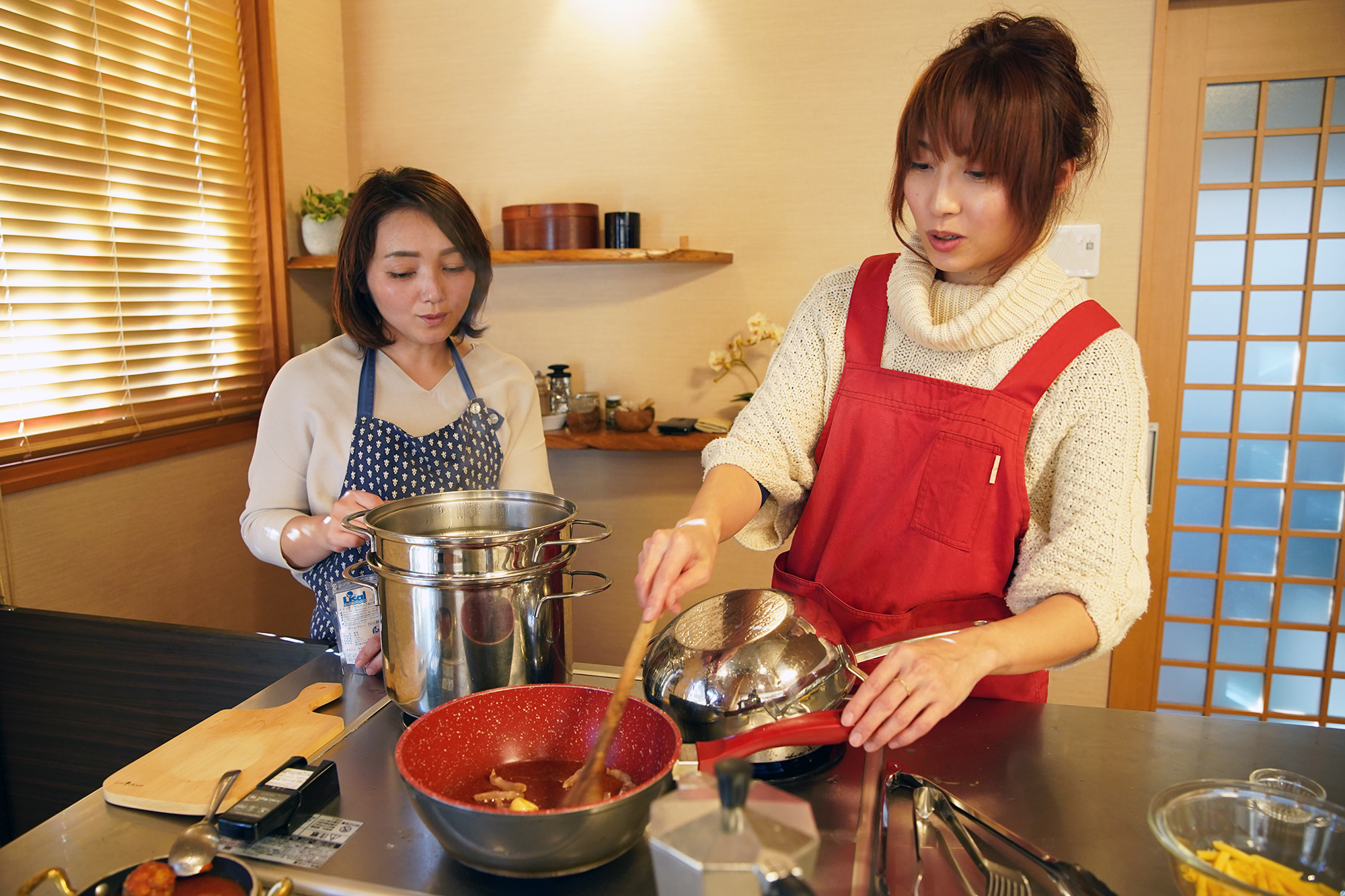
▲The larger size should be used because the food is finished directly in the pan with the oil.
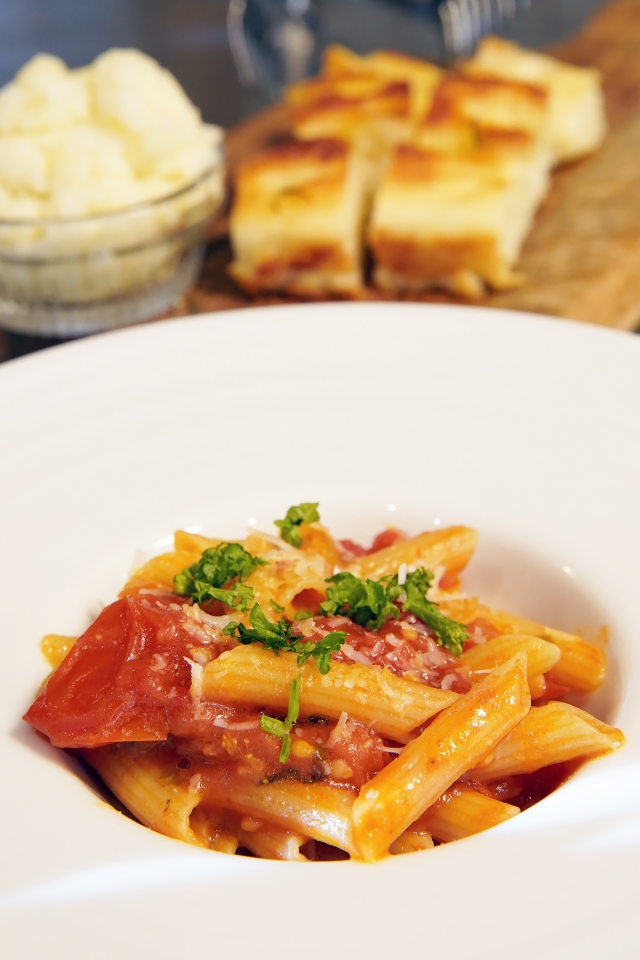
3. When the tomato sauce has reached a nice simmer, add it to the pan. Now boil the pasta. The pasta we used this time is rigatoni, which is short pasta with holes in it. Add 1 tablespoon of Sardinian salt to 1 liter of boiling water. Taste and see if it is as thick as broth.
Mr. Fujiki: "Since we adjust the flavor at the end, it is good to avoid too much saltiness here. If the taste is too weak, people tend to become anxious and increase the saltiness, but it is also important to 'subtract.
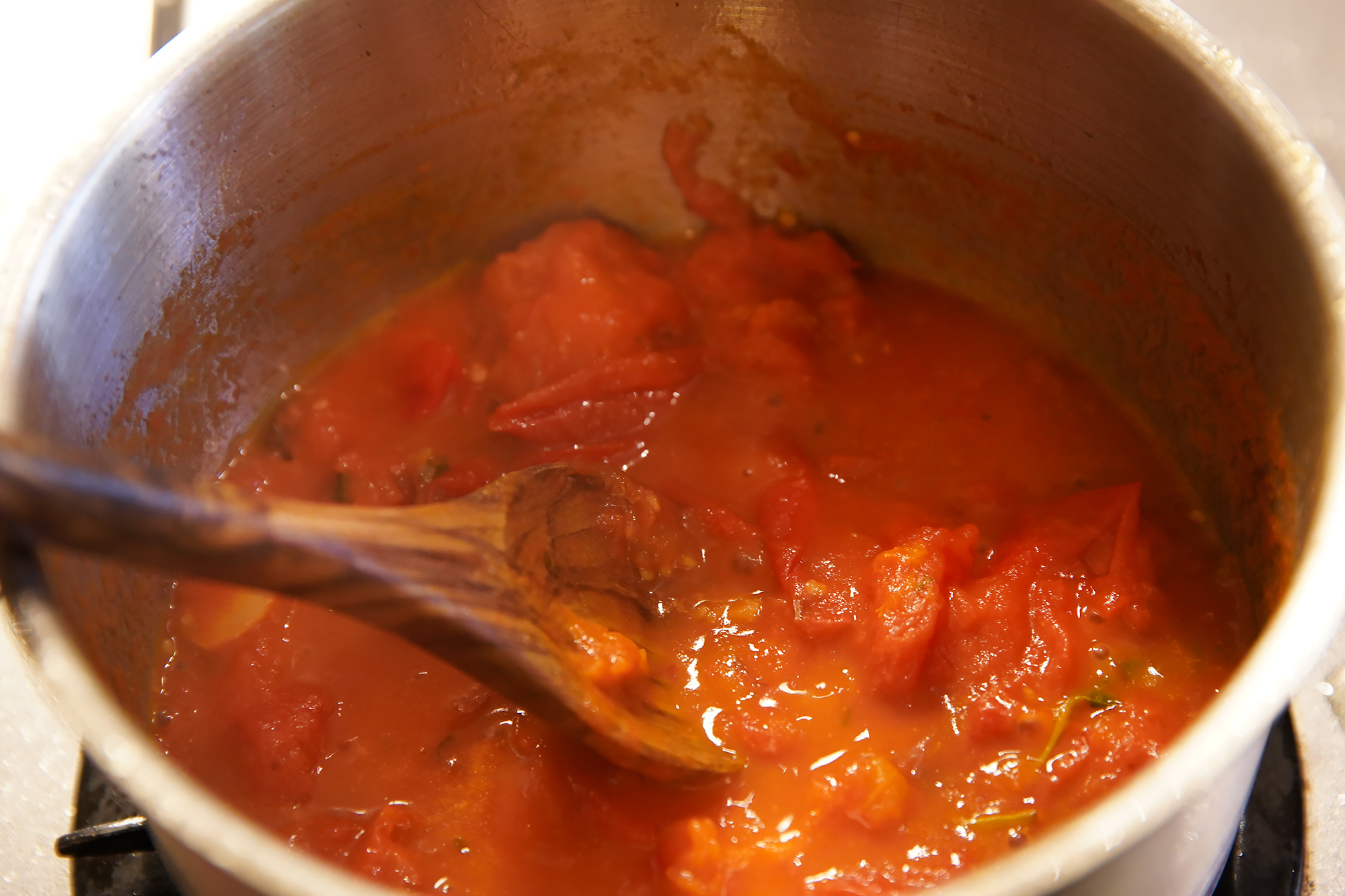
▲The pulp is now tender with a little pulp remaining.
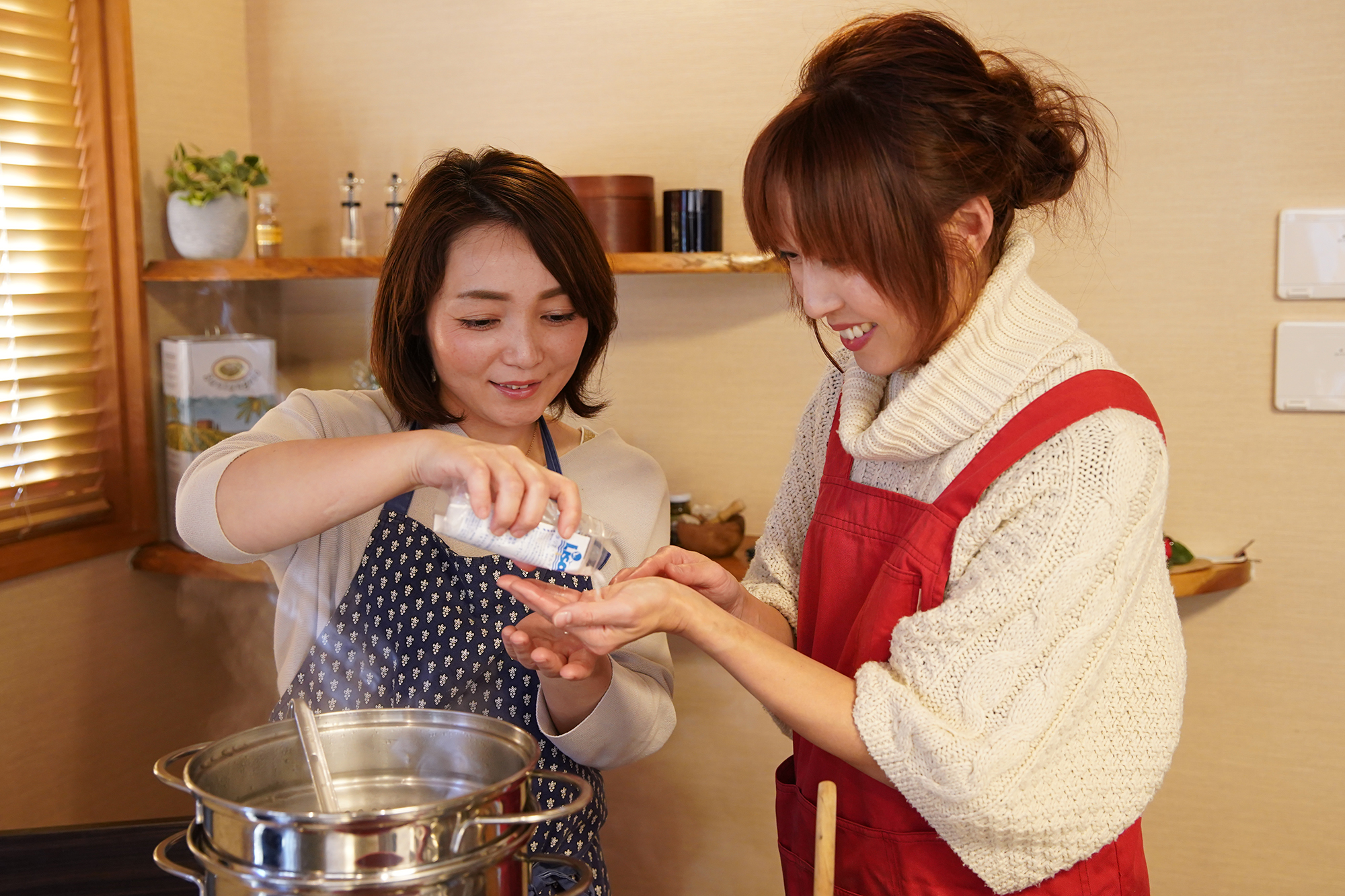
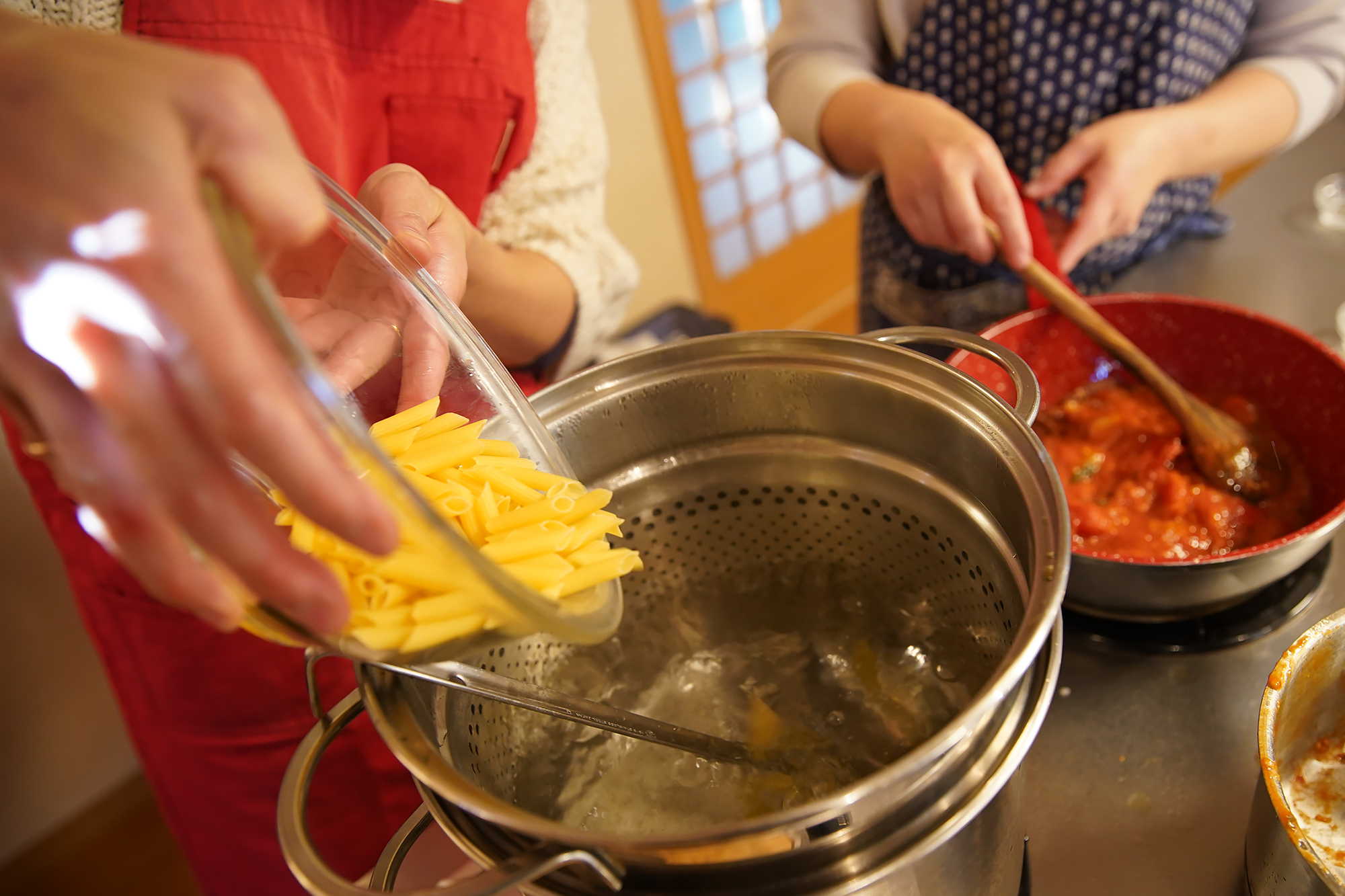
5. Cook the pasta for the indicated time. Add a ladleful of the cooking water to the tomato sauce, taste and adjust by adding salt and olive oil if it is too thin. The sauce is very sweet, so if you don't like the sweetness, adjust the salt to your liking. When I tasted the soup before adjusting the salt to taste, I could taste the sweetness of the tomatoes. This alone would make a gem of a dish.
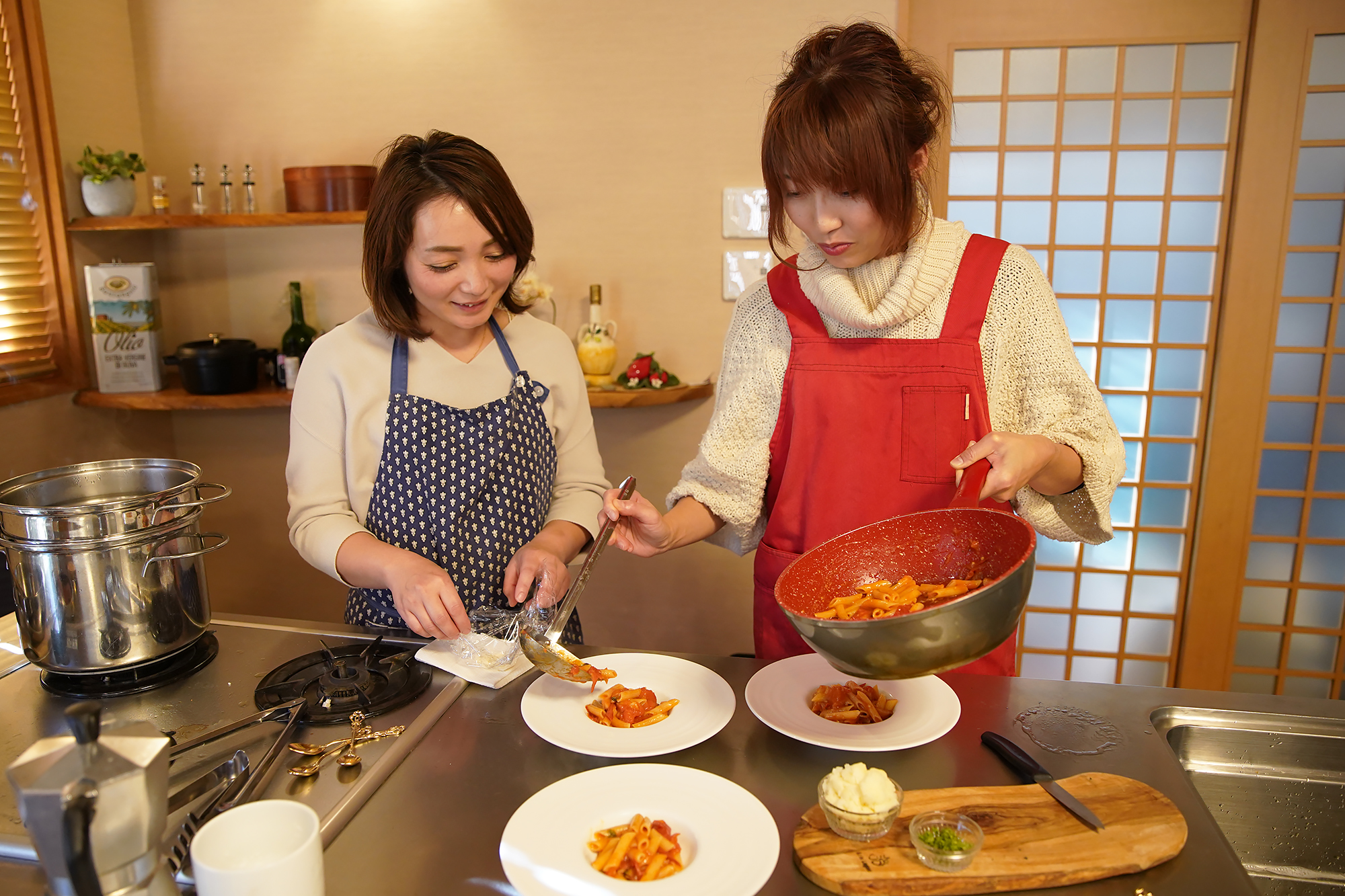
Finish with Parmegiano cheese and parsley. Looks very delicious!
Mr. Fujiki: "Home cooking, the basis of Italian cuisine, is one of its basic and longed-for attractions, using local ingredients and having the whole family together around the table. This pasta recipe lets you feel the deliciousness of the ingredients."
Comment by Chiho Takei
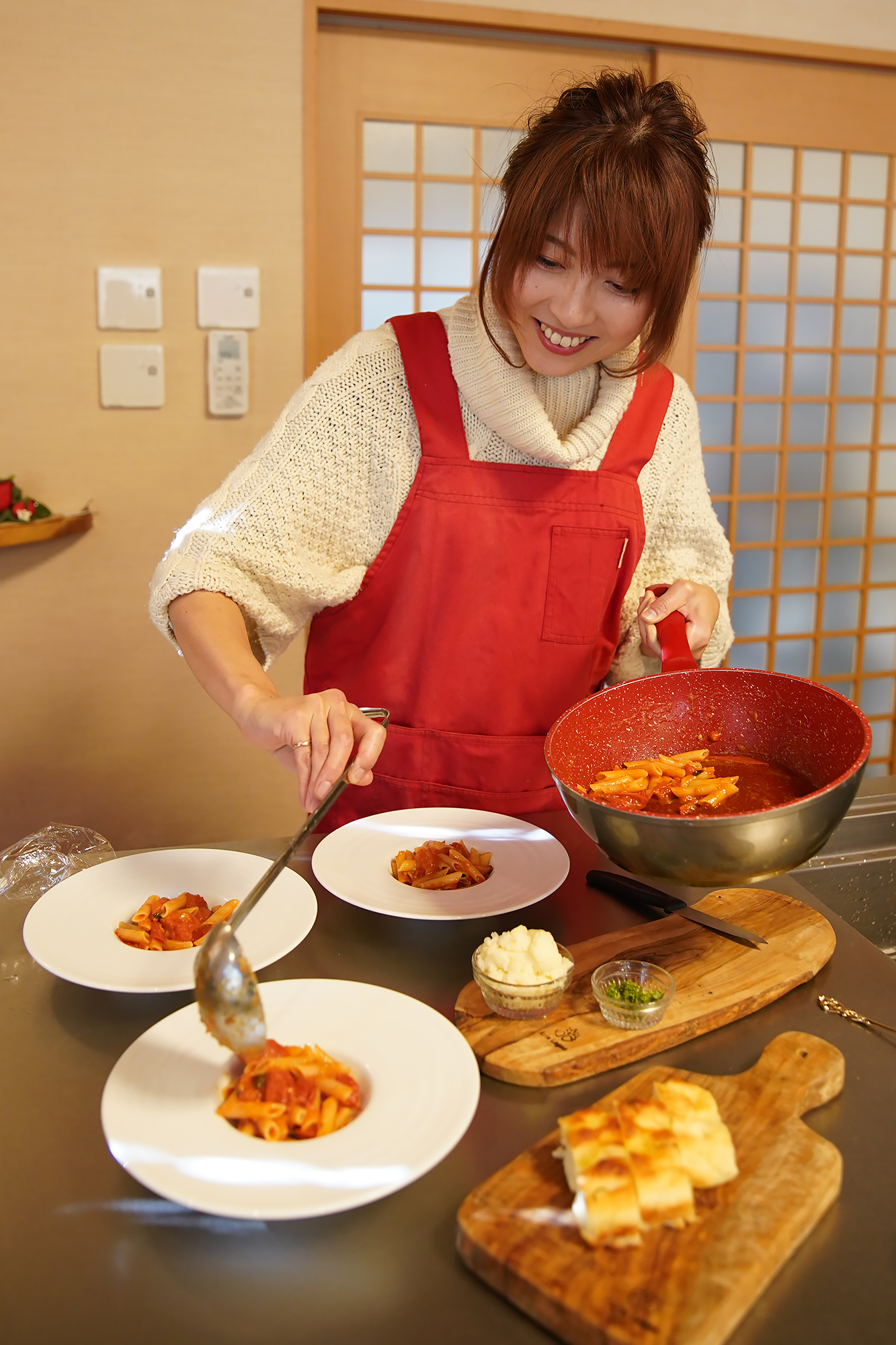
This time, we are going to visit a ”cooking class. I was nervous about whether I would be able to follow the procedures ...... without a hitch. An hour and a bit drive from Nobeoka, we arrived at our destination in the town of Gokase, which is full of nature. Surrounded by trees, the exterior of the house is small, and at first glance, it is hard to see the inside. Passing through the approach to the house, we entered through a large entrance hallway and found a more spacious room than we had imagined. Soft light streamed into the open kitchen, and I couldn't help but say, ”Wow!”The voice leaks out.
It was the first time for me to meet Ms. Fujiki, today's teacher, but she is a lovely lady who wears a very warm and friendly atmosphere. ...... Her cheerful tone of voice made me smile naturally. Before I knew it, my nerves had relaxed and I felt as if I were at a good friend's house.
Today's cooking class menu is pasta with tomato sauce. First, we listened to an explanation about the bright red San Marziano Riserva tomatoes that were placed in front of us. From there, Mr. Fujiki talked about the many challenges he has faced in his life, from his first interest in Italian cuisine, to his studies, to his qualifications, to farming, to product processing, and finally to his current job at ....... His passion for tomatoes, his passion for this studio, and his passion for his work with tomatoes. The light in Mr. Fujiki's beautiful eyes showed us his passion for tomatoes, for this studio, and most of all, for Gokase.
Now it's time to put on an apron and head to the kitchen! Garlic is chopped and red glowing mini tomatoes are put on the fire along with plenty of olive oil. As I work with my hands, I realize how easy it is to use the functional kitchen. As a regular cook, I was impressed. And even though it is a cooking class, it is not ”too formal,” but in the good sense of the word, the class is taught in a relaxed manner, which is something I really appreciate.
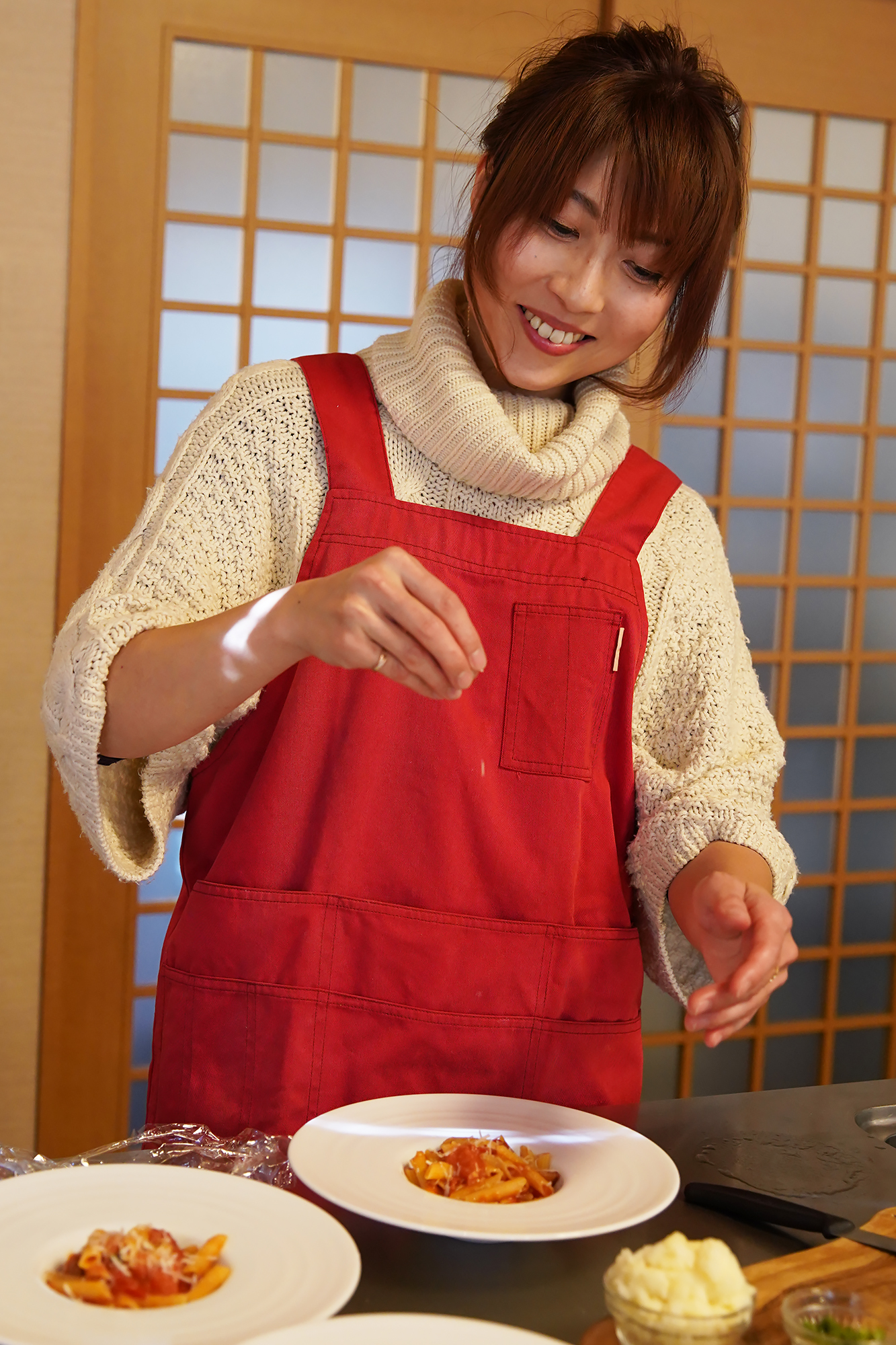 No special cooking equipment is used. The cooking is done on the spot, using all five senses to check the level of heat and salt, so you will be able to learn by doing. The cooking is done in a lively atmosphere, just like a girl's night out. “Is this enough?” ”Is this enough? ”Is this enough?" "Is ...... the right place for this?" I was given advice at every important point, and as the ingredients were transformed into a dish by my hands, I once again felt that "cooking is fun! Cooking is fun!
After the pasta is cooked, it is tossed with the tomato sauce and placed on a plate! The gorgeous table setting is sure to lift your spirits, and the aroma of the tomato sauce that tickles your nose will whet your appetite. “Bon appétit!” Everyone gathered around the table for a delicious time of chatting. The sauce, which was created from Mr. Fujiki's fresh tomatoes, was surprisingly deep in flavor and perfectly balanced with the pasta, and I was impressed with the ”exquisite!” I was so impressed. It is like magic that a simple ingredient and procedure can produce such a great flavor. I wonder what I was doing with the sauce I used to make from canned tomatoes... (laugh)
Looking at the wall, one can see that the shelves are decorated with cute pictures and episodes about "400 Million Year Megumi". Mr. Fujiki named his kitchen studio after "CORASITA," a dialect word from Gokase. The cooking class is filled with love for the community and people. I'll be back to enjoy this time with you again!
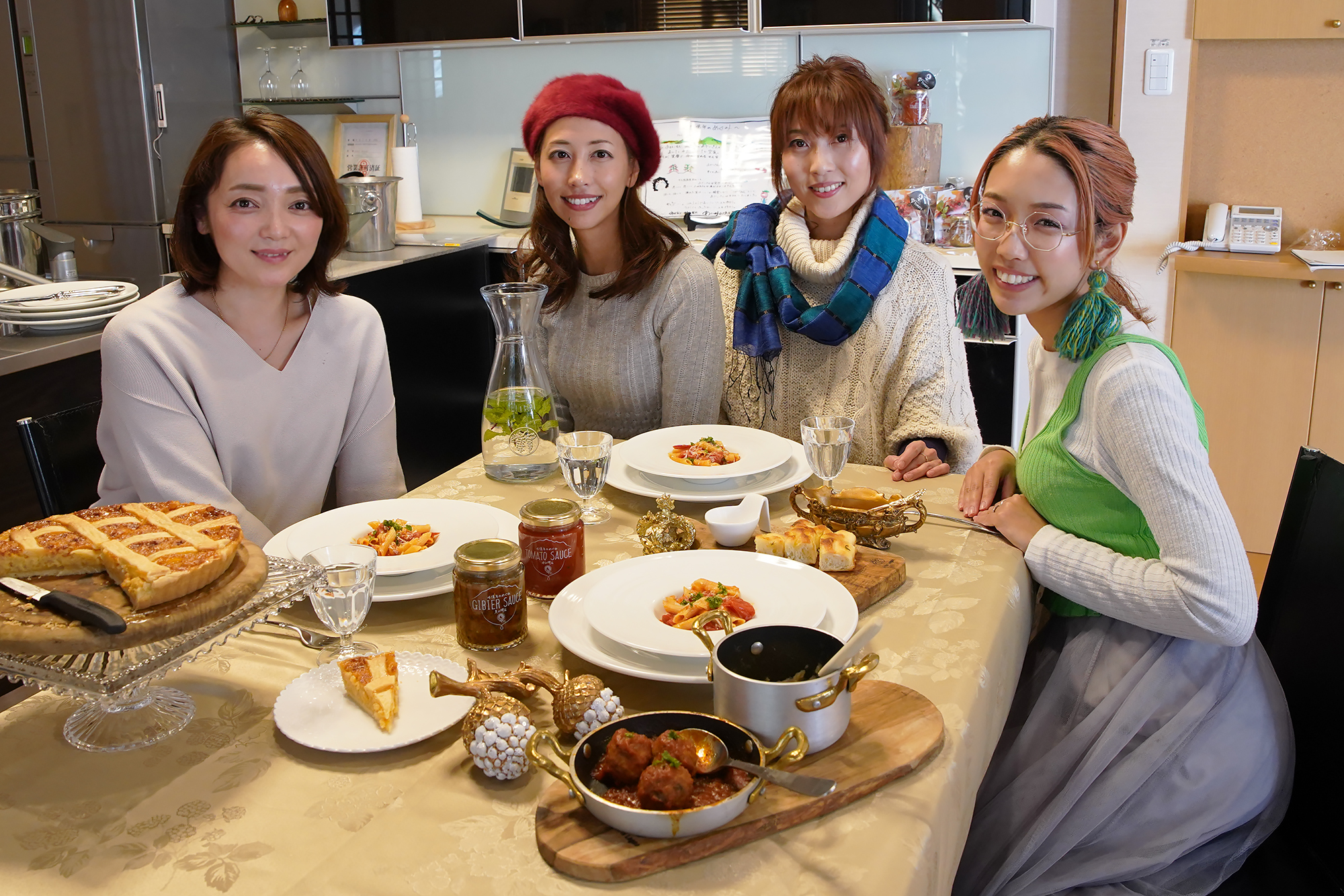
tasting time Enjoy table coordination as well.
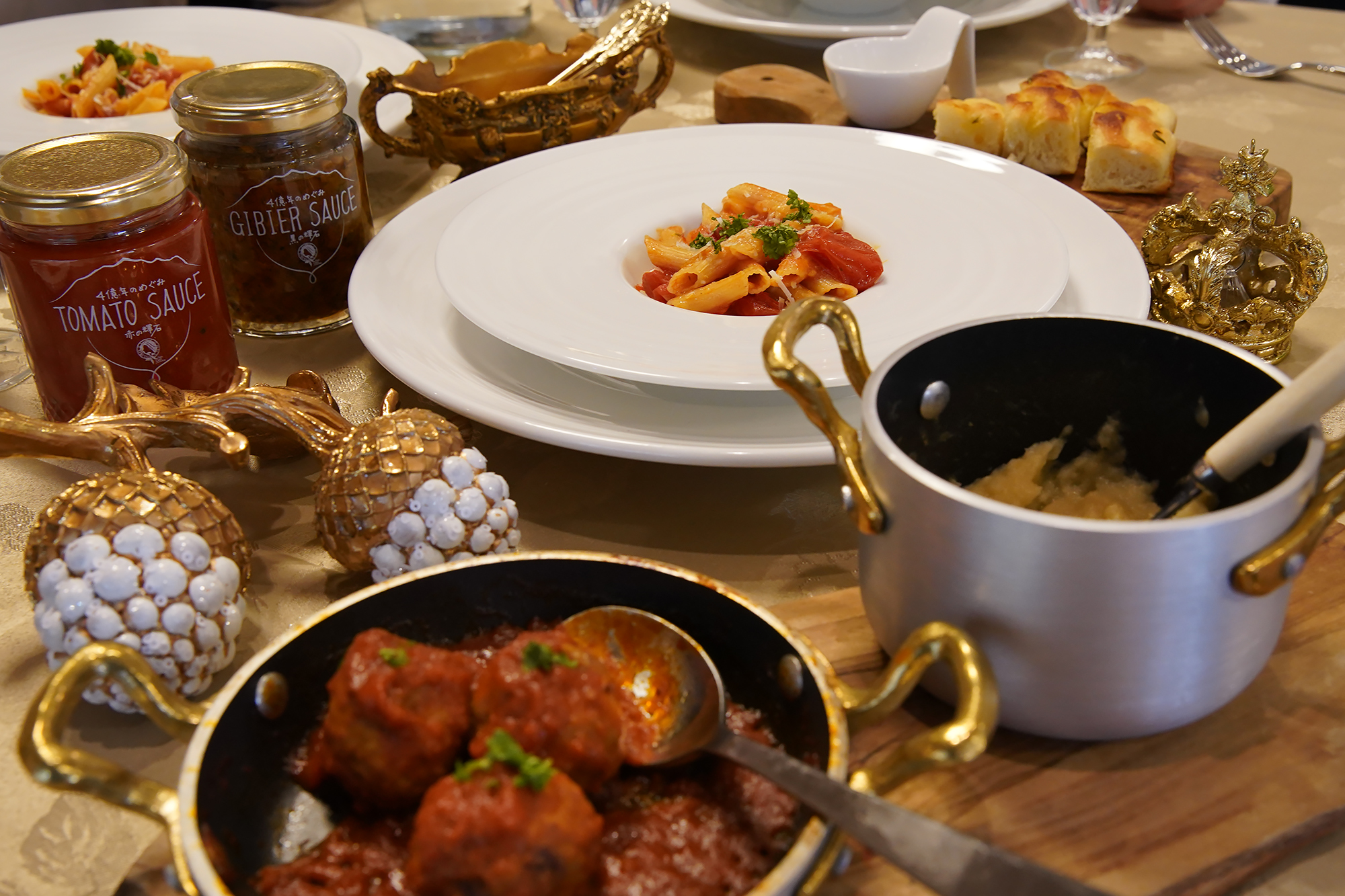
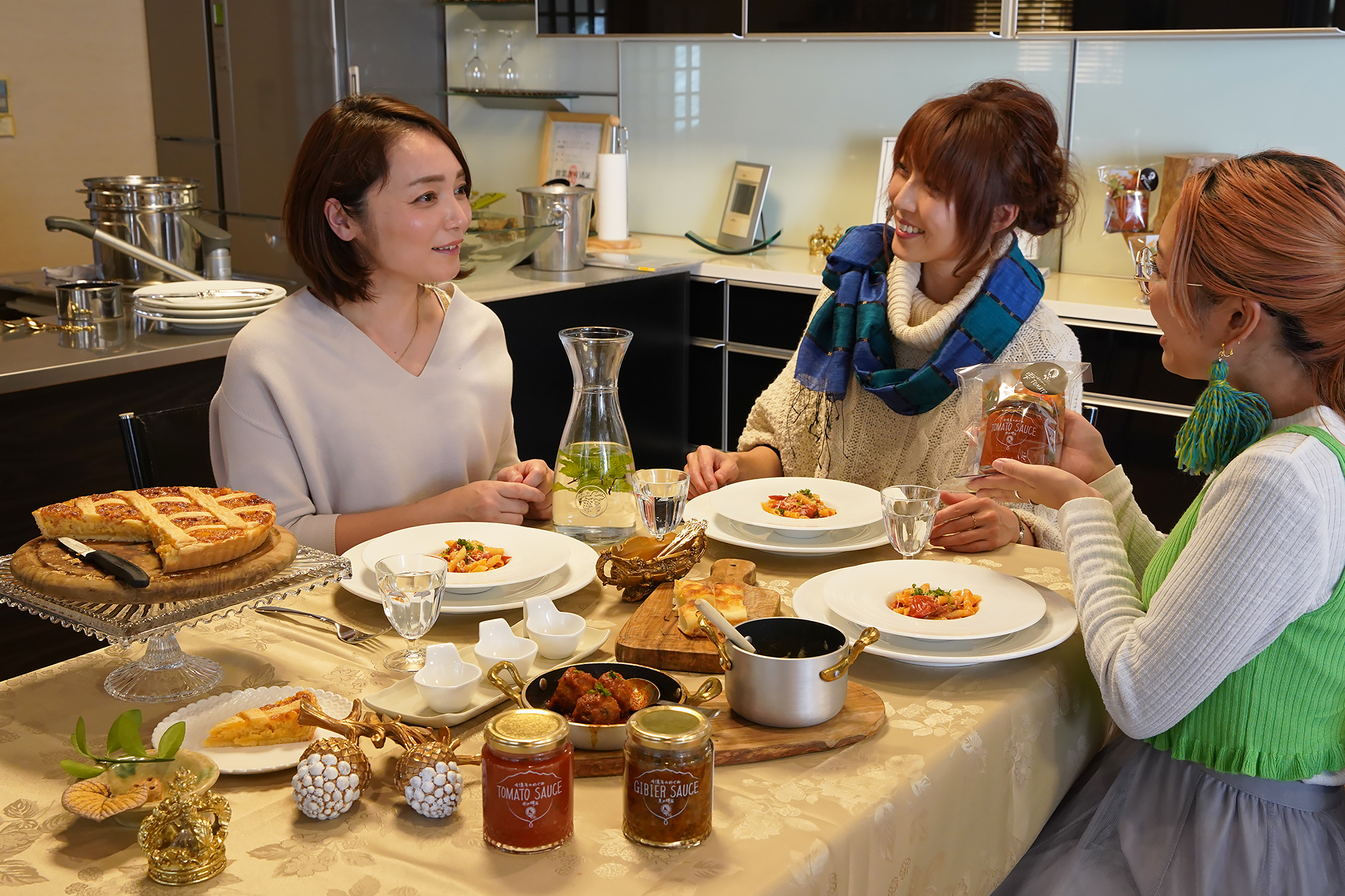
It is time to enjoy the meal around the finished pasta! In addition to the pasta, we also had a special dish of potato focaccia (like bread), turnip soup with brodo, mashed potatoes, and meatballs with "400 Million Year Blessing" tomato sauce.
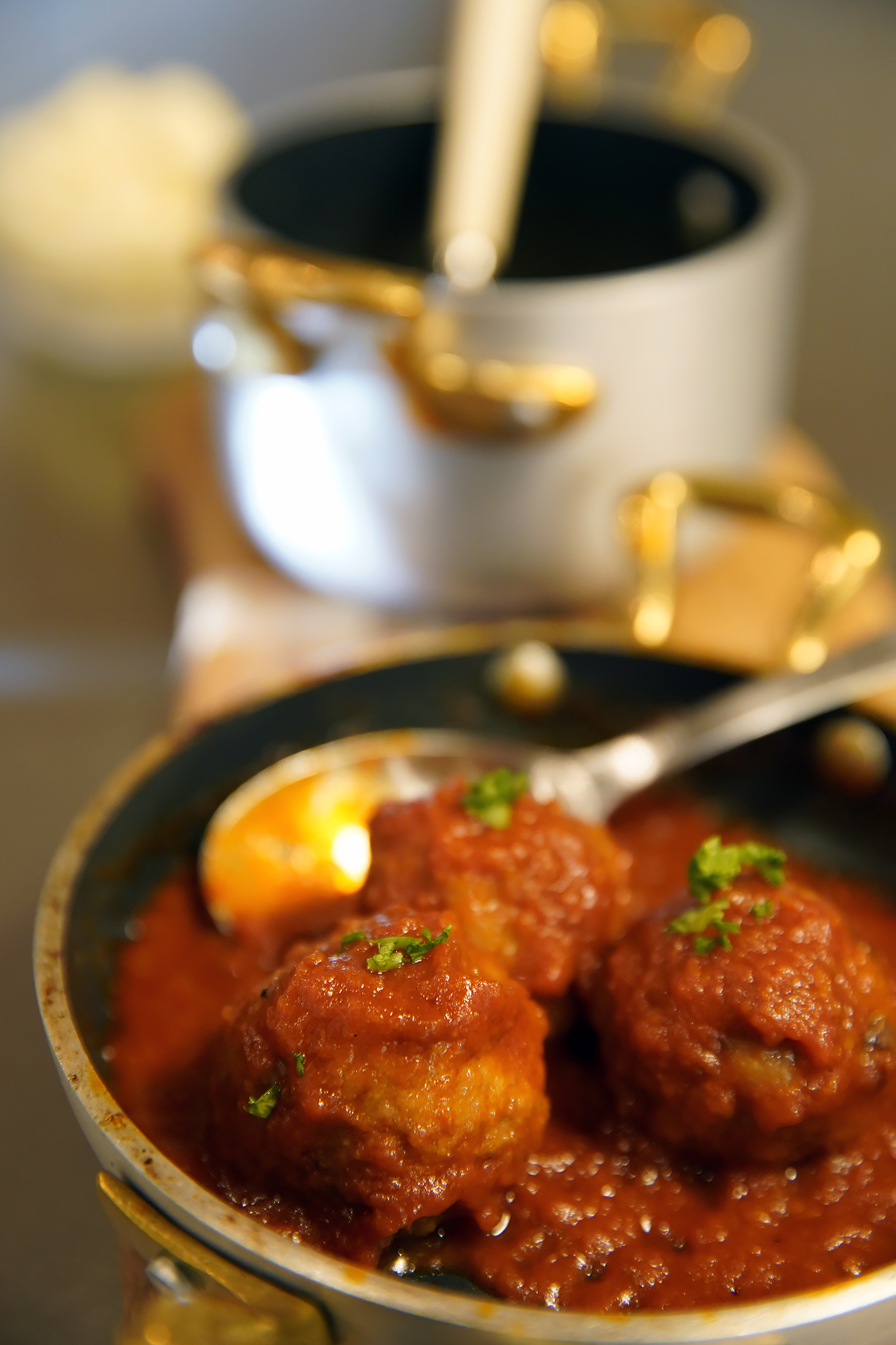
▲Meatballs made with "400 Million Year Bounty" tomato sauce.
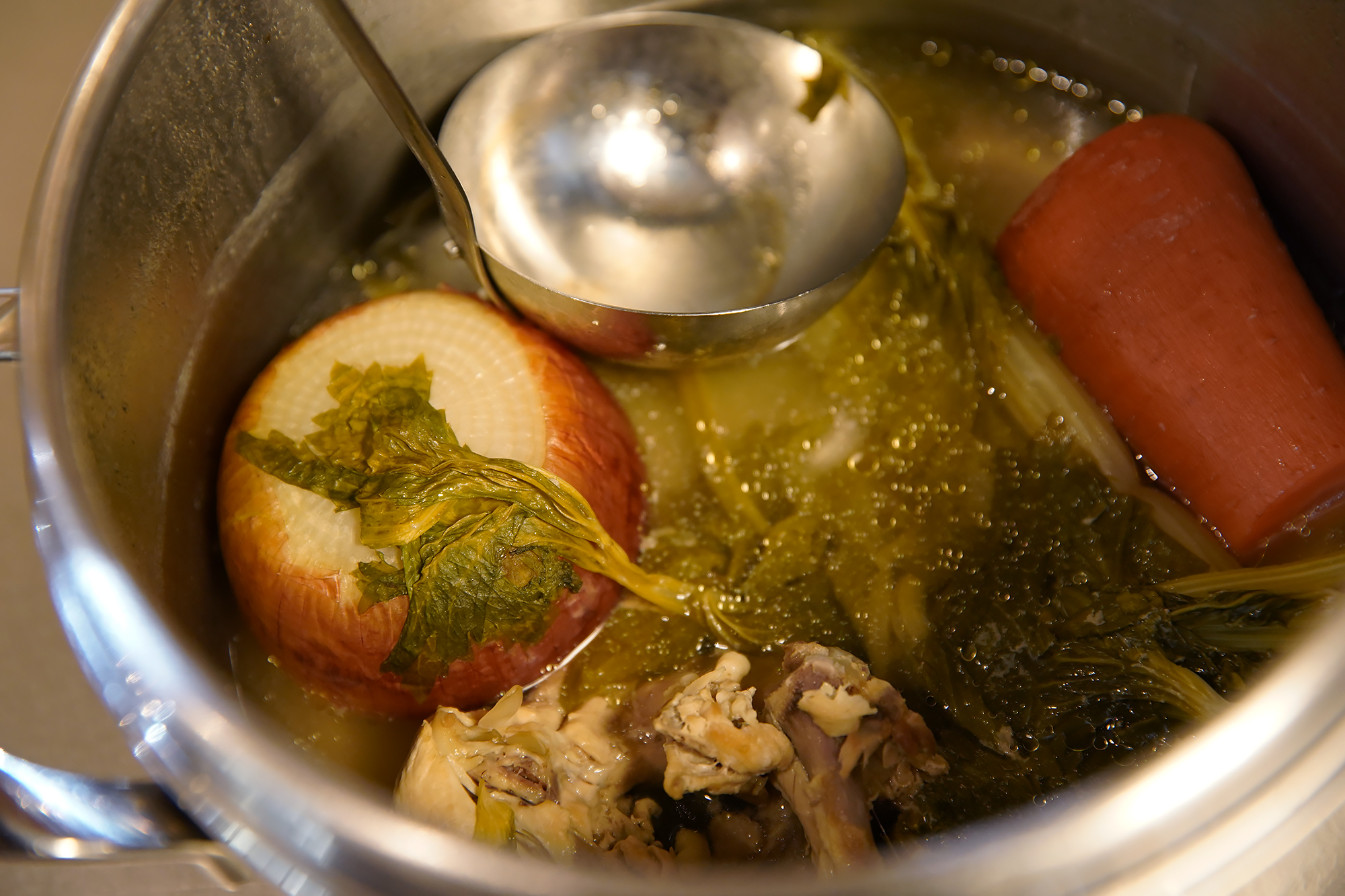
▲This is a pot of brodo (Italian version of soup stock) made by simmering onions, carrots, and chicken bones for an hour. It is used for turnip soup.
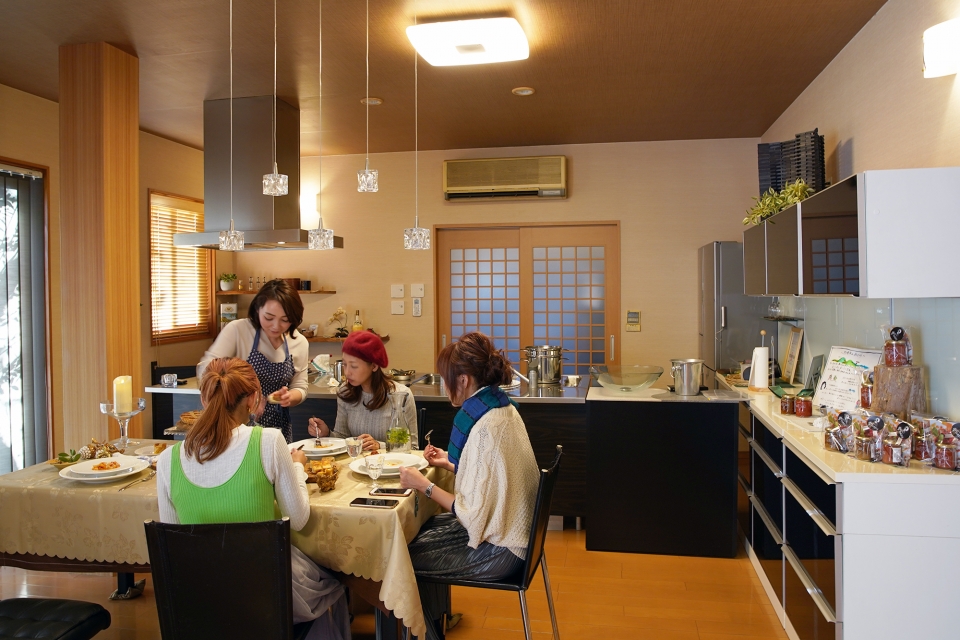
For dessert, we were served pastiera napoletana, a traditional Easter pastry eaten in Naples, Campania. The pie crust is made of cooked barley. It is a pie that is hard to find in Japan, but it had just the right amount of sweetness and the texture of the barley was delightful. The small pots and antique accessories were collected by Mr. Fujiki at flea markets and other places, and the stylish table setting was also very colorful.
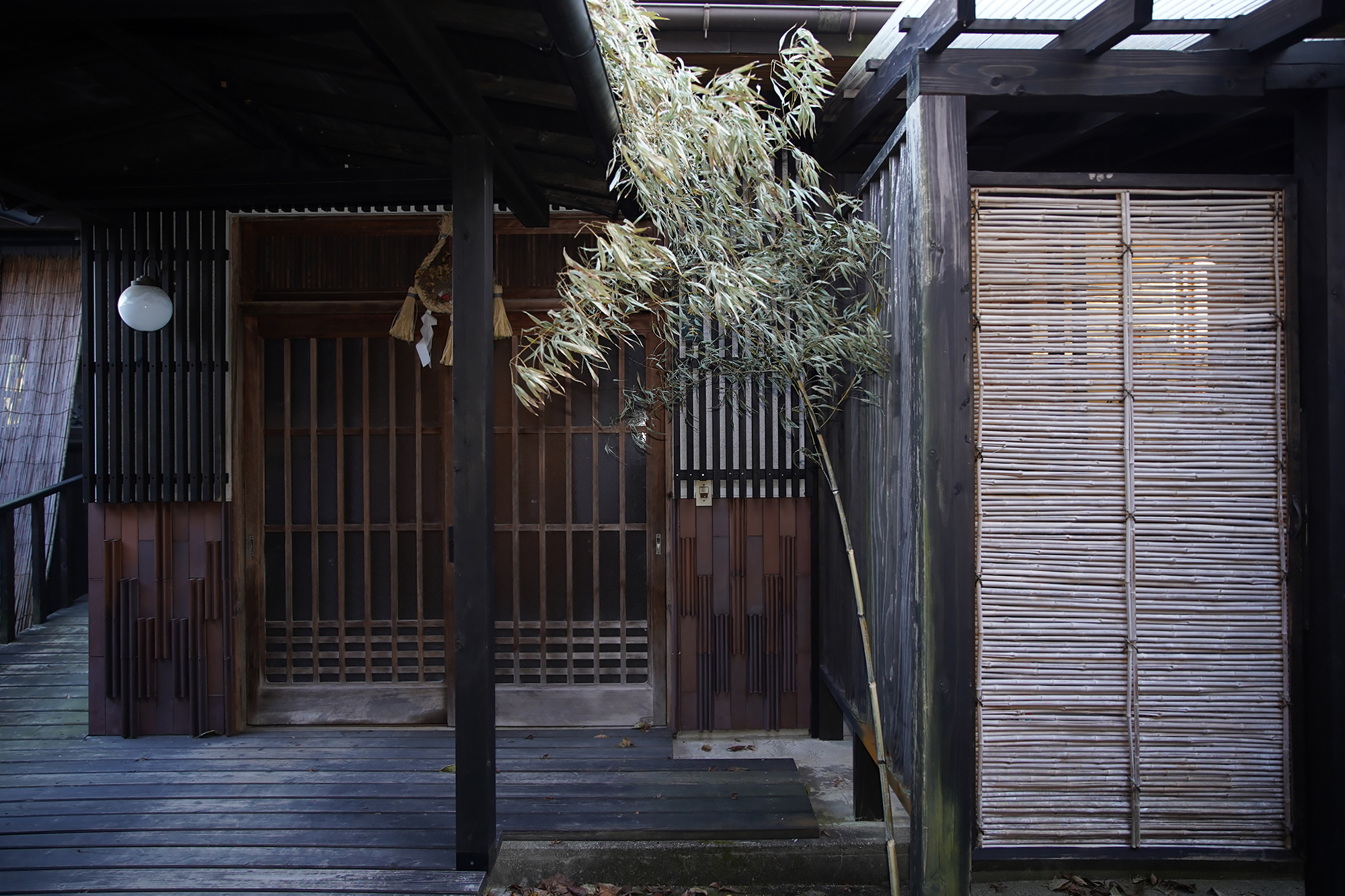
CORASITA" private accommodation Experience the advantages of country living in comfort.
Address: 2847-1, Oaza Kuraoka, Gokase-cho, Nishi-usuki-gun, Miyazaki Prefecture
Phone: 0982-83-2017
Rates: 10,000 yen and up per night, 2 meals
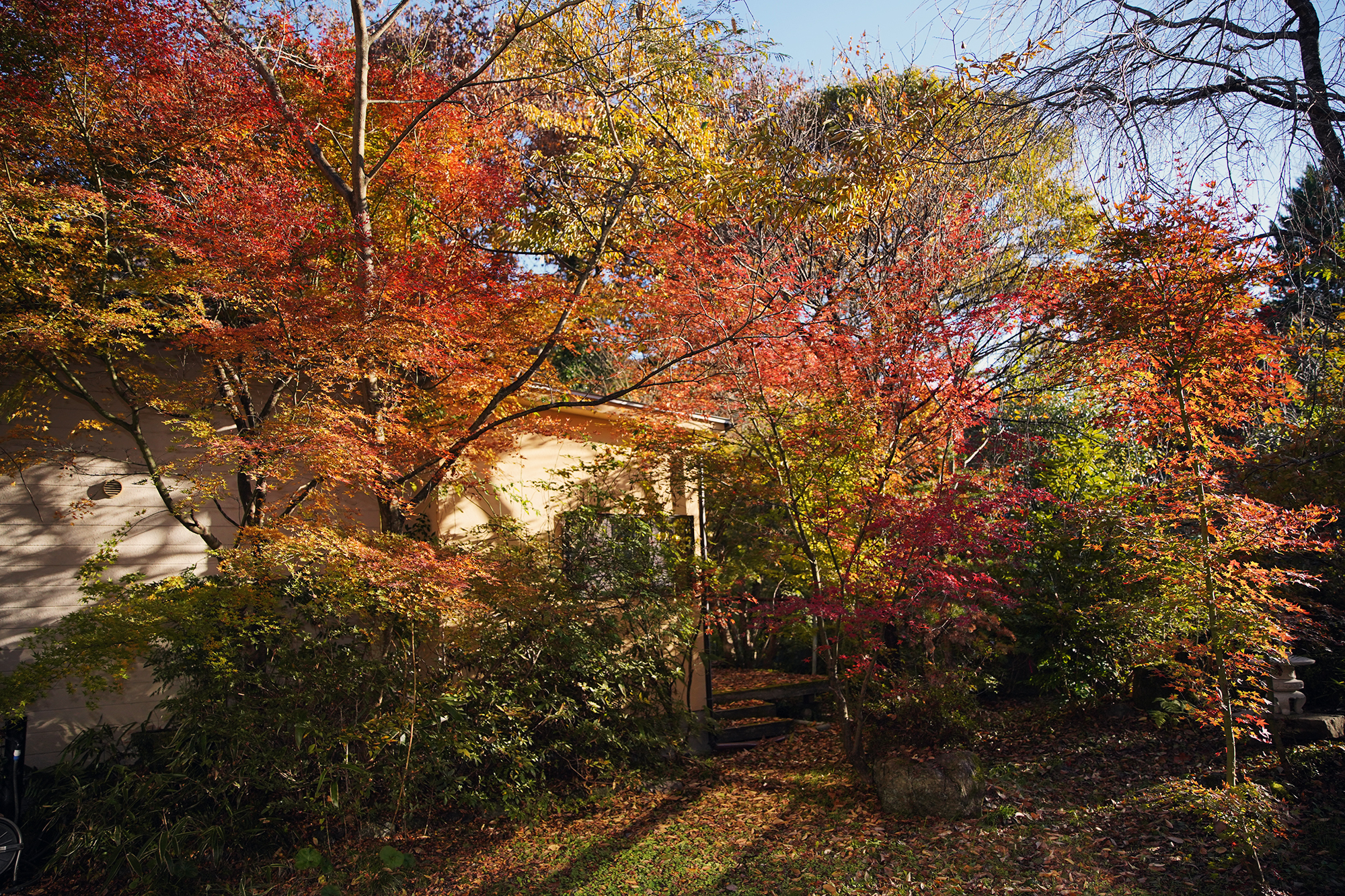
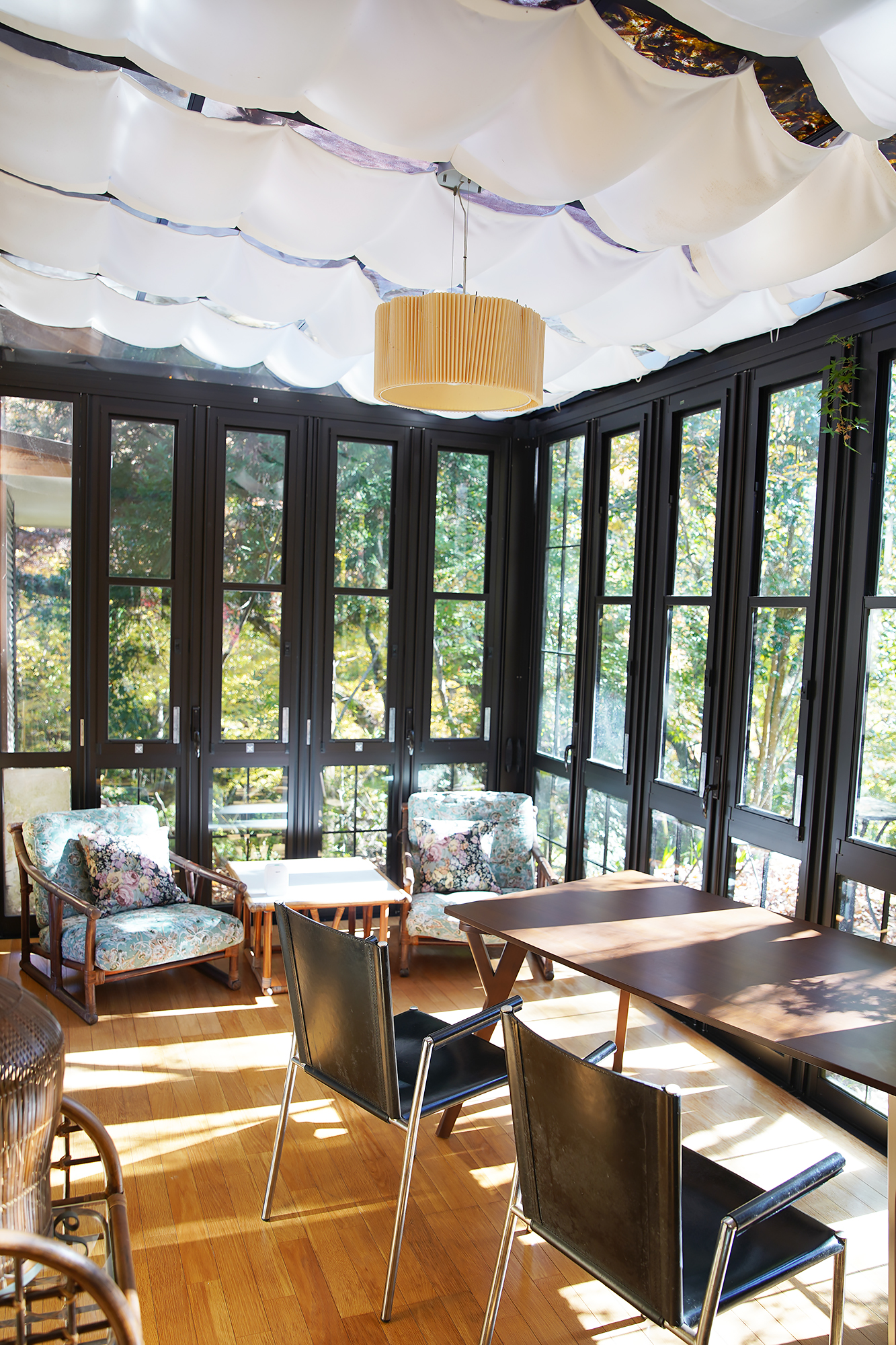
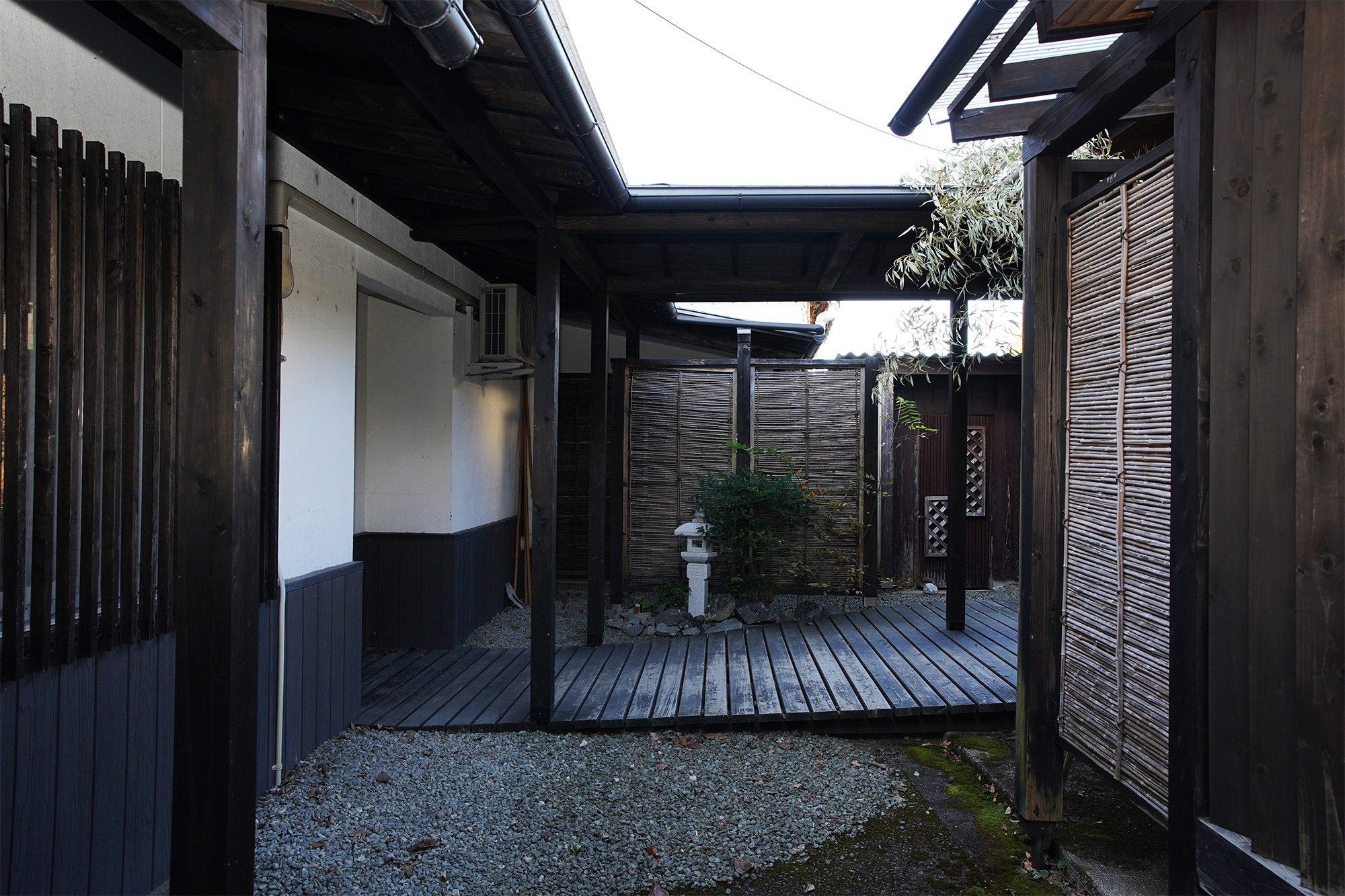
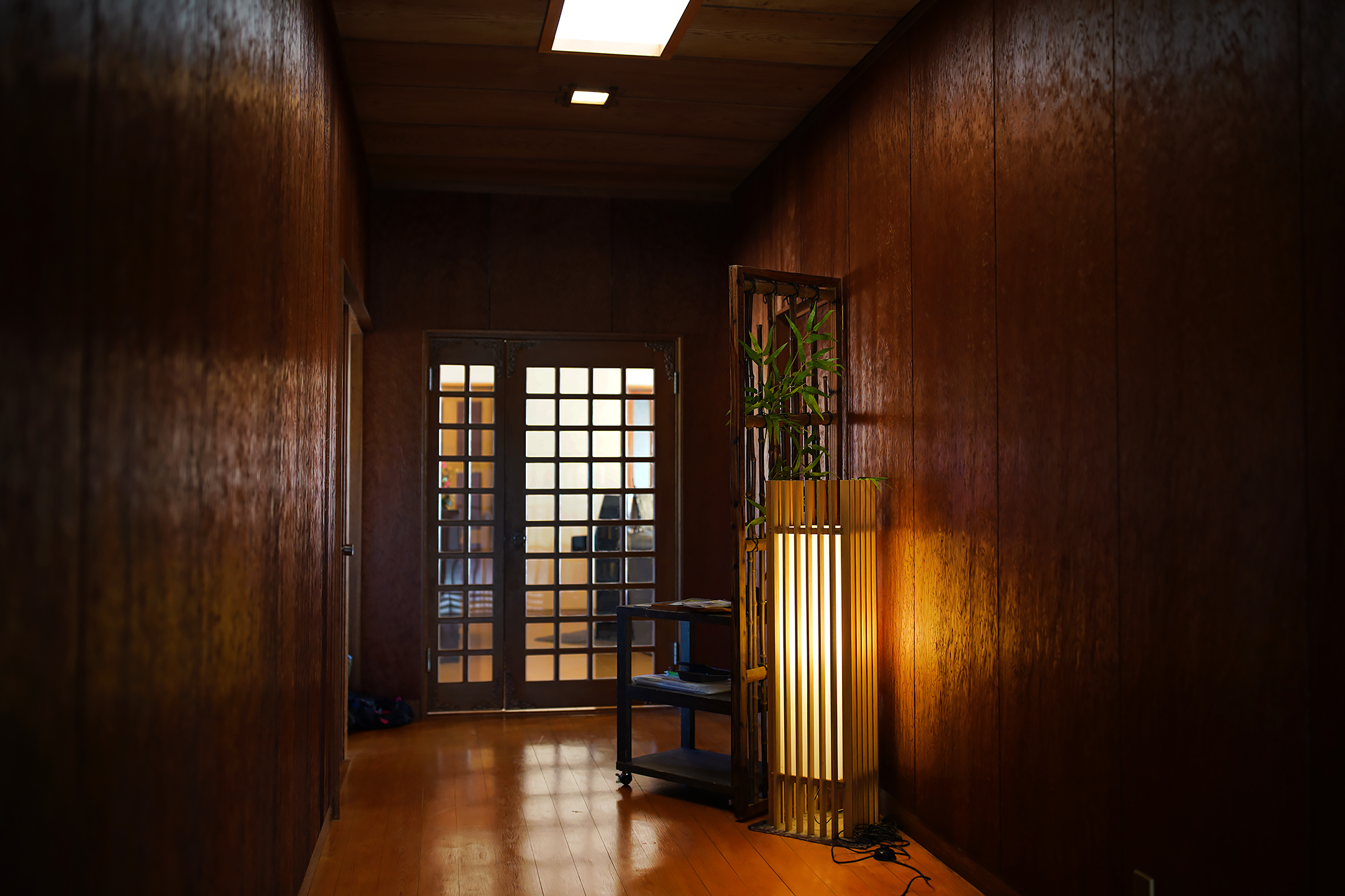
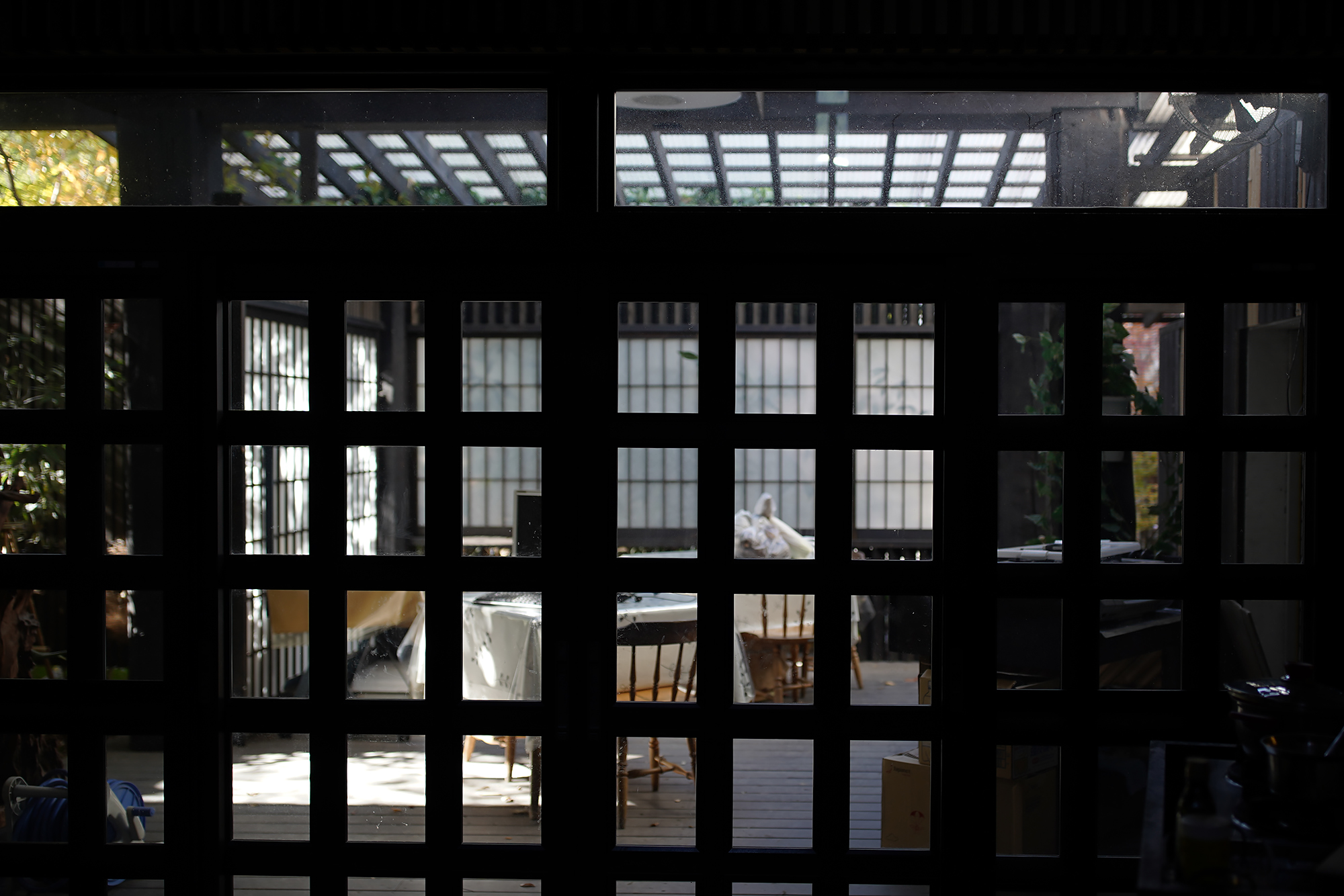
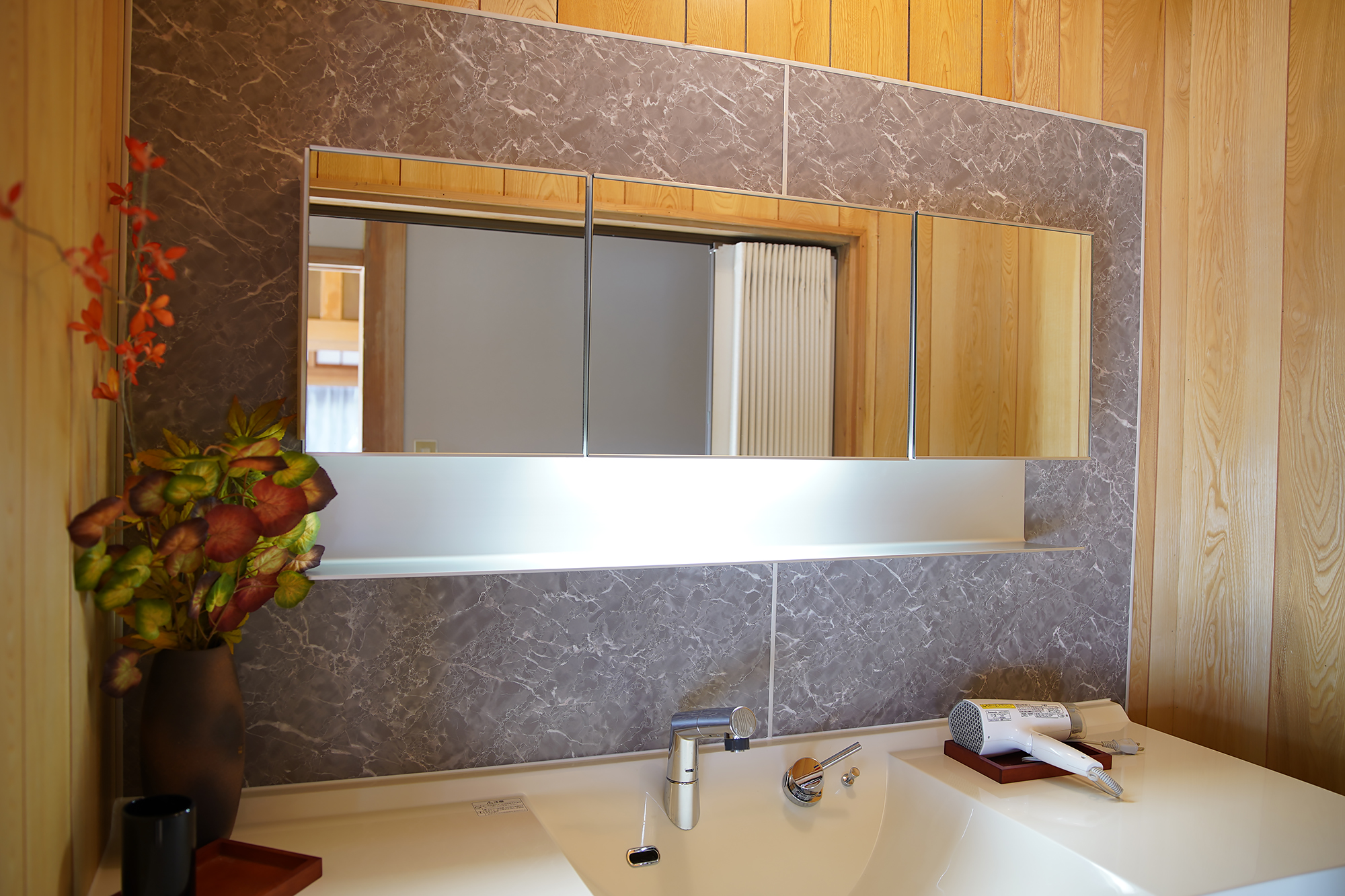
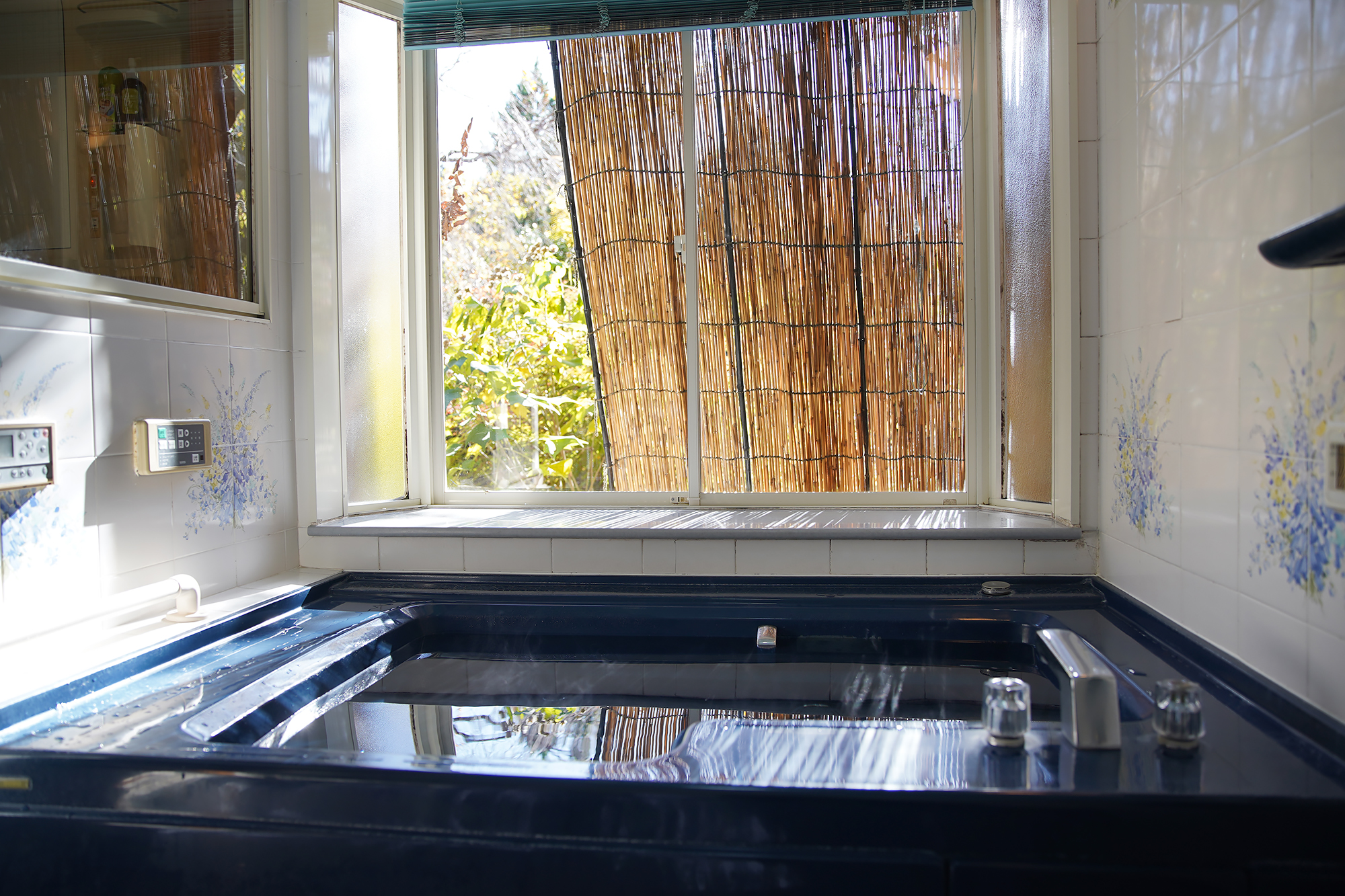
Just started "CORASITA" private accommodation. The facility has a first floor and a second floor, and they are accepting only one couple per day. While retaining the atmosphere of a good old-fashioned Japanese house, all the water facilities have been remodeled so that families with small children can stay at ease. It is a comfortable place to stay while enjoying the unique atmosphere of the countryside.
epilogueAfter the interview
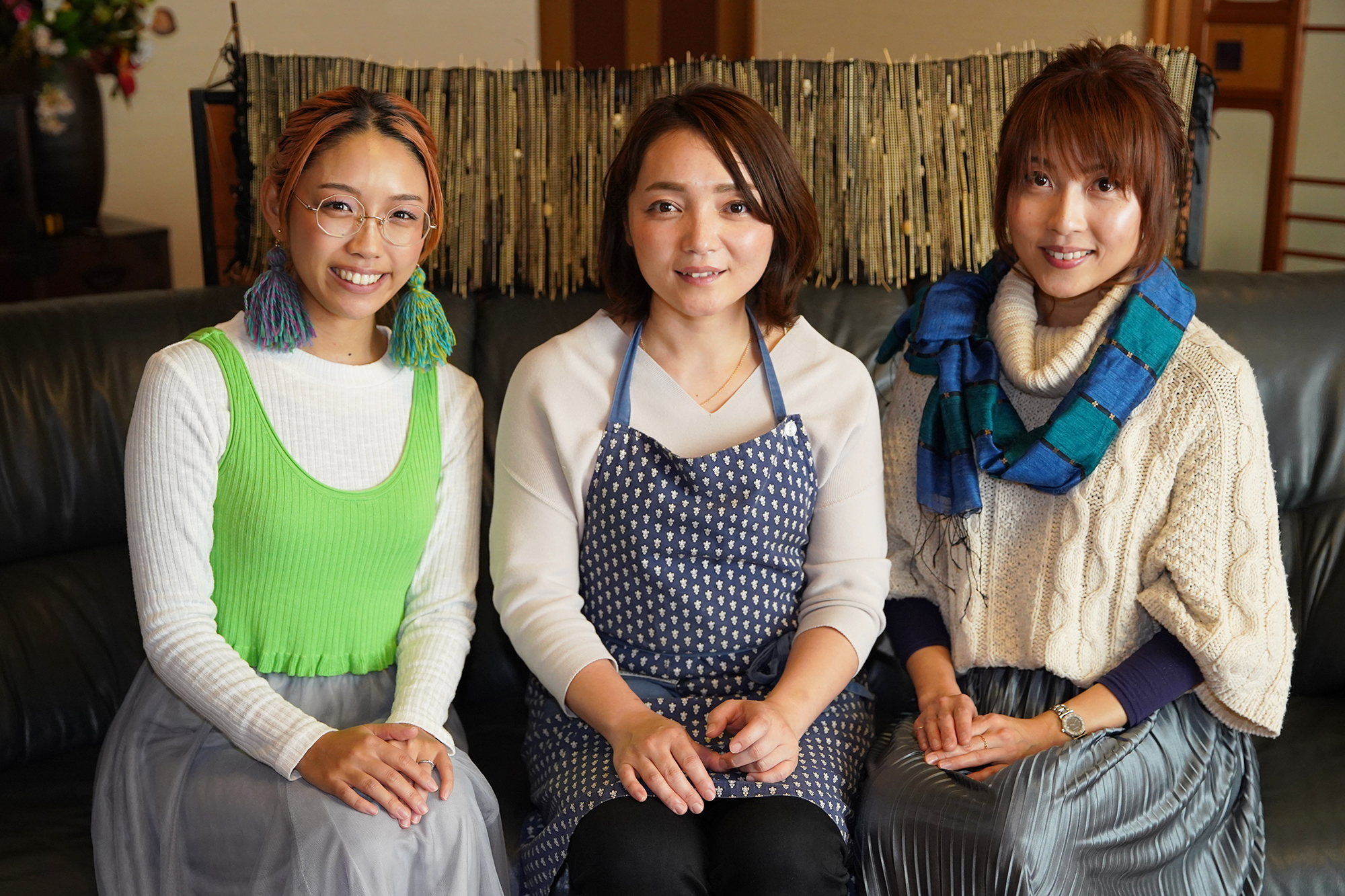
Mr. Fujiki has a kind and cheerful smile. Through this interview, I felt that the charm of his smile became even more apparent. He decided to return to Gokase because of a comment from his family, and rediscovered the charm of the town through the words of a friend. He says that even though he could not have achieved his goals on his own, people naturally gathered around him and supported him, and he was able to achieve his goals with the support of those who supported him and his actions. As a result of his efforts to weave a "karma" with people who support him and new encounters, the ties with Gokase Town have grown strong and wide. The words of hospitality, "kokosashita" (meaning "I have come to you"), have reached our hearts and minds.
AccessApproximately 1.5 hours from Nobeoka City
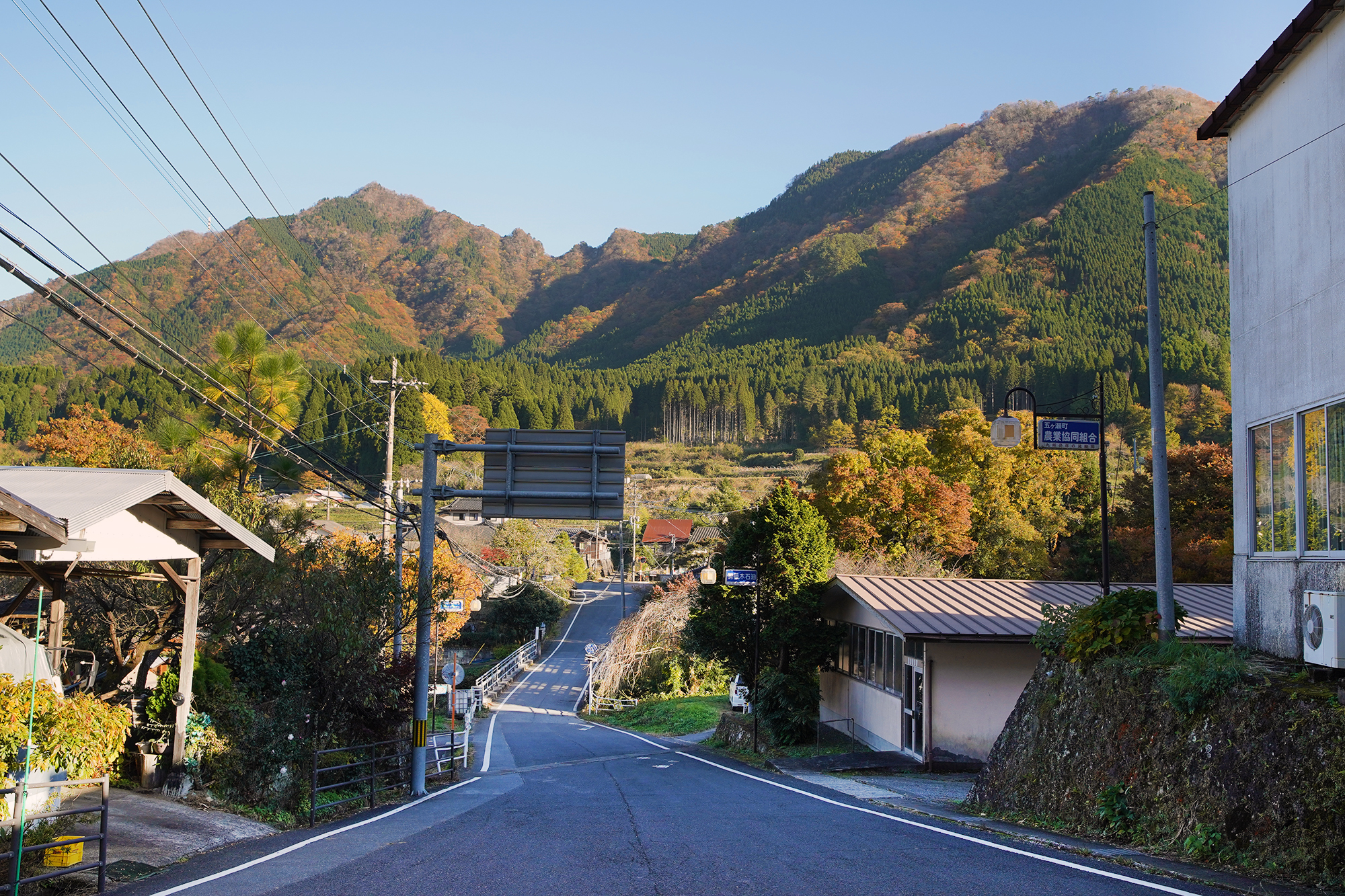
It takes about one and a half hours from Nobeoka City. From National Route 218, proceed in the direction of "Gokase Highland Ski Resort.
Address: 2847-1 Oaza Kuraoka, Gokase-cho, Nishi-usuki-gun, Miyazaki Prefecture (in Fujiki Oil Store)
Phone: 0982-83-2017
Email: info@corasita.jp
WEB:http://corasita.jp/
MAP
Japan, 2847-1 Oaza Kuraoka, Gokase-cho, Nishi-usuki-gun, Miyazaki 882-1201
Interview and editorial staff
Cooking experience model and report: Chiho Takei
Interviewer/Report: Momoko Oshima
Editing: Nozomi Nakamoto
Photography and production: VOKE Ltd.